Ontario’s Movers and Shakers for 2025

As the end of the year draws near, it is time to reveal my annual list of wineries that I found to be most impressive in 2025. Once again, I am not suggesting that these are the only great wineries in the province but merely those that attracted my attention this year.   The list varies in length from year to year as I like to focus on achievements rather than listing a specific number of wineries.

Without further ado, here is my list for 2025, presented in alphabetical order:

Broken Stone Winery

Broken Stone is a boutique winery that is in the heart of the Prince Edward County wine region. I was first introduced to Broken Stone’s wines in 2023 and was impressed enough that I included it in my list of movers and shakers that year. I returned to the winery again this past spring and was equally impressed again by the quality of their wines.

Their objective is to grow the highest quality grapes and craft world-class wines that are created from grapes grown in their vineyards:

  • Kuepfer Vineyard – This is the original vineyard where Pinot Noir, Chardonnay, Cabernet Franc, Pinot Gris, and Pinot Meunier grapes are grown
  • Applehouse Vineyard – This was the home of one of the first commercial plantings in the County that produces Riesling, Gewurztraminer and Chardonnay grapes.
  • King Eddie Vineyard – Varieties planted here include Gamay Noir, Pinot Noir, Chardonnay and Chenin Blanc.

The vintner continually works to improve the vineyard biodiversity and soils. They have adopted minimal winemaking approaches and use their knowledge of science and tradition to help the wines reveal their potential.

Karlo Estates Winery

Prince Edward County’s Karlo Estates first appeared on my Movers and Shakers list in 2021. Since then, it has continued to develop and improve not only their wines, but their customers’ experiences. Under the direction of their Executive Winemaker Derek Barnett and Winemaker Spencer Mayer, they have produced the first certified vegan wine in the world, and as a result are reducing their carbon impact.

Not only is the wine in their bottles certified vegan but all vineyard practices are vegan, their packaging is vegan and their restaurant menu is vegan. As a result, they have been placed on the “Top Ten Cutting Edge Wines of the World” list. 

The winery continues to provide the interesting single varietals and eclectic blends that it has become known for.

The Organized Crime Winery

I would be remiss if I failed to include the top Ontario winery at this year’s National Wine Awards. The Organized Crime earned a Platinum, 6 Gold, 4 Silver and 3 Bronze medals.

They are a second-generation, family-owned, small boutique winery located on the Beamsville Bench of the Niagara Peninsula. Owners Edward Zaski & Ania de Duleba farm the land themselves and assist in the winemaking throughout all stages of the process. Their production volumes are very small, but that hasn’t hindered them from appearing on my Movers and Shakers list previously in 2024 and 2020.

Two Sisters Vineyards

Two Sisters Vineyards began operations in 2007 guided by their passion to create exceptional wine. The winery and vineyards span over 130 acres in Niagara-on-the-Lake, Ontario. Grape varietals include Cabernet Franc, Cabernet Sauvignon, Merlot, Petit Verdot, Chardonnay, Riesling and Sauvignon Blanc.

The vineyards are Certified Sustainable by Sustainable Winegrowing Ontario. Two Sisters employ a science-based, decision-making process to reduce risks from grape pests in a way to minimize environmental risks. The winery also follows vegan practices as the wine fining agents that are used are vegan.

Two Sisters Vineyards was previously included as a Mover and Shaker back in 2020.

Coming up next week will be British Columbia’s 2025 list.

Sláinte mhaith

Gift for the Host

Good Housekeeping magazine now suggests to their readers that a bottle of olive oil is a much more appropriate hostess gift than a bottle of wine. Personally, I am not about to change my behaviours simply on the advice of a magazine or trends in office parties. If I am hosting or attending a social gathering, it is most likely with my friends who, like me, still enjoy a well-crafted alcoholic beverage, whether it be wine, beer or spirits.

Photo credit: cwocorp.com

I am right at home, literally, when I select a bottle of wine from the cellar to take to a dinner party. What I choose will vary based on the occasion, whether I am pairing the wine to a dinner menu, or the host’s personal wine preferences of white versus red, the grape varietal, or country of origin.

On the other hand, I would have no clue as to what olive oil I should purchase for a hostess gift. I feel that I would need to go to a food specialty store as making the purchase at my local Food Basics or No Frills grocery store seems to lack thought and character. Then comes the question – do you get regular olive oil, extra virgin olive oil, or cold pressed extra virgin olive oil? Is one better? Does the use matter? Is Italian olive oil better or different from Greek or French olive oil? Is one brand better than another?

After dealing with the stress of trying to select the most suitable oil, I would then have to witness the expression on my host’s face as the bottle is pulled from the package and the realization is made that this is not something to be poured into a glass, sipped on and enjoyed. I would be met with a polite smile and eyes of bewilderment.

During these changing times the most important thing is to understand your host’s preferences. Don’t change your gift giving practices just to correspond with current trends but match your gift giving to the preferences of your host.

Sláinte mhaith

Holiday Season Wine Pairings

With Christmas, Hanukkah, Kwanzaa, and New Year’s Eve celebrations all quickly approaching, there’s a lot to consider when it comes to choosing what to eat and drink during those festive gatherings. Here is a list of some of the best wines to pair with the flavours of the holidays.

Photo credit: winedevaexperiences.com

For rich, buttery foods, wines with good acidity will refresh the palate. As always, match the weight of the wine to the food: Light-bodied wines go with lighter dishes, while full-bodied wines can stand up to hearty, richer food.

If you are serving sparkling wine, be sure to keep it chilled. Sparkling wine always adds an instant celebratory feel and pairs well with everything from appetizers to desserts.

If you want to keep it simple, you can offer a red, white, and a sparkling option to cover the diverse flavours on the dinner table. Guests can then choose which wine they prefer. Chardonnay, Pinot Noir and Riesling are all good general options.

Here are some classic holiday pairing selections:

Main DishesRed WineWhite Wine
Roast turkeyPinot NoirChardonnay (oaked or unoaked)
Glazed hamPinot NoirPinot Gris, Riesling
Prime Rib / Roast BeefCabernet SauvignonChardonnay  
Roast ChickenPinot NoirChardonnay, Sauvignon Blanc
Salmon / Baked FishPinot NoirSauvignon Blanc, Pinot Gris
Beef BrisketSyrah, MalbecRiesling
Spicy Gumbo Off-Dry Riesling
Side Dishes / AppetizersRed WineWhite Wine
Charcuterie Sparkling
Crab cakes          Sparkling
Creamy dishes Pinot Gris, Chardonnay
Vegetable dishesPinot Noir          Sauvignon Blanc
Collard Greens Dry Riesling
Sweet Potatoes Chardonnay
Mashed potatoesPinot NoirChardonnay
Potato latkes     Sauvignon Blanc
Squash soup      Chardonnay
Pasta salad        Beaujolais, GamayPinot Gris
DessertsRed WineWhite Wine
Peach cobbler Late Harvest Riesling
Apple PieTawny PortDemi-Sec or Doux Sparkling Wine
Bread puddingTawny Port, SherrySémillon
Sticky toffee pudding   Tawny Port, SherrySémillon
Pecan pieTawny Port, Gamay 
Crème brûléeTawny PortDemi-Sec Champagne
Christmas cakeTawny Port, SherryChampagne or Prosecco

Enjoy the festive season!

Sláinte mhaith

The Office Holiday Party

Drinking one’s face off at a party or social gathering is becoming a less acceptable behaviour. The younger generations, Millennials and Gen Z, are now the most likely groups to attend holiday parties. They tend to find alcohol less desirable and thus, its use in social settings is changing. Getting into the holiday spirit no longer requires spirits, with mocktails and alcohol-free bars now becoming very popular. 

Photo credit: homrest.com

Gen Z and Millennials are also the ones most likely to make an early exit from the party. About 28% of Gen Z say they stay just long enough for the food, while 39% of millennials admit to quietly slipping away without even saying goodbye.

Zero-proof cocktails and menus featuring gluten-free, vegetarian and vegan options are reflective of a broader focus for these events. However, for those that continue to provide alcoholic options, cocktail menus are more curated and upscale and aim to incorporate local ingredients or have a more direct relationship with the company or event. 

A poll conducted in Great Britain suggested that over twenty percent of office Christmas parties in 2024 were alcohol-free events. This is an increase of two percent over just one year previous, suggesting that this is an increasing trend.

For me, being retired, gone are the days of attending work-related events steeped in their traditions and corporate politics that were often fueled by alcohol, especially during the later hours. Having emceed one of these events attended by a couple of hundred people, I appreciate the benefits of the alcohol-free approach. It can be entertaining to sometimes watch the alcohol fueled antics of some attendees and stressful to see others say or do something totally inappropriate and potentially career-limiting. It can be both tragic and embarrassing for these individuals after they sober up and realize what they had done.

Gatherings are becoming smaller as well. Less companies are hosting single large gatherings attended by all employees. Instead, they are opting for smaller intimate settings pertaining to the interests of specific groups. The events tend to focus more on food and less on spirits.

Gone are the days of wearing lampshades at a party.

Sláinte mhaith

Speyburn’s  Jerez Sherry Cask Single Malt Scotch Whisky

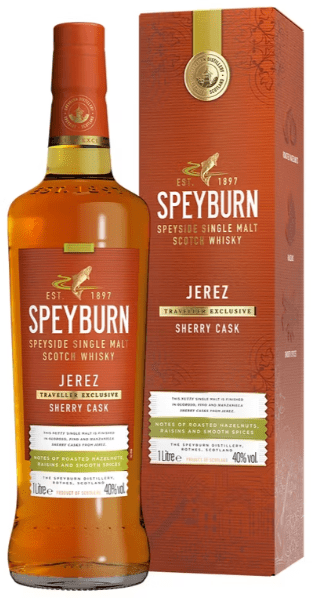
On my recent Danube River cruise through eastern Europe, I discovered another of Speyburn Distillery’s scotch whisky options, Jerez Sherry Cask Single Malt. This nutty single malt is first aged in bourbon casks, then finished in Oloroso, Manzanilla and Fino Sherry Casks from Jerez, which is located in the Andalusia region in the south of Spain.

The result is a Scotch whisky that displays flavours of roasted hazelnuts, raisins, and smooth spices. It has a dark amber colour and a nose of roasted hazelnuts, raisins and sweet spices. The flavours of nutty spices and dark red fruits lead into sweet, subtle vanilla and hazelnuts flavours.

I found it most enjoyable but unfortunately, like many of Speyburn’s whiskies, it is not available for purchase in Ontario.

Sláinte mhaith

Bock Winery, Villany, Hungary

While on a recent Danube River cruise through some of the former Iron Curtain countries of eastern Europe, I visited the Bock Winery, which is located near Mohacs (“the mother of wine”), Hungary. It is a tenth-generation family winery that was established in 1850. It spreads out over 125 hectares or about 310 acres.

Bock’s cellars

Bock’s wines are aged in a combination of French, American and Hungarian oak barrels. The use of Hungarian oak introduces a flavour and nose that is slightly different than what would be experienced with most new world wines of Australia, North America or South America. The vintner also uses a combination of both new oak and old oak barrels, depending on the specific wine being produced.

In addition to wine, Bock also produces grape seed oil, grape seed tablets and grape seed flour. This is done to minimize the amount of waste resulting from the wine making process.

While there I had the opportunity to try four of Bock’s wines – a 2023 Villányi Hárslevelú, a 2024 Villányi Rosé Curvée, a 2017 Villányi Bock Curvée, and the 2022 Cabernet Franc.

2023 Villányi Hárslevelú

This is a fresh and fragrant white wine that is produced from a native Hungarian grape variety. It is made using overripe grapes grown on 40-year-old vines in the Göntér vineyard. Its colour is a medium-intensity, straw yellow. The aroma reveals linden blossom, combined with a slight citrus note, which is also reflected in the taste.

2024 Villányi Rosé Curvée

This is a fresh and fragrant wine produced from the virgin must of blue grape varieties from Bock’s vineyards. It has a medium colour with salmon-pink hues. The aroma and taste consist of strawberries, accompanied by satisfying acidity. The wine is enhanced with carbon dioxide before bottling.

2017 Villányi Bock Curvée

2017 Villányi Bock Curvée

This is Bock Winery’s flagship wine, produced from a blend of premium red grapes from several Bock vineyards which produce a full-bodied wine. It is a Bordeaux-type blend of Cabernet Sauvignon (60%), Cabernet Franc (30%) and Merlot (10%) that has developed in new, small oak barrels for 24 months and then in the bottle for an additional year. The wine is characterized by a deep, dark intensity and dark purplish red hue. It is a full-bodied wine, with a scent of ripe cherries and tobacco, and a taste of overripe fruits, chocolate and vanilla.

This was my personal favourite of the wines I sampled.

2022 Cabernet Franc

This is a medium-bodied red wine using grapes from several of Bock’s vineyards. After fermentation, the Cabernet Franc matures in large oak barrels for 12 months to produce a dark, intense, deep red wine with a large body. It has a complex aroma and taste, in which the fruitiness forms a unity with the aromas from the barrel.

Good news for Ontario residents, Bock Wines are periodically available liquor stores.

Sláinte mhaith

Pairing Wine with Mexican Food

Mexican cuisine is very rich and varied, making it challenging to make generalized wine pairing suggestions. Because of the spicy nature of Mexican food, sparkling wines, such as Cava or Prosecco, Rosé, or sparkling Rosé, are all good choices. Wines with low or moderate alcohol levels will be a better match with the spicy nature of the food. Also, a slightly sweet or fruity wine can help balance the heat.

Photo credit: gustomexico.com

Specific wine pairings should focus on the dominant flavours, proteins or sauces of the dish. Lime, cilantro and tomatillos will pair well with crisp white wines like Sauvignon Blanc or Albariño. Grilled dishes with smoky chipotle flavours may be balanced with a Malbec, Tempranillo or Syrah. Pinot Noir will compliment Carnitas or other pork dishes. Seafood dishes are a good match with Spanish Verdejo or Vermentino. The ever-popular Chile Con Carne is a good match with GSM blends (Grenache, Syrah and Mourvèdre grapes) or a South American Carménère.

Here are some specific dish pairing suggestions from some experts:

Tacos, Chalupas, tostadas – Dry Rosé, Lambrusco, Spanish Garnacha

Stuffed Masa Dough Dishes, Gorditas, Enchiladas – Cabernet Franc Rosé, Tempranillo Rosé, Syrah Rosé

Savory-Sweet Dishes – New Zealand Sauvignon Blanc, Spanish Verdejo, Torrontes, Albariño, Grüner Veltliner, or Garnacha Rosé

Queso Fundido Quesadillas – Sangiovese, Tempranillo, Carménère from Chile

Barbacoa Mexican spices, barbecued meats, grilled, charred Mexican spices beef – Cabernet Franc, Carménère, Cabernet Sauvignon, Tempranillo, Malbec

Chorizo a guajillo and arbol chili seasoned ground fatty pork meat – sparkling wines, such as Cava or Crémant

Mexican Cured Meats – Nebbiolo, Cabernet Sauvignon, Nero d’Avola, Sangiovese, Gran Reserva Rioja

Rice Dishes – Cava, Sauvignon Blanc, Albariño

Bon Appetit.

Sláinte mhaith

Returning Wine to a Vendor

I came across an article recently that asked the question, under what circumstances is it acceptable to return wine, whether it be purchasing it from a wine shop or while dining in a restaurant?

Photo credit: crushwinexp.com

Except in situations where wine is suspected to be contaminated or unsafe for consumption, most jurisdictions do not have regulations regarding the return of wine and liquor to the vendor for refund or exchange. Therefore, it is the decision of individual retailers to determine whether they will accept returns. Most require a receipt, and some may charge a restocking fee.

The most obvious situation is when you open a bottle of wine, pour a glass and then discover an unpleasant aroma, appearance or taste. This could be the result of the wine being stored in a warm location, tainted with TCA (cork taint) or gone bad in some other way, such as being exposed to oxidation. However, it is important to keep in mind that individual flavour profiles, tartrates (wine crystals or wine diamonds), natural sedimentation and tannin deposits are not considered to be wine defects.

In situations where the wine is not spoiled but is just not to your liking or expectation, results may greatly vary. Purchasing wine and not liking it doesn’t automatically make it returnable. For example, being unfamiliar with the nuances of the effects of an aged bottle of wine may result in an individual unfairly judging it, especially if they are unaccustomed to the secondary and tertiary aromas and flavours that can develop over time. Whether such a wine may be returned varies from one establishment to another. Having a conversation with staff prior to selecting a wine you are unfamiliar with will help you manage expectations and avoid disappointment. Whether you have a legitimate right to return a wine comes down to judgment, experience and hospitality. Customers should feel taken care of, but they also need to be realistic and fair.

Many retailers have a 30-day return or exchange policy; most require a receipt and some charge a restocking fee. If you’re returning a bottle because you believe it is flawed, you should bring the mostly full bottle back to the shop with you.

Returns to a winery may be the most stringent. Other than for spoiled wine, returns must be unopened and in saleable condition (label and capsule intact), be of the current vintage and accompanied by the original receipt, indicating that it was purchased within the previous 14 days. The product may then be exchanged for an item at the original purchase price shown on the receipt. Personalized wines are a final sale.  In that case, unopened bottles cannot be returned for a refund or exchange.

A faulty product must be returned for assessment immediately upon discovery. If most of the product has been consumed, the return may not be accepted.

For online purchases, in addition to the regulations above, the purchaser will be required to pay for any additional applicable shipping charges.

Hopefully it doesn’t happen but if you ever find yourself in a position where it becomes necessary to return wine, you now have the information necessary to make this transaction as easy as possible.

Sláinte mhaith

Wine with Pasta

Now that autumn has returned, I begin to turn my thoughts to cold weather comfort foods like pasta.

Photo credit: blog.web-center.si

Generally speaking, the best way to pair wine with pasta is to match the weight and richness of the sauce to the wine. Pair light, vegetable or seafood-based pasta with crisp white wines like Pinot Grigio. Rich creamy, or meat-based sauces go well with fuller-bodied wines such as Chardonnay or Pinot Noir, while tomato-based sauces require medium-bodied reds like Sangiovese. A sparkling wine, for example Prosecco, will complement many pasta dishes, especially those with creamy or rich sauces.

A good rule of thumb is to match the weight of the pasta sauce with the weight of the wine. A light sauce calls for a light wine, while a heavy sauce pairs well with a bolder wine. Also consider sparkling wines as the bubbles will complement creamy sauces and the acidity works well with tomato-based dishes.

Here are some specific pairing suggestions from several experts:

Fettuccine Alfredo: The wine needs to complement the richness of the dish while providing balance and enhancing the flavours. White Burgundy, Pinot Blanc, and Soave Classico will pair well with Fettuccine Alfredo.

Lasagna: This dish pairs well with a full-bodied red wine like an Italian Chianti Classico or a Brunello di Montalcino.

Pesto Pasta: The pesto flavours will harmonize well with a light-bodied white wine with herbal and citrus notes such as a Sauvignon Blanc, Pinot Grigio or Italian Vermentino.

Spaghetti Bolognese: The rich and meaty tomato-based sauce goes well with a medium-bodied red wine with good acidity such as an Italian Sangiovese or a Chianti.

Spaghetti Carbonara: The creamy Carbonara sauce will be complimented by a medium-bodied white wine like a Viognier or a Chardonnay. If you prefer red, Pinot Noir or Malbec are suggested.

Cheese-filled Ravioli: Pair with a light to medium-bodied white wine like Sauvignon Blanc, Pinot Grigio or Vermentino.

Meat-filled Ravioli: A full-bodied red wine such as Sangiovese, Barbera, Chianti, Cabernet Sauvignon, or Syrah is a good combination.

Seafood-filled Ravioli: Couple this ravioli with a white wine like Chardonnay, Sauvignon Blanc or a dry Riesling.

Vegetarian Ravioli: A red wine like Pinot Noir or Gamay, or a light to medium-bodied white wine such as Grüner Veltliner, Pinot Grigio, Viognier or Sauvignon Blanc are great options. You can also choose Rosés like Chenin Blanc or Pinot Gris.

No matter what pasta you have there will be the perfect complementary wine to enjoy alongside.

Sláinte mhaith

2025: A Much Better Year

As an update to my November 9, 2024, post “2024: A Year to Remember”, I am pleased to report that the devastation resulting from the environmental disasters that plagued the 2024 growing season in British Columbia have had a reduced impact on this year’s grape harvest.

Photo credit: decanter.com

The vines that survived the destruction have recovered significantly, contrary to expectations. Most growers are now expecting a substantial crop; something that seemed unimaginable last year. The vines have proven to be much more resilient than expected. Some wineries project this year to be their largest harvest ever.

Indications are that the 2025 vintage will be of high quality as the weather has been consistently warm but without extreme heat spikes and wildfires. However, some vineyards still have crop yields of questionable quality.

Grape prices have returned to more reasonable levels, similar to what existed before the environmental challenges of the past couple of years. This will be a relief for the wineries and consumers.

Only a small number of wineries will continue to need to source grapes again from the U.S. Thus, the replacement wine program has been extended for another year. Many producers have replanted vineyards that will not be in full production for another several years.

The effects of the 2024 disaster will continue to linger for the foreseeable future. but the impact is proving not to be as devastating as first thought.

Sláinte mhaith