The Effects of Histamines in Wine

If you get headaches when drinking wine or your face becomes flushed, chances are you have experienced an allergic reaction to the wine.  Antihistamine medications like Zyrtec, Allegra, Claritin or Benadryl may provide quick relief for your symptoms. This is because histamine has caused an immediate inflammatory response in the body.
Photo credit: therealreview.com

Histamine is part of the immune system that serves to provide a warning to your body of any potential attackers. It causes blood vessels to swell so the white blood cells can quickly find and attack an infection or problem.  The increase in the level of histamine is what causes a headache and leaves a person feeling flushed, itchy and miserable.

Many wines contain components that may react negatively to people with histamine sensitivity.  To begin, the wineries tend to use grapes that are ripe or even overripe; a state which leaves the fruit in the perfect state for excess histamine production.  Sulphur dioxide, which is a common preservative used in winemaking, can cause dermatitis, hives’ and/or flushing.   Another preservative, ammonium sulphates, may cause nausea or vomiting. It also causes histamine release in the body.  Commercial yeasts are also a known histamine trigger.

Lastly, ethanol, which is the alcohol we consume when we drink wine, is a by-product of the bacteria which feed on the sugars in the grapes from which the wine was made.  It is the reason why all alcohol contains histamines. Generally, the higher the alcohol content, the lower the sugar content and vice versa.

The level of histamine in wine varies depending on the processes used when making the wine; things such as the type of barrel used. You won’t find an alcohol completely without histamines and sulfites but there are techniques that will lower the histamine formed in wine.

While both red and white wines contain some trace nutrients, red wine has much higher levels of antioxidants, but all wines contain substances such as sulfites, which can cause mild to severe allergy symptoms to appear in some individuals.  White wine will contain between 3 to 120 micrograms of histamine per glass, whereas red wine will have 60 to 3,800 micrograms of histamine per glass.

Some people claim that natural wines contain low levels of histamine, however this is not always true.  It is not easy to determine which wines are safe as most wine labels do not legally have to show this kind of information and there isn’t a legitimized certificate for low histamine wines.

What works for many people with a sensitivity to histamine is a low histamine wine without sulfates.  White wines such as Sauvignon Blanc or sparkling wines like Cava or Prosecco are often a good choice for people with histamine sensitivity.

Sláinte mhaith

New Alcohol Consumption Guidelines

According to new guidelines from the Canadian Centre on Substance Use and Addiction (CCSA), which were published earlier this year, consuming more than six alcoholic drinks a week leads to high health risks, including cancer, especially for women.

The CCSA led the initiative to update Canada’s Low-Risk Alcohol Drinking Guidelines (LRDGs). This Health Canada initiative was initiated in July 2020. The result of this project was the creation of Canada’s Guidance on Alcohol and Health, which now replaces the LRDGs.

The CCSA states that no matter the kind of alcohol, whether it is wine, beer, cider or spirits, even a small amount is damaging, regardless of age, sex, gender, ethnicity, tolerance for alcohol or lifestyle.  Thus, if you drink, it’s better to drink less.

According to the CCSA, the guide provides people with the information necessary to make well-informed and responsible decisions about their alcohol consumption.  The guidelines state that there is a continuum of risk associated with weekly alcohol use.

  • No risk = 0 drinks per week — Not drinking has benefits, such as better health and better sleep.
  • Low risk = 2 standard drinks or less per week — Most likely to avoid alcohol-related consequences.
  • Moderate risk = 3 to 6 standard drinks per week — There is risk of developing several types of cancer, including breast and colon cancer.
  • Increasingly high risk = 7 standard drinks or more per week — The risk of heart disease or stroke increases significantly at this level.
  • Each additional standard drink radically increases the risk of alcohol-related consequences.
Photo credit: https://c2cjournal.ca

In addition, consuming more than 2 standard drinks on any occasion is associated with an increased risk of harms to oneself and others.

As with the previous guidelines, alcohol should not be consumed when pregnant or while breastfeeding.

On the other hand …

Contradicting at least a portion of the new Guidance on Alcohol and Health is another study, also published this year, this time in the Nutrients Journal where researchers completed a study aimed at understanding the association between wine consumption and cardiovascular mortality, cardiovascular disease (CVD) and coronary heart disease (CHD). 

This investigation states that wine consumption has an inverse relationship to cardiovascular mortality.  According to the journal, “Researchers performed a systematic review and meta-analysis using longitudinal studies, including cohort and case-control studies retrieved from multiple databases which they searched from their inception to March 2023”.

The researchers stand by the belief that light to moderate alcohol consumption positively affects general health; for instance, it acts on high-density lipoprotein cholesterol to prevent atherosclerosis, lowers the incidence of ischemic heart disease (IHD) and helps with the prognosis of people at higher risk of coronary complications leading to myocardial infarction.

However, these researchers agree that excessive drinking causes over 200 diseases, which makes it a leading cause of deaths globally.  They also warn that alcohol interacts with multiple drugs, altering its metabolism. Decreased alcohol metabolism could lead to increased blood alcohol levels. For example, a component in wine, resveratrol, interacts with certain drugs and modifies their metabolism.

Polyphenols in red wine, such as tannins, provide multiple cardiovascular health benefits. It is also an anti-inflammatory, antioxidant and antimutagenic thus reducing potentially harmful chemicals from the body. Nonetheless, all cardiologist agrees that light to moderate alcohol consumption has a positive effect on cardiovascular health, whereas excessive alcohol drinking elevates the risk of CHD mortality, cancers, etc. At least both studies agree on this point.

The participant’s age, sex or smoking status apparently had no effect on the study’s results.  Both red and white wines displayed positive affects but the impact varied by the type of wine.

Though health benefits were noted with both red and white wine, the variations in the strength of this association were attributable to the different concentrations of some components.  Red wine, in particular, has phenolic compounds such as gallic acid, catechin, and epicatechin (flavonols), which gives it antioxidant properties. These wines also reduce low-density lipoprotein (LDL) oxidation, thrombosis risk, plasma and lipid peroxide.

Alcoholic components of wine reduce the risk of thrombosis and levels of fibrinogen, as well as induce collagen and platelet aggregation. Thus, higher consumption of red wine is more beneficial for combating CVDs than white wine other alcoholic beverages.

The study concluded that moderate wine consumption is good for cardiac health. However, researchers should interpret these findings with caution. Increasing wine consumption could harm patients susceptible to alcohol due to age, preexisting pathologies or medications.

In closing …

I leave it to you to make your own decision with regards to the merits of both studies.  Complete information regarding Canada’s Guidance on Alcohol and Health is available at https://ccsa.ca/.  The complete study, Association between Wine Consumption with Cardiovascular Disease and Cardiovascular Mortality: A Systematic Review and Meta-Analysis, is available at https://www.mdpi.com/2072-6643/15/12/2785.

Sláinte mhaith

2023 Ontario Wine Awards

Photo credit: ontariowineawards.com

The 2023 Canadian wine award season began in early June with the Ontario Wine Awards.  There were 558 entries from 77 Ontario wineries.

Receiving the honour of the Winemaker of the Year was Peller Estates Winery’s Katie Dickieson.  She earned more gold medals than any other winemaker in Ontario.

The Niagara region’s Domaine Queylus attained the Red Wine of the Year award for its 2020 Cabernet Franc Tradition.  This wine is only available directly from the winery but at a very affordable price of $33.50 CDN.

The White Wine of the Year award was presented to Prince Edward County’s Norman Hardie for their 2017 Semi-Dry Riesling.  This wine comes at a price of $21.00 CDN and is available from either the winery or select LCBO stores.

This year Gold medals were awarded in the following categories:

Sparkling Wine Award (Traditional Method)

Gold medals were presented to:

  • Malivoire Wine Bisous Rose NV
  • Megalomaniac Bubblehead Limited Edition Brut NV
  • Niagara College Teaching Winery, Balance Brut NV
  • Thirty Bench Wine Makers, Sparkling Riesling NV
  • Trius Winery, Showcase Blanc de Blancs NV

Sparkling Wine Award (Cuve Close)

The gold medal was awarded to Greenlane Estate Winery for their Saffron Sparkling Rose 2021

Riesling Award (Semi-Dry)

The gold medal was awarded to Megalomaniac Winery for their Narcissist Riesling 2021

Sauvignon Blanc / Semillon Award

Gold medals were awarded to:

  • Peller Estates Winery, Private Reserve Sauvignon Blanc 2021
  • Palatine Hills Estate Winery, Wild & Free Semillon 2021
  • Trius Winery, Showcase Wild Ferment Sauvignon Blanc 2020

Unoaked Chardonnay Award

The Gold medal was awarded to Big Head Wines Inc. for their 2022 Chardonnay Stone

Oaked Chardonnay Award

Gold medals were awarded to:

  • Exultet Estates, cru X Chardonnay 2018
  • Konzelmann Estate Winery, Chardonnay Barrel Aged 2022

Gewürztraminer Award

The Gold medal was presented to Magnotta Winery for their Gewürztraminer VQA Venture Series 2022

Blanc De Noir Award

The Gold medal was awarded to 180 Estate Winery for their Gamay Rose 2021

Gamay Award

The Gold award was presented to 13th Street Winery for their Gamay 2021

Pinot Noir Award

Gold medals were awarded to:

  • King and Victoria, Pinot Noir 2018
  • Domaine Queylus, 2018 Pinot Noir La Grande Réserve

Cabernet Franc Award

Gold Awards were presented to:

  • Big Head Wines Inc., 2020 Cabernet Franc Select
  • Domaine Queylus, 2020 Cabernet Franc Tradition
  • Peller Estates Winery, Signature Series Cabernet Franc 2020
  • Ravine Vineyard Estate Winery, Ravine Cabernet Franc 2020
  • Thirty Bench Wine Makers, Wild Cask Cabernet Franc 2020

Merlot Award

Gold medals were presented to:

  • Kacaba Vineyards and Winery, Signature Series, Reserve Merlot 2020
  • Niagara College Teaching Winery, Dean’s List Merlot 2020
  • Sprucewood Shores Winery, Merlot Hawk’s Flight Reserve 2020
  • Thirty Bench Wine Makers, Small Lot Merlot 2020

Meritage & Cabernet Blends Award

Gold medals were awarded to:

  • Konzelmann Estate Winery, Legacy Meritage 2020
  • Magnotta Winery, Magnotta Legacy Limited Edition VQA 2018
  • Ravine Vineyard Estate Winery, Reserve Red 2020
  • Three Dog Winery, Big Red 2020

Syrah / Shiraz Award

The Gold medal was awarded to Kacaba Vineyards and Winery for their Premium Series, Terraced Vineyard Syrah 2020

Late Harvest Reds & Whites

Gold medals were presented to:

  • Peller Estates Winery, Private Reserve Late Harvest Vidal 2021
  • Trius Winery, Showcase Late Harvest Vidal 2021

Other Red Wines

A Gold medal was awarded to Strewn Winery for their Select Late Harvest Cabernet 2017

Vinifera Icewine Award

Gold medals were presented to:

  • Inniskillin, Cabernet Franc Icewine 2019
  • Peller Estates Winery, Andrew Peller Riesling Icewine 2019
  • Riverview Cellars Estate Winery, Riesling Icewine 2019

Unassigned Wine

A Gold medal was presented to the London Born Wine Co for their Chardonnay Musque 2020

I did not include the Silver and Bronze medal recipients.  However, the complete list is available at https://winesinniagara.com/2023/06/domaine-queylus-captures-red-wine-of-the-year-award/.

Sláinte mhaith

The World of Ultra-Rare Scotch Whisky

Over the past few years whisky makers have released a variety of very rare and expensive Scotch whiskies to the marketplace.  The price of these rare offerings is determined by what the market will bear, or in other words, the amount the investor is willing to pay.  It appears that the price has little to do with the cost and time required to produce the bottle but more about who is interested in purchasing it. What has been happening is that there are a number of avid whisky enthusiasts who are willing to part with large sums of cash to claim one of these rare items as their own.

Photo credit: harpers.co.uk

The participants in this market consists of collectors, investors and high-end consumers.  Individuals may take on only one or even all three of these roles.  For example, the same person may try to acquire two bottles, one to keep and maybe sell later, and the other to drink.

Ironically, with the recent surge in whisky’s popularity, distillers have been creating and promoting no-age statement whiskies. Older whiskies are more valuable, but the industry is far from claiming that older is necessarily better.  The older the vintage, the fewer bottles there are available, making it more desirable to those who can afford it, as well as more collectible.

Marketing whisky is about the quality of the whisky and the stories it allows the producers to tell about their brand’s legacy and history.

The media seems to have become infatuated by the so-called investment potential of these expensive bottles and casks.  However, whisky producers shy away from considering them as an investment.  There are people collecting simply for the happiness gained from the achievement of getting hold of a particular brand or vintage item.  However, encouraging people to invest for profit is risky business.  A large outlay of cash doesn’t necessarily provide the opportunity for resale for an increased amount later.

In the same way the price of fine wine will fluctuate up and down, so, too will Scotch whisky.  But just like wine, most people don’t consider it an investment vehicle similar to stocks or bonds.

When it comes to distillers setting a price for their rare releases, the only reference point seems to be the auction houses. If the price is set too high they will be accused of having delusions of grandeur. If the price is too low, the whisky will be quickly purchased and resold.

If you find yourself in the possession of a bottle of Scotch from one of the distilleries that no longer exists, you may have something of great value without realizing it. This list of distilleries includes Brora, Imperial, Littlemill, Port Ellen and Rosebank.

Revenues from the sale of rare whisky is minuscule in comparison to the profit made from the sale of the distilleries’ standard fare.  That is one reason why every distillery doesn’t take part in this niche market. Another being that any of the newer distilleries haven’t existed long enough to have any casks that have aged long enough to enable them to provide such a rare offering.

A certain amount of snobbery exists in the ultra-rare whisky market.  There are those who believe that distilleries, such as Macallan, should not have luxury status because their whiskies are available through grocery retailers in Britain.  Apparently in the view of some, if a distiller makes their product easily accessible to consumers, it raises doubts about its luxury status.

Thankfully, this is not an opinion shared by everyone and that whisky is judged and valued by its quality and flavour.  Proof in point, a bottle of Macallan’s 1926 sold at Sotheby’s for £1.5 million or $2.325 million dollars CDN!

Sláinte mhaith

The All Canadian Wine Championships

Photo credit: allcanadianwinechampionships.com

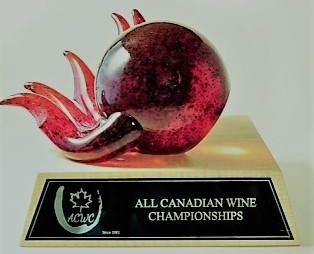
The 41st edition of the All Canadian Wine Championships was held in mid June.  There were participants from nine of the ten provinces and even one territory. In total 184 wineries entered 1,154 wines.

The overall results by province were as follows:

  • BC           5 Trophies/25 Double Gold/75 Gold/73 Silver /66 Bronze (612 entries)
  • ON          22 Double Gold/32 Gold/37 Silver/39 Bronze (379 entries)
  • QC           2 Trophies/3 Double Gold/14 Gold/10 Silver/10 Bronze (73 entries)
  • NS           7 Gold/ 2 Silver/6 Bronze (26 entries)
  • NB           3 Double Gold/ 3 Gold/1 Silver (26 entries)
  • PEI          1 Double Gold/1 Silver (4 entries)
  • AB            1 Double Gold/ 1 Gold/1 Silver/ 4 Bronze (24 entries)
  • MB          2 Bronze (3 entries)
  • SK            1 Silver (8 entries)
  • YT             1 Double Gold (2 entries)

Assessments and awards were based as follows:

Trophies: “All Canadian Best Wines of the Year”

All wines are judged using the 100-point system. Trophies are awarded for each of the following categories:

  • Best Red table wine
  • Best White table wine
  • Best Dessert wine
  • Best Sparkling wine
  • Best Fruit wine

Double Gold medals / Best of Category were awarded to the single highest rated wine (using an average of the aggregate judges’ scores) from each of the categories. These wines were all submitted for the Trophy round.

Medals of Merit: Gold, Silver, Bronze were awarded in the following manner:

  • Gold awards were awarded to those wines scoring in the top 10 percentile.
  • Silver awards of merit were issued to those wines scoring in the second 10 percentile.
  • Bronze awards of merit were given to those wines scoring in the third 10 percentile.

The Trophy Awards were presented as follows:

Best Sparkling Wine of the Year

TIME Family of Wines, BC; N/V Chronos Brut ($40.24 CDN)

Best Red Wine of the Year

Wild Goose Winery, BC; 2021 Pinot Noir ($29.89 CDN)

Best White Wine of the Year

Wild Goose Winery, BC; 2022 Gewürztraminer ($17.89 CDN)

Best Dessert Wine of the Year

Vignoble Rivière du Chêne, QC ; 2021 Monde ($32.00 CDN)

Best Fruit Wine of the Year

Maan Farms Estate Winery, BC; 2020 Raspberry ($23.00 CDN)

Double Gold Awards

Double Gold awards were presented to the following entries:

  • Sparkling Wine – Charmat Method – Fresh, ON; N/V Sparkling Rosé ($18.95 CDN)
  • Sparkling Wine – Frizzante Method – Seaside Pearl Farmgate Winery, BC  2021 Daffodils Sparkling To Go 250ml ($7.98 CDN)
  • Chardonnay, Unoaked – Two Sisters Vineyards, ON; 2020 Unoaked Chardonnay ($38.80 CDN)
  • Chardonnay Under $35.00 – Meldville Wines, ON; 2021 Chardonnay Barrel Select ($26.00 CDN)
  • Chardonnay Over $35.00 – Dark Horse Estate Winery, ON; 2018 Stirling Gait Chardonnay ($39.95 CDN)
  • Riesling Dry – Gehringer Brothers Estate Winery, BC; 2022 Private Reserve Dry Riesling         ($18.39 CDN)
  • Riesling Off Dry – Moraine Winery, BC; 2022 Riesling ($23.00 CDN)
  • Sauvignon Blanc – Gehringer Brothers Estate Winery, BC; 2022 Dry Rock Vineyards Sauvignon Blanc ($20.69 CDN)
  • Pinot Gris Style – Lighthall Vineyards, ON; 2022 Estate Pinot Gris VQA. Prince Edward County ($27.75 CDN)
  • Pinot Grigio Style – Ovino Winery, BC; 2022 Pinot Grigio ($18.40 CDN)
  • Viognier – Wesbert Winery, BC; 2022 Viognier ($26.95 CDN)
  • Other Single Vitis Vinifera Whites – Reif Estate Winery, ON; 2021 Chenin Blanc ($19.95 CDN)
  • White Vitis Vinifera Blends – Priest Creek Family Estate Winery, BC; 2022 Marsanne Roussanne Viognier ($32.74 CDN)
  • Single White Hybrids – The Roost Wine Company, ON; 2021 Frontenac ($24.75 CDN)
  • White Hybrid Blends – Privato Vineyard and Winery, BC; 2022 Sorpresa Bianco ($22.99 CDN)
  • Pet Nat – Black Market Wine Co., BC; 2022 Nothing to Declare ($40.25 CDN)
  • Orange Wines – Creekside Estate Winery Ltd., ON; 2022 Undercurrent Madame Marmalade ($35.00 CDN)
  • Rosé Dry – Forbidden Fruit Winery, BC; 2022 Dead End The Happy Ending Organic Cabernet Franc Rosé ($24.00 CDN)
  • Rosé Off Dry – Jabulani Vineyard & Winery Ltd, ON; 2022 Rosé ($16.00 CDN)
  • Cabernet Sauvignon Under $35 – Bordertown Vineyard & Estate Winery, BC; 2020 Cabernet Sauvignon ($35.00 CDN)
  • Cabernet Sauvignon Over $35.01 – Colchester Ridge Estate Winery, ON; 2018 Grand CREW ($39.95 CDN)
  • Merlot Under $35 – Squeezed Wines, BC; 2015 Merlot ($21.90 CDN)
  • Merlot Over $35.01 – Nk’Mip Cellars, BC; 2020 Qwam Qwmt Merlot ($43.69 CDN)
  • Pinot Noir Over $35.01 – Privato Vineyard and Winery, BC 2019 Woodward Collection – Grande Reserve Pinot Noir ($68.99 CDN)
  • Cabernet Franc Under $35 – Colio Estate Wines, ON; 2020 Reserve Cabernet Franc ($19.95 CDN)
  • Cabernet Franc Over $35.01 – Palatine Hills Estate Winery c/o John Neufeld Farms, ON; 2018 Wild & Free Cabernet Franc ($64.95 CDN)
  • Bordeaux Blends Under $35 – Creekside Estate Winery Ltd., ON; 2020 Red Tractor Cabernet Merlot ($17.95 CDN)
  • Bordeaux Blends Over $35.01 – Two Sisters Vineyards, ON; 2018 Eleventh Post ($47.80 CDN)
  • Syrah/Shiraz Under $35 – Moon Curser Vineyards, BC; 2021 Syrah ($34.49 CDN)
  • Syrah/Shiraz Over $35.01 – Moon Curser Vineyards, BC; 2021 Contraband Syrah ($43.69 CDN)
  • Single Red Hybrids – Seaside Pearl Farmgate Winery, BC; 2020 Cabernet Foch ($39.10 CDN)
  • Marechal Foch – Alderlea Vineyards, BC; 2020 Clarinet ($26.45 CDN)
  • Red Hybrid Blends – Vignoble Rivière du Chêne, QC ; 2021 Origine, Cuvée Spéciale  ($32.00 CDN)
  • Other Single Red Vitis Vinifera – Garry Oaks Estate Winery, BC; 2018 Zweigelt ($31.50 CDN)
  • Other Red Vitis Vinifera Blends – Bonamici Cellars, BC; 2020 Belviaggio ($51.75 CDN)
  • Malbec – Moon Curser Vineyards, BC; 2021 Malbec ($40.24 CDN)
  • Gamay – Byland Estate Winery, ON; 2021 Gamay Noir ($38.00 CDN)
  • Appassimento Style – Magnetic Hill Winery, NB; 2021 Terroir Generator Marquette ($45.00 CDN)

FRUIT WINES

  • Soft Fruit Dry – Yukon Wines, YT; 2020 Dry Haskap Wine ($23.30 CDN)
  • Soft Fruit Dessert – Magnetic Hill Winery, NB; N/V Framboise ($20.00 CDN)
  • Tree Fruit Dry – Forbidden Fruit Winery, BC; 2022 Organic Cherysh Cherry Rosé ($21.00 CDN)
  • Tree Fruit Off Dry – Caroline Cellars Winery, ON; N/V Plum ($12.30 CDN)
  • Tree Fruit Dessert – Puddicombe Estate Wines, ON; 2021 Iced Apple ($20.00 CDN)
  • Fruit Sparkling – Cornerstone Estate Winery, ON; 2020 Fizzy Peach ($6.15 CDN)
  • Fruit Fortified – Vinerie DesFruits Winery, NB ; N/V vin de cassis fortifié ($11.99 CDN)

DESSERT WINES

  • Late Harvest – Clos du Soleil Winery Inc, BC; 2022 Saturn ($38.50 CDN)
  • Red Icewine – Harbour Estates Winery, ON; 2017 Syrah Icewine ($100.00 CDN)
  • Grape Fortifieds – D’Angelo Estate Winery BC; N/V Dolce Vita Rosso ($49.39 CDN)

CIDERS

  • Trophy, Best Cider – The View Winery, BC; N/V Wards Winter Spice Picker’s Hut ($9.45 CDN)

MEADS

  • Trophy, Best Mead of the Year – Miel Nature Inc. QC; N/V Poire et miel ($35.00 CDN)

All of the results are available at https://allcanadianwinechampionships.com/acwc-2023-results/

Sláinte mhaith