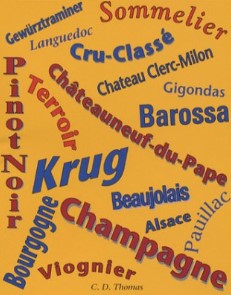
Wine Pronunciation Guide

Photo credit: abebooks.com

If you have ever found yourself gazing at a restaurant wine list unsure of how to properly pronounce the wine you want to select, rather than attempting to pronounce the name and facing the potential embarrassment of saying it wrong, many often point to the selection with an apologetic grin.

Since wines originate from all over the world, pronouncing many wines can be rather tricky. It may be helpful to think back to high school French, Italian, German or Spanish lessons. For those of us whose memory of those language lessons has faded or who didn’t take language courses, here is a pronunciation guide for many common wines and wine terms.  After all, you should never have to feel stressed or discouraged when you want to enjoy some wine.

The words appearing in italics are wine terms or descriptors.

Wine / TermPronunciation
Albariñoahl-bah-REE-nyo
Aligotéah-lee-go-TAY
Amaroneahm-mah-RO-nay
ArmagnacAHR-muh-nyak
Asti SpumanteAH-stee spoo-MAHN-tay
AusleseOWS-lay-zuh
Beaujolaisbo-zho-LAY
BeerenausleseBEH-ruhn-OWS-lay-zuh
Cabernet Francka-ber-NAY frahn
Cabernet Sauvignonka-ber-NAY so-vee-NYON
Carménèrekar-may-NAIR
Chablissha-BLEE
Chardonnayshar-dn-AY
Chemin BlancSHEN-in BLAHN
Châteauneuf-du-Papeshah-toh-NŒF-dy-pap
Chiantikee-AHN-tee
ChinonSHEE-nohn
Condrieucohn-DREE-uh
Crljenak Kaštelanskisuhrl-YEH-nak ka-STUH-lan-skee
EisweinICE-vine
Enologyee-NAW-luh-gee
Fumé BlancFYU-may BLAHN
Gewürztraminerguh-VURTS-tra-mee-ner
Grenachegruh-NAHSH
Grüner VeltlinerGROO-ner VE|LT-lee-ner
Kabinettka-bih-NET
Kirkeer
LiebfraumilchLEEB-frow-milk
Loirelwahr
Madeiramuh-DEER-uh
Merlotmehr-LO
Montepulcianomawn-tee-pool-CHYA-noh
MuscadetMYU-ska-day
MuskatMUH-skat
Nebbioloneh-BYO-lo
Nouveaunoo-VO
Petit Verdotpuh-TEET vair-DO
Petite Sirahpuh-TEET sih-RAH
Piemontepyay-MAWN-tay
Pinot GrigioPEE-no GREE-gee-o
Pinot GrisPEE-no GREE
Pinot MeunierPEE-no muh-NYAY
Pinot NoirPEE-no NWAHR
Pouilly-FuisséPOO-yee fwee-SAY
Pouilly-FuméPOO-yee fyu-MAY
PrädikatPRAY-dih-cot
RheingauRINE-gow
RieslingREES-ling
Riojaree-O-ha
Sangiovesesan-jo-VAY-zay
Sauternesso-TEHRN
Sauvignon BlancSO-vee-nyon-BLAHN
SémillonSAY-mee-yawn
Shirazsh-RAHZ
Sommeliersuh-muh-LYAY
SpätleseSHPAYT-lay-zuh
Syrahsih-RAH
Tempranillotem-pra-NEE-yo
Tokajitoke-EYE
Trebbianotreh-BYAH-no
Vinho VerdeVEE-nyo VEHR-day
Viogniervyo-NYAY
Vitis ViniferaVIH-tiss vin-IF-uh-rah
Vouvrayvoo-VRAY
ZinfandelZIN-fan-dell

It may be helpful to know that terms having a French origin do not vocalize the last letter.

Sláinte mhaith
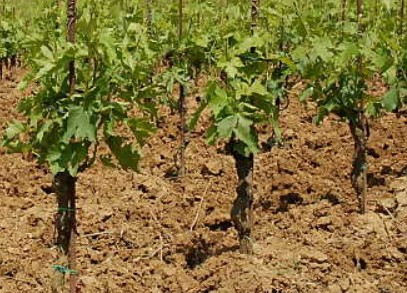
Minerality in Wine

What does “minerality” in wine mean?  While ‘minerality’ is a useful term, there is no definite view on what it actually means.  Many wine labels provide no information about how the soil might affect the wine. Others specify in vague terms about how the soil contributes certain aromas or contains concentrated minerals.

Photo credit: diwinetaste.com

There is often an assumption that a small amount of material from the soil is drawn up through a grapevine’s roots and deposited in the fruit where it remains until the grape juice is fermented into wine. The popular notion is that the minerals can be tasted when we drink the wine.  However, scientific research has established that this is not the case.  It is not possible for us to taste minerals from the soil when we drink wine.

If this is true then why are people tasting minerality in wine?  In essence, the word mineral refers to three things.  The first is geologic minerals that make up the rocks in the ground.  Minerality can also refer to nutrient minerals like potassium, that vines absorb through their roots and use in vital processes. Finally, minerality can be a flavour descriptor where people think of the minerality in a physical sense rather than metaphorically as you would when describing a wine as having hints of lemon or fresh berries.

So, if minerality is not actually real is it still a useful concept?  The simple answer is yes.  Being able to associate imagery of things such as slate, gunflint, chalk or iodine helps us to associate and recognize flavour impressions even though we know we are not tasting the actual minerals.

Wines that are described as mineral are also generally described as ‘lean’, ‘pure’ and ‘acid’. They have a taste of licking wet stones and often a chalky texture. Some argue that it only applies to white wines, but it also occurs in reds.

There is an assumption that mineral wines are superior to mass produced New World fruity wines. They have a romantic image, one that implies they are handmade by artisans and express the mystery of the soil. Typical examples are found in the Old World such as Chablis and Sauvignon Blancs in France, Rieslings from the Mosel and Rheingau in Germany and Wachau and Kremstal in Austria.  This is not just a European characteristic but it does seem more prominent in places where the wines show less fruit and more acidity.

Many producers see it as an expression of the terroir, while some oenology experts (those who study wines) put it down to compounds produced in winemaking. Whatever the origin, there is no agreed definition of minerality, but for many it’s a very useful word.

Sláinte mhaith

The Effects of Climate Change in Bordeaux

Rising summer temperatures are impacting grape growers around the world, however today I will focus on France’s Bordeaux region.  Temperatures are expected to rise between 0.3°C and 1.7°C over the next 20 years. At this point global warming has benefited Bordeaux but that is about to change, especially if the grape crop is not somewhat modified. 

Photo credit: foodandwine.com

Growers are going to need to reconsider their mix of grapes as temperatures continue to rise.  The future of white varietals from the region may become non-existent while the existing proportion of reds, where 60% to 70% is currently Merlot, is already too great an amount.  Merlot is ideal in cooler regions where there is a shorter growing season. However, with temperatures increasing and the growing season getting longer, Merlot now ripens too quickly.  Many of these vines will need to be replaced with varietals such as Cabernet Sauvignon, which perform better in hotter climates with a longer growing season.

At least until now the increase in temperature and the resulting riper fruit have not had a detrimental effect on the quality of the wine. Instead, higher temperatures have made wine quality more consistently better. However, if warming continues the quality of the wine will begin to deteriorate.

It is well known that high temperatures can have harmful effects on grape composition, such as a decrease in anthocyanins (the pigmented molecules that give red wine its colour), as well as other molecules, that could cause unpredictable aromas.  The grape skins are also negatively impacted by higher temperatures.

Growers, scientists, and wine professionals all speculate that continued increases in temperature will negatively impact fruit and wine quality in the future. However, to date Bordeaux has successfully adapted to the quickly changing climate, but experts fear that the danger point is swiftly approaching.

Sláinte mhaith

Whisky Tasting

Whisky can be enjoyed in many ways, whether it be on the rocks, with a splash of water, soda water, a mixer or in a cocktail. However, there are those of us who, on occasion, feel it’s important to appreciate the spirit in its simplest state. This is particularly true when trying a whisky you have not had before. Here is a simple guide for conducting a whisky tasting.

Photo credit: http://www.lcbo.com

The process is very similar to the way a wine tasting is conducted.  After all, they are both a savoured, complex drink.  As with a wine tasting, it is fun and beneficial to do this with company.  It is both entertaining and educational to see how your interpretations compare to those of your friends.  The beauty lies in the senses of the beholder and there are no right or wrong interpretations.

There is a set of simple steps to follow that will help ensure you have the best possible whisky tasting experience.  It is recommended to use tasting glassware such as tulip-shaped International Standards Organization (ISO) vessels or Glencairn footed glasses.  Pour half an ounce or less into each glass, just enough for a few sips.

The first step is to examine the whisky in your glass. The colour can indicate what kind of cask the whisky was matured in and how long it aged. The older the whisky, the darker the colour. Also, the newer the cask, the darker the colour.  The more a cask has been used, the lighter the colour of the whisky. However, in many places including Canada and Scotland, it’s legal and common to add artificial colouring. Most whiskies are in a range of gold to amber.

Avoid swirling whisky as you might wine; the higher alcohol content in spirits can prickle your senses, burning your nose and palate.  Bring your nose to the glass slowly.  Many whiskies can be over 50% alcohol by volume (ABV) and thus too intense if your nose isn’t accustomed. Get in close to the glass, take your time, and start sniffing. Some experts recommend frequent, small sniffs, while others say long, soft sniffs are better. People often recognize one or more of floral, fruity, spicy, toasty, nutty, caramel, toffee, butterscotch or vanilla aromas.

Take a small sip and then another. As with the aromas, focus on flavours that immediately pop into your head. Spend a few minutes sipping slowly, moving the whisky around your mouth and identifying the flavours.  Then add a few drops of water to the whisky; this will lower the alcohol percentage, allowing more aromas and flavours to be identified.   Consider how long they linger on the finish.

Also consider the whisky’s texture; whether it is rough and hot, oily and silky or intense and sharp. Note the flavours you taste, and how long they linger on the finish.

All that is left now is to gather a couple of fellow whisky enthusiasts together, along with a favourite bottle, and let the exploration begin.

Sláinte mhaith

Challenges for France’s Bordeaux Region

This summer has proven to be especially bad for the grape harvest in France’s Bordeaux region.  The perfect combination of meteorological conditions has led to an alarming spread of mildew throughout the region. The combination of warm weather and rain has resulted in new plant growth being left unprotected as the wet weather has hindered the application of herbicides.

Photo credit: vivino.com

The mildew has been having the greatest impact on the red grape varietals, most notably Merlot.  So far this year the region has been impacted by two separate waves of mildew.   It remains to be seen whether the disease will progress onto the stalks of bunches and if it can be ultimately contained.

Some growers have lost their entire harvest.  As a result, a helpline has been established to help growers cope with the devastation.  Some grape growers are even considering their careers because of the mildew.  It has been quite traumatic for those trying to control it.

This is the second consecutive year where Bordeaux growers have been impacted by the weather.  The 2022 harvest was about 11% less than the ten-year average.

Grape growers are hoping that the region will soon see a return to more uninterruptedly dry, hot weather.  If the dry heat returns, Bordeaux may see the 2023 harvest being within the top three earliest harvests in the past decade.  However, given the devastation caused by the mildew, the harvest yield will be much lower than in previous years.  This will no doubt impact the price when the 2023 vintage of Bordeaux reaches store shelves in a few years’ time.

Sláinte mhaith