What does “minerality” in wine mean? While ‘minerality’ is a useful term, there is no definite view on what it actually means. Many wine labels provide no information about how the soil might affect the wine. Others specify in vague terms about how the soil contributes certain aromas or contains concentrated minerals.
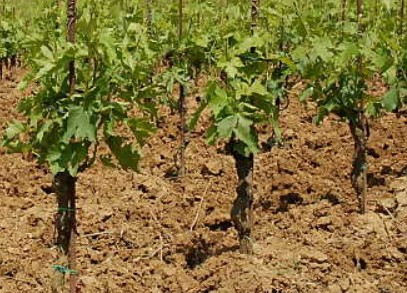
There is often an assumption that a small amount of material from the soil is drawn up through a grapevine’s roots and deposited in the fruit where it remains until the grape juice is fermented into wine. The popular notion is that the minerals can be tasted when we drink the wine. However, scientific research has established that this is not the case. It is not possible for us to taste minerals from the soil when we drink wine.
If this is true then why are people tasting minerality in wine? In essence, the word mineral refers to three things. The first is geologic minerals that make up the rocks in the ground. Minerality can also refer to nutrient minerals like potassium, that vines absorb through their roots and use in vital processes. Finally, minerality can be a flavour descriptor where people think of the minerality in a physical sense rather than metaphorically as you would when describing a wine as having hints of lemon or fresh berries.
So, if minerality is not actually real is it still a useful concept? The simple answer is yes. Being able to associate imagery of things such as slate, gunflint, chalk or iodine helps us to associate and recognize flavour impressions even though we know we are not tasting the actual minerals.
Wines that are described as mineral are also generally described as ‘lean’, ‘pure’ and ‘acid’. They have a taste of licking wet stones and often a chalky texture. Some argue that it only applies to white wines, but it also occurs in reds.
There is an assumption that mineral wines are superior to mass produced New World fruity wines. They have a romantic image, one that implies they are handmade by artisans and express the mystery of the soil. Typical examples are found in the Old World such as Chablis and Sauvignon Blancs in France, Rieslings from the Mosel and Rheingau in Germany and Wachau and Kremstal in Austria. This is not just a European characteristic but it does seem more prominent in places where the wines show less fruit and more acidity.
Many producers see it as an expression of the terroir, while some oenology experts (those who study wines) put it down to compounds produced in winemaking. Whatever the origin, there is no agreed definition of minerality, but for many it’s a very useful word.
Sláinte mhaith
 A Layman's Wine Musings