Regenerative Agriculture

Regenerative agriculture is not just a trendy environmental buzzword intended to tug on your emotional “save the planet” heartstrings; it is an ancient form of agriculture that is making its way back into mainstream farming.  It’s successful, not only in producing and sustaining quality wine grapes, but it’s also successful in combating climate change, the effects of drought and creating a healthy environment.
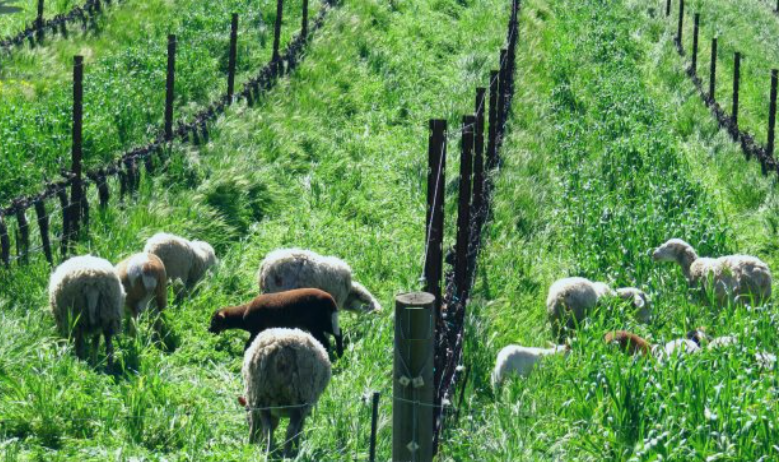
Photo credit: daily.sevenfifty.com

Regenerative wine farming means farming grapes in a way that regenerates soil health. It is a set of organic, ecologically driven farming practices that improve the ecosystem by working in harmony with nature. Farming this way increases biodiversity, restores soil and plant microbiome and eliminates the need to introduce toxic pesticides, herbicides and genetically modified organisms (GMOs) into the soil, waters and grapevines.

Equally important are the broader environmental benefits. Regenerative agriculture has the potential to help reverse climate change by capturing carbon in the soil and removing it from the atmosphere.

Decades of extractive farming methods have taken their toll on the land. While sustainability efforts aim to maintain living systems to prevent further degradation, regenerative viticulture will revitalise the terroir, the wines and our bodies. By prioritizing soil health and biodiversity, regenerative viticulture holds the potential to transform the industry and bring it into alignment with a more complete and sustainable vision for the future.

With the focus on living soil, regenerative viticulture builds more robust ecosystems that are less susceptible to climate change and biodiversity loss. Adopting management practices for living soil can increase soil organic matter and reduce carbon from the air, a crucial component of the United Nations Climate Change Conference’s plan to reduce global carbon emissions.

Regenerative viticulture also promotes water percolation and retention and it also better ensures water supply for communities. The overall goal is to guarantee food security, nutrition and community health and well-being, making it a vital component of a sustainable future.

Regenerative farming practices foster a robust ecosystem for the grape vines to prosper naturally, in turn producing fruit that is truly expressive of its surroundings, and wines with enhanced minerality and other nuances that come from healthy, site-specific soil without chemical manipulation. The taste of the wines is distinctly delicious with terroir-driven flavours.

There are a number of components to regenerative viticulture.  The first is to plant a variety of cover crops. In traditional agriculture the soil is tilled. This allows for the most economical farming, but it is not good for the soil as it destroys the soil’s natural structure and causes soil erosion, water runoff and poor water infiltration. By introducing a variety of cover crops to the vineyard, bees and other pollinators will have a welcoming habitat. These plants will smother out undesirable weeds and increase water retention in the soil while reducing erosion and reducing the need for pesticides. Cover crops will improve the level of soil nutrients and provide the biodiversity essential for a healthy ecosystem.

The introduction of sheep, chickens, geese and ducks to roam the vineyards will reduce pests and weeds, as well as provide nutrient-rich manure to the soil. This results in improved soil health and further eliminates the need for pesticides.

Viticulture is at a critical juncture. Through its commitment to ecosystem services and human health, viticulture is embracing a systemic approach to support farmers in delivering regenerative agriculture. However, in order to maximize its potential, there must be a paradigm shift that will contribute to solving the biodiversity and climate crises.

Sláinte mhaith

World’s Oldest Scotch Distillery

The Glenturret is Scotland’s oldest working distillery, being officially established in 1763. The distillery is located in The Hosh, Crieff, Perthshire. This Highland distillery is one of the smallest in Scotland.

Photo credit: theglenturret.com

Over the decades Glenturret has been visited by writers and poets (including Robert Burns), Prime Ministers and Princes, including the present Duke and Duchess of Cambridge. The Glenturret brings together the hard-won wisdom of generations of distillers.

In 2019, the French-based crystal house, Lalique, purchased a controlling interest in The Glenturret. Since then Lalique has taken a lead in the product design.

In February 2022, Glenturret became the world’s first Michelin Star whisky distillery. That same year it also announced the release of its oldest single malt to date; a 50-year-old expression packaged in a specially designed Lalique crystal decanter. Only 150 bottles of the sherry cask-matured whisky were available for sale at a price of £40,000 each.

The restaurant was launched in 2021 with the support of their French owners and crystal house, Lalique. Their Executive Sommelier provides an extensive international wine list to complement the restaurant’s menus, comprising over 400 bins. The Glenturret staff are passionate about taste and flavour profiles of both their whiskies and in their food.

Lalique’s portfolio also includes two Michelin-starred restaurants, Villa René Lalique in Alsace, and Château Lafaurie-Peyraguey, in the region of Bordeaux.

Glenturret produces a series of both peated and unpeated whiskies. Unfortunately, none of which are available through the LCBO. However, there are a couple of Canadian websites where a limited variety of Glenturret products may be obtained.

Sláinte mhaith

Countries with The Worst Wine Trade Deficits

According to the most recent statistics, the following countries have the highest negative net exports for wine. Net exports are defined as the value of a country’s total exports minus the value of its total imports. Thus, the statistics below present the deficit between the value of each country’s wine import purchases and its wine exports (in U.S. dollars).

Photo credit: bkwine.com
  1. United States: -$6.2 billion
  2. United Kingdom: -$4.4 billion
  3. Canada: -$2.2 billion
  4. Japan: -$1.9 billion
  5. Germany: -$1.8 billion
  6. China: -$1.4 billion
  7. Switzerland: -$1.2 billion
  8. Netherlands: -$1 billion
  9. Russia: -$882.3 million
  10. Sweden: -$793.9 million
  11. Belgium: -$750.2 million
  12. Hong Kong: -$727.8 million
  13. South Korea: -$581.1 million
  14. Denmark: -$580.1 million
  15. Norway: -$499.4 million

The combined North American deficit of $8.4 billion in international wine trade has a strong demand for both Old World and New World brands. In turn, this negative cashflow highlights North America’s strong competitive disadvantage for wine sales but also indicates opportunities for other wine-supplying countries to contribute toward satisfying North America’s consumer thirst and wide-ranging tastes for different types of wines.

Sláinte mhaith

Wine Exporting Companies

Based on the most recent statistics among continents, European countries sold the highest dollar value of wine exported with shipments worth $30.3 billion U.S. or 76.2% of the world’s total wine exports. Oceania’s international wine sales were led by Australia and New Zealand and came in at 7.4%. Latin America, excluding Mexico but including the Caribbean was at 7%. North America exporters provided 3.9% of worldwide wine exports, while Asia shipped 3.7% and African suppliers provided 1.9% of wine sales.

Below are the world’s largest wine conglomerates. Shown within parentheses is the country where the company is headquartered. These names may not be familiar to you but most of their wine brands will be.

  • Accolade Wines (Australia)
  • Casella Wines (Australia)
  • Concha y Toro (Chile)
  • Constellation Brands (United States)
  • E. & J. Gallo (United States)
  • Pernod Ricard Winemakers (France)
  • The Wine Group (United States)
  • Treasury Wine Estates (Australia)
  • Trinchero Family Estates (United States)

The following list identifies some of the world’s most popular wine brands. You will find most, if not all of these brands in your local wine store. Each brand is owned by the wine-producing conglomerate shown in parentheses.

  • Barefoot (E & J Gallo Winery, United States)
  • Gallo (E & J Gallo Winery, United States)
  • Concha y Toro (Concha y Toro, Chile)
  • Robert Mondavi (Constellation Brands, United States)
  • Sutter Home (Trinchero Family Estates, United States)
  • Yellow Tail (Casella Wines, Australia)
  • Hardy’s (Accolade Wines, Australia)
  • Lindeman’s (Treasury Wine Estates, Australia)
  • Beringer (Treasury Wine Estates, United States)
  • Jacob’s Creek (Pernod Ricard Winemakers, France)

Does this mean that these are the best wines in the world? No. It only signifies that they produce the highest volumes of wine. Big doesn’t make it better, especially in the case of wine. Small production estate wineries generally produce a better, more consistent product at a similar price point.

Sláinte mhaith