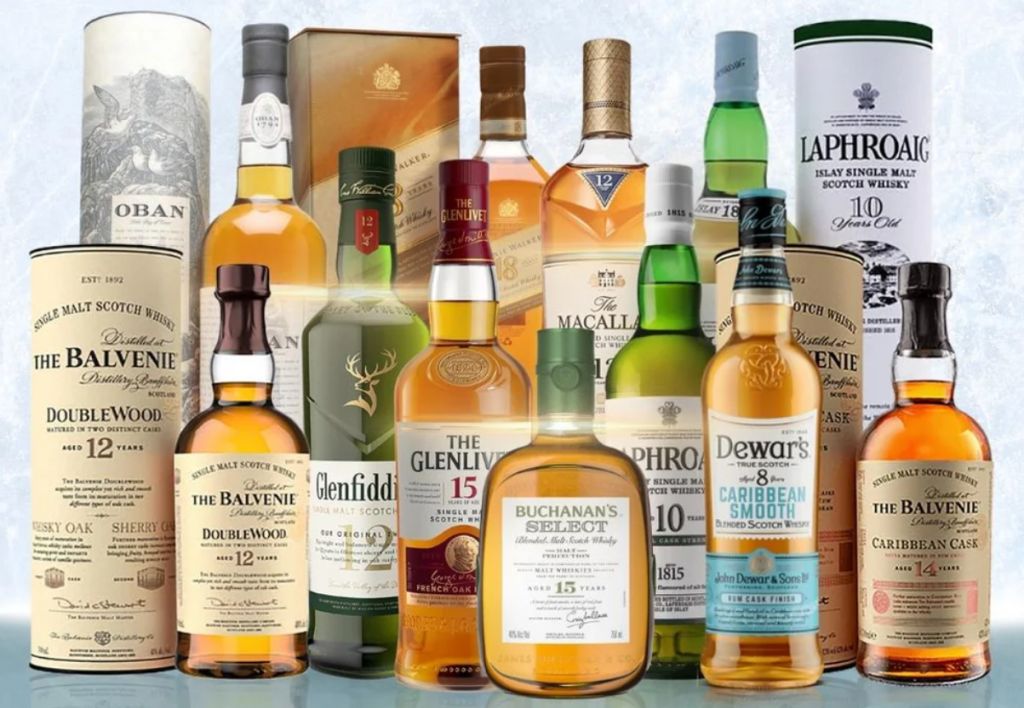
Whisky has evolved from simply being a drink on its own to being part of an overall holistic lifestyle. Today people who appreciate fine single-malt scotch whisky are also thought to have an appreciation for fashion, travel, watches, cars and luxury pursuits. All of these things can go together hand in hand.
Photo credit: nestorliquor.com
There was a period during the 1980s when there was an excess of Scotch Whisky production that was the result of erroneous market assumptions. This resulted in a ‘lake’ of unsellable whisky because of the miscalculation in demand. This became known as the ‘Whisky Loch’. During this period twenty distilleries closed, production slowed by 35% and 20 years later there was still a large quantity of undesired 3 year old whisky.
New markets opening due to the ever-growing middle class in India, China and South America point towards a promising future for Scotch Whisky and single malts in particular; there is currently no fear of another Whisky Loch occurring anytime soon.
A combination of non-aged whiskies are often being used to appeal to new and younger audiences. Refined approaches to marketing and branding are being explored. Also, with the resurgence in the demand for Scotch Whisky, the supply of aged single malts has been somewhat depleted resulting in higher prices for these whiskies. The new blends, on the other hand, have a more favourable price point. These new blended whiskies can also become the base for a variety of nice whisky cocktails.
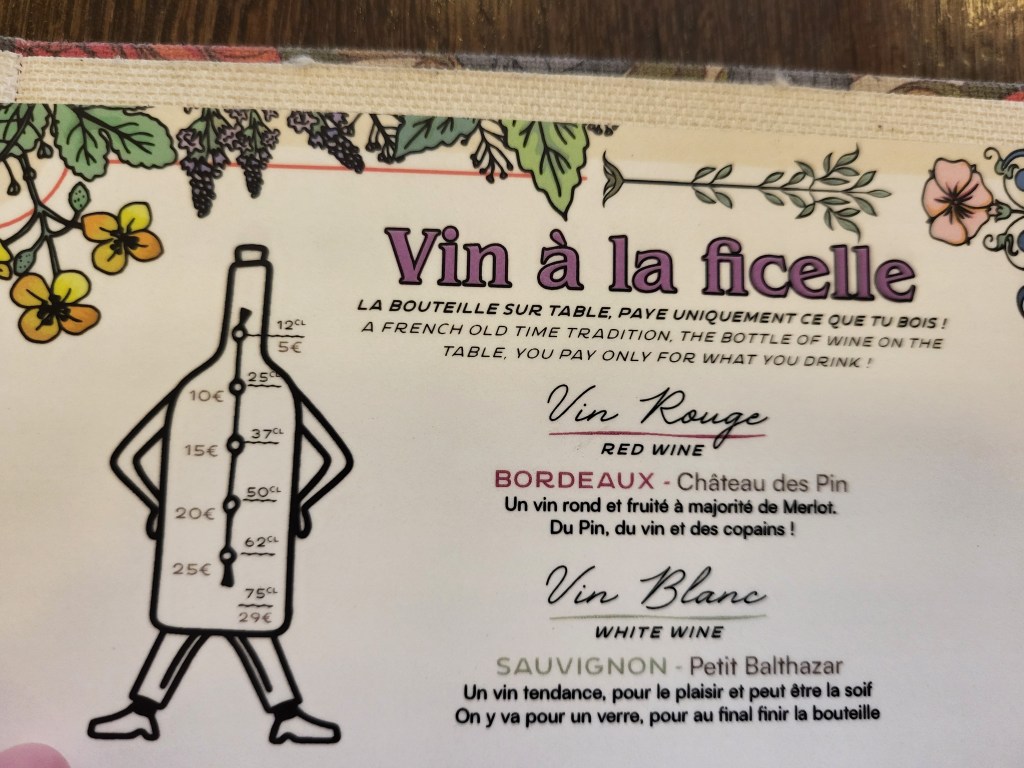
While dining in a restaurant in Paris earlier this year I came across something that I had never seen before – being able to purchase wine by the portion of the bottle that you consume. The server provides you with your choice of a bottle of French red or white. The bottle comes with a string tied around the neck that then drapes down the length of the bottle. There are knots in the string to indicate 12, 25, 37, 50, 62 and 75 centilitres of wine.
This is referred to as, “à la ficelle”. It is a very practical approach to purchasing wine when you don’t want to consume a whole bottle but desire more than a single glass.
Although the concept of ficelle wine has only started to become popular in restaurants in recent years, the concept dates all the way back to the 15th century. According to legend, it was an Auvergne innkeeper by the name of Gaultier who, in the 1400s, used a piece of string to determine how much wine his customers drank.
During that time wine was served in earthenware or pewter pitchers. The innkeeper used an evenly spaced knotted rope to determine the quantity of wine his patrons had consumed. The distance between each knot represented 25 centilitres of wine.
With the current trend where people are reducing their wine consumption, the concept of string wine is becoming more popular. Less restaurant patrons are purchasing wine by the bottle and instead 20% now favour wine by the glass while 12% now prefer the wine by string concept.
Many of the world’s wine regions are facing problems resulting from an oversupply of grapes. For example, last year the French government spent 200 million euros to dispose of surplus wine. In addition to that, Bordeaux region vintners received 57 million euros to destroy 9,500 hectares of grape vines.
Photo credit: vancouversun.com
In Australia, millions of vines are being destroyed and tens of millions more must be removed to control overproduction. Drastically reduced grape prices are threatening the incomes of growers and wine makers.
Falling consumption of wine worldwide has hit Australia particularly hard as demand shrinks fastest for the cheaper reds that are its biggest product. It had relied on the Chinese market for growth until recent years. Last year there was more than two billion litres of surplus wine in Australia.
Oversupply is not a new phenomenon. In the past the industry has always been able to readjust but going forward it may not be as easy. Past declines were triggered by economic factors such as market crashes, the tech boom, new tax laws and other more specific events that impacted the amount of money people spent and how they prioritized their consumption of wine.
Today the reduction in wine consumption is the result of a change in attitude and lifestyle resulting in people consuming less wine. Campaigns such a “Dry January” and “Sober October” are becoming more and more popular, leading to less wine consumption in the other ten months of the year. As a result, wine drinking has been declining year over year since 2017.
In France, wine consumption has declined significantly, from 150 litres per person per year in 1950, to 40 litres per person in 2022. The French people are no longer insular with just their own culture. Instead, they have adopted influences from other parts of the world and as a result, have substituted some of their wine consumption with other beverage options, such as beer, whiskey and cocktails.
Cuisine is changing as well, which has altered drinking habits. Lighter food choices and finger foods are often replacing traditional multi-course meals. Also, people have been reducing the amount of red meat in their diet. This has resulted in consumers wanting lighter, lower-alcohol wines. The Bordeaux region in particular has been greatly impacted by this, having reduced demand for their full-bodied red wines.
The U.S. market is being impacted as well due to a focus on wellness and a change in lifestyle. Non-alcoholic beverages sales there have increased 20.6 percent from 2021 to 2022.
People are drinking less wine but better wine. Over the past seven years, the U.S. wine industry is seeing growth rates sag in the under $12 category but wines in higher-priced tiers continue to see growth.
This change has also impacted wine sales in Australia where for the first time since the mid-1990s there is an oversupply based on a lack of consumer demand. A main driver of the decline is due to the lack of demand for Australin wine in the U.S.
There are other factors as well affecting Australian wine sales. In March 2021, China imposed a 218 percent tariff on Australian wine in response to Australia requesting an independent investigation as to the origins of COVID-19. China’s decision wreaked havoc on Australia’s wine industry.
The world is also still feeling the effects of the pandemic. From supply chain issues to how people purchase and consume wine was severely impacted. The good news is that there are indications that the wine industry is heading toward a return to normalcy, at least in this regard. Wine consumption remains lower than in 2015 but above what it was in 2021. This is largely due to the reopening of bars and restaurants. The long-term effects remain to be seen.
Depending on soil conditions, some French vintners are now investigating switching to other crops such as corn or wheat. Others are changing vineyards into livestock pastures. Australia is focusing on market expansion and providing wineries with market data so they can determine their best course of action. Not waiting for new markets to open, some growers are turning to citrus and nut trees instead.
One thing for certain is there is currently much uncertainty in the wine industry.
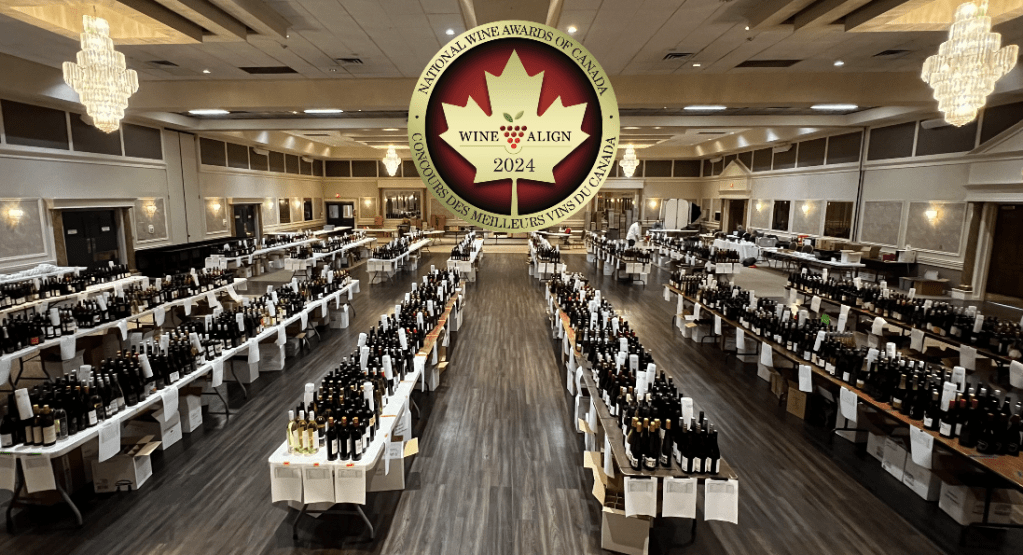
Here is what the organizers and judges were seeing, hearing and thinking at this year’s WineAlign National Wine Awards of Canada (NWAC). Their narrative has been separated by each judging category and presented below.
Photo credit: winealign.com
Sparkling Wine
While global wine consumption has decreased over the past two years. Sparkling wine, except for costly Champagne, has progressed upwards. In Canada, the Sparkling category burst during the pandemic, especially with accessible and affordable selections. The quality of Canadian sparkling wine continues to improve.
Red Blends
Red blends are abundant in both British Columbia and Ontario, making it the second largest category at the National Wine Awards. There is a variety of styles and grape varieties.
Bordeaux blends and Rhone blends continue to be important, but winemakers are increasingly evolving beyond the traditional French classic style. The next frontier is beginning to appear where blends consisting of Malbec, Carménère and Syrah are part of a new wave of Okanagan red blends.
White Blends
Winemakers continually mix and match with several varietal combinations. There are many permutations made with traditional varietals, as well as hybrid grapes.
There are no firm rules other than those set out by VQA which says that all the grapes in a labeled bottle must come from the province, an appellation and sub-appellation. Beyond this, the choices are endless, allowing white blends to vary from the traditional to the eclectic. Concepts include the Bordeaux combination of Sauvignon Blanc and Sémillon, Rhône blends that may include Marsanne, Roussanne and Viognier, but also Grenache Blanc, Clairette Blanche, Bourboulenc, Picpoul and Ugni Blanc. This year, British Columbia has continued to set the trends for blending and styles.
Rosé
There is a great deal of flexibility with respect to producing Rosé wine. Extraction levels and pigmentation can vary, many red or combination of red and white grape varietals can be used and there are no rules overseeing sweetness levels or oak aging.
Most Rosés are not meant for extended aging and are often best consumed in the year in which they are made. In Canada, most Rosés are bottled from March to June and make it to the stores between April and July.
Pinot Gris/Grigio
This white wine grape is a mutation clone of the black Pinot Noir grape. The skin colour varies greatly, and the wines produced from Pinot Gris also vary in hue from palest yellow to deep golden to blushing salmon. Pinot Gris also goes by its Italian name, Pinot Grigio. Wines made in the fresh, crisp and unoaked style of Italy’s Veneto region are called Grigio, while those in a richer, riper version go by Gris.
Orange
Orange wines are skiin contact white wines. There is no rule as to the length of the contact period or the grape varietals used. These wines range widely in colour and style.
Niagara’s popular Vidal grape responded well to skin contact, bringing texture and complexity to its tropical fruit profile. However, aromatic Gewürztraminer, with its subtly oily mouthfeel and subtle tannic framework, also showed well.
Gamay
Things change each year as there are new entries from newer wineries making Gamay. Some things also remain the same as many long-time advocates and committed Gamay producers continue to make excellent wines.
Pinot Noir
No other grape causes more of a stir. For many, there is no other grape variety. Pinot Noir has found enormous global success and Canadian soils are largely responsible for that. From agile, transparent, high-toned, red berry charmers to darker, seriously ripe and often tannic iterations, Pinot Noir succeeds with harmony and balance.
Chardonnay
This is always one of the largest categories in the competition. Chardonnay always leads or equals the greatest number of medals from platinum to bronze. Prices ranged from $87 for the most expensive medal winner to $11.95 for the least costly.
While the most expensive wine was not a platinum winner, there is a correlation between price and medal earned, establishing that top quality wine sells for more money. The average price for the platinum winners came in at just over $45, $40 for gold, $39 for silver and $33 for Bronze.
Malbec and other Red Single Varieties
Malbec represented 18 of the 41 medal winners in this category and accounted for 7 of 8 of the gold medals. It accounted for just 1.4% of entries in the competition but earned 4.1% of all gold medals.
This trend is almost entirely driven by British Columbia. There is something special about Okanagan Malbec. Much like Syrah, it does well up and down the valley.
Other White Single Varieties
Chardonnay and Riesling are often singled out as the signature grapes when it comes to top quality Canadian white wine. There are many other white varieties producing spectacular results including Grüner Veltliner wines from British Columbia.
Chenin Blanc is another consistent performer in BC and Ontario, making vibrant, fruit- forward wines.
Sleek, elegant Sémillon wines are also cropping up with increased frequency from coast to coast, as single variety wines and in classic Sauvignon blends.
Pinot Blanc proved its merit for good value, easy drinking white wine.
Gewürztraminer and Viognier
Viognier and Gewürztraminer remain minor varieties on the Canadian wine scene. Both grapes are particularly unreliable in Ontario, where Gewürztraminer accounted for just 2% of total production in 2023. Viognier is so rare that it is in the “other” category in the VQA’s annual report. In B.C. Gewürztraminer places a respectable 4th among white varieties in 2023, behind Pinot Gris, Chardonnay and Riesling. Viognier sits in ninth position alongside other Rhône varieties suitable to the West Coast’s unique conditions.
Sauvignon Blanc
At this year’s competition, Sauvignon Blanc took great strides and gained increased favour from judges and wine lovers. There were 32 medals awarded, with 20 going to Ontario and 12 to British Columbia. Of impressive interest is the average price of the 16 Silver Medal winners. These are wines that scored 90 points with an average cost of $23.40.
Syrah
“Syrah” above “Shiraz” is the key style in Canada. Reflective of a French Rhône style “Syrah”, as opposed to “Shiraz”, wines labelled as such tend to be distinctively peppery, with more sharp tannins, lower alcohol and exhibit more freshness than “Shiraz”. Yet in Canada, there is no enforcement over the use of these terms. Vintage variation and place do play a deterministic role, but the style of Syrah in Canada is heavily influenced by winegrowing and winemaking decisions that vary from producer to producer.
Ontario can produce excellent Syrah, but the category has forever been dominated by British Columbia.
Riesling
Canada has many great and quality examples of Riesling. It is a variety that truly expresses the place where it is grown. Riesling also counts among some of Canada’s oldest planted vinifera varieties, with plantings dating back to the mid 1970’s and early 1980’s in both Niagara and the Okanagan Valley.
Icewine & Late Harvest
Icewine, is the most important wine export. Now more than ever, due to erratic weather patterns, production is being threatened. Since the start of Icewine production in the 1970’s, a harvest has never been missed despite coming close a few times because of a mild winter in Ontario.
VQA regulations require the grapes to be naturally frozen on the vine, harvested, and pressed while the air temperature remains at or below -8 degrees Celsius. Recurrent periods of freezing and thawing can cause grapes to split, increasing unpredictable acidity in the wine. Production is a physically demanding task for both for the vines, that must bear their fruit into the cold of winter, as well as for the winemaker, who often harvests on the coldest of winter nights.
Cabernet Sauvignon
The number of gold medals has dropped from 13 in 2022 to 10 in 2023 to 7 this year. Despite the results, it is the category that has the most potential.
Cabernet Sauvignon is the most widely planted grape in the world, but such is not the case in Canada. It is the third most planted red variety in British Columbia, with 7.7% of total grapes grown. In Ontario, Cabernet Sauvignon represents only 5.9% of the grape harvest. There’s been a consistent downward trend, as a percentage of tonnage, over the last five years.
Cabernet Franc
Ontario has historically had a slight edge over the Okanagan Valley, given Ontario’s generally cooler and wetter climate, which suits the lighter, aromatic style that the judges tend to favour. However, the margin of difference has always been slim.
This year Ontario captured 38 out of 53 medals in total. However, British Columbia’s representation was impacted by the wildfires that severely impacted the Okanagan Valley in 2021, which resulted in smoke-tainted wines from some parts of the valley. Since these wineries did not submit any smoke-tainted wines, the number of submissions from B.C. was reduced significantly.
Merlot
Merlot remains the number one red planted grape in British Columbia.
There you have it; and that’s a wrap on the 2024 National Wine Awards.
The WineAlign National Wine Awards of Canada (NWAC) is the country’s largest competition, involving only 100 percent Canadian-grown and produced wines. The judging involves a select group of Canadian wine writers, educators, sommeliers and two international judges who spend a week assessing some 2000 wines and ciders. This year’s competition took place near Niagara Falls, Ontario.
Double Honour
The Winery of the Year and Small Winery of the Year is Kelowna British Columbia’s SpearHead Winery. In addition to the twin honours this year, they also had unprecedented success in an individual category (Pinot Noir), winning a total of seven medals for their Pinots, including three platinum, one gold, three silvers and a bronze. In total they earned a total of twelve medals.
Top 10 Wineries
Six of the top ten wineries this year are from British Columbia, with the remaining four from Ontario. The top ten are:
SpearHead Winery, British Columbia
Meyer Family Vineyards, British Columbia
Henry of Pelham, Ontario
Black Hills Estate Winery, British Columbia
Thirty Bench Wine Makers, Ontario
Quails’ Gate Estate Winery, British Columbia
Nostalgia Wines, British Columbia
Peller Estates Niagara-on-the Lake, Ontario
Lake Breeze Vineyards, British Columbia
Vieni Estates, Ontario
The Top 10 Small Wineries
Seven of the top ten small wineries are from British Columbia, with the remainder from Ontario. The top ten are:
SpearHead Winery, British Columbia
Meyer Family Vineyards, British Columbia
Nostalgia Wines, British Columbia
Lake Breeze Vineyards, British Columbia
The Organized Crime Winery, Ontario
Corcelettes Estate Winery, British Columbia
Black Bank Hill, Ontario
Kismet Estate Winery, British Columbia
Fort Berens Estate Winery, British Columbia
Lailey Winery, Ontario
Regional Top 10 Winners
British Columbia
SpearHead Winery
Meyer Family Vineyards
Black Hills Estate Winery
Quails’ Gate Estate Winery
Nostalgia Wines
Lake Breeze Vineyards
Corcelettes Estate Winery
Nk’Mip Cellars
Burrowing Owl Estate Winery
Kismet Estate Winery
Ontario
Henry of Pelham
Thirty Bench Wine Makers
Peller Estates Niagara-on-the-Lake
Vieni Estates
The Organized Crime Winery
Black Bank Hill
Two Sisters Vineyards
Lailey Winery
Hidden Bench Estate Winery
Marynissen Estates
Platinum and Gold Medal Winners
Only 1% of the wines entered earn a Platinum Medal. This year, 18 out of 1,800 wines received this recognition. Every Platinum winner has passed through a minimum of two tastings and a review by a minimum of five judges. These wines must be put forward by at least three judges in the first round and re-considered by at least five judges in the second round.
Earning a Platinum Medal greatly increases a winery’s performance score based on the mathematical degree of difficulty in reaching Platinum. This helps to decide the Winery of the Year and the Top 25 list.
Platinum and Gold medals were awarded in the following categories, presented alphabetically below:
Cabernet Franc
Platinum Medal
Black Bank Hill 2020 Cabernet Franc, Lincoln Lakeshore, Niagara Peninsula, Ontario
Vieni Estates 2022 Cabernet Franc, Vinemount Ridge, Niagara Peninsula, Ontario
Gold Medal
Bordertown 2020 Cabernet Franc Reserve, Okanagan Valley, British Columbia
Domaine Queylus 2022 Cabernet Franc Réserve du Domaine, Niagara Peninsula, Ontario

 A Layman's Wine Musings