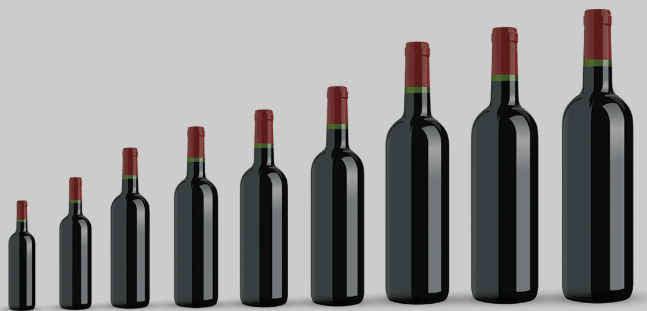
Name That Size

Photo credit: jerseymanmagazine.com

Ignoring cardboard and aluminum packaging options, did you know that there are seventeen glass bottle packaging sizes available for holding your favourite white or red wine? Now every wine is not available in every size as that would be cost prohibitive, but producers have lots of options for packaging their wine, depending on the market for packaging their wines.

The vessels from smallest to largest include:

Split or Piccolo – ¼ the size of a standard bottle or one glass. This is the size often served on trains and airplanes.

Half or Demi – ½ standard bottle or two glasses. This size bottle is also commonly served on trains and airplanes.

Half-litre or Jenni – 2/3 standard bottle or three glasses. This is a common size served in restaurants.

Standard – 1 standard 750 ml. bottle or five glasses. This is the most common size sold in wine stores.

Litre – 1 1/3 standard bottles or 7 glasses. This size is often produced in countries that use the metric system of measure. It is a size commonly sold to venues serving significant quantities of wine.

Magnum – 2 standard bottles or ten glasses. Some wines are available in this size at local wine stores.

Jeroboam or Double Magnum –4 standard bottles or twenty glasses.

Rehoboam – 6 standard bottles or thirty glasses.

Methuselah or Imperial – 8 standard bottles or forty glasses.

Salmanazar – 12 standard bottles or sixty glasses.

Balthazar – 16 standard bottles or eighty glasses.

Nebuchadnezzar – 20 standard bottles or one hundred glasses.

Melchior – 24 standard bottles or one hundred twenty glasses.

Solomon – 26 standard bottles or one hundred thirty glasses.

Sovereign – 35 standard bottles or one hundred seventy-five glasses.

Primat or Goliath – 36 standard bottles or one hundred eighty glasses.

Melchizedek or Midas – 40 standard bottles or two hundred glasses.

As you can now see, there are many sizes of bottles available for supplying your wine.

Sláinte mhaith

Whiskey: Tradition Meets Innovation

Whiskey has been and continues to be, one of the world’s most favourite spirits. It is both a symbol of tradition and an area for continued innovation. From single malts to blended varieties, whiskey’s rich history that dates back several hundred years, is accompanied by a dynamic, evolving market that attracts both connoisseurs and casual drinkers.

Photo credit: nationalgeographic.com

Whiskey’s deep-rooted craftsmanship, with its complex aging processes and diverse production methods, continues to attract consumers. Distilleries are preserving traditional techniques while embarking on new technologies that help to enhance flavour profiles.

While countries like Scotland, Ireland and North America remain as key players in the industry, whiskey’s appeal is expanding globally, with countries such as Japan and India gaining significant recognition for their increased demand and innovative whiskey production.

Globally the demand for premium and supreme whiskeys is on the rise. This shift is pushing brands to offer a variety of variably priced, exclusive, limited-edition releases to attract whiskey enthusiasts, as well as collectors. These offerings range greatly in price from a few hundred dollars to well into the four-to-five-digit range. A few rare whiskeys have sold for prices even beyond that!

During recent years, producers have been experimenting with new barrel finishes; making use of barrels that were formerly used to store other spirits, such as cognac, sherry, bourbon or brandy. Distillers have found that maturing whiskey in these types of barrels will infuse new flavour from the wood of these barrels into the whiskey. Distillers have also experimented with combining multiple flavour infusions.

The popularity of whiskey-based cocktails and the craft cocktail movement is also expanding whiskey’s appeal. The industry is now attracting younger generations and enhancing market versatility.

Whiskey continues to be a beverage of choice for those who appreciate both tradition and innovation, offering endless possibilities for consumers, whiskey enthusiasts and collectors alike.

Sláinte mhaith

Wine Barrels

Is the best wine made using French oak barrels or American oak barrels? The answer depends on who is answering. I would be amiss if I didn’t mention that there are also Hungarian oak and Romanian oak but these oaks are seldomly used in making wine.

Photo credit: bodegaspaniza.com

Oak can play a crucial role in the winemaking process. It is a long-known fact that not just any wood will do when it comes to aging wine. Oak has been the choice for centuries. Due to the natural wood compounds, aging wine in oak barrels exposes complex flavours and textures that are crucial to the overall taste and structure of a wine. There are natural wood sugars in the oak that influence the wine’s flavour. The wine’s texture can be enhanced from tannins found in the oak.

French Oak is known by winemakers for its subtlety. These trees have tighter grains that deliver lower amounts of tannin that are more readily integrated into the wine. This wood is also more aromatic, producing delicate notes of dark chocolate, roasted coffee beans, vanilla and baking spices to the wine.

American Oak presents more robust flavour profiles introducing bold vanilla notes along with coconut, sweet spices and dill. The wider grain patterns of American oak also injects more tannins into the wine.

French Oak lets wine age gracefully over time. The wine will evaporate less from barrels of French oak than American oak, thus producing a naturally slower oxidation. On the other hand, American oak will often go through a more rapid oxidation process in the barrel.

When it comes to price, American oak is less expensive to purchase. This is due to it being more readily available than French oak. However, French oak produces a more luxurious wine, making it well worth the higher price tag.

So, which wines work best with French oak versus American oak? Chardonnay flourishes when aged in French oak barrels because the French oak releases delicate vanilla undertones into the flavour of the wine.

Pinot Noir also benefits from the use of French oak. This light-bodied red grape works well with the lower tannin content inherent to French oak. It allows for slow maturation without overwhelming Pinot Noir’s naturally elegant profile.

In contrast, bold reds such as Zinfandel often get paired with American oak. The intense notes of coconut and sweet spice from the American oak can complement the robust nature of these types of wine.

Wines such as Cabernet Sauvignon, Merlot or Syrah can work well with either French or American oak, depending on the winemaker’s desires. European winemakers tend to use French oak while American winemakers and some Australian vintners may use American oak. It all comes down to the desired style of the wine.

Many winemakers use both types of barrels or blend wines aged separately. It lets them control flavour profiles more precisely. The type of barrel used, or combination of barrels used will depend on the flavour notes the winemaker wants to achieve.

Sláinte mhaith

Sommeliers – The Stuff-Shirt Approach is Changing

The way in which wine experts and sommeliers approach wine with their customers is changing. There is movement away from the traditional style of introducing a wine, explaining its character, aromas and flavours. The wine industry is recognizing that this change has become necessary as the younger generations, particularly Gen Z, do not embrace wine as enthusiastically as previous generations. This is resulting in a reduction in wine sales.

Photo credit: sommelierschoiceawards.com

There is a new group of forward-thinking sommeliers who are working to change the way wines are described when tasting and pairing. The aim is to make the industry more inclusive to the younger generation. Everything from the vocabulary used to describe flavours, to the way bottles are marketed and how wine is discussed culturally needs to change.

The traditional way of ordering wine in restaurants has often been fraught with fear by many patrons. The image of an intimidating snooty sommelier, who comes across as testing the depth of the customer’s wine knowledge and skill, is a potential embarrassment in the presence of the person’s date, spouse, family or friends. Many are left wanting the encounter to be over as quickly as possible and without feeling that they have embarrassed themselves and have selected a wine that they like without having to pay an exorbitant price.

The new generation sommeliers want the emphasis to be about creating an experience that makes the guest feel comfortable rather than fearful. Their approach is becoming directed toward how the customer is feeling and asking what they feel like drinking. The focus is on personal interaction; it’s not about the incomprehensibly complex tasting notes of the wines.

Certification of sommeliers has helped standardize baseline wine terminology and language, but it is now important to progress beyond that to provide more approachable and easier understood language for the public.

A new generation of writers, sommeliers, podcasters and influencers are beginning to challenge the traditional approach to understanding and selecting wine. Social media is playing a key role in interpreting wine due to young influencers like Wine Gini, The London Wine Girl or Carron Brown’s The Natural Sommelier. Individuals can now learn about wine in the unintimidating surroundings of their own home.

It is good to see that the wine industry’s image is beginning to change as the new generation of writers, sommeliers, podcasters and influencers are now challenging the old snobby, snooty stereotype.

Sláinte mhaith