British Columbia wineries are now beginning to bottle and debut wines that are classified in the new wine category, “Crafted in BC”. This is a limited time offering that was authorized by the Vintage 2024 Relief and Support Program. This program was introduced by the British Columbia government in the summer of 2024 to help offset the devastating losses that resulted from last year’s extreme climate effects. For more information, see my November 9, 2024 post 2024: A Year to Remember in British Columbia.
This support program is enabling B.C.’s winemakers to use out-of-province grapes thus allowing wineries to keep their doors open and staff employed. This is also providing winemakers with the unique opportunity to think beyond the realms of their own vineyards by using different varietals of grapes from various climates and terroirs.
The “Crafted in BC” title is not a designation or certification but instead, a messaging approach. VQA wines, made from 100% B. C. grapes, remain the focus and the future for B.C. wineries. There is still plenty of supply in the market from previous vintages and those areas unaffected by the 2024 climate events. The “Crafted in BC” wines from the 2024 vintage will help to bridge the gap while vines recover or vineyards are replanted and B.C. wineries can return to producing wines produced from 100% British Columbia grapes.
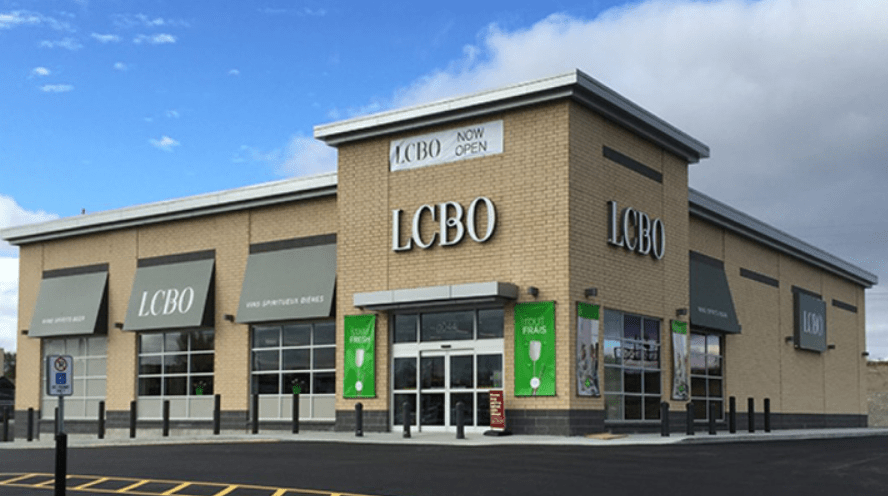
In Ontario, where I live, there is an age-old debate as to whether wine and liquor sales should be government controlled and sold only in the Liquor Control Board of Ontario outlets (LCBO) or allowed to be sold by private enterprise. During recent years, government control has been loosened somewhat, enabling wine, beer and coolers to be sold in grocery stores and more recently in convenience stores.
Photo credit: foodincanada.com
The LCBO’s history dates back to 1927 and the end of prohibition in Ontario. In 1927 the LCBO was basis of three central beliefs:
The best way to prevent social harm and health risks related to alcohol consumption was to make purchasing alcohol awkward or inconvenient.
Adults could not be trusted to make their own decisions around responsible alcohol consumption.
Private sector retailers did not have the capacity to balance market competition and social responsibility.
Attitudes are very different today and it can be argued that the LCBO would not have been necessary nor created if current circumstances had applied in the 1920s. In today’s world, the private sector manages business enterprises for profit and the government regulates their behaviour through the establishment of standards and the use of enforcement to ensure those standards are met.
There have been several studies over the years on what reforms, if any, should be made to the LCBO. It has been argued that the government could generate more revenue by privatizing the LCBO’s retail stores while keeping their wholesale business in place.
This is what Alberta did back in 1993 when it introduced a privatization scheme. The system initiated more selection, arguably reduced prices and enhanced convenience for the consumer. It provided better opportunities for small business and alleviated the government from direct business operations.
Despite Alberta’s experience, Ontario has not had the enthusiasm for such a venture. A study published in 2019 suggested that the people of Ontario did not want privatization as they felt the LCBO provided great value-add to the community as their surpluses fund other provincial initiatives. Reform is more likely to take place in the distribution process via an expansion in the type and number of retail outlets allowed to sell wine and in the pricing of wine.
The LCBO has a dual social responsibility mandate. It is responsible for generating revenue for the benefit of the Ontario government, as well as a social responsibility to put in place a system of minimum selling prices to discourage excessive alcohol consumption. This has been criticized as being a legally sanctioned price fixing mechanism to guarantee profits and discourage price competition.
It’s interesting to note that each province sets its own rules and regulations regarding the sale of wine and liquor. This is illustrated by the table below which indicates when each province implemented and repealed prohibition in Canada.
Province/territory Prohibition enacted Repealed
British Columbia 1917 1921
Alberta 1916 1923
Saskatchewan 1915 1925
Manitoba 1916 1921
Ontario 1916 1927
Quebec 1919 1919
New Brunswick 1856 1856
1917 1927
Northwest Territories 1874 1891
Nova Scotia 1921 1930
Prince Edward Island 1901 1948
Yukon 1918 1920
Newfoundland 1917 1924
Perhaps standardization of liquor sales should be considered across the country. That could be a discussion for another day.
The demand for sparkling wine can be very volatile as it is heavily influenced by consumer moods and trends. Sparkling wine is traditionally related to festive gatherings and celebrations as long as people are congregating for happy times there will be a demand. However, during economic down times or in unusual circumstances like COVID-19, people are not gathering to celebrate and the sparkling wine market suffers.
Photo credit: marketresearchintellect.com
Like in so many segments of the wine industry, there is increasing demand for non-alcoholic sparkling wine options as the younger generations become more health-conscious and want to avoid alcohol. This trend is expanding market appeal. Vintners who embrace this new market by diversifying their product lines and expanding consumer reach will benefit.
Health-conscious consumers are looking for wines with reduced sugar content and fewer calories. This shift encourages innovation in product formulations, helping wine makers attract a broader consumer base. Low-calorie options provide a competitive edge in a health-driven market.
Given today’s ecological and environmental concerns, consumers are also placing much more emphasis on sustainability and organic certifications. Sparkling wine producers who are adopting eco-friendly practices are appealing to environmentally conscious buyers. This trend is providing producers with the ability to command higher prices & enhance brand loyalty.
The sparkling wine market, which has been steeped in tradition for centuries, is now being forced to change by evolving consumer demand. Producers need to respond and adapt to the evolving marketplace if they want to continue to survive.
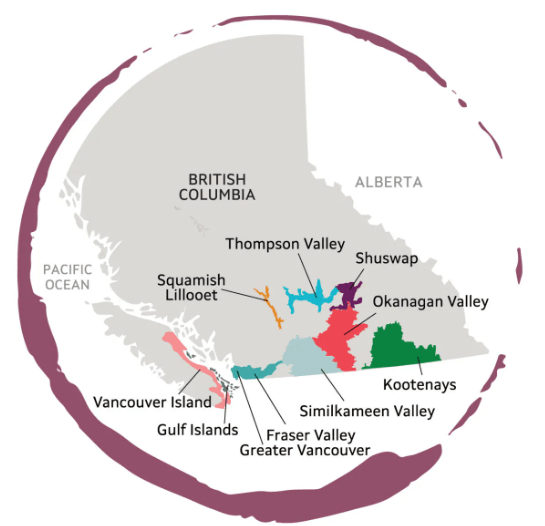
For the eighth year, the British Columbia government has declared April as Wine Month in recognition of the vital role that the B.C. wine industry plays in the province’s economy, tourism and culture. Given the effects of the current economic uncertainty combined with the devastating environmental impacts of the past couple of years, this recognition is very timely.
Photo credit: winetourhub.com
B.C. Wine Month is intended to be a celebration of everything related to B.C. wine, including new 2024 vintage releases, including B.C. VQA wines, which consist of wines that are 100% produced in B.C., and for a limited time because of the 2024 environmental situation, Crafted in BC wines produced under the 2024 vintage relief and support program. See my post from November 9, 2024, “2024: A Year to Remember” for details regarding the events of 2024.
Wine Month is intended to recognize the people working in the wine and hospitality sectors who create memorable experiences for visitors from around the world that come to enjoy the wines and flavours of the region. This supports grape growers, winemakers and winery operations, increasing the market exposure to their excellent wines.
According to Wines BC (winesbc.com), there are 929 vineyards in British Columbia along with 369 licensed wineries. The B.C. wine industry generates about 3.75 billion dollars annually, contributes over 440 million dollars in federal and provincial tax revenues, and employs over 14,000 full-time workers. An estimated one million tourists are drawn to the region each year resulting in 452 million dollars in tourism-related revenue, along with 147 million dollars in tourism-related wages from over 2,600 associated jobs. This all boils down to 105 dollars being generated for the economy from every bottle of wine sold.


 A Layman's Wine Musings