Wine with Pasta

Now that autumn has returned, I begin to turn my thoughts to cold weather comfort foods like pasta.

Photo credit: blog.web-center.si

Generally speaking, the best way to pair wine with pasta is to match the weight and richness of the sauce to the wine. Pair light, vegetable or seafood-based pasta with crisp white wines like Pinot Grigio. Rich creamy, or meat-based sauces go well with fuller-bodied wines such as Chardonnay or Pinot Noir, while tomato-based sauces require medium-bodied reds like Sangiovese. A sparkling wine, for example Prosecco, will complement many pasta dishes, especially those with creamy or rich sauces.

A good rule of thumb is to match the weight of the pasta sauce with the weight of the wine. A light sauce calls for a light wine, while a heavy sauce pairs well with a bolder wine. Also consider sparkling wines as the bubbles will complement creamy sauces and the acidity works well with tomato-based dishes.

Here are some specific pairing suggestions from several experts:

Fettuccine Alfredo: The wine needs to complement the richness of the dish while providing balance and enhancing the flavours. White Burgundy, Pinot Blanc, and Soave Classico will pair well with Fettuccine Alfredo.

Lasagna: This dish pairs well with a full-bodied red wine like an Italian Chianti Classico or a Brunello di Montalcino.

Pesto Pasta: The pesto flavours will harmonize well with a light-bodied white wine with herbal and citrus notes such as a Sauvignon Blanc, Pinot Grigio or Italian Vermentino.

Spaghetti Bolognese: The rich and meaty tomato-based sauce goes well with a medium-bodied red wine with good acidity such as an Italian Sangiovese or a Chianti.

Spaghetti Carbonara: The creamy Carbonara sauce will be complimented by a medium-bodied white wine like a Viognier or a Chardonnay. If you prefer red, Pinot Noir or Malbec are suggested.

Cheese-filled Ravioli: Pair with a light to medium-bodied white wine like Sauvignon Blanc, Pinot Grigio or Vermentino.

Meat-filled Ravioli: A full-bodied red wine such as Sangiovese, Barbera, Chianti, Cabernet Sauvignon, or Syrah is a good combination.

Seafood-filled Ravioli: Couple this ravioli with a white wine like Chardonnay, Sauvignon Blanc or a dry Riesling.

Vegetarian Ravioli: A red wine like Pinot Noir or Gamay, or a light to medium-bodied white wine such as Grüner Veltliner, Pinot Grigio, Viognier or Sauvignon Blanc are great options. You can also choose Rosés like Chenin Blanc or Pinot Gris.

No matter what pasta you have there will be the perfect complementary wine to enjoy alongside.

Sláinte mhaith

2025: A Much Better Year

As an update to my November 9, 2024, post “2024: A Year to Remember”, I am pleased to report that the devastation resulting from the environmental disasters that plagued the 2024 growing season in British Columbia have had a reduced impact on this year’s grape harvest.

Photo credit: decanter.com

The vines that survived the destruction have recovered significantly, contrary to expectations. Most growers are now expecting a substantial crop; something that seemed unimaginable last year. The vines have proven to be much more resilient than expected. Some wineries project this year to be their largest harvest ever.

Indications are that the 2025 vintage will be of high quality as the weather has been consistently warm but without extreme heat spikes and wildfires. However, some vineyards still have crop yields of questionable quality.

Grape prices have returned to more reasonable levels, similar to what existed before the environmental challenges of the past couple of years. This will be a relief for the wineries and consumers.

Only a small number of wineries will continue to need to source grapes again from the U.S. Thus, the replacement wine program has been extended for another year. Many producers have replanted vineyards that will not be in full production for another several years.

The effects of the 2024 disaster will continue to linger for the foreseeable future. but the impact is proving not to be as devastating as first thought.

Sláinte mhaith

French Cuisine with French Wine

Inspired by my excursion earlier this year to France, I have compiled a list of popular French foods along with complimentary French wines.

Photo credit: joinusinFrance.com

Asparagus and Hollandaise with Condrieu

Condrieu is the highest form of Viognier, a white grape known for its thick texture and exuberant aromatics. Asparagus makes a good combination.

Brie de Meaux with Champagne

The richness of the creamy cheese is balanced by the acidity and lightness of the bubbly Champagne. It creates a very decadent experience. 

Coq au Vin with Beaujolais

Beaujolais is the often-underestimated red from southern Burgundy. Made from pure Gamay, the wines are easy to appreciate. The freshness in Beaujolais allows it to cut through the richness of stew. However, the berry notes of the wine are better suited with chicken rather than beef or pork.

Boeuf Bourguignon with Red Burgundy

Boeuf bourguignon, being robust and savory, is well complimented by a red Burgundy, which is a complex and subtle expression of Pinot Noir.

Chèvre with Sauvignon Blanc 

As simple as it sounds, fresh goat cheese and Sauvignon Blanc make a great combination. The pungent flavours in chèvre are highlighted by the minerals and acidity of Sauvignon Blanc.

Comté with Vin Jaune

Vin Jaune is the oxidized, sherry-like wine made in France’s Jura region. It has intense, delicious notes of walnuts, dried fruit, curry and pine. It can be a bit sharp on its own, but with cheese, such as Comté, it is very appealing.

Duck with Red Burgundy

A red Burgundy will be a good compliment for roasted duck breast. It combines delicate berry fruits with cool earthiness. As the wine ages it is enhanced by notes of mushrooms and leather.

Foie Gras with Sauternes

Steeped in French tradition, foie gras should be paired with a Sauternes from the Bordeaux region.

Lamb with Northern Rhône Syrah

Northern Rhône Syrah is both subtle and elegant, combining characteristics of dark berry with lightweight aromatics. There are often notes of smoked meats, bacon, licorice, and cloves, which pairs well with lamb.

Mussels with Muscadet

Muscadet is a refreshing, uncomplicated white wine that is produced along the Loire River near the Atlantic Coast. With the ocean nearby, it’s a perfect match for shellfish, particularly oysters or mussels.

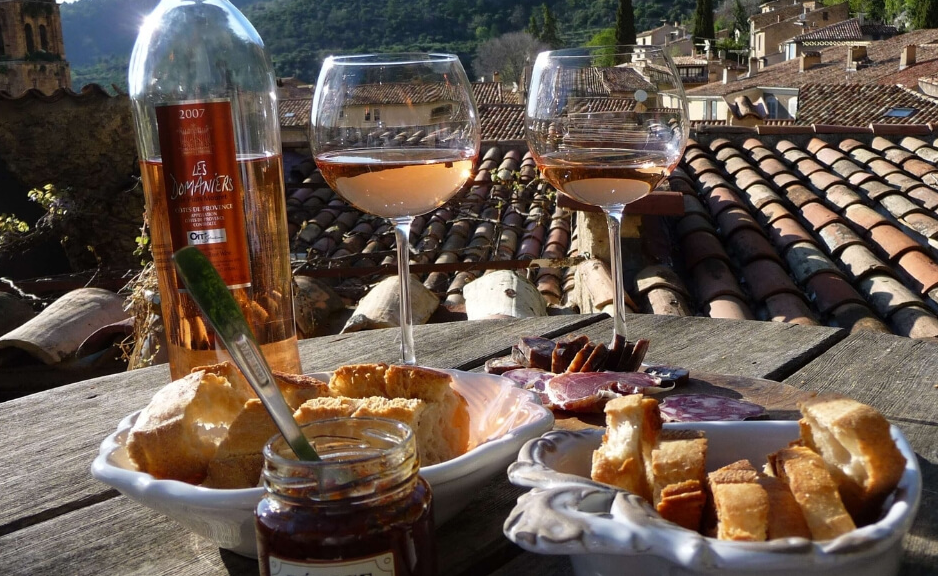
Olive Tapenade with Rosé

Olive tapenade served on seasoned crackers or crusty slices of baguette combined with a crisp Rosé is a great combination.

Oysters with Chablis

Chablis is a sub-region of Burgundy, known for its Chardonnay wines made with little or no oak. Classic Chablis is full of minerality and zest making it a great pairing with most oyster dishes.

Roquefort with Sauternes

Sauternes is a unique wine, being created from mold-covered shriveled up grapes just south of Bordeaux. It has notes of apricot, pineapple, ginger, caramel and honey. It pairs well with blue cheese.

Salade Lyonnaise with Beaujolais 

A traditional salad lyonnaise (greens, bacon, croutons and mustard dressing topped with a poached egg) is the perfect match for the low levels of tannins and high acidity found in Beaujolais, which is produced from Gamay grapes.

Sole or Flounder with Sancerre

Sancerre is pure Sauvignon Blanc. It is aged in a stainless steal tank without any oak. The combination of juicy grapefruit and mineral freshness matches beautifully with any fine white fish prepared in butter.

Steak with Bordeaux

Steak pairs well with many reds from France, but one sure bet is Bordeaux, especially the Right Bank Merlot dominant wines.

Stew with Southern Rhône Red

Southern Rhone reds usually consist of a blend of Grenache, Syrah and Mourvèdre. The resulting wines are bold and rich, with texture and dark, jammy notes. Most beef stews work well with these wines.

Veal with White Burgundy

White Burgundy is the highest expression of Chardonnay. As long as the wine retains some acidity, it should match beautifully with the subtle, delicate flavours of veal.

Bon appetite!

Sláinte mhaith

Impact of Tariffs on the Canadian Wine Industry

Tariffs and retaliatory measures significantly hurt Canada’s wine industry by increasing the cost of U.S. grape must and juice needed by many winemakers, while also indirectly harming wineries through higher costs for imported packaging and equipment. On the other hand, provincial bans on U.S. wine improved sales for domestic Canadian wines. However, should this increased demand continue, wineries may need to enhance their operations.

Photo credit: tbnewswatch.com

Wine production costs have increased for wineries that purchase grape must (crushed grapes) from the U.S.  Tariffs on steel and aluminum from the U.S. have increased the cost of barrels, equipment and cans.

However, it’s not all doom and gloom for the Canadian wine industry. There have been increased sales of domestic wine due to the removal of American wines from liquor and wine store shelves in most provinces.

Statistics Canada announced that in April 2025, Canada imported only 2.9 million dollars of American wine  a 94% decrease from the year previous. Imports from other wine-producing regions such as New Zealand and Australia increased by 31% and 28% respectively, while shipments from France and Italy rose by 13.6% and 7.6% respectively.

Wineries in Southwestern Ontario, the B.C. Lower Mainland, and Kelowna have experienced increased sales. For example, despite total wholesale wine sales falling nearly 5% year-over-year, B.C.’s share climbed from 47% to over 52%. For the first time, B.C. wines represent more than half of all wholesale wine sales in that province.

However, as stated previously, I don’t believe there are any real winners in a trade war.

Sláinte mhaith