The Office Holiday Party

Drinking one’s face off at a party or social gathering is becoming a less acceptable behaviour. The younger generations, Millennials and Gen Z, are now the most likely groups to attend holiday parties. They tend to find alcohol less desirable and thus, its use in social settings is changing. Getting into the holiday spirit no longer requires spirits, with mocktails and alcohol-free bars now becoming very popular. 

Photo credit: homrest.com

Gen Z and Millennials are also the ones most likely to make an early exit from the party. About 28% of Gen Z say they stay just long enough for the food, while 39% of millennials admit to quietly slipping away without even saying goodbye.

Zero-proof cocktails and menus featuring gluten-free, vegetarian and vegan options are reflective of a broader focus for these events. However, for those that continue to provide alcoholic options, cocktail menus are more curated and upscale and aim to incorporate local ingredients or have a more direct relationship with the company or event. 

A poll conducted in Great Britain suggested that over twenty percent of office Christmas parties in 2024 were alcohol-free events. This is an increase of two percent over just one year previous, suggesting that this is an increasing trend.

For me, being retired, gone are the days of attending work-related events steeped in their traditions and corporate politics that were often fueled by alcohol, especially during the later hours. Having emceed one of these events attended by a couple of hundred people, I appreciate the benefits of the alcohol-free approach. It can be entertaining to sometimes watch the alcohol fueled antics of some attendees and stressful to see others say or do something totally inappropriate and potentially career-limiting. It can be both tragic and embarrassing for these individuals after they sober up and realize what they had done.

Gatherings are becoming smaller as well. Less companies are hosting single large gatherings attended by all employees. Instead, they are opting for smaller intimate settings pertaining to the interests of specific groups. The events tend to focus more on food and less on spirits.

Gone are the days of wearing lampshades at a party.

Sláinte mhaith
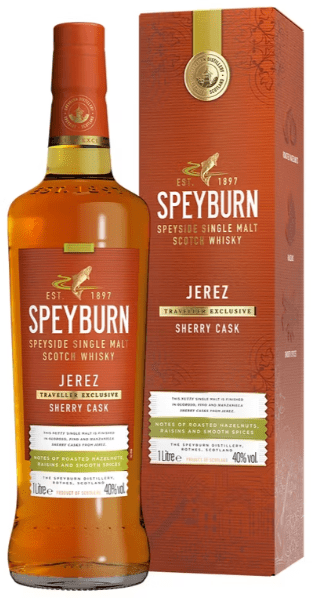
Speyburn’s  Jerez Sherry Cask Single Malt Scotch Whisky

On my recent Danube River cruise through eastern Europe, I discovered another of Speyburn Distillery’s scotch whisky options, Jerez Sherry Cask Single Malt. This nutty single malt is first aged in bourbon casks, then finished in Oloroso, Manzanilla and Fino Sherry Casks from Jerez, which is located in the Andalusia region in the south of Spain.

The result is a Scotch whisky that displays flavours of roasted hazelnuts, raisins, and smooth spices. It has a dark amber colour and a nose of roasted hazelnuts, raisins and sweet spices. The flavours of nutty spices and dark red fruits lead into sweet, subtle vanilla and hazelnuts flavours.

I found it most enjoyable but unfortunately, like many of Speyburn’s whiskies, it is not available for purchase in Ontario.

Sláinte mhaith

Bock Winery, Villany, Hungary

While on a recent Danube River cruise through some of the former Iron Curtain countries of eastern Europe, I visited the Bock Winery, which is located near Mohacs (“the mother of wine”), Hungary. It is a tenth-generation family winery that was established in 1850. It spreads out over 125 hectares or about 310 acres.

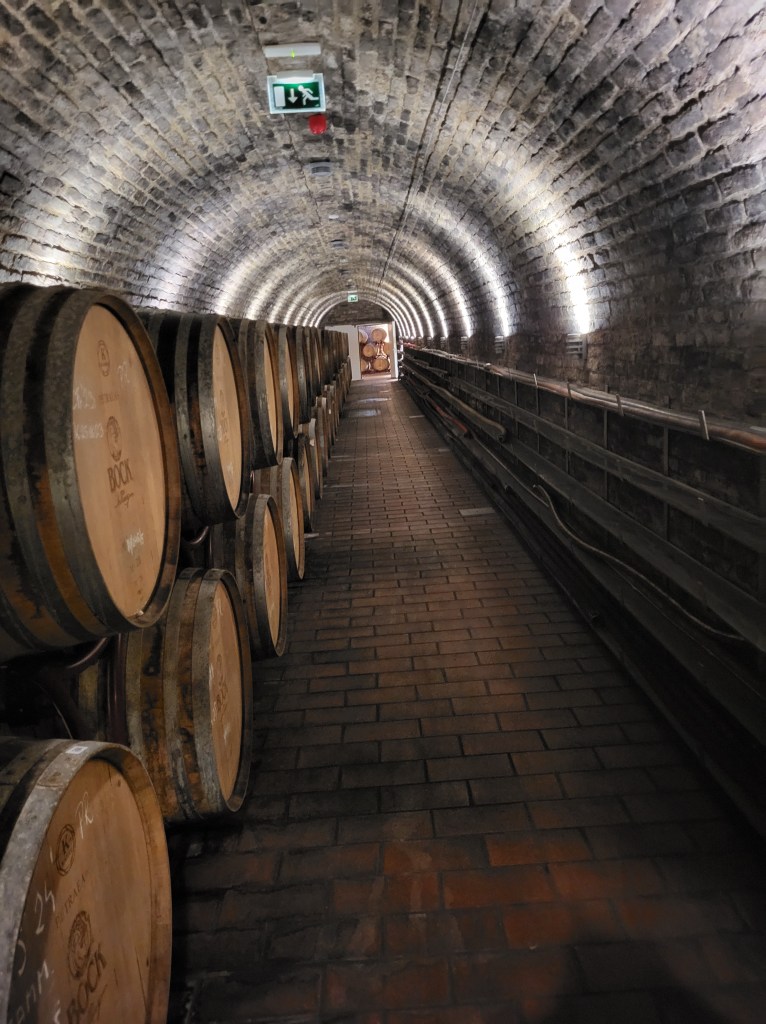
Bock’s cellars

Bock’s wines are aged in a combination of French, American and Hungarian oak barrels. The use of Hungarian oak introduces a flavour and nose that is slightly different than what would be experienced with most new world wines of Australia, North America or South America. The vintner also uses a combination of both new oak and old oak barrels, depending on the specific wine being produced.

In addition to wine, Bock also produces grape seed oil, grape seed tablets and grape seed flour. This is done to minimize the amount of waste resulting from the wine making process.

While there I had the opportunity to try four of Bock’s wines – a 2023 Villányi Hárslevelú, a 2024 Villányi Rosé Curvée, a 2017 Villányi Bock Curvée, and the 2022 Cabernet Franc.

2023 Villányi Hárslevelú

This is a fresh and fragrant white wine that is produced from a native Hungarian grape variety. It is made using overripe grapes grown on 40-year-old vines in the Göntér vineyard. Its colour is a medium-intensity, straw yellow. The aroma reveals linden blossom, combined with a slight citrus note, which is also reflected in the taste.

2024 Villányi Rosé Curvée

This is a fresh and fragrant wine produced from the virgin must of blue grape varieties from Bock’s vineyards. It has a medium colour with salmon-pink hues. The aroma and taste consist of strawberries, accompanied by satisfying acidity. The wine is enhanced with carbon dioxide before bottling.

2017 Villányi Bock Curvée

2017 Villányi Bock Curvée

This is Bock Winery’s flagship wine, produced from a blend of premium red grapes from several Bock vineyards which produce a full-bodied wine. It is a Bordeaux-type blend of Cabernet Sauvignon (60%), Cabernet Franc (30%) and Merlot (10%) that has developed in new, small oak barrels for 24 months and then in the bottle for an additional year. The wine is characterized by a deep, dark intensity and dark purplish red hue. It is a full-bodied wine, with a scent of ripe cherries and tobacco, and a taste of overripe fruits, chocolate and vanilla.

This was my personal favourite of the wines I sampled.

2022 Cabernet Franc

This is a medium-bodied red wine using grapes from several of Bock’s vineyards. After fermentation, the Cabernet Franc matures in large oak barrels for 12 months to produce a dark, intense, deep red wine with a large body. It has a complex aroma and taste, in which the fruitiness forms a unity with the aromas from the barrel.

Good news for Ontario residents, Bock Wines are periodically available liquor stores.

Sláinte mhaith

Pairing Wine with Mexican Food

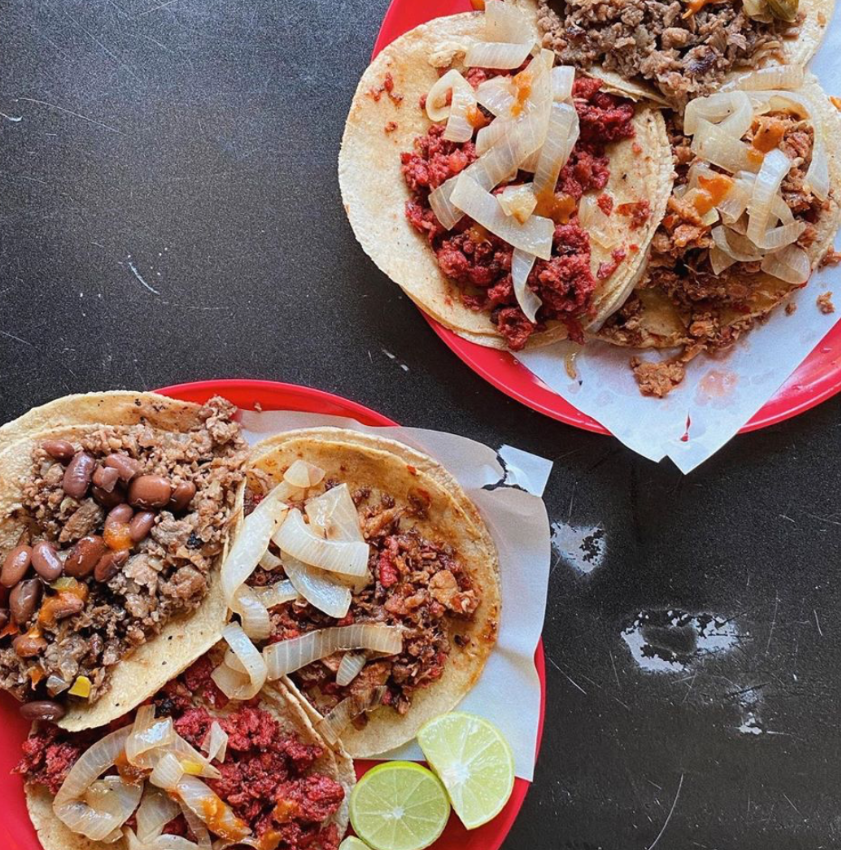
Mexican cuisine is very rich and varied, making it challenging to make generalized wine pairing suggestions. Because of the spicy nature of Mexican food, sparkling wines, such as Cava or Prosecco, Rosé, or sparkling Rosé, are all good choices. Wines with low or moderate alcohol levels will be a better match with the spicy nature of the food. Also, a slightly sweet or fruity wine can help balance the heat.

Photo credit: gustomexico.com

Specific wine pairings should focus on the dominant flavours, proteins or sauces of the dish. Lime, cilantro and tomatillos will pair well with crisp white wines like Sauvignon Blanc or Albariño. Grilled dishes with smoky chipotle flavours may be balanced with a Malbec, Tempranillo or Syrah. Pinot Noir will compliment Carnitas or other pork dishes. Seafood dishes are a good match with Spanish Verdejo or Vermentino. The ever-popular Chile Con Carne is a good match with GSM blends (Grenache, Syrah and Mourvèdre grapes) or a South American Carménère.

Here are some specific dish pairing suggestions from some experts:

Tacos, Chalupas, tostadas – Dry Rosé, Lambrusco, Spanish Garnacha

Stuffed Masa Dough Dishes, Gorditas, Enchiladas – Cabernet Franc Rosé, Tempranillo Rosé, Syrah Rosé

Savory-Sweet Dishes – New Zealand Sauvignon Blanc, Spanish Verdejo, Torrontes, Albariño, Grüner Veltliner, or Garnacha Rosé

Queso Fundido Quesadillas – Sangiovese, Tempranillo, Carménère from Chile

Barbacoa Mexican spices, barbecued meats, grilled, charred Mexican spices beef – Cabernet Franc, Carménère, Cabernet Sauvignon, Tempranillo, Malbec

Chorizo a guajillo and arbol chili seasoned ground fatty pork meat – sparkling wines, such as Cava or Crémant

Mexican Cured Meats – Nebbiolo, Cabernet Sauvignon, Nero d’Avola, Sangiovese, Gran Reserva Rioja

Rice Dishes – Cava, Sauvignon Blanc, Albariño

Bon Appetit.

Sláinte mhaith

Returning Wine to a Vendor

I came across an article recently that asked the question, under what circumstances is it acceptable to return wine, whether it be purchasing it from a wine shop or while dining in a restaurant?

Photo credit: crushwinexp.com

Except in situations where wine is suspected to be contaminated or unsafe for consumption, most jurisdictions do not have regulations regarding the return of wine and liquor to the vendor for refund or exchange. Therefore, it is the decision of individual retailers to determine whether they will accept returns. Most require a receipt, and some may charge a restocking fee.

The most obvious situation is when you open a bottle of wine, pour a glass and then discover an unpleasant aroma, appearance or taste. This could be the result of the wine being stored in a warm location, tainted with TCA (cork taint) or gone bad in some other way, such as being exposed to oxidation. However, it is important to keep in mind that individual flavour profiles, tartrates (wine crystals or wine diamonds), natural sedimentation and tannin deposits are not considered to be wine defects.

In situations where the wine is not spoiled but is just not to your liking or expectation, results may greatly vary. Purchasing wine and not liking it doesn’t automatically make it returnable. For example, being unfamiliar with the nuances of the effects of an aged bottle of wine may result in an individual unfairly judging it, especially if they are unaccustomed to the secondary and tertiary aromas and flavours that can develop over time. Whether such a wine may be returned varies from one establishment to another. Having a conversation with staff prior to selecting a wine you are unfamiliar with will help you manage expectations and avoid disappointment. Whether you have a legitimate right to return a wine comes down to judgment, experience and hospitality. Customers should feel taken care of, but they also need to be realistic and fair.

Many retailers have a 30-day return or exchange policy; most require a receipt and some charge a restocking fee. If you’re returning a bottle because you believe it is flawed, you should bring the mostly full bottle back to the shop with you.

Returns to a winery may be the most stringent. Other than for spoiled wine, returns must be unopened and in saleable condition (label and capsule intact), be of the current vintage and accompanied by the original receipt, indicating that it was purchased within the previous 14 days. The product may then be exchanged for an item at the original purchase price shown on the receipt. Personalized wines are a final sale.  In that case, unopened bottles cannot be returned for a refund or exchange.

A faulty product must be returned for assessment immediately upon discovery. If most of the product has been consumed, the return may not be accepted.

For online purchases, in addition to the regulations above, the purchaser will be required to pay for any additional applicable shipping charges.

Hopefully it doesn’t happen but if you ever find yourself in a position where it becomes necessary to return wine, you now have the information necessary to make this transaction as easy as possible.

Sláinte mhaith