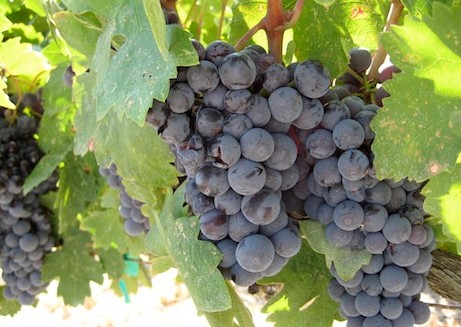
The Primitivo grape is believed to have originated in what is known today as Croatia. It was named Primitivo by the Italians based on the Italian word “primaticcio”, which means ‘early ripened’. The vines are believed to have been exported to North America during the early 1800s, where the grapes became known as Zinfandel. Where that name came from, I have no idea.
The most common Zinfandel is a dry, medium-bodied red wine with medium to high tannins and medium to low acidity. The alcohol by volume is usually in the very high range, in excess of 14%.
Red Zinfandel is a bold, fruit-forward red with smoky spice notes. Its primary flavours are generally blackberry, strawberry, peach, cinnamon and tobacco.
The wine pairs well with BBQ ribs, grilled chicken, roast lamb, pulled pork, pork chops, blackened salmon, bacon-wrapped tenderloin, game meats and burgers. If cheese is your thing, pair it with sharp cheddar or smoked gouda. Vegetables like caramelized onion, tomatoes, grilled eggplant, mushrooms, olives, zucchini or baked beans will also go well. Desserts such as cheesecake and dark chocolate are great options as well.
There is also White Zinfandel, which is actually a sweet pink Rosé. It has aromas of fruits, such as strawberries, raspberries, cherries and citrus.
Today, the United States, where the grape is referred to as Zinfandel, is the largest producer, with over 18,500 hectares under management. Italy, where it is still referred to by its original name, has almost 14,000 hectares of vines. Macedonia is next with 1,000 hectares and Australia with 87 hectares. Lesser amounts are grown in Chile, Canada and South Africa.
Left to the imagination, winemaking is simply the hand-picking of grapes from sun-kissed vines and patient aging in oak barrels. However, modern production often includes the use of additives to enhance flavour, stabilize the wine or mask defects. This may cause digestive upset, food sensitivity flares or even mood swings.
Here is a brief rundown on common additives, their regulation, benefits, potential drawbacks and how you can make informed choices about the wine you drink.
Fining Agents (e.g., Egg Whites, Casein, Gelatin)
Fining agents help to clarify and stabilize wine by removing unwanted particles. Their use is widely accepted but the use of egg or milk related products must be disclosed on the label since these items may result in an allergic reaction by anyone sensitive to them.
Glyphosate
Glyphosate is a widely used herbicide. Traces of glyphosate may be found in wines due to vineyard herbicide use, generating concerns about long-term health impacts. Its use is closely monitored though trace amounts have been detected in some wines worldwide. While levels are generally below health risk thresholds, the presence of glyphosates enhances the value of organic and biodynamic wines.
Mega Purple and Colouring Agents
The use of Mega Purple and other colouring agents is permitted in moderation in accordance with wine production laws and is not required to be disclosed on the wine label. Overuse of these materials can conceal flaws and mix flavour profiles.
Sugar (Chaptalization)
Sugar is used to increase the amount of alcohol generated during the fermentation process for cool-climate wines as natural sugar levels may be insufficient. Some wine regions permit their use while others do not. For example, it is prohibited in the southern wine regions in France but accepted in their northern wine regions. Overuse of sugar can make wines taste unnaturally sweet.
Sulfites (SO₂)
Sulfates are included to preserve freshness, prevent oxidation, and reduce microbial growth. Their use and quantities permitted are regulated though the limits vary by country. Most people can safely consume sulfites but anyone sensitive to them, particularly those with asthma, may suffer headaches or redness in the face. However, this is rare and these reactions are often confused with other sensitivities.
Tannin
Tannin is needed to make wine age-worthy. The grapes are full of seeds which are very tannic. The seeds are crushed with the grapes to add structure to wine. Small amounts of oak chips or tannin powder may be added to the wine as well.
Tartaric Acid
Tartaric acid is used to balance the wine’s acidity to improve the taste. Regulators considered its use safe and it is widely used in small quantities. If too much is used, the wine can taste sharp and be unbalanced.
Yeast and Nutrients
These are used to initiate fermentation and the different kinds of yeast affect the flavour of the resulting wine. The use of yeast is widely accepted among the wine producing nations. Overuse can result in mixed flavour profiles.
Minimizing Additives
To minimize the inclusion of additives in the wines that you drink, look for organic, biodynamic and natural wines as these minimize or eliminate synthetic additives and chemicals. Low-intervention wines are wines that have fewer additives. They will be labeled as “natural,” “minimal sulfites,” or “no added sulfites”.
Explore local wineries as smaller producers often have more transparency in their winemaking processes and may use fewer additives.
Natural wines are made with grapes and time, delivering pure flavours showcasing their origins. They prove that great wine doesn’t need artificial help. Avoid mass-produced wines for example, Apothic, La Crema, Ménage à Trois and Yellow Tail. Instead, investigate lower production wines that are often found in the specialized section of the wine store. In Ontario, that would be the “Vintages” section of the liquor store.
Wine additives are not fundamentally unsafe, but understanding their role can help you make choices aligned with your health and values.
England is known for its Gin and Tonic (G&T) and its bitters (beer), but did you know that the English also produce fine wine? The United Kingdom ranks 6th in the world for wine consumption, but over the past 15 to 20 years England has been making a name for itself as an up-and-coming wine producer. Most notable are its sparkling wines, which are made in the traditional way. They are finishing ahead of major Champagne houses in competitions and earning recognition around the world.
Photo credit: winefolly.com
Sparkling wines represent 65% of England’s wine production. Still white wines represent about 20% of production and reds and Rosé make up the remaining 15%.
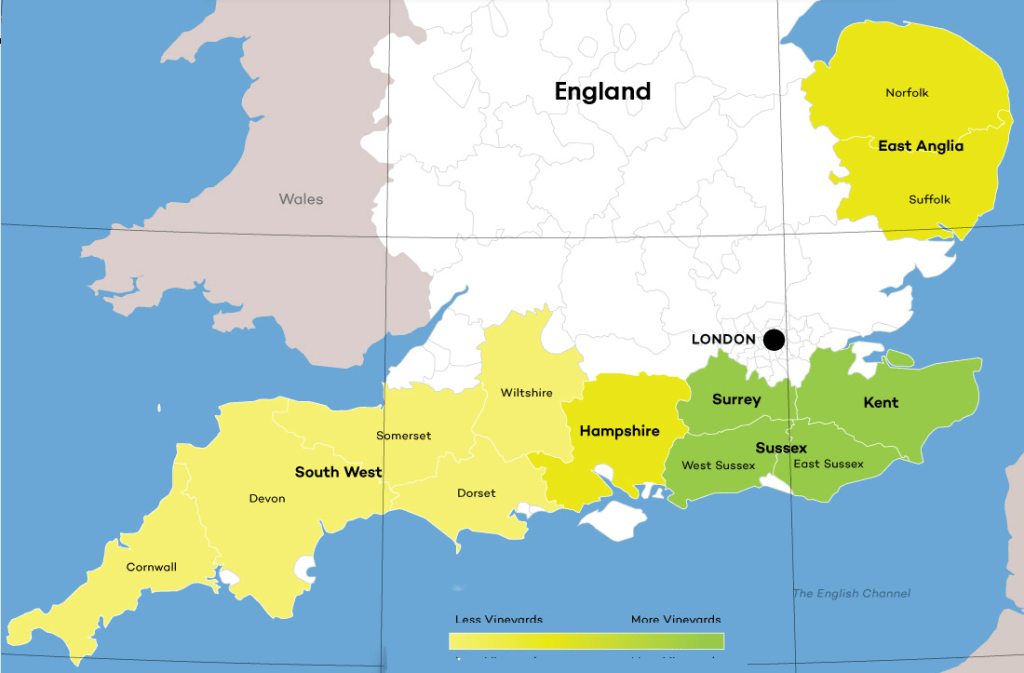
The last official count suggested that there are about 450 wineries in England, producing around 3.2 million bottles of wine each year. Many of the wineries and vineyards are situated along the southern strip of England’s coast from Cornwall to Kent, where the climate is slightly warmer and dryer than elsewhere in the country. This area includes the counties of Kent, Surrey and Sussex.
Sussex is situated alongside of the English Channel and is one of the sunniest regions in England. It benefits from the same soil characteristics as that found in France’s Champagne region. The grapes grown there include the classic Champagne grapes, Chardonnay, Pinot Noir and Pinot Meunier, as well as Bacchus, which is a cross of the German white grapes Silvaner, Riesling and Müller.
The county of Kent is located to the east of Sussex along the English Channel. The viticulture includes Chardonnay, Pinot Noir, Bacchus and Ortega. The Champagne house Taittinger purchased land in Kent and planted Chardonnay, Pinot Noir and Pinot Meunier in its English vineyard.
Kent has also drawn attention from a second French Champagne house. Pommery joined forces with England’s Hattingley Valley creating Louis Pommery England.
Each year the number of wineries continue to increase to satisfy the growing demand for English wine, in particular sparkling wine. Due to climate change, viticulture is now expanding beyond the traditional three counties right across England and even into Wales. Global temperatures have increased to the point where the temperature in England is now nearing that of the Champagne region of France during the prime of Champagne production, before the challenges brought on by climate change.
As a result, consumers can anticipate more English wines becoming available in global markets. As the prices for land in England are drastically lower than in Champagne, producers can afford to sell their wines at more consumer-friendly prices. Also, because of the similar soil composition as found in Champagne, the flavour is much closer to Champagne than either Spain’s Cava or Italy’s Prosecco.
Wine is a popular choice for Valentine’s Day. Whether it is paired with food or enjoyed on its own, it helps create a romantic atmosphere. Given that Valentine’s Day is about your partner’s love and affection, be sure to select a wine that will match their preferences; the best wine is one that your partner will enjoy, so tailor your selection to their tastes.
Remember to serve the wine at the correct temperature as this will help enhance its flavour and aroma. The ’20 Minute Rule’ is an easy way to do this. For white wine that has been chilling in the refrigerator all day, set it out 20 minutes before serving. For red wine do the opposite. Place it in the fridge to chill for 20 minutes before serving.
If you want to add an element of surprise to your experience, introduce your partner to a wine from a less-known region. Another option is to try a grape variety that you don’t normally serve.
If you are looking for a wine to enjoy with chocolate, it is best to match the intensity of the wine to the type of chocolate. For dark chocolate, opt for bold red wines like Cabernet Sauvignon or Port. Milk chocolate goes well with fruity, lighter-bodied reds, such as Pinot Noir or sweeter sparkling wines. White chocolate pairs well with sweet white wines like Moscato or dry options like a crisp Chardonnay or Sauvignon Blanc.

 A Layman's Wine Musings