Alternatives to Government Operated Liquor Stores

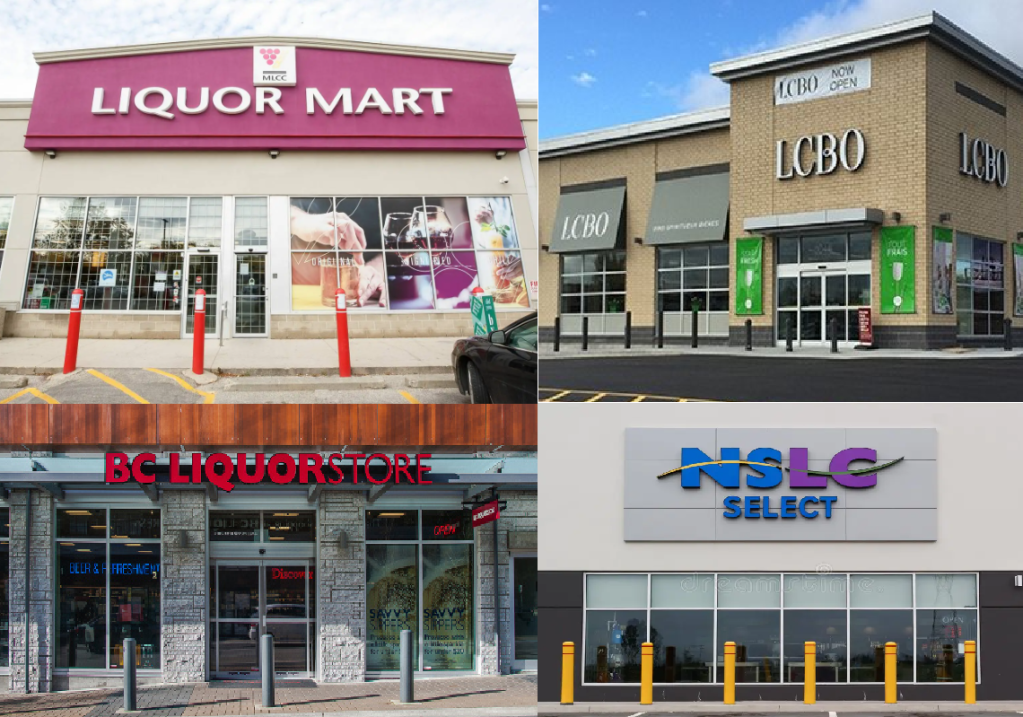
Further to my previous post on the question of whether liquor sales should be privatized (see Should the LCBO be Privatized? April 19, 2025), today I want to look at the difference between government-controlled retail outlets versus government regulated ones. Examples of government operated retail outlets include Ontario’s LCBO, Nova Scotia’s NSLC, British Columbia’s BC Liquor Store and Manitoba’s Liquor Mart.
I can see where privately owned retail outlets could provide benefits in large cities where there is a sufficient population to support specialty wine or whiskey shops. Each store could have an expert who could provide insight on each of the various products sold. It could be a great opportunity for niche marketing and the customization of the sales environment.

However, in small centres, selections could be much more limited with options being dictated solely by profit margins. In this case, the run-of-the-mill wine and whiskey choices could be sold along side soda pop and potato chips. Store staff would be much less likely to have the expertise to assist customers making their selections.

Small wineries, distilleries and breweries could find independent liquor stores beneficial, potentially providing them with more market exposure. Government operated outlets limit retail shelf space to producers who can meet minimum production volumes, leaving many small estate wineries and private distilleries with very limited market exposure. Independent retailers could provide these wineries and distilleries with the consumer exposure that they are currently lacking.

Even though the government could continue to collect taxes on liquor sales, some fear that the revenue generated from government operated retail operations could be lost, impacting the government services currently supported by those revenues. As well, there would be job losses from the public sector if private companies take over retail operations.

Government operated liquor outlets have been instrumental in supporting the domestic alcohol beverage industry. Privatization could potentially weaken that support.

It could be argued that private liquor companies might prioritize profits over public health and safety, potentially leading to conflicts of interest. However, if sufficient regulations are put in place, private enterprise could be made to follow the same principles and practices as the government operated retail outlets adhere to.

As you can see, there is no simple solution as to which alternative is best. You will have to weigh the odds for yourself before deciding which side to support in this age-old debate.

Sláinte mhaith
The Price of Wine

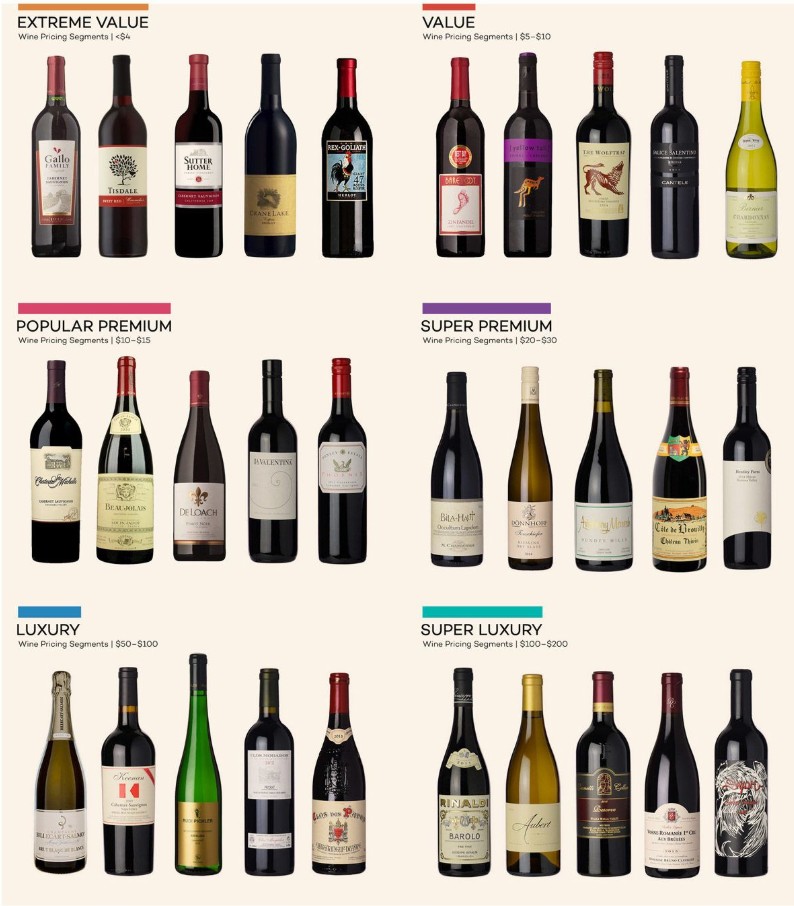
Why are there such variations in the price of wine? Does the price reflect the quality? Why are some types of wine more expensive than others? Here are some of the answers to help explain why there can be such variations in price.

Photo credit: ipinimg.com

To begin with, location and climate can have a significant impact on price. Factors such as soil, weather, and region (terroir) can impact grape quality and rarity. Examples include Piedmont Italy’s Nebbiolo grape, which is used to make Barolo, or the production of Châteauneuf-du-Pape wine in the Rhone region of France.

The cost of the land that the vineyard occupies influences the price. For example, the price of a vineyard in Champagne, France is much more expensive than a similar piece of viticultural land in England.

The number of grapes available impacts price. Lower yields where there are fewer grapes on the vines produce less volume but more flavourful, concentrated and thus, more expensive wines.

Hand-harvesting helps ensure that only the best quality grapes make the wine, but the process is more expensive than using machine harvesting.

Wine produced using traditional methods is more costly than wines produced in modern, non-traditional ways. For example, French Champagne costs much more to produce than Italy’s Prosecco. However, the flavours and aromas of Champagne are much more complex than Prosecco.

The use of natural yeasts adds complexity to wine but also adds intricacy to the winemaking process and increases cost over commercially manufactured yeast. This is one reason why naturally produced wines demand a higher price than their mass-produced counterparts.

New, high-quality oak barrels add rich flavour to the wine but are quite costly, thus demanding a higher price than wines produced in old oak or without oak. Also, the longer the wine is aged in the oak the greater the impact of the cost of space and time.

Vineyard maintenance, harvesting, and winemaking labour are major expenses, especially for vineyards that produce natural wines. These are wines made with the least possible use of chemicals, additives and overly technological procedures; included are biodynamic, organic and vegan wines.

Once the wine is made, it must be packaged for shipping. This includes the cost for glass bottles and labels, shipping boxes and additional transportation labels.

Brand reputation can also impact how much a consumer is willing to pay for a bottle of wine. The perception of quality and taste of a particular label or varietal can make consumers willing to spend more money on certain products due to their trust in the quality and craftsmanship of those wines. Some of the most notable wineries include Château Mouton Rothschild (Bordeaux, France), Domaine Leroy (Burgundy, France), Egon Müller (Mosel, Germany) and Screaming Eagle (Napa Valley, USA).

Finally, distributors, importers, and retailers must all get their share before you see the final product on liquor store shelves.

In conclusion, determining the price of a bottle of wine can be complex and multi-faceted. However, as the saying goes, you get what you are willing to pay for.

Sláinte mhaith

The Sweetness Level of Wine

Photo credit: totalwine.com

Wine’s sweetness is determined by the amount of residual sugar that remains after fermentation is complete. It ranges from bone dry (less than 1 gram/litre) to very sweet (over 120 grams/litre). Wine sweetness levels are often, though not consistently, categorized as bone dry, dry, off-dry, semi-sweet, sweet and very sweet. Sweetness indicators are sometimes found on the bottle label or are available on the winery’s tech sheets.

It is interesting to note that wine experts do not always agree on the names of the categories or the scale used to describe sweetness. For example, where one authority considers a certain grams per litre ratio as dry, another considers it as off-dry.

Complicating things further, you will see that some types of wine may appear in more than one category. This is because there can be differences in the sweetness level depending on the fermentation process used by individual vintners. Yeast converts grape sugars to alcohol. If fermentation is stopped early, more sugar is left in the wine. Therefore, a single varietal, for example Riesling, may appear in more than one category.

While residual sugar is the main factor, other elements such as tannins (common in red wines) can make a wine feel drier than its sugar content would suggest.

Category Residual Sugar (g/L) Description
Bone DryLess than 1 g/LEssentially no distinguishable sweetness; very crisp.
Dry1 – 3 g/L Little to no noticeable sweetness.
Off-Dry4 – 12 g/LAn evident but not overwhelming amount of sweetness
Semi-Sweet12.1 – 35 g/LOverlaps with the Off-Dry and Sweet classifications.
Sweet35 – 120 g/LA significant amount of sweetness
Very SweetOver 120 g/LVery sweet; often dessert wines.


Listed below, by category, are many popular wines. The wines within each grouping appear in no particular order.

Level of DrynessRedWhite
Bone DryNebbioloMuscadet
MalbecChablis
ChiantiGrenache Blanc
BordeauxPinot Grigio
Barolo
DrySangioveseGruner
TempranilloSauvignon Blanc
Cabernet SauvignonPinot Gris
Pinot NoirChardonnay
SyrahChenin Blanc
MerlotVermentinu
Cabernet FrancSémillon
CarménèreViognier
ValpolicellaDry Riesling
BeaujolaisTrebbiano
GrenacheRoussanne
ZinfandelMarsanne
Off DryKabinett
Riesling
Chenin Blanc
Muller
Semi-SweetValpolicellaGewürztraminer
LambruscoSpatules
Riesling
SweetPortLate Harvest
Maury  Riesling
White Port
Very SweetTawny PortIcewine
IcewineRiesling
Vin Santo

To avoid disappointment in purchasing a too sweet or too dry wine, your best option is to pay attention to the grams per litre sugar level and choose your wine accordingly. The sweetness categories can help guide you, but because of their inconsistencies, they should not be relied on totally.

Sláinte mhaith

English Whisky

Photo credit: confidentials.com

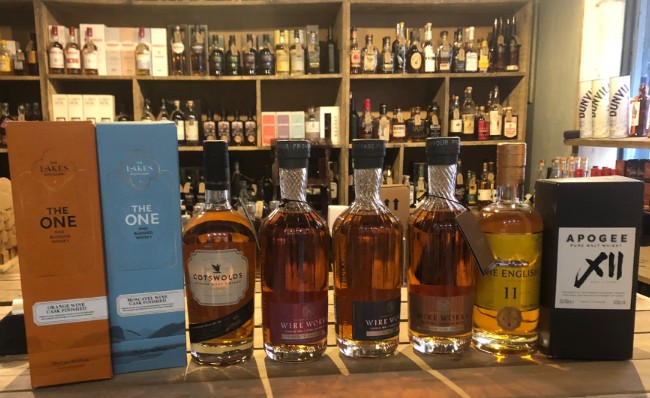
English Whisky (whisky spelled without an ‘e’ like the Scots) is categorized as a “new world” spirit produced from malt, grains and water. It has become known for its many styles of single malt and blended choices. Brands include Cotswolds, The Lakes, Bimber and The English Distillery. They make whiskies with unique mash bills, regional ingredients and cask finishes, offering sweeter, spicier or smoky profiles that separate them from their Scottish counterparts because there are less regulations surrounding production. English Whisky may include fruit, spices or herbs that are not allowed in Scotch Whisky.

English whisky saw a revival starting in the early 2000s, with many new distilleries opening across England, gaining international recognition. In 2022, the English Whisky Guild was established to protect and promote English whisky. As of last year, there were 24 English Whisky brands.

The English are working to develop a statutory definition for English whisky, including a requirement where the grains and water must be locally sourced. Currently, English whisky producers adhere to European Union Regulation that established the criteria for whisky and specifies that whisky must be matured in wooden casks for three years, contain no additives or sweeteners except for E150a, be matured to a minimum alcohol by volume (ABV) of 40% with a maximum less than 94.8% ABV. English single malt must also be made using malt barley from England and distilled in copper pots at a single distillery in England.

Types of English Whisky include:

Malt Whisky – Produced with malt barley, distilled in copper pots twice and matured in wooden casks for a minimum of three years.

Grain Whisky – Produced at least partly from grains other than barley, such as maize, wheat or rye.

Rye Whisky – Produced using rye grain.

Cornish Whisky – Produced using local produce and is distilled, matured and bottled in Cornwall.

Bourbon – Produced to the same specifications as the USA but with ingredients sourced from the United Kingdom.

Styles include:

Single Malt – Produced using 100% single malt barley within a single distillery.

Triple Malt – Aged in three types of casks but not blended.

Blended Whisky – A combination of malt and grain whisky within a single whisky.

Single Cask – Bottled from a single cask or barrel without blending the whisky.

Small Batch – Produced by mixing the contents of a relatively small number of premium selected barrels.

Peated – Produced using malt barley that has been dried over a fire; this gives the whisky a smoky flavour.

Cask Strength – Bottled from the barrel without any additional water.

The flavour profiles of English Whisky range from sweet and fruity to spicy and smoky.

Sláinte mhaith