Sauternes is a sweet wine from France’s Bordeaux region. It is made from Sémillon, Sauvignon Blanc and Muscadelle grapes that have been affected by Botrytis cinerea, also known as noble rot. Sauternes is one of the few wine regions where infection with noble rot is a frequent occurrence. The noble rot causes the grapes to partially shrivel like raisins, resulting in concentrated and distinctively flavoured wines.
Sauternes is a full-bodied, sweet, late-harvest white wine that is an exceptional dessert wine. It is well complimented by aging in oak barrels and will keep for several decades.
Wine production is not consistent from one year to the next as harvests vary widely. The wines produced from Sauternes can be very expensive, largely due to the very high cost of production.
Sauternes are characterized by sweetness with the zest of acidity. Some common flavour notes include apricot, butterscotch, caramel, coconut, mango, marmalade and citrus, as well as honeysuckle and toasted baking spices. The finish may remain on the palate for several minutes. A Sauternes typically starts out with a golden yellow colour that darkens as it ages.
Most Sauternes are sold in half bottles of 375 ml. The wines are typically served chilled at 10 °C, but wines older than 15 years are often served a few degrees warmer.
Sauternes is a great dessert wine but it may also be served with several food pairings. Consider cheesecake of all kinds, almond tart, lemon tart, meringues and custards. As well, it may be served along side something savory such as Roquefort or Livarot cheese and foie gras or terrine with caramelized onions. Mains such as herb-roasted poultry or spicy Asian fare are recommended as well.
Scotch Whisky can be a difficult drink for us North Americans to get into. When I was younger (how I long for those days) I perceived Scotch being a drink for mature whisky connoisseurs. Where rye and rum were often served as mixed drinks with cola or ginger ale, Scotch was not. If it was mixed with anything it was only water or maybe soda water. Many people like myself interpreted this to mean that Scotch Whisky was not for the faint of heart and you must be prepared for a strong flavoured throat-burning drink.
Another intimidating factor is the hard to pronounce names. With names such as Bruichladdich (Brook laddie), Craigellachie (Craig alecky), Glenmorangie (Glen maw ruhn jee) and Laphroaig (Luh froig), it can be very intimidating to try and pronounce them for fear of stumbling over the names or mispronouncing them entirely.
Though an acquired taste, Scotch is a very simple straightforward drink that is usually served in any of four ways
Neat
With water
With ice
In a cocktail
Neat
Drinking Scotch neat means drinking it with nothing added. To get the most benefit, the Scotch should be served in a whisky snifter at room temperature. A whisky snifter has a large bottom that tapers toward the top like a tulip to trap the whisky aromas in the glass and concentrate them all in one place.
Single malts or blends can be drunk in this manner.
With Water
Adding a splash of water will unleash new whisky flavours while decreasing the intensity of the alcohol. Water chemically suppresses ethanol molecules (alcohol) as well as the flavours extracted from the wood barrels. Water decreases the effects of less desirable, immature aromas.
Cask strength or barrel proof whisky will generally have a higher level of alcohol by volume. In such situations, by adding a couple drops of water, the flavour can be improved and more enjoyable.
Depending on how the whisky was filtered water may give the whisky appear hazy. However, there is nothing wrong with a hazy whisky and it won’t change the drinking experience.
With Ice / On the Rocks
There are those whisky enthusiasts who will scoff at the idea of chilling your Scotch and diluting it with melting ice. However, for those still developing a taste for whisky, ice can be very beneficial. Cooling a dram depresses dominant alcohol flavours and aromas, making the drink more palatable for some. However, it will also lessen some of the flavours that make Scotch taste like Scotch. The increased flavours from adding water are lost as the low temperature nullifies any flavour gains.
If you use ice be sure to use large cubes that will slowly melt and take up the majority of space in the rocks glass. That way you get the chill without diluting it so much that it becomes unrecognizable as Scotch.
In a Cocktail
The classic example of a Scotch Whisky cocktail is the Rob Roy, which is essentially a Manhattan that substitutes Scotch Whisky for Rye Whiskey. The cocktail was invented around 1900 in New York’s Waldorf-Astoria.
According to mixologists, Scotch may be used in place of other whiskeys in cocktails such as the Boulevardier, Old Fashioned, or Mint Julep. Who knew?
Bordeaux; most people have heard of this French wine region, which is one of the most famous Old World wine regions, but many people don’t understand it. To begin with, Bordeaux is divided into two sections, referred to as the Left Bank and the Right Bank. The banks refer to the left (west)and right (east) bank of the Gironde Estuary and Garonne River.
The Left and Right banks have significantly different terroirs. A terroir is the natural environment in which a particular wine is produced, including factors such as the soil, topography, and climate.
The soil is rockier on the Left Bank. It is packed with gravel and deep deposits of limestone which serves to provide more character and potential quality in the wine. This is why Left Bank wines are considered prime candidates for aging, while Right Bank wines are generally thought to be smoother and more drinkable at the time they are released for sale.
This is not to suggest that Right Bank wines are simple and boring. With limestone closer to the surface and less gravel for the vine roots to contend with, the wines of the Right Bank don’t lack character; it’s just that they possess a different kind of character.
When it comes to the grape varietals grown, because of the differences in the terroir between the Left and Right Bank, each supports its own type of grape. As a result, this is often the best way to distinguish between a Left and Right Bank Bordeaux, as the label will not often tell you. Left Bank wines are mostly Cabernet Sauvignon with a smaller portion of Merlot. The Right Bank wines are dominated by Merlot balanced by a smaller proportion of Cabernet.
The Cabernet dominated Left Bank wines tend to be higher in tannin, thus the reason why they age well. Aging the wine helps to mellow out the tannins and integrate the flavors of the wine. Merlot-based Right Bank wines are generally smoother, with softer fruit flavours as tannins are not as dominating.
The last comparison is between the wineries or chateaux themselves. These are the castle-like structures that appear on many of the Bordeaux wine labels. Generally, the Left Bank chateaux have larger vineyards than those of the Right Bank. Left Bank vineyards are on average 5o to 80 hectares in size versus those of the Right Bank, which only have a maximum of about 30 hectares. However, this is only a fun-fact as vineyard size really has no impact on the quality or character of the wine. Arguably the most renown chateaux include Chateau Margaux, Lafite, and Mouton Rothschild on the Left Bank and Petrus and Cheval Blanc from the Right Bank.
So, which wines are better? Neither. If you are looking for a wine to enjoy with dinner tonight, a Right Bank wine is probably the better choice, whereas if you are looking for a wine to age and appreciate in the future, you will find that a Left Bank wine will improve with age and provide a delightfully satisfying experience when it is uncorked in a few years’ time.
Winter is a time for comfort food and one of my favourite comfort foods is pasta. When it comes to pairing a wine with pasta, the deciding factor should be the accompanying sauce, not the pasta itself because after all, pasta by itself does not have a great deal of flavour.
Photo credit: finewinemaster.com
Tomato-Based Pasta
Tomato-based sauces are high in acid and are often blended with beef or pork. Because of the acidity in tomatoes, a dry, medium-bodied red wine is recommended. Examples of red, medium-weight wines include:
Chianti
Grenache
Nero d’Avola
Primitivo
Rhône Blends
Sangiovese
Zinfandel
Cheese Pasta
There are a wide range of red as well as white wines that will pair well with cheese sauces. You shouldn’t feel restricted to serving just white wine with white cheese pasta. An oaked white wine will have a buttery character that will compliment the creamy sauce. Examples include an oaked Trebbiano or Chardonnay. Here are a couple of white wine options to consider:
Oaked Chardonnay
Oaked Trebbiano
Also, lighter more floral red wines will also pair well with intense hard-cheese pasta, especially if there are mushrooms or root vegetables in the sauce. Red wine options include:
Chianti
Nebbiolo
Pinot Noir
Sangiovese
Seafood Pasta
Light-bodied white wines are the preferred pairing choice for seafood pasta. These wines will be relatively acidic, thus a good balance for creamy white sauces and fatty seafood, such as scallops, shrimp, oysters or mussels. White wine options include:
Chenin Blanc
Grenache Blanc
Pinot Gris / Pinot Grigio
Riesling
Sauvignon Blanc
For seafood pasta that is cooked in a tomato-based sauce, light body red wines or Rosé are a good option. Red wine options include:
Pinot Noir
Malbec
Pesto Pasta
Whether you are serving the traditional pine nut and basil pesto or another type of pesto, the focus should be on matching the green, whether it be parsley, cilantro, mint, etc. which is the centerpiece of the dish. For the most part, herbaceous wines are said to be best suited when serving pesto pasta. Herbaceous wines are those wines that have aromas and flavours like herbs such as mint, vegetables such as asparagus, freshly cut grass or tomato leaves. Wines considered to be herbaceous include:
Grüner Veltliner
Sauvignon Blanc
Cabernet Sauvignon
Primavera (Vegetable) Pasta
Spring onions, garlic ramps, artichoke hearts and broccolini are among the choices on which to base primavera. The objective is to highlight the springy freshness of the vegetables; thus, it is often best paired with a light-bodied white wine with lemony and floral notes. However, if the pasta has major vegetable intensity, it needs to be matched with an equally savory white wine. White sauce wine options include:
Pinot Gris / Pinot Grigio
Riesling
Sauvignon Blanc
Vermentino
If tomatoes are a major component of the primavera, a light-bodied acidic red wine would be a better choice. Tomato sauce wine options include:
Cabernet Franc
Pinot Noir
Rosé
No matter which type of pasta you fancy, one of the corresponding wine options will compliment your meal.
Armenia is a wine region that I was unaware of until I saw an Armenian wine advertised recently in a wine catalogue. That enticed me to do some research and here is what I learned.
The bulk of wine grapes indigenous to Armenia are not very well known in North America. Hindering Armenia’s ability to familiarize the rest of the world with its wines are the ongoing conflicts surrounding its borders. Armenia is situated between Georgia, Iran, Azerbaijan and Turkey. Armenia’s rivers and high plateaus are surrounded by the Caucasus Mountains.
The country’s wine history is ancient. The region of Vayots Dzor claims to be home to the oldest winery in the world, in operation since some 6,100 years ago.
As with some other Eastern European countries, the progression of Armenian wine ended when the Soviet Red Army invaded in 1920. In 1922 the country was merged into the Transcaucasian Soviet Federated Socialist Republic. Then, in 1936 it became the Armenian Soviet Socialist Republic or Soviet Armenia.
Innovation stopped with the elimination of private enterprise. The Soviets converted wineries into processing plants and vineyards turned over fruit for brandy distillation or bulk wine production. Some vineyards were planted in unfavorable locations, while others went neglected or abandoned.
In 1991, after the demise of the Soviet Union, Armenia regained its sovereignty. Young Armenians and those with investment money began to embrace the region’s ancient wine-making techniques and wine culture. As a result, Armenia has become the youngest oldest wine industry in the world.
During the Soviet years a great deal of information was lost, including knowledge of the traits of many indigenous grape varieties, understanding soil suitability, sun preference, as well as how much maceration and aging of the grapes is best. Regaining this knowledge requires years of experimentation.
A few producers work with international grapes mainly for the Russian and other former Soviet republic markets. However, new quality-driven wineries focus on local varieties. Much of the post Soviet revival has included using a combination of modern technology and traditional techniques, such as aging the wine in terracotta jars called karasi.
The drive to produce quality wines has helped winemakers find export partners. Being a landlocked country, Armenia cannot produce low-cost wines. It must become part of the higher-priced market segment.
Armenia contains four main wine regions. The best known is the south-central region of Vayots Dzor, a long, narrow plateau which stands out for its highest elevation vineyards, some which reach almost 6,000 feet above sea level.
The Aragatsotn region is situated at slightly lower elevation. The remaining regions include Ararat, which is located on a sunny plateau, and Armavir, which is a mountainous area in the southwest.
Grape varietals include Areni Noir, which produces medium-bodied red wines with fruits like cherry and strawberry laced with black pepper aromas. It compares in its freshness, silkiness and transparency to Pinot Noir.
Voskehat is Armenia’s signature white grape. The wine has light to medium body. It has floral and stone fruit aromas with notes of herbs and citrus.
Khndoghni, or Sireni, is a red grape that gives black fruit flavors, deep colour, good tannins and the potential to age.
To sum it up, Armenia is small, landlocked and poor. However, it appears to have resilience, an ability to adapt, and a desire to show the world its world-class wines. Many experts feel that there is a future for quality Armenian wines.
At the end of November, The Irish Whiskey Association announced the 2023 Irish Whiskey Awards winners. Now having over 40 distilleries, Ireland has reemerged as a powerhouse in the international whiskey industry and is now the fastest-growing whiskey making country in the world.
Whiskey tastings were conducted throughout Ireland with members of the Irish Whiskey Society. Events took place in Dublin, Dingle, Cork, Waterford, Kilkenny, Ennis, Carlow and Belfast. There was also a select group of international whiskey judges.
The Best Irish Whiskey of the Year prize was awarded to Connacht Irish Whiskey Distillery, Exclusive Cask Strength, Single Malt Irish Whiskey, 47% ABV, 750 ml.
Connacht’s single malt whiskey is a triple-distilled whiskey produced at their distillery in Ballina, County Mayo. The distillery was founded by Master Distiller Robert Cassell in 2016, along with a team of Irish whiskey entrepreneurs who saw the potential of northwest Ireland’s unique climate to produce an iconic Irish whiskey. The region is characterized by dramatic swings in atmospheric pressure that contributes to producing a flavourful, heavily extracted whiskey. The use of custom-designed stills further enhances the unique character of the whiskey.
Other winners included:
Single Pot Still 11 Years and Under
Winner: Drumshanbo Single Pot Still Irish Whiskey Pinot Noir Cask
Gold: Jameson Single Pot Still
Gold: Powers Three Swallows
Single Pot Still 12 Years and Over
Winner: Red Spot 15 Year Old
Gold: Yellow Spot 12 Year Old
Gold: Redbreast 15 Year Old
Single Malt 11 Years and Younger
Winner: Jack Ryan Whiskey 5-Year-Old Oloroso Finish Cask Strength
Gold: Dunville’s 10 Year Old Pedro Ximenez Cask
Gold: The Irishman Legacy
Single Malt 12 – 15 Year Old
Winner: Tullamore DEW 14 Year Old
Gold: Knappogue Castle 12 Year Old
Gold: The Irishman 12 Year Old
Single Malt 16 Years & Older
Winner: The Irishman 17 Year Old
Gold: Dunville’s 21-Year-Old Palo Cortado Cask
Gold: McConnell’s Irish Whisky 20 Year Old Port Finish Single Cask
In the past I have written articles on whether a wine should or shouldn’t be decanted (To Breathe or Not to Breathe from November 9, 2019) and on what style of wine decanter is best (Choosing a Wine Decanter from July 18, 2020). Today I will talk about the dos and don’ts for decanting a bottle of wine.
Decanting wine can be a great way to enhance flavour and aroma, but it’s important to do it properly to avoid ruining the wine. Here are some suggested dos and don’t dos from some wine experts.
Dos
Wines that should be decanted are young, full-bodied red wines with high tannins and bold flavours. Wines to decant include Cabernet Sauvignon, Syrah and Bordeaux blends. Lighter red and white wines usually don’t need to be decanted.
Stand the bottle in an upright position for an hour or two before opening. This will allow any sediment to settle at the bottom of the bottle.
Make sure the decanter is clean before decanting. A dirty or musty decanter can affect the taste and aroma of the wine.
When pouring the wine into the decanter do it slowly and steadily. Be aware of any sediment in the bottom of the bottle as you don’t want any of it in the decanter. It is often handy to use a fine mesh strainer to catch any bits that escape from the bottle.
After decanting, let the wine sit in the decanter for at least 15 minutes before serving. This will allow the wine to open up and release its aromas and flavours. Some wines require much more than 15 minutes, so feel free to taste the wine to decide if it needs additional time to decant.
Don’ts
Be careful not to decant the wine for too long. If you do, the wine will lose its flavour and aroma. Generally, if you can smell the fruit flavours from the wine, it is ready to drink.
Never shake the bottle. Shaking the bottle can disturb the sediment and mix it with the wine, making it more difficult to remove the sediment.
Do not decant aged or delicate wines. These wines can be harmed by decanting. Both the flavour and aroma may be greatly weakened resulting in a flat, tasteless drink. If in doubt, taste the wine before deciding whether to decant.
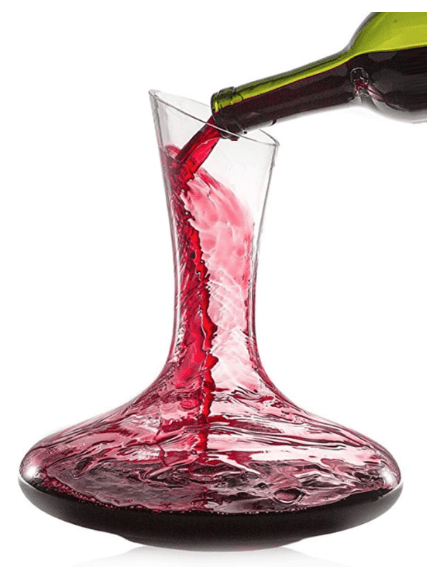
The decanter should not be filled to the top as there needs to be space to allow the wine to breathe and release its aromas. Quite often a bottle of wine will fill up to the widest part of the decanter.
By following these guidelines, you can ensure that you are receiving the most flavour and aroma experience from every bottle of wine.
These are the wineries from British Columbia that particularly caught my attention this past year. My impressions are based on several factors: the winery’s performance at both the National Wine Awards and the All Canadian Wine Championships, environmental and sustainability practices of each winery and my own thoughts.
I have listed the wineries in alphabetical order and have included several of their 2023 award winning wines.
Corcelettes Estate Winery
Corcelettes was ranked as the second best performing small winery at this year’s National Wine Awards. It is located on 150 acres in British Columbia’s Similkameen Valley. Charlie and Jesce Baessler blend passion, precision and science to craft their expressive, small lot premium wines. No short cuts are taken in finding balance between viticulture, the environment and winemaking.
Corcelettes first vintage was in 2011, consisting of 200 cases. They currently craft 8,200 cases of wine per year, with plans of each future vintage growing in production size.
Their portfolio includes predominantly Syrah and Pinot Noir, crafted from Similkameen grown grapes. There is also a small selection of premium wines from the Micro Lot Series; wines crafted from specially selected grapes available only in limited quantities.
In addition to this year, Corcelettes was among the Top 10 Small Wineries at the 2018, 2019 and 2021 National Wine Awards of Canada.
This year’s Platinum and Gold award winning wines included:
Deep Roots was awarded Best Performing Small Winery at this year’s National Wine Awards where they earned 1 Platinum, 4 Gold, 1 Silver and 4 Bronze medals.
Their Platinum and Gold winners included:
Deep Roots 2020 Reserve Chardonnay
Deep Roots 2020 Parentage Red
Deep Roots 2022 Gamay
Deep Roots 2020 Syrah
Deep Roots 2022 Sauvignon Blanc
Deep Roots is a family owned and operated winery situated on the clay cliffs above Okanagan Lake on the Naramata Bench, where beginning in 2003 the Hardman family began switching their 100-year-old family farm from an apple orchard to a vineyard. Today they have 19 acres of grape vines spread between two Naramata vineyards, using almost exclusively estate fruit.
Initially the grapes were all sold to CedarCreek and Lake Breeze, among others. However, that all changed in 2012 when Will Hardman broke ground to create his own winery. There are two vineyards at two sites on the Naramata Bench where they grow Muscat, Gamay, Merlot, Chardonnay, Pinot Gris, Malbec and Syrah grapes.
All the vineyard work is done by hand, as the Hardmans are passionate about producing grapes that are the best expressions of each varietal.
Road 13 Vineyards
At Road 13 in Oliver, B.C., they farm to protect the land. Their philosophy is that by taking care of the dirt, the dirt then can take care of the roots of the vines, thus producing the best fruit possible. Doing things right means going the extra mile, in both the vineyard and in the cellar. Winemaker, Barclay Robinson and his crew farm organically to produce the best wine possible.
Road 13’s Platinum and Gold award winning wines included the following:
Road 13 2020 Select Harvest GSM
Road 13 2013 Jackpot Sparkling Chenin Blanc
Road 13 2020 John Oliver Cabernet Franc
Road 13 2021 Viognier
Road 13 2020 John Oliver Petit Verdot
Road 13 2022 Honest John’s Rose
SpearHead Winery
SpearHead Winery of Kelowna, B.C, appears on my list of British Columbia’s list of movers and shakers for the second straight year.
Their focus is on premium quality wine which is produced from grapes grown in their estate vineyard and from selected Okanagan Valley vineyards. The hand harvested grapes are sorted at the winery and fermented in small lots.
SpearHead produces Pinot Noir, Chardonnay and Riesling varietals. Approximately 80% of the 15 acres of vines is comprised of Pinot Noir including four different Dijon clones, 2 California heritage clones and Pommard. This combination of plantings enables the wine maker to select from the different characteristics of these clones to create a complex Pinot Noir from their home vineyard. They also draw from several other vineyards in the Okanagan including Golden Retreat in Summerland and Coyote Vineyard in West Kelowna.
Their 2023 Platinum and Gold award winning wines include the following:
SpearHead 2020 Club Consensus Pinot Noir
Spearhead 2020 Golden Retreat Pinot Noir
SpearHead 2021 Saddle Block Pinot Noir
SpearHead 2021 Cuvée Pinot Noir
SpearHead 2021 Golden Retreat Pinot Noir
SpearHead 2022 Pinot Gris
Wild Goose Winery
It all began in early 1983 when founder Adolf Kruger purchased a piece of land east of Okanagan Falls.
Kruger first planted Riesling and Gewürztraminer with the intention of selling the grapes. Over the following few years, outstanding wines were produced by purchasers of the grapes leading him to the decision to make his own wine.
Wild Goose Winery became the seventeenth winery in British Columbia and was established in June 1990. The winery started producing Riesling, Gewürztraminer and Maréchal Foch. Over time Wild Goose established itself as a premium small producer of VQA wines.
In July of 2021, the Wyse family of Burrowing Owl Vineyards purchased Wild Goose Vineyards & Winery. Wild Goose’s approach to winemaking has been to grow the highest quality fruit and then transform it into premium wines.
It has become a bit of a tradition that as the year draws to a close that I share my thoughts as to which wineries are stepping forward to be noticed. As usual I have based my opinions on each winery’s performance at both the National Wine Awards and the All Canadian Wine Championships, environmental and sustainability practices and my own personal impressions.
The number of wineries on my list varies from year to year as I prefer to highlight wineries that I feel have excelled. This is not to suggest that these are the only great wineries in the province; they are merely the ones that especially caught my attention this year. The wineries are presented in alphabetical order and I have included several of each winery’s 2023 award winning wines.
Broken Stone Winery
Having been introduced to this winery this past summer I have become a big fan. I then did some research to see what I could find out about it.
Broken Stone began in 2009 when Tim and Micheline Kuepfer purchased three hayfields along a backroad near Hillier, in Prince Edward County. At the time, the acre of newly planted grape vines that came with the land was almost an afterthought. The first harvest was in 2010 when two tonnes of quality Pinot Noir grapes were picked. An additional four acres of grapes were then planted with a vague notion that someday maybe a winery may be developed.
In 2012 a small building was constructed and the necessary licensing to make wine was obtained. Broken Stone Winery was born. Since then, the Kuepfers have been balancing the busy lifestyle of raising a family in Toronto with their passion for growing vines and making wine in Prince Edward County.
The result has become a dynamic boutique winery in the heart of the Prince Edward County wine region. Their mission is to grow the highest quality grapes and craft world-class wines. They believe that great grapes make great wine, and they strive to ensure that each great vintage is a little better than the last. Broken Stone continually strives to improve the vineyard biodiversity and soils. They strive to live in harmony with the earth and leave a legacy for future generations.
Colchester Ridge Estate Winery
Colchester Ridge is a relatively new winery located in Harrow, which is in the Lake Erie North Shore wine region. The wine labels display the acronym CREW.
I was first introduced to CREW wines by a friend who brought my wife and I a bottle of Meritage when they came to stay with us for a weekend just prior to the pandemic. From then until this past July, my search for another bottle had been fruitless (no pun intended). Then finally I was able to order several bottles of their most recent release, the CREW 2020 Meritage.
CREW was established in 2001 by the husband and wife team of Bernie and Nancy Gorski. The Gorski’s planted twelve acres of vines on their family land in 2001 and produced their first vintage in 2004. Then in 2006 they opened their shop. After years of continual growth, the Gorski’s launched the new CREW Winery & Gallery in November 2019.
Their award-winning wines include the following:
CREW 2020 Barrelman’s Blend
CREW 2020 Meritage
CREW 2018 Grand CREW Cabernet Sauvignon
Hidden Bench Estate Winery (ranked 1st at National Wine Awards)
Hidden Bench was recognized as the 2023 Winery of the Year at the National Wine Awards of Canada. Hidden Bench has come close to top Awards before, previously competing in the small winery category. However, the winery has grown to produce now over 10,000 cases of wine each year, allowing it to qualify for the top prize. Owner Harald Thiel is committed to being an estate winery using only Beamsville Bench fruit. By controlling his own fruit, he can control the quality as well.
Hidden Bench has emerged as the signature property among several highly regarded wineries on Niagara’s Beamsville Bench, an area of gently sloping, north-facing, limestone-laced sites and maturing vineyards and wineries. All of the wines of Hidden Bench are sourced from the Beamsville Bench and are produced using a comprehensive sustainable approach.
Hidden Bench also appeared in my 2022 and 2020 Ontario lists.
Hidden Bench’s 2023 award winning wines include 2 Platinum, 5 Gold and 5 Silver winners. The platinum and gold winning wines included the following:
Hidden Bench 2020 Pinot Noir Felseck Vineyard
Hidden Bench 2020 Chardonnay Tête de Cuvée Rosomel Vineyard
Hidden Bench 2020 Estate Riesling
Hidden Bench 2017 Natur Zero Dosage
Hidden Bench 2020 Chardonnay Felseck Vineyard
Hidden Bench 2021 Nuit Blanche Rosomel Vineyard
Hidden Bench 2021 Chardonnay Beton
Tawse Winery (Ranked 2nd at National Wine Awards)
Tawse Winery adheres to a non-interventionist philosophy and a firm belief that the start of every great wine begins in the vineyard. Their wines reflect their unique terroir near Vineland, in the heart of the Niagara wine Region.
Healthy vines yield quality fruit which allows for the creation of terroir-driven wines of great elegance, depth and character. Promoting the health of the vines and vineyards requires a labour-intensive and hands-on approach. Yields are kept low by cluster-thinning to ensure that all the energy of the vine is focused to ripen fewer, higher-quality grape clusters.
Organic farming feeds the vines and controls diseases without the use of synthetic insecticides, fungicides and fertilizers. They strive to create a diversified balanced ecosystem that generates health and fertility from the vineyard itself. Healthy vines mean less need for outside substances to control diseases and promote growth.
The architecture of the winery was created to be environmentally friendly. The wines are aged in underground cellars, which keeps the ambient temperature between 10 and 16 degrees Celsius, with a natural humidity of approximately 85%. The modern geo-thermal energy system has reduced the use of traditional forms of energy by 80%. There is also a wetland bio-filter which allows them to re-use all their sanitary and winery process water.
Tawse earned 2 Platinum, 4 Gold, 8 Silver and 5 Bronze medals this year at the National Wine Awards. The Platinum and Gold award-winning wines include the following:
At the dawn of the twentieth century, Ireland was the hub of the world of whiskey with Bushmills being the oldest licensed whiskey distiller in the world. Jameson was one of the most recognized names and Dublin, the centre of it all having one of every three workers involved in some way with the whiskey industry. At that time about three quarters of the world’s whiskey came from Ireland.
Photo credit: forbes.com
However, the events of history were not kind to the Irish whiskey trade. Two world wars, the Irish War of Independence, Prohibition and the rise of the Scotch Whisky industry all played a part in its demise. By the 1960s the industry was on the verge of extinction with only one percent of the world market share.
By the 1970s there were only two operational distilleries in all of Ireland; Midleton, who produces many well-known Whiskey brands including Midleton, Jameson, Powers, Redbreast, Writers Tears, The Irishman, Green Spot, Yellow Spot, Red Spot, Blue Spot amongst other labels, and Bushmills, who at the time was also then owned by the same company.
For several decades there were no working distilleries in Dublin (Midleton was located in County Cork and Bushmill was in County Antrim, Northern Ireland) but today there is a resurgence throughout Ireland, including Dublin. In 2015 the redevelopment began in Dublin with the launch of Teeling Distillery. Since then there have been others who set up shop including Roe & Co, Pearse Lyons and the Dublin Liberties.
Today the Irish Whiskey industry is healthier than it has been for over 120 years. According to the Irish Whiskey Association, as of December 2019 there were 32 distilleries in operation in Ireland.
If you are planning to visit Ireland here are some of the best distilleries to visit:
DUBLIN
Pearse Lyons Distillery – Founded by the late Pearse Lyons in the Liberties district of Dublin, this boutique distillery is a unique spot to learn about the brewing and distilling processes. It is located in the restored St James’ Church on James St.
Tullamore D.E.W. Distillery – Created in 1829 and later prospering under general manager Daniel E Williams (hence D.E.W. in the name), Tullamore D.E.W is the second largest selling brand of Irish Whiskey globally.
Teeling Whiskey Distillery – The first new distillery in Dublin for 125 years, it is located in Dublin’s historic distilling district.
Roe & Co Distillery – Named after legendary 19th-century whiskey pioneer George Roe, Roe & Co opened their doors in 2019 at the Guinness Power House.
The Dublin Liberties Distillery – Set in the district from which it takes its name, it is a modern, state-of-the-art distillery on Mill St. You can hear the tales of trade, conflict and debauchery about the Liberties district, stretching back hundreds of years to when it was outside of the official Dublin city limits.
Jameson Distillery, Bow St. – Ireland’s most famous whiskey opened in 1780 by John Jameson. The distillery on Bow St in Smithfield has been a staple in Dublin for over two centuries. Although since 1971 it has operated only as a visitors’ centre.
MIDLETON
Jameson Distillery, Midleton – Midleton, in County Cork, is where the bulk of Jameson operations have taken place since 1975.
COUNTY CARLOW
Royal Oak Distillery is the first to distill all three styles of Irish whiskey: pot still, malt and grain, all under one roof. It’s also the largest non-automated distillery in Ireland.
COUNTY CORK
Clonakilty Distillery – Single pot still whiskey is Clonakilty’s specialty. They also will explain how different woods change the character of the whiskey as it matures.
DINGLE PENINSULA
Dingle Distillery – Since 2012, the Dingle Whiskey Distillery has been distilling some excellent single pot still whiskey.
COUNTY KILKENNY
The Ballykeefe Distillery – Though only in operation since 2017, the distillery is situated on land that has a distilling heritage going back hundreds of years. They follow the family farm traditions and have a strong commitment to sustainability.
With records of distilling going back to 1324, it’s claimed that Kilkenny is the birthplace of Irish whiskey.
COUNTY MEATH
Slane Irish Whiskey Distillery – Located 50 minutes outside of Dublin, the distillery is located in in the 250-year-old stables of Slane Castle.
WATERFORD
Waterford Distillery – Distilling since 2015, Waterford Distillery’s state-of-the-art facility is on the banks of the river Suir.
COUNTY WESTMEATH
Kilbeggan Distilling Co. – Established in 1757, it claims to be Ireland’s oldest licenced distillery and after battling through a painful closure in 1953, it was revived by locals in the 1980s who have maintained it ever since.
COUNTY WICKLOW
Powerscourt Distillery – At the foot of the Wicklow Mountains, Powerscourt Distillery is located a short drive south of Dublin. Set in The Old Mill House, the distillery was once at the heart of the local farming community.
COUNTY ANTRIM, NORTHERN IRELAND
The Old Bushmills Distillery – On the wild north coast of Ireland, the Bushmills Distillery has been in operation for over 400 years, making it one of the oldest whiskey distilleries in Ireland. Established in 1608, it claims to be the oldest licensed distillery in the world.