Pizza is one of the most versatile dishes. It can be presented gourmet style at a dinner party to discriminating adults, served to a group of rambunctious kids at a birthday party, munched on as finger food in front of the television, or eaten cold from the fridge as breakfast. The styles vary greatly as well, spanning from micro-thin Roman crust to Chicago-style deep dish. Complicating things further is the broad range of toppings that can adorn the pizza; a variety of flavourful meats that will have a wide range of spiciness; vegetables that range in the level of heat; an assortment of cheeses with varying levels of saltiness; the possibility of anchovies or pineapple; and finally, the type of sauce. Complicating things even further is the option to have a variety of pizzas at one time, giving guests several choices to indulge in.
Photo credit: homemadepizzaschool.com
So how do you ever decide which wine to serve with all these variations and possibilities? Should the wine be paired with pizza sauce and toppings in similar fashion as with a plate of pasta? What if there are multiple pizzas or a pizza that is half one type and half another type? Should Italian wine be served in recognition of pizza’s origins, even if you are serving pineapple and ham topped pizza? How can the simplest dish be so complicated?
A number of experts agree that pretty much any wine can go well with pizza. It can be fun to pair your favourite pizza with the perfect wine but you may feel that pizza wine is a mood. The trick is to find wine that celebrates rather than competes with what’s on your mind and your plate. In other words, the perfect pizza wine is in the eye of the beholder.
When serving one type of wine with a variety of pizza, choose a versatile bottle that will appeal to as many people as possible. If you decide to serve more than one type of wine, be sure to highlight this fact and encourage your guests to try the various combinations of wine and pizza.
However, for those who prefer to match specific wines to a particular type of pizza, here are some suggestions for you.
BBQ Chicken Pizza
The smokiness and sweetness of the barbeque sauce will pair well with Pinot Noir, Dolcetto, Merlot, Chardonnay or Rosé.
Hawaiian Pizza
A reasonably sweet Riesling, Prosecco or Sauvignon Blanc will pair well as a counterbalance to the saltiness of the ham and the flavour of the pineapple.
Margherita Pizza
Featuring the simple and classic flavours of tangy tomato, creamy mozzarella and fragrant basil, a margarita pizza lends itself to light/medium-bodied wines. Pinot Grigio, Sangiovese or Rosé would all be good choices.
Meat Lovers Pizza
The intense flavours of Meat Lovers needs a wine with a higher amount of tannins, such as Cabernet Sauvignon, Tempranillo, Shiraz or Malbec.
Pepperoni Pizza
Because of the spiciness of pepperoni, a wine with rich, fruity flavours like a Sangiovese, Barbera or Nebbiolo would pair well.
Vegetarian Pizza
With Vegetarian pizza it is important to have a wine that won’t compete with the mix of vegetables on the pizza. An unoaked Chardonnay, Sauvignon Blanc, Prosecco or Rosé are all good choices.
Final Thoughts
Whatever you decide to do, whether it be pair your wine to the type of pizza or take a more generalist approach, there is an old theory that says, “What grows together, goes together”, which means that most any Italian-style wine will go well with whatever pizza you serve. My personal preference is Sangiovese but Chianti, Nebbiolo, Barbera, Nero d’Avola, Fiano or Vermentino pair well too.
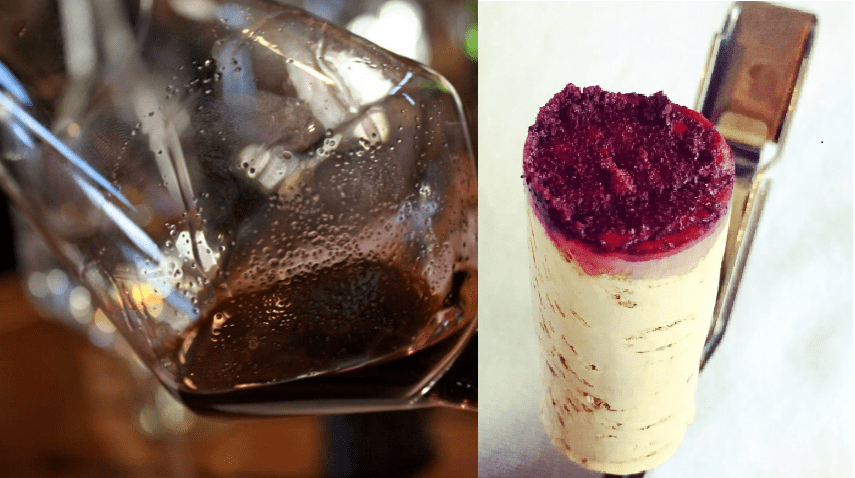
Occasionally you may come across a bottle of wine that contains tiny crystal shards that could appear as tiny pieces of broken glass. These are tartrates that are often referred to as wine diamonds. Although they may cause a slight gritty texture on your tongue, they are harmless and safe to consume.
These wine diamonds may occur if the wine has been exposed to temperatures below 4°C, when potassium and tartaric acid, both naturally occurring products of grapes, bind together to form a crystal.
Tartaric acid is used to maintain a wine’s body, character and colour but many wines contain a surplus of the acid, which accounts for the appearance of the wine diamonds. Potassium, which is another big component in wine, binds with the acid and creates a salt called tartaric bisulfate, which separates from the wine and creates the crystals that are found at the bottom of the wine bottle or on the underside of the cork.
The colour of these crystals is dependent on the pigment of the wine. In red wine they will often appear brown or dark red. In white wines they will often look brownish or resemble glass.
It is difficult to predict which wines will have high levels of tartaric acid and thus have wine crystals. Weather, region, soil nutrients and grape varieties all play a role in determining the amounts of acid present in a particular grape.
Older wines are more likely to form crystals or sediment once the cork is removed. As wines are constantly evolving during the aging process, elements within the wine are constantly interacting with each other. As such, some chemical bonds that are formed in the bottle are denser than the wine itself, causing them to sink to the bottom of the bottle. This is part of the aging process.
The presence of wine diamonds is considered by many winemakers as a sign of high quality because it means that the wine was not over processed.
Although wine diamonds may leave a slight gritty texture on your tongue, they do not impact the taste of the wine nor do they pose a health risk. They are completely safe to drink.
If you prefer not to serve wine crystals in your wine you can decant the wine by simply pouring the wine through a wine strainer or cheesecloth into a wine decanter.
Today I present to you the amalgamated thoughts of ten different sources – Liquor, VinePair, Gear Patrol, Forbes, Esquire, Punch Drink, Elle, GQ, Men’s Health and Delish – as to what are the Top 5 Scotch Whisky recommendations for 2023. The results were compiled by the organization StudyFinds.
However, before presenting the list, there are some things to keep in mind. There are a large number of Scotch Whiskies produced, many of which are not available for purchase outside of Scotland. Therefore, this list just contains those whiskies that have benefited from international exposure and have, in return, received the most attention and the largest number of recommendations from writers and critics.
So, without further ado here is the list.
1. Talisker 10-Year-Old Single Malt Scotch Whisky ($139.95 CDN)
Talisker is created by the oldest distillery on the Isle of Skye. It is aged in ex-bourbon casks for a minimum of 10 years. It boasts a rich gold colour. With a powerful peat-smoke on the nose with just a hint of the sea-water salt of fresh oysters and citrus sweetness, this full, rich-bodied single malt has a rich dried-fruit sweetness on the palate, with smoke and strong barley malt flavours. It has a finish that is long and warm, with an appealing sweetness.
Bartenders favour Talisker 10-Year-Old Single Malt because of its salty, smoky and spicy flavour. They find it an excellent choice when making stirred drinks and highballs because of its oily texture and weight.
2. Glenfarclas 15-Year-Old ($109.50 CDN)
Glenfarclas is one of the few remaining family owned and operated distilleries in Scotland.
The Glenfarclas 15 is bold and very smooth with aromas of port and sherry followed by a little smoke and leather. There are flavours of a bit of jalapeno and a little anise and a little smoke, ending with a pepper spicy finish.
3. Ardbeg Corryvreckan ($201.40 CDN)
This one has been getting a lot of press lately. It was included in my holiday gift suggestion list for the Scotch drinker in December.
In 2010 it was awarded The World’s Best Single Malt by the World Whiskies Awards. It is an intense, non-chill-filtered whisky with flavours of peat and pepper. It is aged in virgin French Limousin oak. At 57.1 percent ABV, Ardbeg makes a great option for a slow sipping Scotch, full of flavour and punch. It tastes of rich, peaty tobacco with a medicinal herbaceous quality with hints of sweet spice and citrus peel.
4. The Macallan Double Cask 18 Years Old ($470.00 CDN)
Although rather pricy, the experts agree that The Macallan Double Cask 18 Years Old is one of the best luxury Scotch whiskies. It is aged in oloroso-seasoned American and European oak casks. There are aromas of golden raisins, ginger, caramel and orange and tastes of dried fruit, citrus and nuts. The finish is warm with hints of oak spice, ginger and sweet orange.
5. Lagavulin 16-Year-Old ($175.95 CDN)
If you’re looking for a Scotch that’s both high quality and available at most liquor stores, including mine in Gananoque, ON, Lagavulin 16-Year-Old is a good one. It is one of my personal favourites. I will always be grateful for having been introduced to it by my wife’s uncle during a trip to Islay several years ago.
Reviewers love this Scotch for its well-balanced, yet complex flavours. Earth and smoke define its profile, as well as an attractive array of fruit, light caramel and vanilla flavours. Spice lingers on its finish, leaving smoke behind as a pleasant and surprisingly subtle afterthought.
Most wine enthusiasts are familiar with international wine regions such as France’s Bordeaux, California’s Napa Valley or Italy’s Tuscany. However, there are many other, lesser-known regions, each offering its own unique characteristics. These regions offer not only good wine but fewer crowds and opportunities to discover places less travelled. My list is not intended to be all-encompassing; it is merely a list of regions that I have found intriguing for one reason or another. The regions are presented in alphabetical order by country.
Pedernal Valley, Argentina
Located in the shadow of the Andes mountains, Argentina’s wine country is spectacular. Situated north of the famous Mendoza region is the lesser-known Pedernal Valley. It is felt that the Pedernal Valley can stand on its own merits as a premium wine region. The region’s Malbec is considered world-class and distinct and represents a unique style.
Mendocino County, California, United States
Mendocino County grows less than four percent of California’s grape yield but contains an impressive one-third of the state’s certified organic vineyards. The number of old vines, post-WWII plantings makes this region unique. Some of the best wineries in California source their grapes from Mendocino. Dry-farming practices were introduced to the region by Italian families in the early 1900s, which resulted in wines that are concentrated, balanced and distinctly Californian.
Okanagan Valley, British Columbia, Canada
Photo credit: dailyhive.com
Canada’s own Okanagan Valley is considered breathtaking as it is situated between two mountain ranges and contains glacial lakes and rolling hills of vineyards. The region produces world-class wines that are difficult to find outside of Canada. The high-quality wines combined with the beautiful views of the region have attracted top winemakers from France, New Zealand and South Africa.
Chinon, Bugey and Savoie, France
There are three lesser-known regions in France. Chinon is in the Loire Valley. It is much less popular than its neighbours, Bordeaux and Burgundy. The Loire Valley is famous for its white Sancerre and Pouilly-Fumés. The red variety is Cabernet Franc.
The wine regions of Savoie and nearby Bugey are nestled in the French Alps and are home to great wines and hospitality. Savoie has both a ski and hiking industry and thus there are quality restaurants, wine bars and a wide range of accommodations. The vineyards are spread throughout the Auvergne-Rhône-Alpes overlooking both the mountain ranges and fresh bodies of water.
Bugey is situated underneath the alps. There is a group of small producers that have either relocated from other parts of France or are new vintners who are focused on raising the profile of the region.
The Republic of Georgia
Georgia is the world’s oldest continuously producing wine region but it is one of the lesser known. This is due to The Republic formerly being under the control of the former Soviet Union. During that time only four grape varieties of the over 500 available were allowed in production. After gaining independence, Georgia rediscovered its wine culture and began sharing it with the world. Traditional Georgia wine production is unique, resulting in the production of some exceptionally distinctive wines. The wines are produced in underground amphorae called Qvevri.
For additional information about the wines and the region, see my posts The Wines of European Georgia from February 6, 2021 and Traditional Georgian Wine from September 18, 2021.
Szekszárd, Hungary
The Szekszárd wine region is located about 160 kilometres south of Budapest. Not many tourists explore beyond Budapest since the region has not been marketed. However, it is one of the country’s oldest wine regions, dating back around 2000 years. Wine production is small and the wineries are often family-owned, which equates to limited exports and less awareness about the region.
The region has a wide range wine styles. The most popular variety is the Kékfrankos grape (aka Blaufränkisch) which produces a tannic and spicy style of wine. There’s also Kadarka grapes which creates a fresh acid red fruit that is meant to be enjoyed without aging.
Mexico
Mexico’s wine history dates back to the1600s but the region remains a virtual unknown for many wine enthusiasts. Although wine grapes have been cultivated there for 400 years, it has only been during the past several decades that there has been a renewed focus on premium and terroir-driven expressions.
Valle de Guadalupe’s boutique wineries are experimenting with a mix of European red grapes such as Cabernet Sauvignon, Nebbiolo and Tempranillo. The varietals are often blended to create a Bordeaux style of wine.
Middleburg, Virginia, United States
California, Oregon, Washington and New York dominate the U.S. wine industry but there are other regions worth noting. One of these is Middleburg, Virginia. Virginia was one of the first places in America to produce wine but it is still a relative unknown. The wine industry there is mostly made up of small artisanal producers who are creating world-class wines. Some think of the region as a crossroads between Napa Valley and Bordeaux. The region is situated in the foothills of the Blue Ridge Mountains an hour outside Washington DC.
Final Thoughts
There are many lesser-known wine regions to be explored, either by visiting or merely by sampling the wines they produce. By expanding our horizons and creating new experiences, we will ultimately find more wines to enjoy.
There is a recurring theme of grape revivals beginning to take place in Europe. Back on May 28th I wrote about France’s The Forgotten Grape of the Loire, the Lignage grape, and today I will talk about efforts taking place by some of the world’s largest wine producers. Not only do they have the resources to take on such a massive undertaking, but they also have the land, the vineyards and the history to be able to go back in time to re-plant vines for the future.
One such producer is Spain’s Familia Torres where Miguel A. Torres, the fourth-generation president, began the work about 40 years ago after discussing the great phylloxera aphid epidemic of the late 19th century with famed University of Montpellier viticulture professor Denis Boubals. The insect infestation, which unknowingly came from North America, destroyed most European vineyards. However, Boubals believed that a few vines had probably survived somewhere.
Torres began the search for orphan vines and over several decades his winery has rediscovered 54 ancient grape varieties from Catalonia, including six good enough to produce as wine. It is his belief that we need a new way of understanding wine in order to mitigate the effects of climate change. With that aim, Familia Torres focused their efforts on reducing their carbon footprint, while recovering ancestral varieties, promoting research and implementing regenerative viticulture to benefit the vineyards and the planet. What makes these old varietals even more interesting and potentially important in light of climate change is that they have been found to be significantly resistant to both heat and drought.
Regenerating ancestral varieties is an exercise in viticultural archaeology to recover past heritage. By reviving varieties used by their ancestors, they can look to the future and discover the authenticity that will result in extraordinary wines that are truly special and cannot be made the same way anywhere else.
With an understanding of the type of varieties and vines that prospered so well in its soils in the past, the Torres family will be able to work better with the grapes and terroir they now have in their vineyards.
The first step of the project was to try and fine old vines and determine if they were indeed varieties that were no longer cultivated. This required going to the media outlets and placing ads asking farmers to contact Torres if they came across vines they could not identify.
Their first breakthrough came in the mid-1980s when a vine was found that Torres’s technical team could not identify. This unknown varietal was eventually identified as Garró. After much examination and research the decision was made to plant the variety in Conca de Barberà and add it to the blend of the first Grans Muralles vintage in 1996.
In 1998 a second variety was found and named Querol, after the village where it was found. The 2009 vintage was the first Grans Muralles blend to include grapes from the Querol vines.
Since 2000, Familia Torres’s research team has collaborated with France’s National Agricultural Research Institute, the INRA, to establish and implement specific stages when looking to identify and revive ancestral varietals. These stages include:
Search for Varietals
This includes the placement of ads with local and regional media outlets to tell grape growers who to contact if they happen to come across an old vine. When a potential case presents itself, Torres’s technical team conducts a preliminary evaluation on site.
Identification and Classification
To identify different varieties, ampelographers analyze the shoots, leaves, canes and grapes. A DNA analysis of the vine is then completed to dispel any remaining doubts about the variety. If the variety is identified as being unique, the team then completes a detailed description of all of the plant’s components.
Evaluation and Enological Potential
In order to study the behavior of these varieties under normal reproductive conditions, the vines are planted in a pilot vineyard. This allows for an in-depth analysis of the vegetative and productive parameters of each individual variety. The grapes are harvested to evaluate the enological (science that deals with wine and wine making) potential and organoleptic (being, affecting, or relating to qualities (such as taste, colour and odor) of a substance (such as a food) that stimulate the sense organs) quality of the wines.
Adapting to the Vineyard
The varieties displaying enological potential are planted in vineyards to evaluate their performance under more extreme climate conditions. Once the ideal conditions for each variety have been identified and its enological potential verified, the process of registering it with the relevant authorities begins.
The complete list of ancestral varieties that have been regenerated by Familia Torres include the following:
Garró
Garró was the first variety to be revived. First found on the terraced slopes of the Garraf Massif in the mid-1980s, it was planted in the early 1990s in Conca de Barberà. It was initially used in the blend of the first Grans Muralles vintage (1996). This is a late ripening, low yield variety with “great aromatic complexity”, according to Torres. It also “displays intense notes of green leaves and ripe black fruit. They are big on the palate, with lots of character and lively tannins”.
Querol
This old vine, rediscovered in 1998 near Querol (Tarragona,) saw the resurgence of a variety that was named after the village where it was found. It is one of the few known varieties that is completely female. This means that unlike most vinifera vines, its flowers are female rather than hermaphroditic (having both male and female reproductive organs). s a result, the berries are smaller and more irregular, and produce in a low yield.
Torres says Querol wines “are intense and fruity (forest fruit, pomegranate juice) with a big, concentrated palate that displays good acidity”.
Moneu
Moneu was also found in 1998 near Querol. It is named after Coster de Moneu, located to the south of the village. It is a red variety that grows well in high temperatures and drought conditions. The wines offer intense aromas of fragrant fresh fruit with well-defined acidity and gentle tannins.
Gonfaus
This is a red variety that was found around Lluçanès in Osona county in 1998. The climate conditions there are extremely dry, with large changes between daytime and nighttime temperatures. Gonfaus is a very low-yielding variety with wine that displays complex aromas of ripe fruit with slightly spicy undertones. It has well-integrated acidity and ripe, sweet tannins.
Forcada
Forcada is a white varietal found in Ripollès county. It is very vigorous and productive, as well as very aromatic. It has aromas of herbs, white flowers and citrus.
Pirene
Found in the foothills of the Catalan Pyrenees, Pirene is a strongly pigmented red variety with high tannin levels and a spicy, minerally nuance. The flavour reveals flavourful fresh fruit.
Given the severe winter storm that is expected to arrive later today and the power outages that are anticipated to accompany it, I am publishing the blog earlier this week.
The world of wine can be intimidating, appear complicated and very mysterious. Understanding the flavours of the large number of grape varieties and complicated regional appellations can be somewhat daunting.
Photo credit: theundergroundbottleshop.com
If you’ve been firmly staying within your comfort zone and continually drinking the same type of wine, it’s time for a change. Although it’s great to have a safe choice or two, it is good to explore new horizons. There is an exciting world of wine ready to be discovered.
If you insist on staying with the same grape variety, then try wines from different regions and styles. For example, if you normally drink a California Chardonnay, try an Australian one or a French Chablis. If an Australian Shiraz is your preference, sample a French Syrah. For great Merlot, consider lesser-known varieties with similar flavour profiles, such as Spanish Mencía or Saperavi, an ancient red grape from Georgia. Pinot Noir enthusiasts should explore those wines of Burgundy France, Oregon, New Zealand, Australia or Argentina. Region can have a great influence on character and flavour.
The total experience, from purchase to consumption, can affect your perception of the wine you are drinking. Grocery stores are great for picking up a few cans or bottles of your favourite coolers or beer, but not a great option when purchasing wine. To best ensure that you have a good buying experience, always go to a good quality liquor store or specialty wine shop that has knowledgeable staff. You can ask for advice and receive suggestions, especially if you become a regular at a place with experienced and well-trained employees.
To help you select a good bottle, don’t be afraid to ask about new products or releases, innovative winemakers and local wines, or ask for pairing suggestions for an upcoming dinner. You can help the staff understand your likes by revealing your favourite varieties and styles. One thing to remember is that there are good wines in every price range so don’t be intimidated by wanting to stay within a specific price range.
Regarding price, it is one of the most common misconceptions about wine. People often have the perception that more expensive wines taste better. Purchasing wine varietals that you like from less familiar locations can save you money. Instead of buying wine from the most popular regions, discover reasonably priced quality wines from new, smaller or less popular regions. For example, Chardonnay (Chablis) from France or California tends to be more costly than a wine of the same varietal from Australia or South Africa.
When reading the label on the bottle, resist the urge to simply purchase one with an attractive label or an intriguing name. Neither of these are an indicator of the quality and character of the wine.
The label will tell you whether it is an Old World or New World wine. Old World wines are from Europe whereas New World wines are from anywhere but Europe. New World wine labels will generally identify the actual varietal or varietals that the wine consists of. In contrast, Old World European wines indicate the regional appellation where it was produced. Examples would include Bordeaux or Burgundy from France, Chianti from Italy or Rioja from Spain. However, there are many more appellations. Back in the blog archives are posts on the various wine regions of France, Italy, Spain, Portugal, etc. that identify which grape varietals are produced in each region.
Recognizing the name of the wine producer or importer may give you a hint about the quality of the wine, but location and grape variety will provide the best idea of what to expect in a bottle.
The labels will also display the vintage, which indicates the year the grapes were harvested. When purchasing a wine to be enjoyed in the immediate or near future, the vintage doesn’t reveal much about quality. There is a common misconception that older wines are always better. Though this applies to some bold wines that need time to rest before reaching their full potential, it represents only about ten percent of wines produced.
Whether a wine bottle has a cork stopper or screw cap is not an indicator of a wine’s quality. Though cork has been the traditional method for sealing bottles, it is not necessarily the best way. There are both pros and cons to both methods and neither comes out as a clear winner. My blog, Cork versus Screw Cap from January 8, 2022, presents the arguments for both.
Lastly, when selecting a wine at a restaurant, don’t be afraid to ask the wine steward or sommelier for advice. These are typically well-informed individuals who are there to share their knowledge so take advantage of their presence to receive expert advice. They will help you select a wine that will both suit your palate and complement the food.
Looking for the perfect gift for a Scotch or Irish whiskey-loving relative or friend? Here are some suggestions that should satisfy the enthusiast on your shopping lists.
The Laphroaig distillery on Islay has a couple of suggestions. First there is Laphroaig Cairdeas 2022, which is a limited-edition crafted spirit honouring the iconic Warehouse 1. It has the classic Laphroaig flavours of peat, smoke and salt, as well as sweet vanilla, nutty and medicinal notes. It has a peaty, spicy and floral finish. It comes at a price of $144.95 CDN.
The second Laphroaig offering is Laphroaig Ian Hunter – Chapter 3. With a price tag of $2,499.95 CDN, this 33-year-old bottling celebrates its legendary owner, Ian Hunter. Aged exclusively in ex-bourbon casks, this whisky is deep copper in colour with pear, peach, honey and rose petal notes. It has a creamy licorice finish.
The Teeling Small Batch Spirit of Dublin Gift Pack contains the Awarded Best Blended Irish Whiskey at the 2018 Irish Whiskey Awards. Aged in hand-picked casks and finished in rum barrels, it is a brilliant yellow gold colour and is light, smooth and sweet on the palate, with notes of burnt sugar, tropical fruit, vanilla and spice. It comes with a pair of whiskey glasses bearing the Teeling emblem and name. The price tag on this item is $51.95 CDN.
Glenfiddich Gran Reserva 21 Year Old Single Malt Scotch Whisky is finished in rum casks for added richness. It has notes of buttered rum, banana and prune along with flavours of fig, vanilla toffee, brown spices, ginger and molasses. The finish is long and spicy with notes of ginger and brown spice. It is package in its own fancy box with a price of $399.95 CDN.
The Macallan Rare Cask, at a price of $500.25 CDN, offers a nose of opulent vanilla and raisin aroma, that gives way to apple and citrus. The flavour is balanced by a spicy mix of ginger, cinnamon, vanilla and chocolate leading to a light citrus zest finish.
For fans of sherry cask-matured single malt scotch whisky, the GlenDronach Revival 15 Year Highland Scotch is matured in Oloroso and Pedro Ximenez sherry casks. Revival, the 15-year-old expression, is hard to beat at a price of $108.25.
For fans of peated whisky, Ardbeg is an Islay distillery known for its extremely peated whisky, having three core expressions. First is the 10 Year Old ($112.45 CDN), with its balanced smoke and fruit character. It has aromas of lemon, smoke, peat and brine. On the palate, it is warm and smoky with bold, yet balanced flavours that resonate with the aromas. The finish is long sweet and smoky. Serve neat or with a few drops of pure water.
Ardbeg Corryvreckan ($201.40 CDN) is named after a tidal whirlpool that lies to the north of Islay. It was created with the input of the Ardbeg Committee, which is a group of 120,000 Ardbeg whisky lovers from all over the world. It has an intense nose of cedar, brine, creosote, with caramel, smoky bacon, vanilla and clove. The palate is also intense but it is round and finely balanced with outstanding length. The lingering finish shows smoky black, tarry coffee with chocolate. It is not intended for the fainthearted but a true Ardbeg fan will have an appreciation of this dram.
If you can find the Ardbeg 25 Year Old ($1,395.40 CDN), the whisky collector in your family will thank you. The briny smoke integrates with sweet bakery aromas of vanilla, streusel, ginger-spiced pound cake, cinnamon and allspice, studded with nuts and dried apple. The palate’s silky texture is an ideal base for warm vanilla, toasted nuts, toffee and milk chocolate, swirling with iodine, peat and gentle gingerbread spices. The finish is complex, compelling and quite lengthy with ginger, white pepper, allspice, saline, coffee grounds, dried apple and lingering smoke.
Gift options that don’t come in a bottle include cocktail books such as Death & Co: Modern Classic Cocktails, Cocktail Codex and Death & Co: Welcome Home. These books contain hundreds of recipes of exciting drinks that are complex but still manageable enough to be made at home.
Lastly, the experience of drinking whisky/whiskey can be greatly enhanced by the glass it is served in. The proper vessel allows the enthusiast to fully enjoy the flavours and aromas of any whiskey and the glasses are even nice to look at. Prices range greatly; starting around $12 and climbing up into the triple digits, depending on whether the vessel is made of glass or varying levels of crystal.
Mulled Wine is a must-have on many holiday cocktail recipe lists but what is it? A traditional mulled wine recipe is made most often with red wine, though white is sometimes used, heated with a mixture of whole warming spices and other optional ingredients like apple cider, citrus and brandy.
Photo credit: thelondoneconomic.com
Spiced wine tastes like a big, fruity red wine crossed with a spicy batch of apple cider, with a touch of spirit.
Mulled wine is known by many names such as spiced wine, hot wine, glögg, glühwein, and vin chaud. They all essentially refer to the same drink, although the spices and liquor of choice may vary.
Depending on personal preference, individual recipes will contain varying amounts of spice, sweetness and warmth. The best wine for mulled wine is dry and full-bodied, such as Merlot, Cabernet Sauvignon, Grenache, Zinfandel, or Syrah/Shiraz. These will stand up to the other flavors and ensure the spiced wine won’t be too sweet. Since other flavours will be added, select a budget-friendly bottle. Don’t go bottom shelf, but don’t use the super good stuff either. Those wines are best appreciated on their own.
At this time of year you will see several brands selling pre-mixed spiced wine in bottles. Don’t be tempted. These wines tend to be overly sweet and contain artificial flavours. They are nowhere close to being of equal quality as the homemade versions.
It doesn’t require a great investment of your time to prepare a steaming pot of mulled wine. It takes about 5 minutes to prepare and can be made either on the stovetop or in a slow cooker. It’s totally customizable with your favourite spices and liqueurs. It will make your home smell wonderful and warm everyone up on a cold winter night.
In addition to your bottle of wine, it is suggested to include the following:
Brandy or other liqueur such as Cointreau (or another orange liqueur) or tawny port
Fresh oranges; one that has been peeled and sliced to mull in the wine; and one to slice and use as a garnish
Cinnamon sticks
Mulling spices, which may include one or more of whole cloves, star anise, a few cardamom pods, nutmeg and ginger
Sweetener such as sugar, honey, apple cider, apple juice or maple syrup.
To make it, combine all the ingredients in a saucepan and give them a quick stir. Heat until the wine almost reaches a simmer over medium-high heat but don’t let it bubble, otherwise the alcohol will begin to vaporize and the wine will begin to evaporate. Reduce heat to low, cover completely, and let the wine simmer for at least 15 minutes or up to 3 hours.
Using a fine mesh strainer, remove and discard the mulling spices. Give the wine a taste and stir in the desired amount of extra sweetener if needed.
Serve warm in heatproof mugs topped with your favorite garnishes.
As an alternative to a saucepan, a slow cooker can be used. The slow cooker keeps the stove top free and the spiced wine warm, and it’s easy for guests to access for refills.
Here is my list of what I consider to be British Columbia’s most noteworthy wineries for 2022. My opinions are based on several factors: the winery’s performance at both the National Wine Awards and the All Canadian Wine Championships, environmental and sustainability practices of each winery and my own personal impressions.
However, there are many more great wineries in the province. These are just the ones that I paid particular attention to this year.
I have listed my choices in alphabetical order and have included several of each winery’s 2022 award winning wines.
Black Hills Estate Winery
Black Hills Estate Winery vineyards have some of the most favourable grape growing conditions in the country, located in the middle of Canada’s only official desert. The resulting microclimate provides one of the hottest, driest and sunniest sites in the country.
Black Hills irrigation techniques and viticulture practices provide ideal growing conditions for the Bordeaux and Rhone varietals.
Black Hills grows four clones of Cabernet Sauvignon, two clones of Cabernet Franc and four clones of Merlot. Each clone has a unique flavour profile. When they are blended together, this Clonal diversity gives multi-faceted depth and complexity to the wine.
Black Hills is committed to sustainable, environmentally friendly farming and winemaking practices. All the vines are hand picked, hand pruned and manually maintained. They have been awarded Environmental Farm Plan Status by the British Columbia Environmental Farm Plan, which is administered by the Federal and Provincial Departments of Agriculture, as well as the BC Agriculture Council and the Investment Agriculture Foundation.
Black Hill’s 2022 award winning wines include:
Black Hills 2020 Addendum
Black Hills 2020 Chardonnay
Black Hills 2020 Ipso Facto
Black Hills 2020 Per Se
Black Hills 2020 Roussanne
Black Hills 2021 Alibi
CedarCreek Estate Winery (Ranked 1st at The National Wine Awards)
CedarCreek was named Winery of the Year at the 2022 National Wine Awards. The award was earned based on the number of wines receiving awards as well as for their approach to growing grapes and producing their wine.
CedarCreek works to build a healthy ecosystem, utilizing animals and plants to naturally combat disease or pests. Cover crops, like alfalfa and crimson, keep the soil healthy while animals bring a diversity and balance to the land.
Bees pollinate cover crops and wildflowers contributing to the diversity of the vineyard and helping eliminate the need for synthetic pesticides and fertilizers. Chickens eat many unwanted pests and help scratch and aerate the soil and their eggs are served in the winery’s restaurant.
There are three Scottish Highland cows that wander the vineyard rows breaking up the soil. Also, their manure is good for compost and attracting beneficial bugs and birds. Their Scottish roots make them a hearty stock, comfortable in the cool Okanagan winters and known for their friendly temperament.
La Frenz Estate Winery (5th at The National Wine Awards)
La Frenz was the Small Winery of the Year at the 2017 National Wine Awards. They are located on the Naramata Bench in the heart of the Okanagan Valley. Over time the winery has grown to encompass 17 hectares across four different vineyard sites, each with its own distinctive soils and aspects.
Their 2022 award winning wines include:
La Frenz 2018 Aster Brut
La Frenz 2019 Cabernets Rockyfeller Vineyard
La Frenz 2019 Grand Total Reserve
La Frenz 2019 Malbec Rockyfeller Vineyard
La Frenz 2019 Syrah Rockyfeller Vineyard
La Frenz 2020 Pinot Noir Desperation Hill Vineyard
La Frenz 2020 Reserve Vivant
La Frenz 2021 Riesling Cl. 49 Rockyfeller Vineyard
La Frenz 2021 Semillon Knorr Vineyard
La Frenz Liqueur Muscat
Mission Hill Family Estate (4th at The National Wine Awards)
Mission Hill is the only winery to appear on both my 2020 and 2021 Movers and Shakers list.
Mission Hill follows organic farming practices. Bees, falcon, and chickens replace pesticides and insecticides. Cover crops, earthworms and compost are used in place of chemical fertilizers.
Their practices are fundamentally rooted in Old World techniques supported with modern technology. The winemaking team continuously innovates, combining fermentation and maturation vessel traditions with future trends.
The 2022 award winning wines includes:
Mission Hill 2020 Perpetua Chardonnay
Mission Hill 2020 Reserve Cabernet Sauvignon
Mission Hill 2020 Reserve Merlot
Mission Hill 2020 Terroir Collection Jagged Rock Syrah
Mission Hill 2021 Reserve Riesling
SpearHead Winery (3rd at The National Wine Awards)
SpearHead was named Best Performing Small Winery at this year’s National Wine Awards. Their focus is on premium quality wine produced from grapes grown on their estate vineyard and from selected Okanagan Valley vineyards. The hand harvested grapes are sorted at the winery and fermented in small lots.
Approximately 80% of the 15 acres of vines is comprised of Pinot Noir, including four different Dijon clones, 2 California heritage clones and Pommard. This combination of plantings enables their wine maker to select from the different characteristics exhibited by the clones in order to create a harmonious, complex Pinot Noir from the home vineyard. They also draw from several other vineyards in the Okanagan including Golden Retreat in Summerland and Coyote Vineyard in West Kelowna.
They have extended their wine making methods to other varietals including Chardonnay, which is made from a single clone.
Spearhead’s 2022 award winning wines include:
SpearHead 2019 Botrytis Affected Late Harvest Riesling
Here is my list of who I consider to be the Ontario wineries of notoriety for 2022. My opinions are based on several factors: the winery’s performance at both the National Wine Awards and the All Canadian Wine Championships, environmental and sustainability practices of each winery, and my own personal impressions.
By far these are not the only good wineries in the province, they are merely the ones that especially caught my attention this year.
I have listed my choices in alphabetical order and have included several of each winery’s 2022 award winning wines.
Hidden Bench Vineyards and Winery (Ranked 17th at National Wine Awards)
Since 2010, Hidden Bench has followed organic practices, and since 2013, all their estate vineyards have been certified as organic.
At Hidden Bench they believe that the highest quality of grapes and wine can only be achieved by avoiding the use of systemic chemical insecticides and fungicides. Since 2015 they have extended their organic certification into the winemaking processes and as of 2016, most wines carry the Pro-cert certification on their labels. Although becoming an organic certified winery has raised costs significantly, they believe the peace of mind and health of those who enjoy the wines and vineyard is well worth the additional costs they embrace.
Part of their philosophy is to have the smallest impact possible on the environment. They have instituted several initiatives to help reduce the footprint and assist with the recovery of the environment.
Hidden Bench uses geothermal energy to provide heating and cooling for both their building and winemaking processes. They have also installed a 105 panel/23.5kW solar array on the storage building which reduces their reliance on the electrical grid and works to be energy cost neutral on an annual basis.
Recycled materials are used in product packaging wherever possible. They also only package their wines at the point of sale to reduce the associated environmental impact.
Hidden Bench’s 2022 award winning wines include the following:
Hidden Bench last appeared on my annual list in 2020.
Malivoire Wine Company (15th at National Wine Awards)
Malivoire was named Winery of the Year at last year’s National Wine Awards and earned 6 Gold, 6 Silver and 8 Bronze medals at this year’s event.
For over 20 years Malivoire has become a base for innovation, creativity and sustainability. They are proud to be Certified under Ontario’s Sustainable Winemaking Program. They promote biodiversity and a healthy living vineyard that protects wildlife habitat. They conserve water and energy in both the vineyard and winery, recognizing the vital importance of natural resources.
While always receptive to new practices or tools to improve their wine, Malivoire recognizes that as a quality-of-life product, wine’s traditions are treasured by many as essential to their fullest enjoyment of the experience. Malivoire has evaluated emerging farm, vinification and bottling techniques, while remaining dedicated to the concept of wine as a natural product.
Malivoire chooses not to use quick-fix chemical solutions to vineyard challenges. Experience has shown that synthetic treatments, while effective in the short term, can cause long-term complications. Natural obstacles can be remedied effectively with natural solutions so the vineyards will thrive without causing deterioration to their surrounding habitat.
Malivoire’s 2022 award winning wines include:
Malivoire 2021 Farmstead Gamay
Malivoire 2021 Gamay Concrete
Malivoire 2021 Le Coeur Gamay
Malivoire N/V Bisous Brut
Malivoire NV Bisous Rose
Peller Estate Winery (14th at National Wine Awards)
Peller Estates consistently produces fine quality wines. They earned 7 Gold, 4 Silver and 3 Bronze medals at this year’s National Wine Awards. Their wine portfolio features four collections: Andrew Peller Signature Series, Private Reserve, Family Series and French Cross.
This year’s award winners include:
Peller Estates Winery 2018 Cabernet Franc Icewine
Peller Estates Winery 2018 Signature Series Vidal Blanc Icewine
Peller Estates Winery 2019 Oak Aged Vidal Blanc Icewine
Peller Estates Winery 2019 Signature Series Riesling
Peller Estates Winery 2020 Signature Series Sauvignon Blanc
Peller Estates Winery Signature Series Sur Lie Chardonnay
Potter Settlement Artisan Winery
Potter Settlement is very small but it has been making great strides to create high-end, quality wines. They produce more than a dozen different wines, most of which are made with grapes grown on the Tweed property. The winery only purchases grape varieties that can’t be grown onsite (because of the cool climate) and they never buy finished wine. If the grapes are not grown on site, the wine label will indicate where they were grown.
It is one of the northernmost vineyards in Canada, where the temperature is known to drop to -27o C during the winter. However, being further north has its benefits, as the soil is rich in minerals.
Potter Settlement is a marriage of rustic, old-world charm with up-to-date winemaking techniques. They respect tradition but strive for progression when creating their wines. The winery promotes organic farming, as well as the use of solar and geothermal energy. They strive to be considerate and respectful of their surroundings. Potter Settlement consists of 10 planted acres of vinifera, hybrid, and VQA-recognized grapes.
Several of Potter Settlement wines are uniquely crafted adhering to historic processes, specific European yeast, or barrels made of uncommon woods.
This year’s award winners include:
Potter Settlement 2019 Cabernet Franc
Potter Settlement 2020 Cordova
Potter Settlement 2017 Marquette
Potter Settlement 2017 Pinot Noir
Potter Settlement 2020 Pinot Noir Rosé
Redstone Winery (18th at National Wine Awards)
Redstone is a new addition to my Movers and Shakers list. They earned a Platinum, 2 Gold, 3 Silver and 4 Bronze medals at this year’s National Wine Awards.
In 2009, Moray Tawse, owner of Tawse Winery, purchased what was formerly the Thomas and Vaughan Estate Winery. Redstone got its name from the red clay soil and large stones that exists throughout the vineyard.
The 38-acre estate vineyard is farmed organically and is perfect for maturing late-ripening varietals including Merlot, Cabernet Franc, Cabernet Sauvignon and Syrah. There is also Pinot Gris on the property. Riesling, Sauvignon Blanc, and Chardonnay varietals are grown on the recently acquired Limestone vineyard.
Fostering the health of their vines and the soil they grow on requires a labour-intensive and hands-on approach. The yields are kept low by cluster thinning to ensure that all the energy of the vine is focused in fewer grape clusters which then become more concentrated in flavour. The grapes are hand-picked to select the very best fruit.
They practice organic farming, which feeds the vines and controls diseases without the use of synthetic insecticides, fungicides and fertilizers. They have chickens that feed on bugs, sheep that eat the lower vine leaves to expose the grapes to the ripening sun and use horses instead of tractors whenever possible to help prevent soil compaction.
Redstone’s list of award-winning wines for 2022 include:
Redstone 2018 Cabernet Franc Redstone Vineyard
Redstone 2019 Bistro Gamay Noir
Redstone 2019 Bistro Riesling
Redstone 2019 Brickyard Riesling
Redstone 2019 The Club Riesling
Thirty Bench Wine Makers (10th at National Wine Awards)
Thirty Bench Wines was awarded Best White Wine of the Year at the All Canadian Wine Awards for their 2019 Small Lot Riesling Triangle Vineyard wine. At the National Wine Awards they received 6 Gold, 7 Silver and 1 Bronze medal.
The vineyard’s location beneath the Niagara Escarpment provides a longer season that allows grapes more time to ripen and cooler nights that help intensify flavours. All Thirty Bench wines are made exclusively with grapes from their own vineyards. Their vines are hand cropped and thinned to produce very low yields to create exceptional quality and an intensity of fruit flavour.
The commitment to “Small Lot” winemaking means many of their wines are made in extremely limited numbers.
2022 award winners include the following wines:
Thirty Bench 2019 Small Lot Riesling Triangle Vineyard
Thirty Bench 2019 Small Lot Riesling Wild Cask ($32.00)
Thirty Bench 2019 Small Lot Riesling Wood Post Vineyard
Thirty Bench 2019 Special Select Late Harvest
Thirty Bench 2020 Small Lot Pinot Noir
Thirty Bench 2020 Small Lot Riesling Steel Post Vineyard
Thirty Bench 2020 Winemaker’s Blend Cabernet Franc
Thirty Bench 2020 Winemaker’s Blend Riesling
Thirty Bench 2021 Winemaker’s Blend Rosé
Next week I will present this year’s list for British Columbia wineries.