Triumph to Tragedy

My wife and I recently hosted a family dinner and for the occasion I asked my wife to purchase a Riesling to go along with it.  One of the challenges of living in a rural community is that the local liquor store doesn’t have a lot of choices when in search of a particular varietal. She returned home with Tawse 2017 Sketches of Niagara Riesling. 

When we opened and served the wine with the dinner my wife and I identified the bouquet right away, diesel fuel.  My wife was immediately turned off by it while I became positively excited.  This was the first Ontario Riesling that I have had that authentically portrays its Old-World style German cousin.

The wine was vibrant with subtle floral, nutty, fig, smoke and pear notes, a soft sweetness and long finish.   It is a great value at only $18.95.  Even though my wife was not a fan of the nose of a traditional German style Riesling, she did enjoy the overall flavour of the wine.

When I clicked on Tawse website to see if I could learn more about their German style Riesling, I saw that their wine maker, Paul Pender, had been tragically killed several days prior.  I never had the opportunity of meeting him but after tasting the Riesling, as well as other wonderful creations from Tawse, I certainly wish I had.  His untimely passing is a tragic loss to the entire wine community.

If you are a fan of Riesling, I suggest picking up a bottle or two of the Sketches of Niagara as a tribute to its creator.

Sláinte mhaith

Appassimento Style of Wines

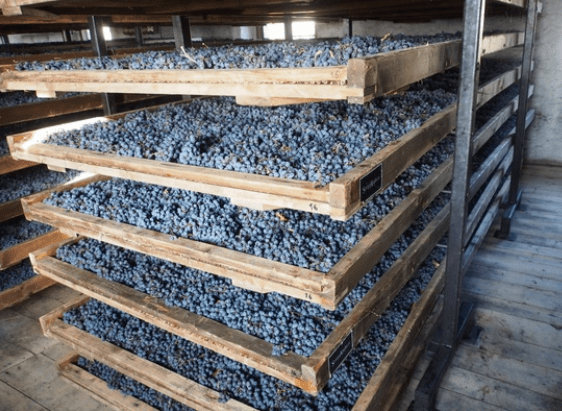
Appassimento is an Italian term that describes the drying of harvested grapes.  Traditionally this was done on bamboo racks or straw mats.  The process took anywhere from a few weeks up to several months to concentrate the sugars and flavours of the grapes. This process is used in making Amarone, Recioto and Sforzato.

Photo credit: WineAnorak.com

The process goes all the way back to the Egyptians or Greeks. The fruit was dehydrated by either leaving them on the vine to dry naturally in the hot sun or by picking and laying the bunches out on straw mats or hanging from rafters.

These types of wines became popular because they provided higher levels of alcohol and sweetness, thus making them not only more stable and complex but appealing to the consumer.

Today, dried grape wines are made in many regions of the world. The most well-known are the Amarone and Recioto wines of Valpolicella in Veneto, Italy.  However, dried-grape wines are also made throughout the rest of Italy and Mediterranean Europe, parts of the southern hemisphere, and even in cool climate regions such as Romania, Moldova, Switzerland, France, Austria, and Germany.

Canada is even now experimenting with these wines. Niagara’s Magnotta’s Enotrium is considered the first of its kind in Canada.

Today the appassimento process consists of harvesting ripe grapes and drying them for a period of several days or months in special rooms where airflow, humidity and temperature are controlled to varying degrees. The process does not ripen grapes like green bananas turning yellow and then brown in a bowl on your kitchen counter. Instead, the process concentrates what already exists in the grapes after they are removed from the vine. The grapes must be very healthy and fully ripe with adequate levels of acidity when harvested.

There are many different approaches to drying in Ontario. Some vintners use ventilated barns or open-air greenhouses while others use kilns.

The drying process will take anywhere from two weeks to over 140 days. Aside from concentrating sugars, acidity and tannins, the drying process will result in important microbiological changes in the grapes that can impart additional unique aromas and flavours adding greater complexity and intrigue to the final product. After the desired period of drying has elapsed, the winemaker will perform a final sorting to eliminate any unwanted fruit from entering the fermentation stage.

Anywhere from 30% to 50% of the original harvested juice yield will be lost using this process. Many of Ontario’s top appassimento-style wines are only made in select, high quality vintages. It is important to inquire as to what percentage of the wine has been dried and to take note of the alcohol percentage and residual sugar present. Knowing this will help you predict the final style of the wine and can help you match your taste preferences to the right product.

A second, less costly by-product of the appassimento process is ripasso wines. Unlike the appassimento wines where dried grapes make up part, or all of the final blend, ripasso wines use fresh, undried grapes to make the base wine which is then re-passed over the used skins leftover from the rarer and expensive appassimento process. This second contact with the skins may start a short re-fermentation adding a slight increase in alcohol to the base wine while adding extra complexity and flavour.

Ontario wineries producing wines using this process include Angel’s Gate, Big Head Winery, Burning Kiln Winery, Kew Vineyards, The Foreign Affair Winery and Rennie Vineyards.

The VQA of Ontario (VQAO) is currently reviewing the use of terms like appassimento and partial appassimento on labels of VQA wines. The VQAO is attempting to update the rules to ensure producers meet all the necessary legal limits for sugar, alcohol content and percentage of dried grapes so consumers will have clarity when buying wines.

As the Canadian wine industry continues to evolve, I believe the inclusion of the Appassimento style will enhance the industry moving forward. Expansion of Canadian viticulture and winemaking provides consumers with an even greater selection of fine wines offering excellent value.

Sláinte mhaith

Scotch Whisky

There are four main whisky regions in Scotland – the Lowlands, the Highlands, Campbelltown and Islay. There are also two whisky sub-regions, Speyside and the Islands, both of which are part of the Highland region.  The Islands are considered to include all the whisky producing islands in Scotland except Islay. Although each distillery’s whisky is unique, the malts produced in each region have some common characteristics that separate them from scotch produced in other regions.

There are four main types of Scottish whisky – ‘single malt’ which is made by one distillery in one batch using only water and malted barley, ‘ grain whisky’ where rye or wheat is added, ‘blended malt’ which is a mix of malts from more than one distillery and ‘blended whiskies’ where many malts and grains are blended together.

Scottish whisky is made and governed by law and must be a minimum of 3 years old before it can be called whisky. Most distilleries produce their first bottling at 10 years old though many are aged longer.

Highlands Region

The Highlands is the largest whisky producing region.  It generally produces more full-bodied whiskies with deep flavours of peat and smoke.

Flavours of fruitcake and oak with heather and smoke are prevalent in Highland whiskies. Wild seas and impenetrable moorlands dominate, creating powerful peaty drams, whilst still leaving room for floral, silky elegance.

The vast size of the region has resulted in Highland whiskies tasting very different from each other, ranging from the extreme heathery, spicy character of Northern Highlands to the fruity whiskies of the Southern Highlands.

Famous highland distilleries include Oban, Glenmorangie, Dalmore, and Glengoyne.

Islands Sub-Region

The versatility of the Islands includes both citrus and smoking peaty flavours.  Scotch from the Islands can be described as a milder version of Islay whisky. The islands, which include Arran, Mull, Jura, Skye and Orkney, have hints of brine, oil, black pepper, heather and honey.  Most of the Island whiskies are salted by the sea.

Talisker’s potent malt hails from the largest distillery of all the islands. Tobermory offers fruity flavours and Jura is nutty and oily, more mid-range in flavour intensity.

Speyside Sub-Region

Speyside is home to over half of Scotland’s distilleries.  However, since Speyside is geographically part of the Highlands, it is considered to be a sub-region of the Highlands by some and a separate region by others.  The region received its name from the river Spey, which cuts through the area.  Many of the distilleries use water straight from the river in their production process. 

Speyside scotch is arguably the country’s most complex, renowned for its sweetness and elegant flavours and aromas, including nutty fruit flavours of apple, pear, honey, vanilla and spice.  Speyside whiskies generally do not use peat as part of their process.

These whiskies often make use of sherry casks thus there is a variety ranging between light and grassy malts such as Glenlivet, and the rich and sweet likes of Macallan.  Other whiskies hailing from the region include Glenfiddich, as well as Balvenie, Aberlour, Tomintoul and Glen Moray, as well as blends like Johnnie Walker and Chivas Regal.

On a personal note both the Glenlivet 15 year old and 18 year old are two of my favourites.

Islay Region

Islay scotch is considered to be the smokiest and strongest flavoured of the single malts.  The strong flavour is believed to be due to the region’s exposure to the high winds and seas of the west coast. 

The distilleries include Laphroaig, Lagavulin, Bowmore, and Ardbeg.

Campbeltown Region

Campbeltown was once considered the whisky capital of Scotland but today only three distilleries remain.  The scotch is peaty with a hint of sea salt and a briny character and is said to have flavours of wet wool, salt, smoke, fruit, vanilla and toffee.

Springbank produces three uniquely different whiskies; Longrow, Springbank and Hazelburn. They range from double to triple distilled, non- to richly peated, caramel to clear.

Glengyle produces the sweet, fruity and spiced Kilkerran while Glen Scotia is light with grassy palates.

Lowlands Region

The whiskies of the Lowlands, which are located just above England, are not peaty or salty.  Soft and smooth malts are characteristic of the region, offering a gentle, elegant palate reminiscent of grass, honeysuckle, cream, ginger, toffee, toast and cinnamon.

Lowland whisky is light with floral tones.  The whiskies include Glenkinchie, Bladnoch, Auchentoshan, Linlithgow, Girvan and Strathclyde.

During the upcoming weeks I will discuss a couple of the regions in more detail and relate some of my personal experiences.

Sláinte mhaith

Dry Times Ahead

North America is now said to be entering the early stages of a Champagne shortage which could last for several years.  There are a number of reasons why this is happening.  First, there are the supply chain issues that I discussed in my December 31, 2021 blog, Wine Shipping Delays. This problem was caused by the effects of COVID-19 on the shipping industry, which has resulted in deliveries taking two or three times longer than normal.

Photo credit: https: TheGrapeGeeks.com

Complicating things further has been the fluctuations in the demand for Champagne.  Because of the COVID-19 related lockdowns of 2020, demand fell by about 25% but rose back up again by the end of that year.  The upward trend continued throughout 2021 with demand returning to pre-pandemic levels as consumers were willing to spend more to wine and dine at home since they were often prevented from dining out at fine restaurants.

However, the Comité Interprofessionel du Vin de Champagne (CIVC), who regulates how much Champagne may be produced each year, in response to the initial reduction in demand, reduced Champagne output but did not react to the resurgence in demand at the end of that year.  The effects of the reduced Champagne production won’t be felt until this vintage reaches the market in a few years’ time. Ironically, the organization whose purpose it is to protect the Champagne industry inadvertently caused significant financial damage.

While consumer demand for Champagne was expanding throughout 2021, France’s Champagne region was experiencing extreme weather issues.  In March there was scorching heat that burned many of the vines.  This was followed by frost that destroyed about 30% of the vines.  Finally, there were torrential rains during June and July that resulted in mildew coating many of the remaining vines.  As a result, the 2021 grape harvest was the smallest in many decades.

Champagne production won’t be returning to normal anytime soon.  Shortages are expected to last through until at least 2025.

These availability problems will provide growth opportunities for producers of other sparkling wines including Italy’s Prosecco, Spain’s Cava as well as many North American varieties. Canadian options include, among others, 13th Street Cuvée Brut Sparkling Rosé, Cave Spring Blanc de Blancs Brut Sparkling, Henry Of Pelham Cuvée Catharine Rosé Brut VQA and Château des Charmes Brut Sparkling.

Sláinte mhaith

To Age or Not to Age

In the past I have talked about how and where to store wine but today I will tackle the issue of understanding the time wine needs to reach its peak and the length of time a wine can be cellared before it begins to deteriorate. 

The experts have conflicting views on this topic as the choices are somewhat based as much on opinion and perception as science.  The one point that everyone seems to agree on is that most wine isn’t meant to age; in fact only 1% of wine should be cellared for a long period of time.  Most wine is released within 2 years of the grapes being harvested and then drunk within 6 months of purchase.

As long as the wine is stored properly it won’t expire in the same manner as a carton of milk.  It just means that there is no additional benefit to aging it.  Generally, experts agree that there is a common misconception that aging a mediocre wine will transform it into something extraordinary when in fact it only become an average aged wine.

Some experts suggest that wines priced around thirty dollars and under are meant to be drunk within five years or so of purchase. After that time the wine may actually start to deteriorate and lose many of its qualities.  Even the majority of wines priced over thirty dollars should be consumed within five years.  However, my thoughts are that there are many factors that go into determining price and therefore a price threshold cannot be arbitrarily used to determine when a wine is suitable for cellaring.

More importantly, I find that vintner and reviewer notes are very beneficial when determining which wines to hold and which to drink.  Most quality wines are made with aging in mind but so are some less expensive ones. It is the structure of a wine that determines how long it will last, not the price.

If you buy your wine directly from a winery you have an opportunity to ask the producers of the wine if the bottle you are buying will benefit from aging. They are the best people to ask how long they think it will last and should be able to give you some indication of the wine’s cellaring potential.

The winemaker’s techniques and style can have a large effect on how long you can age a particular wine. Not all wine is made in the same way. The structural elements are key to determining whether a wine will age well or not. 

In red wine, acidity is an essential characteristic of highly rated, great tasting aged wines.  As wines mature they lose acidity so there needs to be a high level of acidity in order to cellar it.

Tannin levels need to be moderately high but not so high that they overshadow the other flavours in the wine. You should still be able to taste the fruit, along with the grip-like sensation of tannin and bitterness on the front sides of your tongue.

The amount of volatile acidity (VA) must be low.  VA will cause wine to degrade quickly. It causes 2 types of aroma compounds to become too high.  One smells like acetone (nail-polish remover); the other aroma smells like bruised apples in a white wine and a nutty brown sugar-like note in red wines. VA should never be higher than 1.2 grams/litre (g/L) in any wine, and lower than .6 g/L in most age-worthy wines.

Most age-worthy wines need to have an alcohol level between 12% and 14%.  This is necessary to prevent the oxidization that occurs in the bottle from degrading the wine too quickly.

In white wine a high level of acidity is necessary for longevity while alcohol levels need to be low to medium.

Aged wine isn’t necessarily better than young wine, it is just different. Time in the cellar can have a great benefit in transforming the wine from something fruit-forward with a tight structure into a mellow, yet complex drink. The colour, smell and taste of a wine will change. Reds lose their colour while whites gain colour and take on a deep golden hue. Acid and tannins drop away and fruit flavours become savoury, soft and rounded. Decanting aged wine has the benefit of letting the aromas and flavours mix with the air to bring out the very best.

Drinking a well-aged wine has a romantic appeal. An old wine gives us a way to re-experience a past year that had special memories, or maybe just to sit and reflect on life in general.  Also, when a wine that was meant to be aged is drunk, the aging of the wine helps create flavours and textures that would never be experienced had the wine not undergone aging.

Sláinte mhaith

Cork Versus Screw Cap

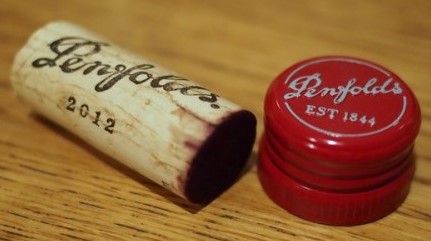
Corks have been the traditional choice since the 1400’s for preserving wine. Cork bark is one of the few natural products that is malleable enough to hold the contents inside a glass bottle.  However, today there is great debate as to whether cork is actually the best way to preserve wine.  The most prominent opponent is the screw cap.

Photo credit: wineanorak.com

The pro cork side of the debate usually begins with the fact that tradition dictates that cork is the way to go.  It has been in use for hundreds of years.  Screw caps on the other hand are a 20th Century invention.  

For many of the more mature members of our society there is a sense of enchantment in maintaining tradition, including the ritual of uncorking a bottle of wine, which adds to the enjoyment and experience.

Cork bark is a natural ingredient, as well as a renewable resource. Cork is harvested from the bark of cork trees, which continually replenish themselves.

One of the properties of cork is that it does not have a completely airtight seal, which allows the wine to slowly oxidize in the bottle. This oxidization allows the wine to continue to age while it sits in the cellar, developing more complex flavours over time.

The down side of using cork is that cork allows cork taint, otherwise known as TCA or Trichloroanisole, a flaw that can happen when a wine is exposed to a particular yeast during production. If you’ve ever swirled and sniffed a glass of wine and smelled something like wet dog, then you have experienced cork taint. Because corks are permeable, bottles sealed by a cork can be vulnerable to damage.

Another downside to cork is the cost as cork is more expensive than screw caps.

Finally, there is the irritation you feel when the cork breaks off or crumbles into your wine when you try to open the bottle.  To help prevent this from happening, the bottles need to be stored horizontally in order to keep the corks moist.

In the past, screw caps were associated with cheaper wines since they are less expensive than corks and were the obvious choice for budget-friendly wines. However, those days are long gone. Screw caps have their own benefits, so some high-end wineries have abandoned the cork. Some winemakers even prefer them to cork.

Screw caps do not allow TCA to occur in the wine after bottling. This doesn’t mean the wine is always free of TCA, since it can be exposed prior to bottling, but it does mean if it hasn’t happened before bottling there is no chance of exposure until it is opened.

Screw caps are much easier to open. A cork screw is not required so that means one less thing to pack when travelling.

On the down side, the airtight protection that is provided by a screw cap prevents the wine from breathing and slows down the aging process.

Also, while screw caps are recyclable they are neither biodegradable nor are they made from a renewable resource.  They typically include PVDC plastic which is made from petroleum, making them a far less eco-friendly option.

Ongoing innovation in wine packaging means that natural cork and screw caps are not the only two options for bottle enclosure and storage. Plastic, can, cardboard and plant-based polymer cork are now being introduced into the marketplace.

While natural cork adds character, heritage and custom to your wine experience but is not necessarily a reflection of quality. Screw caps are a convenient modern option, but they have their own drawbacks.

You will have to decide for yourself which you prefer. Personally, it is the wine itself that determines whether I buy it, not whether it is sealed with a cork or a screw cap.

Sláinte mhaith

Wine Shipping Delays

Photo credit: dw.com

I have found myself frustrated many times over the past number of months when the wines I am hoping to purchase from the liquor store are not available. The reason I have been told is a result of the pandemic.  COVID-19 has affected shipping companies and dock workers hard, resulting in huge backlogs and skyrocketing shipping costs.

The global wine supply chain generally starts with the grape grower -> producer -> packer -> exporter -> shipper -> importer -> trucker -> wholesale distributor -> retailer/restaurant/bar.  The time to complete this process has increased from 30 days to 3 months or more.

Wine importers are having trouble bringing wine not just from Europe but also from Chile, Argentina and South Africa. Wineries are also experiencing a shortage of bottles, many of which are imported from China.

Many distributors historically operated on a just-in-time basis whereby goods were received as close as possible to when they are actually needed, to keep costs low. However, today just-in-time processing is not working because of all the delays.

Shipping costs have increased by over 50% during the past year.  Along with a lack of shipping containers available to ship the wine, the containers get delayed at the dock resulting in additional charges, and there is a lack of truck drivers available to deliver the wine to its final destination.  In preparation for the upcoming holidays wine merchants have planned their shipments at least 3 months in advance. However, there is no guarantee that the wines will reach their intended destination in time for the holidays.

It is expected that volume-driven wines will most likely bear the brunt of the skyrocketing costs. Chilean and Argentinian wines will most likely suffer the most from the soaring freight costs. It is felt that these less expensive wines will lose their competitive advantage with the extensive increase in freight cost.

However, there is optimism that the situation will eventually improve, though probably not until mid-2022, as countries come out of lockdown and more truckers are hired. It is now feared that inflationary pressures will take quite a while longer to come back into proper alignment.

It’s hard to imagine an upside for anyone for the foreseeable future, from producers to importers to distributors to retail and hospitality outlets to customers. The impact will soon become apparent on wine store shelves and restaurant tables as we end-consumers will eventually bear the added costs. Isn’t that always the way?

Sláinte mhaith

Sugar Levels in Champagne & Other Sparkling Wines

Given that that New Year’s is fast approaching it seems like a good time to talk about sparkling wines; in particular the amount of sweetness in these wines.  Sweetness levels range from super dry to very sweet. Because of this extreme variation, the experts have developed a standardized sweetness scale that has been divided into seven levels.

Photo credit: ScientificAmerican.com

The sweetness level varies due to a step in the wine making process referred to as “liqueur d’expedition” where producers add a small amount of grape must (sugar) before corking the bottle. Since sparkling wine is so acidic, the sweetness is added in order to reduce sour flavours in the final product.

The sweetness scale for sparkling wines consists of the following levels:

Brut Nature (Brut Zero)

  • 0-3 grams (g) of natural residual sugar (RS) / litre (L)
  • 0-2 calories and up to 0.15 carbs for a total of 91–93 calories per 5 oz. (~150 ml) serving of 12 % ABV sparkling wine.

Extra Brut

  • 0-6 g/L RS
  • 0-6 calories and up to 0.9 carbs per 5 oz. (~150 ml) serving for a total of 91–96 calories per serving of 12 % ABV sparkling wine.

Brut

  • 0-12 g/L RS
  • 0-7 calories and up to 1.8 carbs per 5 oz. (~150 ml) serving for a total of 91–98 calories per serving of 12 % ABV sparkling wine.

Extra Dry

  • 12-17 g/L RS
  • 7-10 calories and 1.8–2.6 carbs per 5 oz. (~150 ml) serving for a total of 98–101 calories per serving of 12 % ABV sparkling wine.

Dry (Secco)

  • 17-32 g/L RS
  • 10-19 calories and 2.6–4.8 carbs per 5 oz (~150 ml) serving for a total of 101–111 calories per serving of 12 % ABV sparkling wine.

Demi-Sec

  • 32-50 g/L RS
  • 19-30 calories and 4.8–7.5 carbs per 5 oz (~150 ml) serving for a total of 111–121 calories per serving of 12 % ABV sparkling wine.

Doux

  • 50+ g/L RS
  • 30+ calories and more than 7.5 carbs per 5 oz (~150 ml) serving for a total of more than 121 calories per serving of 12 % ABV sparkling wine.

Brut has a fair amount of variation in sweetness, whereas Extra Brut and Brut Nature have focused sugar content. Therefore, if a dryer wine is your preference it is best to select either an Extra Brut or Brut Nature wine.

Something to keep in mind when considering the sweetness of sparkling wine is how little sugar is required to make it taste sweet.  The amount of sugar in these wines is comparatively low to other beverages.

Drink Comparison (sugar levels in grams)

  • 0 g in Vodka Soda
  • 0.5 g in Brut Nature Sparkling Wine
  • 2 g in Brut Sparkling Wine
  • 8 g in Demi-Sec Sparkling Wine
  • 14 g in Gin & Tonic
  • 16 g in Honest Tea Green Tea
  • 17 g in Starbucks 2% Milk Grande Latte
  • 20 g  in Margarita on the rocks (made w/ simple syrup)
  • 33 g in Rye & Coke

Happy Holidays!

Sláinte mhaith

Scotch Whisky Single Malt Vs Blend

I did not know this but there are five types of Scotch whisky, each with a slightly different definition.  Until now I thought there were only two, single malt whisky and blended whisky.  The definitions of the five types of whisky are:

  • Single Malt Whisky – whisky made at one distillery using pot stills and only malted barley.  Example:  Glenlivet 12 Year Old Single Malt Scotch Whisky
  • Single Grain Whisky – whisky made at one distillery using a continuous still, or using any type of still and grains other than malted barley.  Example:  Strathclyde Single Grain
  • Blended Malt Whisky – whisky made by combining single malt whiskies from different distilleries. Example:  Ballantine’s Finest Blended Malt Scotch Whisky
  • Blended Grain Whisky – whisky made by combining single grain whiskies from different distilleries.  Example:  Teacher’s Highland Scotch Whisky
  • Blended Whisky – whisky made by combining malt whisky and grain whisky.  Example: Chivas Regal 12 Year Old Blended Scotch Whisky

Each bottle of Scotch whisky you buy will have one of these five types indicated on the label.

Only about 10% of the Scotch whiskies on the market are single malt. However, single malt Scotch made up nearly 28% of the whisky exported from Scotland.

For all Scotch whisky the age indicated on the label refers to the number of years the whisky spent in casks. Very few whiskies come from a single cask. The mixing of spirits of different ages is permitted.  The age indicated on the bottle indicates the age of the youngest whisky in the bottle, which has matured in oak casks in Scotland for a minimum of three years.

Are single malts better than blends?  Well that comes down to personal taste. Many blended whiskies are cheaper than single malts but that doesn’t mean that single malts are better. Blended whisky can have a great range of flavour and can rival single malts not only for complexity and flavour, but also for price.  Case in point: Macallan Estate single malt has a price tag of $349.50 while Chivas Regal 25 year old blend currently sells for $359.75.

Those new to the world of Scotch whisky usually begin by trying one or more blended whiskies, especially since they generally have a more favourable price point. It’s easy for single malt fans, like me, to write them off as cheap and uninteresting.  However, after some discussion with a Scotch blend enthusiast and tasting some of his recommendations, I made some new discoveries and had to admit that there are some good blended whiskies.

Sláinte mhaith

2021 & the B.C. Wine Industry

2021 presented lots of challenges for British Columbia’s vintners.  The spring was one of the driest on record with very little rain from late May to the end of June. Temperatures in June climbed up to 47 degrees Celsius.  The combination of these things resulted in the grapes maturing faster and earlier than normal.  The grape yields were low but the quality was good, producing small, very ripe fruit bursting with flavour.  It is hoped that this high concentration of flavour will translate into an excellent, though a low yield vintage.

Photo credit: TourismKelowna.com

The wild fires also wreaked havoc on the harvest in some areas, particularly the Thompson and Okanagan Valleys.  Fortunately, the worst of the smoke exposure occurred before the grapes began to ripen so the impact is believed to be minimal.

The recent flooding in B.C. has affected all residents either directly or indirectly.  With major transportation routes being blocked or damaged, supply chains and mobility have been severely restricted.  At this point it is still too early to know what additional burden will be felt by B.C.’s wine industry as a whole because of the flooding.

This year was without a doubt a season with its challenges because of the smoke, heat and floods.  However, early indications suggest that the 2021 vintage of British Columbia wines will be very flavourful.  Unfortunately for consumers the prices will most likely be higher due to the smaller than normal yields produced.  These are some things to keep in mind when the 2021 B. C. vintages begin hitting the store shelves in a year or two.

Sláinte mhaith