North America is now said to be entering the early stages of a Champagne shortage which could last for several years. There are a number of reasons why this is happening. First, there are the supply chain issues that I discussed in my December 31, 2021 blog, Wine Shipping Delays. This problem was caused by the effects of COVID-19 on the shipping industry, which has resulted in deliveries taking two or three times longer than normal.
Photo credit: https: TheGrapeGeeks.com
Complicating things further has been the fluctuations in the demand for Champagne. Because of the COVID-19 related lockdowns of 2020, demand fell by about 25% but rose back up again by the end of that year. The upward trend continued throughout 2021 with demand returning to pre-pandemic levels as consumers were willing to spend more to wine and dine at home since they were often prevented from dining out at fine restaurants.
However, the Comité Interprofessionel du Vin de Champagne (CIVC), who regulates how much Champagne may be produced each year, in response to the initial reduction in demand, reduced Champagne output but did not react to the resurgence in demand at the end of that year. The effects of the reduced Champagne production won’t be felt until this vintage reaches the market in a few years’ time. Ironically, the organization whose purpose it is to protect the Champagne industry inadvertently caused significant financial damage.
While consumer demand for Champagne was expanding throughout 2021, France’s Champagne region was experiencing extreme weather issues. In March there was scorching heat that burned many of the vines. This was followed by frost that destroyed about 30% of the vines. Finally, there were torrential rains during June and July that resulted in mildew coating many of the remaining vines. As a result, the 2021 grape harvest was the smallest in many decades.
Champagne production won’t be returning to normal anytime soon. Shortages are expected to last through until at least 2025.
These availability problems will provide growth opportunities for producers of other sparkling wines including Italy’s Prosecco, Spain’s Cava as well as many North American varieties. Canadian options include, among others, 13th Street Cuvée Brut Sparkling Rosé, Cave Spring Blanc de Blancs Brut Sparkling, Henry Of Pelham Cuvée Catharine Rosé Brut VQA and Château des Charmes Brut Sparkling.
In the past I have talked about how and where to store wine but today I will tackle the issue of understanding the time wine needs to reach its peak and the length of time a wine can be cellared before it begins to deteriorate.
The experts have conflicting views on this topic as the choices are somewhat based as much on opinion and perception as science. The one point that everyone seems to agree on is that most wine isn’t meant to age; in fact only 1% of wine should be cellared for a long period of time. Most wine is released within 2 years of the grapes being harvested and then drunk within 6 months of purchase.
As long as the wine is stored properly it won’t expire in the same manner as a carton of milk. It just means that there is no additional benefit to aging it. Generally, experts agree that there is a common misconception that aging a mediocre wine will transform it into something extraordinary when in fact it only become an average aged wine.
Some experts suggest that wines priced around thirty dollars and under are meant to be drunk within five years or so of purchase. After that time the wine may actually start to deteriorate and lose many of its qualities. Even the majority of wines priced over thirty dollars should be consumed within five years. However, my thoughts are that there are many factors that go into determining price and therefore a price threshold cannot be arbitrarily used to determine when a wine is suitable for cellaring.
More importantly, I find that vintner and reviewer notes are very beneficial when determining which wines to hold and which to drink. Most quality wines are made with aging in mind but so are some less expensive ones. It is the structure of a wine that determines how long it will last, not the price.
If you buy your wine directly from a winery you have an opportunity to ask the producers of the wine if the bottle you are buying will benefit from aging. They are the best people to ask how long they think it will last and should be able to give you some indication of the wine’s cellaring potential.
The winemaker’s techniques and style can have a large effect on how long you can age a particular wine. Not all wine is made in the same way. The structural elements are key to determining whether a wine will age well or not.
In red wine, acidity is an essential characteristic of highly rated, great tasting aged wines. As wines mature they lose acidity so there needs to be a high level of acidity in order to cellar it.
Tannin levels need to be moderately high but not so high that they overshadow the other flavours in the wine. You should still be able to taste the fruit, along with the grip-like sensation of tannin and bitterness on the front sides of your tongue.
The amount of volatile acidity (VA) must be low. VA will cause wine to degrade quickly. It causes 2 types of aroma compounds to become too high. One smells like acetone (nail-polish remover); the other aroma smells like bruised apples in a white wine and a nutty brown sugar-like note in red wines. VA should never be higher than 1.2 grams/litre (g/L) in any wine, and lower than .6 g/L in most age-worthy wines.
Most age-worthy wines need to have an alcohol level between 12% and 14%. This is necessary to prevent the oxidization that occurs in the bottle from degrading the wine too quickly.
In white wine a high level of acidity is necessary for longevity while alcohol levels need to be low to medium.
Aged wine isn’t necessarily better than young wine, it is just different. Time in the cellar can have a great benefit in transforming the wine from something fruit-forward with a tight structure into a mellow, yet complex drink. The colour, smell and taste of a wine will change. Reds lose their colour while whites gain colour and take on a deep golden hue. Acid and tannins drop away and fruit flavours become savoury, soft and rounded. Decanting aged wine has the benefit of letting the aromas and flavours mix with the air to bring out the very best.
Drinking a well-aged wine has a romantic appeal. An old wine gives us a way to re-experience a past year that had special memories, or maybe just to sit and reflect on life in general. Also, when a wine that was meant to be aged is drunk, the aging of the wine helps create flavours and textures that would never be experienced had the wine not undergone aging.
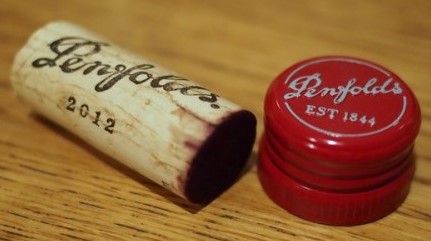
Corks have been the traditional choice since the 1400’s for preserving wine. Cork bark is one of the few natural products that is malleable enough to hold the contents inside a glass bottle. However, today there is great debate as to whether cork is actually the best way to preserve wine. The most prominent opponent is the screw cap.
Photo credit: wineanorak.com
The pro cork side of the debate usually begins with the fact that tradition dictates that cork is the way to go. It has been in use for hundreds of years. Screw caps on the other hand are a 20th Century invention.
For many of the more mature members of our society there is a sense of enchantment in maintaining tradition, including the ritual of uncorking a bottle of wine, which adds to the enjoyment and experience.
Cork bark is a natural ingredient, as well as a renewable resource. Cork is harvested from the bark of cork trees, which continually replenish themselves.
One of the properties of cork is that it does not have a completely airtight seal, which allows the wine to slowly oxidize in the bottle. This oxidization allows the wine to continue to age while it sits in the cellar, developing more complex flavours over time.
The down side of using cork is that cork allows cork taint, otherwise known as TCA or Trichloroanisole, a flaw that can happen when a wine is exposed to a particular yeast during production. If you’ve ever swirled and sniffed a glass of wine and smelled something like wet dog, then you have experienced cork taint. Because corks are permeable, bottles sealed by a cork can be vulnerable to damage.
Another downside to cork is the cost as cork is more expensive than screw caps.
Finally, there is the irritation you feel when the cork breaks off or crumbles into your wine when you try to open the bottle. To help prevent this from happening, the bottles need to be stored horizontally in order to keep the corks moist.
In the past, screw caps were associated with cheaper wines since they are less expensive than corks and were the obvious choice for budget-friendly wines. However, those days are long gone. Screw caps have their own benefits, so some high-end wineries have abandoned the cork. Some winemakers even prefer them to cork.
Screw caps do not allow TCA to occur in the wine after bottling. This doesn’t mean the wine is always free of TCA, since it can be exposed prior to bottling, but it does mean if it hasn’t happened before bottling there is no chance of exposure until it is opened.
Screw caps are much easier to open. A cork screw is not required so that means one less thing to pack when travelling.
On the down side, the airtight protection that is provided by a screw cap prevents the wine from breathing and slows down the aging process.
Also, while screw caps are recyclable they are neither biodegradable nor are they made from a renewable resource. They typically include PVDC plastic which is made from petroleum, making them a far less eco-friendly option.
Ongoing innovation in wine packaging means that natural cork and screw caps are not the only two options for bottle enclosure and storage. Plastic, can, cardboard and plant-based polymer cork are now being introduced into the marketplace.
While natural cork adds character, heritage and custom to your wine experience but is not necessarily a reflection of quality. Screw caps are a convenient modern option, but they have their own drawbacks.
You will have to decide for yourself which you prefer. Personally, it is the wine itself that determines whether I buy it, not whether it is sealed with a cork or a screw cap.
I have found myself frustrated many times over the past number of months when the wines I am hoping to purchase from the liquor store are not available. The reason I have been told is a result of the pandemic. COVID-19 has affected shipping companies and dock workers hard, resulting in huge backlogs and skyrocketing shipping costs.
The global wine supply chain generally starts with the grape grower -> producer -> packer -> exporter -> shipper -> importer -> trucker -> wholesale distributor -> retailer/restaurant/bar. The time to complete this process has increased from 30 days to 3 months or more.
Wine importers are having trouble bringing wine not just from Europe but also from Chile, Argentina and South Africa. Wineries are also experiencing a shortage of bottles, many of which are imported from China.
Many distributors historically operated on a just-in-time basis whereby goods were received as close as possible to when they are actually needed, to keep costs low. However, today just-in-time processing is not working because of all the delays.
Shipping costs have increased by over 50% during the past year. Along with a lack of shipping containers available to ship the wine, the containers get delayed at the dock resulting in additional charges, and there is a lack of truck drivers available to deliver the wine to its final destination. In preparation for the upcoming holidays wine merchants have planned their shipments at least 3 months in advance. However, there is no guarantee that the wines will reach their intended destination in time for the holidays.
It is expected that volume-driven wines will most likely bear the brunt of the skyrocketing costs. Chilean and Argentinian wines will most likely suffer the most from the soaring freight costs. It is felt that these less expensive wines will lose their competitive advantage with the extensive increase in freight cost.
However, there is optimism that the situation will eventually improve, though probably not until mid-2022, as countries come out of lockdown and more truckers are hired. It is now feared that inflationary pressures will take quite a while longer to come back into proper alignment.
It’s hard to imagine an upside for anyone for the foreseeable future, from producers to importers to distributors to retail and hospitality outlets to customers. The impact will soon become apparent on wine store shelves and restaurant tables as we end-consumers will eventually bear the added costs. Isn’t that always the way?
Given that that New Year’s is fast approaching it seems like a good time to talk about sparkling wines; in particular the amount of sweetness in these wines. Sweetness levels range from super dry to very sweet. Because of this extreme variation, the experts have developed a standardized sweetness scale that has been divided into seven levels.
Photo credit: ScientificAmerican.com
The sweetness level varies due to a step in the wine making process referred to as “liqueur d’expedition” where producers add a small amount of grape must (sugar) before corking the bottle. Since sparkling wine is so acidic, the sweetness is added in order to reduce sour flavours in the final product.
The sweetness scale for sparkling wines consists of the following levels:
0-2 calories and up to 0.15 carbs for a total of 91–93 calories per 5 oz. (~150 ml) serving of 12 % ABV sparkling wine.
Extra Brut
0-6 g/L RS
0-6 calories and up to 0.9 carbs per 5 oz. (~150 ml) serving for a total of 91–96 calories per serving of 12 % ABV sparkling wine.
Brut
0-12 g/L RS
0-7 calories and up to 1.8 carbs per 5 oz. (~150 ml) serving for a total of 91–98 calories per serving of 12 % ABV sparkling wine.
Extra Dry
12-17 g/L RS
7-10 calories and 1.8–2.6 carbs per 5 oz. (~150 ml) serving for a total of 98–101 calories per serving of 12 % ABV sparkling wine.
Dry (Secco)
17-32 g/L RS
10-19 calories and 2.6–4.8 carbs per 5 oz (~150 ml) serving for a total of 101–111 calories per serving of 12 % ABV sparkling wine.
Demi-Sec
32-50 g/L RS
19-30 calories and 4.8–7.5 carbs per 5 oz (~150 ml) serving for a total of 111–121 calories per serving of 12 % ABV sparkling wine.
Doux
50+ g/L RS
30+ calories and more than 7.5 carbs per 5 oz (~150 ml) serving for a total of more than 121 calories per serving of 12 % ABV sparkling wine.
Brut has a fair amount of variation in sweetness, whereas Extra Brut and Brut Nature have focused sugar content. Therefore, if a dryer wine is your preference it is best to select either an Extra Brut or Brut Nature wine.
Something to keep in mind when considering the sweetness of sparkling wine is how little sugar is required to make it taste sweet. The amount of sugar in these wines is comparatively low to other beverages.
Drink Comparison (sugar levels in grams)
0 g in Vodka Soda
0.5 g in Brut Nature Sparkling Wine
2 g in Brut Sparkling Wine
8 g in Demi-Sec Sparkling Wine
14 g in Gin & Tonic
16 g in Honest Tea Green Tea
17 g in Starbucks 2% Milk Grande Latte
20 g in Margarita on the rocks (made w/ simple syrup)
I did not know this but there are five types of Scotch whisky, each with a slightly different definition. Until now I thought there were only two, single malt whisky and blended whisky. The definitions of the five types of whisky are:
Single Malt Whisky – whisky made at one distillery using pot stills and only malted barley. Example: Glenlivet 12 Year Old Single Malt Scotch Whisky
Single Grain Whisky – whisky made at one distillery using a continuous still, or using any type of still and grains other than malted barley. Example: Strathclyde Single Grain
Blended Malt Whisky – whisky made by combining single malt whiskies from different distilleries. Example: Ballantine’s Finest Blended Malt Scotch Whisky
Blended Grain Whisky – whisky made by combining single grain whiskies from different distilleries. Example: Teacher’s Highland Scotch Whisky
Blended Whisky – whisky made by combining malt whisky and grain whisky. Example: Chivas Regal 12 Year Old Blended Scotch Whisky
Each bottle of Scotch whisky you buy will have one of these five types indicated on the label.
Only about 10% of the Scotch whiskies on the market are single malt. However, single malt Scotch made up nearly 28% of the whisky exported from Scotland.
For all Scotch whisky the age indicated on the label refers to the number of years the whisky spent in casks. Very few whiskies come from a single cask. The mixing of spirits of different ages is permitted. The age indicated on the bottle indicates the age of the youngest whisky in the bottle, which has matured in oak casks in Scotland for a minimum of three years.
Are single malts better than blends? Well that comes down to personal taste. Many blended whiskies are cheaper than single malts but that doesn’t mean that single malts are better. Blended whisky can have a great range of flavour and can rival single malts not only for complexity and flavour, but also for price. Case in point: Macallan Estate single malt has a price tag of $349.50 while Chivas Regal 25 year old blend currently sells for $359.75.
Those new to the world of Scotch whisky usually begin by trying one or more blended whiskies, especially since they generally have a more favourable price point. It’s easy for single malt fans, like me, to write them off as cheap and uninteresting. However, after some discussion with a Scotch blend enthusiast and tasting some of his recommendations, I made some new discoveries and had to admit that there are some good blended whiskies.
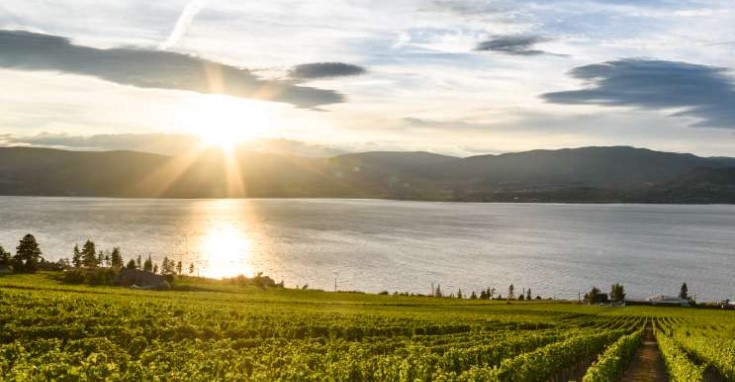
2021 presented lots of challenges for British Columbia’s vintners. The spring was one of the driest on record with very little rain from late May to the end of June. Temperatures in June climbed up to 47 degrees Celsius. The combination of these things resulted in the grapes maturing faster and earlier than normal. The grape yields were low but the quality was good, producing small, very ripe fruit bursting with flavour. It is hoped that this high concentration of flavour will translate into an excellent, though a low yield vintage.
Photo credit: TourismKelowna.com
The wild fires also wreaked havoc on the harvest in some areas, particularly the Thompson and Okanagan Valleys. Fortunately, the worst of the smoke exposure occurred before the grapes began to ripen so the impact is believed to be minimal.
The recent flooding in B.C. has affected all residents either directly or indirectly. With major transportation routes being blocked or damaged, supply chains and mobility have been severely restricted. At this point it is still too early to know what additional burden will be felt by B.C.’s wine industry as a whole because of the flooding.
This year was without a doubt a season with its challenges because of the smoke, heat and floods. However, early indications suggest that the 2021 vintage of British Columbia wines will be very flavourful. Unfortunately for consumers the prices will most likely be higher due to the smaller than normal yields produced. These are some things to keep in mind when the 2021 B. C. vintages begin hitting the store shelves in a year or two.
Ontario had 79 wineries enter this year’s National Wine Awards competition, second only to B.C. With such a strong field of competitors, earning a position in the top 10 is truly an accomplishment.
The wines were presented to the judges without displaying the producer, origin or price. The wines were identified and organized by grape variety or style. The top medalists were tasted in multiple rounds by many different judges.
All ten wineries were from the Niagara region. There were no winners from Prince Edward County, the North Shore of Lake Erie, Norfolk County, Georgian Bay, Huron Shores or the Toronto Wine Region.
The wineries identified in green periodically have their wines available for sale in local liquor stores. The award winning wines identified in blue are available in Ontario through the LCBO.
1. Malivoire Wine Company, Beamsville, ON (1st overall)
Malivoire Wine Company is the National Wine Awards Winery of the Year as a result of their earning 3 Platinum, 1 Gold, 8 Silver and 5 Bronze medals. This was the first year that a winery has received 3 Platinum medals. Malivoire’s wines may be purchased from their website at www.malivoire.com.
Platinum Medal Winners
2020 Le Coeur Gamay – Category: Gamay – $27.95
N/V Bisous Rose – Category: Sparkling Pink – $29.95
2020 Analog Demo Series – Category: Red Blend – $27.95
Gold Medal Winner
2020 Small Lot Chardonnay – Category: Chardonnay – $19.95
N/V Che Bello, Ontario – Category: Sparkling Wine – 17.95
2020 Ladybug Rosé – Category: Rosé – $16.95
2020 Vivant Rosé – Category: Rosé – $19.95
2. Trius Winery, Niagara-on-the-Lake, ON (4th overall)
Trius Winery was awarded 2 Platinum, 1 Gold, 7 Silver and 5 Bronze medals at this year’s event. Their wines may be purchased from their website at www.triuswines.com.
Platinum Medal Winners
2019 Showcase Late Harvest Vidal – Category: Late Harvest – $29.95
Brut Rose – Category: Sparkling Pink – $29.95
Gold Medal Winner
2019 Showcase Riesling Ghost Creek – Category: Riesling – $29.75
3. Peller Estates, Niagara-on-the-Lake, ON (5th overall)
Peller Estates received 2 Platinum, 2 Gold, 5 Silver and 3 Bronze medals at this year’s awards. Their wines are available at retailers across Canada, as well as from their website at www.peller.com.
Platinum Medal Winners
2019 Private Reserve Cabernet Franc – Category: Cabernet Franc – $23.75
2019 Signature Series Riesling – Category: Riesling – $29.95
Gold Medal Winners
2018 Andrew Peller Cabernet Franc Icewine – Category: Icewine – $108.90
2019 Winemaker’s Blend Red – Category: Red Blend – $24.95
2019 Small Lot Riesling Triangle Vineyard – Category: Riesling – $29.75
2018 Effervescent Riesling – Category: Sparkling White – $38.95
5. 13th Street Winery, St. Catharines, ON (15th overall)
13th Street was awarded 1 Platinum, 1 Gold, 5 Silver and 14 Bronze medals. Their wines are available at retailers in Ontario, as well as from their website at www.13thstreetwinery.com.
Platinum Medal Winner
2015 Premier Cuvee – Category: Sparkling White – $39.95
Gold Medal Winner
2020 Cabernet Franc June’s Vineyard – Category: Cabernet Franc – $24.95
Silver Medal Winners
2013 Grande Cuvee Blanc de Noir – Category: Sparkling White – $59.95
2019 Gamay – Category: Gamay – $19.95
2019 Blanc de Blanc – Category: Sparkling White – $29.95
7. Fielding Estate Winery, Beamsville, ON (22nd overall)
Fielding achieved 3 Gold, 5 Silver and 12 Bronze medals this year. Their wines are available at retailers across Ontario, as well as from their website at www.fieldingwines.com.
Gold Medal Winners
2018 Estate Bottled Cabernet Franc – Category: Cabernet Franc – $39.95
2019 Cabernet-Syrah – Category: Red Blend – $29.95
N/V Sparkling Brut – Category: Sparkling White – $37.15
Tawse received 2 Gold, 12 Silver and 7 Bronze medals at this year’s awards. Their wines are available from their website www.tawsewinery.ca and from retailers across Ontario.
British Columbia had 148 wineries entered in this year’s National Wine Awards competition; the highest of any province. With such a strong field of competitors, earning a position in the top 10 is truly an accomplishment.
The wines were all served to the judges without displaying the producer, origin or price. The wines were identified and organized by grape variety or style. The top medalists were tasted in multiple rounds by many different judges.
The wineries identified in green periodically have their wines available for sale beyond British Columbia. The award winning wines identified in blue are available in Ontario through the LCBO.
1. La Frenz Estate Winery, Penticton, B.C. (2nd overall) In addition to being the top B.C. winery, La Frenz was declared the Best Performing Small Winery of the Year. They previously received the title in 2017. This year they earned 2 Platinum, 6 Gold and 5 Silver medals. La Frenz wines are available online from their web site www.lafrenzwinery.com.
Platinum Award Winners
N/V Liqueur Muscat – Category: Fortified Wine -$22.00
2019 Reserve Ensemble – Category: White Blend – $29.00
2019 Reserve Vivant – Category: White Blend – $29.00
2019 Vintage Port Style – Category: Other Fortified
2. Blasted Church Vineyards, Okanagan Falls, B.C. (3rd overall) Blasted Church received 2 Platinum, 6 Gold, 5 Silver and 11 Bronze medals. There wines are available from their website at www.blastedchurch.com. Platinum Award Winners
2019 Big Bang Theory – Category: Red Blend – $24.00
2019 Cabernet Franc – Category: Cabernet Franc – $36.90
Gold Award Winners
2017 Nectar of the Gods – Category: Red Blend – $75.00
2017 Holy Moly Petit Verdot – Category: Petit Verdot – $50.00
2018 Cabernet Merlot – Category: Red Blend – $34.00
2018 Small Blessings Malbec – Category: Malbec – $40.00
4. Quails’ Gate Estate Winery, West Kelowna, B.C. (7th overall)
Quails’ Gate Estate Winery received 1 Platinum, 3 Gold, 9 Silver and 4 Bronze medals. Their wines are available from their website at www.quailsgate.com.
This year was the twentieth anniversary of the WineAlign National Wine Awards of Canada (NWAC). The country’s largest competition of Canadian wines is usually held in June each year but this year the event was moved to October due to COVID-19 and took place in Penticton, British Columbia. The final results were not released until November 12th.
The judges’ panel consisted of 14 men and 12 women who tasted 2,075 wines from more than 260 wineries.
This year’s Winery of the Year is Niagara’s Malivoire Wine Company. Malivoire earned 17 medals at this year’s Nationals, including 3 Platinum, 1 Gold, 8 Silver and 5 Bronze.
It is the first time in NWAC history that a single winery has won three Platinum Medals at the Nationals. Equally incredible is that the medals were won in three different wine categories.
The NWAC top 10 wineries for 2021 are listed below, including their Platinum and Gold winning wines. The lion’s share of this year’s awards went to British Columbia.
In order to be considered for inclusion on the list, the winery must enter a minimum of five wines. The five top-scoring entries (not including Icewine) from each winery are used to determine the order.
Malivoire Wine Company, whose awards included 3 Platinum, 1 Gold, 8 Silver and 5 Bronze. The winning Platinum and Gold wines included:2020 Le Coeur Gamay (Platinum Award)
No Vintage (N/V) Bisous Rose (Platinum Award)
2020 Analog Demo Series (Platinum Award)
2020 Small Lot Chardonnay (Gold Award)
B.C.’s La Frenz Estate Winery was awarded Best Performing Small Winery of the Year. They earned 2 Platinum, 6 Gold and 5 Silver awards. The Platinum and Gold award winning wines included:




 A Layman's Wine Musings