As an update to my November 9, 2024, post “2024: A Year to Remember”, I am pleased to report that the devastation resulting from the environmental disasters that plagued the 2024 growing season in British Columbia have had a reduced impact on this year’s grape harvest.
Photo credit: decanter.com
The vines that survived the destruction have recovered significantly, contrary to expectations. Most growers are now expecting a substantial crop; something that seemed unimaginable last year. The vines have proven to be much more resilient than expected. Some wineries project this year to be their largest harvest ever.
Indications are that the 2025 vintage will be of high quality as the weather has been consistently warm but without extreme heat spikes and wildfires. However, some vineyards still have crop yields of questionable quality.
Grape prices have returned to more reasonable levels, similar to what existed before the environmental challenges of the past couple of years. This will be a relief for the wineries and consumers.
Only a small number of wineries will continue to need to source grapes again from the U.S. Thus, the replacement wine program has been extended for another year. Many producers have replanted vineyards that will not be in full production for another several years.
The effects of the 2024 disaster will continue to linger for the foreseeable future. but the impact is proving not to be as devastating as first thought.
Inspired by my excursion earlier this year to France, I have compiled a list of popular French foods along with complimentary French wines.
Photo credit: joinusinFrance.com
Asparagus and Hollandaise with Condrieu
Condrieu is the highest form of Viognier, a white grape known for its thick texture and exuberant aromatics. Asparagus makes a good combination.
Brie de Meaux with Champagne
The richness of the creamy cheese is balanced by the acidity and lightness of the bubbly Champagne. It creates a very decadent experience.
Coq au Vin with Beaujolais
Beaujolais is the often-underestimated red from southern Burgundy. Made from pure Gamay, the wines are easy to appreciate. The freshness in Beaujolais allows it to cut through the richness of stew. However, the berry notes of the wine are better suited with chicken rather than beef or pork.
Boeuf Bourguignon with Red Burgundy
Boeuf bourguignon, being robust and savory, is well complimented by a red Burgundy, which is a complex and subtle expression of Pinot Noir.
Chèvre with Sauvignon Blanc
As simple as it sounds, fresh goat cheese and Sauvignon Blanc make a great combination. The pungent flavours in chèvre are highlighted by the minerals and acidity of Sauvignon Blanc.
Comté with Vin Jaune
Vin Jaune is the oxidized, sherry-like wine made in France’s Jura region. It has intense, delicious notes of walnuts, dried fruit, curry and pine. It can be a bit sharp on its own, but with cheese, such as Comté, it is very appealing.
Duck with Red Burgundy
A red Burgundy will be a good compliment for roasted duck breast. It combines delicate berry fruits with cool earthiness. As the wine ages it is enhanced by notes of mushrooms and leather.
Foie Gras with Sauternes
Steeped in French tradition, foie gras should be paired with a Sauternes from the Bordeaux region.
Lamb with Northern Rhône Syrah
Northern Rhône Syrah is both subtle and elegant, combining characteristics of dark berry with lightweight aromatics. There are often notes of smoked meats, bacon, licorice, and cloves, which pairs well with lamb.
Mussels with Muscadet
Muscadet is a refreshing, uncomplicated white wine that is produced along the Loire River near the Atlantic Coast. With the ocean nearby, it’s a perfect match for shellfish, particularly oysters or mussels.
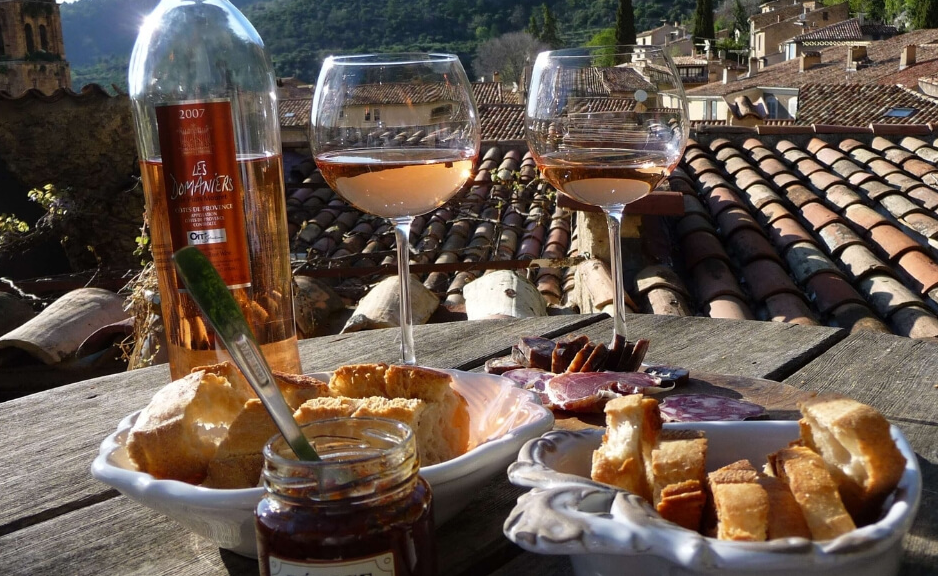
Olive Tapenade with Rosé
Olive tapenade served on seasoned crackers or crusty slices of baguette combined with a crisp Rosé is a great combination.
Oysters with Chablis
Chablis is a sub-region of Burgundy, known for its Chardonnay wines made with little or no oak. Classic Chablis is full of minerality and zest making it a great pairing with most oyster dishes.
Roquefort with Sauternes
Sauternes is a unique wine, being created from mold-covered shriveled up grapes just south of Bordeaux. It has notes of apricot, pineapple, ginger, caramel and honey. It pairs well with blue cheese.
Salade Lyonnaise with Beaujolais
A traditional salad lyonnaise (greens, bacon, croutons and mustard dressing topped with a poached egg) is the perfect match for the low levels of tannins and high acidity found in Beaujolais, which is produced from Gamay grapes.
Sole or Flounder with Sancerre
Sancerre is pure Sauvignon Blanc. It is aged in a stainless steal tank without any oak. The combination of juicy grapefruit and mineral freshness matches beautifully with any fine white fish prepared in butter.
Steak with Bordeaux
Steak pairs well with many reds from France, but one sure bet is Bordeaux, especially the Right Bank Merlot dominant wines.
Stew with Southern Rhône Red
Southern Rhone reds usually consist of a blend of Grenache, Syrah and Mourvèdre. The resulting wines are bold and rich, with texture and dark, jammy notes. Most beef stews work well with these wines.
Veal with White Burgundy
White Burgundy is the highest expression of Chardonnay. As long as the wine retains some acidity, it should match beautifully with the subtle, delicate flavours of veal.
Tariffs and retaliatory measures significantly hurt Canada’s wine industry by increasing the cost of U.S. grape must and juice needed by many winemakers, while also indirectly harming wineries through higher costs for imported packaging and equipment. On the other hand, provincial bans on U.S. wine improved sales for domestic Canadian wines. However, should this increased demand continue, wineries may need to enhance their operations.
Photo credit: tbnewswatch.com
Wine production costs have increased for wineries that purchase grape must (crushed grapes) from the U.S. Tariffs on steel and aluminum from the U.S. have increased the cost of barrels, equipment and cans.
However, it’s not all doom and gloom for the Canadian wine industry. There have been increased sales of domestic wine due to the removal of American wines from liquor and wine store shelves in most provinces.
Statistics Canada announced that in April 2025, Canada imported only 2.9 million dollars of American wine a 94% decrease from the year previous. Imports from other wine-producing regions such as New Zealand and Australia increased by 31% and 28% respectively, while shipments from France and Italy rose by 13.6% and 7.6% respectively.
Wineries in Southwestern Ontario, the B.C. Lower Mainland, and Kelowna have experienced increased sales. For example, despite total wholesale wine sales falling nearly 5% year-over-year, B.C.’s share climbed from 47% to over 52%. For the first time, B.C. wines represent more than half of all wholesale wine sales in that province.
However, as stated previously, I don’t believe there are any real winners in a trade war.
With the introduction of tariffs this year by the U.S., American wine makers are now paying a higher price for all their wine making materials including French oak barrels, glass bottles, corks and even the wine-making equipment itself, such as pumps and de-stemmers. The 15% levy that was imposed on all goods entering the U.S. from the European Union means the cost of wine making supplies increased 15%. For example, each wine barrel now costs California wine makers an additional $100 to $150 US.
Photo credit: globaltradelawblog.com
California’s Paso Robles Wine Country Alliance said international wine orders were drying up as the aftereffects from President Trump’s trade war resonated around the world. U.S. winemakers are saying that this puts wine producers in high-cost California at an even greater disadvantage.
European wine producers are reducing their amount of American wine purchased. Danish wine stores are boycotting U.S. made wines. In Sweden, the state liquor store, Systembolaget, has seen sales of American wines drop 15%. Portugal as well has sought out alternatives to American wine.
Canada, who purchased 33% of all U.S. wine exports in 2024, has removed American wine and alcohol from liquor store shelves in most provinces. Robert P. Koch, president of California’s Wine Institute, said, “Canada is the single most important export market for U.S. wines, with retail sales in excess of $1.1 billion annually”. In April 2025, U.S. wine exports to Canada decreased 72.5% compared to April of last year. According to the American Association of Wine Economists (AAWE) exports declined by $25.5 million to $9.69 million.
It’s feared that these new anti-American sentiments are unravelling decades of marketing work and relationship building. Former consumers of American wine are now discovering interest in other New World wines, such as Australia, South Africa, South America and Canada.
Oregon is facing the same challenges as California. Oregon’s leading export targets are Mexico, China and Canada, representing about 81,000 jobs that are reliant on that export trade. Close to half of all Oregon wine exports in recent years have gone to Canada; in 2022, that was 73,323 cases of a total export of 162,939.
In April, the US Wine Trade Alliance stated that “restaurants will suffer, domestic producers will face new obstacles in bringing their wines to market, and retailers, importers, and distributors across the country will be placed at serious risk “.
I guess we will all have to wait and see what the longer-term effects of this trade war will be. However, I tend to agree with the economists who conquer that a trade war is a war that no one wins.
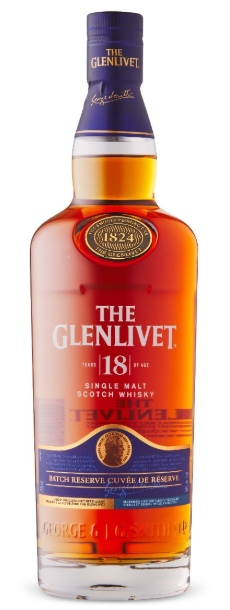
I am a fan of several expressions of Glenlivet Scotch Whisky, but the one I favour most is The Glenlivet 18. The Glenlivet Distillery is located in the Speyside whisky region of Scotland.
Glenlivet’s Master Distiller, Alan Winchester, has created the 18-year single malt by incorporating a variety of cask types, including both first and second-fill American oak and ex-sherry oak. The American oak provides tropical fruit flavours and the ex-sherry casks generate the spicy notes. The result is a striking single malt scotch whisky that is complex and balanced. It has a golden colour with fruity and toffee aromas, toasty grain, vanilla and almond flavours, as well as a long smooth finish.
The Glenlivet 18-Year-Old has won more awards than any other expression. It is a true example of the quality and taste of The Glenlivet. I feel fortunate to have it available frequently at my local liquor store. It is a little pricey at $215.40 CDN but well worth it. I find it a great addition to my liquor cabinet and a tasty treat.
Greek food is very diverse but generally pairs well with crisp white wines such as Sauvignon Blanc or a Greek Assyrtiko, which is a very dry, high acid wine. Light-bodied red wines like Pinot Noir or Sangiovese, as well as sparkling wines like Prosecco also work well.
Photo credit: travelzoo.com
For heartier dishes with lamb or beef, a hardy Greek red such as Xinomavro or Agiorgitiko will pair well.
As with any wine pairing, consider the dominant flavours of the dish. Pair light-bodied wines with lighter dishes and bolder wines with richer dishes. The wine’s acidity can complement the flavours of many Greek selections, especially those with lemon or tomato.
Here are some specific pairing suggestions from a variety of wine experts.
Avgolemono (Lemon Chicken soup): Medium-bodied white such as a Greek Moschofilero
Grilled chicken: Chardonnay or a Greek white Savatiano or Assyrtiko.
Chicken or pork Gyros: Riesling, Gewürztraminer or a light, chilled red Baco Noir or Greek Agiorgitiko.
Fish or seafood: Pinot Noir, Chardonnay, Riesling, Rosé or Assyrtiko.
Greek Salad: Sauvignon Blanc or an Orange wine.
Lamb or beef dishes: Syrah/Shiraz, Merlot, Cabernet Sauvignon, Agiorgitiko, or Xinomavro.
Lamb Gyros: A lighter, chilled red, such as Pinot Noir, Syrah or Agiorgitiko.
Mezze Platter (dips, pita, salads): Light red wines like Pinot Noir or Sangiovese, crisp whites like Sauvignon Blanc or an Orange wine.
Moussaka: A light-bodied red like Baco Noir or Agiorgitiko.
Pastitsio: Italian Nebbiolo or Greek Xinomavro.
Grilled octopus: Greek Assyrtiko.
Red sauce dishes: Cabernet Sauvignon or Merlot.
Saganaki: A citrusy white like Trebbiano.
Spanakopita: Pinot Grigio, Vermentino or Moschofilero.
As always, don’t be afraid to experiment with different pairings to find your favourites.
I have previously shared my experiences on purchasing wine from a winery in a foreign country and shipping it home. Today I look at another purchase option, buying wine online.
Photo credit: vinpark.com
The online sources vary from individual wineries to liquor stores to wine brokerage houses to wine clubs and even auction houses. Online searches will help you find rare wines and older vintages. It also makes it easy to search where a specific wine is sold and allows you to compare prices. These sites will often provide additional information about the wine you are interested in, such as the vintner’s notes, wine critic reviews, a link to winery websites and other technical information.
However, before you begin scrolling through the wide assortment of online vendors, there are some things you need to be aware of. First, if you are purchasing wine or any other alcohol from a website outside your country or province there will be a number of taxes and charges. For example, alcohol being imported from outside Canada to Ontario will have a levy of 102.2% for wine, 143.7% for spirits and $1.70 per litre for beer.
In addition, there will most likely be a shipping fee, which will be a significant percentage of the per bottle price. The only exception I am aware of is when I purchase alcohol online from my liquor store (the LCBO); the price I pay is the same price as it would be in the bricks and mortar store. The only difference is my purchase is shipped to the local liquor store where I then go to pick it up. It enables me to purchase wines and spirits that I would otherwise not have access to, living in an area where there is a limited variety of selections.
The number of retailers able to ship to you may be restricted by shipping regulations in the vendor’s location. Thus, your online wine purchase options may not be as lucrative as it may seem.
Serving wine with your fast-food meal is a great way to enhance your dining experience. A little planning when it comes to your wine pairing can be very rewarding, so don’t just grab any bottle of wine off the shelf or from the fridge. Generally, wines with higher levels of acidity work well with fattier, greasy foods. Also, don’t forget to consider any side dishes you are having with your fast food. The wine should complement all the elements of your dinner. Robust, bold-flavoured dishes need to be paired with an equally powerful wine. Sweeter wines, like Riesling, will counterbalance hot or spicy dishes.
If in doubt, sparkling wines are generally a safe bet when it comes to fast food.
Photo credit: providencejournal.com
Burgers
Since burgers usually have a high fat content, more acidic wines pair well. Beef and medium-bodied red wines, such as Malbec or Syrah are a great match while chicken, turkey and veggie burgers go best with lighter-bodied white wines. Sauvignon Banc, Pinot Gris or Chenin Blanc are all good options.
If having cheeseburgers, a light-bodied Pinot Noir or a fruity Grenache is a good choice. Bacon cheeseburgers are complimented by a bold Cabernet Sauvignon or Shiraz.
Curry
When matching wine with curry there are a couple of considerations: texture and the spice level. High alcohol wines intensify the heat from curries, so these are best avoided with spicy curries. Crisp, cold white wines are a good match at offsetting the curry’s heat. Sparkling wines are best avoided as they can leave an unpleasant metallic aftertaste.
An off-dry Riesling or Pinot Gris works well, as does a light or medium-bodied red wine such as a Beaujolais or Pinot Noir.
Fish and Chips
When it comes to light, white fish such as cod or haddock, white wine is the recommended option. Lean, flaky fish pairs well with a light and zesty Sauvignon Blanc. Meatier fish-like halibut goes well with a medium-bodied Chardonnay. Sparkling wines are also a good choice as they offset the salt and their acidity helps to balance the oil.
Fried Chicken
The wine needs to complement the mild flavour of the chicken while cutting through the salty, crispy deep-fried coating. Medium-bodied white wines with higher acidity levels work best at accomplishing this. Options include Riesling, Sauvignon Blanc or sparkling wine such as Champagne or Prosecco.
Chicken Nuggets
Whether from your grocer’s freezer section or your local McDonalds, chicken nuggets or chicken fingers pair well with Rosé.
French Fries
Good old fashion French fries go well with Cava, Champagne or any other sparkling wine.
Kebobs
Rich reds with fruity flavours are the best choice as lighter wines may be overpowered by the flavours of the meat. A Merlot or Cabernet Franc are good possibilities. White wines with higher acidity and apple notes can be a good option as well. A Pinot Gris or Riesling could be considered.
Pizza
For pizza and wine pairings see my post from either January 28, 2023, or March 9, 2024.
Tacos
Tacos will be complemented by Sauvignon Blanc or Pinot Gris.
When I recently came across a post on social media suggesting that the wines best suited for you to drink are those that compliment your zodiac sign, I was shocked to learn that there have been quite a few articles, including some from renowned wine authorities, written on the subject.
It was interesting to see that the various writers generally agreed on what types of wines are best suited to each zodiac sign.
♈ Aries (March 21 — April 19): Bold and Adventurous
Aries are said to be confident, competitive and direct. Bold mouth-zapping whites such as Grüner Veltliner or reds such as Cabernet Sauvignon, Zinfandel or Barbera are thought to be a good match. These wines contain a higher alcohol content that compliments Aries fiery spirit. The spicy, robust and full-bodied wine flavours compliment Aries zest for life and passion for taking on new challenges.
♉ Taurus (April 20 — May 20): Sensual and Indulgent
Taurus are thought to be down-to-earth, strong, ambitious, and lovers of creature comforts. Grenache, Syrah and Mourvèdre blends from the Rhone, or a Châteauneuf-du-Pape would suit very well. Cabernet Sauvignon is also suggested as another choice. White wine, such as Viognier would be equally as suitable.
♊ Gemini (May 21 — June 20): Versatile and Social
Gemini are said to be lively, versatile and expressive. This personality should be well-suited to aromatic New World Sauvignon Blanc, Champagne, Vinho Verde or Grüner Veltliner.
♋ Cancer (June 21 — July 22): Nurturing and Intuitive
Cancers are often family-oriented foodies who adore sharing a table with others. A Merlot, Cabernet Franc or a Bordeaux blend is a good choice, although Riesling may be as equally appealing.
♌ Leo (July 23 — August 22): Regal and Dramatic
Leos are optimistic, flamboyant and larger than life. This is said to be a good match for a New World Shiraz or an Amarone della Valpolicella. Citrusy, bright and zippy Sauvignon Blancs are also a good choice, as well as Prosecco, Cava, Crémant, Sparkling Rosé, Sekt and Lambrusco.
♍ Virgo (August 23 — September 22): Practical and Sophisticated
Virgos are loving and gentle, yet practical. Their personality pairs well with the delicate flavours of a Beaujolais or Pinot Noir.
♎ Libra (September 23 — October 22): Balanced and Charming
Libras are said to be fair, suave and indulgent. Their social nature means that they seek out foods and drinks that are all about harmony, approachability and lightness. A Riesling or a decadent bottle of Sherry is said to be a good choice. Medium-bodied French Rosé is also a good option.
♍ Scorpio (October 23 — November 21): Intense and Mysterious
Scorpios are said to be intense and persistent but guarded. These traits pair well with the vivid boldness of a Barolo, a savory, spicy Syrah, or the smoky intensity of a Spanish Tempranillo.
♐ Sagittarius (November 22 — December 21): Adventurous and Free-Spirited
Flexible, intellectual, and given to wanderlust, Sagittarius is a match for the complex notes of Cabernet Franc, Spanish Grenache, Malbec or Sangiovese.
♑ Capricorn (December 22 — January 19): Ambitious and Disciplined
Pragmatic, ambitious and serious individuals, Capricorn are a perfect fit for the rich but straightforward flavours of a Montepulciano d’Abruzzo, or the bold, elevated alcohol content of a Primitivo, a Merlot or Cabernet Franc.
♒ Aquarius (January 20 — February 18): Innovative and Eccentric
Aquarius is said to be logical, eccentric, and witty, a good combination with Petit Verdot or Chablis. Orange wines are also said to be a great option as Aquarius are said to veer towards exotic scents and tastes that might be surprising to others.
♓ Pisces (February 19 — March 20): Dreamy and Compassionate
Pisces are compassionate, romantic and quirky. Their personality is well suited for the rich, full flavours of an Argentinian Malbec, a sparkling Rosé or even a Brut Rosé Champagne.
I admit that I am not a follower of the zodiac and that I was at first very quick to dismiss the wine suggestions, particularly because I am an enthusiastic fan of red wines, and there was not a single red option suggested for my sign. However, after thinking about it, I remembered a winery visit I made in Prince Edward County several years ago, where I purchased a particular orange wine solely because I was intrigued by its unique flavour. It will never be a ‘go to’ wine for me but its distinctiveness enticed me to purchase it. Maybe there is something to this wine for my sign.
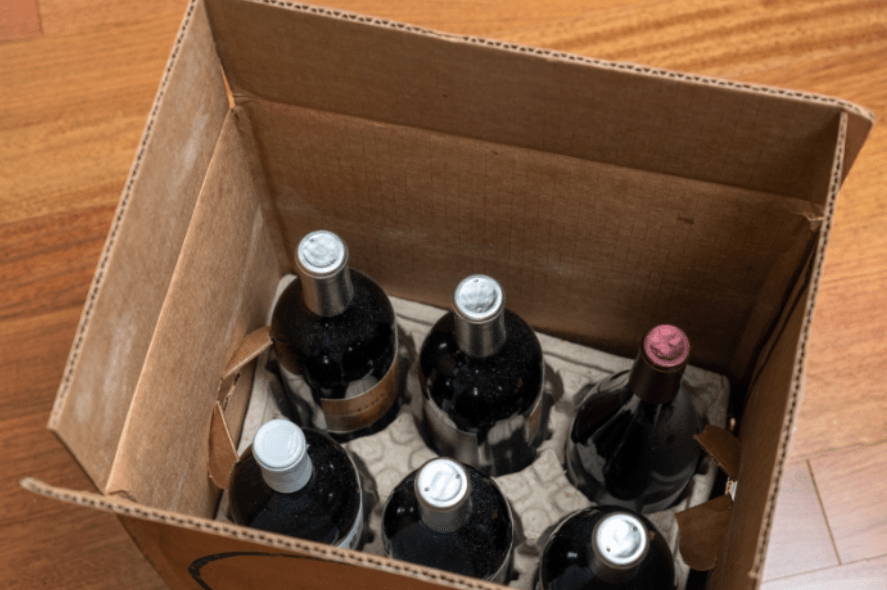
Earlier this year I had my first experience purchasing a case of wine in a foreign country and having it shipped home. In the past I have often taken advantage of the duty-free laws and brought home a bottle of wine or whisky, but this was the first time I purchased a quantity of wine.
Photo credit: palletonline.co.uk
The purchase of the wine was made at the time I visited a winery in Bordeaux, France. The six bottles of wine I purchased cost 315 euros plus a shipping fee of 99 euros for a total of 414 euros. Once the exchange rate was applied my total came to $660 CDN.
After my return home I received an email from the shipper advising that they required a copy of the transaction receipt and/or credit card payment confirmation statement verifying the purchase. This information was then forwarded to the Liquor Control Board of Ontario (LCBO) for valuation purposes prior to the delivery of my wine. I was also advised that there would be additional costs associated with importing alcohol that had to be paid prior to the release of my shipment.
The additional costs included a levy of 102.2% which was applied to the total value of the shipment. There was also a brokerage fee of $49.17+HST, duties, taxes and a government filing fee of $12.50 as well. The total import fees ended up being $605. The result was that a bottle of wine sold at a Bordeaux winery with a price tag of $52.50 euros or $83 ended up costing me $184! Lesson learned.





 A Layman's Wine Musings