BC’s Movers and Shakers

I previously examined a number of the trending wines from Ontario.  This week I will identify a similar group of wines that are on top of the wine scene in British Columbia.  The wineries presented here are based on my own interpretation of critic reviews and award results over the past year.  The information presented about each winery has been gathered from the winery web site.

Unfortunately, none of this particular group of wines is available in liquor or wine stores outside of B.C., but a number of them are accessible from the winery web sites.

The wineries are presented in alphabetical order.  Though the critically acclaimed wines are presented, I doubt you would be disappointed in any of the wines offered from these establishments.

Blasted Church Vineyards

The winery is on a former church site so they focus their story on local folklore; the blasting of a local church with dynamite in order to move it from one location to another. The owners have played out the church theme well, in everything from the wine names and labels to the organization of their web site.

Notable wines:

  • 2016 Merlot – $27
  • 2017 Pinot Noir – Sold out
  • 2012 OMFG (white) – $40

Cedar Creek Estate Winery

Cedar Creek has been Canada’s “Winery of the Year” twice.  Winemaker Taylor Whelan is building upon three decades of winemaking history and defining a new chapter with estate-grown, organic wines.  Both the Home Block and Cedar Creek estate vineyards have been officially certified organic following a three-year conversion of the estate’s viticulture and winemaking practices. For the Kelowna winery, it was a three-year conversion process, accredited by Ecocert Canada, which began in August of 2016.

Because of planting decisions made in the early 1990’s, they now have 30-year-old vines at the heart of everything they do.

Notable wines:

  • 2018 Chardonnay – $19
  • 2018 Platinum Block 7 Pinot Gris  – $30
  • 2018 Platinum Block 3 Riesling  – $30
  • 2017 Platinum Riesling Icewine  – $58
  • 2017 Platinum Haynes Creek Vineyard Syrah  – $50
  • 2017 Pinot Noir 2017 – $27

Deep Roots Winery

Deep Roots is a family owned and operated winery perched on the clay cliffs above Okanagan Lake on the Naramata Bench.

The family has been farming the land around the winery for 100 years, spanning four generations. After many years of selling grapes to other wineries they produced their first vintage in 2012.

They have two vineyards at two sites on the Naramata Bench: the Hardman Vineyard and Rayner’s Vineyard.

The Hardman Vineyard is home to nine acres where they grow Muscat, Gamay, Merlot, and Malbec. The Rayner property is home to eleven acres of vines including Chardonnay, Pinot Gris, Malbec, and Syrah.

Both of these farms were planted with fruit orchards for much of the previous century, which has contributed to the unique and rich terroir of the area. All of the vineyard work is done by hand.

Notable wines:

  • 2017 Syrah – Sold out
  • 2016 Parentage Red – Sold out
  • 2017 Malbec – Sold out

Fort Berens Estate Winery

Fort Berens Estate Winery is a culmination of the dreams, vision and pioneering spirit of several entrepreneurs. The winery is owned by a team of eight individuals who share a common belief in the incredible winemaking potential of British Columbia’s Fraser Canyon and a shared vision to make Fort Berens into one of Canada’s leading producers of fine wine.

Notable wines:

  • 2017 Cabernet Franc – $28
  • 2017 Cabernet Franc Reserve  – $32
  • 2017 Pinot Noir Reserve – $30
  • 2017 Meritage  – $26
  • 2017 Meritage Reserve  – $32
  • 2017 Red Gold  – $45
  • 2018 Pinot Gris – Sold out
  • 2018 Chardonnay – $20
  • 2017 White Gold Chardonnay  – $26
  • 2018 Riesling Reserve  – $24

Gold Hill Winery

Gold Hill opened in 2009.  The founders, brothers Sant and Gurbachan Gill, are farmers from the Indus Valley region.

Sant moved to B.C. as a 20-year-old. He headed straight for the Golden Mile fruit belt and began growing. His younger brother, Gurbachan, soon followed. The brothers grew grapes for a number of wineries from their home vineyards, in their natural element. They understood the area’s microclimate and its dry, rocky soil to perfection.

In time, they bought land and planted vines. Soon they had a healthy business selling grapes to a growing number of notable B.C. wineries–but they had bigger plans for their land.

In 2009, Sant and Gurbachan decided to open a winery with the support of their family. For the location, they chose their prime vineyard on the slopes of a hill along the Golden Mile, between Oliver and Osoyoos.

They partnered with winemaker Philip Soo, a well-respected wine consultant with a terroir-driven approach and scores of great wines to his credit.

Gold Hill’s inaugural 2009 Cabernet Franc was honoured with the prestigious Lieutenant Governor’s Award of Excellence in 2012.

Notable wines:

  • 2013 Syrah – Sold out
  • 2014 Syrah – $35
  • 2013 Merlot – Sold out
  • 2014 Cabernet Franc – $35

Hillside Winery

Grow the best quality fruit possible, pick at optimum physiological ripeness, ferment cool, and intervene with nature only when necessary are the objectives of Hillside. The temptation to constantly “fiddle” and “improve upon” Mother Nature is really more about manufacturing. Natural, beautiful wine is not manufactured—rather, it is carefully guided through natural phases to become the glorious essence of the effects of sun and soil on specific grape varieties.

It is their belief that great wines start in the vineyard, and to this end, they use only the best quality fruit available from their twenty acres of grapes densely planted on hillside terraces surrounding the winery. They also have partnerships with select vineyards along the Naramata Bench.

They are committed to producing hand-crafted, naturally fruit-forward, well-balanced wines that represent the true character of the grapes. The wine is fermented and aged in many small batches to maintain the varietal character and integrity of each grape type and vineyard.

Cool temperature fermentations for the whites using state of the art steel fermenters allow them to produce intensely aromatic and flavourful wines that captivate the senses. More traditional techniques are applied to the reds involving open top fermenters, French and American oak barrels, and a very hands-on winemaking team, resulting in rich, classic style wines that have consistently won accolades from wine judges.

Notable wines:

  • 2016 Cabernet Franc – Available to their wine club members only
  • 2016 Merlot Malbec – $26

Kitsch Wines

The Kitsch family’s Okanagan roots stretch back to 1910, when Kelowna was still a small, lakefront pioneer settlement. Four generations later, this entrepreneurial family takes great pride in helping to shape the past and the future of the Okanagan Valley.

Founders Ria and Trent Kitsch have blended their passion for wine and creative entrepreneurship to produce premium, sustainably-grown wines. With a little help from some friends, the young family transformed overgrown fields into lush vineyards, set on historic apple orchards that originally served as the Kelowna Land and Orchards (KLO) headquarters.

Notable wines:

  • 2017 5 Barrel Pinot Noir – $69
  • 2018 Maria’s Block Riesling – $25

Lake Breeze Vineyards

The wines of Lake Breeze are known to be clean, crisp and fruit driven in style.  They endeavour to take the natural expression of the grape and transfer it to the bottle with as little intervention as possible. 

The newly introduced Lake Breeze Cellar Series is a luxurious collection. Each varietal pays tribute to the regional wind that embodies its unique winemaking style.

In 2016 they introduced an additional premium wine made by Garron Elmes under the MacIntyre Heritage Reserve label. These wines are a bold and prideful celebration.

Notable wines

  • 2017 Aura – Pinot Noir – Sold out
  • 2016 Mistral – Syrah – Sold out

Lakeside Cellars

Lakeside Cellars is situated on the eastern shores of Lake Osoyoos.  The estate is comprised of a 14-acre parcel of land that was originally a vast cattle and agriculture enterprise dating back to 1882. In 2015, Harbans and Harkesh Dhaliwal purchased the historical landmark and resting place of the old Haynes Homestead.

Lakeside now also sits on the site of the first commercial orchard owned and planted by Leslie Hill. The Hill Ranch stretched 1,100 acres on the eastern slop around Lake Osoyoos. Orchards of cherries, apricots, nectarines, plums, prunes, peaches, pears and apples were the first planted in the Okanagan north of the U.S. border.

Upon purchasing the lakeshore property in 2015, the Dhaliwals inherited old-vine plantings of Cabernet Sauvignon and Sauvignon Blanc planted in 1998. Their mission was to continue the tradition of agriculture on the property and guide its rich history towards the current Okanagan lifestyle.

Notable wines:

  • 2016 Portage Red, Okanagan Valley- $24
  • 2016 Syrah, Okanagan Valley – $26
  • 2016 Cabernet Sauvignon, Okanagan Valley – $26
  • 2016 Cabernet Franc, Okanagan Valley – $28

Martin’s Lane Winery

The winery consists of three tiny estate vineyards.  They take a micro view of the vineyard and think about wines right down to the single block or vine. They consider their winemaking approach gentle and guiding.  The wines are tended, harvested and crafted by hand.  They don’t use a single pump as they believe this brings out elegant and complex expressions of Pinot Noir and Riesling.

Notable wines:

  • 2016 Simes Vineyard Riesling – Sold out
  • 2016 Naramata Ranch Vineyard Riesling – Sold out
  • 2016 Frtizi’s Vineyard Riesling – Sold out
  • 2014 Simes Vineyard Pinot Noir – $100
  • 2015 Simes Vineyard Pinot Noir – $100
  • 2015 DeHart Vineyard Pinot Noir – $100
  • 2015 Fritzi’s Vineyard Pinot Noir – $150
  • 2015 Naramata Ranch Vineyard Pinot Noir – Sold out

Mission Hill Family Estate

Making great wines and providing a special place where people can enjoy them is the aim of Mission Hill. They want their winery to be a refuge from the hurried pace of daily life.

Notable wines:

  • 2018 Terroir Collection No. 19 Brigadier’s Bluff Rosé – Sold out
  • 2017 Terroir Collection Border Vista Cabernet Sauvignon – Available only to wine club members
  • 2017 Reserve Shiraz – $27
  • 2017 Reserve Pinot Noir – $28
  • 2018 Reserve Rosé – Sold out

Moon Curser Vineyards

Moon Curser Vineyards is a small, family owned winery on the East Bench of Osoyoos, BC.  It has been in operation since 2004, when Chris and Beata Tolley purchased an old orchard in need of replanting and set about converting it into what is now the Moon Curser home vineyard block, winery and tasting room.

The winery is known for growing unusual varieties such as Tannat, Dolcetto, Touriga Nacional, and Arneis to name a few. These varieties have not historically been a part of the South Okanagan viticulture but thrive in the unique terroir on the Osoyoos East Bench.

The vines have thrived in Osoyoos and continue to deliver unique, world-class interpretations of these traditional wines. Moon Curser has brought home many a gold medal from Canadian and international wine competitions.

Notable wines:

  • 2017 Touriga Nacional (red) – $40
  • 2017 Dead of Night (red) – $40
  • 2017 Syrah – $26

Nk’Mip Cellars Winery

Nk’Mip Cellars is the dedicated guardian of a proud legacy. They claim to be the first Indigenous-owned winery in North America and they express their culture in everything they do. The winery itself is a bold celebration and a strong reflection of their commitment to authenticity and deep respect for their colourful past. They have had international award-winning wines.

Notable wines:

  • 2018Qwam Qwmt Riesling – Price not provided
  • 2018 Winemakers Dreamcatcher – Sold out
  • 2016 Red Merriym Meritage – Price not provided

Red Rooster Winery

Red Rooster Winery was founded in 1990 by a European couple who settled in the area. The first vintage was released in 1997. It was not long before the winery became known for producing award-winning wines that express the very best of BC and the Okanagan. 

Notable wines:

  • 2018 Riesling – Sold out
  • 2017 Rare Bird Series Pinot Noir – $35

Sandhill

Each bottle of Sandhill wine is made from grapes that come from one of six unique BC vineyards – Sandhill Estate, King Family, Phantom Creek , Osprey Ridge, Hidden Terrace and Vanessa Vineyard. Each vineyard possesses a unique combination of soil composition, slope, sun exposure and drainage.

Each vineyard manager employs techniques that bring subtle influences into the growing environment. These one-of-a-kind conditions inevitably produce grapes with unique characteristics.

This, in turn, provides the opportunity to create a wine that’s truly distinct. In the winery, a non-interventionist approach allows the character of the fruit to shine through in the wine. This allows the complex, subtle, unique character of each vineyard to reveal itself.

Notable wines:

  • 2018 Riesling Icewine – Sold out
  • 2017 Single Vineyard Syrah Sandhill Estate Vineyard – $40
  • 2016 Single Vineyard ONE Vanessa Vineyard – Sold out

Township 7 Vineyards and Winery

Township 7 focuses on the production of small lot wines made from carefully chosen grape suppliers from the Okanagan Valley and from estate vineyards in Langley and on the Naramata Bench.

Notable wines:

  • 2018 Pinot Gris  – $19
  • 2018 Raju Vineyard Viognier – $25
  • 2017 Merlot – $25 at the winery
  • 2017 Cabernet Sauvignon – $28

Van Westen Vineyards

Situated in one of the most scenic wine regions in all of North America, Van Westen Vineyards has evolved from over 50 years of family tradition cultivating the soils of The Naramata Bench and producing some of the best wines in British Columbia.

With their expertise and emphasis on sustainable, cool climate viticultural practices, they continue to grow quality vinifera grapes and make premium wine.

Notable wines:

  • 2016 Vulture (red) – $40
  • 2018 Viscous Riesling – $25

Wayne Gretzky Okanagan

The Wayne Gretzky Okanagan winery doesn’t appear to have a web site and www.gretzkyestateswines.com only provides information on the Niagara winery.

Notable wines:

  • 2016 Signature Series Shiraz – No price
  • 2016 Signature Series Riesling – No price

The majority of these wineries are smaller family run operations built on pride and personal commitment to the creation of high quality wines.  Prices can range dramatically on the wines within and between the various wineries.  Some of the wineries have been producing great wine for many years while others are newer operations who are quickly making an impressive name for themselves.

Sláinte mhaith

Enjoy Easter with Wine

Easter is traditionally a time for family celebrations that end with a scrumptious dinner.   I will look at traditional menu options but given the current climate where traditional family gatherings may not be possible, I will look at adding some glam to an everyday meal.

Also, given the strains being experienced by the local economy, all of my wine suggestions will be Canadian.

Lamb

Starting with the traditional Easter menu, the first option is lamb.  Lamb has a long tradition of being part of Easter celebrations.  It is available in many forms, suitable for any budget, ranging from a leg of lamb, to a loin, to chops, or even burgers. 

Lamb in any form is well complimented with a Cabernet such as Lakeview Cabernet Sauvignon ($29.95) or Featherstone Cabernet Franc ($19.95).

Ham

Ham is another classic Easter dish that can be prepared in a multitude of ways.  It can be baked using cloves and or a number of different glazes, ranging from savory to sweet.  Ham is also available in a variety of cuts ranging from the traditional ham on the bone, to small packaged hams to ham steaks.

Pinot Noir is a good option for serving with ham.  Flat Rock Gravity Pinot Noir ($34.95) or Henry of Pelham Pinot Noir ($16.95) are a couple of options.

Turkey

Turkey is a classic choice for Easter.  Not only is it suitable for large family gatherings but provides options for smaller dinners.  Alternatives to purchasing a full-size bird include, prepackaged turkey thighs or turkey breasts, or you can substitute chicken for turkey.

There are both red, as well as white wine alternatives to have with your turkey or chicken.  White wine suggestions include, Flat Rock Chardonnay ($19.95) or Inniskillen Montague Vineyard Chardonnay ($25.95).  Red wine options include Kew Vineyards Pinot Noir ($23.95) or Tawse Growers Blend Pinot Noir ($25.95).

Roast Beef

Over the years roast beef has been the choice of many for Sunday family dinners and Easter is no exception.  Featherstone Cabernet Franc ($19.95) or The Foreign Affair Dream ($29.95), which is a Merlo, Cabernet Sauvignon and Cabernet Franc blend , are two good choices.

Salmon

Salmon, though less traditional, is a good healthy option for your Easter dinner.  It can be baked, poached, or my favourite, tossed on the grill, wrapped in lemons, onions, and capers.  It can be a great alternative if you are forced to a smaller than usual family gathering.

Sauvignon Blanc or Rosé pairs well with salmon.  Options include Wildass Sauvignon Blanc ($16.95) or Malivoire Vivant Rosé ($19.95).

Vegetarian Alternatives

Vegetarian alternatives to the traditional meat dishes are very popular.  These dishes are obviously a good alternative to meat any time, not just on special occasions.  Wine pairings  for vegetable mains are the same as those for salmon; Sauvignon Blanc or Rosé. 

Non-Traditional Options

No matter what your mood or what you are serving, wine can make the simplest of meals more elegant.   Here are some general options:

White Wine

  • Chicken based soup – Angels Gate Chardonnay VQA ($14.95)
  • White fish  – Sandbanks Summer White VQA ($14.95)
  • Mac and cheese – Peninsula Ridge Pinot Grigio VQA ($15.95)
  • Pasta with a white sauce – Mission Hill Five Vineyard Pinot Blanc VQA ($16.95)
  • Poultry – Tawse Sketches of Niagara Chardonnay VQA ($19.95)
  • Sea food – Cave Spring Riesling Dry VQA ($15.95)

Red Wine

  • Beef ribs – Strewn Rogue’s Lot Cabernet Sauvignon Cabernet Franc VQA ($14.95)
  • Beef based soups – Peninsula Ridge Merlot VQA ($15.95)
  • Hamburgers – 13th Street Burger Blend Gamay Pinot Noir VQA ($14.95)
  • Pasta in a red sauce –  Pelee Island Baco Noir VQA ($21.95)
  • Pork ribs – Pelee Island Pinot Noir Reserve VQA ($17.95)
  • Tomato based soups – Henry of Pelham Pinot Noir VQA ($16.95)

No matter what your Easter has in store, whether it be a family dinner with all the fixings, or a simple affair for only one or two people, make it more elegant with wine.

Sláinte mhaith

Chardonnay Musqué

My wife has a strong dislike for Chardonnay but a fond love for Chardonnay Musqué.  This raised the question in my mind, what makes Chardonnay Musqué different from Chardonnay?  Is there truly a discernible difference?  My wife argues that absolutely there is.

I set forth on a research expedition to determine if there is a difference, and if so, why.

What I learned is that Chardonnay Musqué is an aromatic mutation of the Chardonnay grape. It is grown principally in the vineyards of Canada’s Niagara Peninsula and New York’s Finger Lakes.

The typical Chardonnay Musqué wine is off-dry, medium bodied, and has the distinctive, grapey, Muscat-like aroma. Depending on the region and producer, other flavours and aromas might range from tropical fruit to cinnamon-tinged lemon sorbet.

There are over 40 different clones of Chardonnay, but only two of these can be called “Musqué” due to their aromatic qualities.  For you techies they are Clone 77 and Clone 809.  These wines are generally unoaked in order to preserve the fresh and fragrant aromas natural to the grape.  This is the reason why my wife likes it so much (she has a real aversion to any oaked white wine)

Several Ontario vineyards are now planted with musqué clones and the grapes may be used as either part of a blend or bottled on their own. 

Generally these wines are best when consumed relatively young.  The aromas of Chardonnay Musqué are reminiscent of Viognier or even Torrontes, and it can be made in a range of styles from dry to a little sweet to quite sweet, sometimes even with a slight spritz. 

Chardonnay Musqué can be enjoyed on its own on a warm spring or summer day, or paired with mild curries, sushi, salads, grilled salmon, or seafood.

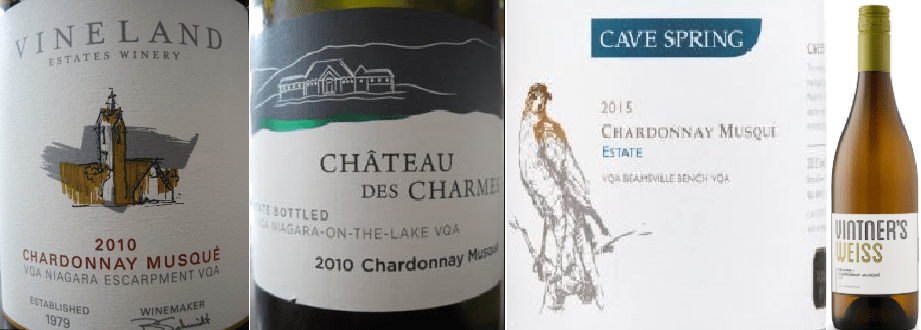
There are several Ontario wineries using one or both Chardonnay Musqué clones in their wines.  Trail Vintner’s Weiss uses Chardonnay Musqué as part of a Riesling Chardonnay Musqué blend, while other producers, such as Chateau des Charmes, Cave Spring Cellars, and Vineland Estates, prefer to bottle the clone on its own.

A few Ontario Chardonnay Musqués:

Chateau des Charmes

Paul Bosc, founder of Chateau des Charmes, chose the particularly fragrant and interesting Clone 809 for his Chardonnay Musqué.  Only about 500 cases are bottled by the winery annually.  The 2015 vintage is available from the winery or online for $14.95.

Cave Spring Cellars

Cave Spring Cellars 2016 Chardonnay Musqué is made from 100% Chardonnay Musqué Clone 77.  This wine is fermented in stainless steel and unoaked so as to maintain every nuance of the delightful aromatics of the Chardonnay Musqué grape. It’s a wine of refinement and class. Floral, yes, but it also offers bright citrus, tropical fruit, peach and a hint of vanilla aromas. Try it with green salads or shrimp Pad Thai.  It is available from the LCBO for $17.95.

Vineland Estates

Their 2016 Chardonnay Musqué is available from the winery or online for $17.95.  The wine is described as having an abundance of warm summer melon, lime zest and tangerine aromas that roll in the glass while the welcomed edge of acidity focuses and the perfect trace of a bitter finish.

Trail Vintner’s  Weiss

The 2017 Riesling Chardonnay Musqué blend is available at the LCBO for $19.95.  According to Natalie MacLean it is a delightful, vibrant white wine blend of Riesling and Chardonnay Musqué grapes form Prince Edward County. It has aromas of daisies, lychee, apple blossom and white peach, and is balanced with racy acidity for shellfish and vegetarian dishes.

If you are a fan of Chardonnay, and unoaked Chardonnay in particular, trying Chardonnay Musqué would be well worth your while; just ask my wife.

Sláinte mhaith

Ontario’s Trending Wineries

These are some wines and wineries which have been in the spot light for doing good things during the past year or so and would be worth while checking out if you have the opportunity.

The wineries presented here are based on my own interpretation of critic reviews and award results over the past year or so.  However, the overview of each winery is based on information provided directly from the winery.

Unfortunately not all of the wines mentioned will be found in your local wine or liquor store.  Many have to be obtained or ordered directly from the winery using their web site. Some can be found in select restaurants. I have included wines that have since been sold out in order to note that future releases of these wines should receive due consideration.

In order to be unbiased, the wineries are being presented in alphabetical order.

Big Head Wines

According to their web site, Big Head is a family of passionate individuals that love all things vinous. They have been making wine in the Niagara area for over a decade, and this is their first project on their own. They source only the best fruit from the Niagara region, working closely with growers that share their attention to detail and pursuit of the highest quality.

The wines of recent notoriety:

  • 2018 Gewurztraminer – Sold out
  • 2017 Chardonnay Stainless – Sold out
  • 2017 RAW Syrah – $48 at the winery
  • 2016 Special Select Late Harvest Riesling – $38 at the winery
  • 2017 RAW Chenin Blanc  – $38 at the winery

Creekside Estate Winery

Creekside Estate Winery opened in 1997 in small-town Jordan, Ontario.  The Winery is run by industry veterans who have decades of experience in their respective fields.

The wines of recent notoriety:

  • 2017 Iconoclast Sauvignon Blanc/Semillon – $23 at the winery, sold out at the LCBO
  • 2016 Broken Press Syrah Reserve – $55 at the winery
  • 2015 Broken Press Syrah Reserve – Sold out

Flat Rock Cellars

Flat Rock Cellars vineyard produces low yields, utilizes progressive viticulture practices and hand picking and sorting of the grapes.

Founded in 1999 on a section of the Niagara Escarpment known as the Jordan Bench, Flat Rock Cellars is located on a gently rolling slope.

Their predominant wine is red.  The rocks that are the geological foundation of the winery and found throughout the property are the roots of the Flat Rock Cellars name.

When Coyote’s Run was sold and closed, Dave Sheppard returned to Flat Rock and is back at the helm of winemaking – and for Flat Rock this is an amazing coup.

The wines of recent notoriety:

  • 2015 Gravity Pinot Noir – $50 at the winery
  • 2017 Chardonnay – $19.95 at Vintages at the LCBO

Hidden Bench Estate Winery

The critically acclaimed estate winery is in the heart of the Beamsville Bench. Premium wines are crafted using only certified organic estate fruit with sustainable, non-interventionist winemaking techniques.

They create only 100% estate grown wines in two series: the Estate Series, which are blends of their three vineyards; and the Terroir Series, which are single vineyard and/or barrel selection, limited production wines.

They produce 100% estate premium Pinot Noir, Chardonnay and Riesling.

The wines of recent notoriety:

  • 2017 Pinot Noir Unfiltered – Sold Out
  • 2016 Chardonnay Felseck Vineyard – $42.20 at the winery
  • 2017 Estate Chardonnay – $29.95 at the winery
  • 2016 Chardonnay Tête de Cuvée – $48.20 at the winery
  • 2016 Riesling Felseck Vineyard – $30.20 at the winery

Konzelmann Estate

The winery began in the small German town of Uhlbach near the turn of the 19th century, when a restauranteur named Frederick Konzelmann left the culinary trade to pursue the craft of winemaking. By 1984 the Konzelmann family immigrated to Canada, purchased a lakefront peach orchard and created the vineyard.

The wines of recent notoriety:

  • 2017 Lakefront Series Pinot Blanc – Sold out
  • 2016 Meritage Reserve – Sold out

Leaning Post Wines

Leaning Post began as a virtual winery and is proud to now have the quaint tasting room at 1491 Hwy 8 on their home property in Winona, Ontario.  Ilya and Nadia are the brains and passion behind Leaning Post Wines. It started with a dream to take unique, interesting single vineyard blocks in Niagara and turn them into distinctive, terroir driven wines.

Ilya has been a winemaker in the Niagara Region for the last 17 vintages working at Daniel Lenko Estate Winery, Foreign Affair and now at Leaning Post Wines. Ilya is also a consulting winemaker at the Good Earth Winery.

The wines of recent notoriety:

  • 2017 Chardonnay Senchuk Vineyard – Sold Out
  • 2016 Chardonnay Clone 96 – Sold out

Malivoire Winery

The winery began in 1995 with the purchase of what is now known as the Moira Vineyard, followed by the acquisition of the larger property where the winery now stands. Original plantings of Pinot Gris, Chardonnay, Gewurztraminer, Gamay and Pinot Noir were supplemented in the following years by additional vinifera varieties. Today Malivoire operates at the top of its capacity, producing twenty-four thousand cases of wine per year.

The wines of recent notoriety:

  • 2016 Stouck Merlot – Sold out
  • 2017 Old Vines Foch – $26.95 at the winery
  • 2016 Pinot Noir, Small Lot – Sold out
  • 2016 Courtney Gamay – Sold out

Marynissen Estates

Marynissen Estates has its roots deeply embedded in the soil of Niagara-on-the-Lake. Located in the Four Mile Creek sub appellation, the estate is home to the oldest commercial planting of Cabernet Sauvignon in Canada. The property, an old pig barn, was purchased in 1953 by viticulture pioneer John Marynissen and his wife Adrianna. John and Adrianna began growing their own grapes in 1976, planting the classic European vinifera grape varietals Chardonnay, Gewurztraminer, Riesling, Merlot and Gamay Noir.  There focus is on small-lot winemaking. 

The wines of recent notoriety:

  • 2015 Heritage Collection Red – $34.95 at the winery
  • 2015 Platinum Series  Pinot Noir – Sold out

Megalomaniac

The winery first opened its cellar doors to the public in 2009. All operations from harvest to administration and even tastings took place in the underground cellar. Today, guests experience the Megalomaniac portfolio within a newly constructed establishment built above the original cellar.

The wines of recent notoriety:

  • Bubblehead Sparkling Pinot Noir – $34.95 at the winery
  • 2017 Coldhearted Riesling Icewine – $39.95 at the winery
  • 2018 Sparkling Personality – $19.95 at the LCBO
  • 2016 Big Mouth Merlot – Sold out

Peller Estates Niagara-on-the-Lake

At the age of 58, thirty-four years after arriving in Canada, Andrew Peller’s modest Okanagan vineyard inspired a vision for the entire family and he opened wineries in British Columbia, Ontario and Nova Scotia.

The wines of recent notoriety:

  • 2018 Private Reserve Sauvignon Blanc – Sold out
  • 2017 Andrew Peller Signature Series Riesling – Sold out

Rosehall Run Vineyards

Dan and Lynn Sullivan, with support from Cam Reston, founded Rosehall Run in 2000.  The 150-acre farm was selected due to its proximity to Lake Ontario.  One of the earliest Prince Edward County wineries established in the west central region known as Hillier Ward; planting of the vineyard began in 2001 with Pinot Noir and Chardonnay.  Today there are 25 acres of vinifera including Pinot Gris, Sauvignon Blanc, Gewurztraminer, Muscat and Tempranillo.

The wines of recent notoriety:

  • 2017 JCR Pinot Noir – $39.95 at the winery
  • 2016 Cabernet Franc Single Vineyard – $34.95 at the winery

Tawse Winery

Situated on the lower slopes of the Niagara Escarpment, Tawse is a family-owned organic and biodynamic winery, voted Canada’s Winery of the Year in 2010, 2011, 2012 & 2016. Founder Moray Tawse purchased 6 acres on the Cherry Avenue property in 2001. In 2005 he opened his state-of-the-art winery, complete with a six-level, gravity-flow design, geo-thermal system and a wetland bio-filter. The inspiration for his first Niagara property came from his love of Burgundian Pinot Noir and Chardonnay. Uniting traditional winemaking techniques with state-of-the-art technology, Tawse is dedicated to producing terroir-driven wines of exceptional elegance, depth and character.

The wines of recent notoriety:

  • 2015 Meritage – Sold out
  • 2016 Riesling Sketches of Niagara – $19.95 at the winery or the LCBO
  • 2015 Chardonnay, Robyn’s Block – Sold out
  • 2013 Lenko Vineyard Chardonnay – Sold out
  • 2015 David’s Block Cabernet Franc – Sold out
  • Tawse 2013 Quarry Road Chardonnay – Sold out

The Foreign Affair

In 2000, taking a leap of faith, Len and Marisa Crispino bought prime farmland in the Vineland area of the Niagara Peninsula starting their journey to becoming one of the pioneers of appassimento in Canada. They then sourced quality vinifera varietals from Europe (Cabernet Sauvignon, Merlot, Cabernet Franc, Petit Verdot, Pinot Noir, Sauvignon Blanc, Chardonnay and Riesling) and after three years, the first crop was harvested in 2004.

When the grapes have fully ripened, the best bunches are hand harvested and placed gently in single layers on racks to air dry in their drying barns. They are left to dry naturally until their weight is reduced to approximately half, which can take between 2 and 3 months. The grapes are then hand sorted and crushed. This process concentrates the ripe flavours and adds the full-bodied character they are so well known for.

The wines of recent notoriety:

  • 2015 Dream (red) – Sold out
  • 2015 Temptress (red) – Sold out

The Organized Crime Winery

This small boutique winery is located on the Beamsville Bench of the Niagara Peninsula. Their parcel of south-facing land lies over the hillside edges of the Bench, and provides an ideal environment for cool climate winegrowing.

They farm the land themselves and assist in the winemaking throughout all stages of the process. Production volumes are very small. They lean towards the passion side of the business, rather than the commercial.

The wines of recent notoriety:

  • 2017 Cuvée Krystyna Chardonnay – Sold out
  • 2017 Limestone Block Chardonnay – $21 at the winery
  • 2016 Cabernet Franc – $42 at the winery

Thirty Bench Wine Makers

“The Bench” is a narrow plateau that slopes gradually from the cliff of the Niagara Escarpment. Its mineral-rich soils, unique topography and favourable airflow patterns have made it one of Niagara’s most coveted sub appellations for growing grapes. Being tucked beneath the Escarpment offers the vineyards a longer season that allow grapes more time to ripen and cooler nights that help intensify flavours.

Thirty Bench wines are made exclusively with grapes from their own vineyards. The vines are hand cropped and thinned to produce very low yields that offer exceptional quality and an intensity of fruit.

They are committed to “Small Lot” winemaking which means many of the wines are made in extremely limited numbers.

The wines of recent notoriety:

  • 2017 Small Lot Riesling Triangle Vineyard – $29.95 at the winery
  • 2017 Small Lot Riesling Steel Post Vineyard – Sold out at winery
  • 2017 Small Lot Gewurztraminer – $29.95 at the winery

Trius Winery

It’s been over 27 years since Trius Red, a Bordeaux blend-inspired wine produced by Hillebrand Winery entered the international wine scene when it became the first-ever Canadian vintage to be recognized as the Best Red Wine in the World. In addition to positioning Trius Red as the little big red that could, the win marked an important step for the Canadian wine industry, sending a signal that Canada’s wine could stand on their own against old world wines.

While Trius Red was originally the only Trius wine in the Hillebrand Winery portfolio, over time the portfolio grew to include sparkling wines and other offerings including Merlot, Cabernet Sauvignon and Riesling. In 2012, Trius Winery was born.

The wines of recent notoriety:

  • 2017 Showcase Clean Slate Sauvignon Blanc Wild Ferment – Sold out
  • 2016 Red Shale Cabernet Franc Clark Farm Vineyard- $65 at the winery

Two Sisters Vineyards

Two Sisters is located at the northern tip of the Niagara River sub-appellation bordered by the Niagara River to the East and Lake Ontario to the North.  The river’s flow creates air convection currents which create moderate temperatures and draw cold air away from vineyards and into the river gorge. To the north, breezes from Lake Ontario provide a reliable and widely distributed moderating effect on temperatures throughout the seasons. These air currents ward off early spring and late fall frosts and most notably support an extended growing season giving us an advantage on their later-ripening varieties.

Two Sisters is committed to produce ultra-premium reds which require superior viticultural practices. They emphasize the varieties the estate grows best with their terroir; Cabernet Franc with its earthy structure, Cabernet Sauvignon for its rich, muscular presence and Merlot for its perfumed, elegant harmony between red and dark fruit aroma and taste. Their objective is to let the grapes hang well into the autumn.

The wines of recent notoriety:

  • 2016 Unoaked Chardonnay – Sold out at winery
  • 2013 Stone Eagle Special Selection (red)- $77.80 at the winery, Sold out at LCBO

Jackson-Triggs Niagara Estate

Nestled into 11.5 acres of the Niagara Peninsula, the Niagara Estate vineyard makes the most of this cool climate viticulture region.

Premium quality grapes flourish around Niagara-on-the-Lake because of the warming and cooling influences of Lake Ontario and its proximity to the Niagara Escarpment. The Niagara Estate produces the same high quality wines that you would associate with similar world-class regions such as Burgundy, Oregon and New Zealand, but with its own distinctive characteristics resulting from the unique terroir of the area.

The vineyard features 3 classic varietals: Chardonnay, Pinot Noir and Riesling grown from the finest vinifera clones and rootstocks, custom grafted in France. The winemakers also work very closely with a number of carefully selected grape growers in the Niagara region to augment their supply of premium vinifera grapes such as Merlot, Cabernet Franc, Cabernet Sauvignon, Gewürztraminer and Sauvignon Blanc.

The wines of recent notoriety:

  • 2016 Jackson-Triggs Niagara Estate Grand Reserve Merlot – $25.95 at the winery, Sold out at LCBO

Personal Taste

Prices can range dramatically on the wines within and between the various wineries.  Some of the wineries are mainstays that have been producing great wine for many years.  Others are newer to the industry and are making an impressive name for themselves.

On numerous occasions I have enjoyed the wines of Flat Rock Cellars, Jackson-Triggs, Konzelmann Estate, Malivoire Winery, Marynissen Estates, Peller Estates, Rosehall Run, Tawse, and Trius.  More recently I have discovered Two Sisters (a winner in my opinion).

I have yet to have the opportunity to try any wines from Big Head Wines, Creekside, Hidden Bench Estate Winery, Leaning Post,  Thirty Bench, Organized Crime or The Foreign Affair.

I must admit that I have tried both Trius and Megalomaniac wines but did not find either to my liking.  That is not to say that their wines are not good, they just don’t strike a chord for me.  Trius is, in fact, one of the most critically acclaimed wineries in Canada and has been for many years so the quality of their wines is top notch.

If you get the chance to visit any of these wineries or see their wines in your local wine or liquor store, any of their wines would be well worth a try.  Don’t limit yourself specifically to the particular wines I have highlighted here.

Sláinte mhaith

Wine Futures

What Are Wine Futures?

The practice to sell wine before it’s bottled, commonly known as “en primeur” or wine futures, is well established across many wine regions like Burgundy, the Rhône Valley, Piedmont Port and in particular, Bordeaux.  The major châteaux of Bordeaux offer about 80% to 90% of their previous year’s wine production for sale as futures.

Beginning in late March or early April, the châteaus host tastings for the trade to evaluate the potential quality of the vintage harvested during the previous autumn.  This is the first opportunity to purchase the new vintage. At that point the wines have just been placed into barrels and are still about two years from reaching the market in bottles.

Over the course of the spring, the châteaux release their trade prices for the vintage based on the initial response to the wines, as well as current economic conditions. It will be interesting to see how this proceeds this spring given the COVID-19 pandemic and the resulting effects on the economy.

The wines first go through courtiers (brokers) who take a small percentage of the cost.  Next the right to sell the futures is passed on to the négociants (shippers), who set a new price for the wine, referred to as the ex-négoce price. With very few exceptions, no one deals directly with Bordeaux’s châteaux; they deal with the négociants.

Why Buy Wine Futures?

There are a few advantages of buying wine futures.  The wine is often the least expensive at the first release because the margins made by wine merchants are the smallest. It is common for the price of the wine to increase and the margins made by wine merchants to also increase once the wine is offered for sale in the bottle.

Futures may be the only way for individuals to obtain high quality, low quantity, hard to find wine as such wines are often sold out prior to them being available for distribution.

Futures enable an individual to purchase a special wine for a special birth year, or as a gift or for weddings and anniversaries.

Futures enable people to purchase the latest vintage of wines that they like to get every year and where there is generally strong demand, such as Mouton Rothschild, La Mission Haut Brion, Cheval Blanc, Lynch Bages, Montrose, Pichon Lalande, Pontet Canet and Haut Bailly.

Wine futures, like other commodities, can be purchased with the hope or expectation that there will be a return on investment.  Those who invest do so to secure high-quality wines at the best prices, but there’s no guarantee that they will be more expensive upon release.

Other Considerations

The wines are often not quite ready for consumption at the time they are released for distribution.  This then requires the purchaser to have a suitable location to store the wine until it is actually consumed.  Suggestions on cellaring wine can be found in my post from August 24, 2019, “Drink or lay down and how to cellar those you keep”.

Since any wine you purchase in this manner won’t be delivered for about 2 years, you will need to keep track of what you ordered, the quantity you ordered, the anticipated delivery date, and how much you deposited and what portion is due on delivery.

Selecting & Ordering Futures

I have purchased Bordeaux futures several times through my local liquor store.  Once a year the store releases a catalogue containing all of the wine futures they have access to that particular year.  The catalogue provides reviewers comments about each release, a scoring of the wine, the price per bottle, and the number of bottles available.

On the identified sale date, individuals can then order their selections either online or by calling a specified telephone number.

Realizing the Futures

When the wines are released from the winery they will be shipped to the wine merchant, who then contacts the purchaser.  Since the wines are packaged and shipped direct from the chateau they are securely packed and often in a wooden crate that clearly identifies the chateau.

The wines can then either be cellared in the crate or placed on a shelf or wine rack until you are ready to enjoy them.

Sláinte mhaith

The Shifting of Sandbanks

I recently read an article announcing that the Sandbanks Winery, one of the first in Prince Edward County, has been sold to Arterra.  Catherine Langlois had operated the winery since its inception in 2001.  Over the years Sandbanks has become most famous for its Baco Noir, Marechal Foch, and Riesling. Over the years there have been some other wonderful creations, such as the one time offering of a bold red that was a personal favourite, which I believe was called Bin 41.

Since inception Sandbanks Winery has proven to be a great place to visit and sample their award-winning wines. I have always found their staff to be knowledgeable and friendly.  The uniqueness of their wine even included the labels, which were designed by a family friend.

It is not surprising that Sandbanks had received such attention by Arterra, given Sandbank’s dominance in Prince Edward Country.

According to the press release, by joining Arterra, Sandbanks will now have the resources and expertise to further enhance the winery’s capabilities.

So Who is Arterra?

Arterra Wines Canada has grown and evolved to owning and distributing 100+ wine brands, including seven of the top 20 brands in Canada. Its Canadian headquarters is in Mississauga, Ontario.   Arterra Wines Canada operates eight wineries and over 1,700 acres of premium vineyards in Canada’s wine regions.

It also owns and operates Wine Rack retail wine stores in Ontario and sells wine kits and products for winemaking through its RJS Craft Winemaking brand. It employs approximately 2,000 full-time and part-time staff across the country.

Arterra has been making wines in Niagara and the Okanagan for the past 150 years.  According to their web site, Arterra Wines Canada has been a pioneer in the Canadian wine industry with their origins dating back to 1874 when the Niagara Falls Wine Company was founded. One hundred twenty years later, they became known as Vincor International. Throughout the 20th century, wineries like Jackson-Triggs and NK’Mip were founded and acquired.  Also purchased were New Zealand’s Kim Crawford.

In 2006, they were acquired by Constellation Brands, a U.S.-based company that is a leading international producer and marketer of beer, wine and spirits. In 2016, the Canadian branch of Constellation Brands was acquired by the Ontario Teachers’ Pension Plan, and Arterra Wines Canada was born.

In addition to the most recent acquisition of Sandbanks, and the wineries mentioned above, Arterra controls Inniskillen, and Le Clos Jordanne.  Internationally, they have Sawmill Creek, Bodacious, Woodbridge by Robert Mondavi, Ruffino, Naked Grape, BÙ By Jessica Harno, and Wallaroo Trail.

According to Arterra, Catherine will continue to drive the Sandbanks brand for years to come.  Hopefully that will be the case.  Even if Catherine remains at the helm it will be interesting to see what direction the winery heads in now.

Whether there will be an impact on the smaller privately run wineries in the region remains to be seen.  My guess however, is that impact, if any, will be minimal as most of these wineries are not marketing their products nationally or internationally.  In fact, the sale may prove good for their businesses as people touring wineries often want to visit the grassroots operations, not the perceived big conglomerates where there is at least a perception of being impersonal.

We will have to wait and see what is now in store for Sandbanks for 2020 and beyond.  I, for one, truly enjoy their wines and hope they remain top notch for years to come.

Sláinte mhaith

Wine Production in the United States

Over 84% of the U.S.’s wine production comes from California, 5% from Washington, 3% from New York, 1­­½% from each of Oregon and Pennsylvania, and the balance from the rest of the nation.  Surprisingly there are 41 wine producing states.

The U.S. follows the Appellation System, similar to France and Italy, whereby there are currently 242 American Viticultural Areas (AVA).  In order to have an AVA appear on a wine label, at least 85% of the grapes used to produce the wine must have been grown in that particular appellation.

I have elected to discuss in more detail the wines of California, Washington, and Oregon as these are the wines that are available from Canadian retailers. For whatever reason wines from New York, though having higher production levels than Oregon, are not as readily available to much of Canada.

For a state or county appellation to appear on the wine label, 75% of the grapes used must be from that state or county. Some states have stricter requirements. For example, California requires 100% of the grapes used be from California for a wine labeled as such, and Washington requires 95% of the grapes in a Washington wine to be grown in Washington.

For bottles labeled with a varietal, at least 75% of the grapes used to make the wine must be of that varietal. In Oregon, the requirement is 90% for certain varietals, such as pinot noir. The requirement is a minimum of 95% in California.

California

California has been stereotyped as a producer of big, blockbuster-style reds and ripe, oaky whites.  However, while these wines do exist, elegance and subtlety also play their part.

Napa and Sonoma are two regions that dominate Californian wine, but other regions are gaining in reputation, particularly those south of San Francisco, such as Paso Robles, Monterey, Santa Cruz Mountains and Santa Maria Valley.  The wine must be from a particular vintage for that year to appear on the label.

California’s most renowned grape varieties are Cabernet Sauvignon and Zinfandel.  However, there are significant amounts of Pinot Noir and Chardonnay, as well as lesser amounts of a number of French varieties, such as Syrah, Marsanne, Roussanne, Viognier, and Mourvèdre.

Oregon

Oregon has a great reputation for Pinot Noir and aromatic white wines, such as Riesling and Sauvignon Blanc. The region is on the same latitude as Burgundy, but benefits from more consistently sunny summers and very cool nights.

There are now more than 400 wineries producing pinot noir in Oregon across many sub regional areas, with the Willamette Valley having the greatest concentration of wineries. The Pinot Noir produced there has higher natural acidity than those from California. They also often have a savoury characteristic on the nose, but generous red berry tart fruits on the palate. These wines can develop great complexity with age and at their best represent some of the most serious fine wines produced in the USA.

Washington

The state of Washington is second after California in terms of importance for wine and offers a great diversity of terroirs. All of the wine growing regions are in Eastern Washington where the Cascade Mountain range acts as a rain barrier allowing for vines to grow. The climate is generally continental with hot dry summers and a significant diurnal temperature flux with summer night time temperatures dropping by more than 15 degrees. Washington is becoming recognised globally for the production of fine Cabernet, Merlot, Riesling and Chardonnay.

Zinfandel

The one grape varietal that is pretty much exclusive to the U.S. and California in particular, is the Zinfandel.  The Zinfandel grape is very challenging to grow. It does not ripen evenly and full ripeness can be hard to achieve without reaching high sugar levels and, therefore, alcohol. The best wines, often made from the lowest viable yields, will have an intensity of fruit that more than handles the higher alcohol. Older or particularly well-balanced vineyards tend to achieve good levels of ripeness at lower alcohol levels.

The grape’s reputation has been knocked somewhat by certain growers favouring quantity over quality with plantings in unsuitably hot climates and yields that were more than was good for it. But in the right hands the grape can really excel across all price levels, producing wine that is muscular, intense and spicy, yet structured and abundantly fruity.

Final Thoughts

With regards to American wines, Zinfandel is well worth a try, and if you like big and bold wine, California Cabernet Sauvignon and Chardonnay may be to your liking.  My personal favourites would include Oregon’s Pinot Noir.  Oregon Pinot is more expensive than similar wines from California or Washington, and often more difficult to find, but in my opinion the flavour difference is worth the extra effort and cost to acquire one.

Sláinte mhaith

Fortified Wines

A fortified wine is a wine-based beverage that is often enjoyed as a before or after dinner drink.  These still wines have been “fortified” with a distilled spirit such as brandy. The original use of fortification was to preserve the wine as it was prone to turn to vinegar during long sea voyages.

The spirit added might also enhance the wine’s natural flavors. The liquor is added to the base wine during fermentation. This fortification process increases the alcohol content from 12% – 13% up to around 17% – 20% by volume.

Fortified wines can be made in either a dry or a sweet style. The middle-ground of medium-sweet or medium-dry is covered in virtually all of the fortified wine categories and they will vary from one producer to the next.

How Fortified Wine is Made

Many fortified wines are blends of various grapes and vintages. Fortified wines are not distilled so are not liquor even though they are sometimes mistakenly categorized as such. This is particularly true of vermouth because it is used in making martinis.

Quite often, the fortifying liquor is simply called a “neutral grape spirit.” Essentially, this is a brandy or eau de vie (the water of life). The amount of time a wine is allowed to ferment before being fortified determines whether it will be sweet or dry.

Once the alcohol is added to the wine, the yeast stops converting sugar to alcohol and all of the remaining grape sugar is left in the wine as residual sugar. If a sweeter fortified wine is desired, the neutral grape spirits are typically added within the first day and a half of fermentation. To make a dry fortified wine, you would allow the full fermentation process to run its course. This consumes the remaining sugar before adding the neutral grape spirits.

Most fortified wines have no additional flavoring agents. However vermouth often has botanicals added during the process to give it an herbal flavour.

Aging

Many fortified wines undergo aging in wood casks. The actual aging time depends on the fortified wine. In general, the cheaper the fortified wine, the less time it has spent aging in oak. As a result of this deep wood aging, many fortified wines will benefit from decanting and aeration.  For additional information on decanting see the November 9, 2019 post “To Breathe or not to Breathe”.

Types of Fortified Wine

The types of fortified wine vary by regional preferences or the methods used in producing them.

Madeira

Madeira is a white fortified wine from the Portuguese island of the same name. It comes with various classifications, including by grape and age.  The wine can range from dry to sweet, and is most notable for its aging process known as estufagem.  Madeira is made from a combination of heating and aging, along with oxidization and mild pasteurization. Madeira can be produced in two ways: either over a period of months with hot water tanks or steam, or naturally over a period of decades.

Marsala

Marsala is an Italian specialty originating in Marsala, a city on the Italian island of Sicily. It is classified by both color and age, with sweet and dry varieties represented.  Sweetness is measured by grams of residual sugar per litre. Alcohol content ranges from 15% to 20% by volume, and styles run from dry aperitivos to sweet dessert-style wines.

Commandaria

Commandaria is from Cyprus and is predominately a sweet dessert wine. It’s made with only two types of grapes, Xynisteri and Mavro, which are indigenous to the island. It’s said to have a history of production stretching back nearly 3,000 years. Maximum alcohol content is 20% by volume, and the wine’s taste is highly rich, sweet, and fruity.

Moscatel de Setúbal

The Portuguese love their fortified wine, and this is another geographically specified rendition coming from the city of Setúbal, located in the Setúbal Peninsula along the country’s coast. It’s primarily made from the Muscat grape, and is dominated by a single company, José Maria da Fonseca. The style is known for more floral, and sometimes funky aromas because of the Muscat grape skins that are added after the distilled spirit has been incorporated into the wine.

Port

Port wine is the best-known fortified wine.  It originally comes from Portugal’s Duoro Valley. However, it is now produced throughout the world. You can choose from tawny, ruby, vintage, and white ports.  Grapes must be grown and processed in the region, and to become port, the wine is fortified with unaged brandy before fermentation is complete to yield a product with around 20% per volume. Port is most commonly rich and sweet, but a range of styles exist.

Ruby Port

Ruby Port and Reserve Port are fruity Ports that are aged for a short time in a vat or tank. They are intended to be drunk at a young age.

Tawny Port       

Tawny Port is aged in vats, and Aged Tawny can be aged for up to 40 years. The older the Port, the more intense the ageing bouquet is, adding complex layers of flavours to the standard fruity tastes. Aged Tawny is typically available in 10, 20, 30 and 40-year-old formats. It will be bottled when it is ready to be drunk, meaning that you can drink it straight away without having to patiently wait for this ageing process to happen.

Vintage Port

The finest wine available from a specific vintage will be bottled earlier than most Ports and will require bottle aging to mature the flavours further. This is quite different to the other types of Port, which are matured in vats and ready to drink when bought. There won’t be a Vintage Port every year, as only the very best harvests are turned into Vintage Port.

Late Bottled Vintage Port

Late Bottled Vintage Port is produced from a single vintage wine that is aged for around seven years in a cask, as opposed to being bottled earlier as with the Vintage Port. This process creates a very fruity, yet highly tannic wine.

Sherry

Sherry is a well-known fortified wine produced in Southwest Spain. It comes in fino (dry and light-bodied) and oloroso (dry but richer) styles.

Sherry originates from Andalucía in the south of Spain. Viticulture has been practised in this region for over 3,000 years, making it one of the oldest wine producing areas in Europe.

The primary grape type used is the Palomino Fino varietal, which is a white grape with good levels of acidity. While Palomino Fino is used for most styles of Sherry, the Pedro Ximenez grape is used for sweeter styles of wine.

The process of producing sherry is very complex and particular and differs from other fortified wine-making practices. White wine is fermented and placed in a ‘Solera System’ which are barrels that are stacked up on their sides in a pyramid-like shape. Yeast develops on the wine, known as flor, which stops the wine turning to vinegar and adding extra spice and flavour to the wine. The wine gets transferred from the top of the Solera system down through each layer over time, blending with older wine each time to create a complex ageing process. Alternatively, sherry can be aged oxidatively, by being left in contact with the air.

A number of types of sherry are produced:

Fino

Fino is a dry sherry that is aged solely under the yeast layer, producing a lighter drink, in both style and colour. It is also the least alcoholic form of Sherry, as it will only be fortified to 15% by volume.

Oloroso

Oloroso sherry is produced simply by leaving the wine in contact with the air, so no yeast is added to this style. It, therefore, presents far more intense flavours and colours and tends to be far more alcoholic than Fino sherry – usually a minimum of 18% by volume.

Palo Cortado

Palo Cortado and Amontillado style sherry is aged firstly under flor, before being aged oxidatively, producing a dry wine fortified to around 17 % by volume.

Cream Sherry

Cream and Dulce Sherry is produced using a sweeter grape varietal for a more dessert-like sip. These sherries tend to see the most variation in quality and price.

Vermouth

Vermouth is probably better known as the “other” ingredient in a martini, but it’s great to sip on its own as an aperitif. It is generally available as either dry or sweet. Vermouth is produced worldwide and varies in taste and quality depending on the producer.

Others

There are other fortified wines that do not fit conveniently into one of these categories. Those typically rely on proprietary recipes and, quite often, utilize a special blend of herbs or botanicals to make them distinct from all others. Dubonnet and Lillet are two labels that fall into this non-category.

Storing Fortified Wines

Since fortified wines vary by style, it’s difficult to give general guidelines about storing and serving. While it is best to look into the recommendations for a particular type, there are a few suggestions you can keep in mind.

Unopened bottles of fortified wine can be stored in a cool, dark location. Some, such as fino and manzanilla sherry, should not sit on the shelf long after bottling. Others will be okay for a few months.

Once opened, it is best to drink fortified wines as soon as possible. However, vermouth can retain its flavor for up to three months. All open bottles of fortified wine should be stored upright in the refrigerator.

Serving Recommendations

Similar to other wines, serving temperatures vary with fortified wines. While some are best chilled, others should be served at room temperature. This is also going to depend on your personal preference as well.

While any fortified wine is designed to be enjoyed straight from the bottle, they’re useful in mixing up cocktails. They’re often best in simple drinks, such as the sherry cobbler and white port and tonic.

Fortified wines also make a great cooking wine. If you find that your wine is too far gone to drink, add it to a sauce or another recipe that calls for a little wine.

Foods Pairings

Food pairings depend on which type of fortified wine you are drinking. In general, fortified wines are known as both an aperitif and a dessert wine option.  Many kinds of cheese, nuts, fruit tarts, and cream-based or chocolate desserts have found a magnificent pairing partner in a fortified wine.

Sláinte mhaith

A Star is Born

There is increasing evidence of celebrities being associated with wine brands.  However, it is not a recent phenomenon, though it has certainly garnered more attention in today’s Information Age. Usually celebrities have a large amount of wealth accumulated, which makes the significant investment in opening a winery or vineyard negligible.

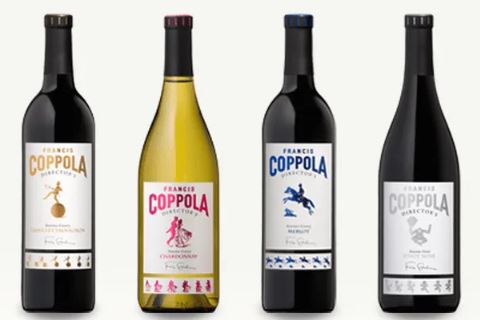
There are many reasons that celebrities gravitate to the world of wine. Starting a winery or vineyard can offer some tax benefits. Some celebrities, such as the Italian-American director Francis Ford Coppola, come from a family with a long history of winemaking. Others such as the British singer Cliff Richard, have been lifelong wine enthusiasts and enter the wine industry in order to do something that they enjoy. Still others like the challenge of a new enterprise. Some celebrities enter the wine industry simply because they can.

Celebrities, such as the American actors Brad Pitt, Angelina Jolie, Johnny Depp, and British football star David Beckham and his wife Victoria, own vineyards and wine estates solely for personal use. Some other celebrities leverage their name recognition as a selling tool in the wine industry.

Celebrities have different degrees of involvement in their wineries and vineyards. Nearly all of them partner, in some form of collaboration, with a winery or winemaker who is already established in the industry.

Sarah Jessica Parker, the former Sex and the City star, has debuted her Sauvignon Blanc and Rosé collection. She has a partnership with New Zealand-based winery Invivo.  The self-proclaimed wine lover is said to have her hand in every step of the winemaking process, including naming and design of the bottles.

The Speaker of the U.S. House of Representatives, Nancy Pelosi, owns two vineyards that sell grapes to California wine producers.

Sometimes the celebrity may own their own “wine brand” which is produced with the collaborating winery instead of owning a physical winery or wine estate itself. An example of this is Wayne Gretzky Estates, which is one of the brands owned by Andrew Peller Limited, who also owns Peller Estates Winery, Sandhill, Trius Winery, Red Rooster, Calona Vineyards and Thirty Bench Wine Makers.  Each is a unique winery operating with its own vintner, wines and labels.  I am sure that Mr. Gretzky is involved to at least some degree in the winery’s operation.

Some celebrities lend their names to a winery for a special wine production.  Examples of this include Niagara’s Stoney Ridge, who produces The Tragically Hip Fully Completely Reserve Red and The Tragically Hip Ahead by a Century Chardonnay.

Tawse winery has created Cuddy, a sparkling wine that has been developed in partnership with Blue Rodeo lead singer, Jim Cuddy.

For the art lovers out there, Niagara’s Diamond Estates winery produces McMichael Collection Tom Thomson Cabernet Franc and McMichael Collection Tom Thomson Barrel-Aged Chardonnay, paying for the rights to have Thompson’s paintings displayed on the bottle.

Does celebrity ownership impact the price of the wine? If the celebrity is involved in the ownership or operation of the winery, I would say no. However, where endorsements or royalties are being paid by the winery to the celebrity, I would speculate that such costs do impact the price.  As a result, in this situation the consumer pays marginally more for a wine bearing the name of a celebrity than another wine of a similar quality. 

However, if you are a fan of a particular celebrity or a particular label design, then the novelty may be worth the slight increase in cost.  After all, the beauty (and taste) lies with the consumer.

Sláinte mhaith

The Wines of Portugal

Personally, I find Portuguese wines a bit of a mystery.  Although there are some excellent creations being produced, they don’t seem to receive the same notoriety as wines from Italy, Spain or France.

Because Portugal’s wine culture developed in relative isolation, there are many grape varieties that do not grow anywhere else in the world.  There are over 250 indigenous varieties and a few imports that have adapted well to the Portuguese landscape. According to many wine experts, Portugal is the last frontier of wine in Western Europe explored. So with all the excitement this region offers, let’s take a look at what there is to know about the major wines and the regions.

DOC (or DOP) – DOC stands for Denominação de Origem Controlada and means the wine comes from a strictly defined geographical area with recommended and permitted grapes and maximum vine yields (to control quality). Technically there are 31 DOCs in Portugal although 3 of them overlap, making it seem more like 28.

Vinho Regional (or IGP) – Portugal is divided into 14 regional wine  areas which have less strict rules for controlling which types of grapes are used, as well as maximum vine yields. While this implies that the wines will not be as high quality, many producers in Portugal use the Vinho Regional designation to create excellent wines using grapes or blends not allowed in DOC.

Vinho (Wine): The most basic classification of Portuguese table wine. These wines are generally not distributed outside of Portugal.

Each region is managed by a regional “Wine and Vine” commission, the Comissão Vitivinícola Regional (CVR). Each CVR supervises and controls the quality regulations in order to ensure quality and to maintain each region’s individual character.

Portuguese Wine Terms

Vinho Tinto – Red Wine

Vinho Branco – White Wine

Quinta – Wine farm. You’ll often find this word as part of a winery’s name on the label of wines.

The Wine Regions

Douro Region

Port is the most famous, and most copied, wine from Portugal and it grows in the Douro Valley.

Wines of Douro

Port – Fortified sweet wines; specifically LBV Port, Tawny Port, and Vintage Port wines which are the best and made by blending “port grapes” which include Touriga Franca, Touriga Nacional, Tinta Roriz (Tempranillo), Tinta Barrocca and Tinto Cão among many others.

White Port and Pink Port – Beyond the red Port there are also Port wines made with the rare white wine varieties in the region. Rosé Port is relatively new.

Tinto Douro – Full-bodied red wines. The same red grapes of Port wine are used to create full-bodied, tannic, age-worthy red wines.

Douro Branco – Light-bodied white wines. Douro Branco are crisp, minerally white wines with very little fruity flavour, subtle flinty notes and salinity, and high acidity. Douro white wines are a little harder to find and include the white Port varieties of Rabigato, Viosinho, Gouveio, and Folgazão.

Terras de Cister (Távora e Varosa) Region

Terras de Cister – Sparkling wines

This area produces wines with much more elegance and acidity than Douro, making it ideal for sparkling wines. There are a growing number of Chardonnay and Pinot Noir vineyards being planted along with the regional varieties of Malvasia Fina (aromatic white), Cerceal (light white), Gouveio (light white), Aragonês (aka Tempranillo), Tinta Barroca (red) and Touriga Franca (red) among others.

Transmontano (Trás-Os-Montes) Region

Tinto Transmontano – Full-bodied red blends

The most common wine from this area is Transmontano, which is a regional red blend. Wines are full-bodied, punchy, with higher alcohol levels.

Minho (Vinho Verde) Region

Vinho Verde wines are best served young when the wine is at its peak of aromatics and crisp acidity.

Wines of Minho

Branco Vinho Verde – Light-bodied white wines. Wines often have a slight spritz and fruity, lemonade-like flavors with notes of melon, gooseberry and chalky texture. White Vinho Verde wines are made with a blend of several grape varieties including Arinto, Azal, Trajadura, Loureiro and Alvarinho (a.k.a Albariño).

Rosado Vinho Verde – Rosé. The Rosado wines offer red berry flavors with quenching acidity like lemonade. The reds/rosés of Vinho Verde are found primarily in the southern part of Minho in the sub-regions of Amarante and Paiva. Red grape varieties include Alvarelhão, Amaral, Borraçal, Espadeiro, Padeiro (quite rare).

Alentejo Region

The Alentejo region contains many progressive and modern wineries making red wines that offer generous fruit and mocha flavors with refined tannins from careful wood aging strategies. White wines from the Alentejo range from medium-bodied refreshers to full-bodied in a style similar to Chardonnay.

Wines of Alentejo

Tinto Alentejo – Full-bodied red wines that are typically blends made with Aragonês (Tempranillo), Trincadeira, Castelão, Alfrocheiro and Alicante Bouschet.

Branco Alentejo – Light-bodied and full-bodied white wines made with Arinto (fuller in style), Antão Vaz (fuller in style), Roupeiro and Fernão Pires (an aromatic white variety).

Alentejano (IGP/Vinho Regional) – Full-bodied red and white wines from a larger encompassing region that may include non-indigenous grape varieties (Viognier and Syrah are growing in popularity here).

Lisboa Region

There are many wines from the various regions in Lisboa (Alenquer, Bucelas) that are already making their way into stores internationally. While there is great quality found in Lisboa (Bucelas, Colares, Alenquer, Arruda) most of the wines you’ll find available are great for everyday drinking.

Wines of Lisboa

Alenquer – Concentrated, high tannin red wines made with Castelão, Alfrocheiro, Aragonês (Tempranillo) and Touriga Nacional

Bucelas – Light-bodied, citrus and beeswax-driven, age-worthy white wines made with Arinto. .

Arruda – Full-bodied red wines that often include international grape varieties like Cabernet Sauvignon and Syrah

Colares – Very rare find. Golden colored, full-bodied white wines in an oxidative style made with Malvasia Fina

Óbidos and Lourinhã – Light-bodied aromatic white wines particularly with Fernão Pires

Torres Vedras –  simple, low-alcohol refreshing white wines.

Setúbal Region

The region of Setúbal is famous for a fantastic rich, deep gold colored dessert wine called Moscatel de Setúbal

Dão Region

Wines from the Dão are lighter in style than in the Douro but have shown to age very well because of the tannin and acidity development from growing in high altitude areas with rugged soils of decomposing granite and schist (similar to Douro and Priorat).

Wines of Dão

Dão Alfrocheiro – Medium-bodied red wine with red berry flavors, licorice and spice notes

Dão Jaen (a.k.a. Mencía) – Full-bodied red wine. Raspberry and black cherry flavors with moderately high acidity and mouth-drying tannin.

Dão Touriga Nacional – Full-bodied red wine. Deep black fruit flavors with chocolate and mocha with refined tannins and medium plus acidity

Terras do Dão and Terras de Lafões – The Vinho Regional wines of the Dão with more experimentation and blends that include international varieties (Indi blends)

Tejo Region

Tejo plants all kinds of grapes, from Alvarinho (the grape of Vinho Verde) to the full-bodied blackish Alicante Bouschet. This is a good region for getting super value from Portugal.

Wines of Tejo

Red “Indi” Blends – Blends consisting of Cabernet Sauvignon, Syrah, Touriga Nacional, Trincadeira and Castalão

White “Indi” Blends – Consists of blends with Fernão Pires (an aromatic white wine), Arinto, Sauvignon Blanc and Chardonnay

Beira Atlântico (Bairrada) Region

Baga is the highly productive red grape of Beira, grown in Bairrada. From the aromatic and delightfully pink sparkling wines by Luis Pato to the soft, structured light-bodied red wines by Niepoort, this area is one of the new frontiers of winemaking for the Portuguese.

Wines of Beira Atlântico

Tinto Bairrada – Made from Baga and ranging from dense, tar-like, high acid reds to delicate, red fruit-driven wines with finely textured tannins and the ability to age.

Branco Bairrada – Made from the aromatic Fernão Pires (called Maria Gomes here), Bical and Arinto

Sparkling “Brut” Bairrada – Delicious beeswax-driven sparkling wines made with early picked Baga and Fernão Pires.

The Beira Interior

The most mountainous region in Portugal has one of the most challenging climates to produce grapes. With a shorter growing season the reds have red-fruit driven flavors with herbaceous smoky notes and a juicy finish while the white wines tend to be lean with chalky minerality. There are many old vines here as well as producers using native yeasts and organic viticulture.

Wines of the Beira

Tinto Beira – Red fruit-driven wines of Murufo, Bastardo, Alfrocheiro, Trincadeira and Touriga Nacional

Branco Beira – Lean, chalky white wines of Síria, Arinto, Malvasia

Madeira & Pico Island (Azores)

Verdelho is the main regional white wine grape. Wine from Pico is golden, viscous liquid that is hauntingly sweet, tart and somewhat salty with a smokiness from the volcanic landscape. Madeira, on the other hand, has the most collected and appreciated fortified wines in the world.

Algarve Region

There are nearly 2500 acres / 1000 hectares of grapes in the Algarve.  The wines aren’t designed to age, but there is hope in particular for red wines with Alicante Bouschet, Syrah and Aragonês (Tempranillo). These drought-climate varieties still manage to have juicy acidity and create more smoky sweet, dusty notes on the finish somewhat reminiscent to South Australia.

The wines of Portugal are well worth a try.  The wines are both good and available at a favourable price point.

Sláinte mhaith