Italy’s Quality Standards

Similar to Canada, France and Germany, Italy has developed its own safeguards where grape growers and producers must adhere to strict regulations in order to be certified.  The laws also govern things like the type of grapes used, the alcohol content, and how long the wine is aged.

Italian certification falls into three categories of decreasing strictness: DOCG, DOC, and IGT.

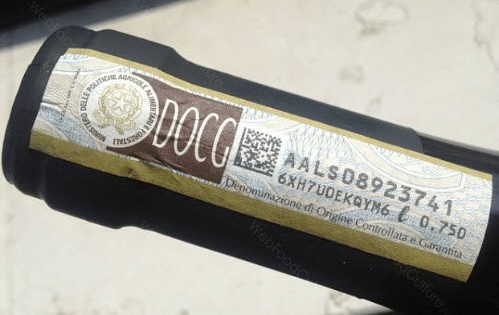
Denominazione di Origine Controllata e Garantita (DOCG) wines contain the DOCG letters on the label.  For the consumer this means that the producer followed the strictest regulations possible to make that wine. The wine is tested by a committee that then authenticates the geographic location and the quality of the wine. There are currently only a handful of Italian wines that qualify for DOCG status.  DOCG wines are easy to identify as they contain a numbered government seal attached to the neck of the bottle.

Denominazione di Origine Controllata (DOC) wines are much more commonly found. The rules governing quality and authenticity are still very strict, but not quite as stringent as those containing the DOCG insignia. For instance, the geographic zone might be a little bigger or the rules about what kind of grapes might be a little more relaxed.  The letters DOC will be found on the label, similar to DOCG.

The final quality designation is Indicazione Geografica Tipica (IGT).   This category was created after the DOC and DOCG designations in order to accommodate growers who couldn’t meet all the DOC or DOCG requirements but were still producing good quality wines. 

The following will help provide an understanding of the information commonly found on an Italian wine label.

  • Abboccato = Slightly sweet
  • Amabile = Medium sweet
  • Amarone = Dry red wine made from dried grapes
  • Azienda/Tenuta/Podere = Estate
  • Bianco = White
  • Cantina = Winery
  • Cantina sociale = Co-operative winery
  • Chiaretto = Pale red or dark rosé
  • Classico = Denotes the traditional, theoretically superior, vineyard area within a DOC/DOCG zone
  • Dolce = Sweet
  • Frizzante = Slightly sparkling
  • Imbottigliato all’origine = Estate bottled
  • Metodo Classico = Sparkling wine made by the classic Champagne method
  • Novello = Describes light, fruity wines intended for early consumption rather than cellaring
  • Passito = Generic term for wine made from dried grapes (usually sweet but occasionally dry)
  • Recioto = Sweet red or white wine made from dried grapes (a form of passito)
  • Ripasso = Full-bodied, powerful wine style made by re-fermenting wine with amarone grape skins
  • Riserva = Denotes extended aging (in cask, then bottle) before the wine is sent to market
  • Rosato = Rosé
  • Rosso = Red
  • Secco = Dry
  • Spumante = Sparkling
  • Superiore = Wines with greater concentration and higher alcoholic strength
  • Vendemmia = Vintage
  • Vigneto = Vineyard
  • Vin Santo = A dessert wine style originally from Tuscany, generally made from air-dried grapes
  • Trebbiano = A name shared between many different Italian grape varieties, planted almost everywhere within Italy. It is dark gold or amber-coloured with high acidity and a rather neutral flavour profile

I myself have sampled quite a few Italian wines over the years and they have not all been DOCG or DOC.  I have found that IGT wines are often very similar in taste to their higher rated cousins.  In general, the quality standards are very good. 

With Italian wines I am more inclined to purchase what intrigues me and not pay so much attention to whether it contains a certain insignia.  It is also interesting to note that the price point of DOCG wines is often no higher than, and sometimes even less than DOC or IGT wines.

Sláinte mhaith

Drink or lay down and how to cellar those you keep

Given all of the images of wine cellars out on the internet, people often get the impression that most wines should be held for many years before popping the cork and enjoying the contents.  However, in reality 90% of wine that is released by the wineries is ready for consumption when it is released and 99% within 5 years of release.  Only 5 to 10% of wines will improve after a year of cellaring and only 1% will continue to improve after 5 to 10 years of cellaring.

In order for a wine to benefit from aging, it requires a high acidity level.  Acidity adds to a wine’s vibrant, full-bodied texture. It fades with age, so cellared wines must start out with a high level of acidity. Wines with low acidity (<0.65g/100ml), like Pinot Grigio, will become flat much sooner and lose most of their flavour in a short period of time.

The second characteristic of a cellarable wine is a significant amount of tannin.  Tannin is created by allowing the grape skins, seeds and stems to remain in the juice after processing.  Additional tannin is created when the wine is stored in wooden wine barrels (French Oak or American Oak).  Bold tannins give wine the structure to age well.  Tannins create the dryness in wine and can make the wine somewhat bitter. In a young wine they can make your mouth pucker up, somewhat like a sip of a strong black tea.

Without tannins and acidity, there is nothing to be gained by keeping a wine for more than a year or two.  When a wine is kept beyond its prime it begins to lose its flavour and becomes very acidy.

Wine reviewers and vintners can give you suggestions as to how long to retain a particular wine.  Why guess when you can take advantage of their free advice.

If you are going to store wine, whether it be for a week, a month or a decade, there are some dos and don’ts to consider  to help ensure that wine tastes as good as it should.  You don’t need to have a wine cellar or even a wine fridge to store wine but there are some things to keep in mind.

Most importantly all wine should be kept in the dark.  Both sunlight and incandescent light can harm your wine.  Think of wine as being like fabric.  Fabric exposed to sunlight can bleach out the colour and eventually cause the material to rot.  Light has a similar effect on wine, causing the wine to begin breaking down, resulting in lost flavour and spoilage.

If you have a means of chilling your wine, the experts have differing opinions but generally speaking it seems safe to store them anywhere between 45 and 65 degrees Fahrenheit, although 55 degrees is believed to be about the perfect temperature.

If stored at a temperature over 70 degrees Fahrenheit, the wine will age more quickly than expected and therefore begin losing flavour and aroma.  It is also beneficial to keep your wine stored at as consistent a temperature as possible.

Traditionally wine is stored on its side.  This is done in order to ensure the cork remains wet.  If a cork is allowed to dry out, over time it will shrink and allow oxygen into the bottle.  Once wine is exposed to oxygen, it quickly spoils leaving you with an undrinkable surprise when you open it. 

Even though not all wine has a cork any more, another reason for laying a bottle on its side is to allow for the equal distribution of the sediment that is often found in a wine with high tannin content.  During the aging process the tannins can solidify and drop to the bottom.  With the bottle lying on its side, the solids are distributed more evenly, keeping the flavour of the wine consistent from the first glass to the last.

Once you have placed your bottle in its resting place, whether that is in a wine cellar, wine fridge or even a closet, it should not be disturbed until you retrieve it to drink.  You don’t want to shake up the tannins that have been slowly settling in the bottle.

One final no-no and my pet peeve is never store wine in an open wine rack in a kitchen.  Kitchen designers seem to love including a wine rack in the end of an island or even worse, next to the stove.  I admit these wine racks often look very enticing and professional but resist the temptation to slip a bottle of wine into one.  The kitchen is the brightest room in the house with the greatest fluctuation in heat and humidity – a total wine killer.  The only time wine should appear in the kitchen is when it is being poured into a glass.

Lastly, when you go to serve that bottle of wine, both reds and whites should be pulled from the fridge or wine cellar about 20 minutes before opening to be allowed some time to warm up a little.  On the other hand, if your wine has been stored at room temperature, even most red wines should be chilled for a few minutes before serving.

Sláinte mhaith

Germany’s Quality Standard

Germany’s wine governing body is the Association of German Quality and Prädikat Wine Estates known as Verband Deutscher Prädikats- und Qualitätsweinguter (VDP).  This is an association of about 200 top German wineries. Membership is voluntary but requires adherence to strict standards well above those required by German wine law.

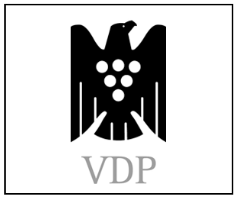
Since 1910, the VDP and its black eagle logo have been an important, although unofficial, symbol of German wine quality. The association has created its own wine quality system based on the vineyard classification terms ‘Grosse Lage’ and ‘Erste Lage’ (similar to France’s Grand Cru and Premier Cru).

Grosse Lage is used only for Germany’s very best vineyard sites – small, carefully demarcated areas with clear site-specific characteristics. Yields on these sites are limited to 50 hectoliters per hectare, which generally equates to about 8,000 kilograms of grapes per hectare, if that is any help giving you a visual.

Grosse Lage vineyards produce Grosses Gewächs (a dry wine). A Grosses Gewächs may be either white or red wine, depending on the vineyard.

Erste Lage identifies first class vineyards with distinctive characteristics, but which rank a little behind Grosse Lage in terms of quality. Yields are limited to 60 hectoliters per hectare.

From a government perspective, German wine is classified into 1 of 4 quality categories: Deutscher Wein, Landwein, Qualitätswein (QbA) and Prädikatswein. The latter is further divided into levels of ripeness: Kabinett, Spätlese, Auslese, Beerenauslese, Eiswein and Trockenbeerenauslese.

  • Kabinett = the lowest level of Prädikatswein.  It is lower in ripeness than Spätlese
  • Spätlese = a white wine made from fully ripe grapes harvested late in the season
  • Auslese = a late harvest white wine  made from grapes that are riper than Spätlese
  • Beerenauslese = made from individually selected grapes that are very ripe. Usually these grapes have been affected by Botrytis cinerea, (noble rot), further concentrating their high sugars. As a result these wines are rare and costly.
  • Eiswein = an icewine/dessert wine produced from grapes that have been frozen while still on the vine.
  • Trockenbeerenauslese = a medium bodied dessert wine with the highest sugar concentration of any German wine ity. Yields

Each of the quality categories is determined by the level of ripeness that the grapes have achieved by the time they are harvested. Generally speaking riper grapes provide more aroma and more flavourful wine. It is interesting to note that ripeness is used as the basis of the quality scale because it is not uncommon for grapes to not fully mature before being harvested.  This is due to the cool climate conditions which can reduce the growing season.

The German wine law identifies Prädikatswein (previously referred to as Qualitätswein mit Prädikat (QmP)), as representing graduating ripeness levels in ascending order: Kabinett, Spätlese, Auslese, BA, and TBA. These wines are all naturally produced with no chaptalization (no sugar is added).   This sounds like a winner to me.

The second category is Qualitätswein (QbA).  These wines must comply with the regional appellation laws and are tested for compliance by an official committee.  The laws ensure that the wine is from one specific wine-growing region, is made of approved grape varieties and reached sufficient ripeness for a quality wine.  Those wines that successfully meet the standard receive an AP-Number.

About three-quarters of all German wine are in this category.  A QbA wine must be made exclusively from grapes grown in one of Germany’s 13 official wine regions, called an Anbaugebiete.

It is interesting to note that the wines in this category are chaptalized (have sugar added to the juice before fermentation to increase the alcohol level after fermentation).  

The third category is Deutscher Wein, which consists of normally ripe and slightly under ripe grapes. This class of wine is primarily consumed in Germany with very little being exported to North America. These wines only have to comply with few restrictions and the wines are not officially tested. They do not have an AP-Number.  This would be the equivalent of France’s Vin De Pays and Europe’s IGP category.

A superior type of Deutscher Wein is Deutshcer Landwein, which has a minimum of 0.5% more alcohol. The wine must come from one of 19 specified wine districts. A Landwein must not contain more than 18 grams of sugar per liter.

From my interpretation I would see only the Qualitätswein (QbA) and Prädikatswein being a worthwhile pursuit in your wine search.  Grosse Lage and Ertse Laga wines would be included in these categories. Personally I am not a fan of incorporating sugars that are not part of the natural fermentation process, so I limit my own search to Prädikatswein grade wines.

Here are some hints that will help you interpret German wine labels.

  • Amtliche Prüfungsnummer (A.P. Nr) = Quality control number, granted after official quality testing
  • Anbaugebiet = One of Germany’s 13 wine regions
  • Bereich = One of Germany’s 39 wine districts, which make up the 13 Anbaugebiete
  • Einzellage = Single vineyard, meaning the grapes used to produce the particular wine came from one vineyard.  This helps to ensure quality control and consistency of the grape content
  • Erste Lage = High quality vineyard, similar to France’s ‘Premier Cru’
  • Goldkapsel = ‘Gold capsule’, indicating a producer’s finest wine
  • Grosslage = Collection of vineyards; the opposite of Einzellage above
  • Grosse Lage = Top-quality vineyard, similar to France’s ‘Grand Cru’
  • Grosses Gewächs = Dry wine from a Grosse Lage vineyard
  • Gutsabfüllung = Estate-bottled wine
  • Halbtrocken = Medium-dry
  • Liebfraumilch = Semi-sweet style, made most often from Muller-Thurgau grapes
  • Oechsle = Unit of must-weight (grape sugar content)
  • Prädikat = ‘distinction’, or ripeness level
  • Rotwein = Red wine
  • Rotling = Rosé wine made from red and white grapes
  • Schillerwein = Rotling-like rosé style from Württemberg (and N.Switzerland)
  • Sekt = Sparkling wine
  • Trocken = Dry
  • VDP Verband Deutscher Prädikats = Qualitätsweinguter, which is described above
  • Weingut = Wine estate
  • Weinkellerei = Winery
  • Weissherbst = Rosé made from a single red-wine grape variety
  • Weisswein = White wine

I have had a number of wonderful German Rieslings and Gewürztraminers over the years and I must admit that I have not paid attention to the quality rating the wine has had.  However, not being a fan of overly sweet wine, I do pay attention to the scale of dryness.  

Sláinte mhaith

What Wine is Best for Me?

I sometimes hear that although someone prefers red wine over white wine, they have to drink white wine because red wine causes them grief, usually in the way of heartburn or headaches.  Don’t give up hope quite yet; there are some potential remedies that may allow you to enjoy red wine again.

 For anyone suffering from heartburn after drinking red wine, quite often it is the tannin that is the culprit.  Therefore, I suggest trying younger, fresher wines, such as Baco Noir and Pinot Noir and stay away from Cabernet Sauvignon, Cabernet Franc, and Syrah/Shiraz.   The young fresh wines will contain less tannin.

Another good way to determine how much tannin is in a red wine is to look and see how long the wine can be kept for.  In the Vintages section of your local LCBO this is identified by the wine bottle icon found on the description card attached to the display shelf.  The bottle will either be vertical, on a slant, or horizontal.   Wines with higher contents of tannin are ones that can be retained for at least several years.  Those will be the ones with the horizontal or slanted bottle icon.

This being said, the reds with the slanted bottle icon should not be automatically rejected.  Those that have been released within a couple of years of being produced  and recommended for consumption within the next couple of years, will have considerably less tannin than those that can be cellared  for a number of years.  It will require experimentation to determine how much tannin your stomach will comfortably tolerate.

I also suggest avoiding red wines from warmer climates, such as Australia and South America.  These wines tend to be bolder and stronger in flavour than wines from countries such as Canada or France.  Wines from warmer climates tend to have longer growing seasons, thus intensifying the wine which can result in a higher degree of tummy agitation.

If red wine gives you headaches tannin again can be the instigator.  Tannin consists of plant chemicals that contain antioxidants that can generate neurotransmitter serotonin.  This in turn can cause headaches in some people.  Selecting a red wine that contains lower amounts of tannin may be of great benefit.

However, tannin is not the only cause of headaches.  Some individuals lack the ability to breakdown the high level of histamine that is contained within the red grape skins.  The result is a type of allergic reaction that comes in the form of a headache.  The recommended solution for this is to take an antihistamine before consuming your favourite red.

Finally, a local potter once told me that a pottery wine challis that is unglazed inside will neutralize the tannin thus making the wine easier on both the stomach and the head.  It may be worth the investment to see if it works for you.  The worst case would be you have a new fancy wine vessel taking space in your cupboard that can be repurposed.

Sláinte mhaith

Tasting Wine

Of course when you drink a glass of wine you indeed taste it as you drink it.  It isn’t chugged like a beer might be or downed in a single gulp like you would if you were doing shots, or at least I hope not.

There are, however, different types of tasting.  There is tasting, as you would when you sit at the dinner table enjoying a glass a wine with a meal. And there is the other type of tasting, the one you do if you go to a winery or attend an event hosted by a sommelier, vintner, or other wine expert. 

This second type of tasting is more of an event than simply the enjoyment of a glass of wine.  Such wine tasting events take place for a variety of reasons, but the process is generally the same.  Perhaps you are visiting a winery and want to know which, if any, of their wines suit your palate.  In other situations you may be comparing and matching certain wines to various types of food.  That is how I acquired a passion for blue cheese, much to my wife’s chagrin, but that is a story for another day.  Another purpose of formal wine tastings is to learn how the various types of wines (grapes) relate to each other, whether it is dryer, sweeter, robust, etc.

In any event, the process for tasting wines in these situations is the same.  In order to truly judge the character of the wine to determine if it is to your liking, it requires the use of a few of your senses – your eyes, then your nose, and finally your taste buds.

The first thing to do once you are given the glass of wine is to hold it to the light to see how transparent or opaque it is.  Generally speaking, the more transparent a wine, the lighter the taste.  Although I have never tried it, it is said that you can read a book through a glass of Pinot Noir, where the same could not be said for a glass of Shiraz.  But I ask, why risk spilling the wine?

Second, you can determine the relative amount of alcohol in the wine by tilting the wine glass toward its side and then straightening it back up to see if there are “legs”, which are streams of liquid lingering along the side of the glass that was tipped.  The longer the legs, the higher the alcohol content.  The higher the alcohol content in the wine, the stronger the flavour.

The next thing you should do is swirl the wine in the bowl of the glass and sniff it to see whether there is an aroma or bouquet, and if there is, whether it is appealing to you.  Wine reviewers will describe what they smell, whether it be apples, pears, grass, etc. in white wine or hints of leather, turf, cocoa, etc. in red wines.  You may or may not smell any of these things; what is important is determining whether it is an aroma that is pleasing to you.

Finally, it is time to taste the wine.  It is best to close your eyes so as not to be distracted by the sights of what is going on around you.  When you taste the wine, let it linger in your mouth, being sure to completely taste before swallowing or spitting it out into the spittoon that will have been provided specifically for that purpose.  Spitting out the wine during a formal tasting is not being disrespectful.  If you are going to be tasting a number of wines, many people prefer not to ingest that much wine, especially if there are a number of varieties being sampled.

When tasting the wine you may find that there are recognizable flavours similar to what is found in the wine’s aroma, such as green apple or pear in some white wines, or cocoa or coffee, for example, in red wine.  Some wine experts will go so far as to say that red wines may have a hint of leather or an earthiness in their flavour, though having personally not chomped on a piece of leather or dirt, I am not sure how they can come to that particular conclusion.

Wine tastings are something that you can experiment with and conduct them with your friends and fellow wine enthusiasts in the comfort of your own home.  It is a fun way to learn about wines and experiment with wines you haven’t tried before.  There are all kinds of different things you can do and try.

Enjoy!

Sláinte mhaith

France’s Standard of Quality

In a previous post I described Canada’s VQA standard for helping to ensure the wine you purchase is an enjoyable experience.  Not all countries take this same approach to standard identification.  Many countries, such as Australia and the United States, govern the wine industry with a general set of standards and controls and do not adhere to any particular categorization for wine quality.   However, there are other countries, such as France, Italy & Germany that do have quality standards specific to wine.

To begin I will focus on France, which has 3 primary quality groupings.   The first is AOC (Appellation d’Origine Contrôlée), which indicates the geographical origin, quality and the style of a wine.  The Europe-wide equivalent of AOC is AOP (Appellation d’Origine Protégée). All Grand Cru and Premier Cru wines fall into the AOC category.

Grand Cru is the very highest classification of French wine. The term can refer to a wine in one of two ways, either the plot of land where the grapes are grown or the chateau at which the wine is made. The former applies most famously in Burgundy, Alsace and Champagne but is also used in Languedoc and the Loire Valley; the latter being exclusive to Bordeaux.

Premier Cru denotes either a vineyard plot (most often in Burgundy) of superior quality, or the very highest tier within a Grand Cru classification (such as the ‘Premier Grand Cru Classé chateaux of Bordeaux).

The second wine category is VDP (Vin de Pays), which means ‘wine of the land’, although it is often translated as ‘country wine’. The European equivalent is IGP (Indication Géographique Protégée). This category focuses on geographical origin rather than style and tradition, and gives winemakers greater stylistic freedom than AOC. Vin de Pays was introduced in the 1970s, and by the year 2000 there were more than 150 individual VDP titles, covering about a quarter of French wine production

The final category, Vin de France, replaced Vin de Table in 2010, but remains the most basic quality tier for French wine. This is the least regulated (and least used) of the three categories; Vin de France wines can be made from grapes grown anywhere in France, but their labels do not mention a specific region of origin. Vintage and grape varietal statements are optional.

Some of the French quality scales can be easily identified on the wine label.  For example, if applicable the term ‘Grand Cru’ or ‘Premier Cru’ will appear somewhere on the label.  You will also notice a correlation between the quality rating and the price of the wines.  Generally speaking ‘Grand Cru’ wines are at the top end of the price scale, with ‘Premier Cru’ are somewhat less expensive.

Here are some helpful hints when interpreting a French wine label; some of the terms are more obvious than others.

  • Blanc = White wine
  • Brut = Dry
  • Château = The name of the wine producer
  • Côte/Coteaux = Slope of a hill/hillsides, for example Côtes du Rhône
  • Crémant = A style of sparkling wine different from Champagne
  • Cru = Means ‘growth’ – it is used to denote the status of a winery or vineyard
  • Cru Classé = Classified vineyard, suggesting a certain quality or age of the vines
  • Demi-sec = Medium-dry
  • Domaine = Estate
  • Doux = Sweet
  • Grand Cru = Signifying the highest quality wines
  • Méthode Traditionnelle = Traditional method of sparkling winemaking, like  Champagne
  • Mis en bouteille au château/domaine = Bottled at the winery
  • Premier Cru = First growth
  • Propriétaire = Identifies the estate or vineyard owner
  • Rouge = Red
  • Sélection de Grains Nobles = Sweet wine made from botrytized grapes (grapes containing botrytis fungus, which is seen as being beneficial to the wine)
  • Supérieur = Wine with a higher alcohol content as a result of being made from riper grapes
  • VDQS (Vin Délimité de Qualité Supérieure) = a mid-level classification used between 1949 and 2012
  • Vendange Tardive = Late harvest (sweet) wines
  • Vieilles Vignes = Old vines
  • Vigneron/Viticulteur = Vine grower/grape grower
  • Vignoble = Vineyard
  • Vin = Wine

Hopefully all of this will help take some of the mystery out of how to find an enjoyable French wine.  I have found that the French wines that are exported, especially any of those that appear on the shelves of the Vintages section of my local liquor store, are all worth a try.  I think you will find that French wine does not need to be expensive nor of a specific quality standard to be enjoyable.

In the future I will take a similar look at German and Italian wine classifications.

Sláinte mhaith

A Need for Speed?

There is beer in a can, coolers in a can, mixed drinks in a can, and now, … wait for it … wine in a can!  Reading through the summer edition of Food & Drink magazine (courtesy of the local LCBO) I came across 2 different ads promoting wine in a can.  The wine comes in a 250 ml sized can, which is the equivalent of 2 smaller size glasses. 

So the question is how would one go about consuming this wine?  I suppose you could down it like a beer; after all there is no re-corking it once you flick that zip top.  I just can’t imagine drinking it straight from the can.  Even when they introduced wine in a box, or ‘cardbordeaux’ as it has been jokingly referred to, it enables you to dispense it one glass at a time.

I am thinking that the advantage of packaging wine in a can is to allow it to be tossed into a backpack or food hamper and transported to your favourite picnic location.  After all, the cans would be a little less weight to lug along and if you drop it, it is less likely to result in a catastrophe.  However, the wine (especially red) still needs to aerate before drinking, which means it still should be poured into some sort of drinking vessel before consuming.  Therefore, at least an acrylic or plastic glass should be included in the picnic basket.

So who is the target of the new marketing idea?  Apparently it isn’t the picnickers and hikers but the millennials.  Marketers are taking aim at these time-pressured souls who need more conveniences, accessibility and approachability when purchasing consumer goods. 

You can expect to see lots of promotion of this new trend in the weeks to come as marketers hope to turn this novelty into a summer staple.  Canadian vintners, unlike some of their European and U.S. counterparts, are not yet as committed to this new endeavour, though there are a couple on the horizon and will be available very soon, if not already.

No matter what country the canned wine originates from, they are all the ‘drink me now’ varieties.  There are no keepers in this bunch.

Call me old fashioned or just simply old, but I for one will not be seeking out any canned wine anytime soon.

Sláinte mhaith

Varietals by Region or Name

It is usually quite easy to identify the varietals contained in new world wines, such as those from Australia, North America or South America, and some European countries such as Germany.  These producers often display the varietal or blend as part of the label.  On the other hand some countries and regions, such as France and Italy, do not follow the same practice. 

In France the wines are usually identified by the region in which they are grown.  The same is true for some German, Italian and Spanish wines. This can make it very confusing for you when trying to find a certain type of wine for your drinking pleasure.  The good news is that both France and Italy label their wines in a consistent fashion so once you understand their naming conventions it is easier to determine the varietals the wines consist of.  The effort to understand these naming conventions, which are buried deep in their wine making history, will be well rewarded as it will provide you with great drinking pleasure for years to come.

 In both France and Italy the grapes grown are unique to each geographic region.  By taking note of which regions are renowned for the type of grapes you enjoy, you will be able to select one of these wines with more certainty than by just grabbing a bottle off the shelf randomly, or worse yet, avoiding them altogether.  From there you may find a particular winery or two or ten that you have a craving for.

In the weeks ahead I will tackle unravelling the mysteries many of the European wines and decipher the meaning of what appears on their labels.

Happy exploring!

Sláinte mhaith

Selecting Canadian Wines

A number of countries, including parts of Canada, provide consumers with a guide to assist with the selection of a quality wine.  You have probably seen the black and gold VQA emblem on the label or neck of many wines produced in Ontario and British Columbia.  VQA is the acronym for Vintners Quality Alliance.

VQA Logo

The VQA is a provincial regulating body in Ontario and British Columbia.  VQA oversees winemaking and labelling standards through origin verification, extensive laboratory testing and tasting by an independent expert panel, as well as comprehensive label reviews.

It is not required that all wines produced in these provinces adhere to the VQA standard.  For those who choose to be VQA certified, the wines must consist of 100% fresh grapes – concentrates are not permitted.  The grapes must meet a quality standard and no water can be added during the winemaking process.  All wines, except sparkling wines, must be vintage dated and adhere to vintage requirements.

Once the vintner has determined the wine is ready for consumption it will be evaluated by an expert taste panel and a laboratory analysis, which must meet minimum quality standards before being released.  Regulations dictate that the origin, style and type of wine must contain 95% of grapes originating from the specific region identified on the label, and 85% must come from the vintage stated on the label and be of the varietal indicated.

What is found on the wine label of a VQA wine:

  • Producer’s name
  • The year the grapes were produced, known as the Vintage Year
  • Vineyard Designation (optional) – 100% of the wine came from this vineyard
  • Varietal name, for example Riesling, Cabernet Franc, etc.
  • The appellation where the grapes were grown, such as Niagara Peninsula, Okanagan Valley
  • Mandatory product information (required by federal legislation) including:
    • Alcohol strength (the percentage per volume)
    • Country of origin
    • Winery’s location
    • Producer’s common name

Depending on the preference of the particular producer, they may choose to include the information on the front or back label of the bottle

What does this mean to you?  The VQA designation does not guarantee that the wine will be to your liking, but it does stack the odds in your favour. 

Non-VQA wines in Ontario and British Columbia are less likely to provide a consistent taste experience.  This is because the wine may not contain the same composition of grapes from one batch to the next or one year to another.  The grapes don’t even have to originate from the same country!  As a result each bottle, even though it has the same label and even the same year, may provide a totally different experience.  I guess you could think of it in the same manner that Forest Gump considered a box of chocolates … each one can be a new surprise.

Inconsistency doesn’t necessarily make non-VQA wines bad.  One advantage that they sometimes do have is that the cost per bottle is usually less than a comparable VQA wine. 

The second advantage is that producers of non-VQA wines are not as susceptible to poor growing seasons.  For example, if there is an unusually cold and/or wet summer in Ontario resulting in reduced Cabernet Franc production, non-VQA producers can obtain suitable Cabernet Franc grapes from elsewhere in the world, thus making Cabernet Franc wine more readily available and at a relatively lower price.

All that being said, personally I still search out VQA wines.  Unlike Forest, I am not a big fan of surprises, in either chocolate or wine.

Nova Scotia has chosen not to follow the VQA guidelines.  Instead it has elected to follow the spirit of France’s Appellation d’Origine Controlee, which is the subject of an upcoming discussion.  Nova Scotia is focused on encouraging their winemakers to produce a product with qualities and characteristics that will be uniquely identified to their region.

Nova Scotian wines are not always easy to obtain, depending on where you live, but in my travels to Nova Scotia I have had the pleasure of drinking some of these wines and found them to be most enjoyable.

Sláinte mhaith

The Mighty Grape

I am sure it is no surprise that the varietal (type of grape) a wine is composed of has the most significant impact on taste.   Generally speaking, white wines are much more subtle and delicate in flavour compared to reds, which are bolder and richer in flavour.

There is also a range of flavour and intensity, as well as sweetness within each of the whites and reds.  The depth of flavour and sweetness of the grapes is impacted by where the grape is grown and to a lesser extent, the characteristics of each individual growing season, whether it being warmer, cooler, wetter, and/or dryer.

The warmer the climate, the more intense the flavour of the grapes.  This is because warmer climates have longer growing seasons, thus giving the grapes more time to develop and enhance their flavour.

There are micro climates within regions as well, which have a comparative effect on the flavour and richness of the wines produced.  For example, within Canada, wines grown in British Columbia will generally have a bolder flavour than those grown in Ontario.  This is because the Okanagan Valley where the bulk of B.C.s grapes are grown is a warmer location with a longer growing season than the wine regions of Ontario.

Wines will sometimes be categorized by dryness while other times they are assessed based on the intensity of their flavour, sometimes referred to as “body”.  Retailers will typically display ratings based on dryness, that is, the amount of natural sugars present in the wine.

Dryness or sweetness does not always relate directly to whether the wine has a bold or mild flavour.  The body or boldness of the flavour will be more dependent on the type of grape, the amount of tannin and acid in the wine, as well as the region the grape was grown in.  For example, an Australian or Chilean Cabernet Sauvignon will most likely have a much more intense flavour than a similar wine from France or Canada.

The more tannin and alcohol content in a wine, the fuller the taste.  The reverse is true for the level of acidity within the wine; the higher the levels of acidity, the less bold the taste of the wine.

Since darker coloured fruit usually has more intense flavour, the darker the colour of the wine, the more intense the flavour will be.  The colour of a wine doesn’t help though when purchasing a wine from a merchant since the bottles are usually coloured preventing you from seeing the natural colour of the wine.

Light bodied wines are considered to be those with an alcohol level of 12.5% or less whereas medium bodied wines have alcohol content between 12.5% and 13.5%.  Finally, any wine with an alcohol level of 13.5% or above is considered full bodied.

The grape content within a wine is not always easily identifiable by simply reading the label.  In France for example, wines are identified only by the region in which they are produced, such as Bordeaux or Burgundy.  An upcoming article will discuss how to identify the varietals contained in wines that are only identified on the bottle only by region or type.

Sláinte mhaith