2025: A Much Better Year

As an update to my November 9, 2024, post “2024: A Year to Remember”, I am pleased to report that the devastation resulting from the environmental disasters that plagued the 2024 growing season in British Columbia have had a reduced impact on this year’s grape harvest.

Photo credit: decanter.com

The vines that survived the destruction have recovered significantly, contrary to expectations. Most growers are now expecting a substantial crop; something that seemed unimaginable last year. The vines have proven to be much more resilient than expected. Some wineries project this year to be their largest harvest ever.

Indications are that the 2025 vintage will be of high quality as the weather has been consistently warm but without extreme heat spikes and wildfires. However, some vineyards still have crop yields of questionable quality.

Grape prices have returned to more reasonable levels, similar to what existed before the environmental challenges of the past couple of years. This will be a relief for the wineries and consumers.

Only a small number of wineries will continue to need to source grapes again from the U.S. Thus, the replacement wine program has been extended for another year. Many producers have replanted vineyards that will not be in full production for another several years.

The effects of the 2024 disaster will continue to linger for the foreseeable future. but the impact is proving not to be as devastating as first thought.

Sláinte mhaith

Impact of Tariffs on the Canadian Wine Industry

Tariffs and retaliatory measures significantly hurt Canada’s wine industry by increasing the cost of U.S. grape must and juice needed by many winemakers, while also indirectly harming wineries through higher costs for imported packaging and equipment. On the other hand, provincial bans on U.S. wine improved sales for domestic Canadian wines. However, should this increased demand continue, wineries may need to enhance their operations.

Photo credit: tbnewswatch.com

Wine production costs have increased for wineries that purchase grape must (crushed grapes) from the U.S.  Tariffs on steel and aluminum from the U.S. have increased the cost of barrels, equipment and cans.

However, it’s not all doom and gloom for the Canadian wine industry. There have been increased sales of domestic wine due to the removal of American wines from liquor and wine store shelves in most provinces.

Statistics Canada announced that in April 2025, Canada imported only 2.9 million dollars of American wine  a 94% decrease from the year previous. Imports from other wine-producing regions such as New Zealand and Australia increased by 31% and 28% respectively, while shipments from France and Italy rose by 13.6% and 7.6% respectively.

Wineries in Southwestern Ontario, the B.C. Lower Mainland, and Kelowna have experienced increased sales. For example, despite total wholesale wine sales falling nearly 5% year-over-year, B.C.’s share climbed from 47% to over 52%. For the first time, B.C. wines represent more than half of all wholesale wine sales in that province.

However, as stated previously, I don’t believe there are any real winners in a trade war.

Sláinte mhaith

A lesson Learned

Earlier this year I had my first experience purchasing a case of wine in a foreign country and having it shipped home. In the past I have often taken advantage of the duty-free laws and brought home a bottle of wine or whisky, but this was the first time I purchased a quantity of wine.

Photo credit: palletonline.co.uk

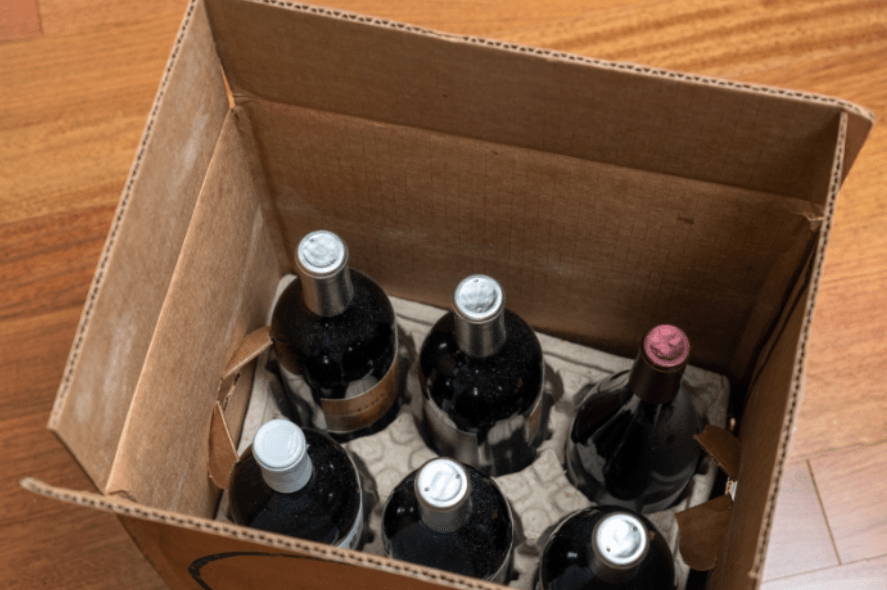
The purchase of the wine was made at the time I visited a winery in Bordeaux, France.  The six bottles of wine I purchased cost 315 euros plus a shipping fee of 99 euros for a total of 414 euros. Once the exchange rate was applied my total came to $660 CDN.

After my return home I received an email from the shipper advising that they required a copy of the transaction receipt and/or credit card payment confirmation statement verifying the purchase. This information was then forwarded to the Liquor Control Board of Ontario (LCBO) for valuation purposes prior to the delivery of my wine. I was also advised that there would be additional costs associated with importing alcohol that had to be paid prior to the release of my shipment.

The additional costs included a levy of 102.2% which was applied to the total value of the shipment. There was also a brokerage fee of $49.17+HST, duties, taxes and a government filing fee of $12.50 as well. The total import fees ended up being $605. The result was that a bottle of wine sold at a Bordeaux winery with a price tag of $52.50 euros or $83 ended up costing me $184! Lesson learned.

Sláinte mhaith

The 2025 National Wine Awards

Photo credit: winealign.com

This year Penticton, British Columbia hosted the 25th anniversary of the WineAlign National Wine Awards of Canada (NWAC). The NWAC is the country’s largest competition, involving only 100 percent Canadian-grown and produced wines.

This year a new category was introduced – Library Wines. This classification includes wines that are 5 years or older. These aged wines were not compared against each other but instead, each wine was independently assessed as to where it was in its lifecycle and how well it was ageing and tasting.

The Replacement wines or Crafted in B.C. wines were not included as part of The WineAlign National Wine Awards.

Winery of the Year

The 2025 Winery of the Year is Penticton, British Columbia’s Mission Hill Family Estate. This is the sixth time Anthony von Mandl has been awarded this prestigious honour.

This year, Mission Hill entered 11 top-tier wines, earning two Platinum medals, five Golds and one Silver medal.

The balance of the top 10 wineries are:

  • Laughing Stock Vineyards, Penticton, British Columbia
  • Meyer Family Vineyards, Okanagan Valley, British Columbia
  • SpearHead Winery, Kelowna, British Columbia
  • The Organized Crime Winery, Beamsville, Ontario
  • Quails’ Gate Winery, Kelowna, British Columbia
  • Peller Estates, Niagara-on-the-Lake, Ontario
  • Fielding Estate Winery, Lincoln, Ontario
  • Trius Winery, Niagara-on-the-Lake, Ontario
  • Tantalus Vineyards, Kelowna, British Columbia

Best Performing Small Winery

This year’s Best Performing Small Winery is Penticton, British Columbia’s Laughing Stock Vineyards. Laughing Stock earned eight medals at this year’s event: two Platinum, three Gold, one Silver, and two Bronze. 

When the winery was acquired by Arterra Wines in 2017, some experts had concerns as to whether Laughing Stock would maintain its boutique identity under its new corporate umbrella. However, the winery continues to operate with a small, focused team and remains fully independent in its winemaking approach.

The balance of the top 10 small wineries are:

  • Meyer Family Vineyards, Okanagan Valley, British Columbia
  • SpearHead Winery, Kelowna, British Columbia
  • The Organized Crime Winery, Beamsville, Ontario
  • Tantalus Vineyards, Kelowna, British Columbia
  • Township 7 Vineyards and Winery, Penticton, British Columbia
  • Stag’s Hollow Winery, Okanagan Falls, British Columbia
  • Moon Cruiser Vineyards, Osoyoos, British Columbia
  • Orofino Vineyards, Similkameen Valley, British Columbia
  • Thirty Bench Wine Makers, Beamsville, Ontario

Platinum Awards

A Platinum medal is the highest award possible. Less than 2% of the 1,700 wines and ciders entered received this award.

The award process involves a minimum of eight judges, three or four in the first round, and five or six in the second round. Each wine must have achieved an aggregate score of 93 points by five of those judges. 93 points or better is considered entering the realm of “outstanding.” Thus, not every judging category had a Platinum recipient.

This year’s Platinum Award winners are listed below:

Library Wines

  • Moon Curser 2020 Malbec, Okanagan Valley, British Columbia

Red Blends

  • Black Hills 2023 Bona Fide, Okanagan Valley, British Columbia
  • Laughing Stock 2022 Blind Trust Red, Okanagan Valley, British Columbia
  • Nomad at Hinterbrook Winery 2021 Wanderlust, Niagara Lakeshore, Niagara Peninsula, Ontario
  • Palatine Hills Ramblers 2024 Schmoozer Cabernet Merlot, Niagara Lakeshore, Niagara Peninsula, Ontario
  • The Organized Crime 2022 The Download, Beamsville Bench, Niagara Peninsula, Ontario
  • Trius 2022 Grand Red, Niagara-on-the-Lake, Niagara Peninsula, Ontario

Pinot Noir

  • 1 Mill Road 2022 Pinot Noir Home Block, Naramata Bench, Okanagan Valley, British Columbia
  • Lightning Rock Winery 2022 Pinot Noir Canyonview Vineyard, Okanagan Valley, British Columbia
  • Meyer 2022 Old Block Pinot Noir   McLean Creek Road Vineyard, Okanagan Falls, Okanagan Valley, British Columbia
  • SpearHead 2022 Okanagan Valley Pinot Noir, Okanagan Valley, British Columbia
  • SpearHead 2022 Pommard Clone Pinot Noir, Okanagan Valley, British Columbia

Chardonnay

  • 1 Mill Road 2023 Chardonnay, Naramata Bench, Okanagan Valley, British Columbia
  • Meyer 2022 Chardonnay McLean Creek Road Vineyard, Okanagan Falls, Okanagan Valley, British Columbia
  • Mission Hill Family Estate 2022 Perpetua, Okanagan Valley, British Columbia
  • Quails’ Gate Winery 2022 Rosemary’s Block Chardonnay, Okanagan Valley, British Columbia

Syrah

  • Laughing Stock 2022 Syrah, Okanagan Valley, British Columbia
  • Sandhill 2022 Syrah Terroir Driven Wine, British Columbia
  • Stag’s Hollow 2022 Syrah, Okanagan Valley, British Columbia

Riesling

  • CedarCreek 2022 Aspect Collection Riesling, Okanagan Valley, British Columbia
  • Peller Estates 2023 Signature Series Riesling, Niagara Peninsula, Ontario
  • Thirty Bench 2022 Small Lot Riesling, Triangle Vineyard, Beamsville Bench, Niagara Peninsula, Ontario Trius 2023 Showcase Riesling, Ghost Creek, Four Mile Creek, Niagara Peninsula, Ontario

Icewine and Late Harvest

  • Inniskillin 2023 Riesling Icewine Niagara Estate, Niagara Peninsula, Ontario
  • Byland 2023 Riesling Icewine, Niagara-on-the-Lake, Niagara Peninsula, Ontario

Cabernet Franc

  • Black Bank Hill 2022 Cabernet Franc, Lincoln Lakeshore, Niagara Peninsula, Ontario
  • Fielding 2023 Cabernet Franc, Niagara Peninsula, Ontario
  • Kismet 2022 Cabernet Franc Reserve, Okanagan Valley, British Columbia
  • Mission Hill Family Estate 2022 Terroir Cabernet Franc, Okanagan Valley, British Columbia
  • Niagara College Teaching Winery 2022 Dean’s List Cabernet Franc, St. David’s Bench, Niagara Peninsula, Ontario
  • Tinhorn Creek 2022 Cabernet Franc, Okanagan Valley, British Columbia
  • Merlot

The complete list of award winners can be found at www.winealign/awards.

Sláinte mhaith

The 2025 All Canadian Wine Championships

The All Canadian Wine Championships (ACWC) is open to all Canadian licensed wineries, cideries and meaderies and content must normally be grown and made in Canada. However, for this year, a new section was added, the international “Cellared in Canada” segment. These wines contain imported grapes or juice. The “Cellared in Canada” program was introduced in 2024 in response to the environmental disasters that severely impacted many British Columbia vineyards. No trophies were awarded for this special category.

As with previous years, the judges come from across Canada and include wine writers, sommeliers, and professional wine judges from the Wine Judges of Ontario. Some judges have been with the competition for more than twenty years.

Awards are presented for Gold, Silver and Bronze winners but the top scoring wine in each category is awarded Double Gold.

This year there were a total of 911 wines entered from 163 wineries.

The Trophy and Double Gold winners for grape wines are presented below. For the complete listing of award winners, visit the ACWC website at www.allcanadianwinechampionships.com/acwc-2025-results/. All prices are expressed in Canadian dollars.

The 2025 Trophy Awards were presented to:

Best Sparkling Wine of the Year

Time Family of Wines, British Columbia – 2018 Evolve Brut Nature – $49.99

Best Red Wine of the Year

Creekside Estate Winery (Diamond Estate Wines and Spirits), Ontario – 2020 Shiraz – $15.95

Best White Wine of the Year

Solvero Wines, British Columbia – 2022 Chardonnay – $40.25

Best Dessert Wine of the Year

Pillitteri Estates Winery Inc., Ontario – 2019 Racina Riesling Icewine – $40.00

Best Rosé Wine of the Year

Keint-he Winery and Vineyards Ltd., Ontario – 2023 Portage Rosé – $24.80

Best Fruit Wine of the Year

Maan Farms Estate Winery, British Columbia – N/V Strawberry Dessert – $29.41

Best Cider of the Year

Archibald Orchards & Winery, Ontario – N/V Hard Ginger – $13.80

Best Mead of the Year

Miel Nature Inc., Quebec – N/V Pomme et miel – $20.00

The 2025 Double Gold medal winners were the following:

Sparkling Wine-Traditional Method

Time Family of Wines, British Columbia – 2018 Evolve Brut Rosé – $49.99

Sparkling Wine–Charmat Method

Monte Creek Winery, British Columbia – 2022 Living Land Sparkling – $27.59

Sparkling Wine–Frizzante Method

Cherry Point Estate Wines, British Columbia – 2024 Spritzy Rosé – $33.40

Chardonnay, Unoaked

Strewn, Ontario – 2023 Distinctive Small Lot Chardonnay Musque – $24.92

Chardonnay Under $35.00

Deep Roots Winery, British Columbia – 2023 Reserve Chardonnay – $34.90

Chardonnay Over $35.00

Solvero Wines, British Columbia – 2022 Chardonnay – $40.25 “Best White Wine of the Year

Riesling Dry

Three Sisters Winery, British Columbia – 2023 Riesling – $28.75

Riesling Off Dry

Huff Estates Winery, Ontario – 2023 Day Tripping Riesling – $20.00

Sauvignon Blanc

Featherstone Winery, Ontario – 2024 Sauvignon Blanc – $17.95

Gewürztraminer

Baillie-Grohman Estate Winery, British Columbia – 2023 Gewürztraminer – $26.00

Pinot Gris Style

Alderlea Vineyards, British Columbia – 2024 Pinot Gris – $26.45

Pinot Grigio Style

Volcanic Hills Estate Winery, British Columbia – 2024 Pinot Gris – $28.74

Viognier

Rainmaker Wines, British Columbia – 2022 Viognier Rainmaker – $30.00

Other Single Vitis Vinifera Whites

Chaberton Estate Winery, British Columbia – 2024 Estate Grown Siegerrebe – $19.95

White Vitis Vinifera Blends

Alderlea Vineyards, British Columbia – 2024 Valerie – $26.45

Single White Hybrids

Magnetic Hill Winery, New Brunswick – 2024 The OC Osceola by the Sea – $20.00

White Hybrid Blends

Bear River Vineyards, Nova Scotia – 2024 Greater Yellowlegs – $25.00

Orange Wines

The Good Earth Food and Wine Co., Ontario – 2023 Chardonnay Musque Orange – $23.80

Rosé Dry

Keint-he Winery and Vineyards Ltd., Ontario – 2023 Portage Rosé – $24.80 “Best Rosé of the Year

Rosé Off Dry

Kismet Estate Winery, British Columbia – 2024 Phulkari Rosé – $29.89

Cabernet Sauvignon $35 and Under

Black Sage Vineyard, British Columbia – 2022 Cabernet Sauvignon – $32.99

Cabernet Sauvignon Over $35.00

Laughing Stock Vineyards, British Columbia – 2022 Market Darling – $60.00

Merlot $35 and Under

Bordertown Vineyard & Estate Winery, British Columbia – 2020 Merlot – $25.00

Merlot Over $35.00

Pillitteri Estates Winery Inc., Ontario – 2020 Exclamation Merlot – $60.00

Pinot Noir $35 and Under

Keint-he Winery and Vineyards Ltd., Ontario – 2022 Portage Pinot Noir – $24.80

Pinot Noir Over $35.00

16 Mile Cellar, Ontario – 2022 Tenacity Pinot Noir – $59.80

Cabernet Franc $35 and Under

Pillitteri Estates Winery Inc., Ontario – 2020 Carretto Cabernet Franc – $28.00

Cabernet Franc Over $35.00

Bella Terra Vineyards, Ontario – 2022 Cabernet Franc – $49.72

Bordeaux Blends $35 and Under

Magnotta Winery, Ontario – 2019 Magnotta Meritage Gran Riserva VQA – $31.95

Bordeaux Blends Over $35.00

Dirty Laundry Winery, British Columbia – 2020 Bordello – $44.99

Syrah/Shiraz $35 and Under

Creekside Estate Winery (Diamond Estate Wines and Spirits), Ontario – 2020 Shiraz – $15.95 “Best Red Wine of the Year

Syrah/Shiraz Over $35.00

Moraine Estate Winery, British Columbia – 2022 Syrah – $39.00

Single Red Hybrids

Magnetic Hill Winery, New Brunswick, – N/V Terroir Generator New World Cali Style – $30.00

Red Hybrid Blends

Planters Ridge Winery, Nova Scotia – 2022 Quintessence Red – $25.36

Other Single Red Vitis Vinifera

Colchester Ridge Estate Winery, Ontario – 2022 Petit Verdot – $39.95

Other Red Vitis Vinifera Blends

Nk’Mip Cellars   British Columbia, – 2022 Winemakers Talon – $32.99

Marechal Foch

Alderlea Vineyards, British Columbia – 2023 Clarinet – $27.60

Malbec

Rainmaker Wines, British Columbia – 2022 Malbec – $40.00

Gamay

Hillside Winery & Bistro, British Columbia – 2021 Founder’s Block Gamay Noir – $45.00

Appassimento Style

Sprucewood Shores Estate Winery, Ontario – 2023 Appassimento Cabernet Franc Hawks Flight Reserve – $44.80

NEW SEGMENT FOR 2025 – INTERNATIONAL “CELLARED IN CANADA”

Single Red Vitus Vinifera

Devonian Coast Wineries, Nova Scotia – N/V Ducks Crossing Cabernet Sauvignon – $13.67

Sparkling

Moraine Estate Winery, British Columbia – 2024 Shipuchka Frizzante – $28.00

Single White Vitus Vinifera

See ya Later Ranch, British Columbia – 2024 Pinot Gris – $19.99

White Vitus Vinifera Blends

Sunnybrae Vineyards & Winery, British Columbia – 2024 Twisted Path Washington – $24.73

Rosé

Arterra Wines Canada, British Columbia – 2024 Saintly Rosé – $20.99

DESSERT WINES

Late Harvests

Vignoble Rivière du Chêne, Quebec – 2024 Cuvée Glacée des Laurentides – $28.05

White Icewines (Riesling, Vidal, Other)

Pillitteri Estates Winery Inc., Ontario – 2019 Racina Riesling Icewine – $40.00 “Best Dessert Wine of the Year

Red Icewines

Magnotta Winery, Ontario – 2019 Magnotta Cabernet Franc Icewine Limited Edition VQA – $44.95

Grape Fortifieds

Moraine Estate Winery, British Columbia – 2022 O’port – $47.00

Next up on the championship list will be the National Wine Awards. The results should be released around mid-July.

Sláinte mhaith
BC Wineries 2024 “Crafted in BC” Wines

Photo credit: orchardandvine.net

British Columbia wineries are now beginning to bottle and debut wines that are classified in the new wine category, “Crafted in BC”. This is a limited time offering that was authorized by the Vintage 2024 Relief and Support Program. This program was introduced by the British Columbia government in the summer of 2024 to help offset the devastating losses that resulted from last year’s extreme climate effects. For more information, see my November 9, 2024 post 2024: A Year to Remember in British Columbia.

This support program is enabling B.C.’s winemakers to use out-of-province grapes thus allowing wineries to keep their doors open and staff employed. This is also providing winemakers with the unique opportunity to think beyond the realms of their own vineyards by using different varietals of grapes from various climates and terroirs.

The “Crafted in BC” title is not a designation or certification but instead, a messaging approach. VQA wines, made from 100% B. C. grapes, remain the focus and the future for B.C. wineries. There is still plenty of supply in the market from previous vintages and those areas unaffected by the 2024 climate events. The “Crafted in BC” wines from the 2024 vintage will help to bridge the gap while vines recover or vineyards are replanted and B.C. wineries can return to producing wines produced from 100% British Columbia grapes.

Sláinte mhaith

Should the LCBO be Privatized?

In Ontario, where I live, there is an age-old debate as to whether wine and liquor sales should be government controlled and sold only in the Liquor Control Board of Ontario outlets (LCBO) or allowed to be sold by private enterprise. During recent years, government control has been loosened somewhat, enabling wine, beer and coolers to be sold in grocery stores and more recently in convenience stores.

Photo credit: foodincanada.com

The LCBO’s history dates back to 1927 and the end of prohibition in Ontario. In 1927 the LCBO was basis of three central beliefs:

  1. The best way to prevent social harm and health risks related to alcohol consumption was to make purchasing alcohol awkward or inconvenient.
  2. Adults could not be trusted to make their own decisions around responsible alcohol consumption.
  3. Private sector retailers did not have the capacity to balance market competition and social responsibility.

Attitudes are very different today and it can be argued that the LCBO would not have been necessary nor created if current circumstances had applied in the 1920s.  In today’s world, the private sector manages business enterprises for profit and the government regulates their behaviour through the establishment of standards and the use of enforcement to ensure those standards are met. 

There have been several studies over the years on what reforms, if any, should be made to the LCBO.  It has been argued that the government could generate more revenue by privatizing the LCBO’s retail stores while keeping their wholesale business in place.

This is what Alberta did back in 1993 when it introduced a privatization scheme.  The system initiated more selection, arguably reduced prices and enhanced convenience for the consumer. It provided better opportunities for small business and alleviated the government from direct business operations. 

Despite Alberta’s experience, Ontario has not had the enthusiasm for such a venture. A study published in 2019 suggested that the people of Ontario did not want privatization as they felt the LCBO provided great value-add to the community as their surpluses fund other provincial initiatives. Reform is more likely to take place in the distribution process via an expansion in the type and number of retail outlets allowed to sell wine and in the pricing of wine.

The LCBO has a dual social responsibility mandate. It is responsible for generating revenue for the benefit of the Ontario government, as well as a social responsibility to put in place a system of minimum selling prices to discourage excessive alcohol consumption.  This has been criticized as being a legally sanctioned price fixing mechanism to guarantee profits and discourage price competition. 

It’s interesting to note that each province sets its own rules and regulations regarding the sale of wine and liquor. This is illustrated by the table below which indicates when each province implemented and repealed prohibition in Canada.

Province/territory           Prohibition enacted                     Repealed

British Columbia              1917                                                    1921

Alberta                             1916                                                    1923

Saskatchewan                  1915                                                    1925

Manitoba                         1916                                                    1921

Ontario                             1916                                                    1927

Quebec                             1919                                                    1919

New Brunswick                 1856                                                   1856

                                         1917                                                    1927

Northwest Territories      1874                                                    1891

Nova Scotia                      1921                                                    1930

Prince Edward Island      1901                                                    1948

Yukon                               1918                                                    1920

Newfoundland                 1917                                                    1924

Perhaps standardization of liquor sales should be considered across the country. That could be a discussion for another day.

Sláinte mhaith

April is Wine Month in British Columbia

For the eighth year, the British Columbia government has declared April as Wine Month in recognition of the vital role that the B.C. wine industry plays in the province’s economy, tourism and culture. Given the effects of the current economic uncertainty combined with the devastating environmental impacts of the past couple of years, this recognition is very timely.

Photo credit: winetourhub.com

B.C. Wine Month is intended to be a celebration of everything related to B.C. wine, including new 2024 vintage releases, including B.C. VQA wines, which consist of wines that are 100% produced in B.C., and for a limited time because of the 2024 environmental situation, Crafted in BC wines produced under the 2024 vintage relief and support program. See my post from November 9, 2024, “2024: A Year to Remember” for details regarding the events of 2024.

Wine Month is intended to recognize the people working in the wine and hospitality sectors who create memorable experiences for visitors from around the world that come to enjoy the wines and flavours of the region. This supports grape growers, winemakers and winery operations, increasing the market exposure to their excellent wines.

According to Wines BC (winesbc.com), there are 929 vineyards in British Columbia along with 369 licensed wineries. The B.C.  wine industry generates about 3.75 billion dollars annually, contributes over 440 million dollars in federal and provincial tax revenues, and employs over 14,000 full-time workers. An estimated one million tourists are drawn to the region each year resulting in 452 million dollars in tourism-related revenue, along with 147 million dollars in tourism-related wages from over 2,600 associated jobs. This all boils down to 105 dollars being generated for the economy from every bottle of wine sold.

B.C.’s Wine Month is something worth celebrating.

Sláinte mhaith

In Response to Donald Trump

During the past six years that I have been writing this blog I have always steered away from political issues. However, today I feel compelled to speak out against Canada’s one time ally, the United States. With the return of Donald Trump to the White House’s Oval Office, Canada’s economy was placed under direct attack by Trump when he decided to impose twenty-five percent tariffs on Canadian imports to the U.S., without just cause. Similar sanctions have been imposed on Mexico and China and are being threatened against the European Union.

Photo credit: Manitoba Liquor Mart

In response to these bullying tactics by Trump, and as a proud Canadian, I will no longer purchase or write about American wine until such time as Trump refrains from his attack on Canada.

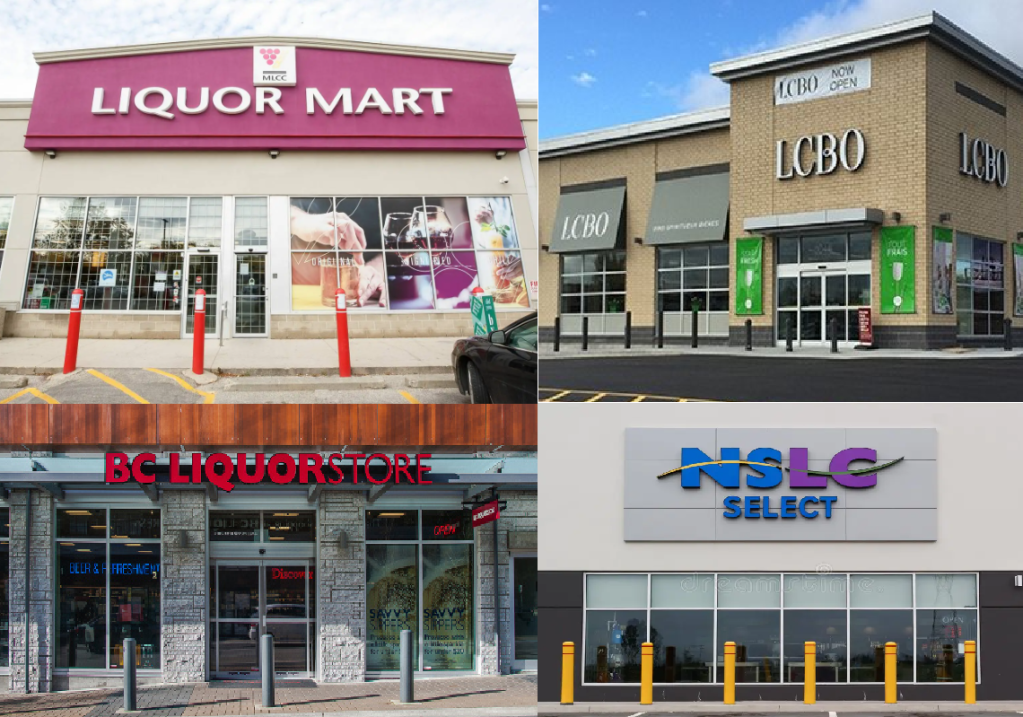
Canada has been the top export market for U.S. wines and Ontario’s provincial liquor board (the LCBO) has been among the largest purchasers of U.S. alcohol. In Ontario, imported wines are primarily sold through provincially owned and operated retail outlets, although recent regulatory changes have authorized 157 private grocery retail locations to distribute wine and beer.

The first phase of Canada’s response to the U.S. imposed tariffs includes tariffs on wine and spirits, in addition to many other products. Ontario is banning American liquor and the LCBO is removing American wine, spirits and beer from its shelves. This will represent about a billion dollars worth of American alcohol.

British Columbia, Alberta, Saskatchewan, Manitoba, Nova Scotia and Newfoundland are also removing U.S. liquor from their store shelves. At last word Quebec is considering the idea. On the bright side these bans will serve to enhance the sale of Canadian wines in Canada, as well as European, Australian, South American and South African wines.

Hopefully the American people will convince Trump that the imposition of his tariffs will not only hurt international economies but his own economy as well. It is a sad situation.

Sláinte mhaith

Inter-Provincial Wine Sales

Given all of the recent tariff talk and the renewed patriotism that has come as a result of it, some interesting points have come to light regarding wine sales between provinces. Many Canadians are now avoiding U.S. made products, including wine. As a result, there are now signs of an increased need to support Canadian wineries and renewed calls to open inter-provincial trade in alcohol. However, there are inter-provincial trade barriers standing in the way.

Photo credit: LCBO

Until June 2019, federal legislation prohibited inter-provincial shipment of alcohol directly to the consumer.  This then allowed the provinces the opportunity to pass legislation to permit direct purchase to consumers.  Unfortunately, most provinces chose not to allow this, leaving only British Columbia, Manitoba, Nova Scotia and Saskatchewan who permit direct-to-consumer alcohol shipments.  Ontario has recently amended its laws to prohibit the possession of wine that has been imported from other provinces unless the transaction was handled via the Liquor Control Board of Ontario (LCBO). There are now calls to have this ban lifted.

Ontario wine consumers cannot support small local wineries in another province.  Ironically, living in Ontario and purchasing wines produced in another province, the LCBO charges the purchaser the same import duties as if the wine came from a foreign country.

The wine growers of B.C., as well as the B.C. government are advocates of opening provincial borders to enable wine to move east and west across this country. There is a great deal of regulatory burden making it difficult for small and medium-sized wineries. The process needs to be simple and streamlined.

The time has come for Canadian provinces to eliminate inter-provincial trade barriers.

Sláinte mhaith