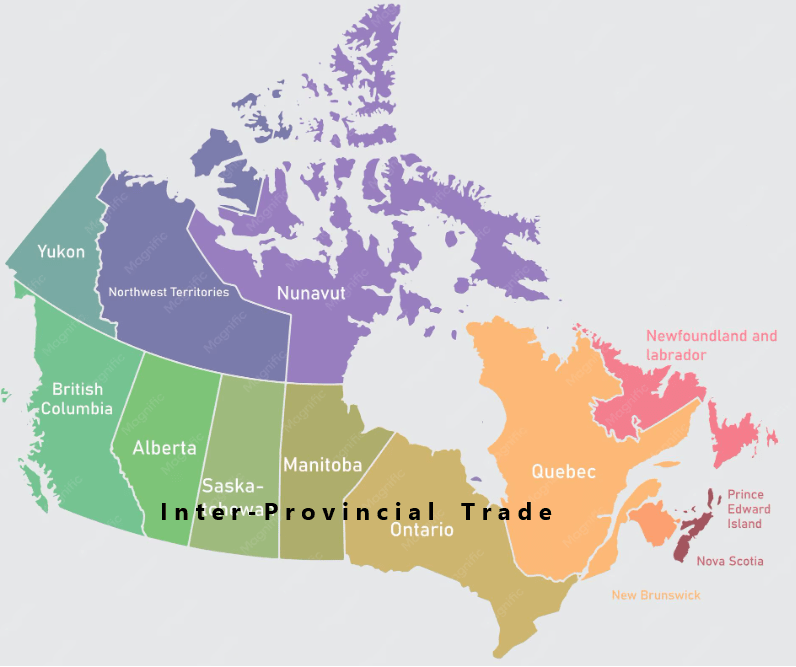
Back in February 2025, I wrote a blog stating that it was time for the provinces to eliminate inter-provincial trade barriers. This was in part the result of tariffs imposed on Canada by the United States. During the July Premiers Meeting in Charlottetown, PEI, nine of the ten premiers agreed to remove the internal trade barriers that have prohibited individuals from purchasing alcohol from producers in other provinces. The agreement will allow wineries, distillers and breweries to sell directly to consumers in other provinces. Although the agreement is effective immediately, it is expected that implementation will take some time.
Quebec and the three territories have not yet joined the other provinces, but Quebec stated that it is working toward joining with the other provinces in the future.
While the agreement establishes an important framework, it does not, by itself, create a truly open inter-provincial market. The provinces must decide how they will each implement the agreement as each one could levy liquor board markups, fees and other charges on direct shipments. However, true free trade requires simple consumer access without new markups, fees or bureaucratic red tape.
Direct-to-consumer sales are especially important for small and medium-sized wineries that have limited access to provincial retail systems. Such sales will enable wineries to maintain relationships with visitors, grow wine club memberships, and connect with consumers in other provinces who want Canadian products.
The provinces are finally moving in the right direction. I only hope that they follow the spirit of free trade and not levies and other bureaucratic annoyances.
There was a new category, Non-Alcoholic Wines, at this year’s National Wine Awards. Non-alcoholic wines must be made either entirely or partially from grapes and can include hybrids such as products made from grapes blended with other fruits. There are no restrictions on how they are made (unfermented versus various methods of removing or lowering alcohol, partial ferments, etc.).
This year’s Platinum and Gold medal wine winners are presented below. The complete list of award winners is available at winealign.com/awards.
Sparkling Wines
Platinum Medal
Fielding N/V Sparkling Rosé, Niagara Peninsula, ON
Malivoire N/V Bisous Rosé, Beamsville Bench, Niagara Peninsula, ON
Gold Medal
50th Parallel 2020 Blanc de Noir, Okanagan Valley, BC
Henry of Pelham 2018 Cuvée Catharine Estate Blanc de Blancs Carte Blanche, ON
Huff Estates 2022 Cuvée Peter, Prince Edward County, ON
La Frenz 2021 Aster Brut, Okanagan Valley, BC
Liquidity NV Reserve Brut, Okanagan Valley, BC
Malivoire 2019 Bisous Blanc de Blanc, Beamsville Bench, Niagara Peninsula, ON
Megalomaniac N/V Bubblehead Rosé, Niagara Peninsula, ON
Queenston Mile 2018 Blanc de Blanc, St. David’s Bench, Niagara Peninsula, ON
Serendipity 2016 Sparkling Truth, Okanagan Valley, BC
Tantalus 2023 Blanc de Blancs, East Kelowna Slopes, Okanagan Valley, BC
Tawse N/V 25th Anniversary Spark, West Niagara, Niagara Peninsula, ON
Tinhorn Creek N/V Blanc de Blanc, Okanagan Valley, BC
Township 7 2023 Seven Stars Rigel Fool’s Gold, Okanagan Valley, BC
Two Sisters Vineyards 2021 Blanc de Franc, Niagara Peninsula, ON
Orange Wine
Platinum Medal
None awarded
Gold Medal
None Awarded
Rosé
Platinum Medal
None Awarded
Gold Medal
Le Vieux Pin 2025 Vaila, Okanagan Valley, BC
Lunessence 2025 ESV Blanc de Noirs, Summerland Bench, BC
Seven Directions 2025 Grenache Rosé Solum Rosa Estate, BC
Pinot Gris/Grigio
Platinum Medal
None Awarded
Gold Medal
Bench 1775 2025 Pinot Gris, Okanagan Valley, BC
Hillside Winery 2025 Unoaked Pinot Gris, Naramata Bench, BC
Solvero 2025 Pinot Gris, Okanagan Valley, BC
Red Blends
Platinum Medal
Hidden Bench 2022 La Brunante, Beamsville Bench, Niagara Peninsula, ON
Laughing Stock 2023 Blind Trust Red, Okanagan Valley, BC
The 2026 National Wine Awards of Canada (NWAC) took place in Niagara Falls, Ontario in mid June. However, the results were not fully tallied and presented until July 31st.
This week I will focus on the wineries that attained the highest honours and next week I will direct attention to the individual wines that were declared the top in their class.
Winery of the Year
The Niagara region’s Tawse Winery was bestowed the honour of being Winery of the Year, for the fifth time in the Awards 26-year history. At this year’s Awards Tawse earned 1 Platinum, 4 Gold, 13 Silver and 8 Bronze medals.
Maverick Estate Winery – British Columbia – 4 Gold, 2 Silver
Phantom Creek Estates – British Columbia – 4 Gold, 8 Silver, 2 Bronze
Painted Rock Estate Winery – British Columbia – 4 Gold, 3 Silver, 4 Bronze
Township 7 Vineyards & Winery – British Columbia – 4 Gold, 4 Silver, 3 Bronze
Best Performing Small Winery
Black Bank Hill, located in the Lincoln Lakeshore appellation of the Niagara Peninsula, is the Best Performing Small Winery. This award goes to the top-scoring winery that produces a maximum of 10,000 cases of wine. Blank Bank Hill only opened in 2021, making it one of the most rapid rising wineries ever witnessed by the NWAC.
The winery earned 1 Platinum, 4 Gold and 4 Silver medals at this year’s event.
Top 10 Small Wineries
Black Bank Hill – Ontario – 1 Platinum, 4 Gold, 4 Silver
La Frenz Estate Winery – British Columbia – 6 Gold, 6 Silver, 5 Bronze
This past June the All Canadian Wine Championships (ACWC) took place in Ontario’s Lake Erie North Shore wine region. This year there were 1,085 products registered with entries submitted from all ten provinces.
If you are looking for a new wine to try or want to see how your favorite wines compare, this list may be useful for you. All prices are presented in Canadian dollars.
The 2026 trophy winners for 2026 are as follows:
Best Sparkling Wine of the Year
Noble Ridge Vineyard and Winery, BC – 2019 The One – $40.25
Intrigue Wines Ltd., BC – 2025 Social Rosé – $23.00
Best Fruit Wine of the Year
Krause Berry Farms & Estate Winery, BC – N/V Sparkling Golden Raspberry – $31.05
The following are the Double Gold and Gold medal winners for each grape wine category: To see the complete list, including all the silver and bronze medal winners, visit the ACWC website at allcanadianwinechampionships.com/acwc-2026-results/
Sparkling Wine-Traditional Method
Double Gold *Trophy, Best Sparkling Wine of the Year
Noble Ridge Vineyard and Winery, BC – 2019 The One – $40.25
Gold
Huff Estate Winery, ON – 2022 Cuvée Janine – $38.80
Tzafona Cellars, ON – 2024 – Cabernet Franc Icewine – $63.00
Gold
Pilliteri Estate Winery, ON – 2024 Family Reserve Corvina Icewine – $85.00
Grape Fortifieds
Double Gold
Moraine Winery, BC – 2023 O’Port – $47.00
Gold
Adega on 45th Estate Winery, BC – N/V Terra Quente – $29.99
INTERNATIONAL SEGMENT FOR 2026 “Cellared in Canada”
These wines are comprised of partial or 100% imported grapes or juice. The program was introduced to assist the BC wineries after 2 harsh winters. These wines are excluded from the trophy rounds.
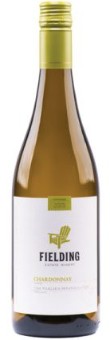
In the past, Fielding Estate Winery was always one of my ‘go to’ wineries for Chardonnay Musque and unoaked Chardonnay. Unfortunately, they no longer produce Chardonnay Musque and produce one mass produced unoaked Chardonnay. However, I did not come away empty-handed as I did find a wine that was totally unexpected – Rock Pile Winemaker’s Red, which is a Meritage blend consisting of 40% Merlot, 40% Cabernet Franc and 20% Malbec. Being a long time fan of Bordeaux style wines, I could not resist picking up a couple of bottles for my cellar.
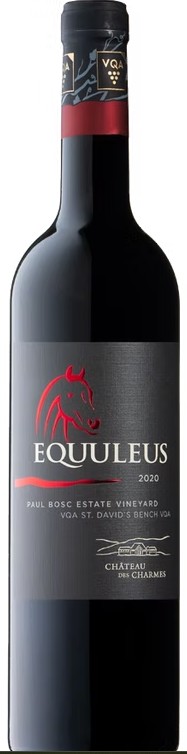
Anytime I am in Niagara I always stop by Chateau des Charmes with the hope of picking up a couple of bottles of their Bordeaux style red wine, Equuleus. Not seeing any on the wine shop shelves, I enquired as to whether they had any. Disappointingly, I was advised that the last edition of Equuleus was produced in 2016, appearing on the store shelf a few years ago, and soon sold out. I was reminded that Equuleus was only produced during years having a great harvest with optimum growing conditions and 2016 was the last of those.
On a more optimistic note, it is believed that the 2025 growing season produced grapes suitable to create the next edition of Equuleus, but it won’t be known for certain until the winemaker can sample the wine after some aging. If all goes to plan, the next edition of Equuleus will reach the shop shelf in 2028. Here’s hoping.
Two of the Niagara wineries I visited on my recent trip were Ravine Vineyard Estate Winery and Megalomaniac.
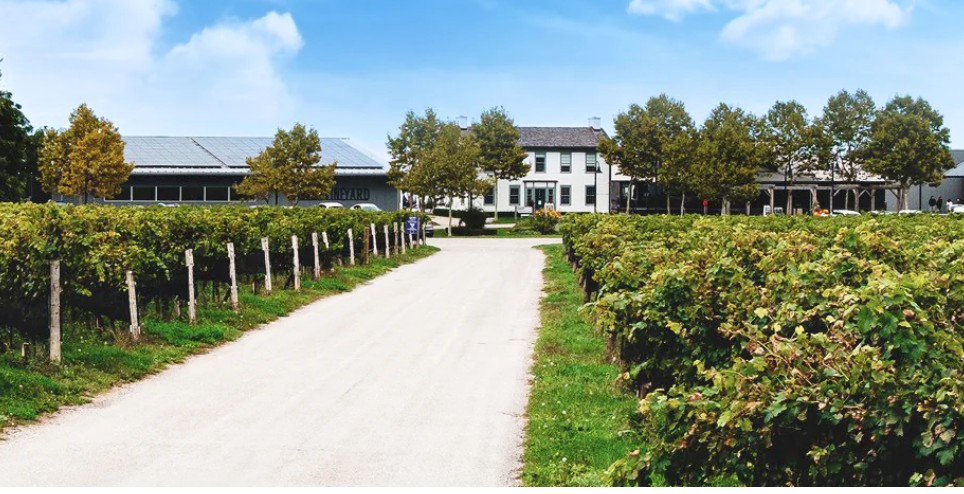
The property that Ravine Vineyard is located on has been owned and farmed by the same family since 1867 and the vineyard in its present form began in 2004 with the planting of the three Bordeaux reds; Merlot, Cabernet Sauvignon and Cabernet Franc, as well as Chardonnay and Riesling. Each of their wines reflect the terroir in which they grow.
Photo credit: ravinevineyard.com
The day I was there I spoke with the son of the current owner who shared information regarding differences in the terroir of each of their vineyards and how that influences the flavour of the wine. The vineyard referred to as Lonna’s Block was a former horse paddock whereas the second vineyard, Nancy’s Block, was crop fields. My host’s preferred wine was the Lonna’s Block Meritage, but I decided to make my own decision and purchased a bottle of each.
The other winery, Megalomaniac, steps away from tradition and takes a light airy approach to wine, avoiding the stigmatism that is often associated with the wine industry. The names of their wines are reflective of their light attitude; for example, My Way Chardonnay, Narcissist Riesling, To Be Frank Cabernet Franc and Much Obliged Baco Noir, which honours first responders and healthcare workers.
Photo credit: megalomaniacwine.com
Don’t let the names fool you; Megalomaniac’s wine maker provides great quality wines. I came home with some of their Much Obliged Unoaked Chardonnay and Unconventional Cabernet Merlot.
I have visited the Two Sisters Vineyards on previous excursions to Niagara and this time was no different. I treated myself to a couple of bottles of their 2019 Meritage, Eleventh Post which is a combination of Merlot, Cabernet Sauvignon and Cabernet Franc.
Photo credit: twosistersvineyards.com
While there I learned about their new winery, Stone Eagle, which is located just a few kilometres from Two Sisters, on the edge of Niagara-On-The-Lake. The Stone Eagle website describes in great detail the winemaking process as well as provides a description of their vineyards. However, when I visited the winery, I quickly learned that it was not a winery in the traditional sense as there was no wine shop or anywhere to see or purchase any of the wines.
When I enquired at the reception desk, which was situated in a large vestibule of what appeared to be an elaborate event centre, I was told that they do not have any wine for viewing or much information about their wines. I was only presented with a wine list similar to one you would see in a restaurant when selecting a wine to accompany your meal. It is worth noting that the least expensive wine on the list was in the $130 plus dollar range. Again, the list contained no information other than the name and price of each wine.
I left the winery perplexed as to its purpose and why it is even called a winery. It would seem to be better referred to as an event centre where you may have access to their exclusive wine list. To try the wines it seems that you must either have lunch or dinner at the Eagles Nest restaurant or bar, which is located on the Stoner Eagle property. I did find that you can purchase Stone Eagle wines online from their website. By clicking on each individual wine you can find the associated tasting notes.
Two Sisters is also in the process of constructing a hotel in the heart of Niagara-On-The-Lake. It is to be called the Parliament Oak Hotel. Once completed it is said that the architecture will reflect the Old Town’s heritage. It will be a four-story, French chateau-style building rather than a standard, modern hotel block.
Growth and development continue to evolve in the Niagara Wine Region. Whether it is all positive or not seems to vary, depending on who you ask.
Not having been to the Niagara wine region since May of 2019, my wife and I decided that this spring was time for a return trip. Given that there are now around 100 wineries operating in the region, the all-important question was, which wineries should we visit? To help narrow the field I used several techniques: personal recommendations, previous award results, some of my own curiosity and follow ups from previous adventures. The result was that we ventured to 7 wineries: Domaine Le Clos Jordanne, Megalomaniac, Two Sisters Vineyards, Stone Eagle Winery, Fielding Estate Winery, Chateau des Charmes and Ravine Vineyard Estate Winery.
Domaine Le Clos Jordanne
Over the next few weeks I will share some of my winery experiences; some good, some not so good, but all were enlightening.
I will begin with Domaine Le Clos Jordanne, which now occupies the site of the former Angels Gate Winery. In May of 2023, Angels Gate was purchased by Arterra Wines Canada Inc. However, Arterra was not interested in continuing the production of Angels Gate wines. Instead, they were looking for a physical home for their Le Clos Jordanne French inspired wines, under the direction of their winemaker Thomas Bachelder. Bachelder is internationally recognized and is Le Clos Jordanne’s original founding winemaker who is specialized in the production of cool-climate Pinot Noir and Chardonnay. His terroir-revealing wines showcase how Old World, French Burgundy style winemaking techniques can apply to New World terroir with minimal intervention to produce great wines.
Following the French philosophy, Domaine Le Clos Jordanne only produces wines supported by the local terroir. Thus, the selection at the winery is limited to a variety of Chardonnay and Pinot Noir. So if you are looking to purchase a wide range of varietals, or looking for something other than Chardonnay or Pinot Noir, this winery is not for you. However, if you are a fan of true Burgundy style wines, Domaine Le Clos Jordanne is worth a look.
My wife and I couldn’t resist getting some of their neutral oaked Chardonnay and a couple of different Pinot Noirs to try.
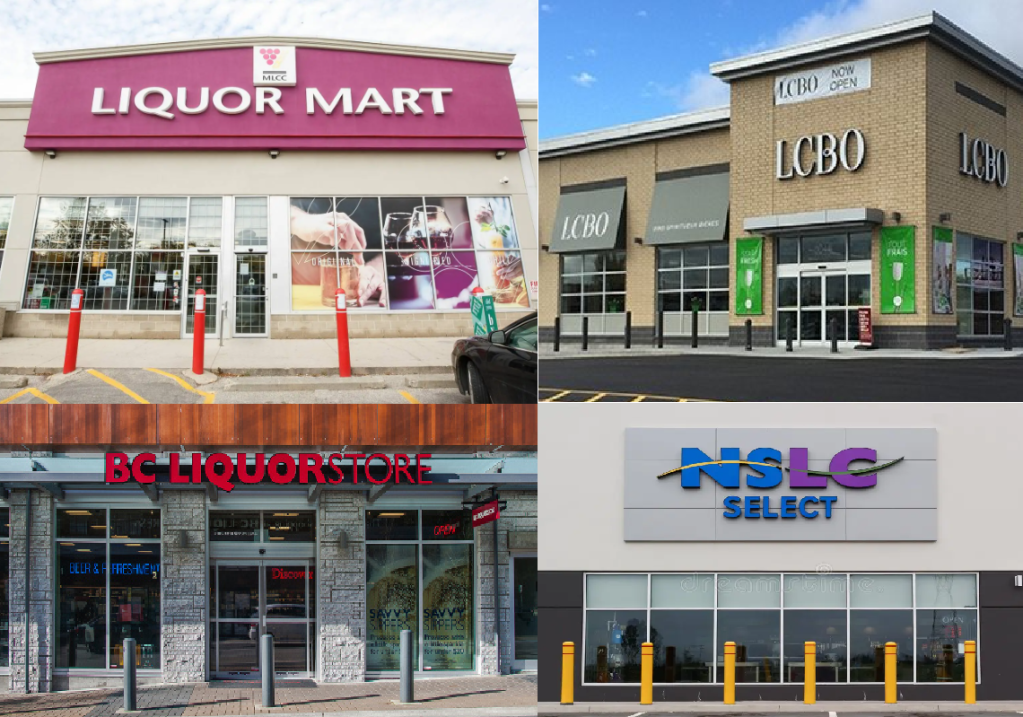
Further to my previous post on the question of whether liquor sales should be privatized (see Should the LCBO be Privatized? April 19, 2025), today I want to look at the difference between government-controlled retail outlets versus government regulated ones. Examples of government operated retail outlets include Ontario’s LCBO, Nova Scotia’s NSLC, British Columbia’s BC Liquor Store and Manitoba’s Liquor Mart.
I can see where privately owned retail outlets could provide benefits in large cities where there is a sufficient population to support specialty wine or whiskey shops. Each store could have an expert who could provide insight on each of the various products sold. It could be a great opportunity for niche marketing and the customization of the sales environment.
However, in small centres, selections could be much more limited with options being dictated solely by profit margins. In this case, the run-of-the-mill wine and whiskey choices could be sold along side soda pop and potato chips. Store staff would be much less likely to have the expertise to assist customers making their selections.
Small wineries, distilleries and breweries could find independent liquor stores beneficial, potentially providing them with more market exposure. Government operated outlets limit retail shelf space to producers who can meet minimum production volumes, leaving many small estate wineries and private distilleries with very limited market exposure. Independent retailers could provide these wineries and distilleries with the consumer exposure that they are currently lacking.
Even though the government could continue to collect taxes on liquor sales, some fear that the revenue generated from government operated retail operations could be lost, impacting the government services currently supported by those revenues. As well, there would be job losses from the public sector if private companies take over retail operations.
Government operated liquor outlets have been instrumental in supporting the domestic alcohol beverage industry. Privatization could potentially weaken that support.
It could be argued that private liquor companies might prioritize profits over public health and safety, potentially leading to conflicts of interest. However, if sufficient regulations are put in place, private enterprise could be made to follow the same principles and practices as the government operated retail outlets adhere to.
As you can see, there is no simple solution as to which alternative is best. You will have to weigh the odds for yourself before deciding which side to support in this age-old debate.
According to an Instagram post just before Christmas, coming soon is the new “Skye Chase Winery” where you can “Discover what’s happening at St Thomas’ new social experience. Exceptional wine, culinary delights and a lounge with breathtaking views. Explore the new Skye Chase Winery and all it has to offer.”
Being intrigued, I did some research and learned that Skye Chase Winery was previously the Quai Du Vin Estate Winery. The vines of Quai Du Vin, now Skye Chase, date back to the 1970s with the original winery operating since 1990. Therefore, the vineyards that Skye Chase has assumed are well established and mature. It appears the new owner, Kyle MacDonald, took over ownership of the winery in 2025.
According to their website, Skye Chase’s objective is to create a winery that will establish Southwest Ontario as one of Canada’s great wine regions. They refer to themselves as a terroir-forward vineyard, letting the grapes be a direct expression of the natural environment, including the weather, soil and mineral content. They feel that this will let them make the highest quality, most interesting wines.
The head winemaker is Jay Johnston, a graduate from Niagara College’s Viticulture & Winemaking program. He has previous winemaking experience with Jackson-Triggs, Le Clos Jordanne, Hidden Bench, and Flat Rock Cellars.
The Skye Chase team has expanded the vineyards and dedicated their winemaking skills to focus on varietals best suited for the region’s unique terroir and climate. Thus, their focus is on cool climate varietals. The whites include Pinot Gris, Sauvignon Blanc, Chardonnay and Riesling. The reds are Cabernet, Cabernet Franc and Pinot Noir.
They have revamped the “Fruit & the Vine” fruit wines with the new label “Wine’d Up Wine Company”. They claim, “It’s fruit wine done better, fresher, cleaner and ready for any occasion. Same flavour forward personality, just a whole new vibe.”
Skye Chase is looking to enhance the winery by constructing a new building that will feature a retail store, tasting room and Restobar.