Bordeaux; most people have heard of this French wine region, which is one of the most famous Old World wine regions, but many people don’t understand it. To begin with, Bordeaux is divided into two sections, referred to as the Left Bank and the Right Bank. The banks refer to the left (west)and right (east) bank of the Gironde Estuary and Garonne River.
The Left and Right banks have significantly different terroirs. A terroir is the natural environment in which a particular wine is produced, including factors such as the soil, topography, and climate.
The soil is rockier on the Left Bank. It is packed with gravel and deep deposits of limestone which serves to provide more character and potential quality in the wine. This is why Left Bank wines are considered prime candidates for aging, while Right Bank wines are generally thought to be smoother and more drinkable at the time they are released for sale.
This is not to suggest that Right Bank wines are simple and boring. With limestone closer to the surface and less gravel for the vine roots to contend with, the wines of the Right Bank don’t lack character; it’s just that they possess a different kind of character.
When it comes to the grape varietals grown, because of the differences in the terroir between the Left and Right Bank, each supports its own type of grape. As a result, this is often the best way to distinguish between a Left and Right Bank Bordeaux, as the label will not often tell you. Left Bank wines are mostly Cabernet Sauvignon with a smaller portion of Merlot. The Right Bank wines are dominated by Merlot balanced by a smaller proportion of Cabernet.
The Cabernet dominated Left Bank wines tend to be higher in tannin, thus the reason why they age well. Aging the wine helps to mellow out the tannins and integrate the flavors of the wine. Merlot-based Right Bank wines are generally smoother, with softer fruit flavours as tannins are not as dominating.
The last comparison is between the wineries or chateaux themselves. These are the castle-like structures that appear on many of the Bordeaux wine labels. Generally, the Left Bank chateaux have larger vineyards than those of the Right Bank. Left Bank vineyards are on average 5o to 80 hectares in size versus those of the Right Bank, which only have a maximum of about 30 hectares. However, this is only a fun-fact as vineyard size really has no impact on the quality or character of the wine. Arguably the most renown chateaux include Chateau Margaux, Lafite, and Mouton Rothschild on the Left Bank and Petrus and Cheval Blanc from the Right Bank.
So, which wines are better? Neither. If you are looking for a wine to enjoy with dinner tonight, a Right Bank wine is probably the better choice, whereas if you are looking for a wine to age and appreciate in the future, you will find that a Left Bank wine will improve with age and provide a delightfully satisfying experience when it is uncorked in a few years’ time.
Winter is a time for comfort food and one of my favourite comfort foods is pasta. When it comes to pairing a wine with pasta, the deciding factor should be the accompanying sauce, not the pasta itself because after all, pasta by itself does not have a great deal of flavour.
Photo credit: finewinemaster.com
Tomato-Based Pasta
Tomato-based sauces are high in acid and are often blended with beef or pork. Because of the acidity in tomatoes, a dry, medium-bodied red wine is recommended. Examples of red, medium-weight wines include:
Chianti
Grenache
Nero d’Avola
Primitivo
Rhône Blends
Sangiovese
Zinfandel
Cheese Pasta
There are a wide range of red as well as white wines that will pair well with cheese sauces. You shouldn’t feel restricted to serving just white wine with white cheese pasta. An oaked white wine will have a buttery character that will compliment the creamy sauce. Examples include an oaked Trebbiano or Chardonnay. Here are a couple of white wine options to consider:
Oaked Chardonnay
Oaked Trebbiano
Also, lighter more floral red wines will also pair well with intense hard-cheese pasta, especially if there are mushrooms or root vegetables in the sauce. Red wine options include:
Chianti
Nebbiolo
Pinot Noir
Sangiovese
Seafood Pasta
Light-bodied white wines are the preferred pairing choice for seafood pasta. These wines will be relatively acidic, thus a good balance for creamy white sauces and fatty seafood, such as scallops, shrimp, oysters or mussels. White wine options include:
Chenin Blanc
Grenache Blanc
Pinot Gris / Pinot Grigio
Riesling
Sauvignon Blanc
For seafood pasta that is cooked in a tomato-based sauce, light body red wines or Rosé are a good option. Red wine options include:
Pinot Noir
Malbec
Pesto Pasta
Whether you are serving the traditional pine nut and basil pesto or another type of pesto, the focus should be on matching the green, whether it be parsley, cilantro, mint, etc. which is the centerpiece of the dish. For the most part, herbaceous wines are said to be best suited when serving pesto pasta. Herbaceous wines are those wines that have aromas and flavours like herbs such as mint, vegetables such as asparagus, freshly cut grass or tomato leaves. Wines considered to be herbaceous include:
Grüner Veltliner
Sauvignon Blanc
Cabernet Sauvignon
Primavera (Vegetable) Pasta
Spring onions, garlic ramps, artichoke hearts and broccolini are among the choices on which to base primavera. The objective is to highlight the springy freshness of the vegetables; thus, it is often best paired with a light-bodied white wine with lemony and floral notes. However, if the pasta has major vegetable intensity, it needs to be matched with an equally savory white wine. White sauce wine options include:
Pinot Gris / Pinot Grigio
Riesling
Sauvignon Blanc
Vermentino
If tomatoes are a major component of the primavera, a light-bodied acidic red wine would be a better choice. Tomato sauce wine options include:
Cabernet Franc
Pinot Noir
Rosé
No matter which type of pasta you fancy, one of the corresponding wine options will compliment your meal.
At the end of November, The Irish Whiskey Association announced the 2023 Irish Whiskey Awards winners. Now having over 40 distilleries, Ireland has reemerged as a powerhouse in the international whiskey industry and is now the fastest-growing whiskey making country in the world.
Whiskey tastings were conducted throughout Ireland with members of the Irish Whiskey Society. Events took place in Dublin, Dingle, Cork, Waterford, Kilkenny, Ennis, Carlow and Belfast. There was also a select group of international whiskey judges.
The Best Irish Whiskey of the Year prize was awarded to Connacht Irish Whiskey Distillery, Exclusive Cask Strength, Single Malt Irish Whiskey, 47% ABV, 750 ml.
Connacht’s single malt whiskey is a triple-distilled whiskey produced at their distillery in Ballina, County Mayo. The distillery was founded by Master Distiller Robert Cassell in 2016, along with a team of Irish whiskey entrepreneurs who saw the potential of northwest Ireland’s unique climate to produce an iconic Irish whiskey. The region is characterized by dramatic swings in atmospheric pressure that contributes to producing a flavourful, heavily extracted whiskey. The use of custom-designed stills further enhances the unique character of the whiskey.
Other winners included:
Single Pot Still 11 Years and Under
Winner: Drumshanbo Single Pot Still Irish Whiskey Pinot Noir Cask
Gold: Jameson Single Pot Still
Gold: Powers Three Swallows
Single Pot Still 12 Years and Over
Winner: Red Spot 15 Year Old
Gold: Yellow Spot 12 Year Old
Gold: Redbreast 15 Year Old
Single Malt 11 Years and Younger
Winner: Jack Ryan Whiskey 5-Year-Old Oloroso Finish Cask Strength
Gold: Dunville’s 10 Year Old Pedro Ximenez Cask
Gold: The Irishman Legacy
Single Malt 12 – 15 Year Old
Winner: Tullamore DEW 14 Year Old
Gold: Knappogue Castle 12 Year Old
Gold: The Irishman 12 Year Old
Single Malt 16 Years & Older
Winner: The Irishman 17 Year Old
Gold: Dunville’s 21-Year-Old Palo Cortado Cask
Gold: McConnell’s Irish Whisky 20 Year Old Port Finish Single Cask
These are the wineries from British Columbia that particularly caught my attention this past year. My impressions are based on several factors: the winery’s performance at both the National Wine Awards and the All Canadian Wine Championships, environmental and sustainability practices of each winery and my own thoughts.
I have listed the wineries in alphabetical order and have included several of their 2023 award winning wines.
Corcelettes Estate Winery
Corcelettes was ranked as the second best performing small winery at this year’s National Wine Awards. It is located on 150 acres in British Columbia’s Similkameen Valley. Charlie and Jesce Baessler blend passion, precision and science to craft their expressive, small lot premium wines. No short cuts are taken in finding balance between viticulture, the environment and winemaking.
Corcelettes first vintage was in 2011, consisting of 200 cases. They currently craft 8,200 cases of wine per year, with plans of each future vintage growing in production size.
Their portfolio includes predominantly Syrah and Pinot Noir, crafted from Similkameen grown grapes. There is also a small selection of premium wines from the Micro Lot Series; wines crafted from specially selected grapes available only in limited quantities.
In addition to this year, Corcelettes was among the Top 10 Small Wineries at the 2018, 2019 and 2021 National Wine Awards of Canada.
This year’s Platinum and Gold award winning wines included:
Deep Roots was awarded Best Performing Small Winery at this year’s National Wine Awards where they earned 1 Platinum, 4 Gold, 1 Silver and 4 Bronze medals.
Their Platinum and Gold winners included:
Deep Roots 2020 Reserve Chardonnay
Deep Roots 2020 Parentage Red
Deep Roots 2022 Gamay
Deep Roots 2020 Syrah
Deep Roots 2022 Sauvignon Blanc
Deep Roots is a family owned and operated winery situated on the clay cliffs above Okanagan Lake on the Naramata Bench, where beginning in 2003 the Hardman family began switching their 100-year-old family farm from an apple orchard to a vineyard. Today they have 19 acres of grape vines spread between two Naramata vineyards, using almost exclusively estate fruit.
Initially the grapes were all sold to CedarCreek and Lake Breeze, among others. However, that all changed in 2012 when Will Hardman broke ground to create his own winery. There are two vineyards at two sites on the Naramata Bench where they grow Muscat, Gamay, Merlot, Chardonnay, Pinot Gris, Malbec and Syrah grapes.
All the vineyard work is done by hand, as the Hardmans are passionate about producing grapes that are the best expressions of each varietal.
Road 13 Vineyards
At Road 13 in Oliver, B.C., they farm to protect the land. Their philosophy is that by taking care of the dirt, the dirt then can take care of the roots of the vines, thus producing the best fruit possible. Doing things right means going the extra mile, in both the vineyard and in the cellar. Winemaker, Barclay Robinson and his crew farm organically to produce the best wine possible.
Road 13’s Platinum and Gold award winning wines included the following:
Road 13 2020 Select Harvest GSM
Road 13 2013 Jackpot Sparkling Chenin Blanc
Road 13 2020 John Oliver Cabernet Franc
Road 13 2021 Viognier
Road 13 2020 John Oliver Petit Verdot
Road 13 2022 Honest John’s Rose
SpearHead Winery
SpearHead Winery of Kelowna, B.C, appears on my list of British Columbia’s list of movers and shakers for the second straight year.
Their focus is on premium quality wine which is produced from grapes grown in their estate vineyard and from selected Okanagan Valley vineyards. The hand harvested grapes are sorted at the winery and fermented in small lots.
SpearHead produces Pinot Noir, Chardonnay and Riesling varietals. Approximately 80% of the 15 acres of vines is comprised of Pinot Noir including four different Dijon clones, 2 California heritage clones and Pommard. This combination of plantings enables the wine maker to select from the different characteristics of these clones to create a complex Pinot Noir from their home vineyard. They also draw from several other vineyards in the Okanagan including Golden Retreat in Summerland and Coyote Vineyard in West Kelowna.
Their 2023 Platinum and Gold award winning wines include the following:
SpearHead 2020 Club Consensus Pinot Noir
Spearhead 2020 Golden Retreat Pinot Noir
SpearHead 2021 Saddle Block Pinot Noir
SpearHead 2021 Cuvée Pinot Noir
SpearHead 2021 Golden Retreat Pinot Noir
SpearHead 2022 Pinot Gris
Wild Goose Winery
It all began in early 1983 when founder Adolf Kruger purchased a piece of land east of Okanagan Falls.
Kruger first planted Riesling and Gewürztraminer with the intention of selling the grapes. Over the following few years, outstanding wines were produced by purchasers of the grapes leading him to the decision to make his own wine.
Wild Goose Winery became the seventeenth winery in British Columbia and was established in June 1990. The winery started producing Riesling, Gewürztraminer and Maréchal Foch. Over time Wild Goose established itself as a premium small producer of VQA wines.
In July of 2021, the Wyse family of Burrowing Owl Vineyards purchased Wild Goose Vineyards & Winery. Wild Goose’s approach to winemaking has been to grow the highest quality fruit and then transform it into premium wines.
What do you do when you find yourself in the predicament of desperately needing to open a bottle of wine and you don’t have a corkscrew, and the bottle is not a screw top? Several of the major wine publications have invested time and effort to find reasonable solutions to this problem. I will present those that I feel are not too farfetched, are fairly safe and hold a realistic chance of success. However, none of these methods are as reliable as using a corkscrew and could result in breaking the cork, chipping the wine bottle, or in a worst-case scenario, breaking the wine bottle.
This list of potential solutions is presented in no particular order.
Screw, Screwdriver and Hammer
Take a screw (minimum 1 ½ inches long) and screw it into the cork with a screwdriver until there is about an inch or so left showing. Then, you take the claw side of the hammer, lock it under the screw, and pull the cork out.
Push the Cork into the Bottle
Using the handle of a wooden spoon, Sharpie, highlighter or other object that is slightly smaller in diameter than the cork, push the cork down into the bottle of wine. Unfortunately, it is almost impossible to remove the cork from the bottle once you push it in. If the bottle of wine is old, the cork may crumble and shed into the wine once pushed in. If this happens, use a strainer, coffee filter or sieve and pour the bottle of wine through it into a decanter to remove the cork pieces.
Wire Clothes Hanger
This method is relatively easy as long as you have an unused wire hanger taking up space in your closet. However, in our house the wire hangers were replaced with plastic hangers years ago.
To begin, bend the tip of the hanger about 30 degrees back so that it looks similar to a fishhook. Next, slide the wire down through the cork slowly until the hook is past the cork and into the wine. Rotate the wire 90 degrees so that the hook is underneath the cork. Then pull the wire up and the cork should release. Pliers can be used instead of your fingers to tug at the hanger.
Keys, Scissors or a Serrated Knife
This method is somewhat similar to the first option where a screw and hammer are used. However, this time plunge your keys, scissors or serrated knife into the cork at a 45-degree angle and move the top of the item in a circle, essentially twisting the cork out slowly. After several rotations the cork should come out. Make sure you really get the tool well into the cork otherwise the cork may crumble.
The Sole of a Shoe
Wrap the bottom of the wine bottle in a towel and place it upside down in between your legs while sitting and slap it with the sole of a shoe. Stop before the cork comes all the way out or the wine may end up all over you and the floor.
Tire Pump and Sports Ball Needle
Take a bike pump that has a needle attached that is used to inflate a basketball, football or volleyball and push it all the way through the cork where the needle reaches the air space between the cork and the wine. Then pump air into the bottle. As air is pumped in, the cork should slowly move out of the bottle due to the air pressure.
Final Thoughts
As long as you are careful and take your time, any of these alternatives should work. However, in my opinion nothing is better than a tried and true corkscrew, if one is available.
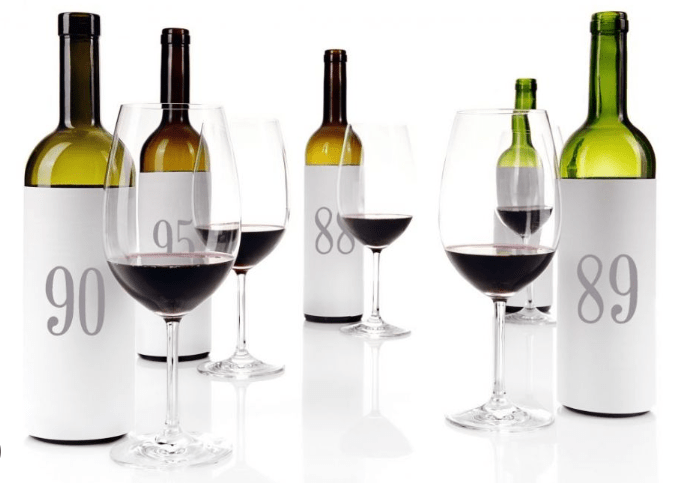
When searching for the ideal bottle of wine to compliment a meal, for a special occasion, or simply to lounge with in front of the television, many people rely on the wine’s rating number or score, as it’s often referred.
Photo credit: vivaavida.r7.com
The most commonly used scoring system is what is referred to as the 100-point scale, which was created by James Suckling in the 1980s. Wines with a score between 89 to 91 are considered good; a score between 92 and 94 is great; a score between 95 and 97 is excellent; and a score from 98 to 100 is considered outstanding.
It is important to realize however that every bottle of wine with a score of 98 is not necessarily better than every bottle of wine with a score of 92. Other factors, such as price to quality, must also be considered. Therefore, it is important to take into account other factors of a wine review before making the ultimate decision as to which bottle you are taking home.
If you see the name of a winery whose wine you have enjoyed in the past, there is a good probability that you will like other wines produced by that winery as well.
Noting the type of grapes contained in the wine is an excellent indicator as to whether you may like a wine or not. If you favour certain grape varietals, for example Riesling or Merlot, chances are wines containing those grapes will be more enjoyable for you.
Many countries, including Canada, have a quality standards system that will indicate on the bottle whether the wine has met the appellation of origin standards. These standards ensure that certain agricultural criteria are met. In Canada we have the VQA (Vintner’s Quality Alliance) system. For more information regarding quality standards see the following posts from 2019: Selecting Canadian Wines, France’s Standards of Quality, Germany’s Quality Standards and Italian Quality Standards.
A wine’s place of origin is one factor in determining its characteristics. The region where a wine comes from will indicate the style of wine as well as flavour characteristics. So, if you find you favour the flavour of a wine from a particular region, chances are you will enjoy other wines from that same region.
Not all wines are intended to be consumed right away. Although the majority of wines may be enjoyed when you take them home, some wines are best drunk after they have been laid down for a few years. The vintner’s notes or the wine store will often indicate whether a wine is intended to be enjoyed now or is best to be cellared. Drinking a wine too soon may leave you with unpleasant thoughts about that wine.
Fortified wine is wine that has had a distilled spirit added during the winemaking process. There are several types of fortified wines, each classified by its own unique set of regulations. These regulations include the type of base wine, type of spirit that is added to the wine, the amount of alcohol by volume (ABV), the amount of sugar and the period that it is aged. While fortified wines can be made anywhere, specific geographic regions are often regulated for a distinct category. For example, Madeira is only produced in Portugal’s Madeira Islands.
The basic process for making fortified wine involves fermenting the wine and adding distilled spirits, such as brandy. The winemaker determines the amount of sweetness in the fortified wine depending at which stage of the process the distilled spirits are added. If the spirit is introduced before fermentation is complete, the resulting wine will be sweet. However, it the spirits are added after fermentation is complete, the resulting fortified wine will be dry.
Wine fermentation occurs when yeast breaks down sugar molecules in grapes and produces ethyl alcohol. Adding a spirit during the fermentation process reduces the yeast content and results in a sweeter fortified wine because a larger amount of residual sugar is left behind. On the other hand, if fermentation ends before the spirit is added, the yeast will break down a higher percentage of the sugar, resulting in a drier fortified wine.
Both sweet and dry varieties are often served as aperitifs or digestifs before or after meals to help stimulate appetite and digestion. Some types of fortified wines are also used in cooking to add a delicious twist to a favourite recipe.
The regulations for making fortified wine vary by region. Here are some of the most popular types presented alphabetically:
Commandaria
Commandaria comes from Cyprus and is predominately a sweet dessert wine. It’s made with only two types of grapes, Xynisteri and Mavro, which are indigenous to the island. The maximum alcohol content is 20 percent ABV. Commandaria is rich and sweet with a fruity taste.
Madeira
This type of fortified wine derives its name from Portugal’s Madeira Islands. Brandy is added at different times during fermentation causing variations in flavours. Types of Madeira range from dry wines served as an aperitif to sweet wines served with dessert. An aging process known as estufagem is used to create the wine and give it its unique taste. Madeira can be produced in two ways: either over a period of months with hot water tanks or steam, or naturally over a period of decades.
Marsala
Marsala is a fortified wine from the Italian island of Sicily. It is available in both dry and sweet varieties and is produced using white Italian grapes and depending on its type, contains between 15 and 20 percent alcohol by volume. The various types of Marsala are determined based on their sweetness, age and colour.
Styles of Marsala range from dry aperitivos to sweet dessert-style wines. Marsala is a common cooking wine that’s fortified after fermentation, giving it a distinct dry flavour. It’s also sometimes sweetened, making it a great addition to dessert recipes.
Moscatel de Setúbal
This a Portuguese fortified wine that comes from the municipality of Setúbal. It must be made with at least 85 percent white Muscat grapes and contain between 16 and 22 percent ABV. Moscatel de Setúbal is one of the sweeter fortified wines and frequently has notes of apricot and orange zest.
Port
Port wine comes from the Douro Valley region of Portugal. Grapes must be grown and processed in the region to be considered as Port. Unaged brandy is added to the wine before it has finished fermenting, resulting in a sweeter flavour. The ABV will be in the 20 percent range.
There are many styles of Port, but its most popular form is a sweet red wine, such as Ruby Port or Tawny Port. Those seeking a different type of dessert wine might consider a White Port or Rosé Port.
Sherry
This fortified wine is produced in from Palomino, Muscat or Pedro Ximénez grapes in the Jerez region of Spain. Sherry production is unique in that the winemaker intentionally exposes the wine to oxygen, which imparts nutty and briny flavours. Before bottling, entire barrels are blended with portions of older wines. This process is referred to as the solera method and is almost entirely exclusive to the production of sherry.
Sherry is fortified with brandy and will contain between 15 to 18 percent ABV. Like any wine, after opening it should be refrigerated but will retain its freshness about four times as long as a typical wine. There are many styles of sherry, ranging from the lighter Fino style to the darker Oloroso style.
Vermouth
Vermouth is fortified wine that is aromatized with flavours of fruits, herbs, spices and florals. Dry Vermouth, also referred to as French Vermouth, has a distinctly crisp and floral character. Dry Vermouth is produced by blending white wine with herbs and spices before adding brandy for fortification. Sweet Vermouth, also known as Italian Vermouth, has a heavier mouthfeel and a more caramelized, fruity character than Dry Vermouth. It doesn’t have to be made from red wine, although some producers insist on it.
Where Dry Vermouth is often the basis for a Dry Martini, sweet vermouth is used to create cocktails such as Manhattan and Negroni. However, Sweet Vermouth can also be enjoyed on its own with a bit of ice or soda.
In Closing…
Many people are either unfamiliar or intimidated by fortified wines. They should not be feared and the best way to become familiar with them is to try them. I would suggest starting with a mid-priced Tawny or Ruby Port, or a sweet or dry Sherry.
This year was the 22nd addition of the WineAlign National Wine Awards of Canada (NWAC), which took place in Penticton, British Columbia. There were 1,930 entries from 255 wineries. All entries to the competition are 100 percent grown and produced in Canada.
Photo credit: winealign.com
The National Wine Awards presents four major awards: The Canadian Winery of the Year, The Best Performing Small Winery, Icewine of the Year and Cider of the Year. Within each of the 37 categories, wines are eligible to compete for Gold, Silver or Bronze medals, all topped by Platinum medals, which are presented to the highest one percent of wines across all competition categories.
The major award winners and the Platinum and Gold medal winners from the top 25 wineries are presented below:
The Winery of the Year is Hidden Bench Estate Winery in Beamsville, Ontario. Being one of the most respected Niagara wineries since its inception 20 years ago, Hidden Bench has finally won Winery of the Year honours by earning 12 medals – two Platinum, five Gold and five Silver. Congratulations to proprietor Harald Thiel and his team, including winemaker Alex Baines and viticulturalist Joel Williams.
The Platinum and Gold winning wines were:
Platinum
Hidden Bench Pinot Noir Felseck Vineyard 2020
Hidden Bench Chardonnay Tete De Cuvée Rosomel Vineyard 2020
Peller Estates Niagara 2021 Andrew Peller Signature Series Rieslin
The 2023 Best Performing Small Winery of the Year was presented to Deep Roots Winery of Naramata, British Columbia. Deep Roots had the best-scoring top five wines in the competition among wineries producing fewer than 10,000 cases. Their 2020 Reserve Chardonnay earned a platinum medal, one of only three Chardonnays to do so, as well as four gold medals for:
Deep Roots Parentage Red 2020
Deep Roots Gamay 2022
Deep Roots Syrah 2020
Deep Roots Sauvignon Blanc 2022
British Columbia wineries dominated the Small Winery category, claiming nine of the top ten rankings. The remaining top 10 small wineries are as follows:
2. Corcelettes Estate Winery, British Columbia
3. SpearHead Winery, British Columbia
4. Township 7 Vineyards & Winery, British Columbia
5. Painted Rock Estate Winery, British Columbia
6. Van Westen Vineyards, British Columbia
7. Orofino Vineyards, British Columbia
8. River Stone Estate Winery, British Columbia
9. Moon Curser Vineyards, British Columbia
10. The Organized Crime Winery, Ontario
Note: A minimum of five wines must have been entered to be eligible for Winery of the Year and the Top Wineries lists. Ranking was determined by the total score of their top five wines, not total number of medals.
The complete listing of all the winning wines from this year’s event is available on the Canadian Wine Awards website, www.winealign.com/awards.
According to new guidelines from the Canadian Centre on Substance Use and Addiction (CCSA), which were published earlier this year, consuming more than six alcoholic drinks a week leads to high health risks, including cancer, especially for women.
The CCSA led the initiative to update Canada’s Low-Risk Alcohol Drinking Guidelines (LRDGs). This Health Canada initiative was initiated in July 2020. The result of this project was the creation of Canada’s Guidance on Alcohol and Health, which now replaces the LRDGs.
The CCSA states that no matter the kind of alcohol, whether it is wine, beer, cider or spirits, even a small amount is damaging, regardless of age, sex, gender, ethnicity, tolerance for alcohol or lifestyle. Thus, if you drink, it’s better to drink less.
According to the CCSA, the guide provides people with the information necessary to make well-informed and responsible decisions about their alcohol consumption. The guidelines state that there is a continuum of risk associated with weekly alcohol use.
No risk = 0 drinks per week — Not drinking has benefits, such as better health and better sleep.
Low risk = 2 standard drinks or less per week — Most likely to avoid alcohol-related consequences.
Moderate risk = 3 to 6 standard drinks per week — There is risk of developing several types of cancer, including breast and colon cancer.
Increasingly high risk = 7 standard drinks or more per week — The risk of heart disease or stroke increases significantly at this level.
Each additional standard drink radically increases the risk of alcohol-related consequences.
In addition, consuming more than 2 standard drinks on any occasion is associated with an increased risk of harms to oneself and others.
As with the previous guidelines, alcohol should not be consumed when pregnant or while breastfeeding.
On the other hand …
Contradicting at least a portion of the new Guidance on Alcohol and Health is another study, also published this year, this time in the Nutrients Journal where researchers completed a study aimed at understanding the association between wine consumption and cardiovascular mortality, cardiovascular disease (CVD) and coronary heart disease (CHD).
This investigation states that wine consumption has an inverse relationship to cardiovascular mortality. According to the journal, “Researchers performed a systematic review and meta-analysis using longitudinal studies, including cohort and case-control studies retrieved from multiple databases which they searched from their inception to March 2023”.
The researchers stand by the belief that light to moderate alcohol consumption positively affects general health; for instance, it acts on high-density lipoprotein cholesterol to prevent atherosclerosis, lowers the incidence of ischemic heart disease (IHD) and helps with the prognosis of people at higher risk of coronary complications leading to myocardial infarction.
However, these researchers agree that excessive drinking causes over 200 diseases, which makes it a leading cause of deaths globally. They also warn that alcohol interacts with multiple drugs, altering its metabolism. Decreased alcohol metabolism could lead to increased blood alcohol levels. For example, a component in wine, resveratrol, interacts with certain drugs and modifies their metabolism.
Polyphenols in red wine, such as tannins, provide multiple cardiovascular health benefits. It is also an anti-inflammatory, antioxidant and antimutagenic thus reducing potentially harmful chemicals from the body. Nonetheless, all cardiologist agrees that light to moderate alcohol consumption has a positive effect on cardiovascular health, whereas excessive alcohol drinking elevates the risk of CHD mortality, cancers, etc. At least both studies agree on this point.
The participant’s age, sex or smoking status apparently had no effect on the study’s results. Both red and white wines displayed positive affects but the impact varied by the type of wine.
Though health benefits were noted with both red and white wine, the variations in the strength of this association were attributable to the different concentrations of some components. Red wine, in particular, has phenolic compounds such as gallic acid, catechin, and epicatechin (flavonols), which gives it antioxidant properties. These wines also reduce low-density lipoprotein (LDL) oxidation, thrombosis risk, plasma and lipid peroxide.
Alcoholic components of wine reduce the risk of thrombosis and levels of fibrinogen, as well as induce collagen and platelet aggregation. Thus, higher consumption of red wine is more beneficial for combating CVDs than white wine other alcoholic beverages.
The study concluded that moderate wine consumption is good for cardiac health. However, researchers should interpret these findings with caution. Increasing wine consumption could harm patients susceptible to alcohol due to age, preexisting pathologies or medications.
In closing …
I leave it to you to make your own decision with regards to the merits of both studies. Complete information regarding Canada’s Guidance on Alcohol and Health is available at https://ccsa.ca/. The complete study, Association between Wine Consumption with Cardiovascular Disease and Cardiovascular Mortality: A Systematic Review and Meta-Analysis, is available at https://www.mdpi.com/2072-6643/15/12/2785.
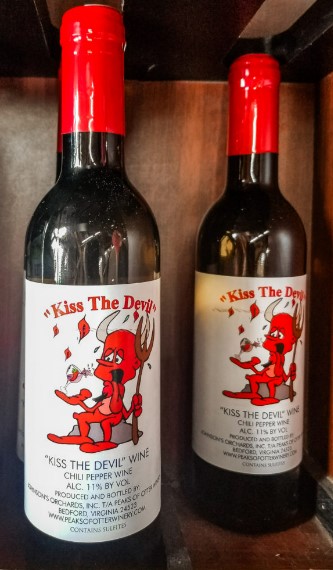
Other than mulled wine, are any wines truly spicy? The short answer is ‘yes’ but there are great differences in individual interpretation. To listen to or read some reviewers impressions you would be led to believe drinking some wines would be similar to eating a chili pepper. For example, “You can taste a red wine and suddenly discover your mouth is sizzling – that spicy red wine has a whole world of delicious, zesty compounds that light up your palate and senses.”
Photo credit: lovicarious.com
Wine can, however, have a certain amount of spiciness to it, though it is much more subtle than the above quote would suggest. There are several reasons for this.
Some wines do have the aroma of freshly ground black or white pepper. Wines made from Syrah grapes have a high level of pepperiness. This is because the grapes actually have one of the same compounds in the skin as is found in black peppercorns, a compound called Rotundone. However, one in five people are unable to detect the smell of Rotundone and thus do not find Syrah or Shiraz to be peppery.
Some red wines, such as Italian Chianti Classico, will provide a warming or burning sensation when they are drunk. This is a result of a high level of acidity in the wine. The same type of sensation may occur when drinking a wine with an alcohol content of around 15% or greater. Amarone is an example of such a wine.
There are wines with the aroma of spices such as vanilla, cloves or baking spices. A California Zinfandel or South African Pinotage will have the aroma of these types of spices. Part of this is due to the wine being aged in oak barrels. Lactones from the barrels create a coconut smell, and vanilla flavours come from vanillin. Spicy, toasted and clove aromas are generated by eugenol and guaiacol respectively, which are also found in the oak barrels.
There are some white wines as well that have flavours and aromas of spice; for example, a Gewürztraminer from Alsace. Grüner Veltliner from Austria can also be spicy as it, like Syrah, has Rotundone in its skin. As a result, it can have a peppery character.
So, although there are some peppery and spicy wines to be found on the shelves of your local wine store, I truly doubt that any of them will leave you fanning your mouth from the intensity of the flavour.





 A Layman's Wine Musings