Croatian wine has a history dating back to the Ancient Greeks. Like other old world wine producers, many traditional grape varieties are still cultivated. Modern wine production methods are now prevalent in the larger wineries and European Union style wine regulations have been adopted, guaranteeing the quality of the wine.
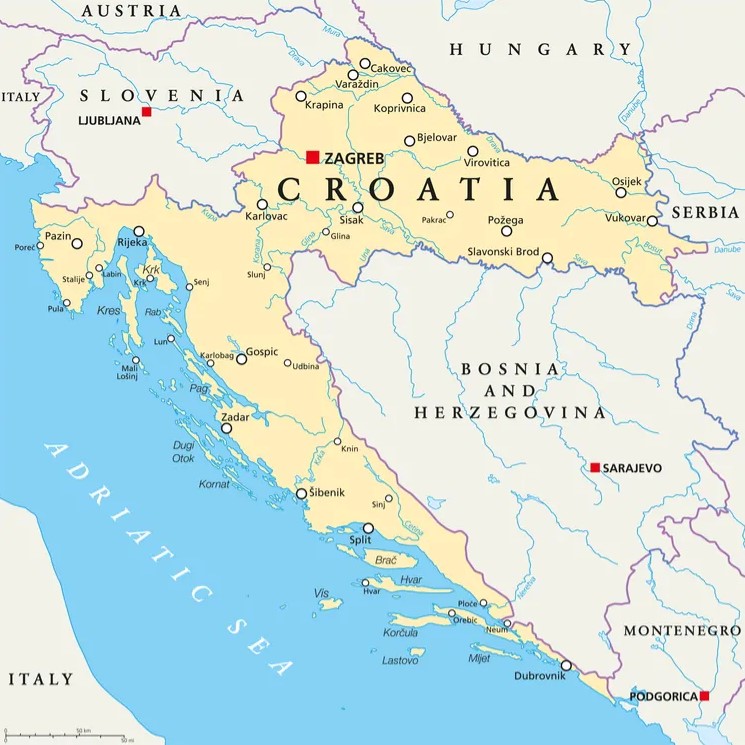
Croatia is located across the Adriatic Sea from Italy. It has many indigenous grape varieties that are not very well-known internationally, partly due to their complicated names. The names may contain a long row of consonants as well as have some special characters like č, ž or dž. This can make it difficult to remember or pronounce any given name.
If you are keen to understand the correct pronunciation of the names of the wines this may help.
č – sounds like the “ch” in “chalk”
ž – pronounced like the “s” in “sure.”
dž – pronounced like “j” in “jump”
š – sounds like “sh” in “shoe”
There are two distinct wine-producing regions. The continental region in the north-east of the country produces rich fruity white wines, similar in style to the neighbouring areas of Slovenia, Austria and Hungary. On the north coast, wines are similar to those produced in Italy, while further south production is more towards big Mediterranean-style reds. On the islands and the Dalmatian coast, local grape varieties, microclimates and the rather harsh nature of the vineyards leads to some highly individual wines, and some of Croatia’s best known.
Almost 70% of wine produced is white and produced in the interior, with the remaining 30% being red, which is mainly produced along the coast. Rosé is relatively rare. Some special wines, such as sparkling wine (pjenušavo vino or pjenušac) and dessert wine, are also produced.
There are indeed many foreign “international” grape varieties grown in Croatia but its long history of wine production has left it with a rich tradition of indigenous varieties, especially in the more out-lying areas and the more extreme growing conditions.
The Croatian Institute of Viticulture and Enology was created in 1996 to oversee the country’s wine industry, and be responsible for regulating winegrowing and wine production. Standards similar to the European Union wine regulations were set up to ensure the consistent quality in their wine. Croatian wines are classified by quality, which is included on the label.
Classifications
Vrhunsko Vino: Premium Quality Wine
Kvalitetno Vino: Quality Wine
Stolno Vino: Table Wine
Types
Suho: Dry
Polusuho: Semi-dry
Slatko: Sweet
Bijelo: White
Crno: Red (literally Black)
Rosa: Rosé
Prošek: Dalmatian dessert wine made from dried grapes, similar to Italian Vin Santo
Even though a classification system is used, Croatian wines don’t have a DO or AOC system like Spain, Italy, or France which can make it confusing to understand a wine’s grade or origin.
Common Red Wines
Plavac Mali
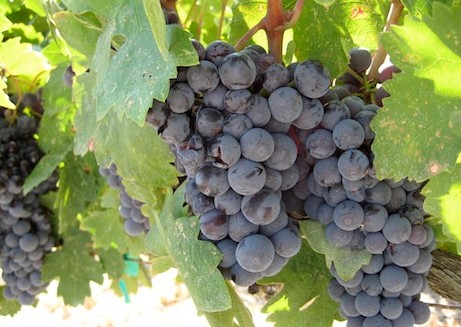
Plavac Mali is the primary red wine of Croatia. It is a wine that is rich and full of flavour, high in both alcohol and tannin, with lower acidity, and has flavours of blackberry, dark cherry, pepper, carob, dry figs, and spice. Plavac Mali translates to “small blue”.
Teran
This is a red grape that has bold flavours of forest berries and violets with smoky meat and game-like notes. Teran generally has high tannins, and should evolve over a few years. In Italy it is known as Terrano.
Common White Wines
Graševina
The everyday wine of Central Europe, Graševina is also known as Welschriesling. It is one of the most popular white wine grapes in Croatia. Graševina is a dry, fresh, aromatic white wine with apple-like notes.
Grk
To pronounce Grk just pronounce the three letters in a row. Grk produces dry white wines with notes of white pepper, melon, herbs, and sliced pear. The variety is indigenous to Croatia and is only found close to Korčula, on an island within the Srednja-Juzna Dalmacija.
Malvazija Istarska
Malvazija Istarska is one of the main white wines of Istria and the northern Dalmatian coast. It is sometimes referred to as Malvasia Istriana, although it’s not actually the same grape as Italian Malvasia. These wines are refreshing and usually dry, with lower alcohol content and aromas of fennel, quince, honey, apricot, and spice.
Pošip
This white wine is often crisp with flavors of apples, vanilla spice, citrus fruit, and a subtle almond note.
Final Thoughts
Croatian wines are not always available or commonplace in our local wine and liquor stores but that doesn’t mean they are inferior or overpriced. When you come across one I think you will find it worth your while to take one home and drink it.
Sláinte mhaith
 A Layman's Wine Musings