As an update to my November 9, 2024, post “2024: A Year to Remember”, I am pleased to report that the devastation resulting from the environmental disasters that plagued the 2024 growing season in British Columbia have had a reduced impact on this year’s grape harvest.
Photo credit: decanter.com
The vines that survived the destruction have recovered significantly, contrary to expectations. Most growers are now expecting a substantial crop; something that seemed unimaginable last year. The vines have proven to be much more resilient than expected. Some wineries project this year to be their largest harvest ever.
Indications are that the 2025 vintage will be of high quality as the weather has been consistently warm but without extreme heat spikes and wildfires. However, some vineyards still have crop yields of questionable quality.
Grape prices have returned to more reasonable levels, similar to what existed before the environmental challenges of the past couple of years. This will be a relief for the wineries and consumers.
Only a small number of wineries will continue to need to source grapes again from the U.S. Thus, the replacement wine program has been extended for another year. Many producers have replanted vineyards that will not be in full production for another several years.
The effects of the 2024 disaster will continue to linger for the foreseeable future. but the impact is proving not to be as devastating as first thought.
I recently returned from a trip to the Bordeaux region of France where I took advantage of the opportunity to experience some of the finest wines in the world.
The effects of climate change are impacting the grape harvests there the same as they are in many other parts of the world. The region is facing increasing temperatures and drought conditions each year. Not helping matters is the governing regulation that prohibits vineyards to irrigate vines that are more than 3 years old.
To help try and offset the effects of climate change, I saw horses being used in place of tractors to till the weeds that were growing between the rows of grape vines, lessening the need for herbicides and reducing the generation of carbon monoxide.
The Bordeaux region is separated into 2 distinct areas: the Left Bank and the Right Bank. To help identify which is which, the city of Bordeaux is situated on the Left Bank.
Bordeaux’s wine areas are often categorized into five main zones, primarily based on their location in relation to the Gironde, Garonne, and Dordogne rivers. These zones are: The Médoc, Graves and Sauternais, The Libournais, Blaye and Bourg and Entre-Deux-Mers. During our trip I visited wineries on both the Left Bank and Right Bank.
The Left Bank, often referred to as the Médoc and Graves, produces red wines, while the Right Bank, including Saint-Émilion and Pomerol, also focuses on red wines. Entre-Deux-Mers produces both red and white wines, and the Graves and Sauternais are known for their sweet white wines.
There are five Bordeaux wine classifications. These classifications serve as an expression of quality and prestige worldwide. The principle of the crus classés (“classified growths”) illustrates the synthesis of a terroir’s typical characteristics and dedicated human intervention over many generations to ensure quality. However, a wine or appellation can still be outstanding even if it is not a part of these classifications. The classifications are listed in order of seniority:
The 1855 classification
The Graves classification
The Saint-Émilion classification
The Crus Bourgeois du Médoc classification
The Crus Artisans classification
For a winery in Bordeaux to be referred to as a Château, the property must include a large house, vineyards and a place to make wine.
The age of the vines impacts the quality of the Bordeaux wine. The older the vine, the more expensive the wine. The roots on old vines extend much deeper and extend further int the soil. This adds minerality to the fruit, which in turn adds complexity to the flavour of the wine.
One thing I found interesting on this trip was how the various winery staff pronounced Cabernet Franc. I was always under the impression that Cabernet Franc was pronounced as the French do, with the ‘c’ in Franc being silent – ka·br·nay frong, but I now found out that it is acceptable to pronounce it in English as ka·br·nay frank.
Over the next few weeks I will describe my adventures through the region, as well as the wineries I had the opportunity to experience.
British Columbia wineries are now beginning to bottle and debut wines that are classified in the new wine category, “Crafted in BC”. This is a limited time offering that was authorized by the Vintage 2024 Relief and Support Program. This program was introduced by the British Columbia government in the summer of 2024 to help offset the devastating losses that resulted from last year’s extreme climate effects. For more information, see my November 9, 2024 post 2024: A Year to Remember in British Columbia.
This support program is enabling B.C.’s winemakers to use out-of-province grapes thus allowing wineries to keep their doors open and staff employed. This is also providing winemakers with the unique opportunity to think beyond the realms of their own vineyards by using different varietals of grapes from various climates and terroirs.
The “Crafted in BC” title is not a designation or certification but instead, a messaging approach. VQA wines, made from 100% B. C. grapes, remain the focus and the future for B.C. wineries. There is still plenty of supply in the market from previous vintages and those areas unaffected by the 2024 climate events. The “Crafted in BC” wines from the 2024 vintage will help to bridge the gap while vines recover or vineyards are replanted and B.C. wineries can return to producing wines produced from 100% British Columbia grapes.
The demand for sparkling wine can be very volatile as it is heavily influenced by consumer moods and trends. Sparkling wine is traditionally related to festive gatherings and celebrations as long as people are congregating for happy times there will be a demand. However, during economic down times or in unusual circumstances like COVID-19, people are not gathering to celebrate and the sparkling wine market suffers.
Photo credit: marketresearchintellect.com
Like in so many segments of the wine industry, there is increasing demand for non-alcoholic sparkling wine options as the younger generations become more health-conscious and want to avoid alcohol. This trend is expanding market appeal. Vintners who embrace this new market by diversifying their product lines and expanding consumer reach will benefit.
Health-conscious consumers are looking for wines with reduced sugar content and fewer calories. This shift encourages innovation in product formulations, helping wine makers attract a broader consumer base. Low-calorie options provide a competitive edge in a health-driven market.
Given today’s ecological and environmental concerns, consumers are also placing much more emphasis on sustainability and organic certifications. Sparkling wine producers who are adopting eco-friendly practices are appealing to environmentally conscious buyers. This trend is providing producers with the ability to command higher prices & enhance brand loyalty.
The sparkling wine market, which has been steeped in tradition for centuries, is now being forced to change by evolving consumer demand. Producers need to respond and adapt to the evolving marketplace if they want to continue to survive.
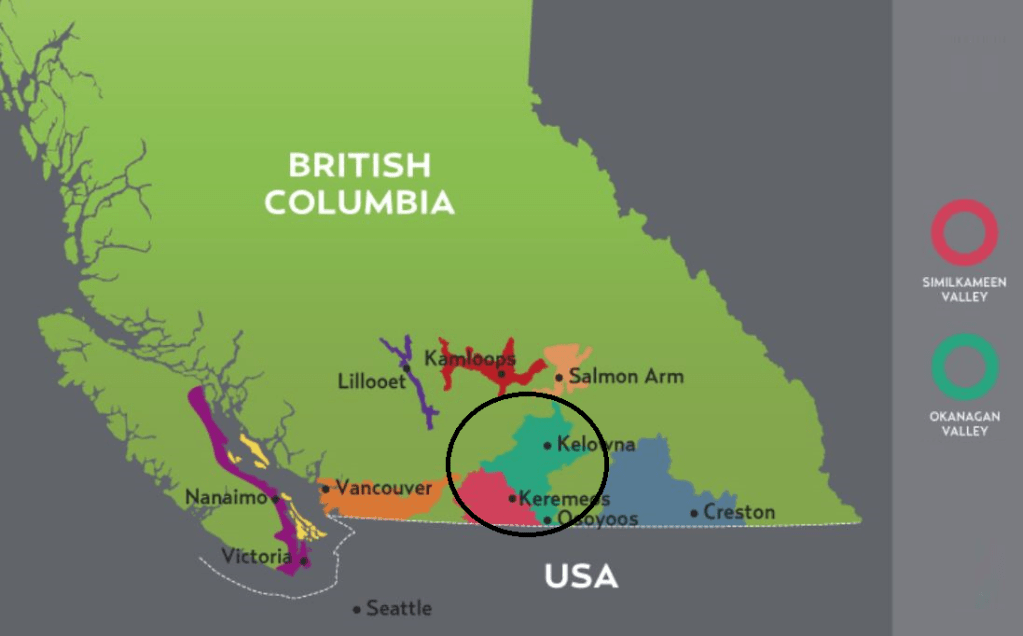
It would be an understatement to simply say that Mother Nature has been unkind to the B.C. wine industry this year. In January the extreme cold caused devastating damage to the vast majority of the grapevines in both the Okanagan and Similkameen Valley. It is estimated that 90% of this year’s grape crops were lost and 15% of the vines were destroyed.
Further devastation resulted because of the hot dry summer consisting of heatwaves and wildfires. The good news is that because of the heat, the remaining grapes ripened quickly, resulting in an early harvest with smaller but more concentrated fruit.
Lifelong workers in B.C.’s wine industry cannot recall a year that has been as devastating as this one. The provincial government has established a 26 million dollar vine replant program with an additional 92 million dollars to be paid through the Production Insurance and AgriStability program.
B.C.’s wine industry generates approximately 3.75 billion dollars annually for the province and employs more than 14,000 full-time workers. There are about 350 licensed grape wine wineries in the province that receive nearly 1.2 million visitors annually.
In order to help the wine industry recover from the lost grape harvest, the province is permitting the impacted wineries to import grapes and grape juice in order to produce the 2024 vintage. However, the imported products will not be eligible to carry the B.C. Vintners Quality Alliance (VQA) label. Without these unprecedented concessions, many wineries would face potential financial ruin resulting in cuts to thousands of direct and indirect jobs, including the loss of highly specialized wine makers and cellar masters whose expertise is essential to the industry.
So, what will all this mean for the wine drinker when comes to the 2024 vintage of BC wines? Because of the intense heat and early ripening of those grapes that did survive, they will provide very concentrated and flavourful wines. However, given the scarcity of the wines that will carry the VQA designation, you can expect the price of the 2024 vintage to be higher than most years.
You can also rest assured that the wines that will be created from imported grapes will meet the established standards of the winery producing them. After all, their hard established reputations are at stake here and no one is willing to jeopardize that. British Columbia’s talented winemakers will deliver great results.
While visiting a winery in the Beaujolais district of France a few weeks ago I was introduced to a new term. I was told that the winery I was visiting was a biodynamic winery. This was a description I had not heard before, so I decided to research the topic in more depth when I returned home from my trip.
You may be familiar with what organic farming entails (if not, see my post Organic Wine from August 8, 2020), however the biodynamic movement is somewhat different. According to the Biodynamic Farming and Gardening Association, biodynamics is “a spiritual-ethical-ecological approach to agriculture, gardens, food production and nutrition.” Biodynamic wine is made with a set of farming practices that views the vineyard as one solid organism. The ecosystem functions with each portion of the vineyard contributing to the next. Conceptually, everything in the universe is interconnected and gives off a resonance or ‘vibe’. This interconnectivity even includes celestial bodies like the moon, planets and stars. Biodynamic viticulture is the practice of balancing this resonance between vine, human, earth and stars. Biodynamics is a holistic view of agriculture.
As with organic farming, natural materials, soils, and composts are used to sustain the vineyard. Chemical fertilizers and pesticides are not permitted. A range of animals from ducks to horses to sheep live on the soil and fertilize it, creating a rich, fertile environment for the vines to grow in. Biodynamic farming also seeks sustainability, leaving the land in as good or better condition.
Biodynamic farming has been met with skepticism by many scientists as some of the practices are difficult at best to prove they work. In addition to organic practices, biodynamic farming takes other factors into account, such as the lunar calendar and astrology. This method of farming considers all aspects of life in the vineyard — other plants, insects and animals. It’s not just about the grapes.
Photo credit: winefolly.com
Farming practices from pruning to harvesting are controlled by the biodynamic calendar. It breaks all the tasks associated with farming into four types of days: root days, flower days, fruit days and leaf days. Each of these categories has certain tasks associated with it that are reflective of the earth’s four classical elements. Fruit days are meant for harvesting, leaf days for watering, root days for pruning. On flower days, nothing is done in the vineyard.
Biodynamic farming calls for specific and sometimes strange compost and field preparations. One of these is known as cow horn manure. Cow horns are stuffed with manure compost and buried into the ground all through the winter, then excavated the following spring. When excavated, the stuffed material is spread throughout the vineyard.
Biodynamic wines must be certified and adhere to strict rules and regulations. The wineries are overseen by 2 governing bodies, Demeter International and Biodyvin.
Biodynamic wines can be found in the United States, France, Germany, Spain, Italy, Eastern Europe, Chile, Argentina, India and Australia. Those who believe in the philosophy feel that the wines are more characteristic to the terroir where they originate. However, wine experts say there is no noticeable difference in the taste of biodynamic wine from organically produced wines. Is the difference worth the additional effort? You be the judge.
Regenerative agriculture is not just a trendy environmental buzzword intended to tug on your emotional “save the planet” heartstrings; it is an ancient form of agriculture that is making its way back into mainstream farming. It’s successful, not only in producing and sustaining quality wine grapes, but it’s also successful in combating climate change, the effects of drought and creating a healthy environment.
Photo credit: daily.sevenfifty.com
Regenerative wine farming means farming grapes in a way that regenerates soil health. It is a set of organic, ecologically driven farming practices that improve the ecosystem by working in harmony with nature. Farming this way increases biodiversity, restores soil and plant microbiome and eliminates the need to introduce toxic pesticides, herbicides and genetically modified organisms (GMOs) into the soil, waters and grapevines.
Equally important are the broader environmental benefits. Regenerative agriculture has the potential to help reverse climate change by capturing carbon in the soil and removing it from the atmosphere.
Decades of extractive farming methods have taken their toll on the land. While sustainability efforts aim to maintain living systems to prevent further degradation, regenerative viticulture will revitalise the terroir, the wines and our bodies. By prioritizing soil health and biodiversity, regenerative viticulture holds the potential to transform the industry and bring it into alignment with a more complete and sustainable vision for the future.
With the focus on living soil, regenerative viticulture builds more robust ecosystems that are less susceptible to climate change and biodiversity loss. Adopting management practices for living soil can increase soil organic matter and reduce carbon from the air, a crucial component of the United Nations Climate Change Conference’s plan to reduce global carbon emissions.
Regenerative viticulture also promotes water percolation and retention and it also better ensures water supply for communities. The overall goal is to guarantee food security, nutrition and community health and well-being, making it a vital component of a sustainable future.
Regenerative farming practices foster a robust ecosystem for the grape vines to prosper naturally, in turn producing fruit that is truly expressive of its surroundings, and wines with enhanced minerality and other nuances that come from healthy, site-specific soil without chemical manipulation. The taste of the wines is distinctly delicious with terroir-driven flavours.
There are a number of components to regenerative viticulture. The first is to plant a variety of cover crops. In traditional agriculture the soil is tilled. This allows for the most economical farming, but it is not good for the soil as it destroys the soil’s natural structure and causes soil erosion, water runoff and poor water infiltration. By introducing a variety of cover crops to the vineyard, bees and other pollinators will have a welcoming habitat. These plants will smother out undesirable weeds and increase water retention in the soil while reducing erosion and reducing the need for pesticides. Cover crops will improve the level of soil nutrients and provide the biodiversity essential for a healthy ecosystem.
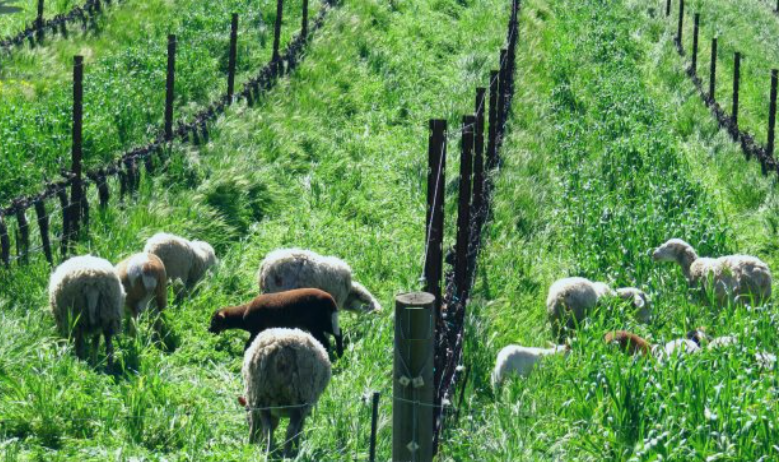
The introduction of sheep, chickens, geese and ducks to roam the vineyards will reduce pests and weeds, as well as provide nutrient-rich manure to the soil. This results in improved soil health and further eliminates the need for pesticides.
Viticulture is at a critical juncture. Through its commitment to ecosystem services and human health, viticulture is embracing a systemic approach to support farmers in delivering regenerative agriculture. However, in order to maximize its potential, there must be a paradigm shift that will contribute to solving the biodiversity and climate crises.
Rising summer temperatures are impacting grape growers around the world, however today I will focus on France’s Bordeaux region. Temperatures are expected to rise between 0.3°C and 1.7°C over the next 20 years. At this point global warming has benefited Bordeaux but that is about to change, especially if the grape crop is not somewhat modified.
Photo credit: foodandwine.com
Growers are going to need to reconsider their mix of grapes as temperatures continue to rise. The future of white varietals from the region may become non-existent while the existing proportion of reds, where 60% to 70% is currently Merlot, is already too great an amount. Merlot is ideal in cooler regions where there is a shorter growing season. However, with temperatures increasing and the growing season getting longer, Merlot now ripens too quickly. Many of these vines will need to be replaced with varietals such as Cabernet Sauvignon, which perform better in hotter climates with a longer growing season.
At least until now the increase in temperature and the resulting riper fruit have not had a detrimental effect on the quality of the wine. Instead, higher temperatures have made wine quality more consistently better. However, if warming continues the quality of the wine will begin to deteriorate.
It is well known that high temperatures can have harmful effects on grape composition, such as a decrease in anthocyanins (the pigmented molecules that give red wine its colour), as well as other molecules, that could cause unpredictable aromas. The grape skins are also negatively impacted by higher temperatures.
Growers, scientists, and wine professionals all speculate that continued increases in temperature will negatively impact fruit and wine quality in the future. However, to date Bordeaux has successfully adapted to the quickly changing climate, but experts fear that the danger point is swiftly approaching.
This summer has proven to be especially bad for the grape harvest in France’s Bordeaux region. The perfect combination of meteorological conditions has led to an alarming spread of mildew throughout the region. The combination of warm weather and rain has resulted in new plant growth being left unprotected as the wet weather has hindered the application of herbicides.
Photo credit: vivino.com
The mildew has been having the greatest impact on the red grape varietals, most notably Merlot. So far this year the region has been impacted by two separate waves of mildew. It remains to be seen whether the disease will progress onto the stalks of bunches and if it can be ultimately contained.
Some growers have lost their entire harvest. As a result, a helpline has been established to help growers cope with the devastation. Some grape growers are even considering their careers because of the mildew. It has been quite traumatic for those trying to control it.
This is the second consecutive year where Bordeaux growers have been impacted by the weather. The 2022 harvest was about 11% less than the ten-year average.
Grape growers are hoping that the region will soon see a return to more uninterruptedly dry, hot weather. If the dry heat returns, Bordeaux may see the 2023 harvest being within the top three earliest harvests in the past decade. However, given the devastation caused by the mildew, the harvest yield will be much lower than in previous years. This will no doubt impact the price when the 2023 vintage of Bordeaux reaches store shelves in a few years’ time.
The spotted lanternfly is an invasive species from Southeastern Asia that poses a threat to Ontario’s wine-growing industry. It has been recently detected in New York state, not far from the Niagara wine-growing region.
Photo credit: onnurserycrops.wordpress.com
According to the Invasive Species Centre, the spotted lanternfly is an invasive plant-hopper native to Southeast Asia. The insect was first detected in Pennsylvania in 2014 and since then has advanced to several other states, including Monroe and Erie Counties of New York, which are very close to the Niagara wine region. It has not yet been detected in Canada, but industry experts say it’s only a matter of time.
The spotted lanternfly has caused a great deal of destruction to grape vines and other tender fruit trees in the United States. The insect sucks the sap out of grape vines, causing them to collapse. If left unchecked, the insects could devastate entire vineyards, which would each cost upwards of $45,000 an acre to replant. It is a much more aggressive pest than previous pests.
A 2019 study completed by Pennsylvania State University estimated that the insect caused between $43 million and $99 million US since being detected. Although the study also includes nursery operators and Christmas tree growers, researchers noted that grape growers were hit especially hard. Pennsylvania has experienced a loss of between 45% to 100% of wine grape crops.
Insecticide application in some vineyards and orchards in the affected areas have gone from four applications per season up to 14 applications, increasing industry expenditures and potential negative impact to the environment.
Early detection will be the key to mitigating the damage caused by the spotted lanternfly. It’s easier to control and a lot less expensive at the prevention stage. At the management stage it has proven to be very difficult to control and eradicate.
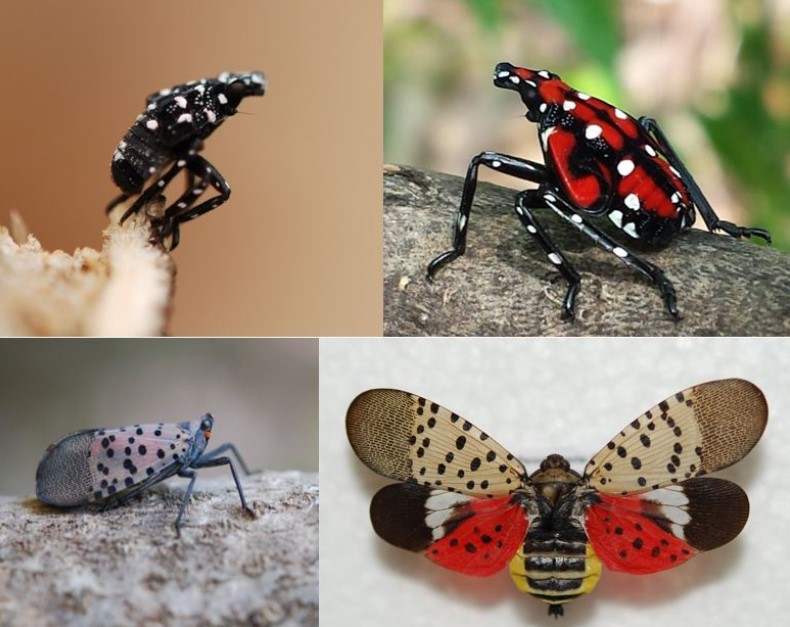
An adult spotted lanternfly can be identified by its black and grey spots and bright red underwing. Their wings are about 2 centimetres or 1 inch long. They will often be found clustered together on a tree.
The eggs are brown, seed-like, covered in a grey, mud-coloured secretion. They will be grouped together in a vertical formation, usually found on trees, but can be laid on any surface, including cars.
The nymphs grow in four stages, starting out with black and white spots but as they mature they gain red spots with distinctive patches of black and white.
Spotted lanternflies spread into new environments in two ways. They are not strong flyers but are able to cling well to a variety of surfaces. They will hold on to people and vehicles who move through heavily infested areas. Their eggs masses are very difficult to spot and can be laid on almost any material, including stone, cut logs, Christmas trees, rusty metal, boats or grills. Egg masses are laid on an object then covered by a shiny, grey, putty-like material that darkens and turns brittle overtime.
The Ontario Ministry of Agriculture, Food and Rural Affairs is currently surveying for spotted lanternflies in high-risk areas to assist with early detection. However, we can all help prevent the spread of spotted lanternfly by buying and burning local firewood, checking ourselves and our belongings thoroughly after visiting an infested area, and watching for egg masses especially during the winter. If spotted, take photos, note the location, and report the sighting to the Canadian Food Inspection Agency.
The pending invasion of the spotted lanternfly is an example of a larger problem linked to climate change. The longer growing season and more temperate winters caused by rising temperatures are allowing more invasive species to spread into the region and to live longer.






 A Layman's Wine Musings