During the past six years that I have been writing this blog I have always steered away from political issues. However, today I feel compelled to speak out against Canada’s one time ally, the United States. With the return of Donald Trump to the White House’s Oval Office, Canada’s economy was placed under direct attack by Trump when he decided to impose twenty-five percent tariffs on Canadian imports to the U.S., without just cause. Similar sanctions have been imposed on Mexico and China and are being threatened against the European Union.
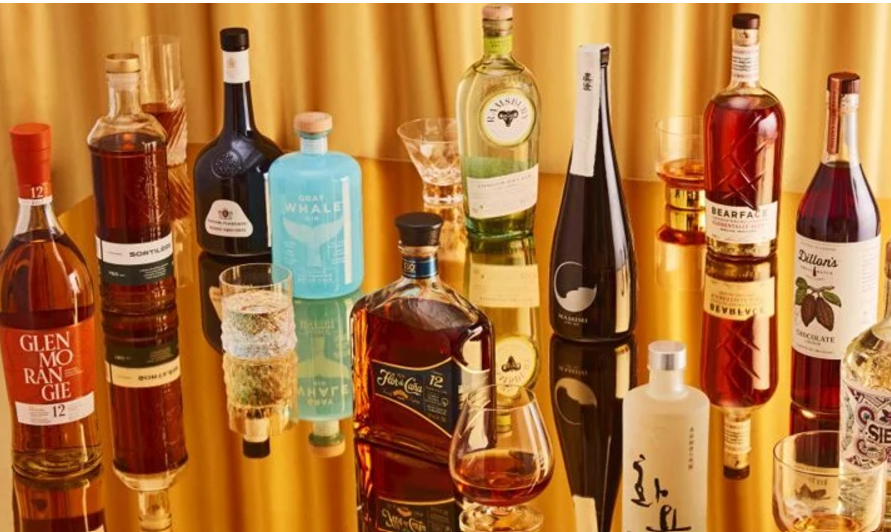
Photo credit: Manitoba Liquor Mart
In response to these bullying tactics by Trump, and as a proud Canadian, I will no longer purchase or write about American wine until such time as Trump refrains from his attack on Canada.
Canada has been the top export market for U.S. wines and Ontario’s provincial liquor board (the LCBO) has been among the largest purchasers of U.S. alcohol. In Ontario, imported wines are primarily sold through provincially owned and operated retail outlets, although recent regulatory changes have authorized 157 private grocery retail locations to distribute wine and beer.
The first phase of Canada’s response to the U.S. imposed tariffs includes tariffs on wine and spirits, in addition to many other products. Ontario is banning American liquor and the LCBO is removing American wine, spirits and beer from its shelves. This will represent about a billion dollars worth of American alcohol.
British Columbia, Alberta, Saskatchewan, Manitoba, Nova Scotia and Newfoundland are also removing U.S. liquor from their store shelves. At last word Quebec is considering the idea. On the bright side these bans will serve to enhance the sale of Canadian wines in Canada, as well as European, Australian, South American and South African wines.
Hopefully the American people will convince Trump that the imposition of his tariffs will not only hurt international economies but his own economy as well. It is a sad situation.
Looking for ideas on what wine or whisky to give this year? Here are some of my favourite suggestions that should be available at your local liquor store or online.
FOR THE WINE FANS
Under $20
Fantini Sangiovese $11.45 CDN – Expressive ripe fruit, supple tannins, and well-balanced acidity contribute to an inviting and versatile wine, making it an easy choice any night of the week. Serve it alongside braised meat dishes or with tomato-based pasta dishes.
This is a wine my wife discovered while browsing the aisles of our local liquor store and it is now our go-to house wine.
Famille Perrin Réserve Côtes du Rhône $16.95 CDN – With floral, red plum, chocolate and spice notes, this wine goes well with Mediterranean-style pizza or hearty lamb stew.
France’s Côtes du Rhône region is one of my personal favourites.
Featherstone Black Sheep Riesling $19.95 CDN – Vibrant, with honey, fresh fig, herbs and citrus, this wine consistently delivers the fine, pure mineral for which both great Riesling and Ontario are so renowned. It may be cellared for up to 5 years and will be superb with lightly grilled or smoked fish.
This has been one of my standards when guests come over or to pair with barbecued fish.
Under $50
Fontanafredda Barolo DOCG $34.95 CDN – With aromas and flavours of red fruit, floral tones, berry, plum and a touch of licorice, this wine is extra-dry with balanced acidity, firm tannins and fruit flavours that linger on the finish. Barolo pairs well with game meats and mushroom risotto.
Barolo is my favourite type of Italian wine and to find one with a price tag under $50 is uncommon.
Famille Perrin Les Sinards Châteauneuf-du-Pape $43.95 CDN – Perrin is among the finest producers in the southern Rhône. Some grapes for this rich, age-worthy red come from their legendary Château de Beaucastel estate. Drink over the next decade with roast duck, roast lamb or grilled game meats.
I have been intrigued by Châteauneuf-du-Pape wine ever since a close friend brought me a bottle from the French district quite a few years ago. After visiting there myself earlier this year and sampling the wines I am even more smitten with them. To find a bottle for less than $50 is a true find.
For That Special Someone
Mazzetti Grappa di Nebbiolo da Barolo in Decanter $199.95 CDN – Crafted from the pomace of Nebbiolo from Barolo, Italy, this is pure quality and elegance. The decanter and stylish gift box make it as breathtaking on the outside as it is on the inside. It is the perfect gift for any grappa enthusiast.
FOR THE WHISKY DRINKERS
Under $50
Jameson Irish Whiskey $39.95 CDN – Jameson Irish Whiskey is a versatile, smooth blend of pot still and fine grain whiskeys. Bright, pale amber with subtle aromas of white flower, nectarine, ripe pear and clove. Mellow and approachable on the palate, with spicy vanilla, wildflower honey and ginger flavours.
This is a great introduction for anyone who is being introduced to the world of whisky. It was one of my initial favourites.
Under $100
Bowmore 12 Year Old Islay Single Malt Scotch Whisky $65.95 CDN – This Islay whisky expresses the essence of Bowmore with rich amber colour; subtle notes of citrus and honey with typical peaty smokiness; the flavours are sweet and delicious with heather and honey; a soft peat smoke note lingers on a long and mellow finish.
My initiation to Bowmore 12 was at a friend’s cottage. It provides a wonderful Islay experience at a better price point than many of its competitors.
Green Spot Irish Whiskey $89.95 CDN – This single pot still whiskey from Ireland uses malted and unmalted barley to give it a unique spiciness. Clove, apricot and oak toast aromas evolve to flavours of cedar, clove, apple and ginger. The long finish echoes spicy notes of clove, nutmeg, and ginger.
This is my go-to Irish Whiskey and I try to always have some on my bar shelf.
Under $200
Lagavulin 16 Year Old Islay Single Malt Scotch Whisky $174.95 CDN – Considered by many to be the benchmark for Islay malts, this classic pours a golden amber colour and wafts from your glass with intense smoky peat and iodine. The palate is full flavour, rich and smooth with peat, figs, dates and vanilla followed by an enduring smoky and dry finish.
I was introduced to Lagavulin 16 by my wife’s uncle during a trip to the distillery several years ago. Even though he was a descendant of the original owners of the Laphroaig distillery he wanted me to try Lagavulin, his favourite whisky. I tried it and it has been a staple on my bar ever since.
The Glenlivet French Oak Reserve 15 Year Old Single Malt Scotch Whisky $114.95 CDN – The unique use of French Oak increases the intensity of the whisky, resulting in a richer and creamier finish along with a distinctive spiciness. Deep golden in colour, expect aromas and flavours of crème brûlée, sweet apple, gentle smokiness and peat alongside of lavender notes followed by a rich and complex finish.
This is another whisky that I like to always have on hand as one of my regular Scotch whisky choices.
For That Special Someone
The Glenlivet 18Year Old Single Malt Scotch Whisky $214.95 CDN – Distiller Alan Winchester takes this malt through a combination of cask types, including both first and second-fill American oak (for tropical fruitiness) and ex-sherry oak (for spiciness). The result is this golden-coloured dram with rich spicy aromas, toasty grain, vanilla and almond flavours and a long smooth finish.
This whisky I save for special occasions or when I want to treat myself.
The WineAlign National Wine Awards of Canada (NWAC) is the country’s largest competition, involving only 100 percent Canadian-grown and produced wines. The judging involves a select group of Canadian wine writers, educators, sommeliers and two international judges who spend a week assessing some 2000 wines and ciders. This year’s competition took place near Niagara Falls, Ontario.
Double Honour
The Winery of the Year and Small Winery of the Year is Kelowna British Columbia’s SpearHead Winery. In addition to the twin honours this year, they also had unprecedented success in an individual category (Pinot Noir), winning a total of seven medals for their Pinots, including three platinum, one gold, three silvers and a bronze. In total they earned a total of twelve medals.
Top 10 Wineries
Six of the top ten wineries this year are from British Columbia, with the remaining four from Ontario. The top ten are:
SpearHead Winery, British Columbia
Meyer Family Vineyards, British Columbia
Henry of Pelham, Ontario
Black Hills Estate Winery, British Columbia
Thirty Bench Wine Makers, Ontario
Quails’ Gate Estate Winery, British Columbia
Nostalgia Wines, British Columbia
Peller Estates Niagara-on-the Lake, Ontario
Lake Breeze Vineyards, British Columbia
Vieni Estates, Ontario
The Top 10 Small Wineries
Seven of the top ten small wineries are from British Columbia, with the remainder from Ontario. The top ten are:
SpearHead Winery, British Columbia
Meyer Family Vineyards, British Columbia
Nostalgia Wines, British Columbia
Lake Breeze Vineyards, British Columbia
The Organized Crime Winery, Ontario
Corcelettes Estate Winery, British Columbia
Black Bank Hill, Ontario
Kismet Estate Winery, British Columbia
Fort Berens Estate Winery, British Columbia
Lailey Winery, Ontario
Regional Top 10 Winners
British Columbia
SpearHead Winery
Meyer Family Vineyards
Black Hills Estate Winery
Quails’ Gate Estate Winery
Nostalgia Wines
Lake Breeze Vineyards
Corcelettes Estate Winery
Nk’Mip Cellars
Burrowing Owl Estate Winery
Kismet Estate Winery
Ontario
Henry of Pelham
Thirty Bench Wine Makers
Peller Estates Niagara-on-the-Lake
Vieni Estates
The Organized Crime Winery
Black Bank Hill
Two Sisters Vineyards
Lailey Winery
Hidden Bench Estate Winery
Marynissen Estates
Platinum and Gold Medal Winners
Only 1% of the wines entered earn a Platinum Medal. This year, 18 out of 1,800 wines received this recognition. Every Platinum winner has passed through a minimum of two tastings and a review by a minimum of five judges. These wines must be put forward by at least three judges in the first round and re-considered by at least five judges in the second round.
Earning a Platinum Medal greatly increases a winery’s performance score based on the mathematical degree of difficulty in reaching Platinum. This helps to decide the Winery of the Year and the Top 25 list.
Platinum and Gold medals were awarded in the following categories, presented alphabetically below:
Cabernet Franc
Platinum Medal
Black Bank Hill 2020 Cabernet Franc, Lincoln Lakeshore, Niagara Peninsula, Ontario
Vieni Estates 2022 Cabernet Franc, Vinemount Ridge, Niagara Peninsula, Ontario
Gold Medal
Bordertown 2020 Cabernet Franc Reserve, Okanagan Valley, British Columbia
Domaine Queylus 2022 Cabernet Franc Réserve du Domaine, Niagara Peninsula, Ontario
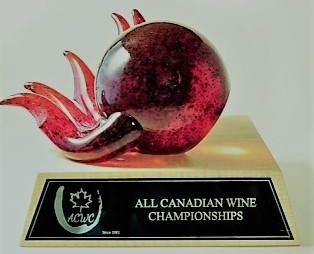
The All Canadian Wine Championships (ACWC) were held earlier this month. It is open to all Canadian licensed wineries, cideries and meaderies and content must be grown and made in Canada. This year there were 995 entries submitted by 173 wineries.
The panel of judges consisted of wine writers, sommeliers, and professional wine judges from the Wine Judges of Ontario. There were 10 judges from Ontario, 2 from Alberta and 1 from each of Quebec and New Brunswick.
The 2024 trophy winners were as follows:
The Best Sparkling Wine of the Year was presented to British Columbia’s (BC) Bench 1775 Winery, for their 2020 Blanc de Blanc ($39.75 CDN).
The Best Red Wine of the Year was BC’s Sunrock Vineyard’s 2021 Shiraz ($40.24 CDN).
The Best White Wine of the Year was awarded to BC’s Van Westen Vineyards, for their 2022 Viscous ($27.40 CDN).
The Best Dessert Wine of the Year was Quebec’s Vignoble du Marathonien, for their 2021 Vin de glace ($50.00 CDN).
The Best Rosé Wine of the Year was awarded to yet another BC winery, Hester Creek Estate Winery, for their 2023 Rosé Noir ($32.19 CDN).
The Best Fruit Wine of the Year was presented to another BC winery, Maan Farms Winery, for their N/V Raspberry Dessert ($29.99 CDN).
The Best Cider of the Year was Nova Scotia’s Domaine de Grand Pré, for their N/V Vintage Sparkling Cider ($29.00 CDN).
The Best Mead of the Year was presented to Manitoba’s Shrugging Doctor Beverage Co, for their N/V Apple Cinnamon Mead ($18.47 CDN).
Double Gold, Gold, Silver and Bronze medals may be awarded in each category. Double Gold and Gold medals were presented to the following participants:
Sparkling Wine-Traditional Method
Gold
Two Sisters Vineyards, ON – 2021 Lush Sparkling Rosé – $57.80
Two Sisters Vineyards, ON – 2020 Blanc de Franc – $63.80
Ravine Vineyard Estate Winery, ON – N/V Brut – $44.80
Sparkling Wine–Charmat Method
Double Gold
Bella Terra Vineyards, ON – N/V Sparkling Rose – $24.95
Gold
Three Dog Winery, ON – 2023 Debut Sparkling – $27.80
Harbour Estates, ON – 2023 Sparkling Riesling – $25.00
Sparkling Wine–Frizzante Method
Double Gold
Planters Ridge Winery, NS – 2022 SEK – $22.43
Gold
Jost Vineyards, NS – N/V Luvo Sparkling White – $5.89
Chardonnay, Unoaked
Double Gold
Calamus Estate Winery, ON – 2023 Unoaked Chardonnay – $18.95
Gold
Kacaba Vineyards and Winery, ON – 2023 Select Series Unoaked Chardonnay – $15.95
Chardonnay Under $35.00
Double Gold
Wending Home, ON – 2021 Chardonnay Estate Vineyards – $34.95
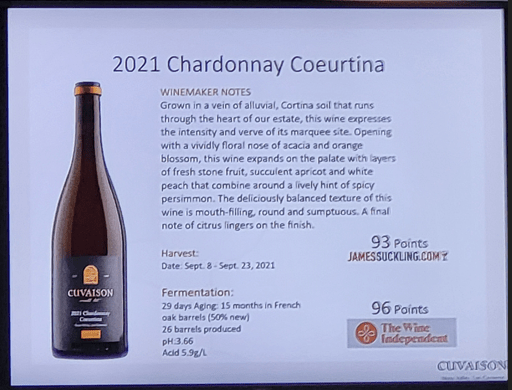
An American wine club operator from Napa Valley, California had arranged for a group of his members to take part on our recent river cruise aboard the Scenic Sapphire, through the Burgundy and Rhône wine regions. The group excursion included the CEO of Cuvaison Estate Wines of Napa, California, Dan Zepponi.
While sailing down the Rhône River between ports, Zepponi treated the passengers to two seminars; the first was an exploration of Chardonnay wine. The presentation included tastings of two different Chardonnays from Cuvaison which were compared to two French Chardonnays that are regularly served as part of dinner service on the ship.
The tastings were conducted as a head-to-head comparison. First, his unoaked Methibiton Chardonnay, was compared to an unnamed, unoaked French wine. The second comparison was between two oaked Chardonnays, Coeurtina from his winery against a second unidentified French.
In each comparison I found the flavours of the Napa wines to be extremely close to the French, though to me the French was slightly more mellow and smoother. The Cuvaison wines are priced at $70 US each and are only available directly from the winery. In comparison, the ships wines would have an equivalent price of approximately $15 – $20 US per bottle.
During the second seminar Zepponi discussed micro-lots as they pertain to the wine industry. When a winery wants to produce a type of wine but does not have enough of the varietal in their own vineyard they may purchase the varietal from another grape grower. The purchased grapes are then used to make a specific wine exclusively from that purchased micro-lot. This allows the winemaker to better control the grapes being used and the wine produced, in a similar manner that would be done if the vintner was using their own estate grown grapes.
Two taste comparisons were conducted, the first was with Cuvaison’s 2022 En Cigar Chardonnay Blanc and the ship’s undisclosed Sauvignon Blanc house wine. The second comparison was conducted using their 2022 Fiddlestix Pinot Noir and an undescribed French Pinot Noir. I favoured the French Sauvignon Blanc over the Cuvaison but did find Cuvaison’s Pinot to be smoother and less fresh that the French Pinot. Once again though, the price between the American and French wines was significantly different – $70 US for both Cuvaison’s versus under $20 US for the French wines.
Unfortunately, the two seminars lacked substance and honesty as they were actually marketing presentations for Cuvaison wines. Zepponi would have had more credibility in my eyes if he had presented his talks as being an introduction to Cuvaison wines. There was no value in conducting taste comparisons with wines that are not even identified by name, let alone any information about where or how the wines were produced. He should have simply talked about how his wines are produced.
Based on information presented about the various Cuvaison wines, they are producing decent wines at a reasonable price point. However, the feeble attempt at conducting product comparisons was an insult to the intelligence of the ship’s passengers.
This is a good time of year to have a whiskey tasting party. A whiskey tasting can be done in a couple of different ways. The simplest method is to just get a few bottles together and let everyone help themselves while they sit around and chat about the ways of the world. However, it can be more interesting if everyone is tasting together and there’s a progression of styles to sip from. This technique is similar to that of a wine tasting party.
Photo credit: southerndrinkingclub.com
If following the second approach, first determine how many people will attend and then how many whiskies you want to sample. If everyone is tasting the same whiskey at the same time it is probably best to keep the number of attendees to under a dozen. This will make it easier to keep organized and maintain a well-structured group conversation about each sample.
When deciding on which whiskies to try, you could follow a specific theme or make your selections based on ones you personally enjoy. The experts suggest that the number of whiskies should range from five to eight with each pour being about ½ an ounce. Following this guideline, you will only require one bottle of each whiskey. Depending on your approach, you can either provide the whiskies yourself or ask each guest to bring a bottle.
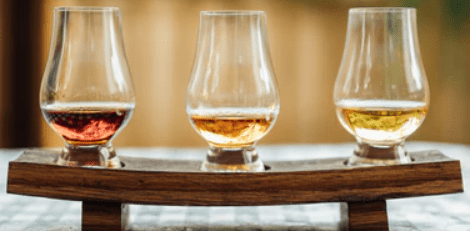
Regarding the number and type of glasses to use, some enthusiasts only use snifter or Glencairn style glass but white wine glasses with small to medium bowls work equally as well. Your guests only need a glass or two at a time, so you can either dispose or finish the remains after each tasting, rinse out the glass and proceed to the next. This saves on glassware plus the clean-up time afterwards.
Allow people to taste each sample first without adding any water. Then give them the option to add a couple of drops of water to see if that affects the taste. It is a good idea to provide a pitcher of filtered or bottled water served at room temperature and liquid droppers, which can be obtained from most pharmacies. When adding water, it is important not to dilute the whiskey, thus no more than a teaspoon should be added. Whiskey flavours are easier to identify as you lower the relative alcohol content, thus diluting your whiskey a few drops at a time helps open up new flavours to experience.
On the topic of water, each participant should be provided with drinking water to cleanse the palate between tastings, as well as to keep themselves hydrated. Crackers or plain bread, such as a baguette are also good ways to cleanse the palate between tastings.
It is a good idea to have a container available for your guests to pour out whiskies they don’t care for. The goal here is to experience a range of whiskies, not encourage anyone to drink something they don’t like.
The best way to progress through a tasting is to sip the lightest whiskey first and end with the richest and/or most heavily flavoured/smokiest one. As host, it’s a good idea to taste everything yourself prior to the event in order to know which order the whiskies should be served in. Keep in mind that lighter coloured whiskey doesn’t necessarily mean it is lighter in flavour.
If you decide to select your whiskies using a theme, options include selecting by country, such as all American, all Irish, all Scottish, all Japanese, etc. Another option is selecting all single malts, whether from Scotland or a selection from different parts of the world. Comparing whiskies of the same age or from a single region are a couple of other options.
When it comes time to sample each whiskey, begin by “nosing” or smelling the whiskey. When it comes to tasting, hold the first sip in your mouth for several seconds before swallowing. On subsequent sips, concentrate on discovering the flavours and aromas. Then after adding a few drops of water explore the flavours again.
With all the discussions, nosings, water additions and subsequent re-tastings, you can expect to spend at least a couple of hours exploring your selections. Most importantly, the experience should be enjoyable for everyone. It’s a bonus if either you or your guests discover a new favourite whiskey along the way.
This year was the 22nd addition of the WineAlign National Wine Awards of Canada (NWAC), which took place in Penticton, British Columbia. There were 1,930 entries from 255 wineries. All entries to the competition are 100 percent grown and produced in Canada.
Photo credit: winealign.com
The National Wine Awards presents four major awards: The Canadian Winery of the Year, The Best Performing Small Winery, Icewine of the Year and Cider of the Year. Within each of the 37 categories, wines are eligible to compete for Gold, Silver or Bronze medals, all topped by Platinum medals, which are presented to the highest one percent of wines across all competition categories.
The major award winners and the Platinum and Gold medal winners from the top 25 wineries are presented below:
The Winery of the Year is Hidden Bench Estate Winery in Beamsville, Ontario. Being one of the most respected Niagara wineries since its inception 20 years ago, Hidden Bench has finally won Winery of the Year honours by earning 12 medals – two Platinum, five Gold and five Silver. Congratulations to proprietor Harald Thiel and his team, including winemaker Alex Baines and viticulturalist Joel Williams.
The Platinum and Gold winning wines were:
Platinum
Hidden Bench Pinot Noir Felseck Vineyard 2020
Hidden Bench Chardonnay Tete De Cuvée Rosomel Vineyard 2020
Peller Estates Niagara 2021 Andrew Peller Signature Series Rieslin
The 2023 Best Performing Small Winery of the Year was presented to Deep Roots Winery of Naramata, British Columbia. Deep Roots had the best-scoring top five wines in the competition among wineries producing fewer than 10,000 cases. Their 2020 Reserve Chardonnay earned a platinum medal, one of only three Chardonnays to do so, as well as four gold medals for:
Deep Roots Parentage Red 2020
Deep Roots Gamay 2022
Deep Roots Syrah 2020
Deep Roots Sauvignon Blanc 2022
British Columbia wineries dominated the Small Winery category, claiming nine of the top ten rankings. The remaining top 10 small wineries are as follows:
2. Corcelettes Estate Winery, British Columbia
3. SpearHead Winery, British Columbia
4. Township 7 Vineyards & Winery, British Columbia
5. Painted Rock Estate Winery, British Columbia
6. Van Westen Vineyards, British Columbia
7. Orofino Vineyards, British Columbia
8. River Stone Estate Winery, British Columbia
9. Moon Curser Vineyards, British Columbia
10. The Organized Crime Winery, Ontario
Note: A minimum of five wines must have been entered to be eligible for Winery of the Year and the Top Wineries lists. Ranking was determined by the total score of their top five wines, not total number of medals.
The complete listing of all the winning wines from this year’s event is available on the Canadian Wine Awards website, www.winealign.com/awards.
The 2023 Canadian wine award season began in early June with the Ontario Wine Awards. There were 558 entries from 77 Ontario wineries.
Receiving the honour of the Winemaker of the Year was Peller Estates Winery’s Katie Dickieson. She earned more gold medals than any other winemaker in Ontario.
The Niagara region’s Domaine Queylus attained the Red Wine of the Year award for its 2020 Cabernet Franc Tradition. This wine is only available directly from the winery but at a very affordable price of $33.50 CDN.
The White Wine of the Year award was presented to Prince Edward County’s Norman Hardie for their 2017 Semi-Dry Riesling. This wine comes at a price of $21.00 CDN and is available from either the winery or select LCBO stores.
This year Gold medals were awarded in the following categories:
Sparkling Wine Award (Traditional Method)
Gold medals were presented to:
Malivoire Wine Bisous Rose NV
Megalomaniac Bubblehead Limited Edition Brut NV
Niagara College Teaching Winery, Balance Brut NV
Thirty Bench Wine Makers, Sparkling Riesling NV
Trius Winery, Showcase Blanc de Blancs NV
Sparkling Wine Award (Cuve Close)
The gold medal was awarded to Greenlane Estate Winery for their Saffron Sparkling Rose 2021
Riesling Award (Semi-Dry)
The gold medal was awarded to Megalomaniac Winery for their Narcissist Riesling 2021
The 41st edition of the All Canadian Wine Championships was held in mid June. There were participants from nine of the ten provinces and even one territory. In total 184 wineries entered 1,154 wines.
All wines are judged using the 100-point system. Trophies are awarded for each of the following categories:
Best Red table wine
Best White table wine
Best Dessert wine
Best Sparkling wine
Best Fruit wine
Double Gold medals / Best of Category were awarded to the single highest rated wine (using an average of the aggregate judges’ scores) from each of the categories. These wines were all submitted for the Trophy round.
Medals of Merit: Gold, Silver, Bronze were awarded in the following manner:
Gold awards were awarded to those wines scoring in the top 10 percentile.
Silver awards of merit were issued to those wines scoring in the second 10 percentile.
Bronze awards of merit were given to those wines scoring in the third 10 percentile.
The Trophy Awards were presented as follows:
Best Sparkling Wine of the Year
TIME Family of Wines, BC; N/V Chronos Brut ($40.24 CDN)
Mulled Wine is a must-have on many holiday cocktail recipe lists but what is it? A traditional mulled wine recipe is made most often with red wine, though white is sometimes used, heated with a mixture of whole warming spices and other optional ingredients like apple cider, citrus and brandy.
Photo credit: thelondoneconomic.com
Spiced wine tastes like a big, fruity red wine crossed with a spicy batch of apple cider, with a touch of spirit.
Mulled wine is known by many names such as spiced wine, hot wine, glögg, glühwein, and vin chaud. They all essentially refer to the same drink, although the spices and liquor of choice may vary.
Depending on personal preference, individual recipes will contain varying amounts of spice, sweetness and warmth. The best wine for mulled wine is dry and full-bodied, such as Merlot, Cabernet Sauvignon, Grenache, Zinfandel, or Syrah/Shiraz. These will stand up to the other flavors and ensure the spiced wine won’t be too sweet. Since other flavours will be added, select a budget-friendly bottle. Don’t go bottom shelf, but don’t use the super good stuff either. Those wines are best appreciated on their own.
At this time of year you will see several brands selling pre-mixed spiced wine in bottles. Don’t be tempted. These wines tend to be overly sweet and contain artificial flavours. They are nowhere close to being of equal quality as the homemade versions.
It doesn’t require a great investment of your time to prepare a steaming pot of mulled wine. It takes about 5 minutes to prepare and can be made either on the stovetop or in a slow cooker. It’s totally customizable with your favourite spices and liqueurs. It will make your home smell wonderful and warm everyone up on a cold winter night.
In addition to your bottle of wine, it is suggested to include the following:
Brandy or other liqueur such as Cointreau (or another orange liqueur) or tawny port
Fresh oranges; one that has been peeled and sliced to mull in the wine; and one to slice and use as a garnish
Cinnamon sticks
Mulling spices, which may include one or more of whole cloves, star anise, a few cardamom pods, nutmeg and ginger
Sweetener such as sugar, honey, apple cider, apple juice or maple syrup.
To make it, combine all the ingredients in a saucepan and give them a quick stir. Heat until the wine almost reaches a simmer over medium-high heat but don’t let it bubble, otherwise the alcohol will begin to vaporize and the wine will begin to evaporate. Reduce heat to low, cover completely, and let the wine simmer for at least 15 minutes or up to 3 hours.
Using a fine mesh strainer, remove and discard the mulling spices. Give the wine a taste and stir in the desired amount of extra sweetener if needed.
Serve warm in heatproof mugs topped with your favorite garnishes.
As an alternative to a saucepan, a slow cooker can be used. The slow cooker keeps the stove top free and the spiced wine warm, and it’s easy for guests to access for refills.