British Columbia Lieutenant Governor’s Wine Awards

Over 800 of B.C.’s finest wines from more than 120 B.C. wineries were judged by a panel of 15 judges at the 2021 B.C. Lieutenant Governor Wine Awards.  The results were released earlier this month.

The top honour went to the Tantalus Vineyards’ 2018 Old Vines Riesling. The wine was produced from Riesling grape vines first planted in 1978. The vineyards and winery are situated on the eastern shores of Lake Okanagan overlooking the lake and the City of Kelowna.

Below I have listed the Platinum and gold winners from this year’s completion.  The complete list of winners can be found at http://www.thewinefestivals.com/awards/results/8/1/

Platinum Award Winners

  • Inniskillin Okanagan Estate Winery, 2018 Estate Riesling Icewine
  • Burrowing Owl Estate Winery, 2019 Syrah
  • Mt. Boucherie Estate Winery, 2018 Reserve Syrah
  • Mt. Boucherie Estate Winery, 2020 Original Vines Sémillon
  • Silkscarf winery, 2017 Syrah-Viognier
  • Three Sisters Winery, 2019 Rebecca
  • Tantalus Vineyards, 2018 Chardonnay
  • Enrico Winery, 2020 Shining Armour Pinot Gris
  • Maan Farms Estate Winery, 2020 Raspberry Table Wine
  • Arrowleaf, 2019 Riesling
  • Silhouette Estate Winery, Boyd Classic Cuvée
  • SpearHead Winery, 2019 Pinot Noir Saddle Block
  • SpearHead Winery, 2019 Pinot Noir Golden Retreat
  • SpearHead Winery, 2019 Pinot Noir Cuvée
  • Chain Reaction Winery, 2019 Tailwind Pinot Gris
  • Liquidity Wines, 2020 Rosé
  • Kismet Estate Winery, 2018 Cabernet Franc Reserve
  • Mission Hill Family Estate,  2019 Perpetua
  • Mission Hill Family Estate, 2019 Terroir Collection Vista’s Edge Cabernet Franc
  • CedarCreek Estate Winery, 2020 Platinum Home Block Rosé

Gold Award Winners

  • Moon Curser Vineyards, 2020 Arneis
  • Moon Curser Vineyards, 2017 Tannat
  • Moon Curser Vineyards, 2019 Touriga Nacional
  • Lakeside Cellars, 2017 Provenir
  • Lakeside Cellars, 2020 Portage White
  • 50th Parallel Estate Winery, 2020 Pinot Noir Rosé
  • 50th Parallel Estate Winery, 2019 Pinot Noir
  • 50th Parallel Estate Winery, 2019 Unparalleled Pinot Noir
  • 50th Parallel Estate Winery, 2018 Blanc De Noir
  • La Frenz Estate Winery, 2019 Reserve Pinot Noir
  • Jackson-Triggs Okanagan Estate Winery, 2018 Reserve Riesling Icewine
  • Jackson-Triggs Okanagan Estate Winery, 2018 Grand Reserve Merlot
  • Wild Goose Vineyards, 2019 Pinot Noir Sumac Slope
  • Wild Goose Vineyards, 2020 Pinot Gris
  • Inniskillin Okanagan Estate Winery, 2019 Discovery Series Chenin Blanc
  • Black Sage Vineyards, 2018 Cabernet Franc
  • St Hubertus & Oak Bay Estate Winery, 2019 St Hubertus Vineyard Riesling
  • Stag’s Hollow Winery, 2018 Renaissance Merlot
  • Stag’s Hollow Winery, 2018 Syrah
  • Tightrope Winery, 2019 Riesling
  • Tightrope Winery, 2020 Pinot Gris
  • Tightrope Winery, 2019 Chardonnay
  • Wayne Gretzky Estates Okanagan, 2020 Rosé
  • Four Shadows Winery, 2019 Merlot Reserve
  • Four Shadows Winery, 2020 Riesling Dry
  • Four Shadows Winery, 2020 Riesling Classic
  • Nk’Mip Cellars, 2019 Qwam Qwmt Syrah
  • Nk’Mip Cellars, 2020 Winemaker’s Pinot Blanc
  • Bordertown Vineyard & Estate Winery, 2017 Living Desert Red
  • Rust Wine Co., 2018 GMB Syrah
  • Blasted Church Vineyards, 2019 Cabernet Franc
  • Blasted Church Vineyards, 2016 OMG
  • Township 7 Vineyards & Winery, 2015 Seven Stars Sirius
  • Township 7 Vineyards & Winery, 2018 NBO
  • Three Sisters Winery, 2019 Tempranillo
  • Bonamici Cellars, 2019 Reserve Merlot
  • Moraine Estate Winery, 2019 Syrah
  • Black Hills, 2020 Alibi
  • Gray Monk, 2018 Odyssey Cabernet Sauvignon
  • Upper Bench Estate Winery, 2019 Chardonnay
  • Upper Bench Estate Winery, 2019 Estate Chardonnay
  • Baillie-Grohman Estate Winery, 2019 Pinot Noir Terraces
  • Fort Berens Estate Winery, 2019 Cabernet Franc
  • Deep Roots, 2019 Parentage Red
  • Blue Grouse Estate Winery, 2019 Estate Pinot Noir
  • Blue Grouse Estate Winery, 2020 Estate Pinot Gris
  • Enrico Winery, 2020 Rosé Red Dragon
  • Hester Creek Estate Winery, 2020 Sémillon
  • Monte Creek Winery, 2020 Living Land Sparkling Rosé
  • Clos du Soleil Winery, 2020 Winemaker’s Series Pinot Blanc
  • Arrowleaf, 2020 Summerstorm
  • Silhouette Estate Winery, 2018 Boyd Blanc De Blanc
  • SpearHead Winery, 2019 Riesling
  • Chaberton Estate Winery, 2018 Reserve Cabernet Franc
  • Frind Estate Winery, 2019 Riesling
  • Lake Breeze Vineyards, 2019 Pinot Blanc
  • Lake Breeze Vineyards, 2019 Cellar Series Alize (Roussanne)
  • Lake Breeze Vineyards, 2017 Cellar Series Mistral (Syrah)
  • Liquidity Wines, Brut Reserve
  • Liquidity Wines, 2019 Reserve Pinot Noir
  • Peak Cellars, 2020 Skin Kissed Pinot Gris
  • Time Family of Wines, 2018 TIME Syrah
  • Kismet Estate Winery, 2017 Malbec Reserve
  • Meadow Vista Honey Wines, 2021 Bliss Sparkling Blueberry Haskap Mead
  • Ex Nihilo Vineyards, 2019 Merlot
  • Mission Hill Family Estate, 2020 Terroir Collection Border Vista Rosé
  • Mission Hill Family Estate, 2019 Terroir Collection Jagged Rock Vineyard Syrah
  • Mission Hill Family Estate, 2020 Reserve Rosé
  • Mission Hill Family Estate, 2018 Reserve Cabernet Sauvignon
  • Mission Hill Family Estate, 2020 Reserve Riesling
  • Plot Wines, 2018 Neighbour
  • Plot Wines, 2019 Merlot
  • CedarCreek Estate Winery, 2019 Estate Syrah
  • CedarCreek Estate Winery, 2019 Estate Chardonnay
  • CedarCreek Estate Winery, 2020 Estate Riesling
  • CedarCreek Estate Winery, 2019 Platinum Block 3 Riesling
  • CedarCreek Estate Winery, 2019 Platinum Cabernet Franc
  • Church & State Wines, 2019 Marsanne
  • Church & State Wines, 2019 Trebella

Unfortunately from what I can tell, none of this year’s winners are presently available outside of British Columbia.  I have indicated in green those wineries that do have products that are occasionally found east of the Rockies. Even though the winners may never travel beyond B.C., other wines from these vineyards would be well worth trying.

Sláinte mhaith

The European Floods

July 13th saw the beginning of torrential rains that resulted in devastating flooding in parts of Germany, Belgium and the Netherlands. The rivers were unable to withstand the volume of rain which resulted in rivers overrunning their banks, flooding some towns and villages. Some wine regions in northwestern Germany suffered extensive damage, with the full impact still to be determined. Even vintners in regions less impacted by the flooding have to contend with water in their cellars and mildew on grapevines.

Photo credit: TheTimes.co.uk

According to meteorologists, some parts of Germany received the equivalent of two months of rain in a 24 hour timeframe. Parts of the Rhine and its tributaries in Germany and the Meuse River in Belgium and Holland quickly overflowed their banks. The Ahr Valley, a Rhine tributary, was particularly ravaged. The steep slopes on both sides of the river contain Spätburgunder (Pinot Noir) vines, which are some of Germany’s best.  The Germany’s Mosel region also experienced flooding that was compared to a tsunami. It came quickly and totally surprised everyone.

To date there have been upwards of 300 deaths attributed to the flooding with many more people still missing.  Wineries in the region have all but been destroyed. All that remains in many cases are the bare walls of the structures.  Furniture, cars, tanks, presses, tractors and other equipment are all lost.

With the equipment gone, the vintners will need a great deal of manual labour to maintain the vines for the balance of this season and then to harvest the grape crop. Then once it is harvested they will need to determine how they will press the grapes and ferment the juice.

Teams from the unaffected areas are organizing to help the grape growers in the devastated areas. The Verband Deutscher Prädikatsund Qualitätsweingüter (VDP), Germany’s association of top-quality wine, is organizing charity events. A wine festival is taking place this weekend where all of the proceeds will go to relief efforts. 

It is worth making a mental note that when the 2021 vintage of German wines reach the shelves in a couple of years, the quantity will be less and the price will be relatively higher than in previous years. This will be due to the reduced supply and increased costs in getting these wines to market. There may also be some spoilage do to mold.

My thoughts are with everyone affected by this devastating situation.

Sláinte mhaith

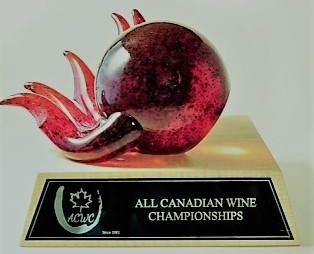
The All Canadian Wine Championships

With COVID seeming to be lessening its grip, life as we used to know it is once again beginning to slowly return. Part of that are the various wine competitions.  The 40th edition of the All Canadian Wine Championships was held from July 6th to 8th.  In total, 208 wineries submitted 1,327 wines to assess.

Assessments and awards were based as follows:

Trophies : “All Canadian Best Wines of the Year”

All wines are judged using the 100-point system. Trophies are awarded for each of the following categories:

  • Best Red table wine
  • Best White table wine
  • Best Dessert wine
  • Best Sparkling wine
  • Best Fruit wine

The award for Best Red Wine of the Year went to BC’s Dark Horse Vineyard for their 2016 Red Meritage ($60.00).

The Best White Wine of the Year was the 2020 Gewürztraminer ($20.69) from BC’s Wild Goose Vineyards and Winery.          

The Best Dessert Wine of the Year went to Ontario’s Peller Estates Winery for their 2019 Andrew Peller Signature Series Riesling Icewine ($89.85).

BC’s Forbidden Fruit Winery won the Best Fruit Wine of the Year award for their 2020 Flaunt Organic Sparkling Plum ($22.00).

Finally the Best Sparkling Wine of the Year award went to BC’s Gray Monk Estate Winery for their 2018 Odyssey Rose Brut ($29.90).

Double Gold medals / Best of Category were awarded to the single highest rated wine (using an average of the aggregate judges’ scores) from each of the categories. These wines were all submitted for the Trophy round.

Medals of Merit: Gold, Silver, Bronze were awarded in the following manner:

  • Gold awards were awarded to those wines scoring in the top 10 percentile.
  • Silver awards of merit were issued to those wines scoring in the second 10 percentile.
  • Bronze awards of merit were given to those wines scoring in the third 10 percentile.

The overall results by province were as follows:

  • BC          4 Trophies / 29 Double Gold / 81 Gold / 75 Silver / 88 Bronze (759 entries)
  • ON         2 Trophies / 22 Double Gold / 38 Gold / 50 Silver / 40 Bronze  (465 entries)
  • QC          1 Double Gold / 7 Gold / 6 Silver / 4 Bronze (57 entries)
  • NS          3 Gold / 2 Bronze  ( 14 entries)
  • NB          1 Double Gold / 1 Gold / 5 Bronze (23 entries)
  • PEI         1 Double Gold / 3 Silver /  1 Bronze   (10 entries)
  • AB          3 Double Gold / 2 Gold / 1 Silver (11 entries)
  • MB          1 Double Gold (4 entries)
  • SK           1 Double Gold / 1 Gold / 3 Silver / 3 Bronze (18 entries)
  • Yukon     0 (4 entries)

All of the results are available at https://allcanadianwinechampionships.com/acwc-2021-results/

With the All Canadian Wine Awards completed, I look forward to the National Wine Awards that were deferred until the fall.

Sláinte mhaith

Virtual Wine Events

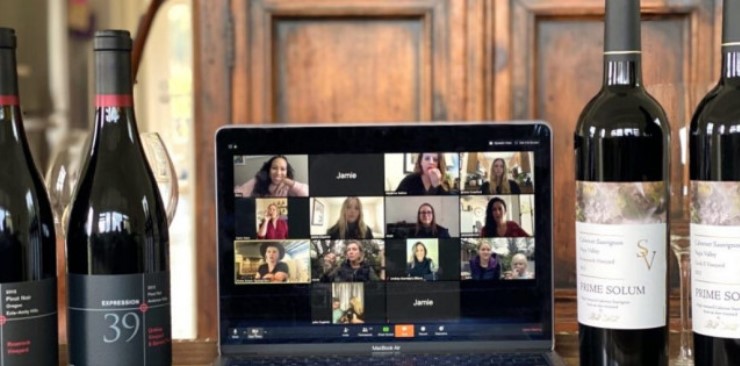
The times are changing in part due to changes in technology and in part due to COVID-19.   A lot of gatherings and meetings will work well using Zoom, Google Meets or another online meeting facility.  The wine industry has been forced to find alternatives to hosting in-person events and wine tastings and even award ceremonies have to now follow this practice.

In order to participate in a wine tasting each attendee should be prepared to do some work ahead of the virtual gathering.  Attendees will need to obtain the list of wines to be sampled and then purchase a bottle of each of the wines.  Obtaining these wines may prove to be a challenge given that they may not be readily available from the local wine store.  Some may need to be obtained directly from the winery and if the winery is not located in the same vicinity as you, you will have to order the wines a couple of weeks ahead of the event.

In attending a tasting without having access to the wines to sample, you have to solely rely on the host’s verbal description. I think the value of the information would be lost without the opportunity to sample the wine yourself. I think it would be about as enticing as watching paint dry.

But if you have the wines being tasted, given that tastings involve only a small sampling of each wine, you will be left with a significant portion of each of the wines that you will then need to try and preserve until they can be consumed.

The same challenges are faced by anyone attending a wine award ceremony who wants to taste any of the wines eligible for or that received a reward.

Making the most of the current environment, there are now companies and wineries that will sell you a wine tasting kit.  These kits consist of a bottle of each wine to be tasted, reviewer’s notes on each wine, and a link to a video of the expert conducting the actual wine tasting.  This gives you the opportunity to invite your friends over (assuming there isn’t a lockdown) for a private wine tasting event hosted by a wine expert.   In some cases you can arrange for a “live” tasting using a remote meeting site like Zoom.

Without a doubt some events and activities are best attended in person rather than virtually. However given these strange times that we live in, virtual events are probably better than no events.

Sláinte mhaith

Oh What a Year!

This is traditionally the time when people reflect back over the year that was and reminisce over the happy and sad times of the past twelve months.  Unfortunately this year there wasn’t a lot of opportunity for happy times.  The main and some would say, only event of 2020 was COVID-19. It has disrupted life as we knew it.

With the production of this last year’s wine supply still in progress, the situation heavily impacts the existing product stocks of the winemakers looking to sell the wine reserves of 2018. However, due to the measures applied in the spring by most countries, the biggest wine producing countries – Italy, France, Spain and the US – have seen sales decline steadily.

Mid-spring to early autumn is when wineries here in Canada do most of their business. However, with wine tours, tastings and exploration being limited or completely on hold for the foreseeable future, the number of visitors to wineries was drastically reduced along with associated wine sales. The sale of other merchandise, such as food and clothing, was also negatively impacted.  Some wineries closed entirely because of the virus.

The Demand for Champagne

Sales of champagne, one of France’s most iconic products, have tumbled over the past year with industry representatives estimating that some 100 million bottles will be left unsold.   Lower demand due to the pandemic has led to an exceptionally low harvest quota in France’s Champagne region, with pickers in the vineyards harvesting one-fifth less than last year.

With many cafes, hotels and restaurants being closed at various times, and weddings and music festivals being called off, people consumed less champagne.  However, lower demand will not necessarily lead to lower prices.

Australian Wild Fires

Wild fires wreaked havoc from late 2019 until the early part of this year in Australia.  The Adelaide Hills wine region was the hardest hit, destroying 30% of its production.  The Cudlee Creek fire affected more than 60 growers and producers in the region.

The financial blow to the Adelaide Hills wine industry was significant. The region lost $20 million worth of wine, which translates to 794,000 cases.

The Wild Fires on the U.S.  West Coast

Wineries were already facing great financial strains due to the reduction in restaurant traffic and smaller crowds visiting vineyards for tastings.  Many tasting rooms were closed due to fire and smoke risks, while many grapes have been damaged or totally ruined.

Oregon, Washington and California together produce about 90% of all U.S. wine. The true impact on the $70 billion industry will not be known for months as crop damage can vary greatly from region to region.  Smoke blanketed much of the U.S. West as fires charred in excess of 2 million hectares.

Canadian Wine Awards

The judging of the 20th Anniversary Edition of the National Wine Awards of Canada has been postponed indefinitely due to the COVID-19 pandemic. The sessions were to be held the week of June 24 to 28 in Penticton, British Columbia. The hope is that the competition can resume in 2021.

The 2020 COVID-19 version of the Ontario Wine awards finally took place on August 28th.  A small group gathered at Kew Vineyard, in Beamsville, Ontario as the awards were presented in front of a small, socially-distanced gathering.  Unlike previous years there were no judges and no formal tastings for the four main awards.  Instead the Awards Committee reached out to judges who had participated in the last three years of the competition and asked them to nominate their top three white, red and sparkling wines they had tasted during the year. Based on those responses the top scoring wines were tabulated.

Onward and Upward

Now that the COVID-19 vaccine is starting to be administered hopefully everyone who wants it will be able to have it within next few months.  Then we can begin the journey toward a world that is better than what we are experiencing today.  In the meantime stay safe and though it may be much quieter than usual, have the happiest New Year that these times will permit.

Sláinte mhaith

Toasting

I have been asked on more than one occasion the meaning of the phrase Sláinte mhaith which appears at the end of each of my posts.  These are the words of an Irish toast which are pronounced ‘slawncha va’.  It means ‘good health’.  It is often shortened to just Sláinte.  If you have ever experienced a true Irish pub, in all likelihood you will have witnessed the raising of a glass and Sláinte given as a toast.

A toast is a ritual in which a drink is taken as an expression of honour or goodwill.  As legend has it the custom of touching glasses came from concerns about poisoning.  By one account, clinking glasses together would cause each drink to spill over into the other glasses.  Another theory is that the word toast became associated with the 17th century custom of flavouring drinks with spiced toast.

The International Handbook on Alcohol and Culture says toasting “is probably a secular vestige of ancient sacrificial libations in which a sacred liquid was offered to the gods: blood or wine in exchange for a wish, a prayer summarized in the words ‘long life!’ or ‘to your health!'”

Toasting has deep roots in Western culture, with some anthropologists suggesting that it goes back to ancient religious rites. While a toast is generally positive — good health and good luck are common — the act carries certain negative superstitions in at least three European countries. Making eye contact while toasting is considered polite in many countries and the penalties for failing to do so can be severe. French and German superstition suggests that you’ll suffer through seven years of ‘bad sex’ if you don’t maintain eye contact during a toast. Many Spanish believe that the same curse will befall those who toast with glasses of water.  Toasting with an empty glass may be viewed by some as acceptable behavior for the non-drinker though pretending to drink from an empty glass seems ridiculous.  I am not sure how the people who think toasting with water is not acceptable feel about toasting with an empty glass.  However, in many countries toasting with an empty glass is preferable to refusing a toast altogether.

Irrelevant of which theory is true, toasting traditionally involves alcoholic beverages. Sparkling wine, often Champagne, is considered festive and is widely associated with New Year’s Eve and other celebrations. Many people nowadays substitute sparkling fruit juice (often packaged in champagne-style bottles).

The words used during a toast vary from country to country, though the meaning is very similar.  The Scots of the western half of Scotland, in Scottish Gaelic, say ‘dheagh shlàinte, (pronounced like ‘do slawncha’).  This is often responded  with ‘slàinte agad-sa”, which literally means “health at yourself”.  Scots, like the English, and now Canadians and Americans, often now use the word ‘cheers’.

In Hebrew, it is’ L’chayim’; in French it is ‘À votre santé’; the Germans often say ‘Prost’ (rhymes with toast); in Spanish it is ‘Salud’; in Portuguese it is ‘Saude’; and the Italians say ‘Salute’.

So if a toast is offered up this year at a holiday gathering (no matter how small that gathering may be) now you have some insight as to how the tradition may have began.

Sláinte mhaith

Shopping for Wine Online

During these difficult times, and trying to minimize my contact with crowds, I have become a fan of online shopping through the LCBO.  My overall results have been favourable and my selections are not limited to the products available at any particular store.

My closest liquor store is located in a small town about 10 km. from where I live.  For obvious reasons the selection of items available there is rather limited.  However, online shopping provides me with a full range of products that I can order and then pick up at my local store. The online price is the same as the in store price and all orders of $50 or more are shipped free of charge.

Online shopping provides other opportunities as well.  Many Canadian wineries offer websites with online ordering capability. If you have a favourite wine that you can’t purchase locally, you may find that it is available direct from the winery via their website.  There is no price difference whether you pick the wine up at the winery or order it from their website.  Many wineries offer free shipping with a minimum size order.

There are several online companies that also make both Canadian and international wines available online.  These companies work on a different premise than wine clubs (see my post from October 3, 2020).  These companies simply provide a wide selection of wines for sale at varying prices.  In order to get free shipping you may have to buy up to 12 bottles, though they don’t need to be all of the same type of wine.

Although it isn’t common, bottles may arrive broken. However, if it does occur, the provider will replace or refund any portion of your order that was damaged. An extra advantage of dealing with the LCBO is that if goods were damaged on arrival at the store they are replaced before you pick up your order.  No fuss no muss.

Sláinte mhaith

Grapes and Wild Fires

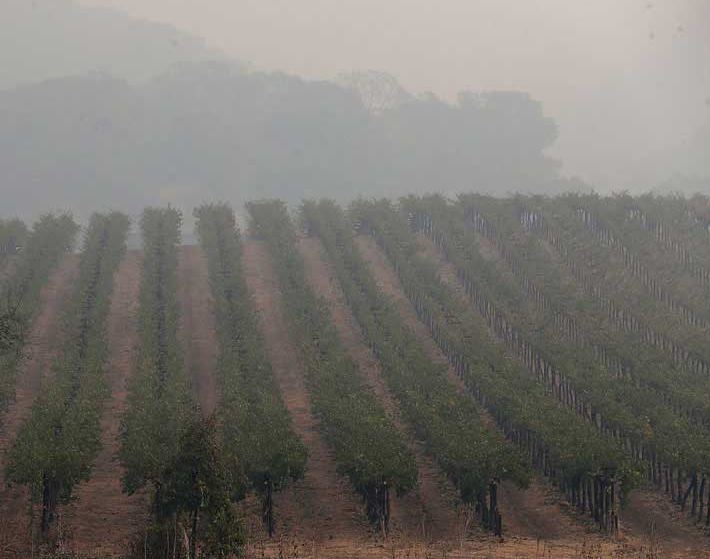
Smoke has caused a lot of damage to the 2020 grape harvest in California, Oregon and Washington during the past few weeks.  In some cases production has been reduced by over 80.  The smoke can be absorbed right into the grapes’ flesh giving them the flavour of a wet ash tray.

Atmospheric smoke has blocked the sunlight that is essential for the grapes to properly ripen. Poor air quality is slowing harvesting as fieldwork hours are being limited and particle-filtering masks are in short supply due to the coronavirus pandemic.

Wineries were already facing great financial strains due to the reduction in restaurant traffic and smaller crowds visiting vineyards for tastings.  Many tasting rooms remain closed due to fire and smoke risks, while grapes may be damaged or totally ruined.

Oregon, Washington and California together produce about 90% of all U.S. wine. The true impact on the $70 billion industry will not be known for months as crop damage can vary greatly.

Smoke has blanketed much of the U.S. West as fires have charred some 2 million hectares.

Laboratories that test grapes for smoke contamination are being overwhelmed with some taking up to a month to return results, instead of the normal week. Vineyards need this data to determine whether or not to harvest their grapes.

Winemakers and scientists are still learning how smoke can affect wine grapes and how the effects can be mitigated.  Australia has been at the forefront of the research, but studies at American universities have ramped up over the past five years.

The Australian Wine Institute has come up with a few practical ways to manage smoke-exposed grapes.  These include:

  • Hand harvest fruit to minimize breaking or rupturing of skins
  • Exclude leaf material to limit smoke-related characteristics
  • Maintain integrity of harvest fruit, avoiding maceration and skin contact
  • Keep fruit cool to extract less smoke-related compounds
  • Whole bunch press to reduce extraction of smoke-derived compounds

If corrections cannot be made, smoke taint will add two distinct compounds to wine: guaiacol (commonly called Creosote) and 4-methyl guaiacol.

White wines are often more susceptible to smoke than reds. Low levels of smoke can mask the fruit and give a dirty finishing flavour and higher levels negatively affect the smell and taste ashy.   Washing grapes with water might help get ash off the grapes but it does not reduce smoke compounds in the fruit.

It is too soon to judge how the wildfires will impact 2020 vintages but harvested grape supplies are expected to be much smaller.  With smaller harvests winemakers are expected to buy bulk wine from the 2019 season for blending with what is available from this year.

The reduced supply will most likely increase prices making U.S. wines less competitive in the international wine market for the next couple of years.

Sláinte mhaith

The 2020 Ontario Wine Awards

The 26th edition of the Ontario Wine Awards was scheduled to be held back on June 4th.  However, due to COVID-19 the event was postponed.  For the previous 25 years the entries were assessed blind by panels of accredited wine judges from the wine writing and teaching community. The criteria for judging the entries not only required an appreciation for wine, but also necessitated knowledge and expertise of wines from the Ontario region. Included amongst the winning categories; Ontario Red, White and Sparkling Wines of the Year, Ontario Winemaker of the Year, and the Ontario Journalism Award, which recognizes the best article published on the Ontario wine industry.

The award winners left to right in the order presented below.

The 2020 COVID-19 version of the awards finally took place on August 28th A small group gathered at Kew Vineyard, at Beamsville, Ontario, as the awards were presented in front of a small, socially-distanced gathering.  Unlike previous years there were no judges and no formal tastings for the four main awards.  Instead the Awards Committee reached out to judges who had participated in the last three years of the competition and asked them to nominate their top three white, red and sparkling wines they had tasted during the year. Based on those responses the top scoring wines were tabulated.

In addition, the judges were asked to vote on whom they considered should be honoured with the title “Winemaker of the Year”.

The Ontario Wine Awards results for 2020 are:

The Allen Red Wine of the Year Award was awarded to Prince Edward County’s Rosehall Run for its 2018 ‘JCR Pinot Noir Rosehall Vineyard’. I was lucky to obtain a few bottles on my recent trip to the County and heartily concur.

The Quench Magazine White Wine of the Year Award went to the 2017 ‘Charles Baker Riesling Picone Vineyard’ from Niagara.

The Canadian Food and Wine Institute at Niagara College Sparkling Wine of the Year Award was awarded to the 2014 ‘Henry of Pelham Cuvée Catharine Carte Blanche Blanc de Blanc’ from Niagara.

Finally, the Quench Magazine Winemaker of the Year Award went to Philip Dowell of Niagara’s Angels Gate Estate Winery.

Looking forward to 2021, we can only hope that life will return to a more semblance of normal.  However, at this point it is anyone’s guess.

Sláinte mhaith

The Ins and Outs of Wine Auctions

There are numerous reasons why individuals wish to buy or sell wine on the secondary market.  There are those who purchase certain wines or vintages purely as an educated, but speculative investment, looking to resell once the particular wine has appreciated in value, assuming it actually does increase.

The reverse can also be true where a purchaser can seek out good wines that, for whatever reason, failed to maintain their initial value, and thus can later be purchased at a more reasonable cost.

It’s also where you can find back-vintages of excellent wines that aren’t known to draw big collectors at live auctions.

Auctions also provide buyers the opportunity to purchase iconic wines that were either not readily available to the general public at the time of the initial release or may not have been affordable to the buyer in the past.

While many collectors have embraced online auctions for the convenience, it’s become a place for wine consumers wanting to dabble in the auction world to do so at a much lower cost of entry. While the financial point of entry for online auctions may be lower, the quality of the wines is good.

Wine Auctions in Ontario

In Ontario, Waddington’s is the sole company permitted to sell fine wines and spirits by auction, under the authority of the LCBO.  Auctions arranged through Waddington’s can either be live or online.

Registration for a live auction is free and can be completed at their office during the preview for an auction or on the day of the auction.  The process for registering and bidding is pretty much the same as for any other type of live auction.

Registration for an online auction is completed using Waddington’s web site.  The good news is you only need to register once to participate in all of their online auctions.

Once registered, you can place online bids anytime up to the noted end time for the desired lot.

If a bid is received in the final five minutes of the auction, the countdown clock is reset an additional five minutes until no further bids are received.

You can also leave ‘absentee’ bids by entering the maximum amount you would like to bid up to; the software will bid on your behalf up to that amount.

Following payment you can either pick up your purchased auction items or arrange for shipping. Items purchased and not picked up after 10 days following the auction may be subject to storage fees on a per lot basis at $15/week, unless Waddington’s is otherwise notified at time of payment.

Waddington’s does not undertake packing or shipping. The purchaser must arrange for the services of an independent shipper and is responsible for all shipping and insurance expenses and any necessary export permits that may apply.

Be Prepared

Explore the online catalogue of any auction you are interested in. Items are researched by Waddington’s specialists and catalogued with an image, description and value estimation to help understand each item.

Don’t hesitate to email auctioneers with questions about lots before bidding.  Every auction house has wine specialists on staff that should be able to answer any questions about lots that you are interested in.   Things that would be helpful to know include:

  • The ownership history (the provenance) of the wine. The provenance includes information about how the wine was acquired by the current owner and under what circumstances. Provenance is particularly important for establishing the estimated value of very old, rare or valuable wines.
  • The manner in which the wine has been stored, such as
    • Temperature controlled unit
    • Passive cellar, which is a room in a residence with no means of maintaining a permanent temperature.
    • Underground/subterranean cellar, which is an underground cellar that can also be passive or temperature controlled. A passive underground storage area is always preferable to an above ground passive residential cellar. Underground storage is almost always a cooler environment, less susceptible to damaging light, and generally very still.
    • Professional storage facility which provides lockers in temperature-controlled buildings that can be rented by wine collectors.

Auctions provide the opportunity to look for vintages that may not have initially been well received.  Some wines receive less than favourable reviews at the time they are released but time and experience prove those reviews to be wrong with those wines drinking well now.

Bidding on mixed lots is not recommended as you can’t be certain of what you are getting.  Selecting single bottles or even small verticals (several consecutive vintages of the same wine) is the recommended way to go. Mixed lots are a great way for auction houses to move along their cellar’s random one-offs.

Waddington’s charges a buyer’s premium of 20% on the hammer price. Buyer’s premium and applicable Canadian taxes are added to the final bid amount.

Conditions of Sale

In order to purchase alcoholic beverages through an online or live auction you must of course be able to prove you are nineteen years of age or older.

All lots are sold “as is”. Any description issued by the auctioneer of an article to be sold is subject to variation to be posted or announced verbally in the auction room prior to the time of sale.  Descriptions provided by the auction house are only statements of opinion.  No opportunity of inspection is offered prior to the time of sale. No sale will be set aside on account of lack of correspondence of the article with its description or its photo, if any. Some lots are of an age and/or nature which preclude their being in pristine condition and some catalogue descriptions make reference to damage and/or restoration. The lack of such a reference does not imply that a lot is free from defects nor does any reference to certain defects imply the absence of others.  In other words, the auction house cannot speak for how well the wine has been maintained while in the possession of the current owner or possible previous owner(s).  

The potential saving grace is that the buyer, prior to removal of a lot, may make arrangements satisfactory to the auctioneer, for the inspection of the purchase by a fully qualified person acceptable to the auctioneer in order to determine the genuineness or authenticity of the lot. This inspection must be completed within a period of 14 days following the sale. The results must be presented to the auctioneer to the effect that the lot is not genuine or authentic, accompanied by a written request from the buyer to rescind the sale.  The sale price will then be refunded to the buyer.

Unless exempted by law, the buyer is required to pay HST on the total purchase price including the buyer’s premium. This is important to keep in mind as it can significantly increase the total cost of your purchase.

Each lot may be subject to an unpublished reserve which may be changed at any time by agreement between the auctioneer and the consignor.

In Closing

Auctions can be exciting, challenging, frustrating and rewarding.  Your own experience will in part be a factor of your preparedness for the event. Do your homework; predetermine the maximum you are willing to pay for the item you are interested in, and be prepared to stand down if the bidding surpasses that amount. It is not a competition. “Winners” have been known to have buyer’s remorse if they have gotten carried away in the heat of the moment.

Sláinte mhaith