People sometimes shy away from French wine because they are unable to determine what type of wine they are selecting. No where will you see the varietal of grape identified. This is because France identifies its wines using the Appellation System, a complex system of laws that define each wine region and its boundaries and imposes strict rules around winemaking practices.
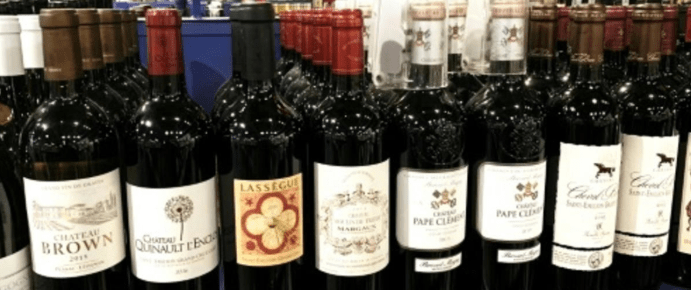
Most appellations take the form of place names, such as Champagne or Bordeaux. What this means is that the grapes grown in each region are consistent with all of the wine producers within that region. This becomes the key to understanding what grapes are contained within a particular French wine.
Here is a brief explanation of what grapes are grown in each of the appellations. Hopefully this will help you crack the code to identify the varietals found in French wines.
Alsace
Alsace is the only French wine region to grow significant quantities of Riesling and Gewurztraminer grapes, as well as Pinot Gris.
Alsace Grand Cru wines are general only allowed to be made from these three varieties but may also contain some Muscat.
Chasselas, Pinot Blanc and Auxerrois are also grown although these three varietals tend to be used only in blends.
There are some red wines produced in the region as well, mainly from Pinot Noir. Alsace Pinot Noirs are typically lighter-bodied and more rustic than the majority of Pinot Noir wines produced in France.
Bordeaux
Bordeaux is produced in the southwest of France. The majority of Bordeaux wines are the dry, medium- and full-bodied red Bordeaux Blends. There are some high-quality white wines as well, both dry styles and the sweet, botrytized varieties. Botrytis is a type of fungus that generates sugar and sweetness in the grapes.
Most Bordeaux reds are made from a blend of Merlot and Cabernet Sauvignon. Merlot is the most common red wine grape in Bordeaux, followed by Cabernet Sauvignon and then Cabernet Franc. Petit Verdot, Malbec and Carmenère are also permitted, but only make up around two percent of the red grape total.
Bordeaux’s white wines are generally blends of Semillon, Sauvignon Blanc and Muscadelle. Sauvignon Gris the only other white variety that is permitted.
Burgundy
The two key grape varieties of Burgundy are Pinot Noir and Chardonnay. Gamay and Aligote are also grown throughout the region, producing more rustic styles of wine. Gamay is used in the red and rosé wines.
Beaujolais
Beaujolais is famous for its vibrant, fruity red wines made from Gamay.
Pinot Noir is used in small quantities in red and rosé wines, but is being phased out. Although best known for its red wines, the region also produces white Beaujolais Blanc, from Chardonnay and Aligote.
Champagne
Champagne is the name of the world’s most famous sparkling wine. While it has been used to refer to sparkling wines from all over the world, Champagne is a legally controlled and restricted name.
Pinot Noir, Pinot Meunier and Chardonnay are the primary grape varieties used to make Champagne.
The key Champagne styles differ in their color, sweetness, base grape varieties, and whether they are the product of a single vintage or several (referred to as Non-Vintage). The whites may be either Blanc de Noirs (made from black-skinned grapes), Blanc de Blancs (made from green-skinned grapes) or just plain Blanc (made from any combination of the permitted varieties). Pink Champagne Rosé is made either by adding red wine to a white blend or sometimes by fermenting the juice in contact with the skins. These types all come with varying degrees of sweetness.
Cognac
Cognac is the world’s most famous brandy. It is graded in three official tiers, which reflect how long the spirit spent in barrel. VS (Very Special) is the lowest tier and means the brandy has been stored for a minimum of two years in casks. VSOP (Very Special Old Pale) is the middle tier and denotes Cognac that has been aged for at least four years. XO is the finest grade and is reserved exclusively for those cuvees aged for six years or more.
Corsica
Corsica is an island in the Mediterranean Sea, located between the southeast coast of Provence and the west coast of Tuscany. Although it is closer to Italy, Corsica is governed by France. The island’s Italian origins are evident in its wines, which are made predominantly from the Italian classics Vermentino and Sangiovese.
Corsica’s wines have both a French and Italian influence. Pinot Noir, Grenache, Tempranillo and Barbarossa are all grown there alongside one another.
Grenache is a primary ingredient in many Corsican red wines and Syrah, Mourvedre, Cinsaut and Carignan all play a variety of supporting roles.
The only white varietal is Vermentino/Rolle.
Coteaux du Lyonnais
These wines are of a lighter style similar to those produced in Beaujolais. The red wines are produced from Gamay grapes.
A small amount of white wine is made from Chardonnay and Aligoté. Occasionally some Pinot Blanc is added to the blend. These are traditionally dry, floral styles, some of which are matured in oak barrels for up to a year to produce a slightly more structured, weighty version.
Jura
Jura is a small wine region in eastern France.
The five main grape varieties used in the region are Poulsard, a red grape which accounts for about one-fifth of the region’s plantings; Trousseau, the other local red variety, covers only the warmest 5% of Jura’s vineyards; White Savagnin, which is responsible for the idiosyncratic vins jaunes (‘yellow wines’); Pinot Noir; and Chardonnay.
Dry white wines are also made in Jura, increasingly from Chardonnay as are dry red wines produced from Pinot Noir.
Loire
The Loire Valley is a key wine region in western France.
White wines are the Loire Valley’s best wines, and account for the vast majority of production. The key white-wine grape varieties used to make Loire Valley whites are Sauvignon Blanc, Chenin Blanc, Melon de Bourgogne and, more popular than traditional, Chardonnay.
Loire reds are of increasingly high quality. The number one red-wine variety is Cabernet Franc. Lighter-bodied red wines are made from Pinot Noir, Malbec (known here as Côt) and Gamay.
Moselle
Moselle is an appellation covering white, red and rosé wines. While Auxerrois Blanc, Muller-Thurgau and Pinot Gris are the principal varieties set out in the appellation law, Gewurztraminer, Riesling and Pinot Blanc are permitted in the white wines in limited amounts.
The reds must be made entirely of Pinot Noir, but Moselle rosés may have a proportion of Gamay.
Provence
Provence is a wine region in the far southeastern corner of France, best known for its rosé wines.
Traditional varieties such as Carignan, Barbaroux (Sardinia’s Barbarossa) and Calitor are being replaced by more commercially viable grapes like Grenache, Syrah and Cabernet Sauvignon.
The more successful local varieties Mourvèdre, Tibouren and Vermentino are incorporated in Provence’s red, rosé and white wines respectively.
Rhône
The Rhône Valley is a key wine-producing region in the southeast of France. The smaller, more quality-driven northern section focuses on Syrah for red wines and Viognier, Marsanne and Roussanne for whites. The larger south region contains a much longer list of varieties; the most notable of these are the red Grenache Syrah and Mourvedre, which are combined to produce the ‘GSM’ blend.
Savoie
Savoie is a wine region in eastern France. Around three-quarters of the region’s wines are white. Jacquère is the most widely planted white grape variety. Altesse, known traditionally here as Roussette, is used to produce some of Savoie’s finer wines.
As in many other areas of France, Chardonnay is increasingly being planted in Savoie. It is used in still and sparkling wines.
Although Savoie is dominated by white wines, it does have a standout red variety, Mondeuse. Gamay and Pinot Noir are also grown. These are lighter in style than their respective counterparts in Beaujolais and Burgundy.
Personally, I am most attracted to the reds of the Rhône. I find them to be very versatile, being both full bodied and flavourful while at the same time being smooth. They are suitable for pairing with a favourite meal or simply enjoyed on their own.
No matter what your likes or dislikes, don’t allow yourself to be intimidated by foreign wine labels. Be adventurous and go exploring.
Sláinte mhaith


