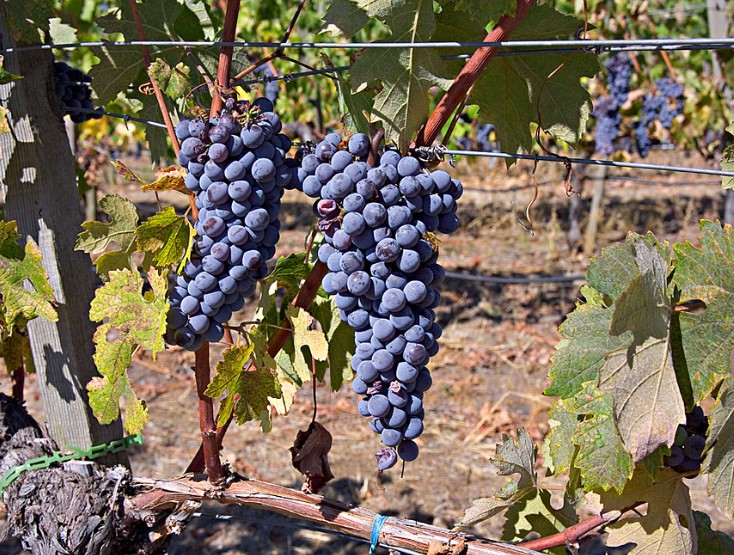
One of my favourite grapes, the Nebbiolo (pronounced “Nebby-oh-low”), is a mystery to many people as it is grown in just a few places in the world and is used to make only a couple of different wines. It originated in the Barolo and Barbaresco districts of the Piedmont region of northern Italy. There the grapes thrive on hillsides in the sun with clay or silt-based soil. For this reason, Nebbiolo is rarely grown outside of this region. Nebbiolo has only experienced limited success elsewhere in the world with there being just a few producers in Australia and Mexico’s Baja California.
Photo credit: strengthinperspective.com
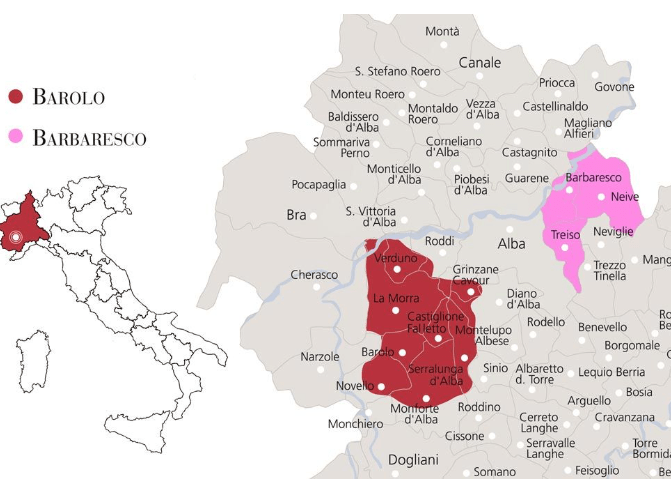
Barolo and Barbaresco wines are both made totally from Nebbiolo grapes. Both wines consist of many integral components; individual hillsides, single vineyards and the range of styles and expressions is significant. For example, the Nebbiolo-based wines in Barolo’s La Morra are very different from the ones grown in Serralunga d’Alba. In Barbaresco, the wines from Neive are distinct from the ones grown in Treiso.
There are also excellent Nebbiolo-based wines made in Roero in Piedmont. Nebbiolo is the heart of both Roero and Roero Riserva, as it is with Gattinara, a less-known Nebbiolo-based wine.
Barolo DOCG has two classifications, a “normale” Barolo which has 38 months of aging, which includes 18 months in wood, and Barolo Riserva DOCG with 62 months aging, also including 18 months in wood.
Average price: $35 t0 $100 CDN but more expensive options are available.
Barbaresco DOCG has two classifications, a “normale” Barbaresco with 26 months aging and Barbaresco Riserva DOCG with 50 months aging. Both wines must include 9 months of their aging in wood.
Average price: $40 to $100 CDN but you can spend more.
Roero Rosso DOCG must be 95% Nebbiolo and have 20 months of aging with at least 6 months in oak. The Riserva level tends to be even softer with 32 months of aging including 6 months in wood.
Average Price: $20 to $40 CDN but is not always available in Canadian liquor and wine stores.
The nose of Nebbiolo wines tend to suggest hints of floral and light red fruits that suggest that the wine will be lighter than it is. Nebbiolo’s flavour provides hints of leather and lots of tannins along with fruity flavours of cherry and raspberries.
Nebbiolo wines pair well with beef tenderloin, ribeye steak, prime rib, roast turkey, pork sausage, braised duck, braised pork shank or prosciutto. It also compliments cheeses such as parmigiano reggiano, feta, manchego, or pecorino. A wide assortment of vegetables go well, including roasted garlic, shallots, truffles, wild mushrooms, chestnuts, butternut squash, fried polenta, olives, capers, funghi pizza, wild rice and roasted fennel.
If you like Sangiovese or cool-climate Pinot Noir you should try the offerings of Barolo, Barbaresco or Roero Rosso wines.
Historically, the Romans are famous for their love of wine. It is ironic that the wine Roman Emperors consumed was nothing like the wonderfully delicious wines that the world enjoys today. During Roman times, what was referred to as wine was actually vinegar with honey and spices added, or sometimes garlic. Despite this, it was considered very good compared to other wines of the time.
Photo credit: disholicioussite.blog
Recently, three historic, yet little-known indigenous grape varieties, Bellone, Nero Buono and Cesanese are making a comeback in Italy’s ever changing wine market.
Bellone
Bellone is an ancient white grape variety that is referred to as ‘uva pantastica or pane d’uva’, meaning a ‘grape as good as bread’ or a ‘grape that goes well with bread’, depending on the source. The white grape often brings bright, fruity characteristics of stone fruit, melon and citrus fruits. Some bottles also have flavours of herbs, tropical fruits and toast. It still grows on the original roots of ancient times.
Casale del Giglio wine estate, located 50 kilometres south of Rome, has spent years reintroducing the native grapes of Lazio. In 2022, its work was recognized by Gambero Rosso magazine when the winery’s Anthium Bellone, which is produced using ungrafted vines, was awarded the coveted Italian award for wine excellence, Tre Bicchieri.
Nero Buono
The black or red grape variety, Nero Buono, almost exclusively grows in the volcanic soil of Monte Lepini. Insects do not thrive in its cool, windy climate, thus alleviating one risk to this finicky grape. The deeply coloured wine brings flavours of dark-skinned fruits, rhubarb and black pepper.
Nero Buono is difficult to grow so there are no clones. It is very wild and produces many leaves which must be thinned out several times per year. The berries are tight and close together making the vines susceptible to disease.
Producers are committed to supporting native grape production, even when there is minimal demand for the grapes. Winemaker Marco Carpineti now makes wine only with sustainably grown fruit that is native to the area. Today Carpineti is one of the best-known winemakers of Lazio. He devotes 25 percent of his production to Nero Buono and Bellone-based sparkling wine made in the traditional method.
Cesanese
Originally called Latium, the Lazio region of Italy borders Tuscany to the north, Abruzzo to the east, Umbria to the northeast and Campania to the south. Rome is in this region, making it the primary winemaking region of the Roman Empire.
Cesanese is the signature red wine of Lazio. Cesanese refers to one of two sub-varieties: Cesanese Comune or Cesanese di Affile. Both are used to make high-quality wines, which were highly prized in ancient times. There are three Cesanese appellations which include Cesanese del Piglio DOCG, Cesanese di Olevano Romano DOC and Cesanese di Affile DOC. All are within a 50-kilometer vicinity.
Cesanese is a red wine that contains flavours of dark-skinned berries, herbs, cedar and cooking spices. It’s ruby in colour and has high acidity and tannin, with the ability to age for a long time.
The Campania Region
Modern winemaking in Campania, a southern region referred to as ‘the ankle of the boot’, is closely identified with the Mastroberardino family, specialists in the wines of ancient times. The family’s involvement in winemaking can be traced back to the late 1500s. However, today, brothers Antonio and Walter, along with sons Piero and Carlo, run the winery which is 60 kilometres northeast of Naples.
The family’s extensive library of ancient viticulture books has enabled the Mastroberardinos to grow grapes that were popular centuries ago.
I recently enjoyed a bottle of Barolo with dinner one night followed by a Barbaresco the following night. Having the two bottles back-to-back reminded me how different the two wines are despite being made from the same Nebbiolo grapes and being produced in the Piedmont region of Italy.
Photo credit: pinterest.co.kr
Production of both Barolo and Barbaresco occur in the Langhe hills near the town of Alba. The Barbaresco zone is northeast and the Barolo zone is southeast of the town. In accordance with Italy’s governing body, the DOCG (denominazione di origine protetta or Denomination of Controlled Origin.) Barolo may only be produced in the comuni or townships of La Morra, Castiglione Falletto, Serralunga d’Alba, Barolo and Monforte d’Alba. Barbaresco wine is produced in Treiso, Neive, San Rocco Seno d’Elvio and Barbaresco.
There are differences in the two sub-regions. The Barolo area is located at a slightly higher altitude and has more south-facing vineyard exposures. This results in slower ripening grapes than those of the Barbaresco area to the north. The northern region it is warmer, due to the lower altitudes and warm sea winds. As a result, the grapes ripen faster.
The soils of the two area are different as well. The soils of Barbaresco are slightly sandier, less compact, and have more nutrients. As a result, the wines have a softer character. The firmer soils of Barolo create bolder, more tannic wines.
According to DOCG regulations, Barbaresco must be aged a minimum of 26 months, with at least 9 of those months in oak. Barbaresco Riserva must be aged a minimum of 50 months with at least 9 months in oak.
Barolo wines are aged a minimum of 38 months, with 18 months being in oak. Barolo Riserva needs to age 60 months with 18 months in oak. The longer aging requirements are necessary because of the more intense tannins that are in Barolo wines.
When it comes to flavour, Barolo is the bigger, bolder and more structured. It may have an array of aromas of plums, sour cherries, tobacco or truffles.
Barbaresco is generally a lighter wine with flavours of ripe fruit. Barbaresco is strongly influenced by the soil, vineyard location and the winemaker’s techniques.
As to which wine is better, that is up to you to decide. Personally, I like both equally. My preference is determined in the moment, whether it be a dinner pairing or simply my mood.
Pinot Gris and Pinot Grigio are made from the same grape and are obviously both white wines, but it can be argued that the similarity ends there.
Photo credit: vinomofo.com
Pinot Gris originates in France and is believed to be a mutation of Pinot Noir. It’s mainly grown in the Alsace region of France. The grape is thought to have reached Italy during the 1300s where the variety was called Pinot Grigio. The Italian version is primarily grown in the Alto Adige region of northwestern Italy.
Gris is the French word for gray and grigio is gray in Italian. The gray describes the grayish-purple skin of the grapes.
Both Pinot Gris and Pinot Grigio will appear on wines produced in countries other than France or Italy. There is an abundance of Pinot Gris grapes produced in countries such as Canada, the United States, Australia and New Zealand.
So what determines why some are labelled Pinot Gris while others are referred to as Pinot Grigio? Winemakers have the choice of selecting which name they use. There is no hard and fast rule, however most will base the name on the style of the wine they produce. You can usually tell the style by the colour. Pinot Gris style wines are typically darker and more yellow in colour, whereas Pinot Grigio wines are very light yellow, almost clear.
Pinot Gris wines are rich, full-bodied and accompanied by higher alcohol content. Made with fully ripe grapes that are occasionally barrel fermented, Pinot Gris often has extra sweetness and a creamy feel. The darker grape skins tend to produce a golden colour.
By contrast, Pinot Grigio is harvested early, resulting in a light-bodied, crisper wine with a lower level of alcohol. The aromas are primarily of fresh fruit and florals.
Pinot Gris embodies complex flavours such as cinnamon and lemon, with a tingly aftertaste. Late harvest French-style Pinot Gris is a rather sweet wine. This is due to noble rot, which creates honeylike undertones.
Pinot Grigio tends to be a lighter, crisp, dry style of wine with flavours of citrus and green apple, pear, lime and lemon, with a refreshing spark of acidity. Some Italian-style Grigio wines also have a floral aroma of honeysuckle.
The Pinot Gris style pairs well with roast pork, creamy pasta, and dense cheeses like Comté or Gruyère, seared scallops, or creamy mushroom risotto. Off-dry versions go well with spicy Asian or Indian dishes like chicken tikka masala or Thai green curry.
The lighter Pinot Grigio is a great apéritif but, also goes well with grilled shrimp, salads or fruit platters and sushi.
Now it is up to you to decide whether you prefer Pinot Gris or Pinot Grigio.
Back on March 18, 2023, I talked about France’s use of the term cru for identifying wines. In France the label is used to identify geographic terrain, specifically the soil type, climate and altitude where the grapes are grown. The term cru is also used in Germany and Italy but there are additional variations in how the name is applied, as well as its meaning.
In Germany, the Verband Deutscher Prädikatsweingüter (VDP), an association of elite German wine estates, has its own vineyard classification system, similar to the one used in Burgundy, France. In Germany the top tier is VDP.Grosse Lage (grand cru). This is followed by VDP.Erste Lage (premier cru), then by VDP.Ortswein (village) and finally VDP.Gutswein (regional).
In Italy, cru is used in several regions, but the application between regions is not exactly the same. Piedmont and Sicily are probably the best known regions using it. In Piedmont, Barolo and Barbaresco have mapped out their grand crus by geographic area, and those vineyard explanations are part of the bylaws of their Denominazione di Origine Controllata e Garantita (DOCGs).
Wine producers in Sicily’s Etna DOC are identifying crus that follow old lava flows and the soil and elevation changes along Mount Etna. At this point there is no formal classification system but it is anticipated to be ratified in the future.
So, if there is one thing that can be concluded regarding the use of the term cru in the labeling and description of wine, it’s that there is no consistency in its use within a country let alone between nations.
Italy is the largest wine-producing nation in the world and has 20 wine regions. Unlike other countries where grape growing is largely restricted to specific geographical areas, Italian wine is produced nearly everywhere from the top of the boot to the tip of the toe.
Most serious wine drinkers are well acquainted with Tuscany’s Chiantis and Piedmont’s Barolos and Barbarescos. However, with so many wine regions, each having its own unique terroir, and with over a thousand indigenous grapes, there are many great quality, lesser known Italian wines.
The next time you are at your favourite wine store, try a bottle from one of these lesser-known wine regions.
Abruzzo
This southern region is referred to as ‘the green lung of Italy’. Historically, the area was known for the bulk wine production of Montepulciano and Trebbiano, but wineries are working on changing that. There is a native light-skinned white grape varietal called Pecorino, that was once thought to be extinct, but is now gaining popularity thanks to its ability to produce ripe and refreshing wines.
Calabria
Calabria, which is situated at the toe of the boot, has been producing wine for more than 2,500 years. It’s best known for a regional style called Ciro Rosso, made from the Gaglioppo grape. It is a powerful, flavourful red with earthy notes and persistent fragrance.
Campania
Located in southern Italy, east of Naples, Campania is primarily home to the Aglianico varietal. It has very high acidity and tannins, similar to Piedmont’s Nebbiolo grape. Thus, Campania is sometimes referred to as the ‘Nebbiolo of the south’. It produces an earthy, hearty red wine that goes well with fatty meats and spicy sauces, and like its Piedmont counterpart, has tremendous aging potential.
Emilia-Romagna
Emilia-Romagna is one of the oldest wine-producing regions and spans most of central Italy. It’s known for Lambrusco, a sparkling red wine made from the grape of the same name. The wine ranges from dry to sweet, depending on the producer. It has high acidity and notes of berry.
Friuli
Friuli is situated in northeastern Italy between the Alps and the Adriatic Sea. The region was historically known for its white wines, many of which were created from the area’s Friulano grapes. However, it is now receiving international attention for its red wines, which are composed of international varietals such as Merlot.
Lake Garda
Lake Garda
Garda, the largest lake in Italy, is in the alpine foothills, midway between Venice and Milan. There are several small wine regions scattered along its shores, each with its own specialty. For example, the Bardolino region produces wines from Corvina, Molinara and Rondinella varietals, similar to those grapes of the Valpolicella region.
The Lugana region has developed a reputation for bold complex white wines from locally grown Trebbiano grapes.
Langhe
The Langhe region is found between the Barolo and Barbaresco appellations in the Piedmont region of northwestern Italy. Just like Barolo and Barbaresco, Langhe makes its most acclaimed wines from local Nebbiolo grapes.
Liguria
Liguria is in north-west Italy to the south of Piemonte. The eastern half of the region is home to the famous wine-producing Cinque Terre area, while the western side, Riveria Ligure di Ponente, is known for several highly distinctive wines. Rossese is unique, said to be unlike any other Italian red. It’s been likened to both Dolcetto and Valpolicella and yet boasts its own unique complex character.
Sardinia
Sardinia is the second largest island in the Mediterranean Sea. There are several underrated indigenous wine varietals found there such as Vermentino, Cannonau and Mirto. Wines made from the white grape Vermentino are crisp, acidic and fruity.
The island’s dominant red variety is Cannonau, which is very similar to France’s Chateauneuf-du-Pape. It has robust fruit and earthy flavours.
Sicily
Sicily is an island off the coast of the tip of Italy’s boot. Its finest red wines are made from Nero d’Avola grapes which grow in arid vineyards and produce rich wines with intense flavour. Similar to Syrah, it has the ability to produce a hearty, fruity and sometimes tannic wine. There are also reds that are produced from the Nerello Mascalese varietal that create elegant, expressive wines.
Taurasi
In western Italy, south of Umbria is the town of Taurasi. The local vineyards contain Aglianico, Nebbiolo and Sangiovese grapes which are Italy’s three most distinguished varieties.
Umbria
Umbria is located in the middle of central mainland Italy. It is bordered by Tuscany to the north and west, Marche to the west and Lazio to the south. According to some experts, Umbria is home to some of the most undervalued wines in Italy, ranging from crisp, dry Grechetto to bold, ruby red Sagrantino. Sangiovese grapes are also popular in Umbria.
During a recent 16-day springtime excursion to Italy as part of a tour group, I discovered passionate people, their food and their wine. I enjoyed homemade soups, pasta, olives and olive oil, mozzarella and parmigiana reggiano cheese, prosciutto, seafood, pizza, risotto, gelato, tiramisu, limoncello and a variety of amazing coffees.
Aperol Spritz
Italy is the home of the “Dolce Vita” sweet life of physical pleasure and self-indulgence. It has the subliminal charm of fine leathers, renaissance art, classical music and of course, great food and wine.
My wife Valerie and I had the wonderful opportunity to travel by bus through the regions of Veneto, Emilia-Romagna, Tuscany, Lazio and Campania where we enjoyed the regional cuisine and wines.
We began our excursion in Veneto, the home of the cities of Venice and Verona where the white sparkling wine Prosecco is enjoyed in numerous cocktails; most notably Aperol Spritz and Bellini. Aperol Spritz consists of 3 parts Prosecco, 2 parts Aperol and 1 part soda. It is then garnished with an orange slice before serving.
A classic Bellini consists of 1 1/2 oz. of peach puree, topped off with chilled Prosecco. It is served in a champagne glass and garnished with a peach slice. Both drinks are refreshing on a warm sunny day.
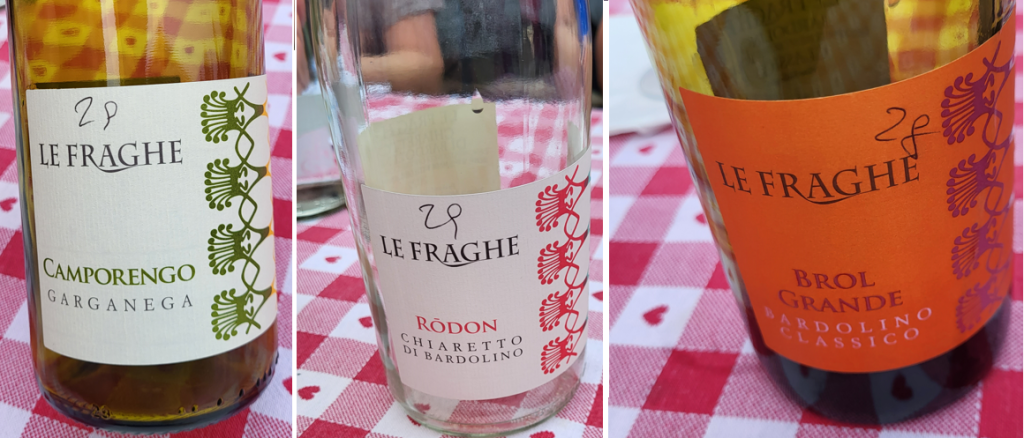
The first winery we visited was the Le Fraghe winery near Verona, where we sampled several of their wines. First was Camporengo Garganega, which is straw yellow in colour. It has a balanced bouquet of floral hints of acacia and mimosa with peach and apple. It has full body flavour.
The second wine, Ròdon Chiaretto di Bardolino, consists of red Corvina and Rondinella grapes. Cherry red with rich purple highlights, Ròdon has fragrant aromas. Notes of wild rose are the first to emerge, followed by nuances of wild strawberry and redcurrant. The wine is crisp and full bodied. It also had excellent tannins and acidity with a lengthy finish.
Brol Grande Bardolino Classico consists of Corvina and Rondinella grapes. Brol Grande is a purple-tinged ruby red of medium intensity. Its bouquet is the result of a blend of the fruity essences of sweet-sour cherry and blueberry, along with spicy nuances of cinnamon and black pepper. The one-year barrel time helps the development of the wine. It has a long and slightly salted finish.
All three wines contain Italy’s DOC designation. They are occasionally available in wine stores in Ontario and Quebec.
Veneto is also the home of Valpolicella and Amarone wines. Unfortunately we did not have the opportunity to visit one of these wineries.
The second winery we visited was the Fattoria Poggio Alloro winery, in San Gimignano, Tuscany. The name Poggio Alloro means Bay Leaf Hill, and it refers to the bay laurel bushes that grow on the property. The farm is a family business. At the present time it consists of one hundred hectares and it is completely organic. The grape varietals include Vernaccia di San Gimignano (a local grape that grows only in this town), Sangiovese (to produce the famous Chianti wine), Canaiolo, Colorino, Malvasia and Trebbiano, Chardonnay, Cabernet, and Merlot.
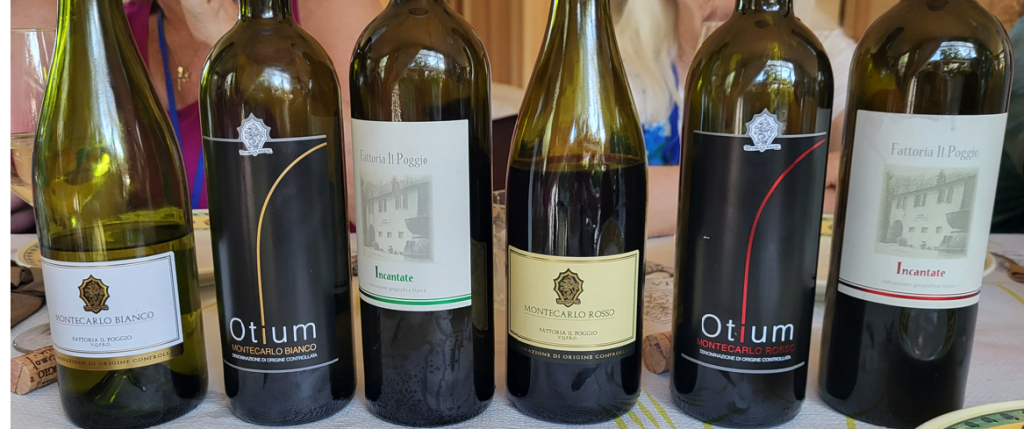
We sampled six wines while we were there, three white and three red. The white wines included Montecarlo Bianco, which is a blend of 50% Vermentino Toscano and the balance consisting of Vermentino, Roussanne, Sauvignon and Pinot Bianco. This combination produces a light, clear wine with a straw yellow colour. The aroma is delicate while the taste is dry, delicate and well-balanced. Montecarlo Bianco has the DOC designation.
The second white was Montecarlo Bianco Otium, which consists of 40% Trebbiano Toscano, 20% Vermentino, 20% Roussanne, 10% Sauvignon and 10% Pinot Bianco. This wine also contained the DOC designation.
The final white was Incantate Bianco IGT Toscana, which was made totally of Chardonnay grapes. The flavour is tropical and the wine is well balanced.
The first red wine presented was Montecarlo Rosso, which was a blend consisting of 60% Sangiovese, Syrah, Canaiolo, Malvasia and Merlot. It is a light red wine with an aroma that is intense, and the taste is delightfully smooth and dry. It contains the DOC designation.
The second red was Montecarlo Rosso Otium, a DOC designated wine consisting of 50% Sangiovese, 30% Syrah, 10% Cabernet and 10% Merlot. It was aged in oak barrels for four months.
The final wine was Incantate Rosso Toscana which was a bold and structured blend of 60% Merlot and 40% Syrah.
There are also 1,500 olive trees on the farm that are utilized to produce extra-virgin olive oil. The olives are completely hand picked each November and then cold pressed to guarantee the superior quality of this product.
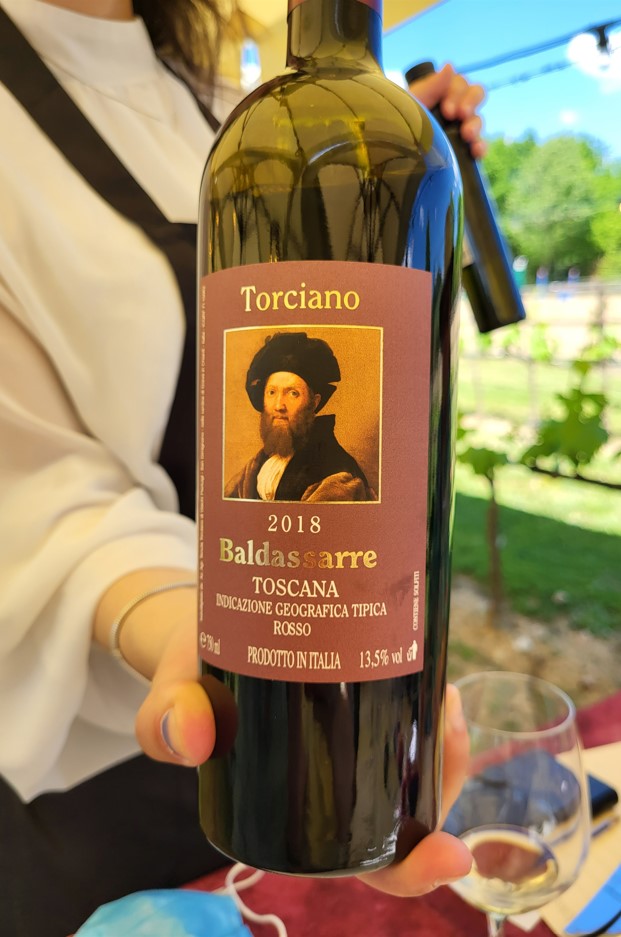
The final winery that we attended was the Tenuta Torciano winery, also in the San Gimignano area. The winery provided a wonderful lunch to accompany the wine tasting but unfortunately the staff did not display the labels of the wines or describe the wines in any detail. The wines are available to be ordered online but they did not say whether any could be purchased from wine stores within Canada.
One wine that we sampled was Tenuta Torciano Baldassarre “IGT Toscana”. This wine is a blend of Sangiovese Grosso, Cabernet and Merlot. It had a deep ruby red colour which transitions to garnet as it ages. It has an elegant bouquet. Hints of wood can be perceived amidst the typical herbaceous notes. Its flavour is dry, full and smooth.
Chianti Classico “Doge” DOCG red wine is produced with Sangiovese grapes, which are harvested by hand and then aged for 12 months.
Doge is characterized by an intense ruby red color. The nose contains hints of violet, then enriched with nuances of ripe red fruit, licorice and vanilla. The taste is full and harmonious, with soft tannins.
Tenuta Torciano Chianti Classico Riserva “Godenzio” is made from Sangiovese and Canaiolo grapes. It has a deep ruby red colour with a penetrating bouquet and full and smooth taste.
Overall, many wines produced in Italy are not intended for export but to be consumed as table wine within Italy itself. These wines are released and drank at a young age, have an abundance of fruit flavour and a slightly lower alcohol level. Examples of these wines include Dolcetto, Montepulciano, Nero d’Avola, Aglianico and Negroamaro.
Unfortunately, being part of a tour, we were at the mercy of the tour company as to which wineries we visited. On the other hand, we had the opportunity to travel to two cheese factories, a couple of olive farms, a Prosciutto farm and a limoncello producer where we enjoyed experiences we otherwise wouldn’t have.
The Sangiovese varietal is the most planted wine variety in Italy and has made the Tuscany region renowned for its Chianti wine. In Chianti, Sangiovese must account for 70% of the blend and in Chianti Classico the minimum rises to 80%. Other better-known Tuscan wine blends made mainly from Sangiovese grapes include Morellino di Scansano, which must contain 85% and Vino Nobile di Montepulciano, with 70% Sangiovese grapes.
Photo credit: blog.suvie.com
Beyond Tuscany, Sangiovese is widely planted in Lazio, Umbria, Marche (all of which border Tuscany) and Corsica. In Corsica the variety is known as Nielluccio or Niellucciu.
In addition to being a mainstay in many varieties of red wines, Sangiovese is often used for Vin Santo wines, which are a style of Italian dessert wine. Vin Santo is traditionally found in Tuscany.
Sangiovese can come in different stylistic expressions based on where it grows. There are many different mutations of the variety found throughout Italy, which results in very different tasting wines. From the delicate, floral strawberry aromas of Montefalco Rosso to the intensely dark and tannic wines of Brunello di Montalcino, Sangiovese wines have wide appeal.
Sangiovese is seldom found outside of Italy. Of the approximate 70,800 hectares of Sangiovese grown worldwide, almost 63,000 hectares are grown in Italy, followed by about 1,940 in Corsica, and 800 hectares in each of Argentina and the United States.
Sangiovese is savory and offers a wide range of tastes. Flavours can vary from very earthy and rustic, as in many Chianti Classico, to round and fruit-forward options. Regardless of where it is grown, it always contains hints of cherry and subtle notes of tomato.
The range of flavours include tart cherry, red plum, strawberry, roasted pepper, tomato, leather, tobacco, smoke, oregano and thyme.
Sangiovese is often lightly oaked in oak barrels. The tannin and acidity level is usually quite high with ageability ranging normally from 4 to 7 years, with some varieties from the Brunello di Montalcino region being aged from 10 to 18 years.
Sangiovese pairs with a wide range of foods because of its medium weighted body and savory character. Use Sangiovese wine as a congruent flavour with herbs and tomatoes. This technique will bring out more fruity flavors in the wine.
A Sangiovese with high tannins will pair well with rich roasted meat, cured sausages and hard cheeses. Vegetarian pairings include butter and olive oil; the richness in the fat helps cut through the wines’ tannins.
Sangiovese is a long-time personal favourite of mine, whether on its own or as the mainstay in a Chianti blend. If you have never tried Sangiovese, it is well worthwhile seeking it out in the Italian Tuscany section of your local wine store.
Along with Nebbiolo and Sangiovese, Aglianico (pronounced alli-yawn-nico ) is generally believed to be on of Italy’s three best wine grapes. It is a full-bodied red grape found in the Campania and Basilicata regions of southern Italy. Aglianico wines are known for savory flavours of leather, white pepper, black fruits, cured meat, cracked pepper, dried cranberry, mushroom broth, smoke, cocoa, nutmeg, cinnamon, cedar, tobacco, coffee and dried oregano.
Photo credit: drinkitalian.eu
Aglianico is full-bodied with high tannin and high acidity. It contains a medium to medium-plus amount of alcohol and can be aged ten to twenty years. The best Aglianico wines don’t start to come into their best until they are about ten years of age. The passage of time softens the wine’s firm tannic structure and acidity, revealing lush layers of sweetened fruit and dried floral aromas intermixed with dusty and spiced smoke, savoury flavours.
Given Aglianico’s rigid nature, some producers make it into a much fresher, easy-drinking style. Because the grape has so much tannin and acidity, it easily holds up to new oak aging and modern winemaking. The winemaking techniques are meant to quell Aglianico’s ferocity into a chocolatey, ripe, rich wine with moderately high alcohol and acidity. The modern style of Aglianico won’t age as long as the traditional method and has less of an expression of flavour. However, it is easier to drink at a much younger age.
The structure of Aglianico pairs well with high intensity foods. Aglianico goes well alongside rich meats with high fat content or vegetarian dishes with a rich umami note, such as black bean sauce, soy sauce, tempeh or dishes that welcome roasted mushrooms.
Meat selections that pair well with Aglianico include beef brisket, smoked pork, barbecue beef, seared prime rib, venison, beef stew, chili, rabbit stew or oxtail. Cheese pairings include Pecorino, Asiago, Cheddar, Monterey Jack and Provolone. Vegetable pairing include portobello mushrooms, roasted mushrooms, baked beans, black beans, lentils, crispy kale, purple potatoes, roasted purple cauliflower and arugula.
A few warm and dry regions outside of Italy are beginning to produce rich, chocolatey styles of Aglianico wine, in particular California and Riverina, Australia. The grapes ripen late, even in these warm climates, with the best examples offering aromas of chocolate and plum.
Aglianico wines are bound to become more available as growers all over the world look to varieties that grow well because of the rapidly changing climate conditions.
The ancient Italian wine region of Basilicata is undergoing a revival thanks to a new generation of wine makers. Although wine has been commercially produced there for over a century it is not well known, but that may be about to change.
Photo credit: winefolly.com
Basilicata is a mountainous region located in the south, stretching north from the arch of Italy’s boot. Its climate is dominated by the Alps of the north rather than the warmer climate of the south. The region’s wineries are scattered around the extinct Monte Vulture volcano.
The region is primarily a red grape growing region predominately consisting of:
42% Aglianico del Vulture
8% Sangiovese
5% Aglianico
4% Primitivo
3% Montepulciano
3% Italica
2% Malvasia
2% Trebbiano Giallo
1% each of
Malvasia Bianca di Basilicata
Barbera
Malvasia Nera di Brindisi
Moscato Giallo
Merlot
Cabernet Sauvignon
Basilicata has two major wines: Aglianico del Vulture Denominazione di Origine Controllata (DOC), established in 1971, and the Superiore Denominazione di Origine Controllata e Garantita (DOCG), which was established in 2010. In total there are only four DOC wines and one DOCG wine produced in the region.
If you are interested in trying the wines of Basilicata, keep an eye for any of these though they are often difficult to come by:
Aglianico del Vulture Superiore DOCG
Aglianico del Vulture DOC
Matera DOC
Grottino di Roccanova
Terre dell’Alta Val d’Agri DOC
You are more apt to find these wines in the specialty section of your wine store as they will not be available on a day-to-day basis. Happy hunting!





 A Layman's Wine Musings