The Office Holiday Party

Drinking one’s face off at a party or social gathering is becoming a less acceptable behaviour. The younger generations, Millennials and Gen Z, are now the most likely groups to attend holiday parties. They tend to find alcohol less desirable and thus, its use in social settings is changing. Getting into the holiday spirit no longer requires spirits, with mocktails and alcohol-free bars now becoming very popular. 

Photo credit: homrest.com

Gen Z and Millennials are also the ones most likely to make an early exit from the party. About 28% of Gen Z say they stay just long enough for the food, while 39% of millennials admit to quietly slipping away without even saying goodbye.

Zero-proof cocktails and menus featuring gluten-free, vegetarian and vegan options are reflective of a broader focus for these events. However, for those that continue to provide alcoholic options, cocktail menus are more curated and upscale and aim to incorporate local ingredients or have a more direct relationship with the company or event. 

A poll conducted in Great Britain suggested that over twenty percent of office Christmas parties in 2024 were alcohol-free events. This is an increase of two percent over just one year previous, suggesting that this is an increasing trend.

For me, being retired, gone are the days of attending work-related events steeped in their traditions and corporate politics that were often fueled by alcohol, especially during the later hours. Having emceed one of these events attended by a couple of hundred people, I appreciate the benefits of the alcohol-free approach. It can be entertaining to sometimes watch the alcohol fueled antics of some attendees and stressful to see others say or do something totally inappropriate and potentially career-limiting. It can be both tragic and embarrassing for these individuals after they sober up and realize what they had done.

Gatherings are becoming smaller as well. Less companies are hosting single large gatherings attended by all employees. Instead, they are opting for smaller intimate settings pertaining to the interests of specific groups. The events tend to focus more on food and less on spirits.

Gone are the days of wearing lampshades at a party.

Sláinte mhaith

Returning Wine to a Vendor

I came across an article recently that asked the question, under what circumstances is it acceptable to return wine, whether it be purchasing it from a wine shop or while dining in a restaurant?

Photo credit: crushwinexp.com

Except in situations where wine is suspected to be contaminated or unsafe for consumption, most jurisdictions do not have regulations regarding the return of wine and liquor to the vendor for refund or exchange. Therefore, it is the decision of individual retailers to determine whether they will accept returns. Most require a receipt, and some may charge a restocking fee.

The most obvious situation is when you open a bottle of wine, pour a glass and then discover an unpleasant aroma, appearance or taste. This could be the result of the wine being stored in a warm location, tainted with TCA (cork taint) or gone bad in some other way, such as being exposed to oxidation. However, it is important to keep in mind that individual flavour profiles, tartrates (wine crystals or wine diamonds), natural sedimentation and tannin deposits are not considered to be wine defects.

In situations where the wine is not spoiled but is just not to your liking or expectation, results may greatly vary. Purchasing wine and not liking it doesn’t automatically make it returnable. For example, being unfamiliar with the nuances of the effects of an aged bottle of wine may result in an individual unfairly judging it, especially if they are unaccustomed to the secondary and tertiary aromas and flavours that can develop over time. Whether such a wine may be returned varies from one establishment to another. Having a conversation with staff prior to selecting a wine you are unfamiliar with will help you manage expectations and avoid disappointment. Whether you have a legitimate right to return a wine comes down to judgment, experience and hospitality. Customers should feel taken care of, but they also need to be realistic and fair.

Many retailers have a 30-day return or exchange policy; most require a receipt and some charge a restocking fee. If you’re returning a bottle because you believe it is flawed, you should bring the mostly full bottle back to the shop with you.

Returns to a winery may be the most stringent. Other than for spoiled wine, returns must be unopened and in saleable condition (label and capsule intact), be of the current vintage and accompanied by the original receipt, indicating that it was purchased within the previous 14 days. The product may then be exchanged for an item at the original purchase price shown on the receipt. Personalized wines are a final sale.  In that case, unopened bottles cannot be returned for a refund or exchange.

A faulty product must be returned for assessment immediately upon discovery. If most of the product has been consumed, the return may not be accepted.

For online purchases, in addition to the regulations above, the purchaser will be required to pay for any additional applicable shipping charges.

Hopefully it doesn’t happen but if you ever find yourself in a position where it becomes necessary to return wine, you now have the information necessary to make this transaction as easy as possible.

Sláinte mhaith

Wine with Fast-Food

Serving wine with your fast-food meal is a great way to enhance your dining experience. A little planning when it comes to your wine pairing can be very rewarding, so don’t just grab any bottle of wine off the shelf or from the fridge. Generally, wines with higher levels of acidity work well with fattier, greasy foods. Also, don’t forget to consider any side dishes you are having with your fast food. The wine should complement all the elements of your dinner. Robust, bold-flavoured dishes need to be paired with an equally powerful wine. Sweeter wines, like Riesling, will counterbalance hot or spicy dishes.

If in doubt, sparkling wines are generally a safe bet when it comes to fast food.

Photo credit: providencejournal.com

Burgers

Since burgers usually have a high fat content, more acidic wines pair well. Beef and medium-bodied red wines, such as Malbec or Syrah are a great match while chicken, turkey and veggie burgers go best with lighter-bodied white wines. Sauvignon Banc, Pinot Gris or Chenin Blanc are all good options.

If having cheeseburgers, a light-bodied Pinot Noir or a fruity Grenache is a good choice.  Bacon cheeseburgers are complimented by a bold Cabernet Sauvignon or Shiraz.

Curry

When matching wine with curry there are a couple of considerations: texture and the spice level. High alcohol wines intensify the heat from curries, so these are best avoided with spicy curries. Crisp, cold white wines are a good match at offsetting the curry’s heat. Sparkling wines are best avoided as they can leave an unpleasant metallic aftertaste.

An off-dry Riesling or Pinot Gris works well, as does a light or medium-bodied red wine such as a Beaujolais or Pinot Noir.

Fish and Chips

When it comes to light, white fish such as cod or haddock, white wine is the recommended option. Lean, flaky fish pairs well with a light and zesty Sauvignon Blanc. Meatier fish-like halibut goes well with a medium-bodied Chardonnay. Sparkling wines are also a good choice as they offset the salt and their acidity helps to balance the oil.

Fried Chicken

The wine needs to complement the mild flavour of the chicken while cutting through the salty, crispy deep-fried coating. Medium-bodied white wines with higher acidity levels work best at accomplishing this. Options include Riesling, Sauvignon Blanc or sparkling wine such as Champagne or Prosecco.

Chicken Nuggets

Whether from your grocer’s freezer section or your local McDonalds, chicken nuggets or chicken fingers pair well with Rosé.

French Fries

Good old fashion French fries go well with Cava, Champagne or any other sparkling wine.

Kebobs

Rich reds with fruity flavours are the best choice as lighter wines may be overpowered by the flavours of the meat. A Merlot or Cabernet Franc are good possibilities. White wines with higher acidity and apple notes can be a good option as well. A Pinot Gris or Riesling could be considered.

Pizza

For pizza and wine pairings see my post from either January 28, 2023, or March 9, 2024.

Tacos

Tacos will be complemented by Sauvignon Blanc or Pinot Gris.

Bon appetite!

Sláinte mhaith

Food and Wine Pairings – Yes or No?

I have written my share of posts over the years suggesting certain wines be served with specific foods as the wine will highlight and compliment the flavours and characteristics of a particular food. However, I recently read an article that suggested that too much focus is placed on paring wine with specific foods. The author made several thought-provoking points as to why the practice is not always useful.

Photo credit: google.com

For one thing, everyone’s palate is not the same. Some people have a more sensitive palate than others. What one person finds to be a good pairing; another person may not. Taste is a very personal thing. What one individual enjoys another may not. For example, not everyone enjoys spicy food.

People’s ability to taste and smell varies for a wide assortment of reasons. The tongue has taste receptors that enable us to identify saltiness, sweetness, sourness, bitterness and umami, which is a   savory, rich taste that is often described as “meaty” or “brothy”. In addition to the approximate 35 receptors on the tongue, it has been discovered that there are additional receptors in the brain, stomach, and even in the muscles.

For the sense of taste to be totally effective, an individual must also have a good sense of smell. This requires good use of about 400 aroma receptors.

Emotions can play a big part in what tastes good and what does not. When depressed, angry, or in pain, chances are that your wine will taste rather off, being much less enjoyable than it otherwise would. The atmosphere and surroundings can have a significant psychological impact on how you feel about the wine and the food you are eating.

What all this illustrates is that the sense of taste is very complex, leaving each of us with varying degrees of flavour interpretation that can fluctuate greatly depending on our mood and circumstances. Thus, there are not only many opinions on what wine and food combinations go well together, but also that what pairs well may be based on a multitude of unidentified external factors. We humans can be very complicated beings and thus, we may have wide ranging opinions as to what wine and food combinations go well together.

Wine and food pairings are standards and suggestions but not a hard and fast rule. The bottom line is, you should match your food and wine in a manner that is most pleasurable to you and makes your meal enjoyable. I will continue to periodically write about suggested wine and food pairings but remember, these are only recommendations, not hard and fast rules.

Sláinte mhaith

Smoky Scotch for Summer

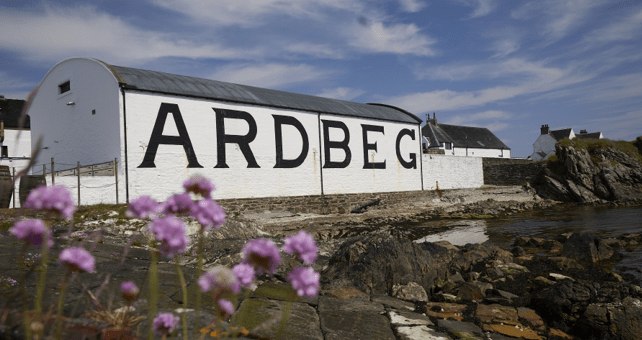
To me, Scotch whisky, especially a heavily peated one, is a beverage best enjoyed in the cool, damp spring and fall months or while cozied up next to a warm fire during the depths of winter. So, when Islay distiller Ardbeg began promoting their whisky offerings as a good summertime drink, I was skeptical to say the least. At best I saw it as a gutsy marketing plan by their promoters.

Photo credit: ardbeg.com

When it comes to peated whisky, people generally have strong opinions. The flavours used to describe such whisky include medicinal, campfire smoke, iodine, tire fire and seaweed. You either love the taste or hate it. Ardbeg’s offering of single malts capture all of these characteristics but there’s much more to it than just peat.

The French mega-giant parent company JVMH owns both the Ardbeg and Glenmorangie distilleries. Glenmorangie is located in the Highlands whisky region at Tain, Ross-shire, Scotland.

There’s a long history behind Ardbeg, but it’s only been operating in its present capacity since the late 1990s. Nevertheless, it has managed to make a big impact on the world of heavily peated single malt scotch under the direction of master distiller and whisky expert, Dr. Bill Lumsden and more recently, master blender and head of whisky creation Gillian Macdonald.

It was Macdonald who came up with the notion that you can and should enjoy smoky scotch during the hot summer months. She based her idea on the fact that Ardbeg’s complex flavours include hints of baked pineapple and banana, as well as the surprising level of sweetness.

Bartenders are using Ardbeg as a base in their cocktails as they claim that it works well with a variety of ingredients. Included in the list of cocktails is Whisky Sour, Scotch Margarita, Highball, Negroni and Expresso Martini.

Who would ever have thought such a smoky Scotch whisky would be popular in the sunny warm weather? Certainly not me. Bring on the summer!

Sláinte mhaith

Should the LCBO be Privatized?

In Ontario, where I live, there is an age-old debate as to whether wine and liquor sales should be government controlled and sold only in the Liquor Control Board of Ontario outlets (LCBO) or allowed to be sold by private enterprise. During recent years, government control has been loosened somewhat, enabling wine, beer and coolers to be sold in grocery stores and more recently in convenience stores.

Photo credit: foodincanada.com

The LCBO’s history dates back to 1927 and the end of prohibition in Ontario. In 1927 the LCBO was basis of three central beliefs:

  1. The best way to prevent social harm and health risks related to alcohol consumption was to make purchasing alcohol awkward or inconvenient.
  2. Adults could not be trusted to make their own decisions around responsible alcohol consumption.
  3. Private sector retailers did not have the capacity to balance market competition and social responsibility.

Attitudes are very different today and it can be argued that the LCBO would not have been necessary nor created if current circumstances had applied in the 1920s.  In today’s world, the private sector manages business enterprises for profit and the government regulates their behaviour through the establishment of standards and the use of enforcement to ensure those standards are met. 

There have been several studies over the years on what reforms, if any, should be made to the LCBO.  It has been argued that the government could generate more revenue by privatizing the LCBO’s retail stores while keeping their wholesale business in place.

This is what Alberta did back in 1993 when it introduced a privatization scheme.  The system initiated more selection, arguably reduced prices and enhanced convenience for the consumer. It provided better opportunities for small business and alleviated the government from direct business operations. 

Despite Alberta’s experience, Ontario has not had the enthusiasm for such a venture. A study published in 2019 suggested that the people of Ontario did not want privatization as they felt the LCBO provided great value-add to the community as their surpluses fund other provincial initiatives. Reform is more likely to take place in the distribution process via an expansion in the type and number of retail outlets allowed to sell wine and in the pricing of wine.

The LCBO has a dual social responsibility mandate. It is responsible for generating revenue for the benefit of the Ontario government, as well as a social responsibility to put in place a system of minimum selling prices to discourage excessive alcohol consumption.  This has been criticized as being a legally sanctioned price fixing mechanism to guarantee profits and discourage price competition. 

It’s interesting to note that each province sets its own rules and regulations regarding the sale of wine and liquor. This is illustrated by the table below which indicates when each province implemented and repealed prohibition in Canada.

Province/territory           Prohibition enacted                     Repealed

British Columbia              1917                                                    1921

Alberta                             1916                                                    1923

Saskatchewan                  1915                                                    1925

Manitoba                         1916                                                    1921

Ontario                             1916                                                    1927

Quebec                             1919                                                    1919

New Brunswick                 1856                                                   1856

                                         1917                                                    1927

Northwest Territories      1874                                                    1891

Nova Scotia                      1921                                                    1930

Prince Edward Island      1901                                                    1948

Yukon                               1918                                                    1920

Newfoundland                 1917                                                    1924

Perhaps standardization of liquor sales should be considered across the country. That could be a discussion for another day.

Sláinte mhaith

The Sparkling Wine Market

The demand for sparkling wine can be very volatile as it is heavily influenced by consumer moods and trends. Sparkling wine is traditionally related to festive gatherings and celebrations as long as people are congregating for happy times there will be a demand. However, during economic down times or in unusual circumstances like COVID-19, people are not gathering to celebrate and the sparkling wine market suffers.

Photo credit: marketresearchintellect.com

Like in so many segments of the wine industry, there is increasing demand for non-alcoholic sparkling wine options as the younger generations become more health-conscious and want to avoid alcohol. This trend is expanding market appeal. Vintners who embrace this new market by diversifying their product lines and expanding consumer reach will benefit.

Health-conscious consumers are looking for wines with reduced sugar content and fewer calories. This shift encourages innovation in product formulations, helping wine makers attract a broader consumer base. Low-calorie options provide a competitive edge in a health-driven market.

Given today’s ecological and environmental concerns, consumers are also placing much more emphasis on sustainability and organic certifications. Sparkling wine producers who are adopting eco-friendly practices are appealing to environmentally conscious buyers. This trend is providing producers with the ability to command higher prices & enhance brand loyalty.

The sparkling wine market, which has been steeped in tradition for centuries, is now being forced to change by evolving consumer demand. Producers need to respond and adapt to the evolving marketplace if they want to continue to survive.

Sláinte mhaith

In Response to Donald Trump

During the past six years that I have been writing this blog I have always steered away from political issues. However, today I feel compelled to speak out against Canada’s one time ally, the United States. With the return of Donald Trump to the White House’s Oval Office, Canada’s economy was placed under direct attack by Trump when he decided to impose twenty-five percent tariffs on Canadian imports to the U.S., without just cause. Similar sanctions have been imposed on Mexico and China and are being threatened against the European Union.

Photo credit: Manitoba Liquor Mart

In response to these bullying tactics by Trump, and as a proud Canadian, I will no longer purchase or write about American wine until such time as Trump refrains from his attack on Canada.

Canada has been the top export market for U.S. wines and Ontario’s provincial liquor board (the LCBO) has been among the largest purchasers of U.S. alcohol. In Ontario, imported wines are primarily sold through provincially owned and operated retail outlets, although recent regulatory changes have authorized 157 private grocery retail locations to distribute wine and beer.

The first phase of Canada’s response to the U.S. imposed tariffs includes tariffs on wine and spirits, in addition to many other products. Ontario is banning American liquor and the LCBO is removing American wine, spirits and beer from its shelves. This will represent about a billion dollars worth of American alcohol.

British Columbia, Alberta, Saskatchewan, Manitoba, Nova Scotia and Newfoundland are also removing U.S. liquor from their store shelves. At last word Quebec is considering the idea. On the bright side these bans will serve to enhance the sale of Canadian wines in Canada, as well as European, Australian, South American and South African wines.

Hopefully the American people will convince Trump that the imposition of his tariffs will not only hurt international economies but his own economy as well. It is a sad situation.

Sláinte mhaith

Inter-Provincial Wine Sales

Given all of the recent tariff talk and the renewed patriotism that has come as a result of it, some interesting points have come to light regarding wine sales between provinces. Many Canadians are now avoiding U.S. made products, including wine. As a result, there are now signs of an increased need to support Canadian wineries and renewed calls to open inter-provincial trade in alcohol. However, there are inter-provincial trade barriers standing in the way.

Photo credit: LCBO

Until June 2019, federal legislation prohibited inter-provincial shipment of alcohol directly to the consumer.  This then allowed the provinces the opportunity to pass legislation to permit direct purchase to consumers.  Unfortunately, most provinces chose not to allow this, leaving only British Columbia, Manitoba, Nova Scotia and Saskatchewan who permit direct-to-consumer alcohol shipments.  Ontario has recently amended its laws to prohibit the possession of wine that has been imported from other provinces unless the transaction was handled via the Liquor Control Board of Ontario (LCBO). There are now calls to have this ban lifted.

Ontario wine consumers cannot support small local wineries in another province.  Ironically, living in Ontario and purchasing wines produced in another province, the LCBO charges the purchaser the same import duties as if the wine came from a foreign country.

The wine growers of B.C., as well as the B.C. government are advocates of opening provincial borders to enable wine to move east and west across this country. There is a great deal of regulatory burden making it difficult for small and medium-sized wineries. The process needs to be simple and streamlined.

The time has come for Canadian provinces to eliminate inter-provincial trade barriers.

Sláinte mhaith

Wine Barrels

Is the best wine made using French oak barrels or American oak barrels? The answer depends on who is answering. I would be amiss if I didn’t mention that there are also Hungarian oak and Romanian oak but these oaks are seldomly used in making wine.

Photo credit: bodegaspaniza.com

Oak can play a crucial role in the winemaking process. It is a long-known fact that not just any wood will do when it comes to aging wine. Oak has been the choice for centuries. Due to the natural wood compounds, aging wine in oak barrels exposes complex flavours and textures that are crucial to the overall taste and structure of a wine. There are natural wood sugars in the oak that influence the wine’s flavour. The wine’s texture can be enhanced from tannins found in the oak.

French Oak is known by winemakers for its subtlety. These trees have tighter grains that deliver lower amounts of tannin that are more readily integrated into the wine. This wood is also more aromatic, producing delicate notes of dark chocolate, roasted coffee beans, vanilla and baking spices to the wine.

American Oak presents more robust flavour profiles introducing bold vanilla notes along with coconut, sweet spices and dill. The wider grain patterns of American oak also injects more tannins into the wine.

French Oak lets wine age gracefully over time. The wine will evaporate less from barrels of French oak than American oak, thus producing a naturally slower oxidation. On the other hand, American oak will often go through a more rapid oxidation process in the barrel.

When it comes to price, American oak is less expensive to purchase. This is due to it being more readily available than French oak. However, French oak produces a more luxurious wine, making it well worth the higher price tag.

So, which wines work best with French oak versus American oak? Chardonnay flourishes when aged in French oak barrels because the French oak releases delicate vanilla undertones into the flavour of the wine.

Pinot Noir also benefits from the use of French oak. This light-bodied red grape works well with the lower tannin content inherent to French oak. It allows for slow maturation without overwhelming Pinot Noir’s naturally elegant profile.

In contrast, bold reds such as Zinfandel often get paired with American oak. The intense notes of coconut and sweet spice from the American oak can complement the robust nature of these types of wine.

Wines such as Cabernet Sauvignon, Merlot or Syrah can work well with either French or American oak, depending on the winemaker’s desires. European winemakers tend to use French oak while American winemakers and some Australian vintners may use American oak. It all comes down to the desired style of the wine.

Many winemakers use both types of barrels or blend wines aged separately. It lets them control flavour profiles more precisely. The type of barrel used, or combination of barrels used will depend on the flavour notes the winemaker wants to achieve.

Sláinte mhaith