Pizza and Wine

Homemade pizza and wine are the standard Friday night fare at our house. The topping choices are numerous, ranging from veggies to savoury cured meats and cheese. The options seem to be only limited by the imagination.

Photo credit: vinointeriano.wordpress.com

No matter what type of pizza you enjoy there will be a suitable wine to complement it. Here are some suggestions to pair with your pizza whether you create it yourself or order it from your favourite restaurant.

Let’s start with the simple Cheese pizza. This straightforward pie goes well with a light red wine, such as Pinot Noir or Chianti.

Building on that foundation we progress to the Pepperoni pizza. Pepperoni is the culmination of cured meats and spices such as cayenne, anise and garlic. It pairs well with either two of my favourite wines, Cabernet Franc or Sangiovese. These bold, spicy reds complement the flavours of the pepperoni.

The combination of veggies and assorted meats creates an assortment of flavour found in the Supreme pizza. It may seem strange but Prosecco makes a great pairing as it won’t overpower the delicate flavours of the veggies but can still balance the taste of the savory ham, sausage and pepperoni.

Speaking of meat, the Meat Lovers pizza needs to be matched with a bold and robust wine, such as a Cabernet Sauvignon or Malbec. These wines have a bold richness, as well higher tannins and acidity to offset the fattiness of the meat.

Tangy, sweet BBQ Chicken pizza pairs well with a fruity Malbec or Pinot Noir. The wine will complement the tangy notes of the barbeque sauce in the pizza.

Heading in the opposite direction is the Veggie pizza. This type of colourful pizza needs a light, chilled red or full-bodied white to let the taste of the vegetables be revealed. A sparkling red wine, such as Lambrusco, or a Chenin Blanc or a Chardonnay would be a good match.

During my Italian adventure last year, I enjoyed a Margherita pizza on several occasions. A Margherita is a light pie consisting of tomato sauce, fresh mozzarella and fresh basil. It pairs well with a light wine, such as a dry Rosé or Prosecco.

If pineapple on pizza is your thing, then Hawaiian pizza is for you. The sweet and salty flavours will be complemented by a German Riesling or a New World Sauvignon Blanc. The wine’s acidity and sweetness will complement the sweetness of the pineapple.

No matter what your choice of pizza is, there is a wine to go along with it.

Sláinte mhaith

Pinot Gris or Pinot Grigio

Pinot Gris and Pinot Grigio are made from the same grape and are obviously both white wines, but it can be argued that the similarity ends there.

Photo credit: vinomofo.com

Pinot Gris originates in France and is believed to be a mutation of Pinot Noir. It’s mainly grown in the Alsace region of France. The grape is thought to have reached Italy during the 1300s where the variety was called Pinot Grigio.  The Italian version is primarily grown in the Alto Adige region of northwestern Italy.

Gris is the French word for gray and grigio is gray in Italian. The gray describes the grayish-purple skin of the grapes.

Both Pinot Gris and Pinot Grigio will appear on wines produced in countries other than France or Italy. There is an abundance of Pinot Gris grapes produced in countries such as Canada, the United States, Australia and New Zealand.

So what determines why some are labelled Pinot Gris while others are referred to as Pinot Grigio? Winemakers have the choice of selecting which name they use. There is no hard and fast rule, however most will base the name on the style of the wine they produce. You can usually tell the style by the colour. Pinot Gris style wines are typically darker and more yellow in colour, whereas Pinot Grigio wines are very light yellow, almost clear.

Pinot Gris wines are rich, full-bodied and accompanied by higher alcohol content. Made with fully ripe grapes that are occasionally barrel fermented, Pinot Gris often has extra sweetness and a creamy feel. The darker grape skins tend to produce a golden colour.

By contrast, Pinot Grigio is harvested early, resulting in a light-bodied, crisper wine with a lower level of alcohol. The aromas are primarily of fresh fruit and florals.

Pinot Gris embodies complex flavours such as cinnamon and lemon, with a tingly aftertaste. Late harvest French-style Pinot Gris is a rather sweet wine. This is due to noble rot, which creates honeylike undertones.

Pinot Grigio tends to be a lighter, crisp, dry style of wine with flavours of citrus and green apple, pear, lime and lemon, with a refreshing spark of acidity. Some Italian-style Grigio wines also have a floral aroma of honeysuckle.

The Pinot Gris style pairs well with roast pork, creamy pasta, and dense cheeses like Comté or Gruyère, seared scallops, or creamy mushroom risotto. Off-dry versions go well with spicy Asian or Indian dishes like chicken tikka masala or Thai green curry.

The lighter Pinot Grigio is a great apéritif but, also goes well with grilled shrimp, salads or fruit platters and sushi.

Now it is up to you to decide whether you prefer Pinot Gris or Pinot Grigio.

Sláinte mhaith

Ontario’s Movers and Shakers 2023

It has become a bit of a tradition that as the year draws to a close that I share my thoughts as to which wineries are stepping forward to be noticed.  As usual I have based my opinions on each winery’s performance at both the National Wine Awards and the All Canadian Wine Championships, environmental and sustainability practices and my own personal impressions.

The number of wineries on my list varies from year to year as I prefer to highlight wineries that I feel have excelled. This is not to suggest that these are the only great wineries in the province; they are merely the ones that especially caught my attention this year.  The wineries are presented in alphabetical order and I have included several of each winery’s 2023 award winning wines. 

Broken Stone Winery

Having been introduced to this winery this past summer I have become a big fan.  I then did some research to see what I could find out about it.

Broken Stone began in 2009 when Tim and Micheline Kuepfer purchased three hayfields along a backroad near Hillier, in Prince Edward County.  At the time, the acre of newly planted grape vines that came with the land was almost an afterthought.  The first harvest was in 2010 when two tonnes of quality Pinot Noir grapes were picked.  An additional four acres of grapes were then planted with a vague notion that someday maybe a winery may be developed. 

In 2012 a small building was constructed and the necessary licensing to make wine was obtained.  Broken Stone Winery was born.   Since then, the Kuepfers have been balancing the busy lifestyle of raising a family in Toronto with their passion for growing vines and making wine in Prince Edward County.

The result has become a dynamic boutique winery in the heart of the Prince Edward County wine region. Their mission is to grow the highest quality grapes and craft world-class wines.  They believe that great grapes make great wine, and they strive to ensure that each great vintage is a little better than the last. Broken Stone continually strives to improve the vineyard biodiversity and soils. They strive to live in harmony with the earth and leave a legacy for future generations. 

Colchester Ridge Estate Winery

Colchester Ridge is a relatively new winery located in Harrow, which is in the Lake Erie North Shore wine region. The wine labels display the acronym CREW.

I was first introduced to CREW wines by a friend who brought my wife and I a bottle of Meritage when they came to stay with us for a weekend just prior to the pandemic. From then until this past July, my search for another bottle had been fruitless (no pun intended). Then finally I was able to order several bottles of their most recent release, the CREW 2020 Meritage.

CREW was established in 2001 by the husband and wife team of Bernie and Nancy Gorski. The Gorski’s planted twelve acres of vines on their family land in 2001 and produced their first vintage in 2004. Then in 2006 they opened their shop.  After years of continual growth, the Gorski’s launched the new CREW Winery & Gallery in November 2019.

Their award-winning wines include the following:

  • CREW  2020 Barrelman’s Blend
  • CREW  2020 Meritage
  • CREW 2018 Grand CREW Cabernet Sauvignon

Hidden Bench Estate Winery (ranked 1st at National Wine Awards)

Hidden Bench was recognized as the 2023 Winery of the Year at the National Wine Awards of Canada.  Hidden Bench has come close to top Awards before, previously competing in the small winery category. However, the winery has grown to produce now over 10,000 cases of wine each year, allowing it to qualify for the top prize. Owner Harald Thiel is committed to being an estate winery using only Beamsville Bench fruit. By controlling his own fruit, he can control the quality as well.

Hidden Bench has emerged as the signature property among several highly regarded wineries on Niagara’s Beamsville Bench, an area of gently sloping, north-facing, limestone-laced sites and maturing vineyards and wineries. All of the wines of Hidden Bench are sourced from the Beamsville Bench and are produced using a comprehensive sustainable approach.

Hidden Bench also appeared in my 2022 and 2020 Ontario lists.

Hidden Bench’s 2023 award winning wines include 2 Platinum, 5 Gold and 5 Silver winners.  The platinum and gold winning wines included the following:

  • Hidden Bench 2020 Pinot Noir Felseck Vineyard
  • Hidden Bench 2020 Chardonnay Tête de Cuvée Rosomel Vineyard
  • Hidden Bench 2020 Estate Riesling
  • Hidden Bench 2017 Natur Zero Dosage
  • Hidden Bench 2020 Chardonnay Felseck Vineyard
  • Hidden Bench 2021 Nuit Blanche Rosomel Vineyard
  • Hidden Bench 2021 Chardonnay Beton

Tawse Winery (Ranked 2nd at National Wine Awards)

Tawse Winery adheres to a non-interventionist philosophy and a firm belief that the start of every great wine begins in the vineyard. Their wines reflect their unique terroir near Vineland, in the heart of the Niagara wine Region.

Healthy vines yield quality fruit which allows for the creation of terroir-driven wines of great elegance, depth and character. Promoting the health of the vines and vineyards requires a labour-intensive and hands-on approach. Yields are kept low by cluster-thinning to ensure that all the energy of the vine is focused to ripen fewer, higher-quality grape clusters.

Organic farming feeds the vines and controls diseases without the use of synthetic insecticides, fungicides and fertilizers. They strive to create a diversified balanced ecosystem that generates health and fertility from the vineyard itself. Healthy vines mean less need for outside substances to control diseases and promote growth.

The architecture of the winery was created to be environmentally friendly. The wines are aged in underground cellars, which keeps the ambient temperature between 10 and 16 degrees Celsius, with a natural humidity of approximately 85%. The modern geo-thermal energy system has reduced the use of traditional forms of energy by 80%. There is also a wetland bio-filter which allows them to re-use all their sanitary and winery process water.

Tawse earned 2 Platinum, 4 Gold, 8 Silver and 5 Bronze medals this year at the National Wine Awards.  The Platinum and Gold award-winning wines include the following:

  • Tawse 2020 Carly’s Block Riesling
  • Tawse 2020 Tawse Riesling
  • Tawse 2020 Quarry Road Riesling
  • Tawse 2021 Sketches Riesling
  • Tawse 2020 Cabernet Merlot
  • Tawse 2020 Limestone Riesling Spark!

Sláinte mhaith

It’s Not Just About the Number

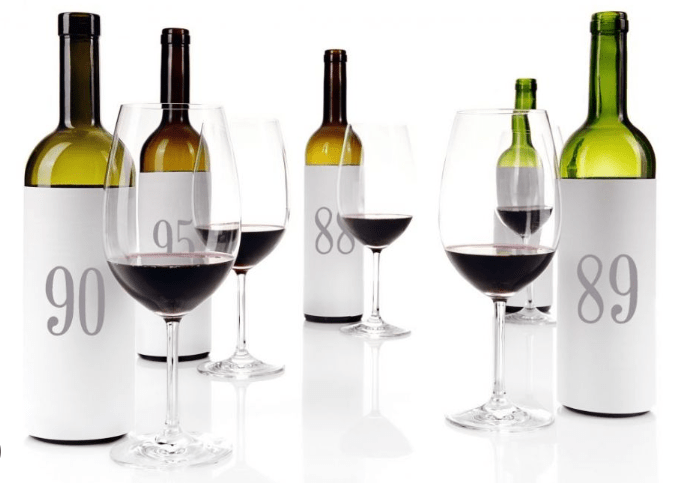
When searching for the ideal bottle of wine to compliment a meal, for a special occasion, or simply to lounge with in front of the television, many people rely on the wine’s rating number or score, as it’s often referred.

Photo credit: vivaavida.r7.com

The most commonly used scoring system is what is referred to as the 100-point scale, which was created by James Suckling in the 1980s. Wines with a score between 89 to 91 are considered good; a score between 92 and 94 is great; a score between 95 and 97 is excellent; and a score from 98 to 100 is considered outstanding.

It is important to realize however that every bottle of wine with a score of 98 is not necessarily better than every bottle of wine with a score of 92. Other factors, such as price to quality, must also be considered.  Therefore, it is important to take into account other factors of a wine review before making the ultimate decision as to which bottle you are taking home.

If you see the name of a winery whose wine you have enjoyed in the past, there is a good probability that you will like other wines produced by that winery as well. 

Noting the type of grapes contained in the wine is an excellent indicator as to whether you may like a wine or not.  If you favour certain grape varietals, for example Riesling or Merlot, chances are wines containing those grapes will be more enjoyable for you.

Many countries, including Canada, have a quality standards system that will indicate on the bottle whether the wine has met the appellation of origin standards.  These standards ensure that certain agricultural criteria are met.  In Canada we have the VQA (Vintner’s Quality Alliance) system.  For more information regarding quality standards see the following posts from 2019: Selecting Canadian Wines, France’s Standards of Quality, Germany’s Quality Standards and Italian Quality Standards.

A wine’s place of origin is one factor in determining its characteristics. The region where a wine comes from will indicate the style of wine as well as flavour characteristics.  So, if you find you favour the flavour of a wine from a particular region, chances are you will enjoy other wines from that same region.

Not all wines are intended to be consumed right away. Although the majority of wines may be enjoyed when you take them home, some wines are best drunk after they have been laid down for a few years. The vintner’s notes or the wine store will often indicate whether a wine is intended to be enjoyed now or is best to be cellared.  Drinking a wine too soon may leave you with unpleasant thoughts about that wine.

Happy wine shopping.

Sláinte mhaith

Trek to The County

During the first week of August my wife Valerie and I made our first post pandemic adventure to Prince Edward County.  I came prepared with a selection of wineries that I felt deserved a closer look, each having caught my attention for a variety of reasons.

The wineries are not presented in any particular order.

Hinterland Wine Company, 1258 Closson Rd, Hillier, Ontario

Hinterland Wine Company is a boutique winery specializing in wines made using the traditional method. Hinterland uses minimal intervention in their winemaking process, allowing the unique terroir to shine through.

I was particularly impressed with their 2021 L’Imparfait Seneca, which is classified as an orange wine, though it is very much red in colour.  It is a blend of 67% Pinot Noir, 26% Marquette and 7% Savagnin grapes.  If you like a sweet wine this one is definitely not for you; it has distinct earthy tones.

Closson Chase Winery, 629 Closson Rd, Hillier, Ontario

From Closson Chase we came away with some of their 2022 Estate Unoaked Chardonnay and 2021 Churchside Pinot Noir

The unoaked Chardonnay was sourced entirely from their South Clos vineyard. It was whole cluster pressed, then cool fermented in stainless steel at 14 C.

The Pinot Noir is sourced entirely from their Churchside vineyard. Destemmed with no crushing and cold soaked for 3-5 days. The juice was then fermented in oak tonneau and aged for 18 months in French oak barrels, 20% new. The wine has five to seven years of cellaring potential.

Rosehall Run, 1243 Greer Rd, Wellington, Ontario

At Rosehall Run we found a 2021 Chardonnay Musque, a wine that not many wineries seem to produce. It is an unoaked variety that contains Chardonnay Musque grapes, rather than the more common Chardonnay.  The wine is 100% estate grown and bottled.

Another find was their 2019 Cabernet Merlot which is a blend of 49% Merlot, 43% Cabernet Franc and 8% Cabernet Sauvignon grapes that were sourced from select vineyards in the Niagara Peninsula.  This wine has a cellaring potential of a minimum of ten years. It has been consistently rated as a 92 out of 100 by several wine critics.

Grange of Prince Edward Vineyards and Estate Winery, 990 Closson Rd, Hillier, Ontario

At Grange I had to go with one of my favourite varietals, Cabernet Franc.  In this case it was their 2020 Cabernet Franc, which contains 100% estate grown grapes.  This is unusual for Prince Edward County given the slightly cooler climate and shorter growing season than either Niagara or the North Shore of Lake Erie. 

Broken Stone Winery, 524 Closson Rd., Hillier, ON

This find I must credit my brother for as he happened by it when he was touring the County earlier this summer.  He brought me back a bottle of each of their 2018 Intensity Meritage Blend Niagara Peninsula and 2021 Gamay Noir Barrel Reserve.  Both were delightful.

In addition to purchasing these two wines, I also picked up some of their 2021 Chardonnay Sans Chene.

Karlo Estate Winery, 561 Danforth Rd, Wellington, Ontario

I am pleased to report that Karlo is back in full swing with a complete lineup of both red and white wines, including their unique red blend Quintus.  Winemaker, Derek Barnett, has recreated this work of founder Richard Karlo using a blend of the classic noble grape varieties, Malbec, Petit Verdot, Merlot, Cabernet Franc, and Cabernet Sauvignon.

The Old Third Vineyard, 251 Closson Rd, Hillier

The Old Third produces unfiltered Pinot Noir, Cabernet Franc and Chardonnay.  Unfortunately, the tasting room is inside a barn that can only be entered by climbing steps consisting of some uneven precariously strung planks with no handrail.  This proved too much of an obstacle for my post-stroke climbing ability so I had to pass on going inside.

Stanners Vineyard, 76 Station Rd., Hillier

Stanners locally grown Cabernet Franc has always been one of my favourite Prince Edward County wines but given the small quantity produced, it is often difficult to obtain and this year is no exception.  The 2020 Cabernet Franc VQA Prince Edward County is already sold out, as well as the 2020 Pinot Noir VQA Prince Edward County and the 2020 Pinot Noir VQA Prince Edward County.  However, I was still able to obtain the 2020 Cabernet Franc VQA Lincoln Lakeshore. The grapes for this Cabernet Franc came from a single vineyard in the Lincoln Lakeshore sub-appellation of the Niagara Peninsula. The grapes were hand harvested then destemmed to whole berries with no crushing. The wine was aged in mostly older French oak barrels for 19 months and was not fined or filtered in order to preserve its fine fruit flavours. This wine is likely to age gracefully for quite a few years.

Devils Wishbone, County Road 7, Prince Edward County, Ontario

In the past I always enjoyed several of Devil Wishbone’s red varietals.  When I last visited the County in 2020 the winery was temporarily closed.  I anticipated a return visit there this summer but was saddened to learn that the owner, Jennifer Baldini, passed away in June of 2021 after suffering from a two-year illness.  The retail operations of the Devils Winery had been closed since the onset of her illness in 2019 but the vineyards were maintained in anticipation of her successful recovery.  Sadly, this didn’t prove to be the case and Devils Wishbone is now closed permanently.

Sláinte mhaith
Spicy Wines

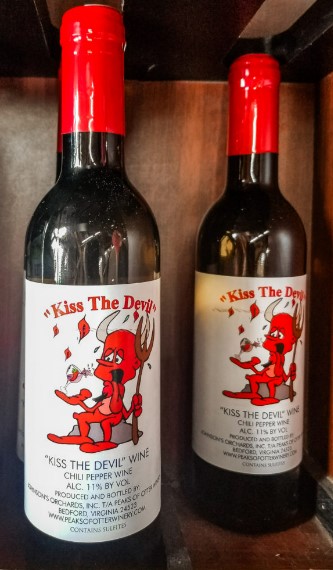
Other than mulled wine, are any wines truly spicy?  The short answer is ‘yes’ but there are great differences in individual interpretation.  To listen to or read some reviewers impressions you would be led to believe drinking some wines would be similar to eating a chili pepper.  For example, “You can taste a red wine and suddenly discover your mouth is sizzling – that spicy red wine has a whole world of delicious, zesty compounds that light up your palate and senses.”

Photo credit: lovicarious.com

Wine can, however, have a certain amount of spiciness to it, though it is much more subtle than the above quote would suggest.  There are several reasons for this.

Some wines do have the aroma of freshly ground black or white pepper.  Wines made from Syrah grapes have a high level of pepperiness.  This is because the grapes actually have one of the same compounds in the skin as is found in black peppercorns, a compound called Rotundone.  However, one in five people are unable to detect the smell of Rotundone and thus do not find Syrah or Shiraz to be peppery.

Some red wines, such as Italian Chianti Classico, will provide a warming or burning sensation when they are drunk.  This is a result of a high level of acidity in the wine.  The same type of sensation may occur when drinking a wine with an alcohol content of around 15% or greater.  Amarone is an example of such a wine.

There are wines with the aroma of spices such as vanilla, cloves or baking spices.  A California Zinfandel or South African Pinotage will have the aroma of these types of spices.  Part of this is due to the wine being aged in oak barrels.  Lactones from the barrels create a coconut smell, and vanilla flavours come from vanillin.  Spicy, toasted and clove aromas are generated by eugenol and guaiacol respectively, which are also found in the oak barrels.

There are some white wines as well that have flavours and aromas of spice;  for example, a Gewürztraminer from Alsace. Grüner Veltliner from Austria can also be spicy as it, like Syrah, has Rotundone in its skin. As a result, it can have a peppery character.

So, although there are some peppery and spicy wines to be found on the shelves of your local wine store, I truly doubt that any of them will leave you fanning your mouth from the intensity of the flavour.

Sláinte mhaith

Wine Diamonds

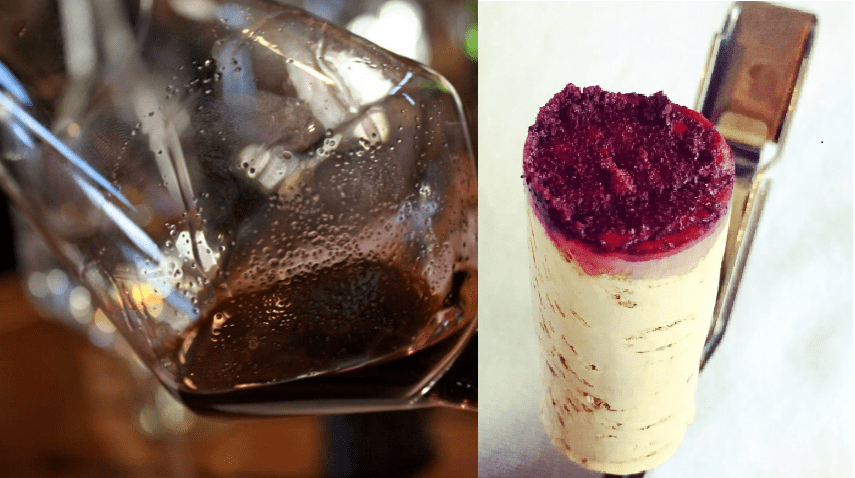
Occasionally you may come across a bottle of wine that contains tiny crystal shards that could appear as tiny pieces of broken glass. These are tartrates that are often referred to as wine diamonds. Although they may cause a slight gritty texture on your tongue, they are harmless and safe to consume.

These wine diamonds may occur if the wine has been exposed to temperatures below 4°C, when potassium and tartaric acid, both naturally occurring products of grapes, bind together to form a crystal.

Tartaric acid is used to maintain a wine’s body, character and colour but many wines contain a surplus of the acid, which accounts for the appearance of the wine diamonds.  Potassium, which is another big component in wine, binds with the acid and creates a salt called tartaric bisulfate, which separates from the wine and creates the crystals that are found at the bottom of the wine bottle or on the underside of the cork.

The colour of these crystals is dependent on the pigment of the wine. In red wine they will often appear brown or dark red. In white wines they will often look brownish or resemble glass.

It is difficult to predict which wines will have high levels of tartaric acid and thus have wine crystals.  Weather, region, soil nutrients and grape varieties all play a role in determining the amounts of acid present in a particular grape.

Older wines are more likely to form crystals or sediment once the cork is removed. As wines are constantly evolving during the aging process, elements within the wine are constantly interacting with each other. As such, some chemical bonds that are formed in the bottle are denser than the wine itself, causing them to sink to the bottom of the bottle. This is part of the aging process.

The presence of wine diamonds is considered by many winemakers as a sign of high quality because it means that the wine was not over processed.

Although wine diamonds may leave a slight gritty texture on your tongue, they do not impact the taste of the wine nor do they pose a health risk.  They are completely safe to drink.

If you prefer not to serve wine crystals in your wine you can decant the wine by simply pouring the wine through a wine strainer or cheesecloth into a wine decanter.

Sláinte mhaith

The Mysteries of the Wine World

Given the severe winter storm that is expected to arrive later today and the power outages that are anticipated to accompany it, I am publishing the blog earlier this week.

The world of wine can be intimidating, appear complicated and very mysterious.  Understanding the flavours of the large number of grape varieties and complicated regional appellations can be somewhat daunting.

Photo credit: theundergroundbottleshop.com

If you’ve been firmly staying within your comfort zone and continually drinking the same type of wine, it’s time for a change.  Although it’s great to have a safe choice or two, it is good to explore new horizons. There is an exciting world of wine ready to be discovered.

If you insist on staying with the same grape variety, then try wines from different regions and styles. For example, if you normally drink a California Chardonnay, try an Australian one or a French Chablis.  If an Australian Shiraz is your preference, sample a French Syrah. For great Merlot, consider lesser-known varieties with similar flavour profiles, such as Spanish Mencía or Saperavi, an ancient red grape from Georgia. Pinot Noir enthusiasts should explore those wines of Burgundy France, Oregon, New Zealand, Australia or Argentina.  Region can have a great influence on character and flavour.

The total experience, from purchase to consumption, can affect your perception of the wine you are drinking.  Grocery stores are great for picking up a few cans or bottles of your favourite coolers or beer, but not a great option when purchasing wine.  To best ensure that you have a good buying experience, always go to a good quality liquor store or specialty wine shop that has knowledgeable staff. You can ask for advice and receive suggestions, especially if you become a regular at a place with experienced and well-trained employees.

To help you select a good bottle, don’t be afraid to ask about new products or releases, innovative winemakers and local wines, or ask for pairing suggestions for an upcoming dinner. You can help the staff understand your likes by revealing your favourite varieties and styles.  One thing to remember is that there are good wines in every price range so don’t be intimidated by wanting to stay within a specific price range.

Regarding price, it is one of the most common misconceptions about wine. People often have the perception that more expensive wines taste better.  Purchasing wine varietals that you like from less familiar locations can save you money.  Instead of buying wine from the most popular regions, discover reasonably priced quality wines from new, smaller or less popular regions.  For example, Chardonnay (Chablis) from France or California tends to be more costly than a wine of the same varietal from Australia or South Africa. 

When reading the label on the bottle, resist the urge to simply purchase one with an attractive label or an intriguing name.  Neither of these are an indicator of the quality and character of the wine. 

The label will tell you whether it is an Old World or New World wine.  Old World wines are from Europe whereas New World wines are from anywhere but Europe.  New World wine labels will generally identify the actual varietal or varietals that the wine consists of.  In contrast, Old World European wines indicate the regional appellation where it was produced.  Examples would include Bordeaux or Burgundy from France, Chianti from Italy or Rioja from Spain.  However, there are many more appellations.  Back in the blog archives are posts on the various wine regions of France, Italy, Spain, Portugal, etc. that identify which grape varietals are produced in each region.

Recognizing the name of the wine producer or importer may give you a hint about the quality of the wine, but location and grape variety will provide the best idea of what to expect in a bottle.

The labels will also display the vintage, which indicates the year the grapes were harvested. When purchasing a wine to be enjoyed in the immediate or near future, the vintage doesn’t reveal much about quality.   There is a common misconception that older wines are always better.  Though this applies to some bold wines that need time to rest before reaching their full potential, it represents only about ten percent of wines produced.

Whether a wine bottle has a cork stopper or screw cap is not an indicator of a wine’s quality.  Though cork has been the traditional method for sealing bottles, it is not necessarily the best way.  There are both pros and cons to both methods and neither comes out as a clear winner.  My blog, Cork versus Screw Cap from January 8, 2022, presents the arguments for both.

Lastly, when selecting a wine at a restaurant, don’t be afraid to ask the wine steward or sommelier for advice.  These are typically well-informed individuals who are there to share their knowledge so take advantage of their presence to receive expert advice.  They will help you select a wine that will both suit your palate and complement the food.

Sláinte mhaith

Cork Versus Screw Cap

Corks have been the traditional choice since the 1400’s for preserving wine. Cork bark is one of the few natural products that is malleable enough to hold the contents inside a glass bottle.  However, today there is great debate as to whether cork is actually the best way to preserve wine.  The most prominent opponent is the screw cap.

Photo credit: wineanorak.com

The pro cork side of the debate usually begins with the fact that tradition dictates that cork is the way to go.  It has been in use for hundreds of years.  Screw caps on the other hand are a 20th Century invention.  

For many of the more mature members of our society there is a sense of enchantment in maintaining tradition, including the ritual of uncorking a bottle of wine, which adds to the enjoyment and experience.

Cork bark is a natural ingredient, as well as a renewable resource. Cork is harvested from the bark of cork trees, which continually replenish themselves.

One of the properties of cork is that it does not have a completely airtight seal, which allows the wine to slowly oxidize in the bottle. This oxidization allows the wine to continue to age while it sits in the cellar, developing more complex flavours over time.

The down side of using cork is that cork allows cork taint, otherwise known as TCA or Trichloroanisole, a flaw that can happen when a wine is exposed to a particular yeast during production. If you’ve ever swirled and sniffed a glass of wine and smelled something like wet dog, then you have experienced cork taint. Because corks are permeable, bottles sealed by a cork can be vulnerable to damage.

Another downside to cork is the cost as cork is more expensive than screw caps.

Finally, there is the irritation you feel when the cork breaks off or crumbles into your wine when you try to open the bottle.  To help prevent this from happening, the bottles need to be stored horizontally in order to keep the corks moist.

In the past, screw caps were associated with cheaper wines since they are less expensive than corks and were the obvious choice for budget-friendly wines. However, those days are long gone. Screw caps have their own benefits, so some high-end wineries have abandoned the cork. Some winemakers even prefer them to cork.

Screw caps do not allow TCA to occur in the wine after bottling. This doesn’t mean the wine is always free of TCA, since it can be exposed prior to bottling, but it does mean if it hasn’t happened before bottling there is no chance of exposure until it is opened.

Screw caps are much easier to open. A cork screw is not required so that means one less thing to pack when travelling.

On the down side, the airtight protection that is provided by a screw cap prevents the wine from breathing and slows down the aging process.

Also, while screw caps are recyclable they are neither biodegradable nor are they made from a renewable resource.  They typically include PVDC plastic which is made from petroleum, making them a far less eco-friendly option.

Ongoing innovation in wine packaging means that natural cork and screw caps are not the only two options for bottle enclosure and storage. Plastic, can, cardboard and plant-based polymer cork are now being introduced into the marketplace.

While natural cork adds character, heritage and custom to your wine experience but is not necessarily a reflection of quality. Screw caps are a convenient modern option, but they have their own drawbacks.

You will have to decide for yourself which you prefer. Personally, it is the wine itself that determines whether I buy it, not whether it is sealed with a cork or a screw cap.

Sláinte mhaith

Sugar Levels in Champagne & Other Sparkling Wines

Given that that New Year’s is fast approaching it seems like a good time to talk about sparkling wines; in particular the amount of sweetness in these wines.  Sweetness levels range from super dry to very sweet. Because of this extreme variation, the experts have developed a standardized sweetness scale that has been divided into seven levels.

Photo credit: ScientificAmerican.com

The sweetness level varies due to a step in the wine making process referred to as “liqueur d’expedition” where producers add a small amount of grape must (sugar) before corking the bottle. Since sparkling wine is so acidic, the sweetness is added in order to reduce sour flavours in the final product.

The sweetness scale for sparkling wines consists of the following levels:

Brut Nature (Brut Zero)

  • 0-3 grams (g) of natural residual sugar (RS) / litre (L)
  • 0-2 calories and up to 0.15 carbs for a total of 91–93 calories per 5 oz. (~150 ml) serving of 12 % ABV sparkling wine.

Extra Brut

  • 0-6 g/L RS
  • 0-6 calories and up to 0.9 carbs per 5 oz. (~150 ml) serving for a total of 91–96 calories per serving of 12 % ABV sparkling wine.

Brut

  • 0-12 g/L RS
  • 0-7 calories and up to 1.8 carbs per 5 oz. (~150 ml) serving for a total of 91–98 calories per serving of 12 % ABV sparkling wine.

Extra Dry

  • 12-17 g/L RS
  • 7-10 calories and 1.8–2.6 carbs per 5 oz. (~150 ml) serving for a total of 98–101 calories per serving of 12 % ABV sparkling wine.

Dry (Secco)

  • 17-32 g/L RS
  • 10-19 calories and 2.6–4.8 carbs per 5 oz (~150 ml) serving for a total of 101–111 calories per serving of 12 % ABV sparkling wine.

Demi-Sec

  • 32-50 g/L RS
  • 19-30 calories and 4.8–7.5 carbs per 5 oz (~150 ml) serving for a total of 111–121 calories per serving of 12 % ABV sparkling wine.

Doux

  • 50+ g/L RS
  • 30+ calories and more than 7.5 carbs per 5 oz (~150 ml) serving for a total of more than 121 calories per serving of 12 % ABV sparkling wine.

Brut has a fair amount of variation in sweetness, whereas Extra Brut and Brut Nature have focused sugar content. Therefore, if a dryer wine is your preference it is best to select either an Extra Brut or Brut Nature wine.

Something to keep in mind when considering the sweetness of sparkling wine is how little sugar is required to make it taste sweet.  The amount of sugar in these wines is comparatively low to other beverages.

Drink Comparison (sugar levels in grams)

  • 0 g in Vodka Soda
  • 0.5 g in Brut Nature Sparkling Wine
  • 2 g in Brut Sparkling Wine
  • 8 g in Demi-Sec Sparkling Wine
  • 14 g in Gin & Tonic
  • 16 g in Honest Tea Green Tea
  • 17 g in Starbucks 2% Milk Grande Latte
  • 20 g  in Margarita on the rocks (made w/ simple syrup)
  • 33 g in Rye & Coke

Happy Holidays!

Sláinte mhaith