Italy’s Quality Standards

Similar to Canada, France and Germany, Italy has developed its own safeguards where grape growers and producers must adhere to strict regulations in order to be certified.  The laws also govern things like the type of grapes used, the alcohol content, and how long the wine is aged.

Italian certification falls into three categories of decreasing strictness: DOCG, DOC, and IGT.
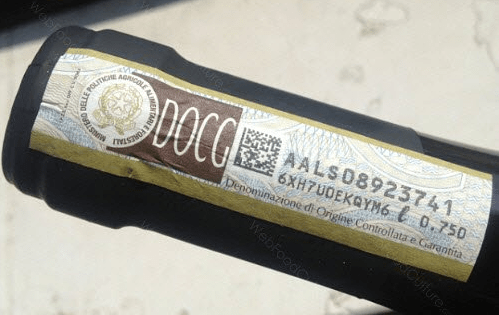
Denominazione di Origine Controllata e Garantita (DOCG) wines contain the DOCG letters on the label.  For the consumer this means that the producer followed the strictest regulations possible to make that wine. The wine is tested by a committee that then authenticates the geographic location and the quality of the wine. There are currently only a handful of Italian wines that qualify for DOCG status.  DOCG wines are easy to identify as they contain a numbered government seal attached to the neck of the bottle.

Denominazione di Origine Controllata (DOC) wines are much more commonly found. The rules governing quality and authenticity are still very strict, but not quite as stringent as those containing the DOCG insignia. For instance, the geographic zone might be a little bigger or the rules about what kind of grapes might be a little more relaxed.  The letters DOC will be found on the label, similar to DOCG.

The final quality designation is Indicazione Geografica Tipica (IGT).   This category was created after the DOC and DOCG designations in order to accommodate growers who couldn’t meet all the DOC or DOCG requirements but were still producing good quality wines. 

The following will help provide an understanding of the information commonly found on an Italian wine label.

  • Abboccato = Slightly sweet
  • Amabile = Medium sweet
  • Amarone = Dry red wine made from dried grapes
  • Azienda/Tenuta/Podere = Estate
  • Bianco = White
  • Cantina = Winery
  • Cantina sociale = Co-operative winery
  • Chiaretto = Pale red or dark rosé
  • Classico = Denotes the traditional, theoretically superior, vineyard area within a DOC/DOCG zone
  • Dolce = Sweet
  • Frizzante = Slightly sparkling
  • Imbottigliato all’origine = Estate bottled
  • Metodo Classico = Sparkling wine made by the classic Champagne method
  • Novello = Describes light, fruity wines intended for early consumption rather than cellaring
  • Passito = Generic term for wine made from dried grapes (usually sweet but occasionally dry)
  • Recioto = Sweet red or white wine made from dried grapes (a form of passito)
  • Ripasso = Full-bodied, powerful wine style made by re-fermenting wine with amarone grape skins
  • Riserva = Denotes extended aging (in cask, then bottle) before the wine is sent to market
  • Rosato = Rosé
  • Rosso = Red
  • Secco = Dry
  • Spumante = Sparkling
  • Superiore = Wines with greater concentration and higher alcoholic strength
  • Vendemmia = Vintage
  • Vigneto = Vineyard
  • Vin Santo = A dessert wine style originally from Tuscany, generally made from air-dried grapes
  • Trebbiano = A name shared between many different Italian grape varieties, planted almost everywhere within Italy. It is dark gold or amber-coloured with high acidity and a rather neutral flavour profile

I myself have sampled quite a few Italian wines over the years and they have not all been DOCG or DOC.  I have found that IGT wines are often very similar in taste to their higher rated cousins.  In general, the quality standards are very good. 

With Italian wines I am more inclined to purchase what intrigues me and not pay so much attention to whether it contains a certain insignia.  It is also interesting to note that the price point of DOCG wines is often no higher than, and sometimes even less than DOC or IGT wines.

Sláinte mhaith

Tasting Wine

Of course when you drink a glass of wine you indeed taste it as you drink it.  It isn’t chugged like a beer might be or downed in a single gulp like you would if you were doing shots, or at least I hope not.

There are, however, different types of tasting.  There is tasting, as you would when you sit at the dinner table enjoying a glass a wine with a meal. And there is the other type of tasting, the one you do if you go to a winery or attend an event hosted by a sommelier, vintner, or other wine expert. 

This second type of tasting is more of an event than simply the enjoyment of a glass of wine.  Such wine tasting events take place for a variety of reasons, but the process is generally the same.  Perhaps you are visiting a winery and want to know which, if any, of their wines suit your palate.  In other situations you may be comparing and matching certain wines to various types of food.  That is how I acquired a passion for blue cheese, much to my wife’s chagrin, but that is a story for another day.  Another purpose of formal wine tastings is to learn how the various types of wines (grapes) relate to each other, whether it is dryer, sweeter, robust, etc.

In any event, the process for tasting wines in these situations is the same.  In order to truly judge the character of the wine to determine if it is to your liking, it requires the use of a few of your senses – your eyes, then your nose, and finally your taste buds.

The first thing to do once you are given the glass of wine is to hold it to the light to see how transparent or opaque it is.  Generally speaking, the more transparent a wine, the lighter the taste.  Although I have never tried it, it is said that you can read a book through a glass of Pinot Noir, where the same could not be said for a glass of Shiraz.  But I ask, why risk spilling the wine?

Second, you can determine the relative amount of alcohol in the wine by tilting the wine glass toward its side and then straightening it back up to see if there are “legs”, which are streams of liquid lingering along the side of the glass that was tipped.  The longer the legs, the higher the alcohol content.  The higher the alcohol content in the wine, the stronger the flavour.

The next thing you should do is swirl the wine in the bowl of the glass and sniff it to see whether there is an aroma or bouquet, and if there is, whether it is appealing to you.  Wine reviewers will describe what they smell, whether it be apples, pears, grass, etc. in white wine or hints of leather, turf, cocoa, etc. in red wines.  You may or may not smell any of these things; what is important is determining whether it is an aroma that is pleasing to you.

Finally, it is time to taste the wine.  It is best to close your eyes so as not to be distracted by the sights of what is going on around you.  When you taste the wine, let it linger in your mouth, being sure to completely taste before swallowing or spitting it out into the spittoon that will have been provided specifically for that purpose.  Spitting out the wine during a formal tasting is not being disrespectful.  If you are going to be tasting a number of wines, many people prefer not to ingest that much wine, especially if there are a number of varieties being sampled.

When tasting the wine you may find that there are recognizable flavours similar to what is found in the wine’s aroma, such as green apple or pear in some white wines, or cocoa or coffee, for example, in red wine.  Some wine experts will go so far as to say that red wines may have a hint of leather or an earthiness in their flavour, though having personally not chomped on a piece of leather or dirt, I am not sure how they can come to that particular conclusion.

Wine tastings are something that you can experiment with and conduct them with your friends and fellow wine enthusiasts in the comfort of your own home.  It is a fun way to learn about wines and experiment with wines you haven’t tried before.  There are all kinds of different things you can do and try.

Enjoy!

Sláinte mhaith