Wine’s sweetness is determined by the amount of residual sugar that remains after fermentation is complete. It ranges from bone dry (less than 1 gram/litre) to very sweet (over 120 grams/litre). Wine sweetness levels are often, though not consistently, categorized as bone dry, dry, off-dry, semi-sweet, sweet and very sweet. Sweetness indicators are sometimes found on the bottle label or are available on the winery’s tech sheets.
It is interesting to note that wine experts do not always agree on the names of the categories or the scale used to describe sweetness. For example, where one authority considers a certain grams per litre ratio as dry, another considers it as off-dry.
Complicating things further, you will see that some types of wine may appear in more than one category. This is because there can be differences in the sweetness level depending on the fermentation process used by individual vintners. Yeast converts grape sugars to alcohol. If fermentation is stopped early, more sugar is left in the wine. Therefore, a single varietal, for example Riesling, may appear in more than one category.
While residual sugar is the main factor, other elements such as tannins (common in red wines) can make a wine feel drier than its sugar content would suggest.
Category
Residual Sugar (g/L)
Description
Bone Dry
Less than 1 g/L
Essentially no distinguishable sweetness; very crisp.
Dry
1 – 3 g/L
Little to no noticeable sweetness.
Off-Dry
4 – 12 g/L
An evident but not overwhelming amount of sweetness
Semi-Sweet
12.1 – 35 g/L
Overlaps with the Off-Dry and Sweet classifications.
Sweet
35 – 120 g/L
A significant amount of sweetness
Very Sweet
Over 120 g/L
Very sweet; often dessert wines.
Listed below, by category, are many popular wines. The wines within each grouping appear in no particular order.
Level of Dryness
Red
White
Bone Dry
Nebbiolo
Muscadet
Malbec
Chablis
Chianti
Grenache Blanc
Bordeaux
Pinot Grigio
Barolo
Dry
Sangiovese
Gruner
Tempranillo
Sauvignon Blanc
Cabernet Sauvignon
Pinot Gris
Pinot Noir
Chardonnay
Syrah
Chenin Blanc
Merlot
Vermentinu
Cabernet Franc
Sémillon
Carménère
Viognier
Valpolicella
Dry Riesling
Beaujolais
Trebbiano
Grenache
Roussanne
Zinfandel
Marsanne
Off Dry
Kabinett
Riesling
Chenin Blanc
Muller
Semi-Sweet
Valpolicella
Gewürztraminer
Lambrusco
Spatules
Riesling
Sweet
Port
Late Harvest
Maury
Riesling
White Port
Very Sweet
Tawny Port
Icewine
Icewine
Riesling
Vin Santo
To avoid disappointment in purchasing a too sweet or too dry wine, your best option is to pay attention to the grams per litre sugar level and choose your wine accordingly. The sweetness categories can help guide you, but because of their inconsistencies, they should not be relied on totally.
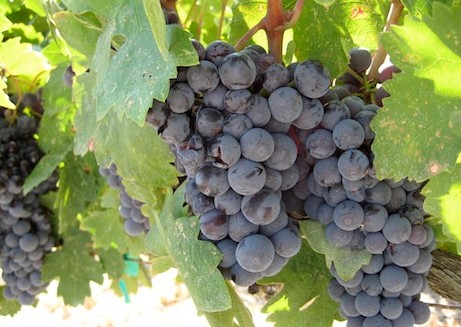
The Primitivo grape is believed to have originated in what is known today as Croatia. It was named Primitivo by the Italians based on the Italian word “primaticcio”, which means ‘early ripened’. The vines are believed to have been exported to North America during the early 1800s, where the grapes became known as Zinfandel. Where that name came from, I have no idea.
The most common Zinfandel is a dry, medium-bodied red wine with medium to high tannins and medium to low acidity. The alcohol by volume is usually in the very high range, in excess of 14%.
Red Zinfandel is a bold, fruit-forward red with smoky spice notes. Its primary flavours are generally blackberry, strawberry, peach, cinnamon and tobacco.
The wine pairs well with BBQ ribs, grilled chicken, roast lamb, pulled pork, pork chops, blackened salmon, bacon-wrapped tenderloin, game meats and burgers. If cheese is your thing, pair it with sharp cheddar or smoked gouda. Vegetables like caramelized onion, tomatoes, grilled eggplant, mushrooms, olives, zucchini or baked beans will also go well. Desserts such as cheesecake and dark chocolate are great options as well.
There is also White Zinfandel, which is actually a sweet pink Rosé. It has aromas of fruits, such as strawberries, raspberries, cherries and citrus.
Today, the United States, where the grape is referred to as Zinfandel, is the largest producer, with over 18,500 hectares under management. Italy, where it is still referred to by its original name, has almost 14,000 hectares of vines. Macedonia is next with 1,000 hectares and Australia with 87 hectares. Lesser amounts are grown in Chile, Canada and South Africa.
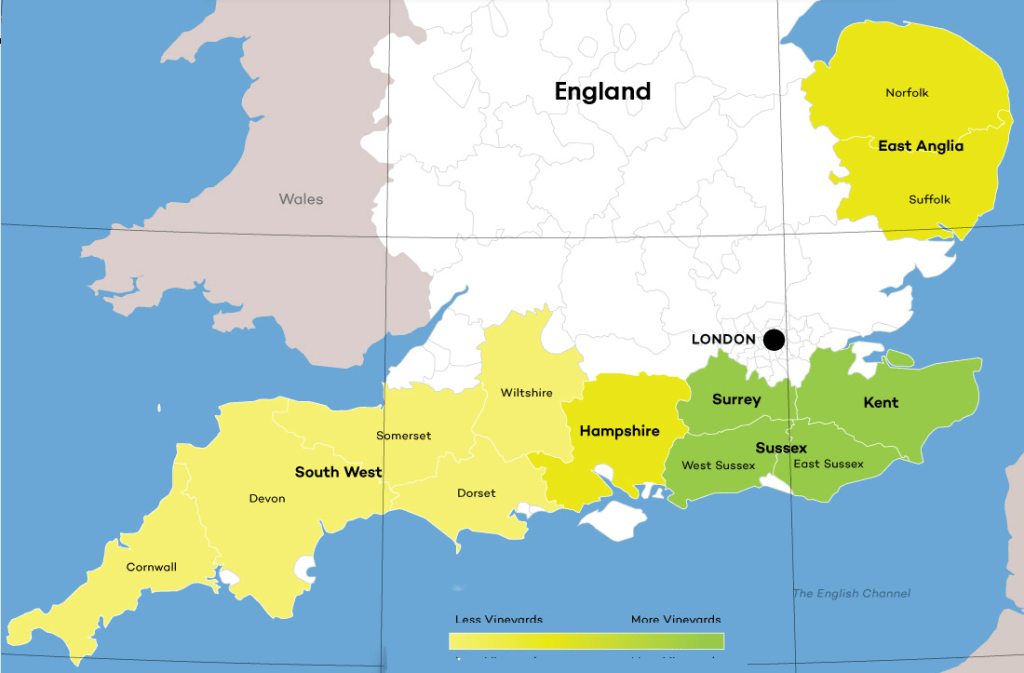
England is known for its Gin and Tonic (G&T) and its bitters (beer), but did you know that the English also produce fine wine? The United Kingdom ranks 6th in the world for wine consumption, but over the past 15 to 20 years England has been making a name for itself as an up-and-coming wine producer. Most notable are its sparkling wines, which are made in the traditional way. They are finishing ahead of major Champagne houses in competitions and earning recognition around the world.
Photo credit: winefolly.com
Sparkling wines represent 65% of England’s wine production. Still white wines represent about 20% of production and reds and Rosé make up the remaining 15%.
The last official count suggested that there are about 450 wineries in England, producing around 3.2 million bottles of wine each year. Many of the wineries and vineyards are situated along the southern strip of England’s coast from Cornwall to Kent, where the climate is slightly warmer and dryer than elsewhere in the country. This area includes the counties of Kent, Surrey and Sussex.
Sussex is situated alongside of the English Channel and is one of the sunniest regions in England. It benefits from the same soil characteristics as that found in France’s Champagne region. The grapes grown there include the classic Champagne grapes, Chardonnay, Pinot Noir and Pinot Meunier, as well as Bacchus, which is a cross of the German white grapes Silvaner, Riesling and Müller.
The county of Kent is located to the east of Sussex along the English Channel. The viticulture includes Chardonnay, Pinot Noir, Bacchus and Ortega. The Champagne house Taittinger purchased land in Kent and planted Chardonnay, Pinot Noir and Pinot Meunier in its English vineyard.
Kent has also drawn attention from a second French Champagne house. Pommery joined forces with England’s Hattingley Valley creating Louis Pommery England.
Each year the number of wineries continue to increase to satisfy the growing demand for English wine, in particular sparkling wine. Due to climate change, viticulture is now expanding beyond the traditional three counties right across England and even into Wales. Global temperatures have increased to the point where the temperature in England is now nearing that of the Champagne region of France during the prime of Champagne production, before the challenges brought on by climate change.
As a result, consumers can anticipate more English wines becoming available in global markets. As the prices for land in England are drastically lower than in Champagne, producers can afford to sell their wines at more consumer-friendly prices. Also, because of the similar soil composition as found in Champagne, the flavour is much closer to Champagne than either Spain’s Cava or Italy’s Prosecco.
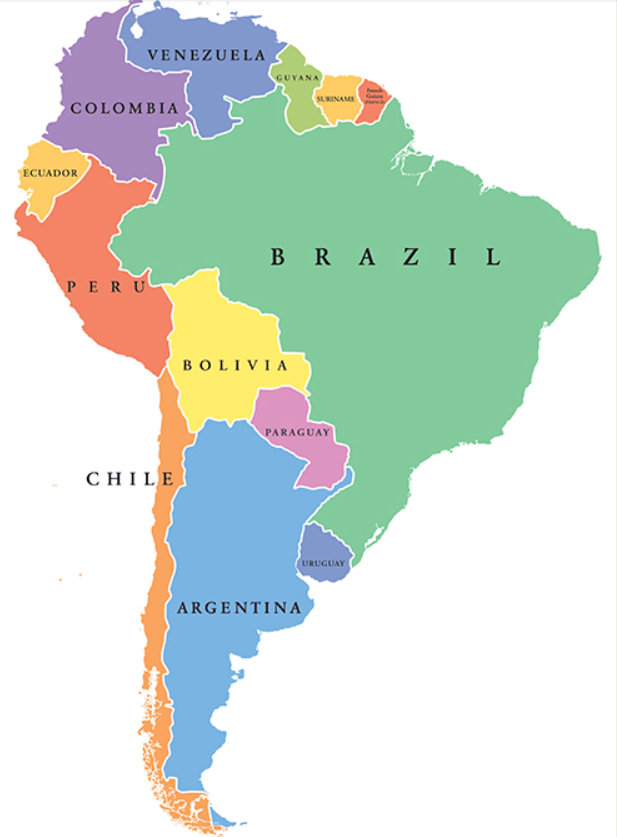
It seems that many people are not aware that Peru produces a variety of quality wines. In fact, it is the oldest wine producing country in South America, ahead of the more familiar wine nations of Chile and Argentina.
Photo credit: heinens.com
Because of the early Spanish settlers, Peru has a strong Spanish influence. During the 16th century Spanish conquistadors planted grape varieties that came from the Canary Islands. The 17th and 18th centuries were the golden age of wine production with Peruvian wine being sold throughout South America.
Unfortunately, during the 19th century viticulture suffered as a result of earthquakes, volcanic eruptions and phylloxera, an insect pest of grapevines worldwide. There were also economic restrictions imposed by Spain resulting in growers refocusing and producing crops other than grapes.
Those vineyards that remained changed their focus from wine making to producing pisco. Pisco is a pale yellowish to amber coloured spirit. It is produced by distilling fermented grape juice into a high proof spirit. Alternatively, grapes were used to make Borgoña, which is a sweet wine made from Isabella hybrid grapes.
Today Peruvian winemakers are once again focused on producing fine wine. They have modernized their wineries and repurposed their vineyards with the help of international consultants.
Producers are following one of two different paths. One is to grow European grape varieties, notably Malbec, Cabernet Sauvignon, Syrah, Merlot, Tannat, Sauvignon Blanc and Chardonnay. The other choice is to raise heritage grapes that have historically been used to make pisco. These include Quebranta, Mollar, Negra Criolla, Torontel, Muscatel Negro del Perú, Albilla and Italia. Some of these have been around since viticulture first began in South America, while others were bred there.
Production of wines from heritage grapes is a way to differentiate Peruvian wines from the other South American counties. On the other hand, there is plenty of potential to produce unique expressions using international varieties such as Malbec, Syrah, Cabernet and Muscat.
Whether you select a Peruvian wine made with heritage grapes or European varieties, the taste experience is well worth the effort to find one of these treasures along your wine store shelves.
During a recent trip to the maritime provinces of Canada, I made a point of seeking out local wines to try. The first I came across while in St. Andrews by the Sea, New Brunswick; the second I found in North Rustico, Prince Edward Island and two while in Nova Scotia.
The first wine my wife and I tried was a 2019 Marquette from the Magnetic Hill Winery of Moncton, New Brunswick. It was a light bodied red wine similar to a Pinot Noir. It had aromas of cherries, blackcurrants and blackberries. The wine was a pleasure to drink and reasonably priced at $20.00 CDN.
The Marquette varietal is the cousin of the Frontenac varietal, which is a well-known French North American hybrid, and a descendant of Pinot Noir. This wine pairs well with pub foods such as cheeseburgers, bangers (sausages) and mash and chili con carne.
The second wine we tried was a $21.99 CDN Gamay from Matos Winery & Vineyards of St. Catherines, PEI. Until then I was not aware that there is a winery on PEI.
Matos Winery & Vineyards is a family-owned and run business that was initiated in 2007. They utilize the French concept of terroir whereby they found a location where the combination of soil, slope, sun exposure and the peculiar weather patterns allow certain grape varieties to thrive. They consulted with European vintners who visited PEI to provide their skill and knowledge.
Their Gamay has won a bronze medal at the National Wine Awards in 2016, 2014, 2012 and silver in 2011.
The first wine from Nova Scotia that we tried was the 2022 Baco Noir from Blomidon Estate Winery, of the Annapolis Valley, near Canning.
The 2022 Baco Noir has a nose of bright berry fruit accentuated by vanilla and notes of spice. Unfortunately for us, we found the wine to be slightly harsh and not quite as smooth and mellow as we have become accustomed to for Baco Noir. The price of this wine is $23.00 CDN.
Given the structure of this wine it would be best suited for pairing with barbecued beef or pork.
Blomidon Estate produces 100% Nova Scotia grown grapes and wines. Over the years they have earned several national and international awards.
The 2nd wine from Nova Scotia we experienced was Founders’ Red from Jost Winery, which is made from a blend of Leon Millot and Marechal Foch grapes. We experienced this wine during a quiet afternoon at our B&B outside of Cap-Pelé, New Brunswick. Like the day, this wine was very smooth and mellow. It had wonderful fruit flavours and was well worth the $17.19 CDN we paid for it.
Founders’ Red is a well-balanced blend of Nova Scotian-grown grapes with deep colour and intensity. This wine pairs well with barbequed meats and roasted pork.
Wings and beer are pretty much standard fare, a pairing seemingly made in heaven. When it comes to pairing drink with wings, usually the last thing to come to mind is wine. However, I am here to talk about wine, not beer, so here are some fun and interesting wine pairing suggestions for the next time wings are on the menu. The only challenge will be keeping the sticky sauce off your wine glass.
Photo credit: mapleleaffarms.com
When it comes to pairing wine with wings, it is all about the sauce. The wine needs to match the spice, heat and acid found in the wing sauces. Therefore, the wine must calm the heat, highlight the sauce’s acidity with its own acidity and complement the spiciness – a relatively easy task.
Here are some of the more typical wing varieties and corresponding wine recommendations:
BBQ
There are many varieties and interpretations of BBQ sauce. But when it comes to wings, the sauce is likely to be sweet and heavy. Such big bold sauces call for a big bold red wine, such as Cabernet Franc, Tempranillo, Zinfandel or Carménère. The intense red and black fruit you find in these wines will complement the tomatoes and spices found in BBQ wing sauce. The high tannins will offset the heat of chili and cayenne.
Savory, herbal notes found in these reds will go well with the garlic and onions in the sauce. And the wine’s dry nature will offset the sweetness of brown sugar and molasses.
Buffalo
This is a classic made from butter and hot sauce with heat levels ranging from mild to super hot. A sweeter wine such as Riesling, Vouvray or Gewürztraminer is just the thing to pair with spicier foods. The higher acidity of these wines will cut through the buttery sauce and the fatty chicken beneath.
Garlic Parmesan
The light, stone fruit flavours of Pinot Grigio will pair well with the taste of garlic and hit of flavour of the Parmesan cheese.
Honey Garlic
Sweet and savory, honey garlic wings tend to forego heat for a big aroma, along with a tangy flavour. Honey and garlic are both strong flavours so the wine needs to support the aromas and flavours. Sparkling Rosé, Crémant d’Alsace, Chenin Blanc or Prosecco will work well in this regard.
Honey Mustard
The sweet tang of honey mustard wings will go well with an unoaked or slightly oaked Chardonnay.
Jerk
Rosé is the perfect pairing for quelling the lingering heat of chicken wings coated with a peppery jerk rub.
Korean-Style
The bright acidity of a Grüner Veltliner is a great pairing for crispy Korean-style wings.
Lemon Pepper
Whether you’re trying a dry rub or a sauce, lemon pepper wings offer a light, zingy flavour that is typically less spicy. It will pair well with wines with lots of citrus flavour and acidity. A French Sauvignon Blanc, Chablis or Dry Riesling are good choices. These wines typically have brilliant lemon aromas, along with a strong sense of minerality that will go with the hit of pepper.
Sweet Chili
Thai-inspired wings are both the sweet and the spicy. Generally, a Thai Chili sauce packs less heat than other wing sauces so an overly sweet wine is not required. An off-dry white or light red can easily offset the spice. Good wine pairings include Chenin Blanc, a sweet Riesling, Zweigelt or Pinot Gris.
Teriyaki
A light fruit forward Spanish Garnacha will complement the sweet glaze of teriyaki wings.
I strongly suggest having a glass of wine along side your next feed of finger-licking good chicken wings. It may surprise you.
Last week I began the discussion on wine glasses. Now I will turn the discussion to the specific types of glasses used for the various varietals of red and white wine.
White Wine Glasses
Having short bowls and long stems, these glasses are perfect for capturing the bright acidity in white wines. The glasses are smaller than red wine glasses, with a less curved bowl and a much narrower opening. White wines don’t require as much space to breathe as reds, and these glasses help deliver subtle aromatics by bringing the wine closer to your nose. There are specific white wine glasses that are designed to enhance full-bodied white wines and those that work best with high-acid wines.
Chardonnay Wine Glasses
White varietals like Chardonnay are best served in a Chardonnay glass. The u-shaped bowl and long stem help the wine’s notes to shine and keep the warmth of your hand away from the bowl. A Chardonnay glass works well with other full-bodied whites such as Viognier, Chenin Blanc, Trebbiano and Sémillon. For oaky Chardonnays, a Pinot Noir wine glass may also be used.
Sauvignon Blanc / Riesling Wine Glasses
Sauvignon Blanc and Riesling wines can be served in the same style of glass. The mid length stem and the narrow bowl will taper slightly. The smaller bowl makes it easier to enjoy the aromas in the wine.
Dessert / Port Wine Glasses
Dessert wine glasses are available in many shapes and sizes, but they tend to be much smaller than standard wine glasses, as these high-alcohol wines are commonly served in two-ounce pours. These glasses will strengthen the aromas and flavour of dessert wines.
Champagne Flutes
Tall and thin, the traditional Champagne flute is generally a visual sign for a celebration. With a small surface area, streamlined straight lines and sturdy base, these glasses help preserve the rising bubbles in Champagne, Sekt, Cava and other sparkling wines. The design helps keep the wine’s bubbles at the base of the glass.
Red Wine Glasses
The overall height and bowl of red wine glasses are larger than those used for white wine. The shape and thickness of a glass influences the aromas, tastes and textures in the wine. The wide bowls on red wine glasses are ideal for swirling, aerating and smoothing the wine, similar to what a decanter would do. This allows the fruity, floral and minerally aromas and flavors to soften, creating a balanced wine tasting experience.
Cabernet Sauvignon / Bordeaux / Merlot Glasses
Bordeaux glasses are designed to enhance full-bodied red wines such as Cabernet Franc, Cabernet Sauvignon, Merlot and Bordeaux blends. These glasses are a good match with tannic wines that are often higher in alcohol. The tall bowls and tapered rims round out the flavour intensity and increase alcohol evaporation.
Syrah / Shiraz / Sangiovese / Malbec Glasses
This style is shorter than the Cabernet Sauvignon type glass and has a smaller bowl, designed for medium to full-bodied red wines. The wine’s flavour and spice are softened because the wine hits your palette more gradually due to the smaller opening. The narrower bowl is more tapered to help trap the aroma.
Pinot Noir / Burgundy Wine Glasses
Pinot Noir/Burgundy glasses are perfect for light-bodied reds but are also good for Rosé and oaked Chardonnay. A Pinot Noir glass has a shorter stem and very wide bowl and slightly tapered rim that softens the acidity and tannins. This enables aeration so the delicate floral aromas of the wine can be appreciated.
Universal Wine Glasses
Most glassware manufacturers offer grape and regional specific wine glasses designed for specific styles of wine. This is great if your preferred choice is one style or grape varietal. However, this is not so good if you don’t just like one type of wine. In this situation, a universal wine glass may be a better option, especially if you only want to have a single type of wine glass in your cupboard.
Also, for people just getting started, universal wine glasses are a good investment. These glasses do a reasonable job of balancing the aromas and flavour of most types of wine. They are characterized by having medium-sized bowls, stems and bases, making them versatile, regardless of the varietal or occasion. They are good for serving red, white and sparkling wines.
Stemless Wine Glasses
Despite the risk of warming the wine with the heat of your hand, stemless wine glasses are a good practical option for everyday use and casual gatherings. Having a universal bowl, these glasses are often a good choice when there are young children or active pets around, reducing the likelihood of both spillage and breakage.
Being only 30 miles long and several miles wide, California’s Napa Valley American Viticultural Area (AVA) is one of the smallest winegrowing regions in the world, with only one-sixth the planted acreage of Bordeaux. About 95% of the wineries are family-owned businesses. The region’s established viticultural practices result in low yields of high-quality grapes, from which the winemakers produce Napa Valley’s renowned wines, which include Cabernet Franc, Cabernet Sauvignon, Merlot, Pinot Noir, Zinfandel, Chardonnay and Sauvignon Blanc. Napa generates only 4% of California’s wine grape harvest but has an extraordinary mixture of microclimates, weather and geography, as well as some of the most varied soils found in a wine region anywhere.
In 1968 Napa Valley became the home of the first Agricultural Preserve in the U.S., a long time before environmental issues became a major concern. Today it has the most comprehensive and stringent land use and environmental regulations of any American winegrowing region.
Napa contains 16 sub or nested appellations, each with its own distinct microclimate and terrain that provide recognizable characteristics on the grapes grown there. These sub appellations are presented alphabetically below:
Photo credit: bigvalleywines.com
Atlas Peak
The elevation ranges between 230 to 800 metres above sea level with temperatures in the summer that are about 10–15° cooler than the valley floor. There is low day-to-night temperature range, with summer temperatures rarely rising above 32° Celsius.
Cabernet Sauvignon and Chardonnay grapes are grown in this region.
Calistoga
Daytime summer temperatures may reach more than 38° Celsius and fall to as low as 4° at night. There are cool afternoon and evening breezes. Elevations range from 90 to 370 metres above sea level.
The main varietals grown in this area are Cabernet Sauvignon, Zinfandel, Syrah and Petite Sirah.
Chiles Valley
Temperatures peak in the 25° range but the higher elevation and summer fog at night result in nighttime temperatures in the 10° range. With an elevation of 180 to 370 metres above sea level, there are colder winters and springs, as well as strong winds, which results in the harvest coming later than down in the valley.
The key varietals are Cabernet Sauvignon, Merlot and Cabernet Franc.
Coombsville
Because of the cool maritime winds from the San Pablo Bay, as well as the Petaluma Gap, high temperatures rarely get above 27° Celsius. This appellation is at a low elevation not exceeding 200 metres above sea level.
The grape varietals include Pinot Noir, Merlot and Chardonnay.
Diamond Mountain
There are moderately warm temperatures in this region, with less fluctuation than the north Napa Valley floor. Summertime temperatures range from 10° t0 30° Celsius. The elevation ranges from 120 to 670 metres above sea level.
Cabernet Sauvignon and Cabernet Franc varietals are grown in the region.
Howell Mountain
Howell Mountain is situated above the fog line on the eastern side of the valley. This area is warmer and drier than the other appellations because of more hours of sunshine and an insignificant amount of marine influence. The elevation ranges from 180 to 800 metres above sea level.
Cabernet Sauvignon, Merlot and Zinfandel grapes are grown in this area.
Los Carneros
With marine winds from the San Pablo Bay and the Petaluma Gap, high temperatures rarely exceed 27° Celsius. Elevations range from sea level to 215 metres above sea level.
Varietals grown include Pinot Noir, Merlot and Chardonnay.
Mount Veeder
There is a cool to moderate temperature in this region, with most of the vineyards situated above the fog line. This results in warmer nights and cooler days than on the valley floor below. Normal summer highs are in the 30° Celsius range. Elevation ranges from 150 to 800 metres above sea level.
Cabernet Sauvignon, Merlot, Zinfandel and Chardonnay grapes are grown.
Oak Knoll
Having a moderate to cool climate with marine air and fog often remaining until late morning, afternoon breezes often develop, maintaining summer temperatures that reach as high as 33° Celsius. Elevations rise from sea level up to 150 metres.
The varietals include Cabernet Sauvignon, Merlot, Chardonnay and Sauvignon Blanc.
Oakville
The climate is moderately warm, with temperatures generally in the mid-30s during summer, but are impacted by night and early morning fog. Elevations are the same as Oak Knoll, rising from sea level to 150 metres.
However, only Cabernet Sauvignon, Merlot and Sauvignon Blanc varietals produced here.
Rutherford
The region is moderately warm, marginally influenced by early morning fog. Summer temperatures usually rise to the mid-30s, with a distinct day-to-night fluctuation in temperature. Elevations range from sea level to 180 metres.
Grape varietals include Cabernet Sauvignon, Merlot, Cabernet Franc and Zinfandel.
St. Helena
Less fog and wind, along with heat reflecting off the hillsides, see summer temperatures often reach the mid-to-high 30s. Elevations range from 30 to 200 metres above sea level.
Grape grown include Cabernet Sauvignon, Cabernet Franc, Merlot, Syrah and Zinfandel.
Spring Mountain
Cool weather prevails as most of the vineyards are located above the fog line, providing warmer nights and cooler days than the valley floor below. Mid-summer temperatures reach 30° Celsius. Elevations range from 180 to 800 metres above sea level.
Grapes grown include Cabernet Sauvignon, Merlot, Cabernet Franc, Chardonnay and Zinfandel
Stags Leap
This region is moderately warm with afternoon marine winds cooling the warmer air. Summer temperatures can reach to about 40° Celsius but are normally in the mid-30s. Elevations range from sea level to 150 metres.
Grapes grown include Cabernet Sauvignon, Merlot, Chardonnay and Sauvignon Blanc.
Wild Horse Valley
This is one of the warmer regions with summer temperatures hovering in the mid-30s. Elevations range from 180 to 600 metres above sea level.
Varietals include Cabernet Sauvignon, Pinot Noir and Chardonnay.
Yountville
Moderate, with cool marine influence and morning fog, summer mornings are cool in this region. Marine breezes keep afternoons more comfortable than further up the valley with high temperatures reaching 32° Celsius and nighttime lows dropping into the teens. Elevations range from just above sea level to 60 metres.
Varietals are limited to Cabernet Sauvignon and Merlot.
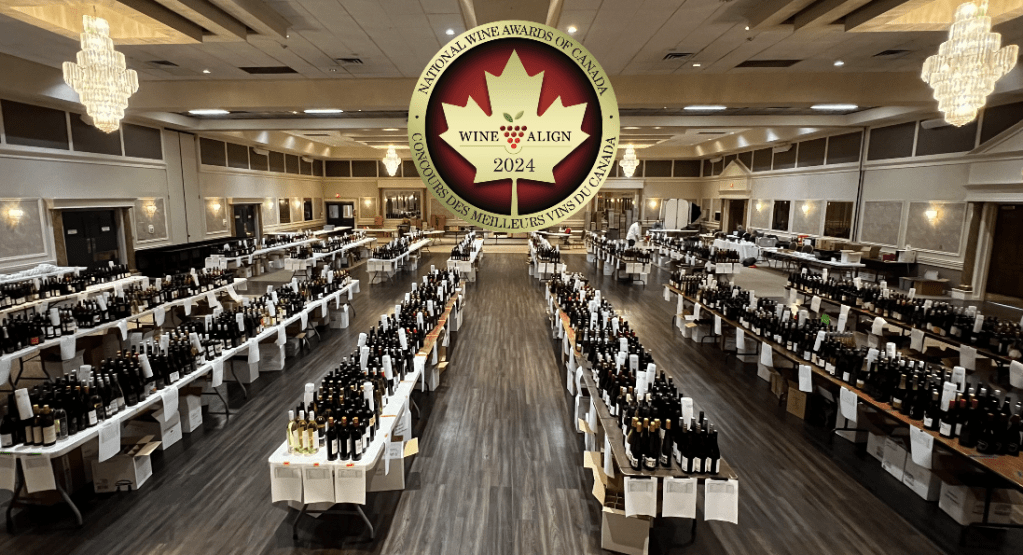
Here is what the organizers and judges were seeing, hearing and thinking at this year’s WineAlign National Wine Awards of Canada (NWAC). Their narrative has been separated by each judging category and presented below.
Photo credit: winealign.com
Sparkling Wine
While global wine consumption has decreased over the past two years. Sparkling wine, except for costly Champagne, has progressed upwards. In Canada, the Sparkling category burst during the pandemic, especially with accessible and affordable selections. The quality of Canadian sparkling wine continues to improve.
Red Blends
Red blends are abundant in both British Columbia and Ontario, making it the second largest category at the National Wine Awards. There is a variety of styles and grape varieties.
Bordeaux blends and Rhone blends continue to be important, but winemakers are increasingly evolving beyond the traditional French classic style. The next frontier is beginning to appear where blends consisting of Malbec, Carménère and Syrah are part of a new wave of Okanagan red blends.
White Blends
Winemakers continually mix and match with several varietal combinations. There are many permutations made with traditional varietals, as well as hybrid grapes.
There are no firm rules other than those set out by VQA which says that all the grapes in a labeled bottle must come from the province, an appellation and sub-appellation. Beyond this, the choices are endless, allowing white blends to vary from the traditional to the eclectic. Concepts include the Bordeaux combination of Sauvignon Blanc and Sémillon, Rhône blends that may include Marsanne, Roussanne and Viognier, but also Grenache Blanc, Clairette Blanche, Bourboulenc, Picpoul and Ugni Blanc. This year, British Columbia has continued to set the trends for blending and styles.
Rosé
There is a great deal of flexibility with respect to producing Rosé wine. Extraction levels and pigmentation can vary, many red or combination of red and white grape varietals can be used and there are no rules overseeing sweetness levels or oak aging.
Most Rosés are not meant for extended aging and are often best consumed in the year in which they are made. In Canada, most Rosés are bottled from March to June and make it to the stores between April and July.
Pinot Gris/Grigio
This white wine grape is a mutation clone of the black Pinot Noir grape. The skin colour varies greatly, and the wines produced from Pinot Gris also vary in hue from palest yellow to deep golden to blushing salmon. Pinot Gris also goes by its Italian name, Pinot Grigio. Wines made in the fresh, crisp and unoaked style of Italy’s Veneto region are called Grigio, while those in a richer, riper version go by Gris.
Orange
Orange wines are skiin contact white wines. There is no rule as to the length of the contact period or the grape varietals used. These wines range widely in colour and style.
Niagara’s popular Vidal grape responded well to skin contact, bringing texture and complexity to its tropical fruit profile. However, aromatic Gewürztraminer, with its subtly oily mouthfeel and subtle tannic framework, also showed well.
Gamay
Things change each year as there are new entries from newer wineries making Gamay. Some things also remain the same as many long-time advocates and committed Gamay producers continue to make excellent wines.
Pinot Noir
No other grape causes more of a stir. For many, there is no other grape variety. Pinot Noir has found enormous global success and Canadian soils are largely responsible for that. From agile, transparent, high-toned, red berry charmers to darker, seriously ripe and often tannic iterations, Pinot Noir succeeds with harmony and balance.
Chardonnay
This is always one of the largest categories in the competition. Chardonnay always leads or equals the greatest number of medals from platinum to bronze. Prices ranged from $87 for the most expensive medal winner to $11.95 for the least costly.
While the most expensive wine was not a platinum winner, there is a correlation between price and medal earned, establishing that top quality wine sells for more money. The average price for the platinum winners came in at just over $45, $40 for gold, $39 for silver and $33 for Bronze.
Malbec and other Red Single Varieties
Malbec represented 18 of the 41 medal winners in this category and accounted for 7 of 8 of the gold medals. It accounted for just 1.4% of entries in the competition but earned 4.1% of all gold medals.
This trend is almost entirely driven by British Columbia. There is something special about Okanagan Malbec. Much like Syrah, it does well up and down the valley.
Other White Single Varieties
Chardonnay and Riesling are often singled out as the signature grapes when it comes to top quality Canadian white wine. There are many other white varieties producing spectacular results including Grüner Veltliner wines from British Columbia.
Chenin Blanc is another consistent performer in BC and Ontario, making vibrant, fruit- forward wines.
Sleek, elegant Sémillon wines are also cropping up with increased frequency from coast to coast, as single variety wines and in classic Sauvignon blends.
Pinot Blanc proved its merit for good value, easy drinking white wine.
Gewürztraminer and Viognier
Viognier and Gewürztraminer remain minor varieties on the Canadian wine scene. Both grapes are particularly unreliable in Ontario, where Gewürztraminer accounted for just 2% of total production in 2023. Viognier is so rare that it is in the “other” category in the VQA’s annual report. In B.C. Gewürztraminer places a respectable 4th among white varieties in 2023, behind Pinot Gris, Chardonnay and Riesling. Viognier sits in ninth position alongside other Rhône varieties suitable to the West Coast’s unique conditions.
Sauvignon Blanc
At this year’s competition, Sauvignon Blanc took great strides and gained increased favour from judges and wine lovers. There were 32 medals awarded, with 20 going to Ontario and 12 to British Columbia. Of impressive interest is the average price of the 16 Silver Medal winners. These are wines that scored 90 points with an average cost of $23.40.
Syrah
“Syrah” above “Shiraz” is the key style in Canada. Reflective of a French Rhône style “Syrah”, as opposed to “Shiraz”, wines labelled as such tend to be distinctively peppery, with more sharp tannins, lower alcohol and exhibit more freshness than “Shiraz”. Yet in Canada, there is no enforcement over the use of these terms. Vintage variation and place do play a deterministic role, but the style of Syrah in Canada is heavily influenced by winegrowing and winemaking decisions that vary from producer to producer.
Ontario can produce excellent Syrah, but the category has forever been dominated by British Columbia.
Riesling
Canada has many great and quality examples of Riesling. It is a variety that truly expresses the place where it is grown. Riesling also counts among some of Canada’s oldest planted vinifera varieties, with plantings dating back to the mid 1970’s and early 1980’s in both Niagara and the Okanagan Valley.
Icewine & Late Harvest
Icewine, is the most important wine export. Now more than ever, due to erratic weather patterns, production is being threatened. Since the start of Icewine production in the 1970’s, a harvest has never been missed despite coming close a few times because of a mild winter in Ontario.
VQA regulations require the grapes to be naturally frozen on the vine, harvested, and pressed while the air temperature remains at or below -8 degrees Celsius. Recurrent periods of freezing and thawing can cause grapes to split, increasing unpredictable acidity in the wine. Production is a physically demanding task for both for the vines, that must bear their fruit into the cold of winter, as well as for the winemaker, who often harvests on the coldest of winter nights.
Cabernet Sauvignon
The number of gold medals has dropped from 13 in 2022 to 10 in 2023 to 7 this year. Despite the results, it is the category that has the most potential.
Cabernet Sauvignon is the most widely planted grape in the world, but such is not the case in Canada. It is the third most planted red variety in British Columbia, with 7.7% of total grapes grown. In Ontario, Cabernet Sauvignon represents only 5.9% of the grape harvest. There’s been a consistent downward trend, as a percentage of tonnage, over the last five years.
Cabernet Franc
Ontario has historically had a slight edge over the Okanagan Valley, given Ontario’s generally cooler and wetter climate, which suits the lighter, aromatic style that the judges tend to favour. However, the margin of difference has always been slim.
This year Ontario captured 38 out of 53 medals in total. However, British Columbia’s representation was impacted by the wildfires that severely impacted the Okanagan Valley in 2021, which resulted in smoke-tainted wines from some parts of the valley. Since these wineries did not submit any smoke-tainted wines, the number of submissions from B.C. was reduced significantly.
Merlot
Merlot remains the number one red planted grape in British Columbia.
There you have it; and that’s a wrap on the 2024 National Wine Awards.
The WineAlign National Wine Awards of Canada (NWAC) is the country’s largest competition, involving only 100 percent Canadian-grown and produced wines. The judging involves a select group of Canadian wine writers, educators, sommeliers and two international judges who spend a week assessing some 2000 wines and ciders. This year’s competition took place near Niagara Falls, Ontario.
Double Honour
The Winery of the Year and Small Winery of the Year is Kelowna British Columbia’s SpearHead Winery. In addition to the twin honours this year, they also had unprecedented success in an individual category (Pinot Noir), winning a total of seven medals for their Pinots, including three platinum, one gold, three silvers and a bronze. In total they earned a total of twelve medals.
Top 10 Wineries
Six of the top ten wineries this year are from British Columbia, with the remaining four from Ontario. The top ten are:
SpearHead Winery, British Columbia
Meyer Family Vineyards, British Columbia
Henry of Pelham, Ontario
Black Hills Estate Winery, British Columbia
Thirty Bench Wine Makers, Ontario
Quails’ Gate Estate Winery, British Columbia
Nostalgia Wines, British Columbia
Peller Estates Niagara-on-the Lake, Ontario
Lake Breeze Vineyards, British Columbia
Vieni Estates, Ontario
The Top 10 Small Wineries
Seven of the top ten small wineries are from British Columbia, with the remainder from Ontario. The top ten are:
SpearHead Winery, British Columbia
Meyer Family Vineyards, British Columbia
Nostalgia Wines, British Columbia
Lake Breeze Vineyards, British Columbia
The Organized Crime Winery, Ontario
Corcelettes Estate Winery, British Columbia
Black Bank Hill, Ontario
Kismet Estate Winery, British Columbia
Fort Berens Estate Winery, British Columbia
Lailey Winery, Ontario
Regional Top 10 Winners
British Columbia
SpearHead Winery
Meyer Family Vineyards
Black Hills Estate Winery
Quails’ Gate Estate Winery
Nostalgia Wines
Lake Breeze Vineyards
Corcelettes Estate Winery
Nk’Mip Cellars
Burrowing Owl Estate Winery
Kismet Estate Winery
Ontario
Henry of Pelham
Thirty Bench Wine Makers
Peller Estates Niagara-on-the-Lake
Vieni Estates
The Organized Crime Winery
Black Bank Hill
Two Sisters Vineyards
Lailey Winery
Hidden Bench Estate Winery
Marynissen Estates
Platinum and Gold Medal Winners
Only 1% of the wines entered earn a Platinum Medal. This year, 18 out of 1,800 wines received this recognition. Every Platinum winner has passed through a minimum of two tastings and a review by a minimum of five judges. These wines must be put forward by at least three judges in the first round and re-considered by at least five judges in the second round.
Earning a Platinum Medal greatly increases a winery’s performance score based on the mathematical degree of difficulty in reaching Platinum. This helps to decide the Winery of the Year and the Top 25 list.
Platinum and Gold medals were awarded in the following categories, presented alphabetically below:
Cabernet Franc
Platinum Medal
Black Bank Hill 2020 Cabernet Franc, Lincoln Lakeshore, Niagara Peninsula, Ontario
Vieni Estates 2022 Cabernet Franc, Vinemount Ridge, Niagara Peninsula, Ontario
Gold Medal
Bordertown 2020 Cabernet Franc Reserve, Okanagan Valley, British Columbia
Domaine Queylus 2022 Cabernet Franc Réserve du Domaine, Niagara Peninsula, Ontario


 A Layman's Wine Musings