Wine for a Summer Picnic

With summertime fast approaching it will soon be time to focus on going to the beach and picnics.  The recipe for a great picnic is great weather and food and of course, wonderful wine.   A good picnic wine will be refreshing, balanced, and will pair well with the foods you pack. A picnic should not require a lot of fuss and muss.  The focus should be on sharing good food and wine with family or friends.  If it requires a huge amount of time and effort to prepare, the outcome is probably not worth the effort.

Photo credit: foodbankwma.org

One thing not to do is consider a picnic the same as a barbecue.  The wines that pair well at a barbecue are not necessarily the same ones that work well at a picnic. Barbecues are all about bold and spicy where picnics are more about a broad spectrum of lighter fare. Most of the foods served at a picnic will be cold and on the lighter side.

Common picnic foods include things such as potato salad, cold fried chicken, cheeses and crackers, charcuterie, fresh bread and fresh fruit. Wines best suited include cool, crisp, whites, rosés or very light reds.

White wine options include Sauvignon Blanc and Fumé Blanc which are dry, crisp, herbal whites that are ideal for summer sipping. They won’t overpower picnic food.  Chenin Blanc, Pinot Gris/Pinot Grigio or Pinot Blanc are fruitier but still light and perfect for a picnic. They are bright, acidic and loaded with crisp citrus fruit and minerality.

A dry Riesling with crisp acidity and light mineral flavours will pair well with spicier foods such as charcuterie.  Moscato d’Asti is a lightly fizzy white with apricot and almond flavours that will pair well with fruit and salads.

A freezer sleeve that slides over a standard 750 ml. bottle will keep your wine chilled.

Rosé or blush wines are versatile. They should also be served chilled the same as whites. These lightly acidic wines offer fruit flavours such as melon, strawberry and red fruit qualities that pair well with cheese and crackers, seafood, salads or cold chicken.

Light red wines with less alcohol, such as Pinot Noir, Gamay, and Beaujolais would be good choices for a picnic, particularly charcuterie and cold cuts. While these wines don’t need to be served chilled, they should not be overwarmed so transporting them in a cooler would be a good idea.  Set them out about 10 minutes before serving.

Sláinte mhaith

Rosé With a Difference

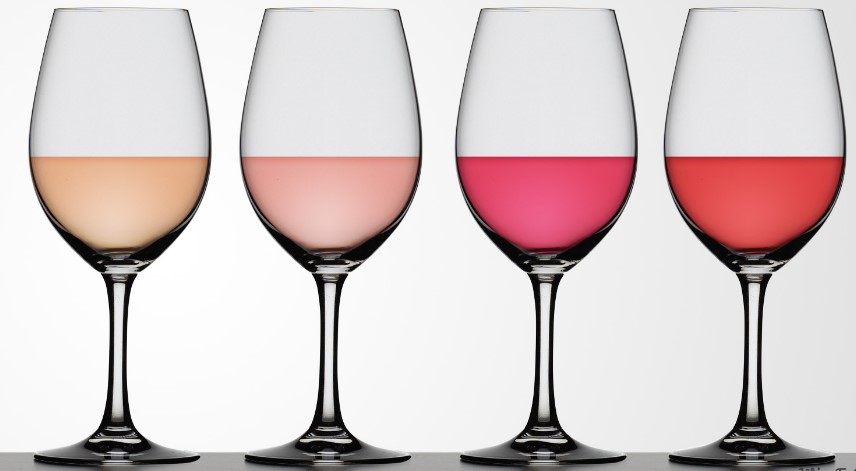
Now that the warm weather is here it is a great time to crack open a bottle of Rosé.  Pale Rosé is by far the most common and thus the most popular type of Rosé but there is a second less known, darker Rosé.

Photo credit: winefolly.com

Darker Rosés can have a fuller body and a greater concentration of flavours.  They may be more complex and structured, making them able to pair well with a wider array of summertime foods.

The most common types of red wine grapes used to make Rosé are Grenache, Sangiovese, Syrah, Mourvèdre, Carignan, Cinsault and Pinot Noir.  The skins are generally exposed to the wine for only a short time. Where some red wines ferment for weeks at a time on red grape skins, rosé wines are left for just a few hours.  However, when making dark Rosé, only dark-skinned varietals are used, such as Mourvèdre, Cinsault, Syrah, Merlot, or Cabernet Sauvignon.  The grape skins are also exposed to the wine for a longer period of time in order to gain more flavour.

Where light and medium bodied Rosés pair well with cheese, creamy sauces and dips, savoury canapés, mezes and tapas, darker Rosés will go well with smoke and char flavours of grilled meats and vegetables, as well as full-flavoured sauces.

The occasion for serving Rosé varies by type as well.  Light or medium-bodied ones are best served chilled and lend themselves well to sipping while relaxing at the cottage or in the backyard.  Darker Rosés, on the other hand, fair well served chilled, at a backyard barbecue.

Whichever Rosé you prefer, now is the best time of year to sit back, relax and enjoy a glass.

Sláinte mhaith

Wine From the Canary Islands

Wine is probably not the first thing that comes to mind when someone mentions the Canary Islands.  The Islands are a popular European tourist destination but they also have a thriving wine industry.

Photo credit: foodandwine.com

Wine production has a long history in the Canary Islands, but the modern era didn’t start until about the mid 1980’s. Since then wine exports have been increasing as more people discover these wines.

The Canary Islands are in the Atlantic Ocean about 100 kilometres west of Morocco. The main islands, from largest to smallest, are Tenerife, Fuerteventura, Gran Canaria, Lanzarote, La Palma, La Gomera, El Hierro and La Graciosa. They are a popular tourist destination because of their subtropical climate.  However, it is the distinctive volcanic wines that have been gaining global attention and critical acclaim over the past 3 decades.

Six of the eight islands, Tenerife, Lanzarote, Gran Canaria, La Palma, El Hierro and La Gomera produce wine.  The soils vary from island to island, formed by volcanic eruptions, landslides and erosion.  The soil ranges from light stone to very heavy basalt rock.

The climate also varies across the archipelago. The eastern islands consist of older geological formations with lower, more uniform altitude and a dry, desert-like climate. The western islands are higher, steeper and have a greater variation of microclimates.

There are 20 unique grape varieties found in the Islands along with more than 20 new varieties that are currently being studied.  Listán Blanco (aka Palomino) and Listán Negro are the most widely planted grapes on the Islands. Others include white wine grapes Malvasía Volcánica, Malvasía Aromática and Albillo Criollo, along with red wine grapes Negramoll, Vijariego Negro and Baboso Negro. There are a few plantings of international varieties, such as Syrah.  Each of the Islands has its own specialities.

Dry, high-acid whites and light, fruity reds are typical of the Islands but richer, oak-aged options exist as well.

The wine industry is very focused on gaining international recognition based on the unique and ancient grape varieties grown. The aim is for these wines to reach markets where they can gain more exposure and have the opportunity to grow in popularity.

In 2020, around 15 million gallons of wine (51% red and 49% white) were produced in the Canary Islands.

Some of the grapes from the Canary Islands can be found in South America. They were brought there by Spanish settlers in the 16th century.  One of the varieties was Listán Prieto, which can now be found in California (known as Mission), Chile (País) and Argentina (Criolla Chica).

Wine from the Canary Islands is occasionally available in the specialty section of wine stores in Canada.  These wines will be included with the other wines from Spain.

Sláinte mhaith

The Forgotten Grape of the Loire

The Lignage grape was virtually extinct several years ago.  The last known vine was situated in the National Research Institute for Agriculture, Food and Environment (INRAE) nursery at Montpellier, France.  Today, the number has increased but there are still well under a thousand vines in existence.

Photo credit: theglamorousgourmet.com

The revival of Lignage is part of a wider project overseen by a local group, the Union for Genetic Resources of Centre-Val de Loire (URGC).  URGC’s goal is to revitalize old grape varieties linked to the local area prior to the phylloxera infestation in the late 1800s. 

Phylloxera is an insect that can damage grape vines by feeding on the plant sap from the roots. It is often described as an aphid-like sucking insect.

Officially, the project is experimental at this point so the Lignage varietal is not listed on any appellation documentation.  Lignage’s history in the region dates back to 1427. It was also known as Macé Doux,  Macédoux, Massé Doux and Lignage de Blois. By the mid 1800s it had become well established in a winegrowing zone known as the Côte des Grouëts.

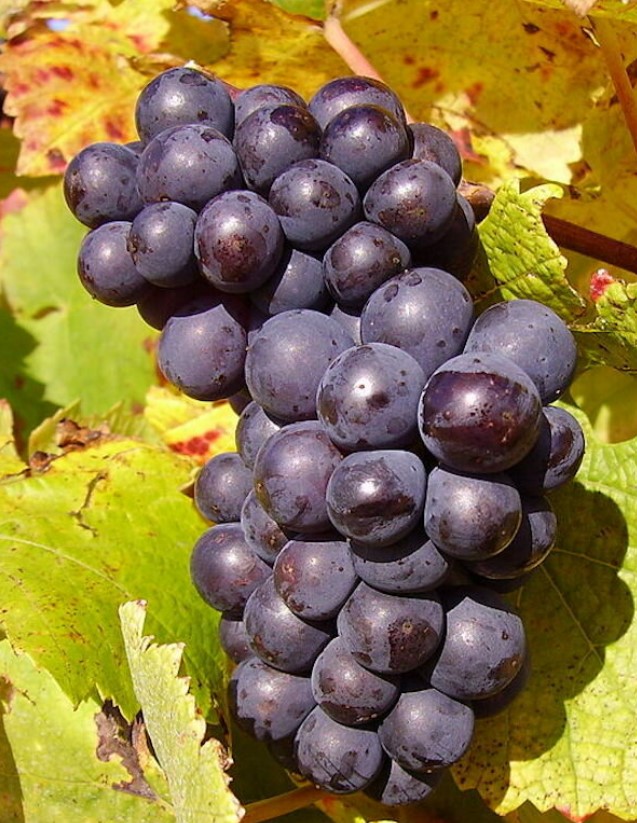
The variety is similar to Pinot Noir in that it produces a light-coloured red wine.  Having purple skin and a green flesh it can also be made into a white wine.

Not much is known about the wine that Lignage produced but according to written accounts the grapes produced a fine, delicate, lightly coloured red wine with fine aromas and a low alcohol content.  More information should be known by 2024 when the first trial wines are expected to be produced. It is anticipated that by 2028 the varietal will return as an official vine and be available for more extensive planting. 

I look forward to perhaps having the opportunity to try Lignage at some point in the future.

Sláinte mhaith

Argentina’s Bonarda Grape

Bonarda grapes are pretty much unique to South America’s Argentina, where, after Malbec, it is the country’s most produced varietal.  It was first introduced in Argentina in the 1800s.  It is not the same grape as the Bonarda from Italy.  The Argentinian varietal is actually named Douce Noir, which originated in Savoie, France.

Photo credit: NatalieMaclean.com

It was initially used to add colour and a fruity flavour to Argentinian-produced blends.  However, it has since been found that it can stand on its own as a single varietal.  The key to using Bonarda on its own is to use grapes only from the more mature vines. There are plantings that are over 100 years old.

Bonarda grapes mature well in oak barrels and the resulting wines are characterized by complexity and spice with great structure and medium-full body.  The wine will have hints of plum, cherry and fig.  The colour is deep and dark. There is a medium level of tannins which allow it to be cellared for five to ten years, though it is ready to drink when it is released from the winery.

Bonarda will pair well with grilled pork, roast chicken or even grilled salmon.

If you haven’t tried it before, Argentina’s Bonarda is worth seeking out at your local liquor store.  Who knows, it may become your next favourite medium-bodied red wine.

Sláinte mhaith

Wine’s “Best Before” Date

Photo credit: CanadianTire.ca

As a follow-up to my blog “To Age or Not to Age” from January 15th, I have put together a list of generally accepted retention times for common varietals of white and red wine. However, proper storage methods need to be followed in order to best achieve these results.  Refer to Wine Storage Options for information on how best to retain wine.

The information provided here refers to the length of time a wine can be retained, not the length of time a wine will necessarily continue to be enhanced.  In certain instances some vintages may be retained longer while others should be drunk shortly after purchase.

White Wine

There are a several white wine varietals that age well. The most renowned is Chardonnay, which gets its ability to age from a combination of higher acidity paired with oak-aging.

Sémillon is often blended with Sauvignon Blanc in the white blend of Bordeaux. Sémillon has been shown to age gracefully and develop interesting nutty flavours over time.

Riesling is Germany’s aromatic and often subtly sweet white has proven to do well during aging. As it matures it turns a rich yellow colour with aromas of petrol.  It may sound disgusting but tastes wonderful.

White Rioja or Rioja Blanca is a white wine that begins with citrus and mineral flavours but then becomes increasingly rich and flavourful with age.

Chenin Blanc wines from France’s Loire Valley have produced some great choices of wines suitable for aging. There are also some new options from South Africa that are making a name for themselves.

Fortified dessert wines tend to age longer than stilled wines. Sherry, Madeira and some Marsala have shown to improve in flavour over decades.  There are several botrytized white wines such as Sauternes and Riesling that age nicely for up to 30 years.

Drink Within 1 to 3 Years

  • Albariño
  • Chenin Blanc
  • Gewürztraminer
  • Grüner Veltliner
  • Moscato
  • Pinot Gris/Grigio
  • Prosecco
  • Dry Riesling
  • Sauvignon Blanc
  • Torrontés
  • Verdicchio
  • Vermentino
  • Vinho Verde

Drink Within 3 to 5 Years

  • Alsace White
  • White Bordeaux
  • Oaked Chardonnay
  • Oaked South African Chenin Blanc
  • Sémillon
  • Trebbiano
  • Oaked Sauvignon Blanc

Drink Within 5 to 10 Years

  • Oaked Grüner Veltliner
  • Kerner
  • Muscat
  • Oaked Albariño
  • Sweet Loire Valley Chenin Blanc
  • Hungarian Furmint
  • White Bordeaux
  • Burgundy Oaked Chardonnay
  • Chablis
  • Auslese German Riesling
  • White Cotes du Rhône
  • White Rioja/ Rioja Blanca

Drink Within 10 to 20 Years

  • High quality Chablis
  • Beerenauslese Riesling
  • Ice Wine
  • Late Harvest Riesling
  • Sauternes
  • Rutherglen Muscat
  • Vendage Tardive Alsace

Some red wines with high acidity and high tannin are perfect to lay down and age for a few years.   Here are some red wines that are known to age well:

Cabernet Sauvignon has a high range of variability because there are a wide range of quality levels and regions. Look for wines with deep color, a higher level of acidity, balanced alcohol levels and noticeable tannins.

Merlot will age in a similar manner as Cabernet Sauvignon. Wines become softer and often smokier with age. Right-bank Bordeaux wines are a great place to start when looking to find cellarable Merlot.

Monastrell/Mourvèdre has extremely high tannins and colour. In the Bandol region of Provence, France, this grape doesn’t usually fully develop its taste until after at least 10 years of aging.

Tempranillo is one of the best varieties for long-term aging.

Sangiovese is another top-notch grape variety to age long-term because of its spicy acidity. Over time it will mellow out and produce sweet fig-like notes.

Nebbiolo grapes produce wines with incredibly high tannins that softens and seems to sweeten over time.  Barolo and Barbaresco are great examples of wines made with Nebbiolo grapes that age extremely well.

Red Wine

Drink Within 1 to 3 Years

  • Beaujolais
  • Dolcetto
  • Gamay
  • Lambrusco
  • Primitivo

Drink Within 3 to 5 Years

  • Barbera
  • Cotes du Rhône
  • Garnacha
  • New world Merlot
  • Petit Syrah
  • Most Pinot Noir
  • Crianza Rioja
  • Viognier
  • Zinfandel

Drink Within 5 to 10 Years

  • Most Cabernet Franc
  • Carmenere
  • Chianti
  • Grenache
  • Malbec
  • Old World Merlot
  • Pinotage
  • Reserva Rioja
  • Sangiovese-based wine
  • Syrah
  • Tempranillo

Drink Within 10 to 20 Years

  • Amarone
  • Bandol
  • Barbaresco
  • Barolo
  • Red Bordeaux
  • Monastrell (aka Mourvèdre)
  • Brunello di Montalcino
  • Douro reds
  • Most Cabernet Sauvignon
  • Dulce Monastrell (sweet red)
  • Nebbiolo
  • Red Port
  • Some Sangiovese
  • Some Tempranillo

Sláinte mhaith

Triumph to Tragedy

My wife and I recently hosted a family dinner and for the occasion I asked my wife to purchase a Riesling to go along with it.  One of the challenges of living in a rural community is that the local liquor store doesn’t have a lot of choices when in search of a particular varietal. She returned home with Tawse 2017 Sketches of Niagara Riesling. 

When we opened and served the wine with the dinner my wife and I identified the bouquet right away, diesel fuel.  My wife was immediately turned off by it while I became positively excited.  This was the first Ontario Riesling that I have had that authentically portrays its Old-World style German cousin.

The wine was vibrant with subtle floral, nutty, fig, smoke and pear notes, a soft sweetness and long finish.   It is a great value at only $18.95.  Even though my wife was not a fan of the nose of a traditional German style Riesling, she did enjoy the overall flavour of the wine.

When I clicked on Tawse website to see if I could learn more about their German style Riesling, I saw that their wine maker, Paul Pender, had been tragically killed several days prior.  I never had the opportunity of meeting him but after tasting the Riesling, as well as other wonderful creations from Tawse, I certainly wish I had.  His untimely passing is a tragic loss to the entire wine community.

If you are a fan of Riesling, I suggest picking up a bottle or two of the Sketches of Niagara as a tribute to its creator.

Sláinte mhaith

New York State Wines

New York is the third largest wine producer in the United States, following California and Washington. New York produces roughly 3.5% of the U.S.’s wine production compared to California at over 84% and Washington at slightly over 5%.

There are eleven designated American Viticultural Areas (AVA).  An AVA is a designated wine grape-growing region in the United States as identified by the Alcohol and Tobacco Tax and Trade Bureau, and the United States Department of the Treasury. The AVAs are Champlain Valley, Long Island, North Fork of Long Island, The Hamptons Long Island; Hudson River Region; Finger Lakes, Seneca Lake, Cayuga Lake; Niagara Escarpment , Upper Hudson and Lake Erie.

Wine production began in New York in the 17th century with Dutch and Huguenot plantings in the Hudson Valley. Today the two dominant wine regions are the Finger Lakes and Long Island.  In 1976 the Finger Lakes and Long Island regions had 19 wineries. By 1985 this number increased to 63 wineries.

The climate differs amongst the eleven regions because of regional influences, such as the Atlantic Gulf Stream and the numerous bodies of water and mountainous regions around the state. The annual precipitation ranges from 76 cm to 127 cm. The growing season in the Lake Erie and Finger Lakes regions ranges from 180 to 200 days a year, while on Long Island the season extends to 220 days.

Today there are over 450 wineries throughout the state.

Riesling grapes consist of less than 10% of New York’s wine production but are used to make some of the highest quality wines. Other varietals include French hybrids, American hybrids and Vitis Labrusca, which are vines native to eastern North America.

American hybrids grown include Catawba, Delaware, Niagara, Elvira, Ives and Isabella. French hybrids consist of Aurore, Baco Noir, De Chaunac, Seyval Blanc, Cayuga, Vidal and Vignoles, which is used to make late harvest wines and ice wines.

I find it interesting that even though I can see New York State from a Muskoka chair in my yard I can very seldom find New York wine in my local liquor store.  On the other hand I can find California, Washington and even Oregon (ranked 5th in U.S. production at only 1.5%) wines all the time.  Especially in the case of Oregon, I am left to think that either Oregon wines are superior in quality and flavour to New York wines or they have a much more aggressive marketing plan, or both.  I can vouch for the quality of Oregon wine but have not had the opportunity to do the same for New York wine.

Sláinte mhaith

Pinot Noir, Pinot Gris, Pinot Grigio and Pinot Blanc

Pinot grapes come in a great variety and not only are they related, many varieties are quite closely connected through DNA.

However, before getting too far in this discussion it is important to point out that Pinot Gris and Pinot Grigio are in fact the same grape.  Confusion sometimes arises from there being two names.  Pinot Gris is what the grape is called in France, while the term Pinot Grigio originates in Italy.  

There are some noticeable differences in characteristics between the two, due to climate, soil and production techniques.  Pinot Gris tends to be a bit softer, with touches of honey and a smooth feel, while Italian Pinot Grigio is a bit more acidic with bitter almond undertones. Technically, there is also American Pinot Grigio which is most similar to Italian Pinot Grigio, but tends to be a bit less tart and more fruit-forward.

Similarly, Pinot Blanc and Pinot Bianco are one and the same as well; Pinot Bianco is the Italian name. Just as with Pinot Gris and Grigio, French Pinot Blanc and Italian Pinot Bianco produce markedly different wines.

The French versions from Alsace are musky and creamy-textured whereas those from Italy have livelier acidity, with pear or even soft citrus flavours. American Pinot Blancs are usually made in the French style, as the name suggests. Pinot Blancs pairs well with cheese-based dishes; Pinot Bianco goes nicely with light foods like chicken breasts or flaky white fish in a simple sauce.

Both the red and white grape are referred to as Pinot because the grape clusters resemble the shape of pine cones.  The latter half of their name refers to the colour of the grapes. Pinot Noir is a rather dark skinned grape, Pinot Gris are considered to have a gray coloured skin, and Pinot Blanc is considered to be is often a mix of bronze, green and pink grapes within the same bunch.

Pinot Blanc/Bianco and Pinot Gris/Grigio are colour mutations from Pinot Noir in which they lack pigment, producing the lighter grapes and fruitier wines. Pinot Blanc/Bianco has the least amount of anthocyanin.

The juices of all the Pinots are clear, but Pinot Noir is allowed to remain with its skin for a period of time which gives it its red colour.  Pinot Blanc/Bianco and Pinot Gris/Grigio on the other hand are not left with the skin, therefore creating a white wine.

With respect to taste, Pinot Grigio is noted for pronounced, often quite high, crisp and bold acidity.  Pinot Gris and American Pinot Grigio have softer, medium levels of acidity but it is still very present.

Aged, Pinot Gris/Grigio will tend to showcase a bit more acidity and structure than Pinot Blanc/Bianco. Pinot Blanc has a rounder expression. It’s actually among the regular, daily whites consumed in Alsace. Unlike the often brighter fruit flavours found in some Pinot Grigio, Pinot Blanc can tend towards apple and even some smoky flavours; it can also be oaked for a bit more richness.

Pinot Blanc is very versatile.  It is used in still wines, sweet, and sparkling wine. In northwestern Italy, Pinot Bianco is also used in Franciacorta, which is an Italian sparkling wine. It’s also a major component in Crémant d’Alsace.

Pinot Noir is semi-acidic, though because it is a red wine, the acidity is a bit less noticeable. It is a light bodied red wine with flavour notes of red berries, cherries, and vanilla.  When aged there may be hints of vanilla and caramel accents. Clove, licorice, and even smokier tobacco are present in some varieties.

When pairing with food, Pinot Noir compliments light meats such as chicken and fattier fish like salmon.  Most Pinot Gris wines have a medium body and crispness, allowing them to pair well with light seafood dishes.

Tannins provide an astringent, drying sensation and also add texture to the wine. For red wine, Pinot Noir is rather light in tannins, and being white wine, Pinot Grigio, Pinot Gris and Pinot Blanc are inherently low in tannins.

Both Pinot Noir and Pinot Grigio tend to be produced as dry wines. Pinot Gris, due to light touches of honey notes, tends to have a touch of sweetness, which can even be considered as slightly off-dry.  Pinot Blanc has its own taste spectrum, either rich (when oaked) or lighter and more neutral in the Pinot Grigio way, but usually with more fleshiness and lower acidity.

In summary, when compared, there are a number of differences, but also a few similarities between Pinot Noir, Pinot Gris/Grigio or Pinot Blanc/Bianca. They all tend to be light; refreshing wines with distinct acidity, but can also be more complex and smoother, depending on climate.

Sláinte mhaith

British Columbia’s Movers and Shakers for 2021

I have put together my 2021 list of British Columbia wineries to watch for.  Not all of these wines will be available at your local wine store; some are available in British Columbia wine stores, but most may be purchased online or directly from the winery. 

My selections are based on my interpretation of recent trends, the wineries successes and the quality of their wine, their wine-making practices and what makes them stand out above their competitors at the present time.  My list is presented in no particular order.

Mission Hill Family Estate Winery, West Kelowna

Mission Hill uses sustainable organic farming practices with the use of modern technology. Their wines are carefully aged with new and Old World techniques.  They employ the use of bees, falcons, and chickens in lieu of pesticides and insecticides. Cover crops, earthworms, and compost are used in place of chemical fertilizers.

Their winemakers’ practices are fundamentally rooted in Old World techniques that are supported with modern technology.  Drones provide a high-level view of the vineyard’s health. Soil science pinpoints the areas where best to plant the vines.

The winemaking team strives to be continually innovative, combining fermentation and maturation vessel traditions with future trends.  The equipment and processes are designed to best serve the wines.

Mission Hill has 3 collections of wines: the Reserve Collection, Terroir Collection and the Legacy Collection.

Reserve Collection

The Reserve Collection expresses hand-selected blocks of grapes, extreme viticulture management, longer barrel time, and increased lees stirring, which is a process to handle the yeast during the fermentation process.

Terroir Collection

Only the top 3% of all of the winery’s fruit is hand-selected for these wines and each individual lot is carefully tasted throughout the winemaking process to ensure its quality level before the final blend.

Legacy Collection

The grapes are hand-harvested and hand-sorted, consisting of the top 1% of the harvest from all of their vineyards. They benefit from extended barrel aging which is followed by a 24-month period in-bottle prior to release.

These wines are small lot and limited production collectibles. Cellar-worthy, they may be aged for decades. The collection includes Compendium, Quatrain, Prospectus, Perpetua and their flagship wine, Oculus.

Covert Farms Family Estate, Oliver

Covert Farms Family Estate practices organic farming with minimal intervention winemaking.  Regenerative agriculture offers many benefits to the farming ecosystem such as increasing soil organic matter, greater water holding capacity, improved nutrient cycling, pest and disease suppression through enhanced soil biology, and ultimately higher nutrient density in the vines.

They hope to introduce Dry Farming to the vineyards within the next few years which would provide such benefits as enhanced resiliency to climate change and potential increase in wine quality attributes.

They practice regenerative farming, which is based on five principles that need to be implemented together: no-till or minimal tillage, keeping the ground covered, species diversity, keeping living roots in the soil as much as possible and integrating livestock.

Regenerative agriculture offers many benefits to the ecosystem such as increasing soil organic matter, carbon capture, greater water holding capacity, improved nutrient cycling, pest and disease control through enhanced soil biology, and ultimately higher nutrient density within their crops.

Minimizing tillage is challenging in organic agriculture as this is one of the only means to manage weeds. They have been adapting their systems and processes and have had good success in the vineyards.  Interestingly, the longer the soil is undisturbed, the fewer weeds there are. 

Tantalus Vineyards, Kelowna

Tantalus Vineyards put incredible care into everything they do, from farming to winemaking and including the winery being Leadership in Energy and Environmental Design (LEED) certified.  It is also LIVE certified.  LIVE has independently certified the sustainable practices of winegrowers in the Pacific Northwest, using the latest in university research and internationally accredited standards.

Riesling is the major focus at Tantalus; it is an Okanagan icon.  However, their Pinot Noir is very good as well. 

Final Thoughts

Obviously these are far more than just 3 good wineries in British Columbia.  In fact I have purposely excluded some of my personal favourites from this list as they were not what I consider as the innovative leaders this year. Included in that list would be Osoyoos Larose, Quails Gate and Gray Monk.

Unfortunately, it is unlikely that you will find many of the wines produced by these wineries outside of British Columbia.  However, lucky for us many of the wineries offer online ordering.

Sláinte mhaith