The Wines of Rioja Spain

Rioja, situated in Northern Spain, is best known for berry-scented, barrel-aged red wines made from Tempranillo and Garnacha grapes. It is arguably Spain’s top wine region and the most famous. The vineyards follow the shores of the Ebro River for roughly 100 kilometers between the towns of Haro and Alfaro.

In addition to Tempranillo and Garnacha, Graciano and Mazuelo (Carignan) are also used in red Rioja wines. A few wineries also use small quantities of Cabernet Sauvignon. White grapes on the other hand  are not widely planted.

By 2017 the vineyard area was recorded at 64,215 hectares, 91 percent of which was planted with red grape varieties. Certified production of wine exceeded 250 million liters.

Aging Categories

Rioja’s traditional classification system for aging has influenced other Spanish regions. For example the words Crianza and Reserva occasionally appear on South American wine.

All top-end red Rioja is matured in new oak barrels.  With French oak being difficult to obtain, winemakers in Rioja used American oak, which was both plentiful and inexpensive.  More wineries are now using a mix of American and French oak. American oak maturation is what gives more traditional Rioja red wines their distinctive notes of coconut, vanilla and sweet spice.

The amount of time that a Rioja wine spends in barrel dictates which of the official Rioja aging categories goes on the label: Joven, Crianza, Reserva or Gran Reserva.

Joven

Joven is Spanish for “young”, indicating that these wines should be consumed within a short period of being released; generally within two years.  Joven wine spends little or no time in oak barrels so they are low in tannin and are not suited for retention.  This category may also include wines which have undergone aging, but for one reason or another do not gain certifications for the higher categories.

Crianza

Crianza red wines are aged for at least one year in oak, and another year in the bottle. They are released in the third year. White Crianza wines must also be aged for two years but only six months needs to be in barrels.

Reserva

Reserva red wines spend a minimum of one year in oak. They cannot be sent to market until a full three years after the vintage. The white Reserva wines need only spend six months of the three years in oak.

Gran Reserva

Gran Reserva red wines must undergo a total of five years of aging with at least two of those years being spent in barrels. The white counterparts must age for at least four years, with a minimum of 12 months in casks.

In order to be more competitive internationally, many wineries now produce a premium wine that is aged entirely in French oak barrels.   Because these wines are often the most expensive in the winery’s portfolio, but may only qualify as Crianza or Reserva, they are not often marketed with any emphasis on the aging classification.

Site-Based Classifications

In 2018, the governing body Consejo Regulador introduced three geographic categories. These can be implemented from the 2017 vintage onwards. 

If producers adhere to strict guidelines they may now produce single-vineyard wines under the Viñedo Singular banner. Vines must be hand-picked and be at least 35 years old. Yields are set low and a tasting evaluation must be passed. If the fruit is not from an estate-owned site, then the winery has to have a ten-year history of buying grapes from the vineyard.

Wine labels may now also be labeled with the name of a village but the winery must be located within the village boundaries, as well as the vines.

White Wines

Rioja Blanco consists of 7 to 8 percent of Rioja’s annual wine production. The region’s top white-wine grape was once Malvasia, which was used to create flavourful, oak influenced high-alcohol wines. Today, the emphasis has shifted to Viura (Macabeo) and Chardonnay, to give a slightly lighter, fresher and more international white-wine style. Other varietals that are now included in white Rioja are Garnacha Blanca, Tempranillo Blanco, Maturana Blanca, Verdejo and Sauvignon Blanc.

Other Styles

Rioja also produces some other styles of wine, the most notable of which are sparkling wines referred to as Cava. Certain parts of the region are authorized to produce Cava.  A few dessert wines are also produced on a commercial scale from both red and white grape varieties.

The wines of Rioja are well worth a look.  They are competitively priced and of equal quality to the better known Italian and French wines.

Sláinte mhaith
The Wines of Mosel Germany

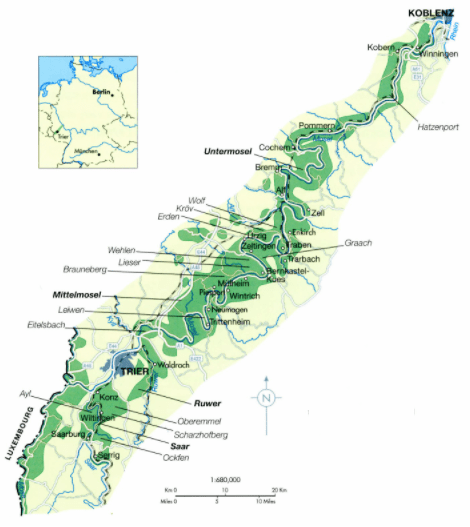
The Mosel (aka Moselle) River begins in France and flows into Germany where it flows 250 km and disperses into the Rhine River. It is along this winding river gorge that most classic Riesling wines in the world are situated.

So what makes the Mosel Valley so special for this wine and grape? It’s a combination of geology, geography and history (Riesling was first recorded in Germany in 1435) that makes the Mosel wine region unique.

Although over 60% of the grapes grown are Riesling, Elbling; Pinot Blanc, Pinot Gris, Kerner and Auxerrois are also grown. There are some Pinot Noir and Chardonnay in the region as well, often used in Sekt–German sparkling wine.

Mosel Riesling ranges from bone-dry to sweet.  The wines start out with a pale straw color and become deep yellow as they age.

Young wines have medium-intensity aromas of lime and honeydew, sometimes with slightly reductive smells of plastic or mineral notes. As the wines age, they reveal high intensity aromas of honey, apricot, lemon and petroleum. The smell of gas might be off-putting to some but it is a classic indicator of German Riesling.

Riesling has intensely high acidity, usually balanced with some level of sweetness. Wines that taste bone-dry will usually have around 6 to 10 grams per litre of residual sugar and wines that taste barely off-dry may have as much as 30 to 40 grams per litre of residual sugar. Generally, Mosel wines have low to medium low alcohol ranging from 7.5 to 11.5%  alcohol per volume.

German Riesling is known to age well. A wine by a quality producer from a great vintage will last up to 40 years. Even modestly priced wines can age for 5 years and develop a deep golden hue with aromatics of honey and petroleum.

The first level for identifying quality in Mosel’s wine is classification, of which there are 3: Qualitatswein (QbA), Pradikatswein, and VDP.  These are explained in detail in my August 11, 2019 post “Germany’s Quality Standards”.

The second level to finding great quality in the Mosel is understanding the variations from one vintage to the next. Cool climate wine growing regions, which the Mosel Valley is one, tend to be more susceptible to variable weather conditions. It’s possible that great producers will still make great wines in less favorable years, but the vast majority often suffer.

As a general rule, great vintages offer amazing wines at all price points, whereas less-awesome vintages require some buying finesse and a little bit of luck.  Here is a quick rundown of what the experts said about the past decade of releases:

Legend

  • 10: Purchase without hesitation with great cellaring capabilities.
  • 9: Purchase without hesitation as wines are very enjoyable.
  • 8: Purchase as wine is drinkable but not very noteworthy.
  • 7: Only the best producers made decent wine that year.

Vintage

2018 – 10 – Largest yield in the past decade; expecting to be of outstanding quality.

2017 – 8 – Difficult growing season.

2016 – 7 – Tough vintage. Lots of rain and insect problems.

2015 – 10 – A fantastic year.

2014 – 9 – A cooler vintage overall, leading to wines with more acidity. These wines may age quite well.

2013 – 8 – Great producers did well but others didn’t because of rain and rot problems.

2012 – 7 – Inconsistent grape bunch development meant only the best producers made out.

2011 – 9 – A great vintage; the wines have awesome structure and depth.

2010 – 8 – A challenging vintage for ripeness but some producers expect these wines will last for decades.

2009 – 9 – A long warm vintage that produced rich wines.

2008 – 9 – Great producers produced age-worthy wines.

Finding Great Mosel Wines by Sub-Region

The third layer of finding great quality Mosel wines is understanding the geography of the region. Not all of the vineyards here are created equal. The northerly latitude means longer days during the growing season, but only certain vineyards are situated to receive these sunshine hours.

Areas that face south receive up to 10 times more sunlight during parts of the year than those facing north. Also, vineyards located on slopes receive even more sun than the flat lands. 40% of the vineyard acres in the Mosel are located on steep slopes and the best vineyards typically face south.

The steepness of the vineyards makes the use of tractors or mechanical harvesting impossible; farming and harvesting on steep slopes requires as much as three times more labour than more level vineyards.

The 6 sub-regions of Mosel all offer different expressions of Riesling. While the most planted sub-region of Bernkastel attracts the most attention, other regions, including Saar and Ruwertal, make great wines as well.

Final Thought

Riesling is definitely the most renowned varietal in the Mosel.  There is no true comparison to these wines anywhere else in the world.  If you enjoy Riesling and have never experienced any from the Mosel, then you owe it to yourself to experience it.  I don’t think you will be disappointed.

Sláinte mhaith

Greek Wines

Wine has played a part in Greece’s culture from as early as the 8th Century BC according to Homer’s Iliad and Odyssey.  Wine is also a part of Greek mythology by way of Dionysus, the Greek god of wine, who appears in legends from every part of Greece.

Due to Greece’s turbulent history, dating all the way back to the 4th Century, it has always fallen well behind Italy in the development of wine.  This has impacted its influence in the modern wine world.  However, since the late 20th Century, Greece has been revitalized by motivated wine producers who are focusing on quality and are adopting modern wine making techniques.

Today Greek wine combines the traditional with the modern. Native Greek grape varieties such as Assyrtico, Agiorgitiko and Xynomavro are found alongside such international varieties as Cabernet Sauvignon and Chardonnay.

Greek wines are truly European in provenance, style and quality. They are a part of the premier European wine league and in belong to the same class as Italian, Spanish, French, Portuguese, German and Austrian wines.

The basis of Greek wine production is the family-owned boutique winery. All vineyard practices, from planting to harvesting are carried out entirely by hand. The manual work done in Greek vineyards allows for greater attention to detail and the ability to select only the best grapes.

There is a rich heritage of vine growers and winemakers. However, the use of innovative practises and cutting-edge technology embellishes and highlight the arduous work carried out in the vineyard.

Like the rest of Europe, Greece’s grape growing areas are now organized into appellations.  Regions of historical significance were among the first to be granted appellation status.  Conditions were imposed on the grape varieties to be used in the making of wine and often on the altitudes required for cultivation.

The Onomasia Proelefseos Anoteras Piotitos (OPAP) and Onomasia Proelefseos Eleghomeni (OPE) are the two principal designations for the quality of wine in Greece. They cover dry and sweet wines respectively.

There are over 300 varietals of grapes grown in Greece, ranging from the traditional to standard European varieties to the most rare that are specific to Greece.   Included in this vast number of varieties are the four traditional ones.  They are:

Assyrtiko

Assyrtiko is a rare white grape that originated from Santorini (Assyrtiko-Santorini) but now can be found throughout Greece.  In terms of quality it is one of the most important native varietals. It is used to produce mainly dry white wines, some of which are aged in oak. However, a number of sweet wines are made from sun dried grapes.

Assyrtiko is made for people looking for unconventional, intense styles of whites that have texture and density. It pairs exceptionally well with grilled fish and seafood. All Assyrtiko wines, can age well for five or even ten years, sometimes significantly more.

Moschofilero

The Moschofilero grape is reddish or grayish in colour but is almost exclusively used to create dry whites and some sparkling wines. It is also used to create rose wines and is also often blended with other grapes.

Agiorgitiko

Agiorgitiko is a red grape variety that has freshness and intensity of aromas and flavours. It is used to produce a large range of styles, from refreshing rosés to concentrated sweet wines. However, the most common styles are as a young, unoaked wine or as a matured in oak for at least a year.

A young Agiorgitiko is a wine with a moderately deep purple red colour, intense aromas of fresh red fruits, medium acidity and soft tannins. The oak aged examples are deep in colour, while the nose suggests concentrated and complex aromas of red fruits. It is a variety that can produce other styles of wine, such as rosé or dessert wine. It is sometimes referred to being like the Italian Sangiovese grapes, which are the basis of Chianti wine.

Xinomavro

Xinomavro grapes are used to create reds, dynamic rosés, aromatic sparkling wines, and even sweet wines.  They are also blended in dry wines. 

Xinomavro wines are usually for sale when they are at least two years old, having spent a significant proportion of that time in oak. These wines tend to rise to prominence with aging and are bright red in colour, with firm tannins and bright acidity.  The bottle aging potential of these wines is excellent.

This wine is an ideal companion to foods with intense and rich flavours such as meat stews, grilled steaks, sausages, game, roasted lamb, coq au vin or even wild mushroom risotto with Parmesan, wine-flavoured cheeses, aged Gouda or Cheddar.

European Grape Varieties

In addition to the unique Greek varietals there are several standard European varieties grown as well.  White varietals include Sauvignon Blanc and Chardonnay and the reds include Merlot, Syrah, Cabernet Sauvignon and Viognier.  Because of Greece’s warm Mediterranean climate, varieties such as Pinot Gris, Pinot Noir, or Gamay are not commonly grown in Greece.

Retsina Wine

One type of wine that is unique to Greece is Retsina. The resinated wine style is said to have developed when pine resin was used as an airtight sealant for wine storage vessels. Today Retsina is made by choice rather than necessity, through the addition of pine resin during fermentation.

Final Thoughts

So far the 21st Century has been a tumultuous as all the past centuries for Greece.  The ‘Greek Tragedy’ continues with political instability and an enormous debt crisis that has threatening the entire economy of Europe.  However, despite the continual turmoil, Greece produces both unique and excellent wines.

If you have never tried Greek wine or have not had any in recent memory, then it is time for a new discovery.  To fully embrace the Greek experience I suggest ignoring the common European varietals and try one or more of the traditional Greek wines.

Sláinte mhaith

The Wines of Tuscany Italy

Because of the romantic glamor of its endless rolling hills, cypress-lined country roads and hilltop villages, Tuscany is often considered to be the most famous of the Italian wine regions. Tuscany has a magnificent reputation for its iconic wines – Chianti, Brunello di Montalcino and Vino Nobile di Montepulciano.

Situated in central Italy, Tuscany’s neighbors are Liguria and Emilia-Romagna to the north, Umbria and Marche to the east and Lazio to the south. Its western boundary is formed by the Tyrrhenian Sea. As is the case with almost all of Italy’s 20 regions, Tuscany has a long wine history.

Today, Tuscany is one of the most famous wine regions in Europe. Its vineyards produce an array of internationally recognised wines in various styles. These go far beyond the well-known reds, and include dry whites such as Vernaccia di San Gimignano and sweet wines, both white (Vin Santo) and red (Elba Aleatico Passito). The region’s top wines are officially recognised and protected by a raft of DOC and DOCG titles. (For explanation see my post on Italian Quality Standards August 31, 2019)

The climate has been a vital factor in its success as a wine region. It has warm, temperate coastal areas contrasted by inland areas where increased temperature variation helps to maintain the grapes’ balance of sugars, acidity and aromatics.

The Sangiovese grape is the mainstay variety in almost all of Tuscany’s top red wines. Its long history and broad regional distribution means that it has acquired various names. In Montalcino it goes by the name Brunello, whence Brunello di Montalcino. In Montepulciano, it is known as Prugnolo Gentile. Under the name Morellino, it is the grape used to make Morellino di Scansano.

Sangiovese is also the main grape in Chianti.  Modern Chianti can be made of 100% Sangiovese but also can include percentages of the native Canaiolo and Colorino grape , as well as Cabernet and Merlot.

I have a yearning to one day, when we are free to travel abroad once again, to sit under the Tuscan sun and enjoy a bottle of Chianti.

Sláinte mhaith

The Wines of Vento Italy

Veneto is an increasingly important wine region, located in the northeastern corner of Italy. The wine style represents a transition between the alpine, Germano-Slavic end of Italy and the warmer, drier, more Roman lands to the south.

Veneto is slightly smaller than the other main wine-producing regions of Italy but creates more wine than any of them. The southern regions of Sicily and Puglia were for a long time Italy’s main wine producers.  However, this balance began to shift north towards Veneto in the latter half of the 20th Century. Since the 1990s, Veneto has developed and improved the quality of its wines.  More than 25 percent of the region’s wine is made and sold under DOC/DOCG titles. (For explanation see my post on Italian Quality Standards August 31, 2019)

From a red wine perspective, Amarone has the most intense flavour.  This is in part due to innovations such as drying grapes prior to fermentation, which develops greater depth, complexity and concentration in the wines.

Production of the fruity red Valpolicella uses the ripasso technique, in which the  wines undergo a second fermentation and are “re-passed” over used Amarone skins, enhancing the colour, body and texture of the wine.

The other red wine unique to Veneto is the sweet wine, Recioto.  The region also produces some wonderfully refreshing white wines, such as Soave and sparkling Prosecco. 

The Veneto region can be roughly split into three geographical areas, each distinguished by its topography and geology. In the cooler, alpine-influenced climate in the northwest, the foothills of the Alps descend along the eastern edge of Lake Garda and fresh, crisp whites are made under the Bianco di Custoza and Garda titles, as well as Veneto’s lightest reds.

East of the lake and north of Verona is Valpolicella and its sub-region Valpantena.  Here 500,000 hectolitres of Valpolicella are produced each year. In terms of production volume, Valpolicella is the only DOC to rival Tuscany’s famous Chianti.

Immediately east of Valpolicella is Soave, home to the dry white wine that now ranks among Italy’s most famous products. Beyond that, Gambellara serves as an eastern extension of Soave, both geographically and stylistically. Garganega and Trebbiano are the key white wine grape varieties grown there.

In central Veneto, vast quantities of wine are produced, but only the better quality wines from more elevated areas have gained DOC status. International varieties such as Merlot, Cabernet Sauvignon, Cabernet Franc, Pinot Noir (known as Pinot Nero in Italy) and Carmenere have proved successful here, as well as white Pinot Grigio and Tocai Friulano.

In the northeastern corner of the region, sparkling Prosecco is produced. Still wines are also made here, such as Lison, Lison-Pramaggiore, Montello e Colli Asolani and Colli di Conegliano. The common factor that unites almost all viticultural zones in northeastern Veneto is the Glera grape and the foaming spumante and semi-sparkling frizzante wines it creates.

I was introduced to Valpolicella wine by my wife many years ago.  We would sometimes venture out for a series of tapas on a Friday night which on her recommendation, we would complement with a glass of Valpolicella.  Delicious!

Sláinte mhaith

The Wines of Piedmont Italy

Piedmont, located in northwest Italy, is the home of more DOCG wines than any other Italian region. (For explanation see my post on Italian Quality Standards, August 31, 2019.)  Among them are such well-known and respected names such as Barolo, Barbaresco, and Barbera d’Asti. Although famous for tannic and floral red wines made from the Nebbiolo grape, Piedmont’s greatest recent success has been sweet, white sparkling Moscato d’Asti.

Piedmont, which literally means ‘at the foot of the mountains’, is situated at the foot of the western Alps.  The mountains are credited for the region’s favorable climate.

Foreign winemaking technologies have been a great contributor to Piedmont being viticulturally advanced compared to other Italian regions. The region’s proximity to France also plays a part in this.

Piedmont has been referred to as the “Burgundy” of Italy, as a result of its many small-scale, family wineries and a focus on quality that has sometimes been known to border on obsession. What Burgundy does with Pinot Noir, Piedmont does with Nebbiolo, the grape that has made the largest contribution to the quality and reputation of Piedmont’s wine. Nebbiolo is the varietal used to produce four of Piedmont’s DOCGs – Barolo and Barbaresco (two of Italy’s finest reds), Gattinara and the red wine from Roero (minimum 95 percent Nebbiolo).

Wines produced from Nebbiolo grapes are known for their “tar and roses” bouquet, and the pronounced tannins that can make them undesired as a young wine but an excellent wine for cellaring. The grape is known as Spanna in the north and east of Piedmont, and is used in at least 10 local DOCs including Carema, Fara and Nebbiolo d’Alba.

Barbera, a dark-skinned variety, is Piedmont’s workhorse grape and the region’s most widely planted variety. It is long been used to make everyday wines under a number of DOC titles, but is now behind a growing number of superlative wines in a range of styles and approaches of oak maturation.

Piedmont’s best Barberas are sold under the Barbera del Monferrato, Barbera d’Asti or Barbera d’Alba titles. These are classically Italian in style: tangy, sour cherry-scented reds with good acidity and moderate complexity. Less astringently tannic than their Nebbiolo-based counterparts, Barbera wines are enjoyably drinkable within just a year or two of vintage, giving them a competitive edge in today’s fast-paced, impatient wine market.

Dolcetto is the third red grape of Piedmont. It has one DOCG (Dogliani), and several DOCs devoted exclusively to it; the top three being Dolcettos d’Alba, d’Acqui and di Ovada. Dolcetto is usually used to make dry red wines.

The Brachetto grape is used in the production of the sweet, sparkling reds of the Brachetto d’Acqui DOCG. So, too is Freisa, with its broad portfolio of sweet, dry, still and sparkling red wines made in Asti and Chieri.

Although Piedmont is known mainly as a red-wine region, it produces several well regarded white wine styles. The most prominent is Moscato d’Asti and to a lesser extent the Asti Spumante. Both of these are made from Moscato grapes grown around the town of Asti.  The former is sweeter, more lightly sparkling and generally of higher quality.

The Piedmont white of the connoisseur is made from the Cortese grape; a variety which struggles to produce wines of any aromatic complexity anywhere else.  It now faces serious competition from the aromatic Arneis varietal. Although not as prestigious, the Arneis is increasingly popular for its delicate, exotic perfume. A final white worthy of mention is Erbaluce, which has benefitted from the 300 percent increase in Piedmont’s white wine production over the past thirty or so years.

With more DOCGs and DOCs than any other Italian region, and about 40 percent of its wine produced at DOC/G level, Piedmont is challenged only by Veneto and Tuscany for the top spot among Italian wine regions. Overall, Barolo is my personal favourite Italian wine.  Though it tends to be sold at a higher price point than other types of Italian wine, I find that it is cost justified.

Sláinte mhaith

The South African Wine Industry

The South African wine industry has faced many challenges throughout the 20th Century.  The South African Co-Operative Wine Growers Association (KWV) restricted the production of wines in such a way that innovation was near impossible and quantity was prioritized over quality. Yields were restricted and minimum prices set at a level which encouraged production of brandy and fortified wine. KWV’s control over the South African wine sector lasted until the 1990s, and still today the country’s industry is unusual for its high number of co-operatives.

South African wine fell out of international favour during the 20th Century.  It reached an all-time low when trade sanctions were placed on the country in the 1980s due to its apartheid policies. Nelson Mandela’s freedom in 1990 and his subsequent election as President reinvigorated the wine industry.

Up until the last 15 to 20 years most South African wines went directly to be distilled into brandy. However, today South African wines have emerged as both some of the best valued red and white wines and of the highest quality.

In 2016, South Africa had grown to be the world’s seventh largest producer of wine in terms of overall volume.  It accounted for 3.9 percent of global wine output. More than 300,000 people are employed in the industry.

South African Red Wines

Cabernet Sauvignon

There is a savory complexity to South African Cab, which makes it a delightful alternative to the more fruit-forward California Cabernets. The character of South African Cabernet Sauvignon is somewhere between the ‘new world’ and the ‘old world’.

The wine regions producing great Cabernet Sauvignon include:

  • Paarl & Stellenbosch
  • Franschhoek

Syrah

Syrah from South Africa is becoming popular due to its dark spiced fruit flavors with a chocolate like richness.  Syrah grows throughout South Africa, and therefore has a wide range of styles. You will find more savory wines from cooler regions such as Paarl and Stellenbosch and more richly intense wines from dry areas such as Robertson and Swartland.

The wine regions most noted for producing great Syrah include:

  • Paarl & Stellenbosch
  • Robertson
  • Swartland

Pinotage

Pinotage is unique to South Africa.  It is a cross between Pinot Noir and Cinsault.  Pinotage offers juicy raspberry to blueberry fruit flavors with spiced chocolate and tobacco. The wines are much denser, higher in alcohol and typically more savory than Pinot Noir. Pinotage often gets blended with Syrah.

The wine regions most noted for producing Pinotage include:

  • Diemersfontein
  • Southern Right
  • Kanonkop

Merlot

Merlot is widely used as a blending grape with Cabernet Sauvignon. Still you can find several single-variety Merlots from the Coastal Region.

Other South African Reds

Several other red wine varietals are growing in South Africa, including Malbec, Petit Verdot, Pinot Noir, Cabernet Franc and Cinsault (spelled ‘Cinsaut’ in SA). While most of these varietals are blended, South Africa’s cooler climate regions  are making single variety Pinot Noir.

Other less known red varietals that are now being produced, but in small quantities include Hanepoot, Cornifesto, and Roobernet.

South African White Wines

Chenin Blanc

Most of the Chenin Blanc produced goes into brandy production but there is an increasing market for South African Chenin Blanc. It is a peachy and floral grape variety not unlike Alsatian Pinot Gris and Viognier.

The vintners and wine regions most noted for producing Chenin Blanc include:

  • Ken Forrester in Stellenbosch
  • MAN vintners in Coastal Region
  • Badenhorst in Swartland

Colombard

Known in South Africa as ‘Colombar’ this less used white wine grape from the central France is commonly used to add Sauvignon Blanc-like zestiness to Chenin Blanc based white wine blends. Still, a large chunk of the wine production goes towards brandy making.

Sauvignon Blanc

The flavors of Sauvignon Blanc in South Africa have a lot of similarities to those of New Zealand.  They are zesty, grapefruity and grassy and usually very inexpensive.

Chardonnay

As a cool climate variety, a lot of South Africa’s regions aren’t particularly well suited for Chardonnay. However, the coastline along the South stays cool. Look for Chardonnay from Walker Bay.

Other South African Whites

Other white varietals include Semillon, Riesling, and Viognier which are often used for blending, but are increasingly found in single-varietal boutique bottlings.

Generally speaking, South African wines provide good value at a competitive price.  I was introduced to these wines several years ago by a friend who had spent a good portion of his working life in South Africa.   There are red and white options available to satisfy any palate.

Sláinte mhaith

Day Trip to The County

On the first anniversary of my hemorrhagic stroke I wanted to get away from the ‘scene of the crime’ so my wife suggested taking a day excursion to Prince Edward County.  The County is often compared to France’s Burgundy region in both climate and the grape varietals grown.

The County was officially designated as a VQA appellation in 2007.  It is separated from the mainland by the Bay of Quinte at Belleville and is completely surrounded by Lake Ontario.  The soils and microclimates of the County, coupled with a limestone base, provide an ideal growing environment for cool-climate grapes such as Pinot Noir and Chardonnay.  This island setting is now home to over 40 wineries, a dozen craft breweries, fine restaurants, cheese producers, farmers’ markets and other local food purveyors.

I hadn’t visited the county for a few years and had lost touch with what is going on there.  So to prepare for our journey I checked out the latest reviews of the County wineries, which I combined with some curiosities of my own and developed a list of destinations.  My list consisted of 7 wineries, 6 of which were considered as the County’s movers and shakers of 2020 and the 7th was one that I had an interest in.  The wineries included Closson Chase, Devil’s Wishbone, The Grange, Hinterland, The Old Third, Rosehall Run and Waupoos.

The day didn’t exactly play out as I had planned, at least partially due to COVID-19.  Both Devil’s Wishbone and the Old Third were closed and a number of the others had a very limited wine supply.   For example, at the Grange, in order to purchase the only red they had in stock, I had to buy two 375 ml bottles of their Merrill House 2016 Pinot Noir as they had no 750 ml bottles left.  However, having now drank one of the bottles, my wife and I agree it was a good purchase at the equivalent price of $37 for a 750 ml. bottle.

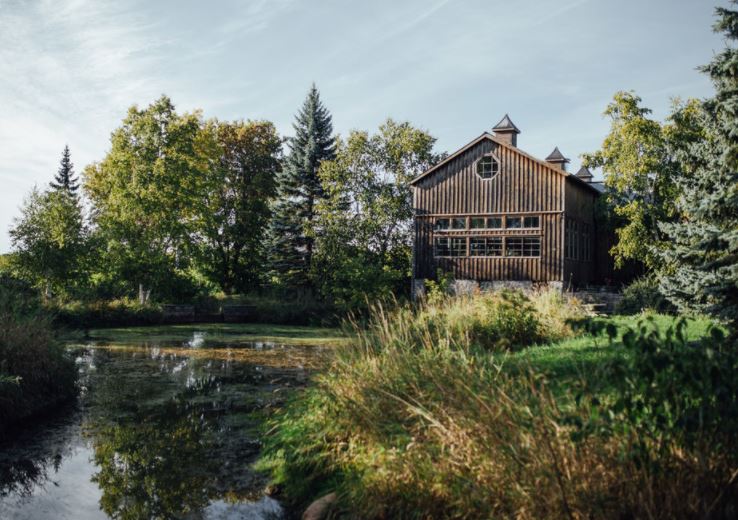
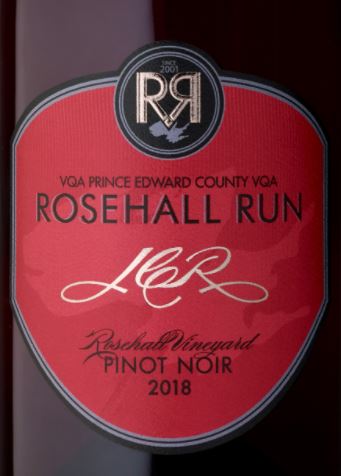
However, as it happened, our last stop made the day worthwhile.  At the very end of Greer Rd. lies Rosehall Run, one of the original wineries established in the County.   Among our finds there was their 2018 JCR Pinot Noir, which in August was awarded the ‘Red Wine of the Year’ at the Ontario Wine Awards.  This wine has the potential of being one of the greatest and longest-lived Pinot Noir they have produced. Even though the wine may be enjoyed now it can be laid down for the next 5 to 7 years to reveal the purity that will evolve with time.  With a price point of $42, it is good value.

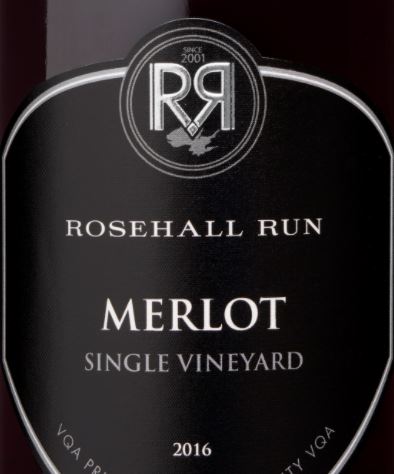
Our second find was a 2016 Merlot which was the result of them being able to secure a couple of tonnes of Merlot planted at Prince Edward County’s Huff Estates which resulted in Rosehall Run creating their first and only County Merlot.  The wine was barreled down in their underground cellar for 18 months. New French oak was utilized in preparing this small lot.  There is only a small quantity left and with its price of $35 a bottle, it will be gone soon.

Overall I have always found the offerings of Prince Edward County to be on the expensive side compared to similar offerings in Niagara and especially at the LCBO.  For a big part it is a factor of demand and supply.  The County VQA region is much smaller than Niagara and thus the quantity of grapes available is less and this is reflected in the prices.  There are some good value wines to be found for sure but you just need to be prepared to make the effort to search them out.   There are a couple of wineries, such as Sandbanks, where you can always count on finding a good selection and good value.

Given the climate of the region it is important to keep in mind that the mainstay varietals are Chardonnay, Pinot Noir and Baco Noir.  To expect to find a lot of other locally grown varietals, such as Cabernet, is not realistic. 

Given that the County has so much more to offer besides wine, a trip there is well worth the time.         

Sláinte mhaith

France’s Champagne Wine Region

The Champagne region is located 145 kilometres northeast of Paris and is one of the world’s most northerly fine-wine regions. It is generally divided into three parts – the Montagne de Reims, the Vallée de la Marne and the Côte des Blancs.

The region contains 75,000 acres of vineyards. It’s interesting to note that most and the greatest vineyards of Champagne are not owned by great landowners but by thousands of growers, often working part-time.

The vineyards are situated on deep chalk soils, part of the same great basin that forms the famous white cliffs of Dover in southern England. The chalk serves as a natural moisture regulator, providing good drainage and reflects the sunlight and its heat.

Regulations dictate which of the three permitted grapes may be planted where.

The slopes of the Montagne de Reims and the Côte des Blancs provide the best vineyards. The greatest concentration of villages designated as Grand and Premier Cru are found in these two areas.

The Montagne de Reims is planted mainly with Pinot Noir. The Montagne is a forested plateau south of Reims. Its wines give the great champagnes their backbone – their weight and richness.

Along both banks of the River Marne is the Vallée de la Marne. This zone produces the fullest, ripest wines, predominately from Pinot Meunier, and to a lesser extent Pinot Noir grapes.

Extending south from Epernay for about 21 km. is the Côte des Blancs. This area produces fine Chardonnay that give freshness to the blend and provides the sparkle to the wine.

The Côte de Sézanne is a relatively new region. It is planted almost exclusively with Chardonnay.

The classification system in Champagne is based by vineyard and is established by the Comité Interprofessional du Vin de Champagne (C.I.V.C.). The land is given a grade based on its suitability for growing white grapes or black grapes. A grade of 100% percent has been given to the 17 Grand Cru villages. The 38 Premier Cru villages have grades from 90 to 99%. The rest have a grade ranging from 80 to 89%. Champagne houses use the average percentage rating of the grapes used in their blends to establish the quality of their raw materials.

The Wine

The richness of champagne wines is largely due to the cold climate of northern France. The bubbles in champagne are a natural phenomenon.

Three grape varieties are used to make Champagne — Pinot Meunier, Pinot Noir and Chardonnay. Pinot Meunier is the most prevalent, making up about 40% of grape production.  It is easier to grow and is less prone to frost damage. Pinot Meunier makes up the base wine for all but the very finest champagnes.

Pinot Noir makes up about 35% of the blend. It is responsible for the depth of fruit and longevity of the wine.

Chardonnay accounts for the remaining 25% and adds lightness and elegance to the blend.

The lack color in most champagne is the result of a gentle pressing, so as to extract the juice but not the color of the dark grape skins.

The main difference between the various Champagne brands or houses, is in the making of the cuvéee, or the blend. A house builds a reputation based on the particular style of blend of its non-vintage wines. So each year the wine must be consistent. The large houses store millions of gallons of wine from various vineyards and grapes for blending purposes. As a result, once you find a house style you like, it will be available year after year as long as that house exists.

In especially good years, some vintage champagne is produced. Some feel that the extra depth in taste is well worth the extra cost of these wines. Eighty percent of the contents of vintage champagne must contain grapes from the declared year.

Champagnes are labeled based on their sugar content; Extra Brut, Brut Sauvage, Ultra Brut, Brut Intégral or Brut Zéro.  These wines are bone dry with less than 0.6% of residual sugar per litre. This wine is rarely made.

Brut

This is the most popular style of champagne. The best blends are always reserved for the brut and is the mainstay of the business. It has less than 1.5% residual sugar and is very dry.

Extra Dry, Extra Sec

Sweetened with 1.2 to 2% residual sugar per litre, it is still dry and goes well with desserts .

Sec

Although it means “dry” in French, it means “moderately dry” or “slightly sweet” as it pertains to champagne. It has 1.7 to 3.5% residual sugar per litre.

Demi-Sec

This style is distinctly sweet or medium. It contains between 3.3 to 5% residual sugar per litre.

Doux

This is the sweetest style of champagne. It is very sweet and is more of a dessert-style wine. It has a minimum of 5% residual sugar per litre.

Blanc de Noirs

Occasionally you will find Blanc de Noirs. This style is made entirely from black grapes but is white. It offers a wine that is fuller than those with Chardonnay in the blend.

Blanc de Blancs

This wine is made exclusively from the Chardonnay grape and is the most delicate of champagnes. Since only 25% of Champagne is planted with Chardonnay grapes, it is generally a more expensive option.

Final Thoughts

COVID-19 is having a devastating impact on Champagne’s economy.  With weddings and other celebratory events being cancelled or postponed all around the world there has been a massive reduction in demand for the famous bubbly.

However, keep in mind that Champagne is not just for toasting and celebrations; it is much more versatile.  Brut pairs well with fish and seafood, or moderately spiced Asian cuisine.  The sweeter varieties make an excellent choice to serve with desserts, such as fresh berries.  Champagne can also be served on its own as a pre-dinner drink or for no particular reason at all.

Now may be a good time to discover/rediscover Champagne.  Prices may never be better and you could develop a new appreciation for this magical bubbly.

Sláinte mhaith

Cabernet Sauvignon vs. Sauvignon Blanc

Let’s begin this comparison with the obvious; Cabernet Sauvignon is a red wine grape.  Its success has been celebrated in many parts of the world, most notably in France’s Bordeaux region and California’s Napa Valley, where it is blended with other grapes to make stately red wines. Most Cabernet Sauvignons are full-bodied, bold reds.

Cabernet Sauvignon Sauvignon Blanc

On the other hand, Sauvignon Blanc is a white wine grape used in the production of terrific white wines, particularly from parts of New Zealand, California and parts of France. In France, Sauvignon Blanc regions include the Pouilly-Fumé and Sancerre appellations, as well as Bordeaux, where it’s blended with Sémillon to make both elegant dry whites and the region’s revered botrytized dessert wines.

Sauvignon Blancs can be made in many different styles, but tend to stand out for their zingy acidity and mineral or herbal notes.

About 20 years ago a DNA test showed that Cabernet Sauvignon is a cross between Cabernet Franc and Sauvignon Blanc. Vine breeding wasn’t well understood or very successful when Cabernet Sauvignon first appeared in the 17 century.  Therefore it is highly unlikely that its development was intentional.

Sauvignon Blanc is a pale lemon colour. It tends to fare better in cooler climates. When fully ripened, it has a fresh, crisp smell, is high in acidity and tends to taste of lemon, lime, peach, gooseberry and/or passion fruit. It tends not to age well so is usually at its best a year or two after bottling. It tends to be fermented and stored in stainless steel, temperature-controlled vats to retain its fruit characteristics, and is best served chilled.

Even though Sauvignon Blanc is a parent grape of Cabernet Sauvignon, they are very different.

Cabernet Sauvignon tends to be full-bodied, with flavours of black fruit, black pepper and sometimes mint andeucalyptus.  The grapes have thick skins so need a warmer climate to ripen fully. The skins make Cabernet Sauvignon wines very high in tannin. Cabernet Sauvignon is also high in acidity but, unlike Sauvignon Blanc, they are fermented and aged in oak barrels, which soften the astringent tannins and give flavours such as toast and vanilla to the wine. They can develop and benefit greatly from ageing. This is why some Cabernet Sauvignons are very expensive, especially if they are from a good vintage. They are best enjoyed slightly cooler than room temperature.

From a food pairing perspective, Cabernet sauvignon goes well with red meats, including game, stews or casseroles, hearty pastas, and strong-flavored cheese. Protein can help soften astringent tannins; fat protects your palate against a too-assertive wine.

Sauvignon Blanc on the other hand pairs well with sushi, goat cheese, spicy Asian food, grilled shrimp, or a fruit salad. A fuller-bodied Sauvignon Blanc will pair well with richer foods, such as chowder and fried calamari.

Both Cabernet Sauvignon and Sauvignon Blanc produce excellent wines despite being so totally different.  Both are very enjoyable under different circumstances.

Sláinte mhaith