The Wines of Italy

Italy governs its wine industry in a similar manner as the French by using an appellation system of wine categorization.  There are 21 regions that contain a rather large number of red and white varietals.  Many of these grapes, such as Cabernet Franc, Cabernet Sauvignon, Chardonnay, Gewürztraminer, Merlot, Pinot Gris, Pinot Noir, Sauvignon Blanc, and Syrah, are common throughout many parts of the new and the old world. 

Other varietals such as, Barbera, Corvina, Molinara, Nebbiolo, Rondinella, Sangiovese, and Trebbiano, are more exclusive to Italy.  It is these grapes that give Italian wines their distinguished flavour.

Italian Whites

Italian white wines come in varieties that run from sparkling and sweet to smooth and fruity to crisp and dry. The following variety of whites will generally be found at your local wine merchant:

Asti is a sparkling wine made from Moscato grapes in Piedmont.  It is a sweet wine and low in alcohol, with fruity and floral flavors.

Frascati is composed mainly from Trebbiano grapes. It is generally dry or slightly off-dry, light-bodied, and un-oaked.

Gavi is made from Cortesa grapes which create this dry, medium-bodied wine from Piedmont. It is generally un-oaked or slightly oaked.

Orvieto is generally a medium-bodied wine made mainly from Grechetto grapes in the Umbria region. It is dry, and crisp, with fruit undertones.

Pinot Grigio is a light-bodied, dry, crisp wine that contains no oak.  It is made from Pinot Gris grapes.

Soave is produced in the Veneto region.  This wine mainly consists of Garganega grapes, which give it a dry, crisp, un-oaked, and light- or medium-bodied flavour.

Verdicchio is a dry, medium-bodied, crisp white wine. It is made from Verdicchio grapes in the Marche region.

Italian Reds

As with the whites, the reds come in a variety of styles.

Amarone is a full-bodied wine produced from partially-dried Corvina grapes.   It is a dry and firm wine but does have a hint of sweetness.  It is best paired with rich, savoury foods or flavourful cheeses.

Barbaresco is similar to Barolo (described below), as it is produced from the same Nebbiolo grapes.  However, it is generally a little lighter in body and a little less expensive. This wine is one that can usually be laid down for some time.  It is best from between 8 and 15 years of age.

Barbera is mainly produced in the Piedmont region. It is characteristically dry, light- or medium-bodied, and has an intense berry flavor, lots of acidity, and but little tannin.

Barolo is one of my personal favourites.  It is dry and full-bodied.  Barolo is produced from Nebbiolo grapes in Piedmont and contains complex aromas and flavours. It is a wine that improves with age and is best enjoyed at 10 to 20 years of age, depending on the producer.

Brunello di Montalcino is a full-bodied, intense, concentrated wine produced from Sangiovese grapes from Tuscany. Dry and quite tannic, it is best enjoyed when it’s at least 15 years old.

Chianti is a very dry, medium-bodied, moderately tannic wine that is created mainly from Sangiovese grapes from Tuscany. “Chianti Classico” is often the best.  Wines labeled “riserva”, and more expensive wines, are generally more concentrated and can be aged for a period of time.

Lambrusco is most commonly a sweet, fizzy wine.  It is made from Lambrusco grapes usually from the Emilia-Romagna region.  These wines are also available in both dry and sparkling styles.

Montepulciano d’Abruzzo is generally a medium-bodied wine but there are some lighter variations.  It is a very easy-drinking wine that is produced in the Abruzzo region.

Salice Salentino is a dry, full-bodied wine produced from Negroamaro grapes in part of the Puglia region. Generally it has intense aromas and flavors of ripe, plummy, baked fruit, and rich, dense texture. It is best paired with robust foods so as not to over-power the meal.

Valpolicella is a medium-bodied wine created mainly from Corvina grapes in the Valpolicella area of the Veneto region.  It is dry, lean, and only moderately tannic, with more or less intense cherry aromas and flavors. Some versions, such as single-vineyard wines, are particularly good.

Vino Nobile di Montepulciano is medium-bodied, dry, and lean, with red cherry flavor, similar to Chianti but slightly fuller.  It is produced from Sangiovese grapes in Montepulciano, in the Tuscany region.

If you are not familiar with Italian wines there are a number that I would recommend trying.  If you like white wine, Pinot Grigio and Verdicchio are worth a taste.  From a red perspective, I suggest both Chianti and Valpolicella.  There is a good selection of both available in a moderate price range.  However, if you are willing to spend a little more, Barbaresco and Barolo are well worth the investment.

Sláinte mhaith

Does The Glass Make a Difference?

Wine glasses are specifically shaped and sized for each particular type of wine.  White wine, having a much more subtle aroma and taste than a red wine, has a smaller bowl and mouth.  This is to better capture the aroma for the nose, as well as minimize the exposure to oxygen, so as not to release the more subtle flavour too quickly.

Bordeaux, Burgundy, Cabernet, Champagne, Chardonnay, Pinot Noir, White, Zin

In addition to the standard white wine glass, there are also Chardonnay glasses.  These glasses are generally the same height as a standard white wine glass but the bowl and mouth are wider.  This is to allow the wine to be better oxygenated, resulting in a bolder bouquet and flavour for the pleasure of the drinker.

Sparkling wine glasses, or Champagne Flutes as they are often referred to, are much narrower and taller than white wine glasses.  This allows for further enhancement of the bouquet of the wine.  Also, by minimizing the surface area at the top of the glass, the bubbles will be more concentrated and last longer.

Red wine glasses vary in shape and size for the various varietals of grapes.  A Pinot Noir glass is tulip shaped containing a rather wide bowl before narrowing and then flaring wider at the mouth.   The theory is that this shape of glass provides for the optimum balance of sweetness, acidity and alcohol.

Zinfandel and Bordeaux glasses are very similar in shape and size with the Bordeaux glass being slightly taller.  These glasses are designed this way in order to allow the wines to breathe and enhance the flavour of the wine.  Given the strong similarity between the two glasses, personally, I doubt the average wine drinker, including myself,  would ever notice a difference if a Bordeaux was served in a Zin glass or vice versa.

The Cabernet glass is the tallest of all the wine glasses.  It has a slightly larger bowl and mouth than the other glasses mentioned.  The Cabernets, including Cabernet , Cabernet Franc, and Cabernet Sauvignon, as well as, Syrah or Shiraz, would benefit from being served in this style of glass.  The shape and size of this glass helps moderate the higher acid content of these wines, as well as allowing for the full bodied aromas to be released.

The most unique red glass is the Burgundy glass, which is shaped like a fish bowl with a wide bowl, basically no neck and a wide mouth.  The idea behind this glass is to enhance the acidity and intensity of Burgundy style wines.

For anyone opting to have a single red and white wine glass, I would recommend the standard white wine glass and the Cabernet glass. 

There are two common styles of wine glasses, stem and stemless.  Personally I prefer a glass with a stem so the heat from my hand is not transferred to the wine inside the glass.

There is a much argued debate over glass versus crystal.  There are those who say that a crystal glass provides much better flavour.  Personally, I would like to see that proven in a blind taste test.  I can see where psychologically if you know you are drinking from a $100 crystal glass versus a much less expensive glass vessel the psychological aspect may provide a more rewarding experience.  However, I am very sceptical and other than feeling the difference in the weight of the 2 glasses in your hand, I am not convinced the type of glass impacts the wine’s flavour as some suggest is the case.  However, after saying all this I do have an assortment of crystal wine stemware in the cupboard.

Sláinte mhaith

France’s Wine Regions

People sometimes shy away from French wine because they are unable to determine what type of wine they are selecting.  No where will you see the varietal of grape identified.  This is because France identifies its wines using the Appellation System, a complex system of laws that define each wine region and its boundaries and imposes strict rules around winemaking practices.  

Most appellations take the form of place names, such as Champagne or Bordeaux. What this means is that the grapes grown in each region are consistent with all of the wine producers within that region.  This becomes the key to understanding what grapes are contained within a particular French wine.

Here is a brief explanation of what grapes are grown in each of the appellations.  Hopefully this will help you crack the code to identify the varietals found in French wines.

Alsace

Alsace is the only French wine region to grow significant quantities of Riesling and Gewurztraminer grapes, as well as Pinot Gris.

Alsace Grand Cru wines are general only allowed to be made from these three varieties but may also contain some Muscat.

Chasselas, Pinot Blanc and Auxerrois are also grown although these three varietals tend to be used only in blends.

There are some red wines produced in the region as well, mainly from Pinot Noir.  Alsace Pinot Noirs are typically lighter-bodied and more rustic than the majority of Pinot Noir wines produced in France.

Bordeaux

Bordeaux is produced in the southwest of France.  The majority of Bordeaux wines are the dry, medium- and full-bodied red Bordeaux Blends. There are some high-quality white wines as well, both dry styles and the sweet, botrytized varieties.  Botrytis is a type of fungus that generates sugar and sweetness in the grapes.

Most Bordeaux reds are made from a blend of Merlot and Cabernet Sauvignon.  Merlot is the most common red wine grape in Bordeaux, followed by Cabernet Sauvignon and then Cabernet Franc. Petit Verdot, Malbec and Carmenère are also permitted, but only make up around two percent of the red grape total.

Bordeaux’s white wines are generally blends of Semillon, Sauvignon Blanc and Muscadelle. Sauvignon Gris the only other white variety that is permitted.

Burgundy

The two key grape varieties of Burgundy are Pinot Noir and Chardonnay. Gamay and Aligote are also grown throughout the region, producing more rustic styles of wine. Gamay is used in the red and rosé wines.

Beaujolais

Beaujolais is famous for its vibrant, fruity red wines made from Gamay.

Pinot Noir is used in small quantities in red and rosé wines, but is being phased out. Although best known for its red wines, the region also produces white Beaujolais Blanc, from Chardonnay and Aligote.

Champagne

Champagne is the name of the world’s most famous sparkling wine. While it has been used to refer to sparkling wines from all over the world, Champagne is a legally controlled and restricted name.

Pinot Noir, Pinot Meunier and Chardonnay are the primary grape varieties used to make Champagne.

The key Champagne styles differ in their color, sweetness, base grape varieties, and whether they are the product of a single vintage or several (referred to as Non-Vintage). The whites may be either Blanc de Noirs (made from black-skinned grapes), Blanc de Blancs (made from green-skinned grapes) or just plain Blanc (made from any combination of the permitted varieties). Pink Champagne Rosé is made either by adding red wine to a white blend or sometimes by fermenting the juice in contact with the skins. These types all come with varying degrees of sweetness.

Cognac

Cognac is the world’s most famous brandy.  It is graded in three official tiers, which reflect how long the spirit spent in barrel. VS (Very Special) is the lowest tier and means the brandy has been stored for a minimum of two years in casks. VSOP (Very Special Old Pale) is the middle tier and denotes Cognac that has been aged for at least four years. XO is the finest grade and is reserved exclusively for those cuvees aged for six years or more.

Corsica

Corsica is an island in the Mediterranean Sea, located between the southeast coast of Provence and the west coast of Tuscany. Although it is closer to Italy, Corsica is governed by France. The island’s Italian origins are evident in its wines, which are made predominantly from the Italian classics Vermentino and Sangiovese.

Corsica’s wines have both a French and Italian influence. Pinot Noir, Grenache, Tempranillo and Barbarossa are all grown there alongside one another.

Grenache is a primary ingredient in many Corsican red wines and Syrah, Mourvedre, Cinsaut and Carignan all play a variety of supporting roles.

The only white varietal is Vermentino/Rolle.

Coteaux du Lyonnais

These wines are of a lighter style similar to those produced in Beaujolais. The red wines are produced from Gamay grapes.

A small amount of white wine is made from Chardonnay and Aligoté. Occasionally some Pinot Blanc is added to the blend. These are traditionally dry, floral styles, some of which are matured in oak barrels for up to a year to produce a slightly more structured, weighty version.

Jura

Jura is a small wine region in eastern France.

The five main grape varieties used in the region are Poulsard, a red grape which accounts for about one-fifth of the region’s plantings; Trousseau, the other local red variety, covers only the warmest 5% of Jura’s vineyards; White Savagnin, which is responsible for the idiosyncratic vins jaunes (‘yellow wines’);  Pinot Noir; and Chardonnay.

Dry white wines are also made in Jura, increasingly from Chardonnay as are dry red wines produced from Pinot Noir.

Loire

The Loire Valley is a key wine region in western France.

White wines are the Loire Valley’s best wines, and account for the vast majority of production. The key white-wine grape varieties used to make Loire Valley whites are Sauvignon Blanc, Chenin Blanc, Melon de Bourgogne and, more popular than traditional, Chardonnay.

Loire reds are of increasingly high quality.  The number one red-wine variety is Cabernet Franc. Lighter-bodied red wines are made from Pinot Noir, Malbec (known here as Côt) and Gamay.

Moselle

Moselle is an appellation covering white, red and rosé wines.  While Auxerrois Blanc, Muller-Thurgau and Pinot Gris are the principal varieties set out in the appellation law, Gewurztraminer, Riesling and Pinot Blanc are permitted in the white wines in limited amounts.

The reds must be made entirely of Pinot Noir, but Moselle rosés may have a proportion of Gamay.

Provence

Provence is a wine region in the far southeastern corner of France, best known for its rosé wines.

Traditional varieties such as Carignan, Barbaroux (Sardinia’s Barbarossa) and Calitor are being replaced by more commercially viable grapes like Grenache, Syrah and Cabernet Sauvignon.

The more successful local varieties Mourvèdre, Tibouren and Vermentino are incorporated in Provence’s red, rosé and white wines respectively.

Rhône

The Rhône Valley is a key wine-producing region in the southeast of France.  The smaller, more quality-driven northern section focuses on Syrah for red wines and Viognier, Marsanne and Roussanne for whites.  The larger south region contains a much longer list of varieties; the most notable of these are the red Grenache Syrah and Mourvedre, which are combined to produce the ‘GSM’ blend.

Savoie

Savoie is a wine region in eastern France.  Around three-quarters of the region’s wines are white.  Jacquère is the most widely planted white grape variety.  Altesse, known traditionally here as Roussette, is used to produce some of Savoie’s finer wines.

As in many other areas of France, Chardonnay is increasingly being planted in Savoie. It is used in still and sparkling wines.

Although Savoie is dominated by white wines, it does have a standout red variety, Mondeuse. Gamay and Pinot Noir are also grown. These are lighter in style than their respective counterparts in Beaujolais and Burgundy.

Personally, I am most attracted to the reds of the Rhône.  I find them to be very versatile, being both full bodied and flavourful while at the same time being smooth.  They are suitable for pairing with a favourite meal or simply enjoyed on their own.

No matter what your likes or dislikes, don’t allow yourself to be intimidated by foreign wine labels.  Be adventurous and go exploring.

Sláinte mhaith

Varietals by Region or Name

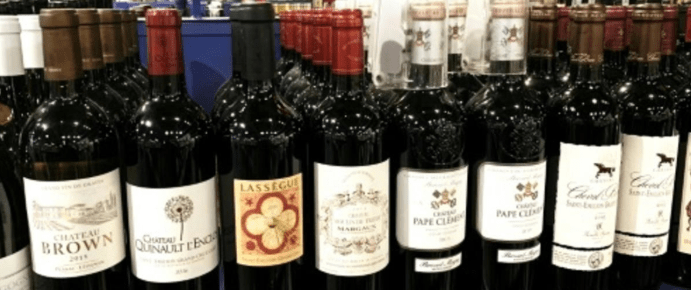
It is usually quite easy to identify the varietals contained in new world wines, such as those from Australia, North America or South America, and some European countries such as Germany.  These producers often display the varietal or blend as part of the label.  On the other hand some countries and regions, such as France and Italy, do not follow the same practice. 

In France the wines are usually identified by the region in which they are grown.  The same is true for some German, Italian and Spanish wines. This can make it very confusing for you when trying to find a certain type of wine for your drinking pleasure.  The good news is that both France and Italy label their wines in a consistent fashion so once you understand their naming conventions it is easier to determine the varietals the wines consist of.  The effort to understand these naming conventions, which are buried deep in their wine making history, will be well rewarded as it will provide you with great drinking pleasure for years to come.

 In both France and Italy the grapes grown are unique to each geographic region.  By taking note of which regions are renowned for the type of grapes you enjoy, you will be able to select one of these wines with more certainty than by just grabbing a bottle off the shelf randomly, or worse yet, avoiding them altogether.  From there you may find a particular winery or two or ten that you have a craving for.

In the weeks ahead I will tackle unravelling the mysteries many of the European wines and decipher the meaning of what appears on their labels.

Happy exploring!

Sláinte mhaith

The Mighty Grape

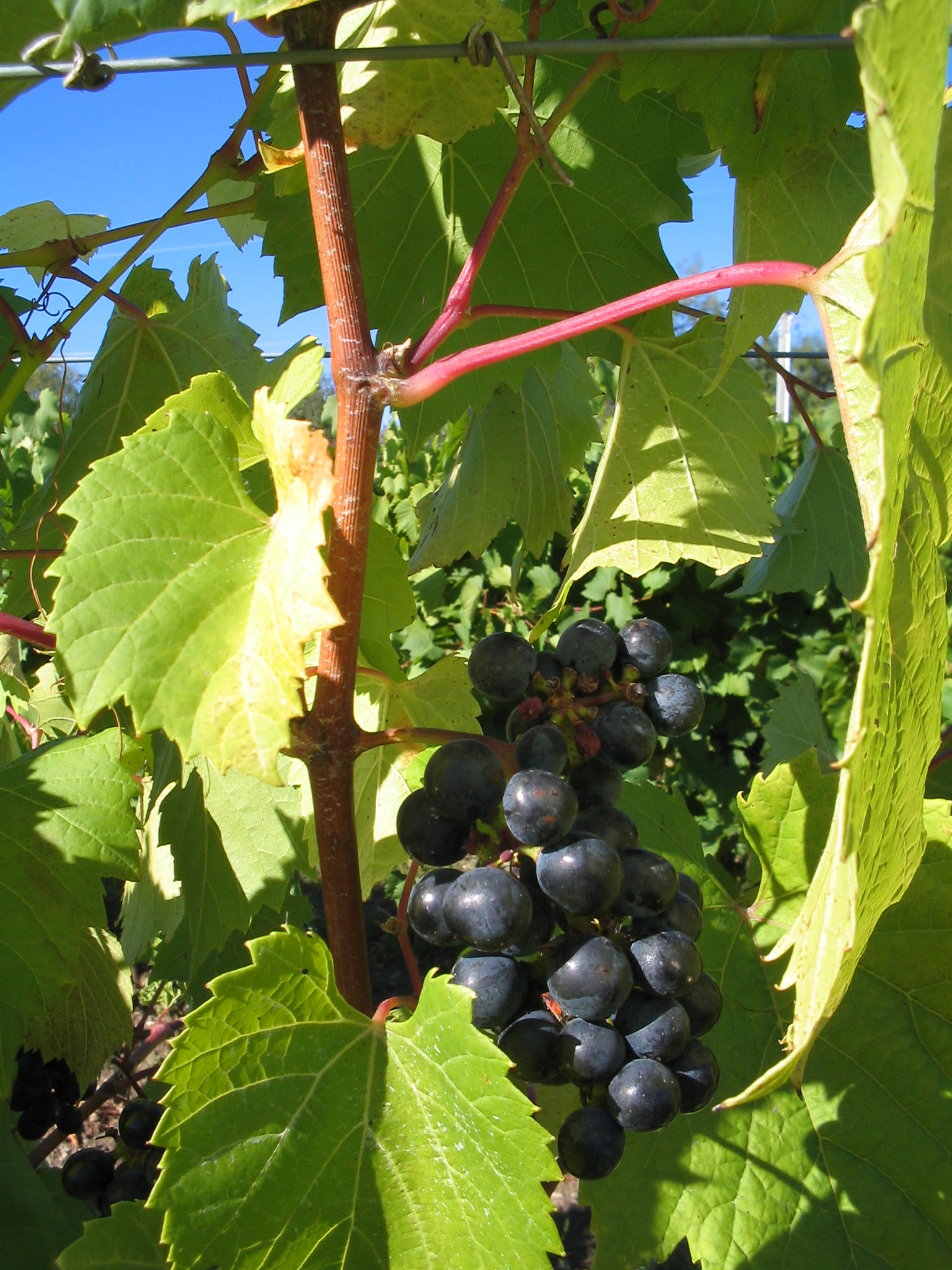
I am sure it is no surprise that the varietal (type of grape) a wine is composed of has the most significant impact on taste.   Generally speaking, white wines are much more subtle and delicate in flavour compared to reds, which are bolder and richer in flavour.

There is also a range of flavour and intensity, as well as sweetness within each of the whites and reds.  The depth of flavour and sweetness of the grapes is impacted by where the grape is grown and to a lesser extent, the characteristics of each individual growing season, whether it being warmer, cooler, wetter, and/or dryer.

The warmer the climate, the more intense the flavour of the grapes.  This is because warmer climates have longer growing seasons, thus giving the grapes more time to develop and enhance their flavour.

There are micro climates within regions as well, which have a comparative effect on the flavour and richness of the wines produced.  For example, within Canada, wines grown in British Columbia will generally have a bolder flavour than those grown in Ontario.  This is because the Okanagan Valley where the bulk of B.C.s grapes are grown is a warmer location with a longer growing season than the wine regions of Ontario.

Wines will sometimes be categorized by dryness while other times they are assessed based on the intensity of their flavour, sometimes referred to as “body”.  Retailers will typically display ratings based on dryness, that is, the amount of natural sugars present in the wine.

Dryness or sweetness does not always relate directly to whether the wine has a bold or mild flavour.  The body or boldness of the flavour will be more dependent on the type of grape, the amount of tannin and acid in the wine, as well as the region the grape was grown in.  For example, an Australian or Chilean Cabernet Sauvignon will most likely have a much more intense flavour than a similar wine from France or Canada.

The more tannin and alcohol content in a wine, the fuller the taste.  The reverse is true for the level of acidity within the wine; the higher the levels of acidity, the less bold the taste of the wine.

Since darker coloured fruit usually has more intense flavour, the darker the colour of the wine, the more intense the flavour will be.  The colour of a wine doesn’t help though when purchasing a wine from a merchant since the bottles are usually coloured preventing you from seeing the natural colour of the wine.

Light bodied wines are considered to be those with an alcohol level of 12.5% or less whereas medium bodied wines have alcohol content between 12.5% and 13.5%.  Finally, any wine with an alcohol level of 13.5% or above is considered full bodied.

The grape content within a wine is not always easily identifiable by simply reading the label.  In France for example, wines are identified only by the region in which they are produced, such as Bordeaux or Burgundy.  An upcoming article will discuss how to identify the varietals contained in wines that are only identified on the bottle only by region or type.

Sláinte mhaith