Speyburn’s  Jerez Sherry Cask Single Malt Scotch Whisky

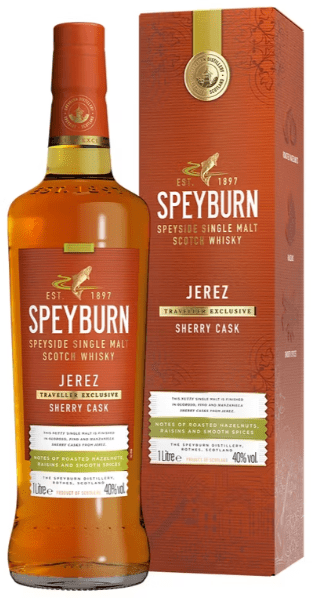
On my recent Danube River cruise through eastern Europe, I discovered another of Speyburn Distillery’s scotch whisky options, Jerez Sherry Cask Single Malt. This nutty single malt is first aged in bourbon casks, then finished in Oloroso, Manzanilla and Fino Sherry Casks from Jerez, which is located in the Andalusia region in the south of Spain.

The result is a Scotch whisky that displays flavours of roasted hazelnuts, raisins, and smooth spices. It has a dark amber colour and a nose of roasted hazelnuts, raisins and sweet spices. The flavours of nutty spices and dark red fruits lead into sweet, subtle vanilla and hazelnuts flavours.

I found it most enjoyable but unfortunately, like many of Speyburn’s whiskies, it is not available for purchase in Ontario.

Sláinte mhaith

Glenlivet 18

Photo credit: lcbo.com

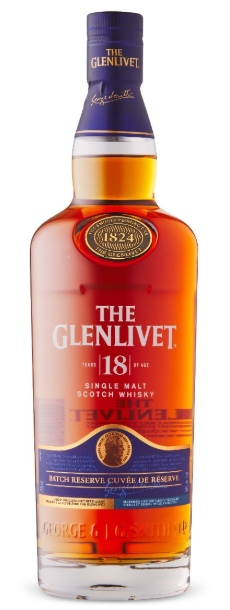
I am a fan of several expressions of Glenlivet Scotch Whisky, but the one I favour most is The Glenlivet 18. The Glenlivet Distillery is located in the Speyside whisky region of Scotland.

Glenlivet’s Master Distiller, Alan Winchester, has created the 18-year single malt by incorporating a variety of cask types, including both first and second-fill American oak and ex-sherry oak. The American oak provides tropical fruit flavours and the ex-sherry casks generate the spicy notes. The result is a striking single malt scotch whisky that is complex and balanced. It has a golden colour with fruity and toffee aromas, toasty grain, vanilla and almond flavours, as well as a long smooth finish.

The Glenlivet 18-Year-Old has won more awards than any other expression. It is a true example of the quality and taste of The Glenlivet. I feel fortunate to have it available frequently at my local liquor store. It is a little pricey at $215.40 CDN but well worth it. I find it a great addition to my liquor cabinet and a tasty treat.

Sláinte mhaith

Speyburn 10 Scotch Whisky

For the second year in a row, I had the opportunity to enjoy Speyburn 16 while traveling through France. Upon returning home, I once again searched Ontario’s liquor stores to see if it was possible to acquire a bottle, but to no avail.

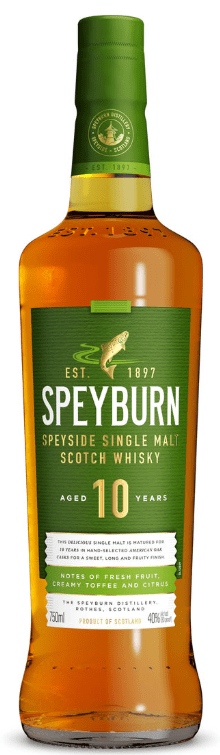
However, unlike when I searched last year, I discovered that this year Speyburn 10 was available. Eager to try it, I immediately ordered a bottle. When it arrived a few days later, I was excited to see how well it compared to the Speyburn 16; though I expected it to be somewhat less impressive given the 16 had the benefit of six additional years of aging.

I was pleasantly surprised to find how good the 10 year is. Speyburn 10 is matured in a combination of American oak and ex-sherry casks. Its colour is pale gold with amber highlights and the flavour contains notes of fresh citrus fruit with hints of toffee, butterscotch and vanilla. The palate is medium bodied with a smooth, long finish. Given its younger age, Speyburn 10 is surprisingly deep, complex and well-balanced.

After tasting Speyburn 10, I was not surprised to learn that it was a Gold medal winner at both the 2022 and 2023 San Francisco World Spirits Competition, as well as the 2021 New York International Spirits Competition.

After trying the Speyside 10 I quickly ordered a second bottle while it is still available in Ontario. At a price of $72.75 it can’t be beat.

Sláinte mhaith

Smoky Scotch for Summer

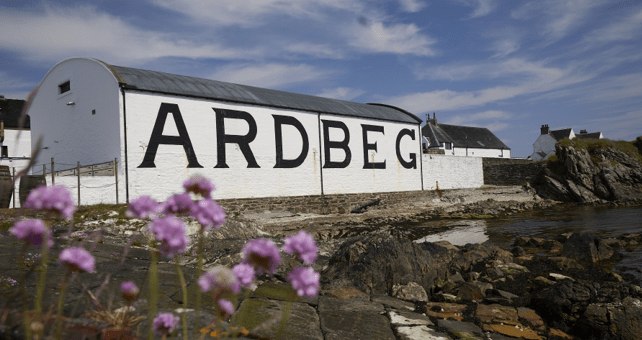
To me, Scotch whisky, especially a heavily peated one, is a beverage best enjoyed in the cool, damp spring and fall months or while cozied up next to a warm fire during the depths of winter. So, when Islay distiller Ardbeg began promoting their whisky offerings as a good summertime drink, I was skeptical to say the least. At best I saw it as a gutsy marketing plan by their promoters.

Photo credit: ardbeg.com

When it comes to peated whisky, people generally have strong opinions. The flavours used to describe such whisky include medicinal, campfire smoke, iodine, tire fire and seaweed. You either love the taste or hate it. Ardbeg’s offering of single malts capture all of these characteristics but there’s much more to it than just peat.

The French mega-giant parent company JVMH owns both the Ardbeg and Glenmorangie distilleries. Glenmorangie is located in the Highlands whisky region at Tain, Ross-shire, Scotland.

There’s a long history behind Ardbeg, but it’s only been operating in its present capacity since the late 1990s. Nevertheless, it has managed to make a big impact on the world of heavily peated single malt scotch under the direction of master distiller and whisky expert, Dr. Bill Lumsden and more recently, master blender and head of whisky creation Gillian Macdonald.

It was Macdonald who came up with the notion that you can and should enjoy smoky scotch during the hot summer months. She based her idea on the fact that Ardbeg’s complex flavours include hints of baked pineapple and banana, as well as the surprising level of sweetness.

Bartenders are using Ardbeg as a base in their cocktails as they claim that it works well with a variety of ingredients. Included in the list of cocktails is Whisky Sour, Scotch Margarita, Highball, Negroni and Expresso Martini.

Who would ever have thought such a smoky Scotch whisky would be popular in the sunny warm weather? Certainly not me. Bring on the summer!

Sláinte mhaith

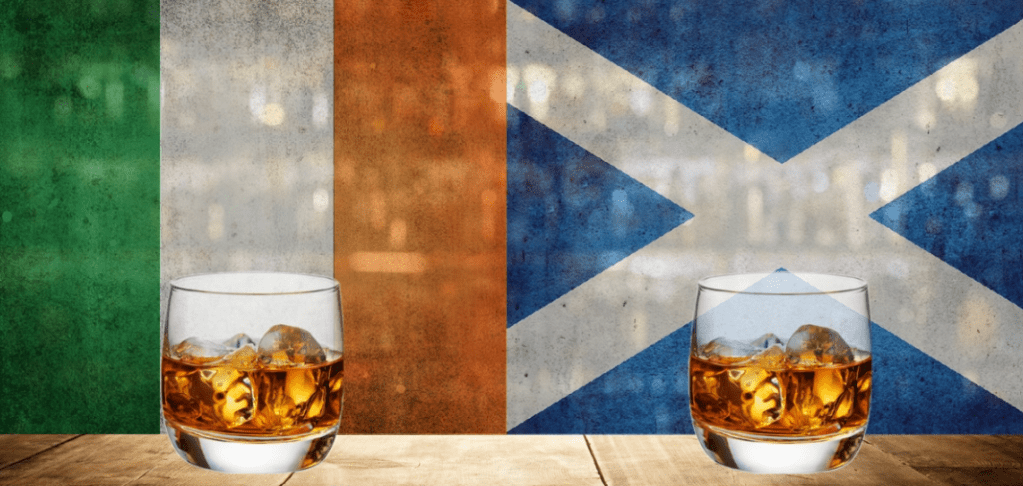
Irish Whiskey or Scotch Whisky

Don’t all types of whiskey pretty much taste the same, especially those ones that are made from the same type of grain? The simple answer is no. Just ask the Irish or the Scots. They will each tell you that theirs is far superior over all others. Irish whiskey and Scotch whisky have common roots but have developed differently over time.

Photo credit: kinnittycastlespirits.com

So, what are the differences between Irish whiskey and Scotch whisky? To begin, Irish whiskey is spelled with an “e” (whiskey), while Scotch whisky is spelled without an “e” (whisky). Whiskey labelled as Irish whiskey must be produced in Ireland and spend a minimum of three years maturing there while whisky labelled as Scotch whisky must be produced in Scotland and spend a minimum of three years maturing there.

Both are created using fermented grain and aged in wooden barrels. However, their distillation process, ingredients and flavour profiles differ. Irish whiskey is often triple-distilled whereas most Scotch whiskies are double-distilled. Thus, Irish whiskey is usually known for a smoother, lighter taste, often having fruitier flavours, while Scotch whisky is typically known for a fuller, heavier, more complex flavour profile with notes of oak, vanilla, fruit, spice and sometimes smokiness. However, as with most things there are exceptions. Occasionally Irish whiskey is only double-distilled and Scotch whisky is triple-distilled.

Irish whiskey may be made from a combination of cereal grains including barley, corn, wheat and rye. Scotch whisky is produced from 100% malted barley. The grain is distilled differently as well. Irish whiskey can mature in wood species other than oak, while Scotch whisky must be matured in oak barrels.

There are four types of Irish whiskey: Single Malt, Single Pot Still, Single Grain and Blended Irish Whiskey. For details on single malt and single pot, see my March 12, 2022 post “The Styles of Irish Whiskey”.

On the other hand, there are five types of Scotch whisky: Single Malt, Single Grain, Blended Malt, Blended Grain and Blended Scotch Whisky. Further information on the types of Scotch can be found in my post “Scotch Whisky Single Malt Vs Blend” dated December 18, 2021.

As you can see, both countries produce single malt, single grain and blends. In Scotland, blended malt and blended grain are separate categories whereas blended Irish Whiskey must be made from two or more different whiskey types.

The biggest difference between Irish whiskey and Scotch whisky is the single pot still classification. This is a style of whiskey that is unique to Ireland and is made from both malted and unmalted barley.

Scotch whisky sales exceed those of Irish whiskey. In 2023, Scotch exports were the equivalent of $10.3 billion CDN while Irish whiskey exports were just more than $1.6 billion CDN. There are currently about 150 whisky distilleries operating in Scotland and around 50 in Ireland.

However, being bigger doesn’t make it better. Scotch can boast more varieties and market exposure but it is up to you decide which one is better. It comes down to personal taste.

Sláinte mhaith

Should the LCBO be Privatized?

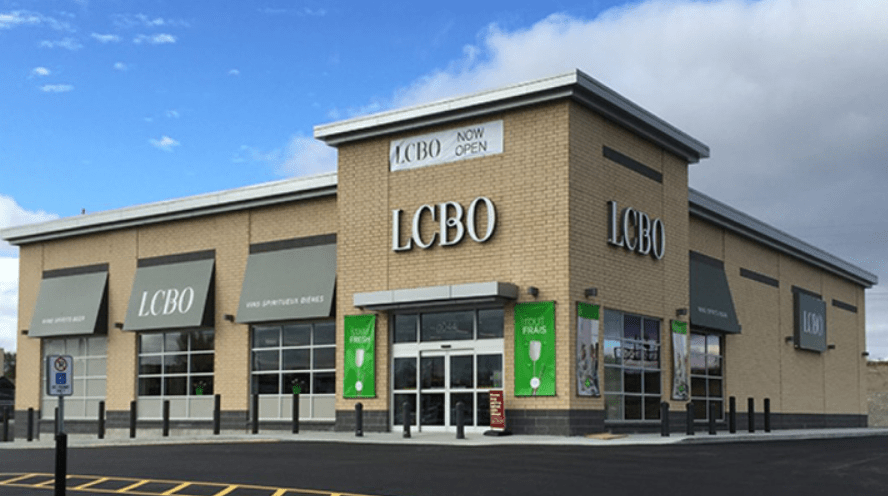
In Ontario, where I live, there is an age-old debate as to whether wine and liquor sales should be government controlled and sold only in the Liquor Control Board of Ontario outlets (LCBO) or allowed to be sold by private enterprise. During recent years, government control has been loosened somewhat, enabling wine, beer and coolers to be sold in grocery stores and more recently in convenience stores.

Photo credit: foodincanada.com

The LCBO’s history dates back to 1927 and the end of prohibition in Ontario. In 1927 the LCBO was basis of three central beliefs:

  1. The best way to prevent social harm and health risks related to alcohol consumption was to make purchasing alcohol awkward or inconvenient.
  2. Adults could not be trusted to make their own decisions around responsible alcohol consumption.
  3. Private sector retailers did not have the capacity to balance market competition and social responsibility.

Attitudes are very different today and it can be argued that the LCBO would not have been necessary nor created if current circumstances had applied in the 1920s.  In today’s world, the private sector manages business enterprises for profit and the government regulates their behaviour through the establishment of standards and the use of enforcement to ensure those standards are met. 

There have been several studies over the years on what reforms, if any, should be made to the LCBO.  It has been argued that the government could generate more revenue by privatizing the LCBO’s retail stores while keeping their wholesale business in place.

This is what Alberta did back in 1993 when it introduced a privatization scheme.  The system initiated more selection, arguably reduced prices and enhanced convenience for the consumer. It provided better opportunities for small business and alleviated the government from direct business operations. 

Despite Alberta’s experience, Ontario has not had the enthusiasm for such a venture. A study published in 2019 suggested that the people of Ontario did not want privatization as they felt the LCBO provided great value-add to the community as their surpluses fund other provincial initiatives. Reform is more likely to take place in the distribution process via an expansion in the type and number of retail outlets allowed to sell wine and in the pricing of wine.

The LCBO has a dual social responsibility mandate. It is responsible for generating revenue for the benefit of the Ontario government, as well as a social responsibility to put in place a system of minimum selling prices to discourage excessive alcohol consumption.  This has been criticized as being a legally sanctioned price fixing mechanism to guarantee profits and discourage price competition. 

It’s interesting to note that each province sets its own rules and regulations regarding the sale of wine and liquor. This is illustrated by the table below which indicates when each province implemented and repealed prohibition in Canada.

Province/territory           Prohibition enacted                     Repealed

British Columbia              1917                                                    1921

Alberta                             1916                                                    1923

Saskatchewan                  1915                                                    1925

Manitoba                         1916                                                    1921

Ontario                             1916                                                    1927

Quebec                             1919                                                    1919

New Brunswick                 1856                                                   1856

                                         1917                                                    1927

Northwest Territories      1874                                                    1891

Nova Scotia                      1921                                                    1930

Prince Edward Island      1901                                                    1948

Yukon                               1918                                                    1920

Newfoundland                 1917                                                    1924

Perhaps standardization of liquor sales should be considered across the country. That could be a discussion for another day.

Sláinte mhaith

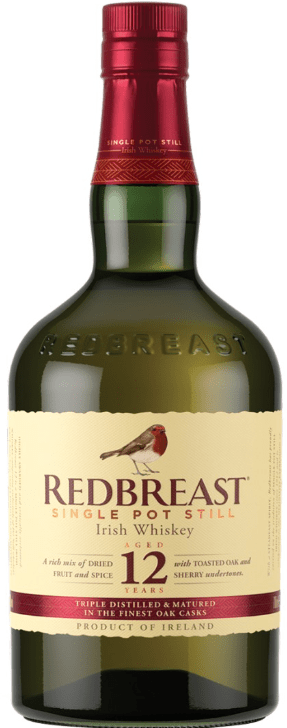
Redbreast 12 Irish Whiskey

While visiting the Jameson Bow Street Distillery in Dublin, Ireland over a decade ago, I was told that the difference between Jameson whiskey and Redbreast whiskey was that Redbreast was distilled in the traditional way whereas Jameson was made in a more contemporary style. Being a novice at the time, I favoured the less complex flavour of the Jameson’s. It took me several years before I gained a full appreciation for single pot whiskey, which is now my Irish whiskey of choice.

The history of Redbreast goes back to the late 1800s in London, England, where a company by the name of W & A Gilbey began selling wines and distilling spirits. By 1875 they were distilling nearly a million bottles of whiskey a year. After experimenting with many whiskey types and labels, in 1912 the company released the first batch of Redbreast 12.

The political and economic turmoil of the 1980s resulted in a stoppage in production. The whiskey was reintroduced in 1991 by The Midleton Distillery that has been making single pot still Irish whiskey in County Cork, Ireland for over 200 years.

Redbreast is now distilled in top quality sherry and bourbon casks that contribute to the complex flavour of this pot still whiskey. With notes of spice, it has a grainy quality and depth that doesn’t exist in a single malt.

A lot goes into making Redbreast a great whiskey. The mash bill is made of a mix of malted and unmalted barley that is locally grown. The unmalted barley creates a unique creamy mouthfeel and spiciness. Water is sourced directly from the Dungourney River, part of which runs through a system of cooling underground caves. The whiskey is distilled in a copper pot still before being matured in a combination of bourbon seasoned American Oak barrels and Oloroso Sherry seasoned Spanish oak casks.

Being the most modestly priced of the Redbreast line, at $96 CDN, Redbreast 12 has great appeal. This is one of the best buys amongst Irish whiskies.

Its colour is clear gold and has the aroma of dried orange peel and toasted nutmeg. It is complex, fruity and spicy, with a hint of toasted wood notes. It finishes with notes of pepper and grass, with a lingering warmth.

After originally trying Redbreast in my “youth” of whiskey drinking years, and not truly appreciating what it truly had to offer, I have since revisited it and gained a new appreciation of this Irish standard.

Sláinte mhaith

Ardbeg Whisky

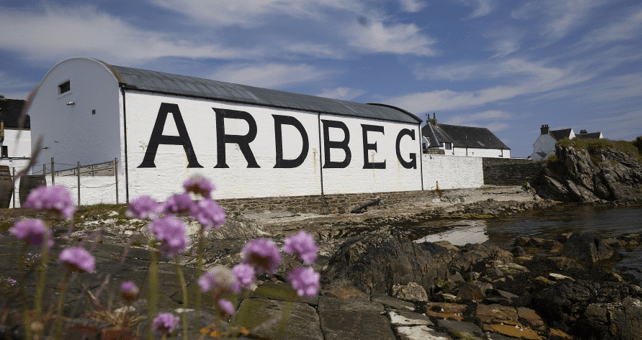
On the small remote Hebridean island of Islay (pronounced ‘eye-lah’), that lies off the western Scottish mainland, is where you will find the 200 year old Ardbeg distillery. The abundance of soft water, fertile soil and acres of precious peat makes Islay a place of pilgrimage for the single malt whisky faithful. I must admit that I have visited the island on two separate occasions and would love to return.

Photo credit: ardbeg.com

Ardbeg claims to produce the most peated of all the Islay malts and having tried it I would not disagree. It achieves this by using the most phenolic malt in the industry. Phenols are a class of organic compounds that contribute to the aroma and taste of whisky. They are often associated with smokiness and medicinal notes commonly found in peated whiskies. Ardbeg’s malt is peated to a level of 50 ppm (parts per million).

The casks used to mature the whisky come from a variety of sources. The vast amount of whisky matures in ex-Bourbon oak barrels. However, there is ongoing experimentation with different types of oak casks.

During the maturation process only 1st and 2nd fill casks are used. All of the new first fill Bourbon casks come from suppliers in the United States. Other casks come from Speyside Cooperage, and Craigellachie in Scotland.

As with many of the Islay distilleries, Ardbeg is situated next to the ocean. As a result, the whisky receives a certain salty, iodine character while it matures.

Here are the stats on Ardbeg’s three main whiskies:

Ardbeg 10 Year Old

  • Alcohol by Volume (ABV) = 46%
  • Appearance = Light Gold
  • Details = Revered for its balanced smoke and fruit character. Shows aromas of lemon, smoke, peat and brine with a kiss of sweet cereal. On the palate, it is warm and smoky with bold, yet balanced flavours that resonate with the aromas. The finish is long, sweet and smoky. Serve neat or with a few drops of pure water.
  • Price = $120 CDN

Ardbeg Uigeadail

  • ABV = 54.25
  • Colour = Deep gold
  • Details = With special vatting, this Ardbeg combines deep traditional smoky notes with sweet, raisiny tones of old, ex-Sherry casks. Rich and weighty with aromas of warm Christmas cake, fresh ocean spice, cedar and pine. Sweet and spicy with deep, smoky flavours, lingering raisins and smoke on the lengthy well-integrated finish.
  • Price = $190 CDN

Ardbeg Corryvreckan

  • ABV = 46.2%
  • Colour = Light gold
  • Details = Expect an intense nose of cedar, brine, and creosote, with caramel, smoky bacon, vanilla and clove; very complex aromas. The palate is also intense, but it is round and finely balanced with outstanding length. The lingering finish shows smoky, black tarry coffee with chocolate. Not for the fainthearted.
  • Price = $238 CDN

If you have a liking for peaty Scotch Whisky, and you haven’t done so already, you should try one or more of Ardbeg’s offerings.

Sláinte mhaith

Health and Lifestyle Changes

Photo credit: wp.stolaf.edu

Anti-alcohol messaging is going to continue and it will be increased during this upcoming year. The World Health Organization (WHO) is now warning against the consumption of any alcohol. Cancer warning labels are now being proposed and will no doubt soon be applied to all alcohol packaging. These warnings will no doubt be accompanied by a reduction in alcohol consumption. However, there are several other factors that will impact alcohol sales.

To begin with, many Millennial and Gen Z consumers are focused on their physical and mental state and how they portray themselves on social media. They have come to associate alcohol with vulnerability, loss of control, anxiety and abuse. For these reasons they have reduced their alcohol consumption.

The increase in popularity of anti-obesity drugs is also having an impact. Glucagon-like peptide 1 (GLP-1), anti-obesity Semaglutide, Liraglutide, as well as Tirzepatide drugs like Saxenda, Ozempic, Wegovy and Mounjaro are now very popular. GLP-1 works by trigging the release of insulin from the pancreas, reducing glucose from entering the bloodstream, slowing digestion and increasing the ‘full’ sensation people feel after eating.

So, how does this impact wine consumption? Studies revealed that Semaglutide reduced binge-like alcohol drinking. The drugs moderated GABA, the gamma-aminobutyric acid receptors in the brain responsible for the ‘buzz’ associated with moderate consumption of alcohol.

There is growing evidence that many users of these drugs feel less inclined to drink any form of alcohol. If GLP-1 becomes as affordable and as widely used as many predict, the effect on the food and drink industries may be dramatic.

Alcohol-free beverage alternatives are becoming more popular as the quality of these products continues to improve and they gain more market acceptance. Our own kids, who are all adults, are into alcohol free alternatives, especially beer. And now with many craft breweries and estate wineries expanding their offerings to include alcohol free options, the quality of these products maintains the same standard as their alcohol-based options. If nothing else, these beverages will provide lunchtime beverage alternatives to soda or mineral water.

Some countries, such as Great Britain, are imposing a different level of excise tax based on alcohol level. For example, beginning February 1, 2025, the duty and tax on a 13.5% Alcohol by Volume (ABV)bottle of wine will be £3.59, whereas an 8.5% ABV bottle will be taxed at just £2.05.

Finland has just reduced its alcohol distribution rules. Beverages with ABVs of 8% or less can now be sold in supermarkets. Traditionally, once one Nordic nation changes the rules, the others, such as larger Sweden, tend to soon follow.

Public attitudes toward alcohol are changing. The social licence to encourage a guest to have another glass of wine or to finish off the bottle are becoming less acceptable behaviours and are being widely revoked.

As Bob Dylan wrote, “The Times They Are a-Changin”.

Sláinte mhaith

The Peatiest Scotches

According to the Scottish government, about eighty percent of Scotch whisky includes some amount of peat in the production process. Peat creates the smoky and medicinal flavour of the whisky. When burned during the malting process, the peat releases compounds called phenols. The phenols are measured in parts per million (ppm) which infuse the spirit with its earthy, charred character.

In general terms, the greater the phenol level the smokier the whisky. However, all the phenols are not necessarily transferred from the barley to the final product. The quantity of phenols in the liquid can often be much less than what is measured in the barley, and the smoke’s influence can be reduced during the maturation process.

Those Scotches with the highest concentrations of phenols generally range between 35 and 55 ppm and will have flavours and aromas of campfire smoke, tar, leather and earthiness. However, some distilleries have created whisky that far exceeds those levels.  Here is a sampling of those whiskies below. Unless you are a really big fan of highly peated whiskies, many of these offerings are probably not for you.

Bruichladdich Octomore 8.3

It is no surprise that Bruichladdich Distillery is on Islay, the island renowned for its peated whisky. Phenol levels in Octomore consistently exceed 100 ppm. The brand releases three or four distinct expressions every year, each using different aging techniques. The 2017 collection included the most heavily peated Scotch ever made. The whisky was bottled at 61.2 percent ABV (Alcohol by Volume) and contained a whopping 309 ppm. Unfortunately, this whisky is not available in Ontario.

Ardbeg Hypernova

Ardbeg, another Islay distillery, is famous for its peated whiskies. Hypernova has a phenol level of 170 ppm. It was bottled at a level of 51 percent ABV. This non-age-statement expression is the smokiest Ardbeg released. It is available in liquor stores at a price of about $375 CDN.                                                                     

The GlenAllachie Meikle Toir The Turbo

Distilled in Speyside, GlenAllachie’s whiskies are usually unpeated. That changed in 2023 when the distillery announced Meikle Toir, a new brand of heavily peated whiskies. The Turbo, which is a limited edition, annual release, is the peatiest, being distilled from malts with 70 ppm of phenol. The 2024 expression was matured in a combination of American oak and oloroso hogshead casks and bottled at 50 percent ABV. It is not currently available in Ontario.

Benromach Contrasts: Peat Smoke Sherry Cask Matured

Benromach Distillery is a Speyside distillery that generally produces only lightly peated whisky at around the 12 ppm level. However, this expression pushes the envelope to a level of 55 ppm. Exclusively distilled in small batches and aged solely in first-fill sherry hogshead casks, the whisky provides a delicate balance of smoke and rich fruit flavours. This particular offering from Benromach is not available in Ontario.

Kilchoman Machir Bay

Being located on Islay, Machir Bay is Kilchoman’s flagship whisky having the tone for Islay’s signature style. Intensely smoky, the single malt Scotch is distilled from barley peated at 50 ppm before it’s laid down to mature in a combination of bourbon and sherry casks. It is available in liquor stores for $100 CDN.

Laphroaig 10 Year Cask Strength

Islay’s Laphroaig Distillery has been exclusively producing peated whisky since its birth in 1815. The smokiest expression in the Laphroaig lineup is Laphroaig 10 Year Cask Strength, which is peated at around 45 ppm of phenol. It is available in liquor stores at a price of $110 CDN.

Lagavulin 16 Year Old Single Malt Scotch Whisky

The most popular offering from Islay’s Lagavulin distillery is one of my personal favourites, the 16 Year Old Single Malt. It is a 43-percent ABV whisky that has been aged in ex-bourbon and ex-sherry casks. The whisky is distilled from malts peated at 35 ppm and contains flavours of caramel, vanilla and saltwater. It is available in liquor stores for $175 CDN.

Caol Ila 12 Year Single Malt Scotch

Another Islay distillery that has been described by some as providing the best peated Scotches for beginners, Caol Ila delivers a sweeter smokiness than some of the more heavily peated Scotches on this list. Distilled from barley at approximately 35 ppm, the whisky carries citrus and potpourri notes combined with subtle peat influence. It is available in liquor stores for $100 CDN.

Sláinte mhaith