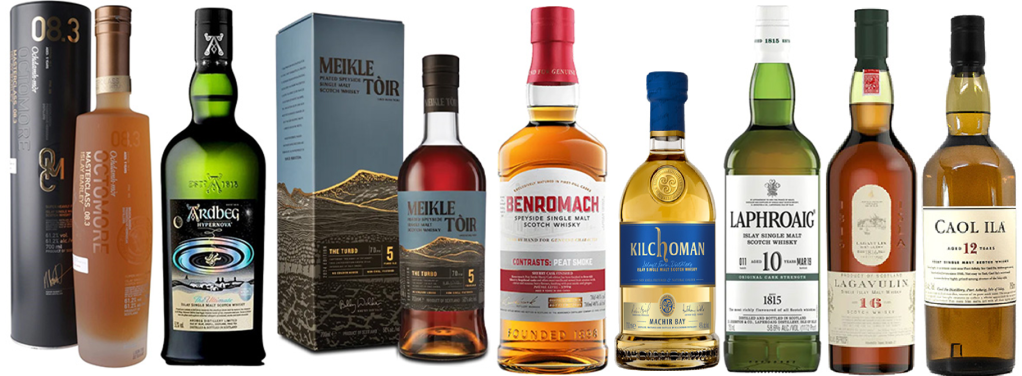
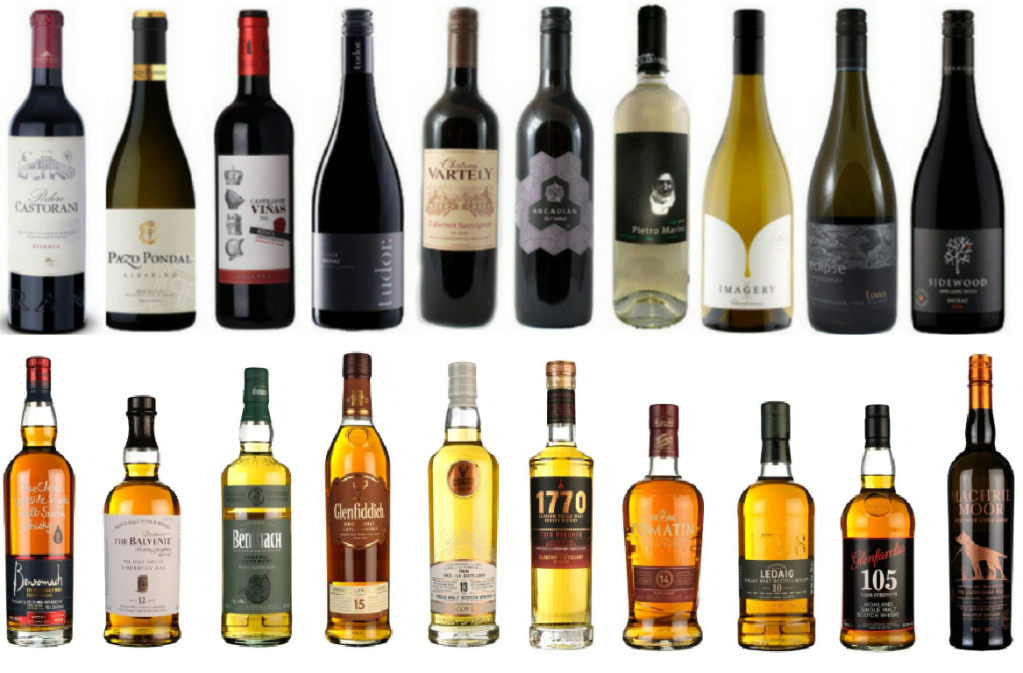
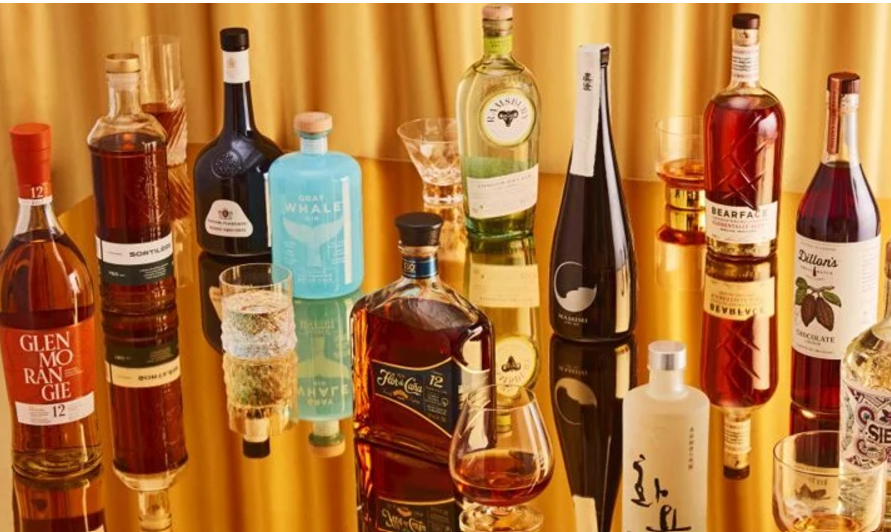
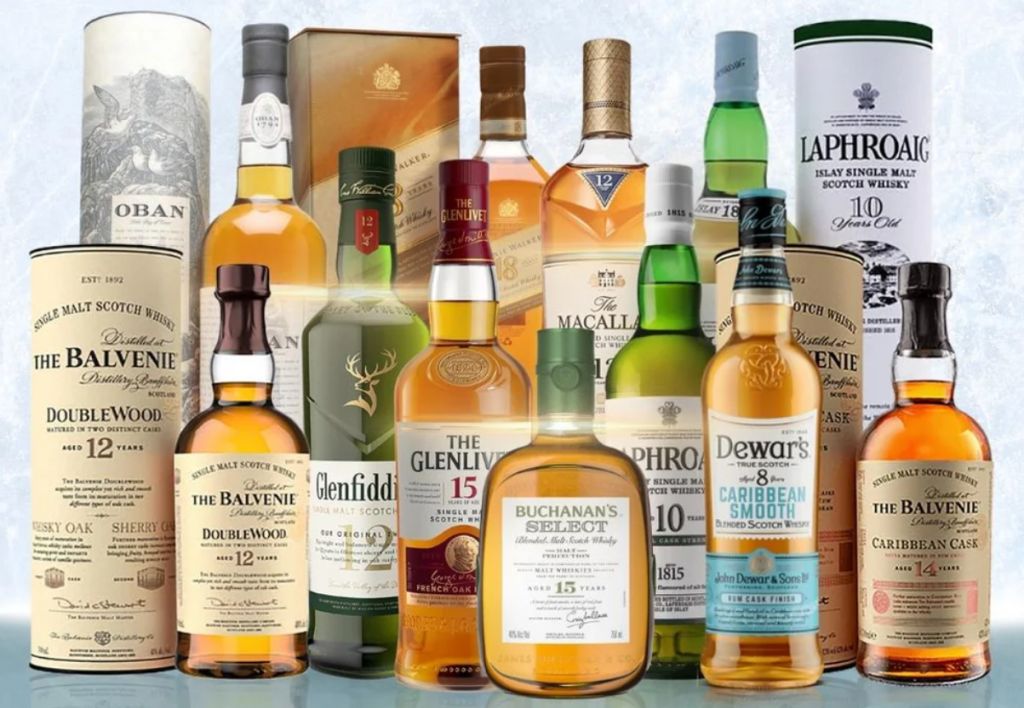
Whiskey has been and continues to be, one of the world’s most favourite spirits. It is both a symbol of tradition and an area for continued innovation. From single malts to blended varieties, whiskey’s rich history that dates back several hundred years, is accompanied by a dynamic, evolving market that attracts both connoisseurs and casual drinkers.
Photo credit: nationalgeographic.com
Whiskey’s deep-rooted craftsmanship, with its complex aging processes and diverse production methods, continues to attract consumers. Distilleries are preserving traditional techniques while embarking on new technologies that help to enhance flavour profiles.
While countries like Scotland, Ireland and North America remain as key players in the industry, whiskey’s appeal is expanding globally, with countries such as Japan and India gaining significant recognition for their increased demand and innovative whiskey production.
Globally the demand for premium and supreme whiskeys is on the rise. This shift is pushing brands to offer a variety of variably priced, exclusive, limited-edition releases to attract whiskey enthusiasts, as well as collectors. These offerings range greatly in price from a few hundred dollars to well into the four-to-five-digit range. A few rare whiskeys have sold for prices even beyond that!
During recent years, producers have been experimenting with new barrel finishes; making use of barrels that were formerly used to store other spirits, such as cognac, sherry, bourbon or brandy. Distillers have found that maturing whiskey in these types of barrels will infuse new flavour from the wood of these barrels into the whiskey. Distillers have also experimented with combining multiple flavour infusions.
The popularity of whiskey-based cocktails and the craft cocktail movement is also expanding whiskey’s appeal. The industry is now attracting younger generations and enhancing market versatility.
Whiskey continues to be a beverage of choice for those who appreciate both tradition and innovation, offering endless possibilities for consumers, whiskey enthusiasts and collectors alike.
I am always seeing articles about ‘TheTen Best this’ or a list of ‘The Best that’. When I read those articles I am always left with the question, “What makes these ones the best? To me beauty is in the eye of the beholder. Whether it be whisky or wine, I have tasted some that I love and others that are so-so, or even worse, that I detest. Just because someone tells you this one is fantastic doesn’t mean that you will agree. Does this mean you are less learned than the author or lacking in your ability to recognize great flavour? Absolutely not. After all, what makes the author’s opinions any better than our own? Nothing.
Another thing I find interesting is that often many of the selections found on these lists are not available in Canada and many are not even accessible to order via the internet. Thus, the information becomes basically useless. It would be like searching for a unicorn.
Lastly, the price point on some of these choices is out of reach for many as prices may reach well into four digits to obtain a bottle of the golden nectar. In my opinion, a steep price doesn’t automatically equate to it being a fantastic wine or whisky. It only means that it is expensive. A high price is better equated to the economic and production factors associated with making the wine or spirit.
To me these articles provide mere opinions and are nothing more than casual reading entertainment. I find it interesting to compare these lists to see whether there are any that I have tried. Of those that I have tasted, I compare the writer’s opinion to my own. If there is agreement, then I am more interested in what the writer has to say since there is then a stronger likelihood that we have similar tastes.
Looking for ideas on what wine or whisky to give this year? Here are some of my favourite suggestions that should be available at your local liquor store or online.
FOR THE WINE FANS
Under $20
Fantini Sangiovese $11.45 CDN – Expressive ripe fruit, supple tannins, and well-balanced acidity contribute to an inviting and versatile wine, making it an easy choice any night of the week. Serve it alongside braised meat dishes or with tomato-based pasta dishes.
This is a wine my wife discovered while browsing the aisles of our local liquor store and it is now our go-to house wine.
Famille Perrin Réserve Côtes du Rhône $16.95 CDN – With floral, red plum, chocolate and spice notes, this wine goes well with Mediterranean-style pizza or hearty lamb stew.
France’s Côtes du Rhône region is one of my personal favourites.
Featherstone Black Sheep Riesling $19.95 CDN – Vibrant, with honey, fresh fig, herbs and citrus, this wine consistently delivers the fine, pure mineral for which both great Riesling and Ontario are so renowned. It may be cellared for up to 5 years and will be superb with lightly grilled or smoked fish.
This has been one of my standards when guests come over or to pair with barbecued fish.
Under $50
Fontanafredda Barolo DOCG $34.95 CDN – With aromas and flavours of red fruit, floral tones, berry, plum and a touch of licorice, this wine is extra-dry with balanced acidity, firm tannins and fruit flavours that linger on the finish. Barolo pairs well with game meats and mushroom risotto.
Barolo is my favourite type of Italian wine and to find one with a price tag under $50 is uncommon.
Famille Perrin Les Sinards Châteauneuf-du-Pape $43.95 CDN – Perrin is among the finest producers in the southern Rhône. Some grapes for this rich, age-worthy red come from their legendary Château de Beaucastel estate. Drink over the next decade with roast duck, roast lamb or grilled game meats.
I have been intrigued by Châteauneuf-du-Pape wine ever since a close friend brought me a bottle from the French district quite a few years ago. After visiting there myself earlier this year and sampling the wines I am even more smitten with them. To find a bottle for less than $50 is a true find.
For That Special Someone
Mazzetti Grappa di Nebbiolo da Barolo in Decanter $199.95 CDN – Crafted from the pomace of Nebbiolo from Barolo, Italy, this is pure quality and elegance. The decanter and stylish gift box make it as breathtaking on the outside as it is on the inside. It is the perfect gift for any grappa enthusiast.
FOR THE WHISKY DRINKERS
Under $50
Jameson Irish Whiskey $39.95 CDN – Jameson Irish Whiskey is a versatile, smooth blend of pot still and fine grain whiskeys. Bright, pale amber with subtle aromas of white flower, nectarine, ripe pear and clove. Mellow and approachable on the palate, with spicy vanilla, wildflower honey and ginger flavours.
This is a great introduction for anyone who is being introduced to the world of whisky. It was one of my initial favourites.
Under $100
Bowmore 12 Year Old Islay Single Malt Scotch Whisky $65.95 CDN – This Islay whisky expresses the essence of Bowmore with rich amber colour; subtle notes of citrus and honey with typical peaty smokiness; the flavours are sweet and delicious with heather and honey; a soft peat smoke note lingers on a long and mellow finish.
My initiation to Bowmore 12 was at a friend’s cottage. It provides a wonderful Islay experience at a better price point than many of its competitors.
Green Spot Irish Whiskey $89.95 CDN – This single pot still whiskey from Ireland uses malted and unmalted barley to give it a unique spiciness. Clove, apricot and oak toast aromas evolve to flavours of cedar, clove, apple and ginger. The long finish echoes spicy notes of clove, nutmeg, and ginger.
This is my go-to Irish Whiskey and I try to always have some on my bar shelf.
Under $200
Lagavulin 16 Year Old Islay Single Malt Scotch Whisky $174.95 CDN – Considered by many to be the benchmark for Islay malts, this classic pours a golden amber colour and wafts from your glass with intense smoky peat and iodine. The palate is full flavour, rich and smooth with peat, figs, dates and vanilla followed by an enduring smoky and dry finish.
I was introduced to Lagavulin 16 by my wife’s uncle during a trip to the distillery several years ago. Even though he was a descendant of the original owners of the Laphroaig distillery he wanted me to try Lagavulin, his favourite whisky. I tried it and it has been a staple on my bar ever since.
The Glenlivet French Oak Reserve 15 Year Old Single Malt Scotch Whisky $114.95 CDN – The unique use of French Oak increases the intensity of the whisky, resulting in a richer and creamier finish along with a distinctive spiciness. Deep golden in colour, expect aromas and flavours of crème brûlée, sweet apple, gentle smokiness and peat alongside of lavender notes followed by a rich and complex finish.
This is another whisky that I like to always have on hand as one of my regular Scotch whisky choices.
For That Special Someone
The Glenlivet 18Year Old Single Malt Scotch Whisky $214.95 CDN – Distiller Alan Winchester takes this malt through a combination of cask types, including both first and second-fill American oak (for tropical fruitiness) and ex-sherry oak (for spiciness). The result is this golden-coloured dram with rich spicy aromas, toasty grain, vanilla and almond flavours and a long smooth finish.
This whisky I save for special occasions or when I want to treat myself.
Whisky has evolved from simply being a drink on its own to being part of an overall holistic lifestyle. Today people who appreciate fine single-malt scotch whisky are also thought to have an appreciation for fashion, travel, watches, cars and luxury pursuits. All of these things can go together hand in hand.
Photo credit: nestorliquor.com
There was a period during the 1980s when there was an excess of Scotch Whisky production that was the result of erroneous market assumptions. This resulted in a ‘lake’ of unsellable whisky because of the miscalculation in demand. This became known as the ‘Whisky Loch’. During this period twenty distilleries closed, production slowed by 35% and 20 years later there was still a large quantity of undesired 3 year old whisky.
New markets opening due to the ever-growing middle class in India, China and South America point towards a promising future for Scotch Whisky and single malts in particular; there is currently no fear of another Whisky Loch occurring anytime soon.
A combination of non-aged whiskies are often being used to appeal to new and younger audiences. Refined approaches to marketing and branding are being explored. Also, with the resurgence in the demand for Scotch Whisky, the supply of aged single malts has been somewhat depleted resulting in higher prices for these whiskies. The new blends, on the other hand, have a more favourable price point. These new blended whiskies can also become the base for a variety of nice whisky cocktails.
I am not sure how much credence I am willing to put in this, but there are those who say there is evidence to prove that there are health benefits to be gained from moderate whiskey or other alcohol consumption. I am a true whiskey fan but I am skeptical of at least several of the claimed health benefits.
Photo credit: vinepair.com
I think everyone will agree that too much of anything can be bad for you. It is argued that alcohol can be both a tonic and a poison. The difference seems to depend on the amount consumed. It is debated that moderate drinking can be good for the heart and circulatory system, and possibly protects against Type 2 diabetes and gallstones.
On the other hand, heavy drinking is a major cause of preventable death. Heavy drinking can damage the liver and heart, harm an unborn child, increase the chances of developing some cancers, and can lead to depression amongst other things.
The active ingredient in alcohol, ethanol, affects the body in many ways. It directly influences the stomach, brain, heart, gallbladder, and liver. It affects the level of cholesterol, triglycerides and insulin in the blood, as well as causing inflammation and coagulation. It also alters mood, concentration, and coordination.
All the various studies base their research on what the researchers refer to as moderate alcohol consumption. However, the definition of moderate consumption is not consistent throughout the scientific community. In some studies, the term “moderate drinking” refers to less than 1 drink per day, while in others it means 3 to 4 drinks per day, a significant difference. Exactly what constitutes “a drink” also varies. In fact, even among alcohol researchers, there’s no universally accepted standard drink definition. Many consider a drink as consisting of 1½ ounces of alcohol, but even then, the alcohol level by volume can vary from whiskey to whiskey.
Even moderate drinking is known to have some risks. Alcohol can disrupt sleep, as well as may interact in potentially dangerous ways with a variety of medications, including acetaminophen, antidepressants, anticonvulsants, painkillers and sedatives. It is also addictive, especially for people with a family history of alcoholism.
One serving of alcohol on average contains 100 to 150 calories, so even a moderate amount of 2 drinks a day can contribute 200 to 300 calories to your daily caloric intake. Mixed drinks that add juice, tonic, soft drinks or syrups will increase the calorie intake even further, increasing the risk of weight gain over time.
So what are the potential health benefits to be gained from whiskey or other forms of alcohol consumption? To start with, there are more than 100 prospective studies that suggest an inverse association between light to moderate drinking and risk of heart attack, ischemic (clot-caused) stroke, peripheral vascular disease, sudden cardiac death and cardiovascular related death.
Research indicates that there is a relationship between moderate drinking and lower risk of cardiovascular disease in both men and women. It applies to people who do not have heart disease, and also to those at high risk for having a heart attack or stroke or dying of cardiovascular disease, including those with Type 2 diabetes, high blood pressure and existing cardiovascular disease.
Moderate amounts of alcohol raise levels of the “good cholesterol”, high-density lipoprotein (HDL). Higher levels of HDL are considered to provide greater protection against heart disease. Moderate alcohol consumption is also linked to better sensitivity to insulin and improvements in factors that influence blood clotting. Such changes would tend to prevent the formation of small blood clots that can block arteries in the heart, neck, and brain, the ultimate cause of many heart attacks and ischemic strokes.
Other claimed health benefits include helping to maintain body weight, using as an antibiotic on scrapes and cuts, protection against dementia, reduction of high levels of uric acid, which in turn lowers the frequency and risk of gout attacks, and lastly it is gluten free.
This is all well and good but there are some essential factors to keep in mind. Having 7 drinks on a single day and then not drinking the rest of the week is not considered the same as having 1 drink a day. The weekly total may be the same, but the health implications are not.
The potential social and psychological benefits of alcohol cannot be easily quantified. A drink before a meal can improve digestion or offer a soothing reprieve at the end of a stressful day and an occasional drink with friends can be a social refresher.
There is one more caveat to add to this debate and that is, given the complexity of alcohol’s effects on the body and the complexity of the people who drink it, all-encompassing statements about the benefits of whiskey consumption cannot be made. Because each of us has unique personal and family histories, alcohol offers each of us a unique variety of benefits and risks. So, are there health benefits to be gained from whiskey consumption? Maybe.
While cruising down the Rhône River through the heart of one of France’s noteworthy wine regions, I discovered a Scotch whisky that quickly became one of my favourites, Speyburn 16 Year Old.
Photo credit: ScotchWhisky.com
The whisky is aged for 16 years in American ex-bourbon barrels. The resulting spirit is a delicate golden colour with the aroma of fruit, vanilla and toffee. The flavour is medium bodied with hints of vanilla, chocolate and honey. The finish is long with a touch of oaky spice. I found it to be close in comparison to Glenlivet 18, but at a more comfortable price point.
Speyburn distillery is more than 125 years old and is located in the heart of Scotland’s Speyside whisky region. A fellow by the name of John Hopkins started whisky production in late 1897. The distillery shut down in 1939 so that the Scottish Artillery Regiment could utilise the facility during World War II, but it was back up and operating again by 1947.
In 1992, Speyburn was sold to Inver House Distillers and the two have been working together ever since. The distillery began expansion work in 2014 in order to double their production capacity. However, even with doubling the amount of whisky being produced, Speyburn has yet to appear on Canadian whisky store shelves. Hopefully it will one day soon.
The Glenturret is Scotland’s oldest working distillery, being officially established in 1763. The distillery is located in The Hosh, Crieff, Perthshire. This Highland distillery is one of the smallest in Scotland.
Photo credit: theglenturret.com
Over the decades Glenturret has been visited by writers and poets (including Robert Burns), Prime Ministers and Princes, including the present Duke and Duchess of Cambridge. The Glenturret brings together the hard-won wisdom of generations of distillers.
In 2019, the French-based crystal house, Lalique, purchased a controlling interest in The Glenturret. Since then Lalique has taken a lead in the product design.
In February 2022, Glenturret became the world’s first Michelin Star whisky distillery. That same year it also announced the release of its oldest single malt to date; a 50-year-old expression packaged in a specially designed Lalique crystal decanter. Only 150 bottles of the sherry cask-matured whisky were available for sale at a price of £40,000 each.
The restaurant was launched in 2021 with the support of their French owners and crystal house, Lalique. Their Executive Sommelier provides an extensive international wine list to complement the restaurant’s menus, comprising over 400 bins. The Glenturret staff are passionate about taste and flavour profiles of both their whiskies and in their food.
Lalique’s portfolio also includes two Michelin-starred restaurants, Villa René Lalique in Alsace, and Château Lafaurie-Peyraguey, in the region of Bordeaux.
Glenturret produces a series of both peated and unpeated whiskies. Unfortunately, none of which are available through the LCBO. However, there are a couple of Canadian websites where a limited variety of Glenturret products may be obtained.
I recently read an article where wine and spirits were likened to various breeds of dogs. Cute idea? Well maybe. Wine, Rum and Vodka were all associated with golden retrievers, being referred to as friendly, comfortable and universally liked. Scotch, on the other hand, was compared to a Doberman Pincher, considered as being beautiful and refined but aloof and requiring a great amount of effort to tame. A fair analogy? Not necessarily so. In my opinion not all Scotch is the same. There are several types, some being peated, others being smooth and silky. As a result, all Scotch should not be universally tarred with the same brush.
Photo credit: etsy.com
I have been told that Scotch is an acquired taste and that only a limited percentage of drinkers will in fact learn to like it. This may be true, but in my opinion, the same can be said about any other liquor. A person who appreciates Scotch is often perceived as being a snobby, upper-class intellectual with a certain knowledge and understanding of the dram. However, reality is that no special knowledge or perspective about Scotch is required to appreciate it. You just need to be willing to try it and not let the aura intimidate you.
In fact, if you love wine, you are already a great candidate for appreciating Scotch. Anyone who enjoys a variety of flavour profiles like those found in wine, should feel comfortable exploring the world of Scotch and its many varieties (although my wife would disagree).
You don’t need to spend a lot of money or purchase an aged Scotch to find a delightful drink. Although older Scotches tend to seem like the highest quality, that is not always the case. Neither older nor expensive necessarily means it is better. The best Scotch for you is simply the one you like the best.
Another common misconception is that it should be drunk straight or ‘neat’ as they say. In fact, drinking it straight is not necessarily best. It has been proven that by adding an ice cube or a splash of water (no more than a teaspoon full), will release all of the true flavours of the whisky, making it even more enjoyable.
It is often recommended to introduce yourself to the world of Scotch by trying a blended variety. These Scotches are created to be very approachable. If you like it, then find out what malt whiskies the blend consists of and use that as a guide to gravitate toward exploring other varieties or single malts.
Regardless of the age of your Scotch, or whether you enjoy it straight, on ice, with a splash of water or even soda water, most importantly enjoy your whisky your way. Don’t put so many rules around it that it prevents you from enjoying your dram.
Ireland, the former whiskey capital of the world which dominated whiskey sales into the early 20th Century, quickly fell from grace due to several reasons. First, people were starting to prefer blended whiskies rather than the traditional single malts and single pot varieties. The Irish, however, chose to ignore this market trend and saw reduced sales as a result. Second, the American Prohibition negatively impacted sales, given that 60% of U.S. whiskey sales came from Ireland. Finally, internal conflict in the 1920s within Ireland itself and the subsequent trade war with Britain a few years later left the Irish Whiskey trade in a dismal state. By the 1970s the number of whiskey distilleries had been reduced to just two – Bushmills and New Midleton, which were both owned by the same company.
Fast forwarding to the period between 1990 and 2010, the Irish Whiskey industry experienced a resurgence, making it the fastest growing liquor industry. Today there are more than 40 distilleries throughout Ireland and more being added; the choices are becoming overwhelming. So today I will take you through a list of what many experts agree are many of the best Irish whiskeys on the market. Included are a couple of my personal favourites.
Before reviewing the list, it’s important to keep in mind that there are four styles of Irish Whiskey: Single Pot Still, Single Malt, Single Grain and Blended. Keep in mind that “Single” in the title refers to a single distillery, it is not a descriptor for the words following after.
SINGLE POT STILL
This was once the most common way to make whiskey but had become almost nonexistent by the end of the 20th Century. There has been somewhat of a resurgence in recent years. The single pot still variety originally came about during the 1700s as a way to avoid taxes imposed on malted barley.
The classification states that the whiskey must be made from a single distillery, distilled in pot stills from a mashbill that contains at least 30% malted barley and 30% unmalted barley, with up to 5% of other cereal grains. Pot still whiskey is noticeably spicier and creamier than other styles.
Recommended single pot style whiskies include:
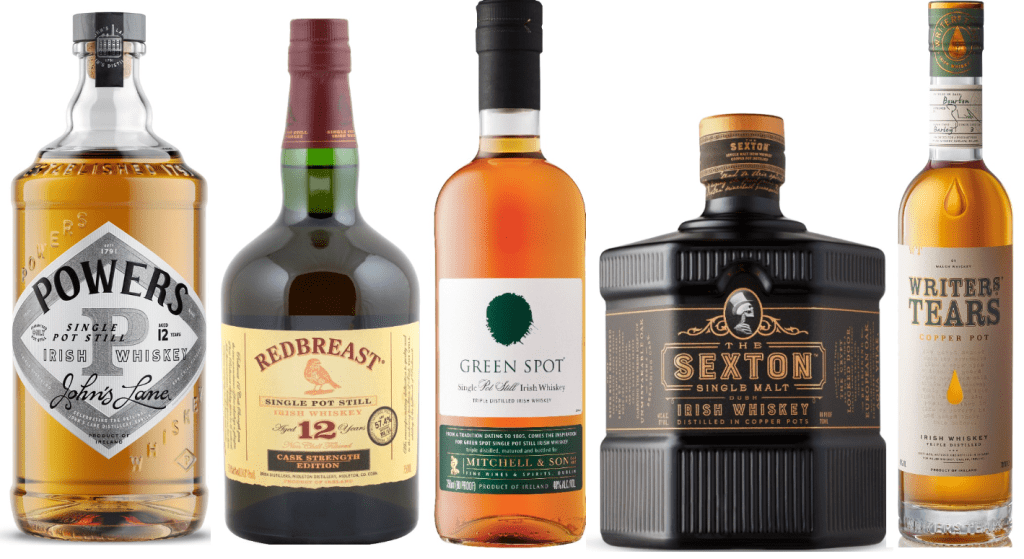
Powers John’s Lane
$76 at LCBO
Because of its 200 year history, Powers has a reputation for being mainstream though it is actually a lesser-known label. It is named after the location of its old distillery, where it held production beginning in the early 1800s until 1975. The whiskey is aged in bourbon barrels and finished in Oloroso sherry casks creating flavours of leather, tobacco, wood, dark chocolate and toffee.
Redbreast 12 Year Old Cask Strength
$120 at LCBO
Redbreast has several popular expressions, but the 12 Year Old Cask Strength is arguably its most popular. At 116 proof, this whiskey provides flavours of oak, buttery pears, cinnamon apple, baking spices, caramel and vanilla.
I have tried Redbreast but I personally have never found it too endearing.
Green Spot
$88 at LCBO
Not appearing on the experts’ list, but one of my own personal favourites is Mitchell and Sons Green Spot. The whiskey has matured in a combination of first and second fill bourbon casks as well as sherry casks. It has flavours of green apples, honey and cinnamon spice. To me this whiskey provides good value for the price.
SINGLE MALT
Single malt Irish whiskey must be made in a single distillery, distilled in pot stills from a mashbill composed entirely of malted barley. Single malt is noticeably smoother than the single pot still style.
Recommended single malt style whiskies include:
The Sexton
$50 at LCBO
Contained within a unique hexagonal bottle, The Sexton single malt has the appearance and taste of a good quality spirit even though it has a very affordable price; the least expensive in this list. Aged for four years in casks previously used for Oloroso sherry, the whiskey has a silky profile of oak, fruit, honeycomb and a hint of spice.
Overall, I like The Sexton although I often favour a whiskey with a little more complexity in flavour. If I am looking for a mindless dram to relax with, this is a good one.
Bushmills 21 Year
$264 at LCBO
Bushmills is the oldest licensed distillery in the world, successfully enduring the near extinction of Irish whiskey in the 1970s as one of two remaining distilleries. The 21 Year single malt is Bushmills’ premier expression, triple distilled and aged for 19 years in either former Oloroso sherry casks or bourbon barrels and then finished for an extra two years in Madeira casks. The result is a big flavour profile of fig, mango, caramel, cherry and apricot, all ending with a sweet finish.
SINGLE GRAIN
Single grain whiskey refers to any whiskey distilled in a column still rather than a pot still. Its mashbill can also be no more than 30% malted barley. The result is something with higher alcohol content, yet is less flavourful. As a result, single grain whiskey is largely used for blended varieties rather than bottled by itself, although there are some exceptions.
Recommended single grain style whiskies include:
Teeling Single Grain
Opening in 2015, Teeling is the first new distillery in Dublin in 125 years. However, Teeling was originally opened in 1782, closing in 1923. The current owners possess the Teeling family name. They put out one of the most versatile ranges of Irish whiskeys, including the rare single grain, which I unfortunately could find no reference to at the LCBO. It is made with a corn-dominant mashbill where it’s then aged in former Cabernet Sauvignon wine barrels creating a profile that ranges from cranberries to butterscotch to the typical sweetness of bourbon whiskey.
Method & Madness Single Grain
Method & Madness is part of the micro-distillery offshoot at New Midleton Distillery. It was launched a few years ago and has an outside the box approach to the aging process. The brand came up with a single grain spirit that’s aged in first-fill bourbon barrels and finished in virgin Spanish oak. The result is a flavourful single grain whiskey with hints of oak, spice and grapefruit. Unfortunately, this whiskey is not available for sale in Ontario.
BLENDED
The driving force behind blended whiskey is that it is a good way to produce the spirit while keeping costs lower. Blended whiskey combines two or more of the previous styles, usually a higher quality liquor with a lower quality one. Most mainstream Irish Whiskeys, such as Jameson and Tullamore Dew, are of the blended variety.
Writers’ Tears
$60 at LCBO
Writers’ Tears is produced by Walsh Whiskey. This blended spirit combines single pot still and single malt varieties. Aged in American bourbon barrels, the whiskey possesses flavours of lemon, honey, black pepper and floral notes.
I have tried Writers’ Tears a few times and have found the flavour to be light and subtle. It is a good choice for anyone new to the whiskey scene.
Jameson Bow Street 18 Year Cask Strength
Jameson, one of Ireland’s most renowned distilleries, put out its rarest release in 2018 and has done so once a year since. The historic Bow Street distillery operated for nearly 200 years until it closed in 1976 and was later turned into a museum, which I have visited. Jameson’s Bow Street 18 Year Cask Strength is claimed to be the king of all blended whiskies, combining both pot still and grain varieties. This expression has flavours of toffee, oak, vanilla and sherry, as well as notes of leather.
This particular Jameson rendition is unfortunately not available in Ontario.
This is a good time of year to have a whiskey tasting party. A whiskey tasting can be done in a couple of different ways. The simplest method is to just get a few bottles together and let everyone help themselves while they sit around and chat about the ways of the world. However, it can be more interesting if everyone is tasting together and there’s a progression of styles to sip from. This technique is similar to that of a wine tasting party.
Photo credit: southerndrinkingclub.com
If following the second approach, first determine how many people will attend and then how many whiskies you want to sample. If everyone is tasting the same whiskey at the same time it is probably best to keep the number of attendees to under a dozen. This will make it easier to keep organized and maintain a well-structured group conversation about each sample.
When deciding on which whiskies to try, you could follow a specific theme or make your selections based on ones you personally enjoy. The experts suggest that the number of whiskies should range from five to eight with each pour being about ½ an ounce. Following this guideline, you will only require one bottle of each whiskey. Depending on your approach, you can either provide the whiskies yourself or ask each guest to bring a bottle.
Regarding the number and type of glasses to use, some enthusiasts only use snifter or Glencairn style glass but white wine glasses with small to medium bowls work equally as well. Your guests only need a glass or two at a time, so you can either dispose or finish the remains after each tasting, rinse out the glass and proceed to the next. This saves on glassware plus the clean-up time afterwards.
Allow people to taste each sample first without adding any water. Then give them the option to add a couple of drops of water to see if that affects the taste. It is a good idea to provide a pitcher of filtered or bottled water served at room temperature and liquid droppers, which can be obtained from most pharmacies. When adding water, it is important not to dilute the whiskey, thus no more than a teaspoon should be added. Whiskey flavours are easier to identify as you lower the relative alcohol content, thus diluting your whiskey a few drops at a time helps open up new flavours to experience.
On the topic of water, each participant should be provided with drinking water to cleanse the palate between tastings, as well as to keep themselves hydrated. Crackers or plain bread, such as a baguette are also good ways to cleanse the palate between tastings.
It is a good idea to have a container available for your guests to pour out whiskies they don’t care for. The goal here is to experience a range of whiskies, not encourage anyone to drink something they don’t like.
The best way to progress through a tasting is to sip the lightest whiskey first and end with the richest and/or most heavily flavoured/smokiest one. As host, it’s a good idea to taste everything yourself prior to the event in order to know which order the whiskies should be served in. Keep in mind that lighter coloured whiskey doesn’t necessarily mean it is lighter in flavour.
If you decide to select your whiskies using a theme, options include selecting by country, such as all American, all Irish, all Scottish, all Japanese, etc. Another option is selecting all single malts, whether from Scotland or a selection from different parts of the world. Comparing whiskies of the same age or from a single region are a couple of other options.
When it comes time to sample each whiskey, begin by “nosing” or smelling the whiskey. When it comes to tasting, hold the first sip in your mouth for several seconds before swallowing. On subsequent sips, concentrate on discovering the flavours and aromas. Then after adding a few drops of water explore the flavours again.
With all the discussions, nosings, water additions and subsequent re-tastings, you can expect to spend at least a couple of hours exploring your selections. Most importantly, the experience should be enjoyable for everyone. It’s a bonus if either you or your guests discover a new favourite whiskey along the way.