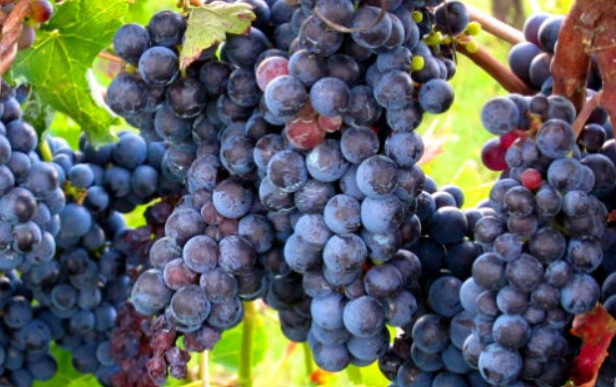
Red Wine Trouble in “Auz”

Photo credit: thedrinkbusiness.com

The Riverland wine region is the largest wine producing region in Australia.  It stretches west from north of Adelaide along the Murray River from Paringa to Blanchetown.  It is home to about 1,000 grape growers who cultivate in excess of 21,000 hectares of vineyards, one third of Australia’s wine production.

Over half of these growers sell their grapes to a multinational company, Accolade Wines.  Accolade now has more wine in storage than the Riverland produces in a single vintage, equating to about 400 million litres of excess red wine.

Accolade is offering financial incentives for growers to switch from growing red to white grapes or to leave their vines dormant for the foreseeable future.  The incentives are not believed to be sufficient to cover the cost, thus making grape growing unviable.

Elsewhere, in the Murray Valley, it’s estimated that 20,000 tonnes of grapes were left unsold this season. Overall, in Australia, wine exports decreased by 26 per cent in 12 months with no relief in sight.  This has been coupled with rising input costs, which have at least doubled in the past year due to the rising cost of chemicals, fertilizer, fuel and labour.

The oversupply of red wine is the result of tariffs on Australian wine being exported to China and global freight issues (see my post from December 31, 2021, on Wine Shipping Delays), which have led to a downturn in red grape prices.  This situation is expected to continue for the next few years.

Although switching from growing red grapes to white would remove unwanted red and replace them with varietals like Sauvignon Blanc, Pinot Gris and Prosecco, which currently have much more demand, the transition would not be cheap or completed quickly.  It takes anywhere between two and six years to switch from one type of vine to another and for them to start producing the same amount of fruit as before.

Grape growers are calling for government assistance but even that may be too little, too late for some.  However, at this point it is most likely that the government would not provide direct financial assistance but instead refer growers to rural small business grants and rural assistance loans.

Some experts are forecasting a generational shift in ownership of vineyards.  There has been a recent increase in the number of vineyards being listed for sale.  Given the current favourable value of the Australian dollar, it is thought that the real estate market may attract the attention of international investors.

Some vintners are even expected to rip out their vines and plant almonds or other crops.

Having experienced fires, droughts and other effects of climate change over the past few years, Australian vintners continue to live in interesting times.  Grape growing is proving not to be a career for the faint of heart.

Sláinte mhaith

Racking Wine

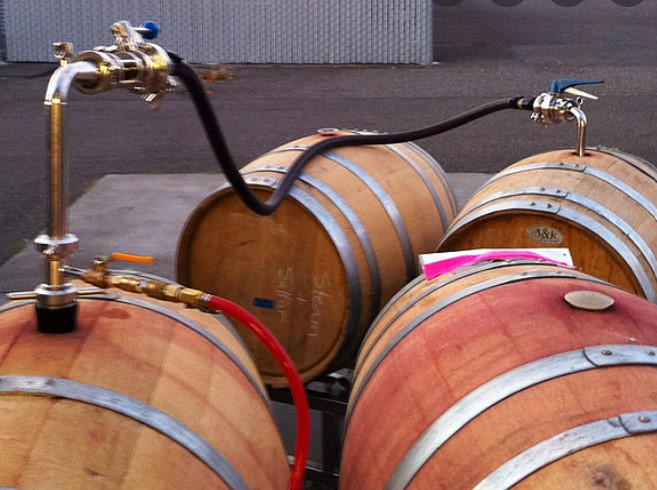
Racking, which is often referred to as Soutirage or Soutirage traditionnel, filtering or fining, is the process of moving wine from one container to another using gravity.   A pump is never used as it can be disruptive to the wine.

Photo credit: en.wikipedia.org

There are two main reasons why winemakers rack their wines.  The first is to remove sediment. An initial racking is done after malolactic fermentation is complete. Malolactic fermentation, also referred to as malo or MLF, is a process where tart malic acid in wine converts to softer, creamier lactic acid, the same acid found in milk. The process reduces acidity in wine and also releases some carbon dioxide.  The dead yeast cells and other solids, referred to as gross lees, accumulate during fermentation that settle over time.

After the first racking, winemakers might then rack additional times to remove what is referred to as fine lees.

The second reason to rack is to provide oxygen to the wine. This impacts its maturation process, managing the tannin in the wine.  Oxygenating the wine can also get rid of reductive aromas. These unwanted aromas, often perceived as rotten eggs or tire rubber, can occur when the wine is deprived of oxygen.

The racking process involves the insertion of a stainless steel, wand-shaped device into the barrel. The wine is then siphoned out. The winemaker then uses a sight glass to observe and halt the process when the siphon starts to pull up sediment. The wine continues on through a hose to a tank.

After the wine has been removed the barrel is cleaned. Then the process is completed in reverse returning the wine to the barrel. If the winemaker wants the wine to receive more oxygen, the wand is placed at the top of the barrel so there’s a splashing, aerating effect. If they want it to receive less oxygen, the barrel is filled from the bottom.

The number of times winemakers rack varies. Generally, the more tannic a grape variety, vineyard or vintage, the more times a wine might be racked. Some may rack their wines only once after malolactic fermentation is complete and then again just before bottling.  Others might do it every quarter. The winemaker’s vision for the wine is also taken into consideration.  A wine that is to be available for consumption early will probably be racked more often than one that is intended to be more age worthy that people are going to cellar for a long time.

All these decisions will impact the wine that ends up in your glass. Who knew?

Sláinte mhaith

Highlands Scotch

The Scottish Highlands are one of the most sparsely populated regions of Europe, making the role of the Scotch whisky industry a major lifeline for small communities in the region.  The distilleries primarily produce single malt whisky, made from 100% malted barley. The whisky is usually made in a pot still, which preserves more of the flavourful constituents giving it more distinctive character.

Note that although Speyside is geographically situated in the Highlands, it is considered to be a separate whisky region because there are more than 60 distilleries in Speyside alone.

Highland whiskies are generally described as being bold, rich, sweet, full-bodied, and sometimes peaty.  However, due to the size and variations of the region, the characteristics of the single malts differ significantly.  Because of this, the Highlands region is often categorized into four subregions based on the four compass points.  

The north produces some big bodied single malts, containing sweetness and richness, for example The Dalmore. In the south there are lighter, fruitier whiskies that are characterized by a definitive dryness, such as Aberfeldy. In the east there are some full-bodied, dry whiskies with lots of fruit flavour, as well as some pungency; Glen Garioch is a good example. Finally, the west part of the Highlands contain full bodied whiskies with peaty, smoky overtones, while closer to the coast there are some more maritime flavoured whiskies including malts from Clynelish and Pulteney.

Below I have identified 34 distilleries in the Highlands.  The ones highlighted in blue periodically have their whiskies available in Canadian liquor stores.

AnCnocAberfeldyArdmore
BalblairBen NevisBlair Athol
ClynelishDalmoreDalwhinnie
DeanstonDrumguishEdradour
GlencadamGlen DeveronGlen Eden
GlendronachGlenfoyleGlen Garioch
GlengoyneGlenmorangieSingleton of Glen Ord
GlenturretKnockdhuLoch Lomond
Loch MorarMacphailMcClelland
MillburnObanOld Fettercairn
Old PulteneyRoyal BracklaRoyal Lochnagar
Tomatin  

Sláinte mhaith

Syrah or Shiraz?

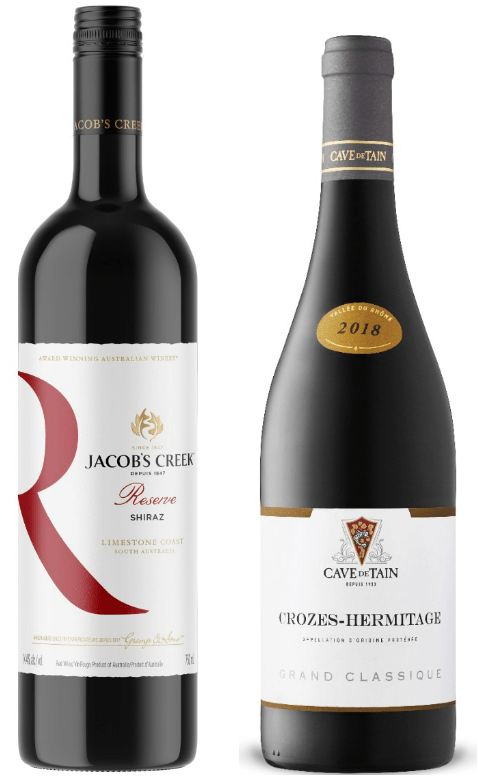
Syrah and Shiraz are the same grape with two different names.  Syrah is the original name while Shiraz is how it became known in Australia and the Americas.  The terms have become associated with a particular style of wine.

Syrah is the term that is associated with the Old-World expressions found throughout Europe.  It is lighter in body and alcohol, with finer tannins. Shiraz, on the other hand, refers to New World, intense wines, which are generally richer, with riper aromas and fuller in both body and alcohol.

The distinct styles first emerged as a natural consequence of the different growing conditions and microclimates.  The grapes in Australia have the potential of having higher levels of alcohol and more aromas than their European counterparts.

The varietal is believed to have originated in the Rhône region of France.  Some winegrowers in the northern Rhône distinguish between a small-berried, more concentrated version of Syrah, referred to as Petite Syrah, and the larger-berried Grosse Syrah. 

Until the 1970s, French Syrah plantings were mostly concentrated in and around the vineyards of the northern Rhône valley. Since then Syrah has had an extraordinary surge in popularity throughout southern France and has become France’s third most planted red wine.

Australia’s history with the grape began in the 1830s.  It flourished and was quickly adopted by New South Wales and from there to the whole country, eventually becoming Australia’s most planted variety.  The country makes a range of styles, the most recognisable is the distinctively rich, ripe styles from both traditional Barossa Valley and newer Heathcote regions.

There is now a growing trend towards more subtle, elegant, cool-grown Rhône style wines that are less concentrated and have a lighter touch. These are often labelled as Syrah instead of Shiraz. These wines are most likely to be found in the Adelaide Hills region.

The grape was introduced to California in the 1990s.  A group of vintners, known as the “Rhône Rangers”, eagerly promoted the grape as being equally suited to California as Cabernet Sauvignon. Californian winemakers consistently produce very vibrant, refined wine.

In addition to California, Washington State also produces Syrah.  Further afield, Chile, South Africa and New Zealand’s Hawke’s Bay are producing interesting varieties. It is worth noting that some of those who make the finest South African examples label them Syrah.

There are some noteworthy Syrahs found in Italy, the Castilla-La Mancha region of Spain and the Alentejo region of Portugal. Another unexpectedly successful site for mature, concentrated Syrah is the Valais in Switzerland, particularly around the upper reaches of the Rhône valley.

Some Canadian wine makers are growing the Syrah grape as well, though the cool climate limits the growing season and thus the intensity of the flavour. Some winemakers label their offering as Syrah while others choose Shiraz.  While some would argue that British Columbia’s Okanagan Valley has a long, hot growing season that supports the Shiraz style of wine, most of Canada’s wine regions cannot.  Wines made in the majority of the country only truly support the Syrah style of wine. 

One of my pet peeves is to see an Ontario winemaker labelling their wine as Shiraz and not Syrah.  I pity the unexpecting consumer who purchases a Shiraz, expecting the bold peppery flavour of a true Shiraz.  Unfortunately, the wine will not live up to its name.

Sláinte mhaith

Italy’s Aglianico Grapes

Along with Nebbiolo and Sangiovese, Aglianico (pronounced alli-yawn-nico ) is generally believed to be on of Italy’s three best wine grapes.  It is a full-bodied red grape found in the Campania and Basilicata regions of southern Italy.  Aglianico wines are known for savory flavours of leather, white pepper, black fruits, cured meat, cracked pepper, dried cranberry, mushroom broth, smoke, cocoa, nutmeg, cinnamon, cedar, tobacco, coffee and dried oregano. 

Photo credit: drinkitalian.eu

Aglianico is full-bodied with high tannin and high acidity.  It contains a medium to medium-plus amount of alcohol and can be aged ten to twenty years.  The best Aglianico wines don’t start to come into their best until they are about ten years of age. The passage of time softens the wine’s firm tannic structure and acidity, revealing lush layers of sweetened fruit and dried floral aromas intermixed with dusty and spiced smoke, savoury flavours.

Given Aglianico’s rigid nature, some producers make it into a much fresher, easy-drinking style. Because the grape has so much tannin and acidity, it easily holds up to new oak aging and modern winemaking. The winemaking techniques are meant to quell Aglianico’s ferocity into a chocolatey, ripe, rich wine with moderately high alcohol and acidity. The modern style of Aglianico won’t age as long as the traditional method and has less of an expression of flavour.  However, it is easier to drink at a much younger age.

The structure of Aglianico pairs well with high intensity foods. Aglianico goes well alongside rich meats with high fat content or vegetarian dishes with a rich umami note, such as black bean sauce, soy sauce, tempeh or dishes that welcome roasted mushrooms.

Meat selections that pair well with Aglianico include beef brisket, smoked pork, barbecue beef, seared prime rib, venison, beef stew, chili, rabbit stew or oxtail.  Cheese pairings include Pecorino, Asiago, Cheddar, Monterey Jack and Provolone. Vegetable pairing include portobello mushrooms, roasted mushrooms, baked beans, black beans, lentils, crispy kale, purple potatoes, roasted purple cauliflower and arugula.

A few warm and dry regions outside of Italy are beginning to produce rich, chocolatey styles of Aglianico wine, in particular California and Riverina, Australia. The grapes ripen late, even in these warm climates, with the best examples offering aromas of chocolate and plum.

Aglianico wines are bound to become more available as growers all over the world look to varieties that grow well because of the rapidly changing climate conditions.

Sláinte mhaith

Wine with Salad

In the warmer weather, salads are more prominent on lunch and dinner menus.  When serving a leafy salad, it is generally the dressing, not the contents of the salad, that determines which wine will best compliment it.

Photo credit: brumate.com

Vinaigrette Dressing

Tart, acidic dressings go best with tart wines such as Sauvignon Blanc. The higher acidity in the salad dominates the palate and has the effect of making the wine taste fruitier and less acidic.

Ranch-Style or Caesar Dressing

For creamy dressings such as ranch or Caesar, the wine needs to have body and acidity to offset the richness of the dressing.  If not, the wine will taste flat.

Raspberry Balsamic Dressing

Valpolicella Ripasso is a well-balanced, fruity wine that with its dark fruity flavour matches well with the berry flavour in the salad. As well, it’s strong enough for the vinaigrette without drowning the more subtle flavors of the leafy greens.

Sweet Dressing

A sweet-spicy ginger-sesame, or other sweet dressing will make light sweet wines taste less so or make dry wines taste somewhat bitter.  A French Vouvray, which is made using Chenin Blanc grapes, or an off-dry Riesling will pair well in this situation.

Bleu Cheese Dressing

Portugal’s Vinho Verde is a tropical fruit-powered delight that has a slight hint of sweetness that brings out the creamy factor in bleu cheese, making the salad pop.  Pinot Gris or Pino Grigio will also pair well.

Sláinte mhaith

Speyside Scotch

Speyside produces some of my favourite Scotch whiskies.  It is a sub-region of the Highlands, taking its name from the River Spey which meanders through the region.  It includes the Highlands to the west, Aberdeenshire to the east and the Cairngorms National Park to the north. 

Speyside has the most distilleries of any of Scotland’s whisky regions, containing about half of all of Scotland’s distilleries.  According to at least one so-called expert, Speyside is as close as most whisky lovers will ever come to the center of the single malt universe.

Speyside whiskies are generally not peaty as many of Islay’s and the Western Island regions are.  Instead they tend to have a fruity flavour, sweet and nutty, sometimes with hints of apple, caramel, honey and vanilla.

There are a number of world class whiskies that hale from Speyside including Aberlour, Balvenie, Glenfarclas, Glenfiddich, Glenlivet, and The Macallan.

The distilleries

Speyside’s distilleries are listed below with those highlighted in orange having whiskies available for sale in Canada.

AberlourAllt-A-BhainneAuchroiskAultmore
BalmenachBalvenieBenRiachBenrinnes
BenromachBraevalCardhuCragganmore
CraigellachieDailuaineDalmunachDalwhinnie
DufftownGlen ElginGlen GrantGlen Keith
Glen MorayGlen SpeyGlenallachieGlenburgie
GlendullanGlenfarclasGlenfiddichGlenlivet
GlenlossieGlenrothesGlentauchersInchgower
KinnvieKnockandoKnockdhuLinkwood
LongmornMacallanMannochmoreMiltonduff
MortlachRoseisleSpeyburnSpeyside
StrathislaStrathmillTamdhuTamnavulin
TomintoulTormore  

In addition to single malts that are sold under the distilleries’ names, brands associated with Speyside include Allt-á-Bhainne, Casg Annamh, Glen Turner, Lismore, McClelland’s Single Malt, and Tlàth.

The oldest working distillery in Speyside is Strathisla Distillery.  Even though Strathisla single malt is not well known outside of Scotland, their whiskies are included in popular blended Scotch, such as Chivas Regal and Royal Salute.

Speyside’s style of whisky has helped popularize Scotch throughout the world. Their craftsmanship dates back a few hundred years with skills being passed down from one generation to the next.  The distillers continue to find new innovations to keep improving the appeal of their whiskies.

There is ongoing experimentation with distilling processes.  One such example is at Glenfiddich where they are finishing a 21 year old whisky in Canadian ice wine barrels from Niagara’s Peller Estates Winery.  Fruity flavourful Speyside whisky accented by sweet ice wine is a match made in heaven.

With Speyside distilleries continuing to develop and rediscover themselves, the future of Scotch whisky is looking very bright.

If you haven’t tried a Speyside scotch, do yourself a favour and try the 18 year old Glenlivet, one of my ultimate favourites!

Sláinte mhaith

The 2022 All Canadian Wine Championships

At this year’s All Canadian Wine Championships there were a total of 1,233 wines from 194 participating wineries.  Unlike the National Wine Awards where there is a significant amount of emphasis on the wineries producing the wine, the total focus of the All Canadian is on the wines themselves.

The summary of this year’s results by province is as follows:

British Columbia – 751 entries

  • 2 Trophies
  • 31 Double Gold
  • 81 Gold
  • 75 Silver
  • 88 Bronze

Ontario – 372 entries

  • 3 Trophies
  • 20 Double Gold
  • 32 Gold
  • 32 Silver
  • 37 Bronze

Quebec – 34 entries

  • 1 Trophy
  • 3 Double Gold
  • 7 Gold
  • 6 Silver
  • 4 Bronze

Nova Scotia – 37 entries

  • 3 Double Gold
  • 2 Gold
  • 2 Silver
  • 3 Bronze

New Brunswick – 11 entries

  • 2 Gold
  • 1 Silver
  • 2 Bronze

Alberta – 13 entries

  • 2 Silver
  • 1 Bronze

Manitoba – 4 entries

  • 1 Bronze

Saskatchewan – 11 entries

  • 3 Silver

The trophy winning wines for 2022 are as follows:

Best Red Wine of the Year was awarded to Wesbert Winery Ltd., of Penticton, British Columbia for their 2020 Syrah ($37.89).

Best White Wine of the Year went to Thirty Bench Wines, of Beamsville, Ontario for their 2019 Small Lot Riesling Triangle Vineyard ($32.00).

Niagara College Teaching Wineryfrom Niagara-on-the-Lake, Ontario received the Best Sparkling Wine of the Year award for its N/V Balance Brut ($26.95).

The Oliver, British Columbia winery of Jackson-Triggs received the award for Best Dessert Wine of the Year for their 2018 Okanagan Reserve Riesling Icewine ($60.00).

Best Fruit Wine of the Year was presented to La Vallée de la Framboise Inc., of Val-Brillant , Quebec for their N/V  Douce Anna ($20.00).

Thornbury Craft Co. from Thornbury, Ontario was awarded Best Cider of the Year for their N/V Premium Craft Apple Cider ($3.50).

Award winning wines could receive a Double Gold, Gold, Silver or Bronze award.  The Double Gold and Gold awards are listed here.  A complete listing of award winners is available on the All Canadian Wine Championships website at https://allcanadianwinechampionships.com/acwc-2022-results/

Sparkling Wine-Traditional Method

Gold

  • Noble Ridge Vineyard and Winery, BC – 2018 The Pink One ($45.99)  
  • Silhouette Estate Winery, BC – 2018 Boyd Classic Cuvee ($42.99)  
  • Summerhill Pyramid Winery, BC – N/V Cipes Brut Rosé ($40.25)  
  • TIME Family of Wines, BC – N/V Chronos Brut ($34.99)  

Sparkling Wine–Charmat Method

Double Gold

  • TIME Family of Wines, BC – N/V Evolve Cellars Effervescence ($24.99)

Gold

  • Creekside Estate Winery Ltd., ON – 2019 Backyard Block Bubbly ($29.80)
  • Diamond Estate Wines, ON – N/V Fresh Sparkling Rose ($17.75)
  • Three Sisters Winery, BC – 2021 Pretty Women ($21.65)

Sparkling Wine–Frizzante Method

Double Gold

  • Moraine Winery, BC – 2021 Shipuchka Frizzante ($31.05)

Gold

  • Intrigue Wines, BC – N/V I DO ($20.90)
  • Play Winery, BC – 2021 Teatro ($33.34)
  • Intrigue Wines, BC – 2021 SOCIAL Sparkling ($20.90)

Chardonnay, Unoaked

Double Gold

  • TIME Family of Wines, BC – 2020 Chronos Chardonnay ($29.99)

Gold

  • Gray Monk Estate Winery, BC – 2021 Chardonnay Unwooded ($22.99)
  • Pelee Island Winery, ON – 2019 Ring Necked Pheasant Chardonnay Unoaked ($12.25)

Chardonnay Under $20

Double Gold

  • Colio Estate Wines, ON – 2020 Reserve Chardonnay ($19.95)

Gold

  • Trius Estate Winery, ON – 2020 Distinction Chardonnay Barrel Fermented ($19.75)

 Chardonnay $20.01-$30.00

Double Gold

  • Three Sisters Winery, BC – 2020 Chardonnay ($21.65)

Gold

  • Mission Hill Family Estate Winery, BC – 2020 Reserve Chardonnay ($26.00)
  • Harper’s Trail Estate Winery, BC – 2019 Chardonnay ($24.14)
  • Monte Creek Winery, BC – 2020 Living Land Chardonnay ($21.99)

Chardonnay Over $30.00

Double Gold

  • SpearHead Winery, BC – 2020 Clone 95 Chardonnay ($34.50)

Gold

  • Noble Ridge Vineyard and Winery, BC – 2019 King’s Ransom Chardonnay ($57.50)
  • Covert Farms Family Estate, BC – 2020 Grand Reserve Chardonnay ($65.00)
  • SpearHead Winery, BC – 2020 Saddle Block Chardonnay ($34.50)
  • Dark Horse Vineyard, BC – 2020 Chardonnay ($46.00)

Riesling Dry

Double Gold 

  • Niagara College Teaching Winery, ON – 2020 Balance Dry Riesling ($16.95)

Gold

  • Four Shadows Vineyard, BC – 2021 Riesling Dry ($27.59)

Riesling Off Dry

Gold

  • TIME Family of Wines, BC – 2020 Chronos Riesling ($27.99)
  • Andrew Peller Estates Winery, ON – 2019 Signature Series Riesling ($29.75)
  • Thirty Bench Wines, ON – 2019 Small Lot Riesling Wild Cask ($32.00)
  • Thirty Bench Wines, ON – 2020 Winemaker’s Blend Riesling ($22.75)

Sauvignon Blanc

Double Gold

  • Gehringer Bros. Estate Winery, BC – 2021 Dry Rock Sauvignon Blanc ($20.69)

Gold

  • Dirty Laundry Vineyard, BC – 2021 Sauvignon Blanc ($20.99)
  • Three Sisters Winery, BC – 2021 Sauvignon Blanc ($19.05)
  • Featherstone Estate Winery, ON – 2021 Sauvignon Blanc ($17.95)

Gewürztraminer

Double Gold

  • Priest Creek Family Estate Winery, BC – 2021 Gewürztraminer ($27.00)

Gold

  • Moraine Winery, BC – 2021 Gewürztraminer ($26.45)
  • Ruby Blues Winery, BC – 2021 Gewürztraminer ($25.90)
  • Wesbert Winery Ltd., BC – 2021 Gewürztraminer ($26.39)

Pinot Gris Style

Double Gold

  • Joseph’s Estate Wines Inc., ON – 2020 Rosato ($18.95)

Gold

  • Deep Roots Winery, BC – 2021 Pinot Gris ($21.90)
  • Savard Vines, BC – 2021 Forgotten Child Pinot Gris ($19.00)
  • Enrico Winery, BC – 2021 Pinot Gris Shining Armour ($24.50)
  • Legends Estates Winery, ON – 2019 Pinot Gris Barrel Fermented ($19.80)
  • Clos du Soleil Winery Inc., BC – 2021 Pinot Gris ($27.49)

Pinot Grigio Style

Double Gold

  • Featherstone Estate Winery, ON – 2021 Pinot Grigio ($17.95)

Gold

  • Kismet Estate Winery, BC – 2021 Pinot Grigio ($25.29)

Viognier

Double Gold

  • Bench 1775, BC – 2021 Viognier ($25.00)

Gold

  • Dirty Laundry Vineyard, BC – 2021 Viognier ($21.99)
  • Country Vines Winery, BC – 2019 Viognier ($21.99)

Other Single Vitis Vinifera Whites

Double Gold

  • Chaberton Estate Winery, BC – 2021 Estate Grown Bacchus ($20.75)

Gold

  • Moon Curser Vineyards, BC – 2021 Arneis ($31.04)
  • Alderlea Vineyards, BC – 2021 Bacchus ($23.00)
  • Forbidden Fruit Winery, BC – 2021 Dead End Gruner Veltliner ($23.00)
  • Gehringer Bros. Estate Winery, BC – 2021 Old Vines Auxerrois ($18.39)
  • Upper Bench Estate Winery, BC – 2021 Pinot Blanc ($25.40)

White Vitis Vinifera Blends

Double Gold

  • Noble Ridge Vineyard and Winery, BC – 2021 Mingle ($21.26)

Gold

  • Moraine Winery, BC – 2021 Cliffhanger White ($24.15)
  • Three Sisters Winery, BC – 2021 Bench White ($16.44)
  • Lakeside Cellars, BC – 2021 Portage White ($24.25)
  • Skimmerhorn Winery & Vineyard, BC – 2021 Autumn Tryst ($20.00)
  • Valley of the Springs Winery, BC – 2021 Vista ($24.15)

Single White Hybrids

Double Gold

  • Whispering Horse Winery, BC – 2021 La Crescent ($31.00)

Gold

  • Enrico Winery, BC – 2020 Petit Milo Coronet ($24.50)

White Hybrid Blends

Double Gold

  • Planters Ridge Winery, NS – 2021 Tidal Bay ($22.80)

Gold

  • Domaine de Grand Pré, NS – 2021 Tidal Bay ($23.00)
  • Vignoble de l’Orpailleur, QC – 2021 Vignoble de l’Orpailleur Blanc ($16.00)

Pet Nat and Orange Wines

Double Gold

  • Joseph’s Estate Wines Inc., ON – 2019 Arancia Skin Fermented Gewurztraminer ($34.95)

Gold

  • Pilliteri Estates Winery, ON – 2020 Racina Ambra Skin Fermented Gewurztraminer ($25.00)

Rosé Blush and Blanc de Noir

Double Gold Blanc de Noir Style

  • TIME Family of Wines, BC – 2021 Chronos Rosé ($27.99)

Double Gold Blush Style

  • Road 13 Vineyards, BC – 2021 Honest John’s Rosé ($23.00)

Gold

  • Bench 1775, BC – 2021 Glow ($26.00)
  • Thirty Bench Wines, ON – 2021 Winemaker’s Blend Rosé ($22.75)
  • Gehringer Bros. Estate Winery, BC – 2021 Rosé ($18.39)
  • Vanessa Vineyard, BC – 2021 Rosé ($29.99)
  • Sonora Desert Winery, BC – 2021 White Merlot ($25.00)
  • Hillside Cellars Winery, BC – 2021 Rosé ($25.00)
  • Three Sisters Winery, BC – 2021 Rosé ($19.05)
  • Ruby Blues Winery, BC – 2021 I Found My Thrill Rosé ($28.90)

Cabernet Sauvignon Under $30

Double Gold

  • Chaberton Estate Winery, BC – 2018 Cabernet Sauvignon ($29.95)

Gold

  • Sprucewood Shores Inc., ON – 2018 Cabernet Sauvignon ($17.95)

Cabernet Sauvignon Over $30

Double Gold

  • Sunrock Vineyards, BC – 2018 Cabernet Sauvignon ($34.49)

Gold

  • Diamond Estate Wines, ON – Lakeview Cellars 2017 Cabernet Sauvignon ($39.80)
  • Muscedere Vineyards Estate Winery Inc, ON – 2019 Cabernet Sauvignon ($31.75)
  • Nk’Mip Cellars, BC – 2019 Qwam Qwmt Cabernet Sauvignon ($45.99)

Merlot Under $30

Double Gold

  • Andrew Peller Estates Winery, ON  – 2020 Private Reserve Merlot ($26.75)

Gold

  • Deep Roots Winery, BC – 2020 Merlot ($29.90)
  • Colio Estate Wines, ON – 2020 Reserve Merlot $19.95

Merlot Over $30

Double Gold

  • Upper Bench Estate Winery, BC – 2018 Estate Merlot ($51.75)

Gold

  • Liquidity Wines Ltd., BC – 2020 ALTO Reserve Merlot ($35.00)
  • Nk’Mip Cellars, BC – 2019 Qwam Qwmt Merlot ($40.24)
  • Intersection Estate Winery, BC – 2017 Alluvia Unfiltered Merlot ($32.20)

Pinot Noir Under $30

Double Gold

  • Keint-he Winery and Vineyards Ltd., ON – 2019 Portage Pinot Noir ($28.00)

Gold

  • Gray Monk Estate Winery, BC – 2020 Pinot Noir ($28.75)

Pinot Noir Over $30

Double Gold

  • Queenstonmile Vineyard, ON – 2017 Pinot Noir ($39.80)

Gold

  • Baillie-Grohman Estate Winery, BC – 2019 Pinot Noir Reserve ($48.00)
  • Wild Goose Vineyards, BC – 2020 Pinot Noir ($38.00)
  • Privato Vineyard & Winery, BC – 2019 Woodward Collection – Tesoro Pinot Noir ($47.14)
  • Hainle Vyds Estate Winery, BC – 2020 Pinot Noir ($39.09)

Cabernet Franc Under $30

Double Gold

  • Monte Creek Winery, BC – 2020 Living Land Cabernet Franc ($22.99)

Gold

  • Thirty Bench Wines, ON – 2020 Winemaker’s Blend Cabernet Franc ($24.75)

Cabernet Franc Over $30

Double Gold

  • Two Sisters Vineyards, ON – 2017 Cabernet Franc ($57.80)

Gold

  • Play Winery, BC – 2020 Cabernet Franc ($44.83)
  • Dark Horse Vineyard, BC – 2018 Cabernet Franc ($51.75)
  • Frind Estate Winery, BC – 2020 Premier Cabernet Franc ($40.24)
  • Fort Berens Estate Winery, BC – 2019 Cabernet Franc ($31.99)

Bordeaux Blends Under $30

Double Gold

  • Indigenous World Winery, BC – 2019 Hee-Hee-Tel-Kin Red Blend ($28.74)

Gold

  • Monte Creek Winery, BC – 2019 Living Land Cabernet Merlot ($23.99)
  • Bordertown Estate Winery and Vineyard, BC – 2019 Living Desert Red ($27.00)
  • Persona, ON – N/V Cabernet Merlot ($12.75)
  • Noble Ridge Vineyard and Winery, BC – 2020 Noble Meritage ($28.74)
  • Sprucewood Shores Inc., ON – N/V Beach Glass Red ($19.95)
  • See Ya Later Ranch, BC – 2019 Ping Meritage ($28.73)

Bordeaux Blends Over $30

Double Gold

Magnotta Winery, ON – 2017 Enotrium Gran Riserva ($59.95)

Gold

  • Blasted Church Wines, BC – 2017 Nectar of the Gods ($75.00)
  • Phantom Creek Estates, BC – 2019 Phantom Creek Vineyard Cuvée ($150.00)
  • Kismet Estate Winery, BC – 2020 Mantra ($39.18)
  • Noble Ridge Vineyard and Winery, BC – 2017 King’s Ransom Meritage ($80.50)
  • Van Westen Vineyards, BC – 2018 V ($39.90)

Syrah/Shiraz Under $30

Double Gold

  • Lakeside Cellars, BC – 2018 Syrah ($28.85)

Gold

  • See Ya Later Ranch, BC – 2019 Rover ($25.29)

Syrah/Shiraz Over $30

Gold

  • Deep Roots Winery, BC – 2020 Syrah ($38.90)
  • Kacaba Vineyards, ON – 2019 Premium Series Terraced Vineyard Syrah ($34.95)
  • Kacaba Vineyards, ON – 2019 Premium Series Proprietors Block Syrah ($34.95)

Single Red Hybrids

Double Gold

  • Mercator Vineyards, NS – N/V Reserve Marquette ($34.80)

Gold

  • Domaine de Grand Pré, NS – 2019 Castel ($21.00)
  • Karlo Estates, ON – 2020 Marquette ($36.00)

Red Hybrid Blends

Double Gold

  • Jost Vineyards, NS – N/V Great Big Friggin’ Red ($17.79)

Gold

  • Volcanic Hills Vineyard & Cellars, BC – 2019 Magma Red ($23.99)
  • Monte Creek Winery, BC – 2020 Hands Up Red ($19.99)

Other Single Red Vitis Vinifera

Double Gold

  • Moon Curser Vineyards, BC – 2020 Touriga Nacional ($50.59)

Gold

  • Kalala Organic Estate Winery, BC – 2019 Zweigelt ($26.00)
  • Moon Curser Vineyards, BC – 2018 Tannat ($50.59)

Other Red Vitis Vinifera Blends

Double Gold

  • Good Natured Okanagan, BC – 2020 Balanced Red ($18.40)

Gold

  • Road 13 Vineyards, BC – 2019 GSM ($37.00)
  • Forbidden Fruit Winery, BC – 2019 Dead End Game Over Tannat Malbec ($40.00)
  • Savard Vines, BC – N/V 5 Turns ($26.00)

Malbec

Double Gold

  • Eau Vivre Winery, BC – 2019 Malbec ($39.90)

Gold

  • Moon Curser Vineyards, BC – 2020 Malbec ($40.24)

Gamay

Double Gold

  • Byland Estate Winery, ON – 2020 Gamay Noir Owner Signature Version ($34.80)

Gold

  • Volcanic Hills Vineyard & Cellars, BC – 2020 Gamay Noir ($20.50)

Soft Fruit Dry

Double Gold

  • Northern Lights Estate Winery Ltd., BC – 2018 Bell Reserve ($24.34)

Gold

  • Winegarden Estates Ltd., NB – 2020 Rubina, dry Blueberry Wine ($12.00)

Soft Fruit Off-Dry

Double Gold

  • Applewood Farm Winery, ON – 2021 Trio ($17.95)

Gold

  • Maan Farms Estate Winery, BC – 2020 Blueberry ($23.00)
  • Applewood Farm Winery, ON – 2021 Eden ($16.95)

Soft Fruit Dessert

Double Gold

  • La Vallée de la Framboise Inc., QC – N/V Le Matapédien ($18.00)

Gold

  • Krause Berry Farms and Estate Winery, BC – N/V Blackberry Portoe ($40.25)

Late Harvests

Double Gold

  • Pilliteri Estates Winery, ON – 2017 Cana Cabin Riesling Late Harvest ($25.00)

Gold

  • Thirty Bench Wines, ON – 2019 Special Select Late Harvest ($40.00)

Riesling Icewine

Gold

  • Inniskillin Okanagan, BC – 2018 Okanagan Estate Riesling Icewine ($60.02)

Vidal Icewine

Double Gold

  • Wayne Gretzky Estates, ON – 2019 No.99 Vidal Icewine ($79.85)

Gold

  • Andrew Peller Estates Winery, ON – 2018 Signature Series Vidal Blanc Icewine ($79.85)
  • Pilliteri Estates Winery, ON – 2017 Cana Cabin Premium Vidal Icewine ($70.00)

Other Icewine

Double Gold

  • Pilliteri Estates Winery, ON – 2017 Canadian Flower Pinot Blanc Icewine ($70.00)

Gold

  • Bench 1775, BC – 2020 Paradise Ranch Chardonnay Ice Wine ($71.00)

Red Icewines

Double Gold

  • Magnotta Winery, ON – 2018 Cabernet Franc Icewine Niagara Peninsula Limited Edition ($44.95)

Gold

  • Andrew Peller Estates Winery, ON – 2018 Cabernet Franc Icewine ($114.90)

Grape Fortifieds

Double Gold

  • Legends Estates Winery, ON – N/V Last Barrel Red ($59.80)

Gold

  • Legends Estates Winery, ON – N/V Last Barrel Red Liquid Gold ($99.80)

Sláinte mhaith

Gewürztraminer

Alsace, a region in north-eastern France that borders Switzerland and Germany, is the home of Gewürztraminer. The region has been passed between French and German control several times since the early 1680s.  As a result, Alsatian culture is a unique mix of French and German influences.

Today the varietal is grown in Argentina, Australia, Austria, Bulgaria, Canada, Chile, Croatia, Czech Republic, France, Germany, Greece, Hungary, Italy, Luxembourg, New Zealand, North Macedonia, Romania, Serbia, Slovakia, Slovenia, Spain, Turkey and the U.S.

Gewürztraminer is an aromatic grape variety that grows well in cooler climates.  It has a high level of natural sugar and the wine is white and usually off dry.  Gewürztraminer generally contains a gram or two of residual sugar but because of the heightened aromatics, higher alcohol and lower acidity, many of these wines will taste sweeter than they actually are.

The aroma or “nose” will be that of lychee or ‘sweet rose’.  However, it may also have hints of red grapefruit, allspice, cinnamon or ginger.  The flavour will consist of hints of grapefruit, pineapple, peach, apricot, orange or cantaloupe.

When serving with food, Gewürztraminer is a great compliment to duck, chicken, pork, bacon, shrimp and crab.  Highly spiced and aromatic herbs such as cayenne pepper, ginger, clove, cinnamon, allspice, turmeric, madras curry, sichuan pepper, shallots, soy sauce, sesame, almond, rose water, lime leaf, bay leaf, coriander and cumin are a great match.

Gewürztraminer goes well with less stinky and delicately flavored soft cow’s milk cheese and dried fruit, as well as roasted vegetables and veggies with natural sweetness including red onion, bell pepper, eggplant, tempeh, squash and carrots.

Sláinte mhaith

The 2022 National Wine Awards

The WineAlign National Wine Awards of Canada (NWAC) is Canada’s largest and most respected competition for wines which are one hundred percent grown and produced in Canada. Niagara Falls, Ontario was the host of this year’s event, which took place from June 19th to 23rd, with results published on July 29th.

This year’s awards were the first to be conducted since 2019 without the influence or restrictions from the pandemic. 

There were 24 judges who tasted 1,890 entries from more than 250 wineries. The entries came from British Columbia, Ontario, Quebec, Nova Scotia, New Brunswick, Alberta, Manitoba and Saskatchewan.

The wines were all served blind; producer, origin, and price were not revealed to the judges. The top medalists were tasted in multiple rounds by many different judges.

The top ten wineries are presented below, along with a listing of their Platinum and Gold medal wines.  For a complete listing of all the winning wines please see the Canadian Wine Awards website, at www.winealign.com/awards.

The 2022 winery of the year is CedarCreek Estate Winery, located in East Kelowna, British Columbia.  The winery first opened in 1980, then known as Uniacke Wines. In 1986 it was purchased by the Fitzpatrick family, who changed the name to CedarCreek, and began planting some of the earliest pinot noir vines in the valley.

Over five years ago CedarCreek embarked on a massive refit converting the family-owned Estate vineyards to organic farming that encompasses every aspect of the winery, from regenerative farming and sustainable viticulture to farm-to-bottle craftsmanship in their wine cellar.  As of 2021, all vineyards were Ecocert certified.

CedarCreek has partnered with local environmentalists to collect native plant seeds from the property – the seeds are used for fundraising, for native plant re-establishment on other sites, and at the boundaries of new vineyards to support biodiversity.

The estate is the home of five Scottish Highland Cows, a flock of chickens, beehives, worm farms and cover crops to create a thriving ecosystem.

CedarCreek was awarded two Platinum Medals, four Gold, eight Silver and five Bronze.

Platinum Medal

  • CedarCreek Platinum Jagged Rock Syrah 2020, Okanagan Valley
  • CedarCreek Aspect Collection Block 5 Chardonnay 2019, Okanagan Valley

Gold Medal

  • CedarCreek Platinum Jagged Rock Chardonnay 2020, Okanagan Valley
  • CedarCreek Aspect Collection Block 3 Riesling 2020, Okanagan Valley
  • CedarCreek Pinot Noir Rose 2021, Okanagan Valley
  • CedarCreek Platinum Home Block Riesling 2021, Okanagan Valley

Rounding out the top ten producers for 2022 were the following wineries:

The second-place finisher was Ontario’s 13th Street Winery, who was awarded 2 Platinum, 2 Gold, 7 Silver and 9 Bronze medals.

Platinum Medal

  • 13th Street Reserve Syrah 2020, Niagara Peninsula
  • 13th Street Premier Cuvee 2015, Niagara Peninsula

Gold Medal

  • 13th Street Gamay 2020, Niagara Peninsula
  • 13th Street Blanc De Blanc 2019, Niagara Peninsula

Third was British Columbia’s SpearHead Winery that had 1 Platinum, 7 Gold, 3 Silver and 5 Bronze medals.

Platinum Medal

  • Spearhead Coyote Vineyard Pinot Noir 2019, Okanagan Valley

Gold Medal

  • Spearhead Botrytis Affected Late Harvest Riesling 2019, Okanagan Valley (375ml)
  • Spearhead Pinot Noir Cuvée 2019, Okanagan Valley
  • Spearhead Golden Retreat Pinot Noir 2019, Okanagan Valley
  • Spearhead Pinot Gris Golden Retreat Vineyard 2020, Okanagan Valley

In fourth position was British Columbia’s Mission Hill Family Estate which earned 1 Platinum, 4 Gold and 9 Silver medals.

Platinum Medal

  • Mission Hill Terroir Collection Jagged Rock Syrah 2020, Okanagan Valley

Gold Medal

  • Mission Hill Reserve Riesling 2021, Okanagan Valley
  • Mission Hill Perpetua Chardonnay 2020, Okanagan Valley
  • Mission Hill Reserve Cabernet Sauvignon 2020, Okanagan Valley
  • Mission Hill Reserve Merlot 2020, Okanagan Valley

The fifth-place winery was British Columbia’s La Frenz Estate Winery which won 1 Platinum, 9 Gold and 8 Silver medals.

Platinum Medal

  • La Frenz Syrah Rockyfeller Vineyard 2019, Okanagan Valley

Gold Medal

  • La Frenz Malbec Rockyfeller Vineyard 2019, Okanagan Valley
  • La Frenz Grand Total Reserve 2019, Okanagan Valley
  • La Frenz Aster Brut 2018, Okanagan Valley
  • La Frenz Reserve Vivant 2020, Okanagan Valley
  • La Frenz Pinot Noir Desperation Hill Vineyard 2020, Okanagan Valley
  • La Frenz Semillon Knorr Vineyard 2021, Okanagan Valley
  • La Frenz Riesling Cl. 49 Rockyfeller Vineyard 2021, Okanagan Valley
  • La Frenz Cabernets Rockyfeller Vineyard 2019, Okanagan Valley
  • La Frenz Liqueur Muscat, Okanagan Valley (375ml)

The sixth-place finisher was Ontario’s Vieni Estates which had 1 Platinum, 4 Gold, 2 Silver and 9 Bronze medals.

Platinum Medal

  • Vieni Riesling 2020, Vinemount Ridge

Gold Medal

  • Vieni Cabernet Franc 2018, Vinemount Ridge
  • Vieni Cabernet Franc Reserve 2017, Vinemount Ridge
  • Vieni Pinot Grigio 2021, Vinemount Ridge
  • Vieni Unoaked Chardonnay 2019, Vinemount Ridge

In seventh position was British Columbia’s Black Hills Estate Winery, with a record of 1 Platinum, 5 Gold, 3 Silver and 3 Bronze medals.

Platinum Medal

  • Black Hills Ipso Facto 2020, Okanagan Valley

Gold Medal

  • Black Hills Per Se 2020, Okanagan Valley
  • Black Hills Chardonnay 2020, Okanagan Valley
  • Black Hills Roussanne 2020, Okanagan Valley
  • Black Hills Addendum 2020, BC VQA Okanagan Valley
  • Black Hills Alibi 2021, Okanagan Valley

The eighth spot went to British Columbia’s Fort Berens Estate Winery which earned 1 Platinum, 3 Gold, 2 Silver and 6 Bronze medals.

Platinum Medal

  • Fort Berens Pinot Noir 2020

Gold Medal

  • Fort Berens Small Lot Grüner Veltliner 2021, Lillooet
  • Fort Berens Merlot Reserve 2019, Lillooet
  • Fort Berens Merlot 2019

The ninth-place position went to British Columbia’s Bordertown Vineyards & Estate Winery which had 1 Platinum, 3 Gold, 3 Silver and 3 Bronze medals.

Platinum Medal

  • Bordertown Cabernet Sauvignon 2019, Okanagan Valley

Gold Medal

  • Bordertown Cabernet Franc 2019, BC VQA Okanagan Valley
  • Bordertown Malbec 2019, Okanagan Valley
  • Bordertown Syrah 2019, Okanagan Valley

Earning the tenth spot was Ontario’s Thirty Bench Wine Makers with 6 Gold, 7 Silver and 1 Bronze medal.

Gold Medal

  • Thirty Bench Winemaker’s Blend Cabernet Franc 2020, Niagara Peninsula
  • Thirty Bench Special Select Late Harvest 2019 (375ml)
  • Thirty Bench Small Lot Riesling Wood Post Vineyard 2019, VQA Beamsville Bench
  • Thirty Bench Small Lot Riesling Steel Post Vineyard 2020, VQA Beamsville Bench
  • Thirty Bench Small Lot Pinot Noir 2020, VQA Beamsville Bench
  • Thirty Bench Small Lot Riesling Triangle Vineyard 2019, VQA Beamsville Bench

The best performing small winery award goes to the winery with a production of 10,000 cases or less that chalked up the highest aggregate score for its five top-scoring wines.  This year the award was presented to the Okanagan Valley’s SpearHead Winery.  SpearHead 2019 Coyote Vineyard Pinot Noir took a coveted Platinum Medal.  In addition to this, SpearHead wines received seven Gold, three Silver and five Bronze medals.

Sláinte mhaith