A Rose by Another Name

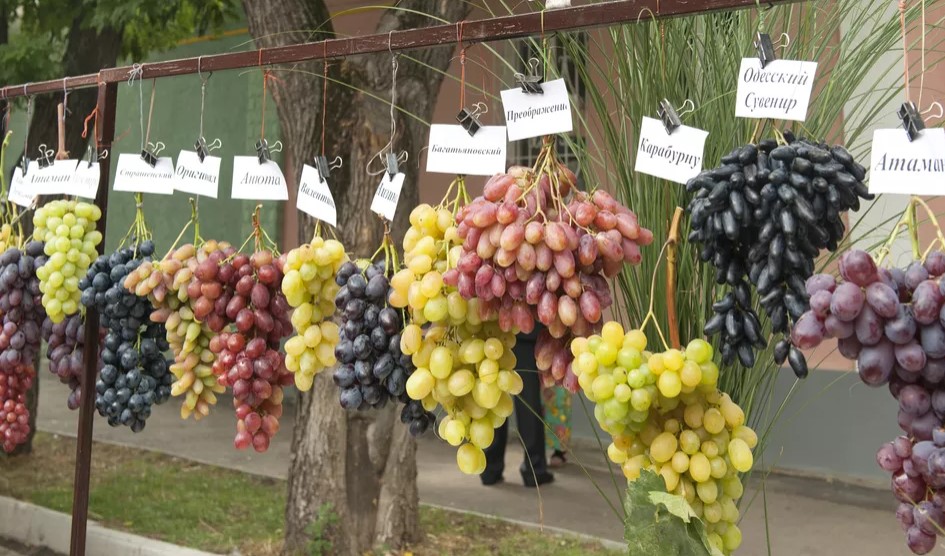
There are in excess of 100 grape varietals that have 2 or more uniquely different names.  Many of these have multiple names within the same country!  I have compiled a list of the more common ones that make an appearance in wine stores in North America.

So what’s in a name? Are they always interchangeable, or does their place and name hold a clue to their style?

Where a grape is grown may greatly impact its flavour.  I have compiled some examples where this is the case.

Red Varietals

Blaufränkisch grapes, also known as Lemberger, Kékfrankos, Frankovka, and Frankinja, are found in the temperate and distinctly continental latitudes of Central Europe.  In eastern Austria, it’s known as Blaufränkisch. In southern Germany, it’s Lemberger. It also goes by Kékfrankos in Hungary, Frankovka in northern Croatia and western Slovakia and Frankinja in eastern Slovenia. No matter the name, it produces quality reds that age well. It also forms part of Egri Bikaver, Hungary’s historic “bulls’ blood” wine.

Fairly full-bodied for such northerly reaches, Blaufränkisch produces structured, elegant wines.  Cooler vintages or sites add an irresistible pepperiness to the usually dark-fruit spectrum, where there are notes of dark cherry and blueberry.

Vinified in stainless steel, Blaufränkisch is sometimes confused with fuller-bodied Gamay. However, when aged in small, new oak barrels, Blaufränkisch attains some punch and needs to be laid down for a few years to return to its inherent subtlety.

Grenache, also known as Garnacha and Cannonau is known for its luscious red fruit flavours. Grenache is an archetypal Mediterranean variety. It needs full sun, will withstand heat and drought and it thrives on meager, stony soils.

Grenache is full-bodied without being tannic. It can also make charming, aromatic reds in the Rhône cru villages of Vinsobres, Rasteau, Gigondas and Vacqueyras. As Cannonau in Sardinia, it’s bigger, stronger and bolder.

Malbec, also known as Côt, is synonymous with Argentina, where this aromatic, black grape revels in the bright, high-altitude sunshine of the Andes.

Malbec is sometimes referred to as Côt in France. It’s even one of the five permitted varieties in red Bordeaux, even though it ripens unreliably there.  In France’s cooler Loire Valley, Côt produces wines that are very fresh, and often spicy.

The Mourvèdre grape also referred to as Monastrell, Mataro, Rossola Near and Garrut, is a thick-skinned, small-berried grape of Spanish origin that thrives in hot climates. Mourvèdre is at home on the Mediterranean coast in Spain, where it’s called Monastrell, and forms the gutsy, heavy, tannic reds of Yecla, Jumilla and Alicante.  In Australia, where it’s known as Mataro, it is included in Grenache, Syrah and Mourvèdre blends.

The Primitivo grape of Italy is also known as Tribidrag or Crljenak Kaštelanski in its native Croatia and Montenegro, as Primitivo in Puglia and as Zinfandel in California.

As a red wine, Zinfandel always boasts full, juicy and plump fruit that covers a spectrum of ripeness, often with elevated alcohol levels of up to 14%.  In Puglia, Primitivo is smooth and warming. On an inland elevation, Gioia del Colle produces the freshest versions, while coastal Primitivo di Manduria is strong, dense and powerful. In Croatia and Montenegro, Tribidrag is produced as a fruity local wine.

Syrah, also known as Shiraz, can taste almost like polar opposites depending on the climate. Syrah was traditionally a French grape found in the Northern Rhône region.  There the grape has firm, drying tannins and is more slender.

Known as Shiraz in Australia, the grape is most distinct in the hot Barossa and warm McLaren Vale regions, but it also thrives in cooler Canberra. Australian Shiraz is often described as peppery, big and bold.

White Varietals

Chenin Blanc is also known as Pineau de la Loire and Steen.  It is native to France’s cool Loire Valley, where it is also called Pineau de la Loire. Its acid is high, and its expression always tinged with apple flavors that range from green to dried.

It’s inherent acidity makes Chenin Blanc a popular grape in South Africa, where it’s referred to as Steen.

Pinot Gris, also known as Pinot Grigio, Grauburgunder, Fromenteau, Pinot Beurot, Ruländer, Malvoisie, Pinot Jaune and Szürkebarát, may range from being an easy-drinker to a full-flavoured white.

Easy-drinking, lighter versions are often labeled Pinot Grigio, while rounder wines, often with some residual sweetness, are designated Pinot Gris. Pinot Gris makes full-fruited, rounded whites heavy enough to accompany red meat and are suitable for aging.

The Vermentino grape is also known as Rolle, Pigato, and Favorita and thrives in Italy, France and on the islands of Corsica and Sardini., prized for its fine, crisp acidity.

On its own, Vermentino displays citrus aromatics and inherent crispness. From the Tuscan coast, it evokes a citrus-scent.  Pigato, from Liguria, while still fresh, is a little more robust and structured.

As Vermentino di Gallura from Sardinia, the grape is fuller-bodied with intense, medicinal notes of lemon balm and yarrow. When grown in places such as Italy’s Piedmont region, it is known as Favorita.  There the grape takes on an aromatic quality. More recently, Vermentino is also finding a new home in Australia.

The Lists

Below is a more complete list of both red and white varietals and countries where they are located. 

Reds

VarietalLocation
Blaufränkisch / LimbergerAustria, Germany, Slovakia, Hungary, Romania, Croatia, Italy, USA
Corvina / CorvinoneItaly
Douce Noir / Charbono / Bonarda / TurcaFrance; California; Argentina
Gamay / Gamay NoirFrance Loire Valley
Grenache / Garnacha / Cannonau  / Lladoner Pelut / Lledoner PelutSpain, France, Australia
Kindzmarauli/ SaperaviGeorgia
Lacrima di Morro / Lacrima NearItaly, Marche
Magarach Bastardo / Bastardo MagarachUkraine
Magaratch Ruby / Magarach RubyUkraine
Magliocco Canino / MaiolicaItaly, Calabria
Magliocco Dolce / Marsigliana NearItaly, Calabria
Malbec / Auxerrois / CotFrance, Argentina, USA, Australia
Malvasia di Schierano / Malvasia NearGreece
Mandelaria / Mandelari / AmorghianoGreece
Mavrodafni / MavrodaphneGreece, Achaea
Mavrud / MavroudiBulgaria, Thrace
Mencía / Jaén ColouradoSpain, Galicia
Millot  / Léon MillotFrance
Montù / MontuniItaly
Mourvèdre / Monastrell / Mataro / Rossola Nera / GarrutSpain, France, Australia
Négrette /  Pinot St. GeorgeFrance
Nerello Mascalese / Nerello CappuccioItaly, Sicily
Perricone / GuarnacciaItaly, Sicily
Pinot Meunier / Schwarzriesling / MüllerebeFrance
Pinot Noir / Spätburgunder / Blauburgunder / Pinot Nero  France
Plavina / Brajda Mala / Brajdica / Bratkovina / Jurkovica / Marasovka /Modrulj / Plavac Plavina / Plavinac / Plavina Mala / Plavina Sitnah / Plavina Velka / Plavka / Plavka Mala / Velika PlavkaCroatia, Dalmatia
Refosco / RefoškItaly
Rouchet / Ruché / RocheItaly
Rufete / Tinta Pinheira / Tinta Carvalha / RufetaPortugal
Schiava / Trollinger / VernatschItaly, Germany
Sciascinoso / Olivella NearItaly
Syrah / ShirazFrance, Australia
Shiroka Melnishka Losa / MelnikBulgaria
Sousão / Souzão / SousónPortugal
St. Laurent / SvatovavrineckeFrance, Czech Republic, Austria
Tempranillo / Aragónez / Tinta Roriz / Ull de Llebre / Cencibel / Tinta del PaisSpain
Tinta Negra Mole / Preto MartinhoPortugal
Touriga Franca / Touriga FrancesaPortugal
Touriga Nacional / Azal Espanhol / Preto de MortáguaPortugal
Trincadeira / Castelão / TorneiroPortugal
Uva di Troia / Nero di Troia / Sumarello / Uva di Canosa / Uva di Barletta / Troiano / Tranese / Uva della MarinaItaly
Vaccarese / Vaccarèse/ Brun ArgentéFrance
Valdiguié / Brocol / Napa Gamay / Gamay 15France
Wildbacher / Blauer WildbacherAustria
Zinfandel / Crljenak Kaštelanski / Tribidrag  / PrimitivoCroatia, Italy, USA, Montenegro
Zweigelt / Zweigeltrebe / RotburgerAustria

Whites

VarietalLocation
Aidani / Aidini / AedaniGreece
Albariño / Alvarinho / Cainho brancoSpain
Altesse / RoussetteFrance
Ansonica / InzoliaItaly
Arany sárfehér / IzsákiHungary
Arinto / Assario brancoPortugal
Arrufiac / Arrufiat / RuffiacFrance
Biancame / BianchelloItaly
Bical / Borrado das MoscasPortugal
Burger / MonbadonFrance
Cayetana / Calagraño / Jaén blanca / GarridoSpain
Chasselas / Fendant / Gutedel / Weisser GutedelSwitzerland, Germany
Chenin blanc / Pineau de la Loire / SteenFrance, South Africa, USA, Australia, New Zealand
Coda di Volpe / Guarnaccia BiancaItaly
Courbu / Xuri Zerratua / Bordelesa ZuriFrance
Crouchen / Clare Riesling / Cape RieslingFrance, Australia, South Africa
Fetească albă / Fetiaska / LeànykaRomania
Folle blanche / Gros Plant / PiquepoultFrance
Freisamer / FreiburgerGermany
Furmint / Mosler / SiponHungary, Slovenia, Croatia
Garganega / Grecanico / GrecanioItaly
Garnacha blanca / Grenache blancSpain
Gewürztraminer / Tramini / TraminacFrance
Gros Manseng / Izkiriota HandiFrance
Knipperle / Klein RauschlingFrance
Macabeo / Macabeu / ViuraSpain, France
Maria Gomes / Fernão PiresPortugal
Melon de Bourgogne / MuscadetFrance
Merseguera / Verdil / VerdosillaSpain
Moschofilero / MoscophileroGreece
Müller-Thurgau / RivanerSwitzerland
Muscadelle  / TokayFrance, Australia
Muscat Blanc à Petits Grains / Muscat Frontignan / Muskateller / Moscatel branco / FrontignanGreece
Palomino / Listan / PerrumPortugal
Pampanuto / PampaninoItaly
Pecorino / PecorelloItaly
Pedro Ximénez / PX / AlamísSpain
Petit Manseng / Izkiriota TtipiFrance
Picardin / Picardan / Aragnan BlancFrance
Picpoul / Piquepoul blanc / Piquepoul grisFrance
Pinot Blanc / Pinot Bianco / Klevner / WeissburgunderFrance, Germany
Pinot Gris / Pinot Grigio / Grauburgunder  / Fromenteau / Pinot Beurot / Ruländer / Malvoisie / Pinot Jaune / SzürkebarátFrance, Italy, Germany, International
Prié Blanc / Blanc de MorgexItaly
Prosecco / GleraItaly
Ribolla Gialla / RobolaGreece
Riesling / Johannisberg Riesling / Rheinriesling / KlingelbergerGermany, South Africa, International
Sauvignon Blanc / Sauvignon GrisFrance, International
Sauvignon Vert / Sauvignonasse / Friulano / Tocai FriulanoItaly
Savagnin / Savagnin Blanc / TraminerFrance
Sereksia / Băbească AlbaMoldavia, Romania
Silvaner / Sylvaner / ÖsterreicherCentral Europe
Torrontés / Torontel / Moscatel de AustriaArgentina
Tourbat / TorbatoFrance
Trebbiano / Ugni BlancItaly
Treixadura / TrajaduraPortugal
Trousseau Gris / Grey RieslingFrance
Verdelho / Gouveio / VerdelloPortugal
Verdiso / VerdiaItaly
Vermentino / Rolle/ Pigato / FavoritaItaly, France, Corsica, Sardinia, Australia
Welschriesling / Riesling Italico / Olaszrizling / Lazki Rizling / GraševinaCentral Europe
Zierfandler / SpätrotAustria

Selecting a wine can be confusing enough without adding the complication of a single varietal having multiple names.  Hopefully this helps remove some of the mystery for you.

Sláinte mhaith
The Wines of Lebanon

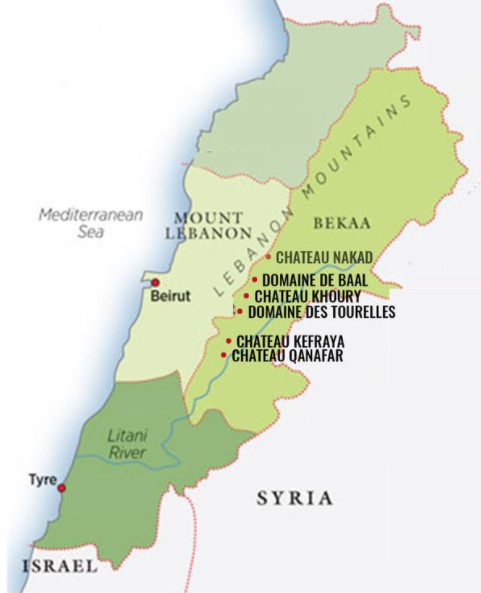
Lebanon is among the oldest sites of wine production in the world.  The Phoenicians of the coastal strip were instrumental in spreading wine and viticulture throughout the Mediterranean in ancient times.  For this reason, Lebanon is included as an ‘old world’ wine producer along with the wine nations of Europe.

Despite the many conflicts in the region, Lebanon manages to produce about 8,500,000 bottles of wine each year.  The majority of this wine comes from the Bekaa Valley, which produces some wonderful red wines.

One of the best known labels internationally is Chateau Musar, which is renowned for its bordeaux-like structure. This winery has been creating international attention since the 1970s. For a long time, Musar was a lone success; but since the mid-2000s new winemakers have started to emerge. These new producers are creating a style they feel is more “Lebanese”, with less European influence. Using different grape varieties and techniques they are creating wines with a definitive sense of place.

Chateau Kefraya’s oaked Bordeaux-blended red and Ksara’s dry rosé are great examples of the new producers as well as Massaya, a serious red wine enterprise backed by top quality St-Émilion and Châteauneuf expertise.  Other up and coming ventures include Chateaux Belle-Vue, Khoury, St Thomas and Domaines de Baal, des Tourelles and Wardy.

One member of the new breed of vintner is the head of Domaine des Tourelles, Faouzi Issa. He is a Château Margaux–trained winemaker who believes the future of Lebanese wine lies not with Cabernet, but with the Lebanese Cinsaut grape.  The floral, slightly spicy Cinsaut tastes like Pinot Noir.

Other producers are championing native varietals such as Merwah and Obaideh. Château Ksara launched its first 100 percent Merwah in 2017; a single-vineyard white with notes of citrus and melon. Château Kefraya has gone further, testing a dozen native grapes including Assali el Arous, Inab el Mir and Assouad Karech, as well as aging the wines in amphorae, which is a tall ancient Greek or Roman jar with two handles and a narrow neck, in recognition of the grapes’ Phoenician heritage.

Naji and Jill Boutros returned home from work careers in London to begin producing wine in Bhamdoun, the small mountain village where Naji was raised. Today their winery, Chateau Belle-Vue, supplies its reds to Michelin-starred restaurants in London and Chicago. And it has breathed new life into a community that has been decimated by war.

In Canada we are fortunate enough to have Lebanese wines occasionally available in the Vintages Section of the local liquor stores. I’d suggest they’re worth giving a try.

Sláinte mhaith

How Sweet Wine Is

The sweetness of a wine is determined by how our taste buds interpret the interaction of a wine’s sugar content, the relative level of alcohol, acid and tannins. Sugars and alcohol enhance a wine’s sweetness; acids (sourness) and bitter tannins counteract it.

Among the components influencing how sweet a wine will taste is residual sugar. It is usually measured in grams of sugar per litre of wine (g/l). Residual sugar typically refers to the sugar remaining after fermentation stops, but it can also result from the addition of unfermented must (a German practice known as Süssreserve) or ordinary table sugar.

Even among the driest wines, it is rare to find wines with a level of less than 1 g/l. By contrast, any wine with over 45 g/l would be considered sweet, though many of the great sweet wines have levels much higher than this. The sweetest form of the Tokaji or Eszencia, contains over 450 g/l, with some vintages reaching 900 g/l. Such wines are balanced by the use of acidity. This means that the finest sweet wines are made with grape varieties that keep their acidity even at very high ripeness levels, such as Riesling and Chenin Blanc.

The sweetness of a wine is also controlled by factors such as the acidity and alcohol levels, the amount of tannin present, and whether the wine is sparkling or not. A sweet wine such as a Vouvray can actually taste dry due to the high level of acidity.  A dry wine can taste sweet if the alcohol level is increased.  

Medium and sweet wines are perceived by many consumers as being of lower quality than dry wines. However, many of the world’s great wines, such as those from Sauternes  or Tokaji, have a high level of residual sugar, which is carefully balanced with additional acidity.

People with more proteins in their saliva do not feel the drying effect of tannin as much as people with less. Another interesting fact is that the taste of tannin is reduced when paired with salty and fatty foods.

Our sense of smell also greatly affects our perception of sweetness. A wine that smells sweeter will also taste sweeter. Wine varieties are often referred to as ‘Aromatic’ because of their sweet floral aromas.  A few examples of this are Riesling, Gewürztraminer, Torrontés, and Moscato.

The sweetness scale for wine ranges from bone dry to dry, off-dry, semi-sweet, sweet and very sweet.

THE WHITE WINE SCALE

Bone Dry with flavours of lemons and minerals

  • Pinot Grigio (Italy)
  • Pinot Gris (France)
  • Albariño (Spain)
  • Garganega (Italy)
  • Dry Furmint (Hungary)
  • Gavi (Italy)
  • Muscadet (France)
  • Chablis (France)
  • Grenache Blanc (Spain, France)
  • Macabeo (Spain, France)
  • Vinho Verde (Portugal)
  • Grillo (Italy)
  • Arinto (Portugal)

Dry with Savory and herb flavours

  • Sauvignon Blanc (France)
  • Verdejo (Spain)
  • Grüner Veltliner (Austria, Hungary, Slovakia, and the Czech Republic)
  • Veroiccho (Italy)
  • Colombard (France, California)

Dry with flavours of grapefruit and green apple

  • Vermentino (Italy)
  • Sauvignon Blanc (New Zealand)
  • Dry Chenin Blanc (France)
  • Dry Torrontés (Argentina)

Dry with flavours of yellow apple and pineapple

  • Chardonnay (France, Australia, North America)
  • Marsanne (Switzerland, France)
  • Roussanne (France)
  • Sémellon (France, Australia)
  • Trebbiano (Italy, France)

Dry with flavours of peach and lemon

  • Pinot Gris (United States, Canada)
  • Viogner (France, Australia, North America, South America, New Zealand, South Africa)
  • Dry Riesling (Germany, Australia, Hungary, Washington State, Canada)

Off-Dry with flavours of honeycomb and lemon

  • Kabinett Riesling (Germany)
  • Spätlese Riesling (Austria)
  • Chenin Blanc (France)
  • Torrontés (Argentina)
  • Müller Thurgau

Semi-Sweet with flavours of tropical fruit

  • Moscato (Italy)
  • Gewürztraminer (Germany)

Sweet with flavours of sweet lemon and honey

  • Late Harvest white wine (Everywhere)
  • Sauternes (France)
  • Ice Wine (Canada)
  • Auslese Riesling (Germany)
  • Tokaji (Hungary)

Very Sweet with flavours of golden raisin, fig and apricot

  • White Port (Portugal)
  • Moscatel Dessert Wine (United States)
  • Passito (Italy)
  • Vin Santo (Italy)

THE RED WINE SCALE

Bone Dry with a bold, bitter finish

  • Tannat (France, Uruguay, Argentina, Australia, Brazil, Bolivia, Peru, South Africa, Italy
  • Nebbiolo (Italy)
  • Sagrantino (Italy, Australia)
  • Malbec (France)

Bone Dry with savory flavours

  • Chianti (Italy)
  • Bordeaux (France)
  • Tempranillo (Spain)
  • Mourvèdre (France)
  • Anglianico (Italy)
  • Barbera (Italy)
  • Montepulciano (Italy)

Dry with flavours of vegetables and herbs

  • Sangiovese (Italy)
  • Carménère (France)
  • Cabernet Franc (France, Canada)
  • Lagrein (Italy, California)
  • Cabernet Sauvignon (France, Canada)

Dry with flavours of tart fruits and flowers

  • Mencía (Spain)
  • Valpolicella (Italy)
  • Rhône Blend (France)
  • Beaujolais (France)
  • Burgundy (France)
  • Syrah (France)
  • Merlot (France)
  • Trincadeira (Portugal)

Dry with flavours of ripe fruits and spices

  • Garnacha (France, Spain)
  • Amarone Della Valpolicella (Italy)
  • Negroamaro (Italy)
  • Pinotage (South Africa, Brazil, Canada, Israel, New Zealand, United States, Zimbabwe
  • Cabernet Sauvignon (Australia, Argentina, Chile, California)
  • Merlot (United States, Canada)
  • Alfrocheiro (Portugal)
  • Alicante Bouschet (France)

Dry with flavours of fruit sauce and vanilla

  • Shiraz (Australia, Chile, California)
  • Monastrell (Spain)
  • Malbec (Argentina)
  • Nero D’Avola (Italy)
  • Petite Syrah (United States)
  • Primitivo (Italy)
  • Zinfandel (California)
  • Grenache (California)
  • Touriga Nacional (Portugal)

Semi-sweet with flavours of candied fruit and flowers

  • Lambrusco (Italy)
  • Brachetto D’Acqui (Italy)
  • Recioto Della Valpolicella (Italy)

Sweet with flavours of fruit jam and chocolate

  • Port (Portugal)
  • Banyuls (France)
  • Maury (France)

Very sweet with flavours of figs raisins and dates

  • Tawny Port (Portugal)
  • Vin Santo (Italy)

Final Thoughts

Depending on where a grape is grown, the characteristics may change somewhat.  The climate and soil can be a great influence over taste.  For example Pinot Noir from Burgundy, France can be very different from the same varietal grown in Canada or the United States.  The same applies to any other varietal grown in multiple climates.

Sláinte mhaith

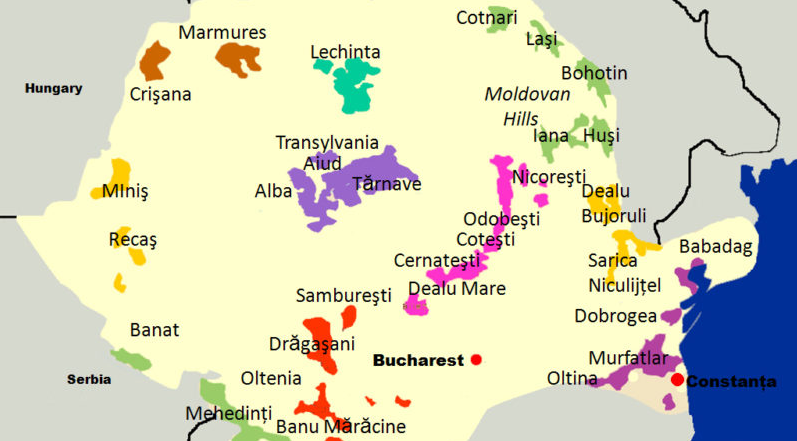
Romanian Wines

When Romania joined the European Union in 2007, it began the task of creating a good reputation for producing quality Romanian wines.  Five years were spent reviewing and organizing its wine industry. New wine laws covering production standards and labeling have been put in place and they have continued to evolve.  The three quality categories are Vin de Masa (Table Wine), Vin cu Indicatie Geografica (IGP) and Denumire de Origine Controlata (AOP/DOC equivalent).

There has been an emergence of good quality, small Romanian wine producers. These wineries have a completely different approach to wine making than the large volume producers. This has resulted in the development of some premium Romanian wine.  However, there is still a lot of low-quality, high-volume production. It has been reported that only about a third of Romanian vineyards use high quality grapes. This is the lowest percentage in Europe.

International Organisation of Vine and Wine (OIV) statistics place Romania as fifth in Europe and tenth in the world for the area under vine. This puts Romania in a similar situation to Chile and Portugal when comparing the portion of the country under vine.  Wine production is slightly above that of New Zealand.

The Romanian wine-making industry suffered during the communist era as a result of quantity being prioritized over quality. With the end of communism the country had to deal with hyperinflation and hard economic times and the wine industry suffered further as a result.  During this time mass market wine, “cheap plonk”, became the main export, giving Romanian wine a bad reputation for producing low quality wine.

However, since then the wine industry is improving.  During the past few years a new generation of wine makers has been developing. These small, craft producers have taken advantage of EU funds to invest in new winemaking technology.

They have begun replanting older vines with better quality clones and are experimenting with the winemaking style, taking a new world approach to the process.  Grape-growing expertise has been brought in from France and Germany to help make the most from the terrain.

These niche producers dedicate a percentage of their produce to premium, high-quality wine that feature the best grapes and have the highest care and attention. In response to the growing demand for quality wine, some of the well-established large producers have also started to make more premium wine.

Most Romanian wine producers are now making wine from a mix of international and indigenous grapes, although there are a number of producers that focus exclusively on international grape varieties. Many of the high-quality clones are French.  While Romania’s domestic preference is for white wines, red varietals are on the rise to compete with the international market.

The most popular international white grape varieties are Chardonnay, Pinot Grigio and Sauvignon Blanc, while the reds include Merlot, Cabernet Sauvignon, Syrah and Pinot Noir.

There are also some Romanian grape varieties that can be very good as well.  These include:

  • Fetească, which is used to make dry, fresh, perfumed white wines. It has some body and can be barrel fermented for more complexity.
  • Tămȃioasă Romȃnească (‘frankincense grape’) or Romanian Muscat, which is a clone of the Muscat Blanc à Petit Grains, one of the world’s oldest grape varieties. It results in perfumed and aromatic white wines.
  • Fetească Neagra is a red wine which is full-bodied and contains a medium amount of tannins. These wines become velvety with age and contain aromas of spice and black or red fruit.

Romanian wines have the name of the grape varietal on the label, making it easier to identify the type of wines you like.

Sláinte mhaith

Wine and Chocolate

With Easter approaching my mind thinks of chocolate. And when I think of chocolate I think of enjoying it with a glass of red wine, one of my favourite combinations.

Wine and chocolate have a lot of similarities; they’re both considered aphrodisiacs and they both contain flavanols (antioxidants). Despite these striking similarities, it’s important to note that all wine and all chocolate don’t pair well together as the levels of flavanols may end up clashing against each other on your tongue.

Pairing food and wine is subjective and there is often disagreement as to which wine pairs well with chocolate.  Some things to consider are:

  • The type of chocolate, whether it is white chocolate, milk chocolate or dark chocolate.  White chocolate and milk chocolate are often easier to match than dark chocolate.

  • Whether the food pairing is a hot or cold dish.  Cold dishes are often more wine-friendly.

  • Any other ingredients that are on the plate.  

  • Generally, the more full-bodied the red wine is, the higher percentage of cacao (the darker the chocolate) you can pair it with.

For the best tasting experience, begin with a small sip of wine. After a few seconds, take a bite of the chocolate, allowing it to melt and warm up on the palate. Then, take another larger sip of wine and enjoy.

Although I enjoy pairing full-bodied red wines with chocolate, many people do not.  It is a matter of personal preference. For some the wine needs to be sweeter than the dessert.  These individuals will find that lighter dessert wines such as Sauternes, Riesling and Moscato work best with lighter chocolate desserts, and richer ones such as Tokaji and fortified wines with darker, denser ones.

Here are some suggestions when pairing chocolate and wine:

To keep things simple, start with a wine that is slightly sweeter than the chocolate or chocolate-themed dessert. To prevent the two flavours from fighting for dominance, let the wine bow to the chocolate in the form of a slightly sweeter wine partnered up with the chunk of chocolate.

Tried and true “sweet” wine options that cover a wide range of chocolate partners include: Port, Madeira, Pedro Ximénez Sherry, and Grenache-driven Banyuls, as well as several late harvest wine options, and some sweet sparkling wines like Italy’s Brachetto d’Acqui or Moscato d’Asti.

Opt for a similar style and weight between the chocolate and the wine. Try to match lighter, more elegant flavoured chocolates with lighter-bodied wines.  Similarly, the stronger the chocolate the more full-bodied the wine should be. For example, bittersweet chocolate tends to pair well with California Zinfandel or Cabernet Sauvignon.

The darker the chocolate the more dry, tannin texture it will display. However, when you pair this darker chocolate with a wine that also contains a lot of tannins, the chocolate will often overshadow or cancel out the wine’s tannins on the palate and allow more of the fruit to show through.

If you will be tasting several varieties of chocolates, begin with the light white chocolate, move to milk chocolate and end with dark chocolate. Just like when conducting a wine tasting, you will keep your palate from starting on overdrive and missing out on the subtle, sweet sensations found in more delicate chocolate choices.

Wine and Chocolate Pairings

White Chocolate

White chocolate isn’t technically a “true” chocolate because it doesn’t contain cacao.  It tends to be more mellow and buttery in flavour that pairs well with the sweeter styles of Sherry  and the sweet, subtle bubbles of Italy’s Moscato d’Asti.

Other options to pair white chocolate with are:

  • Pinot Noir
  • Beaujolais
  • Ice Wine
  • Late Harvest wines
  • German Riesling
  • Rosé Port
  • ​Zinfandel.

Milk Chocolate

A good milk chocolate is usually about half chocolate and half cream. The fat from the cream makes milk chocolate one of the easiest chocolates to pair with wine.  The ripe, red fruit and often lighter body of a Pinot Noir or a medium-bodied Merlot will work well with the smooth character and cocoa butter components of milk chocolate, a creamy chocolate mousse or chocolate accented cheesecake.

Riesling, Muscat or the range of notable dessert wines tend to also pair well to milk chocolate. On the other hand, sparkling wine or champagne goes well with milk chocolate-dipped strawberries. Ruby Port also makes a great pairing with many kinds of milk and dark chocolate choices.

Dark Chocolate

The polyphenols in dark chocolate mirror those in wine and give both a somewhat bitter taste. It’s also the part of the chocolate that gives you all the health benefits. The bitterness in dark chocolate is what makes wine pairings a challenge.

Dark or bittersweet chocolate (chocolate containing a minimum of 35% cocoa solids) requires a wine that offers a fuller body, robust aroma and intense bold fruit flavour.

Zinfandel with dense fruit, energetic spice, and higher alcohol works well with dark chocolate. The bold structure of Cabernet Sauvignon pairs well for the decidedly drier style of dark chocolate.

Pinot Noir or Merlot also pair well with dark chocolate that contains around 55% cocoa. The full-bodied flavours of Grenache grapes often have their own chocolate nuances. Fortified wines like Tawny or Vintage Port also complement a dark chocolate dessert or truffle.

Chocolate in Combination

Since chocolate isn’t always a solo item, here are pairings for some common chocolate combinations:

Chocolate with sea salt may be combined with a white wine pick like a sweet-styled Late Harvest Gewürztraminer or a fruit-driven Zinfandel or even a fortified Malmsey Madeira.

Chocolate with nuts, including peanut butter cups, could be paired with Madeira, Tawny Port or Oloroso Sherry.

Chocolate with caramel may be combined with Madeira, Tawny Port, Sherry, Vin Santo, Muscat de Beaumes-de-Venise, or sweet sparkling wines.

Chocolate with mint can be paired with Cabernet Sauvignon, Cabernet Franc, Shiraz, Moscato d’Asti, or some sweet dessert-style red wines.

Chocolate cake will pair with Madeira, Port, Sherry, Vin Santo or Shiraz.

Final Thought

Personal tastes vary from person to person and a wine and chocolate partnership that works well for one may not find favour with another. However, with a bit of flexibility and experimentation, you are sure to find remarkable wine and chocolate pairings that will work well for you.

Sláinte mhaith

Wine Labels

Wine bottle labels were originally intended to relay information about the wine inside the bottle.  However, over time they have transformed into a form of art. Modern wine labels are more artistic than ever. From classic to contemporary styles, they tell a story about the wine inside.  People, such as my wife, will decide on which wine to purchase solely by the appearance of the label.  Although I am not in favour of this approach I must admit she has had a good track record of selecting wines in this manner.

From a more traditional perspective, wine labels contain a lot of useful information to help you select the perfect wine for you.  The trick is to be able to decipher the information presented.  Generally speaking, European winemakers label their wine in accordance with the location where it was produced, whereas new world vintners (i.e. Australia, New Zealand, North America, South Africa and South America) label their wines according to the type of grapes they are made from. Very simply, if you familiarize yourself with the major wine-producing regions and grape varietals grown, the label will tell you whether the wine is dry or sweet, light and fruity or full-bodied.

European Wine Labels

Begin by locating on the label the name of the country where the wine comes from. These wines are often referred to as “Old World” wine that is from one of the countries that are thought to be the first countries to make wine.   Countries that are considered to be old world winemakers include France, Italy, Germany, Spain, Greece, Portugal, Austria, Croatia, Romania, Georgia, Hungary, Switzerland, Israel and Lebanon.

Old World wines tend to be lower in alcohol content, and lighter and more restrained in taste, although this is not always the case.  The grapes tend to ripen with more acidity and less sugar.  As a result, Old World wines are typically fresh and acidic with a lower amount of alcohol.  New World wines, on the other hand, tend to be very juicy and full-bodied with higher levels of alcohol.

Next check the quality designation.  Each Old World country has its own wine rating system.  Generally they rank from superior quality down to table wine which will have the lowest ranking.  The quality designations for several of the European countries include:

France

  • AOC (Appellation of Controlled Origin)
  • VDQS (Wines of Superior Quality)
  • Vins de Pays (Country Wine)
  • Vins de Table (Table Wine)

Germany

  • QWSA (Quality Wine with Special Attributes)
  • QBA (Quality Wine from Specific Appellations)
  • Deutscher Landwein (Superior Table Wine)
  • Deutscher Tafelwein (Simple Table Wine)

Italy

  • DOCG (Denomination of Controlled and Guaranteed Origin)
  • DOC (Denomination of Controlled Origin)
  • IGT (Typical Geographical Indication)
  • Vini di Tavola (Table Wines)

Spain

  • DO (Denomination of Origin)
  • DOC (Denomination of Qualified Origin)

Portugal

There is only one classification indicating a good quality wine

  • DO (Denomination of Controlled Origin)

Most wines are vintage wines and the label will tell you the year that the wine was made.  If the year is not on either the front or rear label it may be printed on the bottle neck. Vintage wines are made of grapes from the same harvest year. Non-vintage wines are made from a blend of grapes from different harvest years so the year will not appear on the label.

The region where the wine was produced should appear on the front of the label.  The key is that different types of grapes are grown in each region.  For example, in France, Alsace produces fruity, Germanic wines; the Bordeaux region produces Cabernet Sauvignon and Merlot; the Champagne region produces sparkling white wines; Beaujolais produces a light red wine that is designed to be consumed right away.

The region is an indicator of quality.  High quality wines are often identified as being produced in a very specific location.  A label listing a town will be of a higher quality than one that identifies only the region.

Lastly, the shape of the bottle will be unique to the type of wine.  In France, straight, high-shouldered bottles contain Bordeaux wines – green glass for red wines, clear glass for white. In Burgundy, the Loire, and the Rhone they use gently-shouldered bottles. Outside of France, this type of bottle sometimes contains Chardonnay or Pinot Noir.

Tall, slender bottles are usually from Germany and Alsace, and tend to contain Riesling, Pinot Blanc, Pinot Gris, or Gewürztraminer.

Non-European Wine Labels

When looking to purchase a New World wine the first thing to do is identify the country of origin.  If it isn’t on the front label it should be on the back label.

New World wines tend to vary greatly.  Warmer climates produce wines that have bolder, fruity flavours and tend to be more full-bodied than Old World wines, and usually have a higher level of alcohol.

For New World wines the brand is also the name of the vineyard that produced the wine, and it is often the main name on the label. It will be written in the largest type size, and usually appears at the top of the front label.

As with Old World wines, the wines are usually vintage if they are identified by the year they were produced and non-vintage wines are produced from grapes harvested during different years.

After the brand-name the grape varietal is usually the second-largest identifier on the label.   New World wines label their bottles according to the type of grape that was used to make the wine. In order for a varietal to be identified on the label the wine must contain at least 75% of that type of grape.

The vineyard will often be identified on the label providing the vast majority of the grapes used are from the specified vineyard.  Not all wines will list a vineyard on the label.  If one is identified it is because the vintner believes the vineyard attributes special qualities to the wine produced.

If there is a designated viticultural area, for example California’s Napa Valley, it will often appear on the label.  However, in order for the designation to be included a minimum of 85% of the grapes in the wine must come from the identified area.

If the phrase “Estate Bottled” appears on the label, 100% of the grapes in that wine were grown, processed, fermented and bottled at the same location.

Lastly the level of alcohol will appear neat the bottom of the label.  The percentage of alcohol may range from 7% up to 23% depending on the type of wine.  Sweeter wines will have a higher percentage of alcohol than dryer wines, and overall New World wines tend to have a higher alcohol content than Old World wines.

Common Information

Some information can be common to both European as well as New World labels.  That information may include the following:

Inclusion of the name “ Reserve” sounds impressive but it has no official meaning as there are no rules regarding when it may appear on a wine bottle. Many small producers use it to indicate their top-tier wines but that is not required to be the case.

There are also no rules surrounding the use of the term “Old Vines” or “Vielles Vins”.  Producers use this term to help give a sense to the style of wine contained in the bottle.  Vines can range from 10 to 100 years old.  Also wines with this designation can contain a blend of grapes from young vines as well as the old.

Finally, the phrase “Contains Sulphites” is a requirement for any wine for which it applies.  Sulfites help preserve wine and slow chemical reactions which cause wine to spoil. They generally have no effect on the majority of wine drinkers.  Sulfites in wine are surprisingly lower than in a lot of processed foods.  Wine ranges from about 5 mg per litre to about 200 mg per litre. The maximum legal limit is 350 mg per litre. In comparison, a decent dry red wine typically contains about 50 mg per litre of sulfites

For individuals who have sensitivity to sulfites in foods such as french fries, cured meats, cheese and canned soup, they should probably opt for sulfite-free wines. There are some natural wines that do not use sulfites in their processing.

Final Thoughts

The wine label is essential in helping you decide which wine you purchase.  Whether it be to convey the type and quality of wine you want to drink or whether, like my wife, to decide based on the artistic impression the label makes on you.  Either way, your interpretation of the label will be key in deciding which wine you will buy.

Sláinte mhaith

Israel’s Wines

Israel is located in the Middle East at the very eastern edge of the Mediterranean Sea. The modern Jewish state’s famously controversial borders were created at the conclusion of World War II. Its wine industry has its roots in the late 19th century, but has largely developed in recent decades. 

A number of ‘international’ wine grape varieties have proven to be successful in Israel. Among these are Cabernet Sauvignon, Merlot, Syrah, Sauvignon Blanc, Semillon, Chardonnay and even Gewurztraminer.  Several members of the extensive Muscat family, which retains its historic links with this part of the world, are also to be found here.

Although small compared to most modern wine-producing nations, Israel’s wine production has attracted attention from all across the wine world. This is not only due to the development of new cooler-climate terroirs such as the Golan Heights, but also to the quality-conscious approach of the nation’s wine producers.

Many parts of Israel are too hot and dry to be a reliable producer of high quality wine. However there are some suitable microclimates that are either well established or showing good potential.

Throughout much of the 20th century, wine production was focused on Kosher wine to be exported around the globe. These wines were generally sweet and made from high yield vineyards. Carmel Winery was the first to produce a dry table win, as late as the 1960s. Today sacramental wine accounts for only about a tenth of Israel’s wine output.

The revival in quality winemaking began in the 1980s. This was aided by an influx of winemakers from France, Australia and the USA, and a corresponding modernization of technology. The 1990s saw a marked rise in the number of boutique wineries. By 2000 there were 70 wineries and by 2005 this number had doubled.

Today Israeli wine is produced by hundreds of wineries ranging in size from small boutique enterprises to large companies producing over ten million bottles per year.  In 2011, Israeli wine exports totaled over 26.7 million bottles.

It has been observed by several wine authorities that Israel’s approach to winemaking has evolved from being an Old World producer to developing into a stylistic New World producer.

The demand for kosher wines throughout the world has reinforced the development of the Israeli wine industry over the past few decades. However, not all wine made in Israel is kosher.  Modern Orthodox Jews believe that for wine to be considered truly kosher, the wine should only be prepared by Jews. Some Jews consider non-Jewish wine (known as yayin nasekh) to be kosher if it has been heated; the reason being that heated wine was not used as a religious libation in biblical times and its consumption is therefore not sacrilegious.  Therefore, mulling, cooking and pasteurizing wine renders it kosher in the eyes of many Jews.

The modern Israeli wine industry was founded by Baron Edmond James de Rothschild, owner of the Bordeaux estate Château Lafite-Rothschild. Today winemaking takes place in five vine-growing regions: Galilee, Shomron, the Judean Hills, Samson and Negev. Some of the Israeli defined wine-growing regions, such as the Judean Hills, refer to areas that are largely Israeli-occupied territories. Because of this the definition of wines produced in such areas are subject to legal contention abroad.

Sláinte mhaith

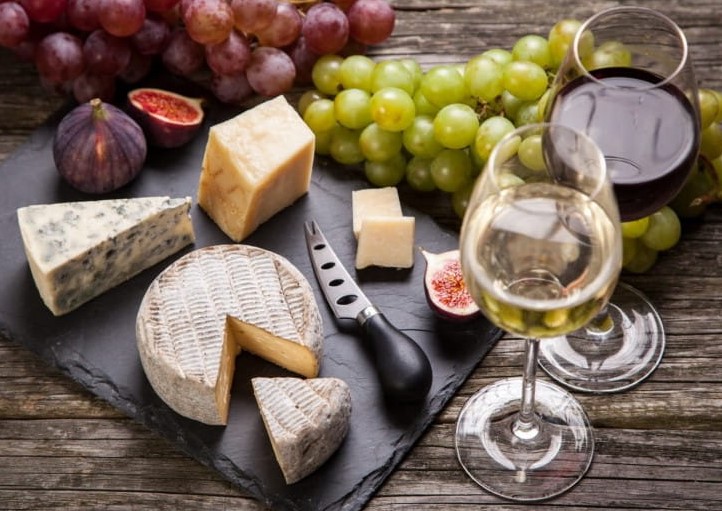
Cheese Pairings

Wine and cheese are two of my culinary pleasures, and finding a good match can be a delicious endeavor. As with any wine and food pairing, there are a number of considerations such as texture, acidity, fat and tannin.

The first thing to decide is whether you want to give the starring role to the wine or to the cheese. If it’s the cheese, pick a wine with less character that will complement it. If you want the wine to be the star, select a cheese with less forcefulness.

Cheeses can be divided into six categories:

Fresh Cheese

These are soft rindless cheeses that are made with cow, goat or sheep milk. They’re not aged and have a mild, slightly tangy flavour.  Cheeses considered in this category include:

  • Mozzarella
  • Burrata
  • Chèvre (goat)
  • Feta
  • Ricotta
  • Mascarpone
  • Stracchino
  • Boursin
  • Very young Selles sur Cher

Wine pairings with fresh cheeses include:

  • Crisp, dry and young white wines such as:
    • Albariño Soave
    • Pinot Blanc
    • Muscadet
    • Vermentino
    • Verdejo
    • Arneis
    • Sauvignon Blanc
    • Young Chardonnay
  • For salty cheeses like Feta, off-dry whites such as:
    • Gewürztraminer
    • Riesling
  • Very young, fruity, unoaked red wines such as:
    • Loire
    • Cabernet Franc
    • Pinot Noir
    • Gamay
    • Valpolicella
  • Crisp, dry rosé.

Bloomy Cheese

These cheeses are named for the bloom of white mold that they are contained within. They tend to be the richest and creamiest type of cheese, with a soft, spreadable texture. The rind is edible, and it has a stronger flavour than the inside.

Bloomy cheeses include:

  • Brie
  • Camembert
  • Robiola
  • Chaource
  • Coeur du Neufchatel
  • Crottin de Chavignol (goat)

Wine pairings with fresh cheeses include:

  • A variety of white wines including:
    • Dry, traditional-method sparkling wines
    • Light-bodied, dry, unoaked Chardonnay (Chablis)
    • Dry, light-bodied Sauvignon Blanc (Sancerre)
    • Dry young Riesling
    • Dry Chenin Blanc (Vouvray)
    • Grüner Veltliner
    • Semillon or white Rhône varieties such as Châteauneuf-du-Pape Blanc
  • Dry and light-bodied red wines that are young, fruity and unoaked such as:
    • Pinot Noir
    • Dolcetto
    • Barbera
    • Gamay
    • Cabernet Franc

Washed Rind Cheese

These are cheeses that are soaked in brine, beer or wine that produce an orange rind. They are rich and creamy, and will be of soft or semi-soft texture.

Examples of washed rind cheese include:

  • Fontina
  • Epoisses
  • Reblochon
  • Taleggio
  • Langres
  • Chaume
  • Livarot
  • Munster
  • Vacherin de Mont d’Or

Wines that compliment washed rind cheese include:

  • White wines such as:
    • Dry, traditional-method sparkling wines
    • Dry and off-dry, unoaked white wines like:
      • Gewürztraminer
      • Pinot Gris
      • Chenin Blanc
    • Dry, structured whites such a:,
      • Marsanne
      • Roussanne
      • Semillon
      • Riesling
  • Red wines such as:
    • Beaujolais Villages
    • Pinot Noir
    • Poulsard
    • Trousseau

Semi-Soft Cheese

Semi-soft cheeses are not spreadable nor do they break in shards like a hard cheese. They tend to be creamy with a fairly mild flavour. Many are excellent to melt and perfect to slice. Some cheeses like Gouda are semi-soft in younger styles, while when aged, their texture turns hard.

Included in this category are such cheeses as:

  • Gruyère
  • Gouda
  • Havarti

Wine pairings include:

  • Slightly oaked white wines such as:
    • Chardonnay
    • Pinot Gris
    • Rioja
  • Gently oaked red wines such as:
    • Côtes de Rhône
    • Corbières
    • St-Chinian
    • Chianti
    • Mencía
    • Young Bordeaux blends

Hard Cheese

These cheeses are aged and are quite firm and crumbles or breaks into shards. They tend to have nutty and complex flavours. Some are fairly pungent and salty.

Cheeses included in this category are:

  • Cheddar
  • Double Gloucester
  • Parmesan
  • Pecorino
  • Manchego
  • Grana Padano
  • Beaufort
  • Cantal
  • Emmenthal
  • Sbrinz
  • Comté

Wine pairings for hard cheese include:

  • White wines such as:
    • Vintage traditional-method sparkling wines
    • Amontillado Sherry
    • Palo Cortado Sherry
  • Red wine pairings include bold wines with some age:
    • Nebbiol0
    • Sangiovese
    • Aglianico
    • Rioja
    • Bordeaux blends from cooler climates

Blue Cheese

Veins of blue mold run through these cheeses. They can be soft and creamy, or semi-soft and crumbly. Some are sweeter and milder, but all contain a fair amount of sharpness and tang.

Blue cheese varieties include”

  • Cambozola
  • Danish Blue
  • Gorgonzola
  • Roquefort
  • Stilton
  • Fourme d’Ambert
  • Bleu d’Auvergne
  • Cabrales

Wine pairings to coincide with blue cheese include:

  • White wines such as:
    • Noble Rot sweet wines like:
      • Sauternes
      • Barsac
      • Monbazillac
      • Riesling Beerenauslese
      • Trockenbeerenauslese
      • Quarts de Chaume
    • Dessert wines from dried grapes:
      • Vin Santo
      • Jurançon
      • Recioto de Soave
    • Late-harvest wines:
      • Riesling Spätlese
      • Gewurztraminer Vendanges Tardives
  • Sweet fortified red wines such as:
    • Vintage Port
    • LBV Port
    • Maury
    • Banyuls

If all of this is too mind boggling and you want just one wine to match any cheese the experts suggest choosing one of either Amontillado Sherry, Rivesaltes, tawny Port or Madeira. They complement any cheese as they are not too delicately flavoured.  All of these wines are considered to be crowd-pleasers.

Sláinte mhaith

The Components of Wine

When a wine reviewer completes an assessment, the critic will describe the wine in terms relating to as many as 8 different components.  These include:

  • Acidity
  • Alcohol
  • Anthocyanins (colour)
  • Aromatic compounds
  • Body
  • Sweetness or Sugar
  • Tannins
  • Viscosity

Acidity

Acid is one of the most important elements in the pulp. As a grape ripens, its sugar content increases and its acid content decreases; the challenge is to harvest precisely when the optimal balance is struck.

Acid balances alcohol and sweetness and sometimes adds a crisp, refreshing sensation.  It may cause your mouth to pucker (like if you were biting into a lemon wedge). Grapes grown in cooler regions tend to have higher levels of acidity.

Alcohol

Alcohol is produced during fermentation when yeasts come in contact with the natural grape sugar in the grape pulp.  High-alcohol wines are full-bodied with a richer mouthfeel.  Alcohol generally has a sweet flavour.  A wine with high levels of alcohol sometimes gives off a hot, burning sensation that can be both smelled and tasted.

High levels of alcohol indicate that the grapes were very ripe at harvest.

Anthocyanins (colour)

Observing a wine’s colour can be a valuable clue for determining the vintage and assessing the wine’s quality.

Red wines lose colour as they age, becoming more garnet and eventually turning brown.  As much as 85% of anthocyanin is lost after 5 years of aging, even though the wine may still appear quite red.

Red wines that are more opaque generally contain higher levels of tannin, though Nebbiolo is an exception to this rule. 

There is reduced colour intensity when there is higher sulfite content.  Also, red wines fermented at higher temperatures will have reduced colour intensity.

The hue in red wine is partially affected by the pH level of the wine. There are many variables that will affect the colour but generally wines with a strong red hue have high acidity; wines with a strong violet hue have a mid-range of acidity; and those with a blueish tint (magenta) usually have a low amount of acidity.

White wines darken as they age, becoming a deeper gold or yellow and eventually turning brown.

Rosé wines are stained pink by macerating the skins of red grapes over an average period of 4 hours to 4 days.

Finally, oxidation in wine causes it to become brown in the same way as an apple browns that is left out on the kitchen counter too long.

Aroma

The aromas of wine are more diverse than its flavors. The human tongue is limited to the primary tastes perceived by taste receptors on the tongue – sourness, bitterness, saltiness, sweetness and savouriness.

The wide array of fruit, earthy, leathery, floral, herbal, mineral and woodsy flavours present in wine are derived from aroma or “nose” as it is often referred. In wine tasting, wine is sometimes smelled before being drunk in order to identify some components of the wine that may be present.

Different terms are used to describe what is being smelled. The most basic term is aroma which generally refers to a “pleasant” smell as opposed to odour which refers to an unpleasant smell or possible fault in the wine. The term aroma may be further distinguished from bouquet which generally refers to the smells that arise from the chemical reactions of fermentation and aging of the wine.

Body

It’s all about mouthfeel and weight.  The body of a wine is due to its alcohol content; however it also includes the perception of alcohol in a wine, associating with the balance of a wine.

  • Light wine is often perceived and described as bright and acidic, fresh, citrusy and having fresh fruit notes.
  • A medium bodied wine is one with lower alcohol levels, softer acids, little to no sugar content and little to no tannin.
  • A fuller body wine is the result of several factors. Alcohol content creates viscosity, which adds to the fullness of the body. Tannins give wine structure, creating a thicker sensation in the mouth. Finally, sugar levels increase the viscosity of the wine, making it more syrupy and less watery.

Sweetness / Sugar

Sugar comes from ripe grapes (although some grape varieties naturally contain more sugar than others). It is mostly converted into alcohol during fermentation. Any remaining sugar is referred to as residual sugar.

A wine with high levels of residual sugar generally tastes sweet, has a richer mouthfeel and fuller body.  Grapes grown in warmer climates tend to get riper and contain more sugar.  Those wines having no apparent sweetness are referred to as being “dry”.

Tannins

Tannin belongs to a class of compounds called phenols and comes from grape skins and seeds; it is mostly found in red wines but can be found in some white wines.

Tannin is an important compound that plays a role in the aging of wine; therefore high-tannic red wines such as Cabernet Sauvignon and Nebbiolo are those that can be aged longest.

A good way to understand the effect of tannin is to think of a cup of hot tea in which the tea bag has steeped for too long.  The tea will taste very strong, harsh and rather bitter (tannic).  The flavour of the tea can be softened by the addition of milk. This same concept applies to wine, thus the reason why cheese and wine is a classic pairing.  The protein in cheese neutralizes or balances the tannins in wine.

Viscosity

Viscosity refers to the liquid consistency of wine. Viscosity will make the wine appear thin and watery, or may make it appear thick and syrupy.

Viscosity is affected by the levels of sugar and alcohol found in the wine. Generally speaking, the higher a wine’s levels of sugar and alcohol, the higher the wine’s viscosity will be.

Wines with high viscosity tend to cling to the side of a wine glass longer, and may leave “tears” or “legs” as the wine begin to slide back down into the glass.

Final Thoughts

Reviewer impressions are often very subjective and will reflect personal bias.  However, these descriptions and impressions are our best source for determining whether it is worth our while to invest in a particular wine or even a certain grape varietal.

Sláinte mhaith

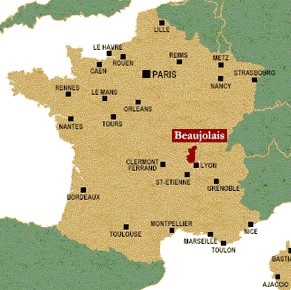
Beaujolais

Beaujolais is located at the southern end of Burgundy, France.  It produces more than three-quarters of the world’s Gamay wine. During the past number of years Beaujolais has improved beyond just producing Beaujolais Nouveau, fruity wines made specifically for early consumption, to now include high-quality yet affordable red wines.

Beaujolais Classifications

Beaujolais Nouveau

It continues to be the most recognizable type of Beaujolais.  It is bottled and appears on store shelves just a few weeks after being harvested. The phenomenon was started by vineyard workers as a way to celebrate the end of harvest. Gradually the wine began appearing in local cafés and eventually even in Paris. Today, tens of millions of bottles of Beaujolais Nouveau are distributed to more than 100 countries in time for its official release date of the third Thursday of November.

Beaujolais Nouveau is young and simple with a very low tannin content and high acidity.

Beaujolais AOC

This is the most basic level of Beaujolais. Wines are light bodied, with plenty of fresh fruit flavours. The majority of wine produced in this appellation is sold as Beaujolais Nouveau.

Beaujolais Villages AOC

There are 38 designated villages in the region that can make Beaujolais Villages wines. The majority are red wine but there are also small amounts of white and rosé wines. Producers have the option of adding the name of the village to the label if the grapes come solely from a specific location, but most of the wines that fit the criteria are destined to be classified as Cru Beaujolais, leaving the villages themselves with little name recognition.

Beaujolais Villages wines are smooth and balanced, with ripe red and black fruit flavours.

Cru Beaujolais

Crus Beaujolais offer wine with unique character and history. Though highly regarded, wines from this quality level only account for 15 percent of the region’s total production.

Beaujolais wines are available in a variety of body types, depending on the cru from which they come.

Light and Perfumed

  • Brouilly: The largest cru totaling 20 percent of the Beaujolais Cru area.
  • Chiroubles: Home to vineyards located in the region’s highest altitudes.

Elegant and Medium-Bodied

  • Fleurie: The most widely exported to Canada and the United States and a good vintage that is age-worthy up to 10 years.
  • Saint-Amour: The most northerly cru which is known for its spicy character and ability to be aged up to 10 years in a good vintage.
  • Côte de Brouilly: Sits within the Brouilly cru, with vineyards on higher slopes of the extinct Mont Brouilly volcano.

Rich and Full-Bodied

  • Juliénas: Named after Julius Caesar and said to be one of the first wine producing areas of Beaujolais, dating back more than 2,000 years.
  • Régnié: It is the newest cru, being recognized in 1988.
  • Chénas: The smallest cru in Beaujolais (under one square mile of vineyards).
  • Morgon: Earthy wines with a deep and rich Burgundian character that can age up to 20 years.
  • Moulin-à-Vent: The most likely cru to use oak witch adds tannins and structure. Wines from this cru are the boldest in the region.  In good vintages they can age up to 20 years.

Beaujolais Food Pairings

Beaujolais pairs well with traditional French foods such as Brie or Camembert cheese, or with a rich pâté. Given its low level of tannins, Beaujolais is also a great partner to lighter fare like grain salads or white fish.

Medium-bodied Beaujolais will pair well with a barbecued burger or a veggie-loaded pizza.

Sláinte mhaith