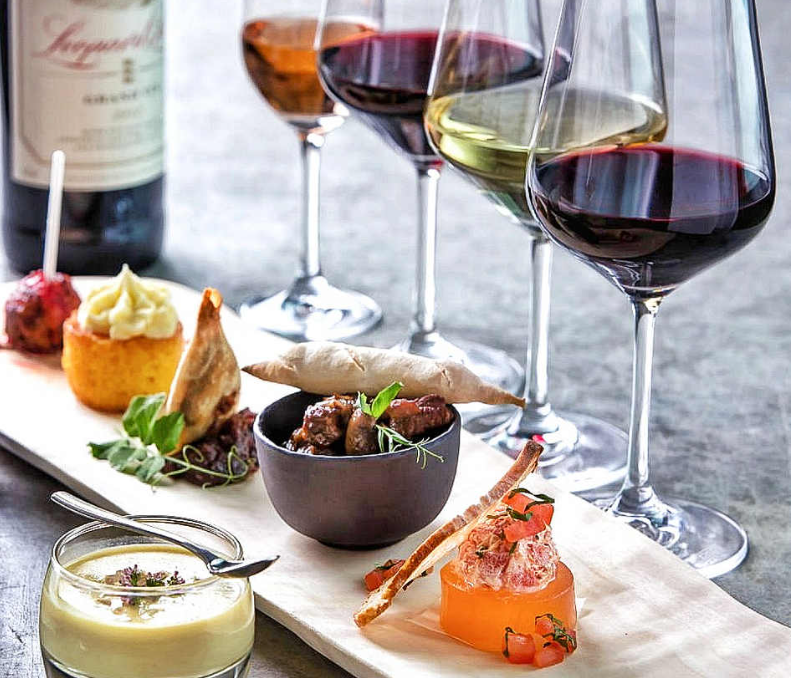
Looking for a way to enhance a meal of sandwiches? For lighter tasting fillings, light-bodied white wine such as Pinot Gris, Pinot Grigio, or Sauvignon Blanc would pair well. For more substantial sandwiches, a Pinot Noir, Beaujolais, or even a Cabernet Franc can go well. Sandwiches that have a spicy kick will pair well with a Moscato or Riesling.
Photo credit: svinando.co.uk
Sandwiches served on a nutty bread loaf are complimented by a Cabernet Sauvignon while more savory breads are enhanced by a Chianti.
Here are some suggestions for some specific types of sandwiches:
BLT – Sauvignon Blanc, Pinot Grigio, Rosé
Cheesesteak – Carménère
Cubano – Chardonnay
Roast beef – Malbec, Syrah
Italian beef – Merlot
Grilled cheese – Chardonnay or semi-dry Riesling
Grilled chicken – Sauvignon Blanc
Ham and cheese – Chardonnay
Italian meat sandwich – Prosecco
Peanut butter & jam – Off-dry Riesling
Pulled pork – Pinot Noir, Cabernet Franc
Reuben – Pinot Noir, Rosé
Cured salami – Shiraz/Syrah
Tuna melt – Verdicchio
Classic turkey – Chardonnay
Turkey burgers – Pinot Noir
Grilled vegetables – Sauvignon Blanc
Whatever your choice of sandwich, the accompaniment of a glass of wine can enhance your dining experience.
Pairing wine, or any alcoholic beverage for that matter, with Thai food is without history or precedent. Whereas many cultures traditionally include alcoholic beverages as part of their cultural experience, for example the French with wine, the Japanese with sake, and the Germans with beer, Thais have no history of pairing alcohol with food at all.
Photo credit: guide.michelin.com
Therefore, when pairing wine with Thai food, there are no rules or traditions to be followed. However, there are general guidelines that can be followed when matching wine with any flavour, boldness, sweetness, spiciness, acidity, or heat combinations of food. I have written about these in one form or fashion numerous times over the years.
In case you don’t want to engage in your own research to find the perfect pairing for your next Thai dinner, here are some wine pairing suggestions from a variety of experts.
As a general comment, lighter-bodied wines, particularly whites and rosés, are good choices. Off-dry Riesling, Pinot Gris, Sauvignon Blanc, Grüner Veltliner and Chenin Blanc go well, along with some lighter red wines such as Pinot Noir or Gamay.
Some Thai dishes, particularly curries, can be quite spicy. A wine with a touch of sweetness can help balance the heat. A Sauvignon Blanc, an off-dry Riesling or a Gewürztraminer would be a good choice. Also, a Riesling can complement the aromatic herbs and spices often used in Thai cooking.
If your preference is for red wine, the light body, low tannins and high acidity of Pinot Noir make it a good choice for Thai food. Gamay, being similar to Pinot Noir, also has a light body and is high in acidity making it a good choice as well.
A light-bodied French Beaujolais can pair well with heartier meat dishes or those with umami-rich sauces.
Wines to avoid include heavy, full-bodied red wines with high tannins, as they can intensify the spiciness of Thai dishes. Therefore, it is best to stay away from wines such as Cabernet Sauvignon and Shiraz.
Here are some more detailed suggestions:
Green Curry: Malbec
Larb: Grenache
Mango Sticky Rice: Sauternes
Massaman Curry: Gewürztraminer
Moo-ping: Grenache or Syrah
Pad Karprao: Red Burgundy, Cabernet Franc
Pad See Ew: Primitivo/Zinfandel
Pad Thai: Chenin Blanc
Som Tum: Moscato d’Asti
Tom Yum: Sauvignon Blanc
One thing is for certain, whichever wine you select to have with your Thai meal will not be wrong.
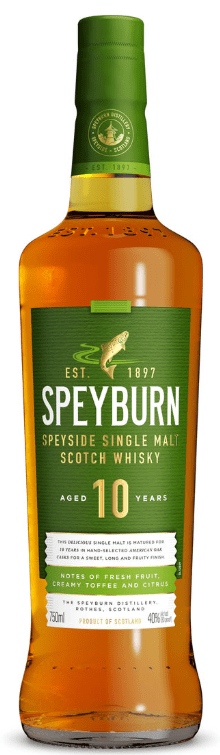
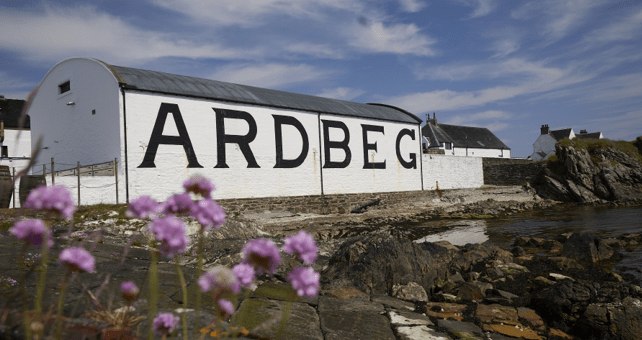
Don’t all types of whiskey pretty much taste the same, especially those ones that are made from the same type of grain? The simple answer is no. Just ask the Irish or the Scots. They will each tell you that theirs is far superior over all others. Irish whiskey and Scotch whisky have common roots but have developed differently over time.
Photo credit: kinnittycastlespirits.com
So, what are the differences between Irish whiskey and Scotch whisky? To begin, Irish whiskey is spelled with an “e” (whiskey), while Scotch whisky is spelled without an “e” (whisky). Whiskey labelled as Irish whiskey must be produced in Ireland and spend a minimum of three years maturing there while whisky labelled as Scotch whisky must be produced in Scotland and spend a minimum of three years maturing there.
Both are created using fermented grain and aged in wooden barrels. However, their distillation process, ingredients and flavour profiles differ. Irish whiskey is often triple-distilled whereas most Scotch whiskies are double-distilled. Thus, Irish whiskey is usually known for a smoother, lighter taste, often having fruitier flavours, while Scotch whisky is typically known for a fuller, heavier, more complex flavour profile with notes of oak, vanilla, fruit, spice and sometimes smokiness. However, as with most things there are exceptions. Occasionally Irish whiskey is only double-distilled and Scotch whisky is triple-distilled.
Irish whiskey may be made from a combination of cereal grains including barley, corn, wheat and rye. Scotch whisky is produced from 100% malted barley. The grain is distilled differently as well. Irish whiskey can mature in wood species other than oak, while Scotch whisky must be matured in oak barrels.
There are four types of Irish whiskey: Single Malt, Single Pot Still, Single Grain and Blended Irish Whiskey. For details on single malt and single pot, see my March 12, 2022 post “The Styles of Irish Whiskey”.
On the other hand, there are five types of Scotch whisky: Single Malt, Single Grain, Blended Malt, Blended Grain and Blended Scotch Whisky. Further information on the types of Scotch can be found in my post “Scotch Whisky Single Malt Vs Blend” dated December 18, 2021.
As you can see, both countries produce single malt, single grain and blends. In Scotland, blended malt and blended grain are separate categories whereas blended Irish Whiskey must be made from two or more different whiskey types.
The biggest difference between Irish whiskey and Scotch whisky is the single pot still classification. This is a style of whiskey that is unique to Ireland and is made from both malted and unmalted barley.
Scotch whisky sales exceed those of Irish whiskey. In 2023, Scotch exports were the equivalent of $10.3 billion CDN while Irish whiskey exports were just more than $1.6 billion CDN. There are currently about 150 whisky distilleries operating in Scotland and around 50 in Ireland.
However, being bigger doesn’t make it better. Scotch can boast more varieties and market exposure but it is up to you decide which one is better. It comes down to personal taste.
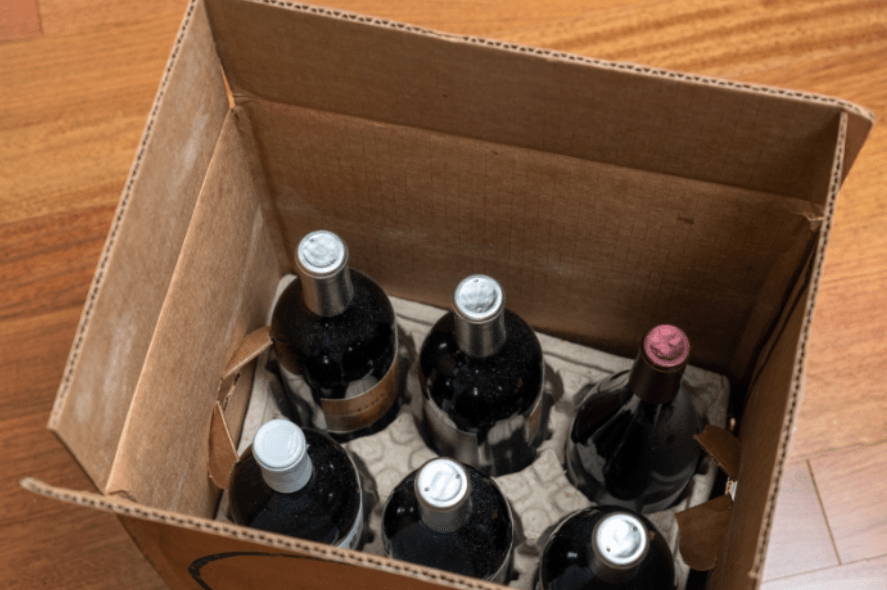
What is ‘wine service’? Experts define it as the way a bottle of wine is served to a gathering of guests. Wine service must include the handling of the bottle itself. Based on this definition, if you were to order a glass of wine in a restaurant, this would not be included under the definition of wine service. Instead, it is considered in the definition of ‘bar service’, perhaps a discussion for another day.
Photo credit: vivatysons.com
The wine service process begins with the selection of the wine, either from a list or by the recommendation of the restaurant wine steward or sommelier, or in the case of a private gathering, your host.
The first step is for the server or host to open the bottle of wine. They begin by removing the foil or capsule covering the cork using a knife or foil cutter. Then they make a clean cut just below the lower lip of the bottle to expose the cork fully.
When serving flat wine (wine with no bubbles), they insert the corkscrew by positioning the tip of the corkscrew at the center of the cork. Gentle pressure is applied and the corkscrew is twisted clockwise until the screw is fully embedded in the cork.
With the corkscrew securely in place, it is rotated approximately six half turns to ensure a firm grip on the cork. Then utilizing the lever arm of the corkscrew, the cork is slowly and steadily lifted upwards. Even pressure should be applied to prevent the cork from breaking or crumbling.
After removing the cork, the neck of the bottle should be inspected for any cork leftovers. A clean napkin or cloth should be used to gently wipe away any residue to ensure a pristine pour.
With the wine glass sitting on the table, the server’s dominant hand should grasp the bottom half of the wine bottle. The other hand holds a cloth napkin below the lip of the bottle to avoid dripping. The bottle should be placed over the wine glass and slowly and steadily turned down over the glass and the wine poured in the center or all along the side. The label should be turned forward, making it visible to the person being served in order to identify the wine that is being poured.
In the typical wine glass, the spread between the rim and the stem is generally the widest at the line for serving 150 millilitres (5 ounces). When the pour is complete, the bottle should be tilted up with a twist and the lip wiped with the napkin.
If serving a sparkling wine, it should be served chilled. An ice bucket is useful in this situation. The bottle needs to be opened gently and slowly, pressing the cork with the thumb while it is gradually being removed due to the pressure inside the bottle. The bottle should be tilted at a 45-degree angle to ensure that wine does not escape from the bottle. Pour the wine slowly and uniformly while holding the glass slightly tilted. This will help prevent the wine from spilling over the rim of the glass.
Once the last of the guests’ glasses are filled the wine service is complete.
British Columbia wineries are now beginning to bottle and debut wines that are classified in the new wine category, “Crafted in BC”. This is a limited time offering that was authorized by the Vintage 2024 Relief and Support Program. This program was introduced by the British Columbia government in the summer of 2024 to help offset the devastating losses that resulted from last year’s extreme climate effects. For more information, see my November 9, 2024 post 2024: A Year to Remember in British Columbia.
This support program is enabling B.C.’s winemakers to use out-of-province grapes thus allowing wineries to keep their doors open and staff employed. This is also providing winemakers with the unique opportunity to think beyond the realms of their own vineyards by using different varietals of grapes from various climates and terroirs.
The “Crafted in BC” title is not a designation or certification but instead, a messaging approach. VQA wines, made from 100% B. C. grapes, remain the focus and the future for B.C. wineries. There is still plenty of supply in the market from previous vintages and those areas unaffected by the 2024 climate events. The “Crafted in BC” wines from the 2024 vintage will help to bridge the gap while vines recover or vineyards are replanted and B.C. wineries can return to producing wines produced from 100% British Columbia grapes.
In Ontario, where I live, there is an age-old debate as to whether wine and liquor sales should be government controlled and sold only in the Liquor Control Board of Ontario outlets (LCBO) or allowed to be sold by private enterprise. During recent years, government control has been loosened somewhat, enabling wine, beer and coolers to be sold in grocery stores and more recently in convenience stores.
Photo credit: foodincanada.com
The LCBO’s history dates back to 1927 and the end of prohibition in Ontario. In 1927 the LCBO was basis of three central beliefs:
The best way to prevent social harm and health risks related to alcohol consumption was to make purchasing alcohol awkward or inconvenient.
Adults could not be trusted to make their own decisions around responsible alcohol consumption.
Private sector retailers did not have the capacity to balance market competition and social responsibility.
Attitudes are very different today and it can be argued that the LCBO would not have been necessary nor created if current circumstances had applied in the 1920s. In today’s world, the private sector manages business enterprises for profit and the government regulates their behaviour through the establishment of standards and the use of enforcement to ensure those standards are met.
There have been several studies over the years on what reforms, if any, should be made to the LCBO. It has been argued that the government could generate more revenue by privatizing the LCBO’s retail stores while keeping their wholesale business in place.
This is what Alberta did back in 1993 when it introduced a privatization scheme. The system initiated more selection, arguably reduced prices and enhanced convenience for the consumer. It provided better opportunities for small business and alleviated the government from direct business operations.
Despite Alberta’s experience, Ontario has not had the enthusiasm for such a venture. A study published in 2019 suggested that the people of Ontario did not want privatization as they felt the LCBO provided great value-add to the community as their surpluses fund other provincial initiatives. Reform is more likely to take place in the distribution process via an expansion in the type and number of retail outlets allowed to sell wine and in the pricing of wine.
The LCBO has a dual social responsibility mandate. It is responsible for generating revenue for the benefit of the Ontario government, as well as a social responsibility to put in place a system of minimum selling prices to discourage excessive alcohol consumption. This has been criticized as being a legally sanctioned price fixing mechanism to guarantee profits and discourage price competition.
It’s interesting to note that each province sets its own rules and regulations regarding the sale of wine and liquor. This is illustrated by the table below which indicates when each province implemented and repealed prohibition in Canada.
Province/territory Prohibition enacted Repealed
British Columbia 1917 1921
Alberta 1916 1923
Saskatchewan 1915 1925
Manitoba 1916 1921
Ontario 1916 1927
Quebec 1919 1919
New Brunswick 1856 1856
1917 1927
Northwest Territories 1874 1891
Nova Scotia 1921 1930
Prince Edward Island 1901 1948
Yukon 1918 1920
Newfoundland 1917 1924
Perhaps standardization of liquor sales should be considered across the country. That could be a discussion for another day.
The demand for sparkling wine can be very volatile as it is heavily influenced by consumer moods and trends. Sparkling wine is traditionally related to festive gatherings and celebrations as long as people are congregating for happy times there will be a demand. However, during economic down times or in unusual circumstances like COVID-19, people are not gathering to celebrate and the sparkling wine market suffers.
Photo credit: marketresearchintellect.com
Like in so many segments of the wine industry, there is increasing demand for non-alcoholic sparkling wine options as the younger generations become more health-conscious and want to avoid alcohol. This trend is expanding market appeal. Vintners who embrace this new market by diversifying their product lines and expanding consumer reach will benefit.
Health-conscious consumers are looking for wines with reduced sugar content and fewer calories. This shift encourages innovation in product formulations, helping wine makers attract a broader consumer base. Low-calorie options provide a competitive edge in a health-driven market.
Given today’s ecological and environmental concerns, consumers are also placing much more emphasis on sustainability and organic certifications. Sparkling wine producers who are adopting eco-friendly practices are appealing to environmentally conscious buyers. This trend is providing producers with the ability to command higher prices & enhance brand loyalty.
The sparkling wine market, which has been steeped in tradition for centuries, is now being forced to change by evolving consumer demand. Producers need to respond and adapt to the evolving marketplace if they want to continue to survive.
For the eighth year, the British Columbia government has declared April as Wine Month in recognition of the vital role that the B.C. wine industry plays in the province’s economy, tourism and culture. Given the effects of the current economic uncertainty combined with the devastating environmental impacts of the past couple of years, this recognition is very timely.
Photo credit: winetourhub.com
B.C. Wine Month is intended to be a celebration of everything related to B.C. wine, including new 2024 vintage releases, including B.C. VQA wines, which consist of wines that are 100% produced in B.C., and for a limited time because of the 2024 environmental situation, Crafted in BC wines produced under the 2024 vintage relief and support program. See my post from November 9, 2024, “2024: A Year to Remember” for details regarding the events of 2024.
Wine Month is intended to recognize the people working in the wine and hospitality sectors who create memorable experiences for visitors from around the world that come to enjoy the wines and flavours of the region. This supports grape growers, winemakers and winery operations, increasing the market exposure to their excellent wines.
According to Wines BC (winesbc.com), there are 929 vineyards in British Columbia along with 369 licensed wineries. The B.C. wine industry generates about 3.75 billion dollars annually, contributes over 440 million dollars in federal and provincial tax revenues, and employs over 14,000 full-time workers. An estimated one million tourists are drawn to the region each year resulting in 452 million dollars in tourism-related revenue, along with 147 million dollars in tourism-related wages from over 2,600 associated jobs. This all boils down to 105 dollars being generated for the economy from every bottle of wine sold.
While visiting the Jameson Bow Street Distillery in Dublin, Ireland over a decade ago, I was told that the difference between Jameson whiskey and Redbreast whiskey was that Redbreast was distilled in the traditional way whereas Jameson was made in a more contemporary style. Being a novice at the time, I favoured the less complex flavour of the Jameson’s. It took me several years before I gained a full appreciation for single pot whiskey, which is now my Irish whiskey of choice.
The history of Redbreast goes back to the late 1800s in London, England, where a company by the name of W & A Gilbey began selling wines and distilling spirits. By 1875 they were distilling nearly a million bottles of whiskey a year. After experimenting with many whiskey types and labels, in 1912 the company released the first batch of Redbreast 12.
The political and economic turmoil of the 1980s resulted in a stoppage in production. The whiskey was reintroduced in 1991 by The Midleton Distillery that has been making single pot still Irish whiskey in County Cork, Ireland for over 200 years.
Redbreast is now distilled in top quality sherry and bourbon casks that contribute to the complex flavour of this pot still whiskey. With notes of spice, it has a grainy quality and depth that doesn’t exist in a single malt.
A lot goes into making Redbreast a great whiskey. The mash bill is made of a mix of malted and unmalted barley that is locally grown. The unmalted barley creates a unique creamy mouthfeel and spiciness. Water is sourced directly from the Dungourney River, part of which runs through a system of cooling underground caves. The whiskey is distilled in a copper pot still before being matured in a combination of bourbon seasoned American Oak barrels and Oloroso Sherry seasoned Spanish oak casks.
Being the most modestly priced of the Redbreast line, at $96 CDN, Redbreast 12 has great appeal. This is one of the best buys amongst Irish whiskies.
Its colour is clear gold and has the aroma of dried orange peel and toasted nutmeg. It is complex, fruity and spicy, with a hint of toasted wood notes. It finishes with notes of pepper and grass, with a lingering warmth.
After originally trying Redbreast in my “youth” of whiskey drinking years, and not truly appreciating what it truly had to offer, I have since revisited it and gained a new appreciation of this Irish standard.
As the name suggests, dessert wine is a sweet wine that is intended to be served alongside dessert. These wines are often rich in flavour and have a high sugar content.
Photo credit: varuninamdar.wordpress.com
There has been a growing demand for premium dessert wines aimed at satisfying consumer demand for high-quality and unique flavours. This has driven market growth by enticing wineries to improve and enhance their product offerings and release new artisanal options, which in turn command higher price points and increased revenue.
There is rising interest in low-alcohol dessert wines by health-conscious Millennials and the Gen Z population who desire lighter wines. These wines also appeal to a broad range of wellness seekers, thus enhancing market growth.
Again, health-conscious and ethically driven drinkers are creating demand for vegan and allergen-free wine alternatives. By excluding animal-derived fining agents, which are added to wine to alter its colour, flavour, texture, and clarity, new dessert wine markets become available. These agents include additives such as casein or gelatin.
There are generally five types of dessert wine. Thirty percent of the market is made up of fortified wines, consisting of Port, Sherry, Madeira and Marsala.
Late harvest wines are next, consisting of twenty-five percent of the dessert wine market. Included in this category are Late Harvest Riesling, Late Harvest Sémillon and Late Harvest Gewürztraminer.
Controlling twenty percent of the market is Ice Wine. Included are Eiswein and Ice Cider.
Botrytized Wines, also referred to as Noble Rot, consist of fifteen percent of the market. For an explanation of this type of wine, refer to my post, Dessert Wines from April 18, 2020. Wines in tis group include Sauternes and Tokaji Aszú.
The “Other” wine category make up the remaining ten percent of the dessert wine market. Included in this catch-all category is Recioto della Valpolicella, Vin Santo and Muscat / Moscato.