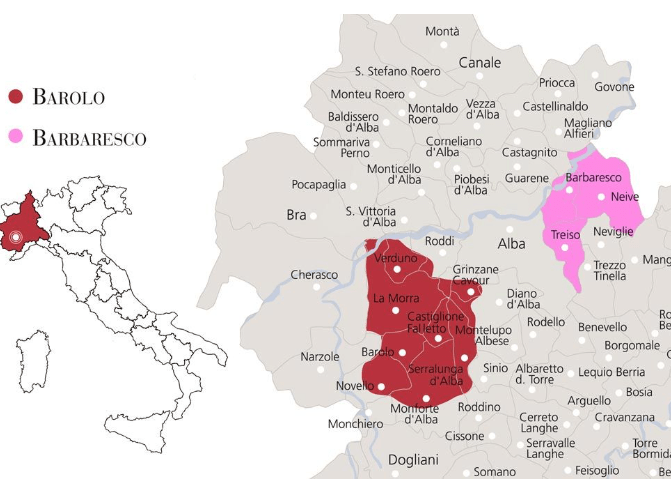
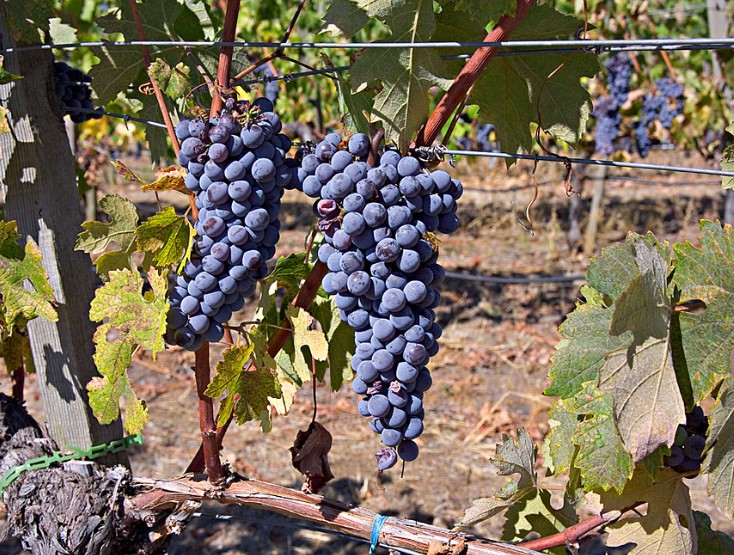
One of my favourite grapes, the Nebbiolo (pronounced “Nebby-oh-low”), is a mystery to many people as it is grown in just a few places in the world and is used to make only a couple of different wines. It originated in the Barolo and Barbaresco districts of the Piedmont region of northern Italy. There the grapes thrive on hillsides in the sun with clay or silt-based soil. For this reason, Nebbiolo is rarely grown outside of this region. Nebbiolo has only experienced limited success elsewhere in the world with there being just a few producers in Australia and Mexico’s Baja California.
Barolo and Barbaresco wines are both made totally from Nebbiolo grapes. Both wines consist of many integral components; individual hillsides, single vineyards and the range of styles and expressions is significant. For example, the Nebbiolo-based wines in Barolo’s La Morra are very different from the ones grown in Serralunga d’Alba. In Barbaresco, the wines from Neive are distinct from the ones grown in Treiso.
There are also excellent Nebbiolo-based wines made in Roero in Piedmont. Nebbiolo is the heart of both Roero and Roero Riserva, as it is with Gattinara, a less-known Nebbiolo-based wine.
Barolo DOCG has two classifications, a “normale” Barolo which has 38 months of aging, which includes 18 months in wood, and Barolo Riserva DOCG with 62 months aging, also including 18 months in wood.
Average price: $35 t0 $100 CDN but more expensive options are available.
Barbaresco DOCG has two classifications, a “normale” Barbaresco with 26 months aging and Barbaresco Riserva DOCG with 50 months aging. Both wines must include 9 months of their aging in wood.
Average price: $40 to $100 CDN but you can spend more.
Roero Rosso DOCG must be 95% Nebbiolo and have 20 months of aging with at least 6 months in oak. The Riserva level tends to be even softer with 32 months of aging including 6 months in wood.
Average Price: $20 to $40 CDN but is not always available in Canadian liquor and wine stores.
The nose of Nebbiolo wines tend to suggest hints of floral and light red fruits that suggest that the wine will be lighter than it is. Nebbiolo’s flavour provides hints of leather and lots of tannins along with fruity flavours of cherry and raspberries.
Nebbiolo wines pair well with beef tenderloin, ribeye steak, prime rib, roast turkey, pork sausage, braised duck, braised pork shank or prosciutto. It also compliments cheeses such as parmigiano reggiano, feta, manchego, or pecorino. A wide assortment of vegetables go well, including roasted garlic, shallots, truffles, wild mushrooms, chestnuts, butternut squash, fried polenta, olives, capers, funghi pizza, wild rice and roasted fennel.
If you like Sangiovese or cool-climate Pinot Noir you should try the offerings of Barolo, Barbaresco or Roero Rosso wines.
Sláinte mhaith