Gift for the Host

Good Housekeeping magazine now suggests to their readers that a bottle of olive oil is a much more appropriate hostess gift than a bottle of wine. Personally, I am not about to change my behaviours simply on the advice of a magazine or trends in office parties. If I am hosting or attending a social gathering, it is most likely with my friends who, like me, still enjoy a well-crafted alcoholic beverage, whether it be wine, beer or spirits.

Photo credit: cwocorp.com

I am right at home, literally, when I select a bottle of wine from the cellar to take to a dinner party. What I choose will vary based on the occasion, whether I am pairing the wine to a dinner menu, or the host’s personal wine preferences of white versus red, the grape varietal, or country of origin.

On the other hand, I would have no clue as to what olive oil I should purchase for a hostess gift. I feel that I would need to go to a food specialty store as making the purchase at my local Food Basics or No Frills grocery store seems to lack thought and character. Then comes the question – do you get regular olive oil, extra virgin olive oil, or cold pressed extra virgin olive oil? Is one better? Does the use matter? Is Italian olive oil better or different from Greek or French olive oil? Is one brand better than another?

After dealing with the stress of trying to select the most suitable oil, I would then have to witness the expression on my host’s face as the bottle is pulled from the package and the realization is made that this is not something to be poured into a glass, sipped on and enjoyed. I would be met with a polite smile and eyes of bewilderment.

During these changing times the most important thing is to understand your host’s preferences. Don’t change your gift giving practices just to correspond with current trends but match your gift giving to the preferences of your host.

Sláinte mhaith

Holiday Season Wine Pairings

With Christmas, Hanukkah, Kwanzaa, and New Year’s Eve celebrations all quickly approaching, there’s a lot to consider when it comes to choosing what to eat and drink during those festive gatherings. Here is a list of some of the best wines to pair with the flavours of the holidays.

Photo credit: winedevaexperiences.com

For rich, buttery foods, wines with good acidity will refresh the palate. As always, match the weight of the wine to the food: Light-bodied wines go with lighter dishes, while full-bodied wines can stand up to hearty, richer food.

If you are serving sparkling wine, be sure to keep it chilled. Sparkling wine always adds an instant celebratory feel and pairs well with everything from appetizers to desserts.

If you want to keep it simple, you can offer a red, white, and a sparkling option to cover the diverse flavours on the dinner table. Guests can then choose which wine they prefer. Chardonnay, Pinot Noir and Riesling are all good general options.

Here are some classic holiday pairing selections:

Main DishesRed WineWhite Wine
Roast turkeyPinot NoirChardonnay (oaked or unoaked)
Glazed hamPinot NoirPinot Gris, Riesling
Prime Rib / Roast BeefCabernet SauvignonChardonnay  
Roast ChickenPinot NoirChardonnay, Sauvignon Blanc
Salmon / Baked FishPinot NoirSauvignon Blanc, Pinot Gris
Beef BrisketSyrah, MalbecRiesling
Spicy Gumbo Off-Dry Riesling
Side Dishes / AppetizersRed WineWhite Wine
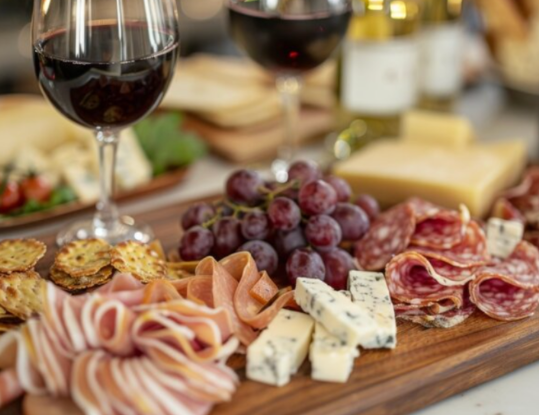
Charcuterie Sparkling
Crab cakes          Sparkling
Creamy dishes Pinot Gris, Chardonnay
Vegetable dishesPinot Noir          Sauvignon Blanc
Collard Greens Dry Riesling
Sweet Potatoes Chardonnay
Mashed potatoesPinot NoirChardonnay
Potato latkes     Sauvignon Blanc
Squash soup      Chardonnay
Pasta salad        Beaujolais, GamayPinot Gris
DessertsRed WineWhite Wine
Peach cobbler Late Harvest Riesling
Apple PieTawny PortDemi-Sec or Doux Sparkling Wine
Bread puddingTawny Port, SherrySémillon
Sticky toffee pudding   Tawny Port, SherrySémillon
Pecan pieTawny Port, Gamay 
Crème brûléeTawny PortDemi-Sec Champagne
Christmas cakeTawny Port, SherryChampagne or Prosecco

Enjoy the festive season!

Sláinte mhaith

Wine with Fast-Food

Serving wine with your fast-food meal is a great way to enhance your dining experience. A little planning when it comes to your wine pairing can be very rewarding, so don’t just grab any bottle of wine off the shelf or from the fridge. Generally, wines with higher levels of acidity work well with fattier, greasy foods. Also, don’t forget to consider any side dishes you are having with your fast food. The wine should complement all the elements of your dinner. Robust, bold-flavoured dishes need to be paired with an equally powerful wine. Sweeter wines, like Riesling, will counterbalance hot or spicy dishes.

If in doubt, sparkling wines are generally a safe bet when it comes to fast food.

Photo credit: providencejournal.com

Burgers

Since burgers usually have a high fat content, more acidic wines pair well. Beef and medium-bodied red wines, such as Malbec or Syrah are a great match while chicken, turkey and veggie burgers go best with lighter-bodied white wines. Sauvignon Banc, Pinot Gris or Chenin Blanc are all good options.

If having cheeseburgers, a light-bodied Pinot Noir or a fruity Grenache is a good choice.  Bacon cheeseburgers are complimented by a bold Cabernet Sauvignon or Shiraz.

Curry

When matching wine with curry there are a couple of considerations: texture and the spice level. High alcohol wines intensify the heat from curries, so these are best avoided with spicy curries. Crisp, cold white wines are a good match at offsetting the curry’s heat. Sparkling wines are best avoided as they can leave an unpleasant metallic aftertaste.

An off-dry Riesling or Pinot Gris works well, as does a light or medium-bodied red wine such as a Beaujolais or Pinot Noir.

Fish and Chips

When it comes to light, white fish such as cod or haddock, white wine is the recommended option. Lean, flaky fish pairs well with a light and zesty Sauvignon Blanc. Meatier fish-like halibut goes well with a medium-bodied Chardonnay. Sparkling wines are also a good choice as they offset the salt and their acidity helps to balance the oil.

Fried Chicken

The wine needs to complement the mild flavour of the chicken while cutting through the salty, crispy deep-fried coating. Medium-bodied white wines with higher acidity levels work best at accomplishing this. Options include Riesling, Sauvignon Blanc or sparkling wine such as Champagne or Prosecco.

Chicken Nuggets

Whether from your grocer’s freezer section or your local McDonalds, chicken nuggets or chicken fingers pair well with Rosé.

French Fries

Good old fashion French fries go well with Cava, Champagne or any other sparkling wine.

Kebobs

Rich reds with fruity flavours are the best choice as lighter wines may be overpowered by the flavours of the meat. A Merlot or Cabernet Franc are good possibilities. White wines with higher acidity and apple notes can be a good option as well. A Pinot Gris or Riesling could be considered.

Pizza

For pizza and wine pairings see my post from either January 28, 2023, or March 9, 2024.

Tacos

Tacos will be complemented by Sauvignon Blanc or Pinot Gris.

Bon appetite!

Sláinte mhaith

Food and Wine Pairings – Yes or No?

I have written my share of posts over the years suggesting certain wines be served with specific foods as the wine will highlight and compliment the flavours and characteristics of a particular food. However, I recently read an article that suggested that too much focus is placed on paring wine with specific foods. The author made several thought-provoking points as to why the practice is not always useful.

Photo credit: google.com

For one thing, everyone’s palate is not the same. Some people have a more sensitive palate than others. What one person finds to be a good pairing; another person may not. Taste is a very personal thing. What one individual enjoys another may not. For example, not everyone enjoys spicy food.

People’s ability to taste and smell varies for a wide assortment of reasons. The tongue has taste receptors that enable us to identify saltiness, sweetness, sourness, bitterness and umami, which is a   savory, rich taste that is often described as “meaty” or “brothy”. In addition to the approximate 35 receptors on the tongue, it has been discovered that there are additional receptors in the brain, stomach, and even in the muscles.

For the sense of taste to be totally effective, an individual must also have a good sense of smell. This requires good use of about 400 aroma receptors.

Emotions can play a big part in what tastes good and what does not. When depressed, angry, or in pain, chances are that your wine will taste rather off, being much less enjoyable than it otherwise would. The atmosphere and surroundings can have a significant psychological impact on how you feel about the wine and the food you are eating.

What all this illustrates is that the sense of taste is very complex, leaving each of us with varying degrees of flavour interpretation that can fluctuate greatly depending on our mood and circumstances. Thus, there are not only many opinions on what wine and food combinations go well together, but also that what pairs well may be based on a multitude of unidentified external factors. We humans can be very complicated beings and thus, we may have wide ranging opinions as to what wine and food combinations go well together.

Wine and food pairings are standards and suggestions but not a hard and fast rule. The bottom line is, you should match your food and wine in a manner that is most pleasurable to you and makes your meal enjoyable. I will continue to periodically write about suggested wine and food pairings but remember, these are only recommendations, not hard and fast rules.

Sláinte mhaith

Pair Wine with Soup

With summer now behind us, it is once again time to focus on winter comfort foods, such as soup. That started me thinking about the possible pairings of wine with soup. If I am having a bowl of soup on its own, accompanying it with a glass of wine isn’t appealing to me. Why serve a hot liquid with a cold liquid?

Photo credit: lafatacellars.com

However, if the soup is being served as part of a multi course meal at home or in a restaurant, a glass of wine may have more appeal. In general, when picking a wine to go with soup, consider the consistency and main flavours. If you break down your soup’s ingredients and view them as you would a pasta sauce, the task may become less intimidating.

Overall, creamy soups pair well with a wine that contains a fair amount of acidity, whether that be red or white wine. Then look at the dominant flavours of the soup. Savory vegetables generally pair well with a fruit-forward wine. Ginger goes well with an aromatic white wine like Gewürztraminer. Spicy soups pair well with wines having a lower level of alcohol.

Lastly, consider the protein. Light vegetarian or chicken-based soups often pair well with white wine while red meats pair best with medium to full-bodied red wine.

Very thin soups, such as French consommé go well with a dry sherry or dry Madeira. Tomato consommé pairs well with a French Sauvignon while broths flavoured with fish sauce, coriander and lime will be complimented by an Austrian Grüner Veltliner or dry German Riesling.

Creamy vegetable soups generally go well with dry Italian whites such as Pinot Grigio or Soave or a French Pinot Blanc. Fennel and cauliflower soups pair with a white Burgundy or lightly oaked Chardonnay, white Bordeaux, Viognier or Chenin Blanc.

Mushroom soup will go well with a lightly oaked Chardonnay. A darker soup with  more earthy varieties of mushrooms such as portabella or cremini, will match well with a Pinot Noir.

Chicken soup will go with a lightly oaked Chardonnay. A Thai style soup made with coconut milk will go with a Riesling or Verdelho. Chicken and dumplings will pair well with a lightly oaked Chardonnay or a light red wine like Pinot Noir.

Classic Provençal fish soup with flavours of garlic, tomato and saffron pairs well with a very dry, crisp white like a Picpoul de Pinet or a strong dry Rosé. Rich crab or lobster bisques match well with white Burgundy or a Chardonnay, while clam chowder goes well with a well-oaked Chardonnay. Corn chowder, on the other hand, goes along side a dry German Riesling.

Sweet vegetable soups, such as butternut squash and pumpkin, fair well with Chardonnay, Viognier or Gewürztraminer.

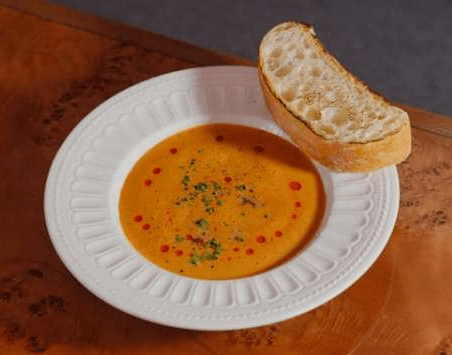
Tomato soups made from fresh tomatoes go well with a crisp white wine such as a Sauvignon Blanc or an Albariño. A chilled sherry could be used as well. However, if the soup has a richer, roast or cooked tomato flavour or is mixed with roast peppers, a medium bodied Italian or southern French red or a young Rioja will work well.

French onion soup is traditionally served with French Beaujolais, Beaujolais Nouveau or a white Burgundy.

Chunky, rustic soups with beans, such as minestrone or lentil soup match well with medium bodied reds like Côtes du Rhône, a young Syrah or a Sangiovese. Chickpea soup pairs with a Chianti Classico.

Beef or lamb stew will be well complimented with a Cabernet or Shiraz. If you prefer a white wine instead, Gewürztraminer is a good choice.

Beef and barley soup matches well with a bold red wine like Zinfandel or Cabernet Franc.

Cold soups go well with light, crisp dry whites such as Albariño. Gazpacho can be paired with an unoaked white Rioja, Rueda or a Fino Sherry.

There are no hard and fast rules for pairing wine with foods. However, there are some wines that will enhance your soup better than others. Don’t be afraid to experiment with some of these suggestions but don’t be afraid to try your own.

Sláinte mhaith

Wine & Chinese Food

Pairing wine with Chinese food can seem overwhelmingly difficult due to the wide range of flavours; everything from spicy to sweet, tangy, salty and bitter. An example of this is an authentic Chinese feast that will consist of dishes with distinct ingredients and clashing flavours.

Photo credit: tuscaloosanews.com

To accommodate such a dinner a well-rounded wine is optimal. Refreshing sparkling wines such as a chilled Champagne, Cava or Prosecco are well suited, as well as aromatic whites with a touch of residual sugar, such as Riesling or Gewürztraminer. Foods with red-braised seasoning pair well with fruity red wines such as Pinot Noir, Italian Nerello, Mascalese or Barbera.

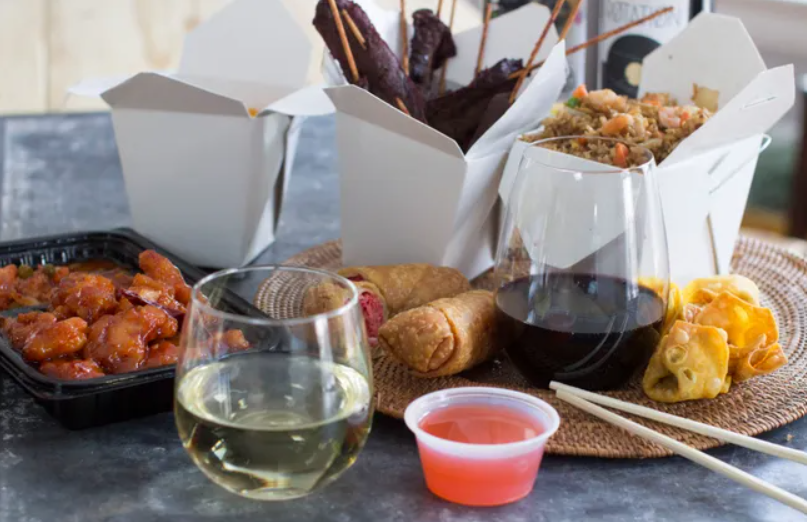
If you are headed to your local westernized eat-in or take-out Chinese restaurant here are some wine suggestions to go along with your food selections.

Generally, dishes that are salty or fried will pair well with a wine with high acidity. Foods with a sweet and sour elements go well together with fruit forward wines. If having food with stronger flavours, such as a dark sauces, duck or pork, a sweeter Spätlese wine works well for balance.

Cantonese Dim Sum offers a wide assortment of food choices in small portions. The most common selections include steamed dumplings, spring rolls, scallops, streamed fish and soy-seasoned meats. Since these foods have relatively mild, savoury flavours Champagne is always a good choice, as well as a young Chablis, a white Burgundy or a German Riesling.

Gruner Veltliner pairs well with mild vegetable-filled spring rolls or egg rolls.

Steamed barbecued pork buns will go well with an off-dry Riesling, Moscato d’Asti or Gamay.

Light red wines such as Gamay, Pinot Noir or Baco Noir will go well with braised pork bellies.

Beef and broccoli, as well as lo mein pair well with a French Syrah.

Orange chicken or lemon chicken goes well with a French Chenin Blanc.

Vegetable Chow Mein is a classic stir-fried noodle dish with onions, peppers, mushrooms, ginger and garlic along with a rice vinegar and soy sauce. It pairs well with Muscat or Moscato, which is an aromatic wine. A German Riesling or French Chablis are also good options.

Crispy duck and pancakes served with hoisin sauce pairs well with Pinot Noir, Gamay, Merlot or even Spätlese Riesling.

Traditional Peking Duck will be well complimented by a French Burgundy or a Pinot Noir.

General Tao’s Chicken is a spicy, deep-fried, aromatic, sweet and sour chicken dish that goes well with an aromatic white wine such as Gewürztraminer or Torrontes, or a fruity Rosé.

Szechuwan-style foods pair well with a variety of wines. Chilled sparkling wine, whether it be Prosecco, Asti or Brut Champagne go well, but also aromatic white wines, or even sweeter wines, such as an Auslese Riesling or Sauternes. A fruity Rosé or off-dry Riesling also works well. Even reds, such as Gamay or Pinot Noir make good pairing partners.

Pork ribs marinated in a sweet and smoky sauce made of soy, hoisin, honey, garlic, rice vinegar, ginger and chili will pair well with Grenache. The flavour intensity of strawberries and plums, leather, dried herbs and blood oranges make these wines pair well with tangy Chinese spareribs.

Kung Pao Chicken is a sweet, sour and spicy dish. It is flavoured with chili, garlic, soy sauce, peanuts, vinegar and sugar. A French Pinot Gris compliments this well.

Enjoy exploring the world of wine with these Asian food specialties.

Sláinte mhaith

Pairing Potato Chips with Wine

Photo credit: localwineschool.com

You may have seen the ads suggesting that you snack on a bag of potato chips while indulging in a glass of wine. I initially found the thought laughable but then later came across an article published by Wine Enthusiast suggesting that wine and potato chip pairings are actually a thing. Investigating further I found some statistics suggesting that 50% of Canadians eat potato chips while watching TV and that 61% of Canadians have a glass of wine with their snacks at least once or twice a month.

Potato chips pair well with wine because of the salt and fat content of the chips. Following the basic principles for pairing food flavours with wine, the following combinations complement each other:

  • Original classic flavour chips with Champagne or other sparkling wine. The sparkling wine is great at offsetting the salt and fat of the potato chips.
  • Barbeque flavoured chips with Pinot Noir or Zinfandel wine. The chips have a sweet coating that goes well with one of these fruity, crisp reds. These same wines go well with ribs brushed with real BBQ sauce.
  • Salt and vinegar chips with Pinot Grigio or Sauvignon Blanc. The sharp and tangy vinegar on the chips needs to be balanced with a fresh bright wine.
  • Sour cream and onion chips with oaked Chardonnay. The sharp, tangy chips pair well with this buttery white wine as the tropical fruit flavours and acidity contrast with the saltiness of the chips.
  • Lime and black pepper flavoured chips with Sauvignon Blanc. The crisp bright tropical notes of the wine are a good balance for the lime and black pepper flavour of the chips.
  • Balsamic vinegar and onion flavour chips with Merlot. The Merlot offsets the tangy sweetness of the chips.

There are a variety of other flavours of chips available in the marketplace, but this will provide the basic idea for pairing your favourite potato chips with wine.

Sláinte mhaith

Wine & Wings

Wings and beer are pretty much standard fare, a pairing seemingly made in heaven. When it comes to pairing drink with wings, usually the last thing to come to mind is wine. However, I am here to talk about wine, not beer, so here are some fun and interesting wine pairing suggestions for the next time wings are on the menu. The only challenge will be keeping the sticky sauce off your wine glass.

Photo credit: mapleleaffarms.com

When it comes to pairing wine with wings, it is all about the sauce. The wine needs to match the spice, heat and acid found in the wing sauces. Therefore, the wine must calm the heat, highlight the sauce’s acidity with its own acidity and complement the spiciness – a relatively easy task.

Here are some of the more typical wing varieties and corresponding wine recommendations:

BBQ

There are many varieties and interpretations of BBQ sauce. But when it comes to wings, the sauce is likely to be sweet and heavy. Such big bold sauces call for a big bold red wine, such as Cabernet Franc, Tempranillo, Zinfandel or Carménère. The intense red and black fruit you find in these wines will complement the tomatoes and spices found in BBQ wing sauce. The high tannins will offset the heat of chili and cayenne.

Savory, herbal notes found in these reds will go well with the garlic and onions in the sauce. And the wine’s dry nature will offset the sweetness of brown sugar and molasses.

Buffalo

This is a classic made from butter and hot sauce with heat levels ranging from mild to super hot. A sweeter wine such as Riesling, Vouvray or Gewürztraminer is just the thing to pair with spicier foods. The higher acidity of these wines will cut through the buttery sauce and the fatty chicken beneath.

Garlic Parmesan

The light, stone fruit flavours of Pinot Grigio will pair well with the taste of garlic and hit of flavour of the Parmesan cheese.

Honey Garlic

Sweet and savory, honey garlic wings tend to forego heat for a big aroma, along with a tangy flavour. Honey and garlic are both strong flavours so the wine needs to support the aromas and flavours. Sparkling Rosé, Crémant d’Alsace, Chenin Blanc or Prosecco will work well in this regard.

Honey Mustard

The sweet tang of honey mustard wings will go well with an unoaked or slightly oaked Chardonnay.

Jerk

Rosé is the perfect pairing for quelling the lingering heat of chicken wings coated with a peppery jerk rub.

Korean-Style

The bright acidity of a Grüner Veltliner is a great pairing for crispy Korean-style wings.

Lemon Pepper

Whether you’re trying a dry rub or a sauce, lemon pepper wings offer a light, zingy flavour that is typically less spicy. It will pair well with wines with lots of citrus flavour and acidity.  A French Sauvignon Blanc, Chablis or Dry Riesling are good choices. These wines typically have brilliant lemon aromas, along with a strong sense of minerality that will go with the hit of pepper.

Sweet Chili

Thai-inspired wings are both the sweet and the spicy. Generally, a Thai Chili sauce packs less heat than other wing sauces so an overly sweet wine is not required. An off-dry white or light red can easily offset the spice. Good wine pairings include Chenin Blanc, a sweet Riesling, Zweigelt or Pinot Gris.

Teriyaki

A light fruit forward Spanish Garnacha will complement the sweet glaze of teriyaki wings.

I strongly suggest having a glass of wine along side your next feed of finger-licking good chicken wings. It may surprise you.

Sláinte mhaith

Pizza and Wine

Homemade pizza and wine are the standard Friday night fare at our house. The topping choices are numerous, ranging from veggies to savoury cured meats and cheese. The options seem to be only limited by the imagination.

Photo credit: vinointeriano.wordpress.com

No matter what type of pizza you enjoy there will be a suitable wine to complement it. Here are some suggestions to pair with your pizza whether you create it yourself or order it from your favourite restaurant.

Let’s start with the simple Cheese pizza. This straightforward pie goes well with a light red wine, such as Pinot Noir or Chianti.

Building on that foundation we progress to the Pepperoni pizza. Pepperoni is the culmination of cured meats and spices such as cayenne, anise and garlic. It pairs well with either two of my favourite wines, Cabernet Franc or Sangiovese. These bold, spicy reds complement the flavours of the pepperoni.

The combination of veggies and assorted meats creates an assortment of flavour found in the Supreme pizza. It may seem strange but Prosecco makes a great pairing as it won’t overpower the delicate flavours of the veggies but can still balance the taste of the savory ham, sausage and pepperoni.

Speaking of meat, the Meat Lovers pizza needs to be matched with a bold and robust wine, such as a Cabernet Sauvignon or Malbec. These wines have a bold richness, as well higher tannins and acidity to offset the fattiness of the meat.

Tangy, sweet BBQ Chicken pizza pairs well with a fruity Malbec or Pinot Noir. The wine will complement the tangy notes of the barbeque sauce in the pizza.

Heading in the opposite direction is the Veggie pizza. This type of colourful pizza needs a light, chilled red or full-bodied white to let the taste of the vegetables be revealed. A sparkling red wine, such as Lambrusco, or a Chenin Blanc or a Chardonnay would be a good match.

During my Italian adventure last year, I enjoyed a Margherita pizza on several occasions. A Margherita is a light pie consisting of tomato sauce, fresh mozzarella and fresh basil. It pairs well with a light wine, such as a dry Rosé or Prosecco.

If pineapple on pizza is your thing, then Hawaiian pizza is for you. The sweet and salty flavours will be complemented by a German Riesling or a New World Sauvignon Blanc. The wine’s acidity and sweetness will complement the sweetness of the pineapple.

No matter what your choice of pizza is, there is a wine to go along with it.

Sláinte mhaith

Wine and Pasta

Wine and Pasta

Winter is a time for comfort food and one of my favourite comfort foods is pasta. When it comes to pairing a wine with pasta, the deciding factor should be the accompanying sauce, not the pasta itself because after all, pasta by itself does not have a great deal of flavour.

Photo credit: finewinemaster.com

Tomato-Based Pasta

Tomato-based sauces are high in acid and are often blended with beef or pork. Because of the acidity in tomatoes, a dry, medium-bodied red wine is recommended. Examples of red, medium-weight wines include:

  • Chianti
  • Grenache
  • Nero d’Avola
  • Primitivo
  • Rhône Blends
  • Sangiovese
  • Zinfandel

Cheese Pasta

There are a wide range of red as well as white wines that will pair well with cheese sauces. You shouldn’t feel restricted to serving just white wine with white cheese pasta. An oaked white wine will have a buttery character that will compliment the creamy sauce. Examples include an oaked Trebbiano or Chardonnay. Here are a couple of white wine options to consider:

  • Oaked Chardonnay
  • Oaked Trebbiano

Also, lighter more floral red wines will also pair well with intense hard-cheese pasta, especially if there are mushrooms or root vegetables in the sauce.   Red wine options include:

  • Chianti
  • Nebbiolo
  • Pinot Noir
  • Sangiovese

Seafood Pasta

Light-bodied white wines are the preferred pairing choice for seafood pasta. These wines will be relatively acidic, thus a good balance for creamy white sauces and fatty seafood, such as scallops, shrimp, oysters or mussels. White wine options include:

  • Chenin Blanc
  • Grenache Blanc
  • Pinot Gris / Pinot Grigio
  • Riesling
  • Sauvignon Blanc

For seafood pasta that is cooked in a tomato-based sauce, light body red wines or Rosé are a good option. Red wine options include:

  • Pinot Noir
  • Malbec

Pesto Pasta

Whether you are serving the traditional pine nut and basil pesto or another type of pesto, the focus should be on matching the green, whether it be parsley, cilantro, mint, etc. which is the centerpiece of the dish. For the most part, herbaceous wines are said to be best suited when serving pesto pasta. Herbaceous wines are those wines that have aromas and flavours like herbs such as mint, vegetables such as asparagus, freshly cut grass or tomato leaves. Wines considered to be herbaceous include:

  • Grüner Veltliner
  • Sauvignon Blanc
  • Cabernet Sauvignon

Primavera (Vegetable) Pasta

Spring onions, garlic ramps, artichoke hearts and broccolini are among the choices on which to base primavera. The objective is to highlight the springy freshness of the vegetables; thus, it is often best paired with a light-bodied white wine with lemony and floral notes. However, if the pasta has major vegetable intensity, it needs to be matched with an equally savory white wine. White sauce wine options include:

  • Pinot Gris / Pinot Grigio
  • Riesling
  • Sauvignon Blanc
  • Vermentino

If tomatoes are a major component of the primavera, a light-bodied acidic red wine would be a better choice. Tomato sauce wine options include:

  • Cabernet Franc
  • Pinot Noir
  • Rosé

No matter which type of pasta you fancy, one of the corresponding wine options will compliment your meal.

Sláinte mhaith