Nebbiolo Grapes and Wines

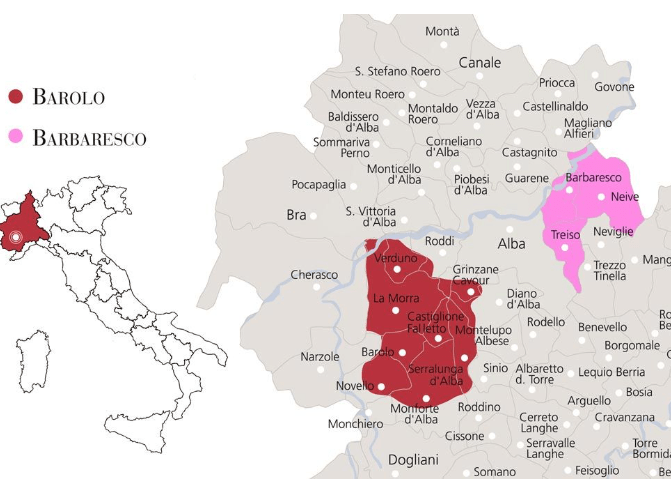
One of my favourite grapes, the Nebbiolo (pronounced “Nebby-oh-low”), is a mystery to many people as it is grown in just a few places in the world and is used to make only a couple of different wines. It originated in the Barolo and Barbaresco districts of the Piedmont region of northern Italy. There the grapes thrive on hillsides in the sun with clay or silt-based soil. For this reason, Nebbiolo is rarely grown outside of this region. Nebbiolo has only experienced limited success elsewhere in the world with there being just a few producers in Australia and Mexico’s Baja California.
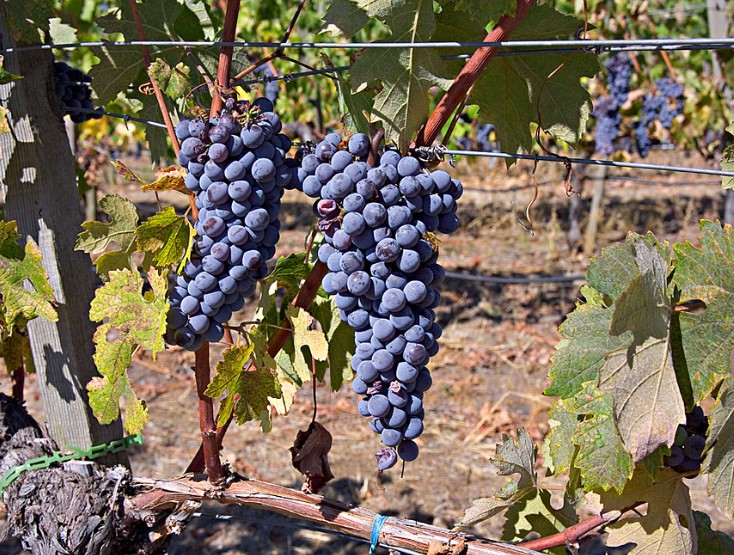
Photo credit: strengthinperspective.com

Barolo and Barbaresco wines are both made totally from Nebbiolo grapes. Both wines consist of many integral components; individual hillsides, single vineyards and the range of styles and expressions is significant. For example, the Nebbiolo-based wines in Barolo’s La Morra are very different from the ones grown in Serralunga d’Alba. In Barbaresco, the wines from Neive are distinct from the ones grown in Treiso.

There are also excellent Nebbiolo-based wines made in Roero in Piedmont. Nebbiolo is the heart of both Roero and Roero Riserva, as it is with Gattinara, a less-known Nebbiolo-based wine.

Barolo DOCG has two classifications, a “normale” Barolo which has 38 months of aging, which includes 18 months in wood, and Barolo Riserva DOCG with 62 months aging, also including 18 months in wood.

Average price: $35 t0 $100 CDN but more expensive options are available.

Barbaresco DOCG has two classifications, a “normale” Barbaresco with 26 months aging and Barbaresco Riserva DOCG with 50 months aging. Both wines must include 9 months of their aging in wood.

Average price: $40 to $100 CDN but you can spend more.

Roero Rosso DOCG must be 95% Nebbiolo and have 20 months of aging with at least 6 months in oak. The Riserva level tends to be even softer with 32 months of aging including 6 months in wood.

Average Price: $20 to $40 CDN but is not always available in Canadian liquor and wine stores.

The nose of Nebbiolo wines tend to suggest hints of floral and light red fruits that suggest that the wine will be lighter than it is. Nebbiolo’s flavour provides hints of leather and lots of tannins along with fruity flavours of cherry and raspberries.

Nebbiolo wines pair well with beef tenderloin, ribeye steak, prime rib, roast turkey, pork sausage, braised duck, braised pork shank or prosciutto. It also compliments cheeses such as parmigiano reggiano, feta, manchego, or pecorino. A wide assortment of vegetables go well, including roasted garlic, shallots, truffles, wild mushrooms, chestnuts, butternut squash, fried polenta, olives, capers, funghi pizza, wild rice and roasted fennel.

If you like Sangiovese or cool-climate Pinot Noir you should try the offerings of Barolo, Barbaresco or Roero Rosso wines.

Sláinte mhaith

Ancient Roman Grapes

Historically, the Romans are famous for their love of wine.  It is ironic that the wine Roman Emperors consumed was nothing like the wonderfully delicious wines that the world enjoys today.  During Roman times, what was referred to as wine was actually vinegar with honey and spices added, or sometimes garlic. Despite this, it was considered very good compared to other wines of the time.

Photo credit: disholicioussite.blog

Recently, three historic, yet little-known indigenous grape varieties, Bellone, Nero Buono and Cesanese are making a comeback in Italy’s ever changing wine market.

Bellone

Bellone is an ancient white grape variety that is referred to as ‘uva pantastica or pane d’uva’, meaning a ‘grape as good as bread’ or a ‘grape that goes well with bread’, depending on the source. The white grape often brings bright, fruity characteristics of stone fruit, melon and citrus fruits. Some bottles also have flavours of herbs, tropical fruits and toast.  It still grows on the original roots of ancient times.

Casale del Giglio wine estate, located 50 kilometres south of Rome, has spent years reintroducing the native grapes of Lazio. In 2022, its work was recognized by Gambero Rosso magazine when the winery’s Anthium Bellone, which is produced using ungrafted vines, was awarded the coveted Italian award for wine excellence, Tre Bicchieri.

Nero Buono

The black or red grape variety, Nero Buono, almost exclusively grows in the volcanic soil of Monte Lepini. Insects do not thrive in its cool, windy climate, thus alleviating one risk to this finicky grape. The deeply coloured wine brings flavours of dark-skinned fruits, rhubarb and black pepper.

Nero Buono is difficult to grow so there are no clones. It is very wild and produces many leaves which must be thinned out several times per year.  The berries are tight and close together making the vines susceptible to disease.

Producers are committed to supporting native grape production, even when there is minimal demand for the grapes.  Winemaker Marco Carpineti now makes wine only with sustainably grown fruit that is native to the area. Today Carpineti is one of the best-known winemakers of Lazio. He devotes 25 percent of his production to Nero Buono and Bellone-based sparkling wine made in the traditional method.

Cesanese

Originally called Latium, the Lazio region of Italy borders Tuscany to the north, Abruzzo to the east, Umbria to the northeast and Campania to the south. Rome is in this region, making it the primary winemaking region of the Roman Empire.

Cesanese is the signature red wine of Lazio.  Cesanese refers to one of two sub-varieties: Cesanese Comune or Cesanese di Affile. Both are used to make high-quality wines, which were highly prized in ancient times. There are three Cesanese appellations which include Cesanese del Piglio DOCG, Cesanese di Olevano Romano DOC and Cesanese di Affile DOC. All are within a 50-kilometer vicinity.

Cesanese is a red wine that contains flavours of dark-skinned berries, herbs, cedar and cooking spices. It’s ruby in colour and has high acidity and tannin, with the ability to age for a long time.

The Campania Region

Modern winemaking in Campania, a southern region referred to as ‘the ankle of the boot’, is closely identified with the Mastroberardino family, specialists in the wines of ancient times. The family’s involvement in winemaking can be traced back to the late 1500s.  However, today, brothers Antonio and Walter, along with sons Piero and Carlo, run the winery which is 60 kilometres northeast of Naples.

The family’s extensive library of ancient viticulture books has enabled the Mastroberardinos to grow grapes that were popular centuries ago.

Sláinte mhaith

Barbaresco vs. Barolo

I recently enjoyed a bottle of Barolo with dinner one night followed by a Barbaresco the following night. Having the two bottles back-to-back reminded me how different the two wines are despite being made from the same Nebbiolo grapes and being produced in the Piedmont region of Italy.

Photo credit: pinterest.co.kr

Production of both Barolo and Barbaresco occur in the Langhe hills near the town of Alba. The Barbaresco zone is northeast and the Barolo zone is southeast of the town.  In accordance with Italy’s governing body, the DOCG (denominazione di origine protetta or Denomination of Controlled Origin.) Barolo may only be produced in the comuni or townships of La Morra, Castiglione Falletto, Serralunga d’Alba, Barolo, Verduno, Roddi, Cherasco, Novello, Grinzane, Diano d’Alba and Monforte d’Alba. Barbaresco wine is produced in Treiso, Neive, San Rocco Seno d’Elvio and Barbaresco.

There are differences in the two sub-regions. The Barolo area is located at a slightly higher altitude and has more south-facing vineyard exposures. This results in slower ripening grapes than those of the Barbaresco area to the north. The northern region it is warmer, due to the lower altitudes and warm sea winds. As a result, the grapes ripen faster.

The soils of the two area are different as well. The soils of Barbaresco are slightly sandier, less compact, and have more nutrients. As a result, the wines have a softer character. The firmer soils of Barolo create bolder, more tannic wines.

According to DOCG regulations, Barbaresco must be aged a minimum of 26 months, with at least 9 of those months in oak. Barbaresco Riserva must be aged a minimum of 50 months with at least 9 months in oak.

Barolo wines are aged a minimum of 38 months, with 18 months being in oak. Barolo Riserva needs to age 60 months with 18 months in oak. The longer aging requirements are necessary because of the more intense tannins that are in Barolo wines.

When it comes to flavour, Barolo is the bigger, bolder and more structured. It may have an array of aromas of plums, sour cherries, tobacco or truffles.

Barbaresco is generally a lighter wine with flavours of ripe fruit. Barbaresco is strongly influenced by the soil, vineyard location and the winemaker’s techniques.

As to which wine is better, that is up to you to decide.  Personally, I like both equally. My preference is determined in the moment, whether it be a dinner pairing or simply my mood.

Sláinte mhaith