The Office Holiday Party

Drinking one’s face off at a party or social gathering is becoming a less acceptable behaviour. The younger generations, Millennials and Gen Z, are now the most likely groups to attend holiday parties. They tend to find alcohol less desirable and thus, its use in social settings is changing. Getting into the holiday spirit no longer requires spirits, with mocktails and alcohol-free bars now becoming very popular. 

Photo credit: homrest.com

Gen Z and Millennials are also the ones most likely to make an early exit from the party. About 28% of Gen Z say they stay just long enough for the food, while 39% of millennials admit to quietly slipping away without even saying goodbye.

Zero-proof cocktails and menus featuring gluten-free, vegetarian and vegan options are reflective of a broader focus for these events. However, for those that continue to provide alcoholic options, cocktail menus are more curated and upscale and aim to incorporate local ingredients or have a more direct relationship with the company or event. 

A poll conducted in Great Britain suggested that over twenty percent of office Christmas parties in 2024 were alcohol-free events. This is an increase of two percent over just one year previous, suggesting that this is an increasing trend.

For me, being retired, gone are the days of attending work-related events steeped in their traditions and corporate politics that were often fueled by alcohol, especially during the later hours. Having emceed one of these events attended by a couple of hundred people, I appreciate the benefits of the alcohol-free approach. It can be entertaining to sometimes watch the alcohol fueled antics of some attendees and stressful to see others say or do something totally inappropriate and potentially career-limiting. It can be both tragic and embarrassing for these individuals after they sober up and realize what they had done.

Gatherings are becoming smaller as well. Less companies are hosting single large gatherings attended by all employees. Instead, they are opting for smaller intimate settings pertaining to the interests of specific groups. The events tend to focus more on food and less on spirits.

Gone are the days of wearing lampshades at a party.

Sláinte mhaith
The Sparkling Wine Market

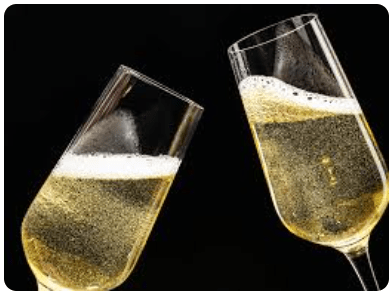
The demand for sparkling wine can be very volatile as it is heavily influenced by consumer moods and trends. Sparkling wine is traditionally related to festive gatherings and celebrations as long as people are congregating for happy times there will be a demand. However, during economic down times or in unusual circumstances like COVID-19, people are not gathering to celebrate and the sparkling wine market suffers.

Photo credit: marketresearchintellect.com

Like in so many segments of the wine industry, there is increasing demand for non-alcoholic sparkling wine options as the younger generations become more health-conscious and want to avoid alcohol. This trend is expanding market appeal. Vintners who embrace this new market by diversifying their product lines and expanding consumer reach will benefit.

Health-conscious consumers are looking for wines with reduced sugar content and fewer calories. This shift encourages innovation in product formulations, helping wine makers attract a broader consumer base. Low-calorie options provide a competitive edge in a health-driven market.

Given today’s ecological and environmental concerns, consumers are also placing much more emphasis on sustainability and organic certifications. Sparkling wine producers who are adopting eco-friendly practices are appealing to environmentally conscious buyers. This trend is providing producers with the ability to command higher prices & enhance brand loyalty.

The sparkling wine market, which has been steeped in tradition for centuries, is now being forced to change by evolving consumer demand. Producers need to respond and adapt to the evolving marketplace if they want to continue to survive.

Sláinte mhaith

Health and Lifestyle Changes

Photo credit: wp.stolaf.edu

Anti-alcohol messaging is going to continue and it will be increased during this upcoming year. The World Health Organization (WHO) is now warning against the consumption of any alcohol. Cancer warning labels are now being proposed and will no doubt soon be applied to all alcohol packaging. These warnings will no doubt be accompanied by a reduction in alcohol consumption. However, there are several other factors that will impact alcohol sales.

To begin with, many Millennial and Gen Z consumers are focused on their physical and mental state and how they portray themselves on social media. They have come to associate alcohol with vulnerability, loss of control, anxiety and abuse. For these reasons they have reduced their alcohol consumption.

The increase in popularity of anti-obesity drugs is also having an impact. Glucagon-like peptide 1 (GLP-1), anti-obesity Semaglutide, Liraglutide, as well as Tirzepatide drugs like Saxenda, Ozempic, Wegovy and Mounjaro are now very popular. GLP-1 works by trigging the release of insulin from the pancreas, reducing glucose from entering the bloodstream, slowing digestion and increasing the ‘full’ sensation people feel after eating.

So, how does this impact wine consumption? Studies revealed that Semaglutide reduced binge-like alcohol drinking. The drugs moderated GABA, the gamma-aminobutyric acid receptors in the brain responsible for the ‘buzz’ associated with moderate consumption of alcohol.

There is growing evidence that many users of these drugs feel less inclined to drink any form of alcohol. If GLP-1 becomes as affordable and as widely used as many predict, the effect on the food and drink industries may be dramatic.

Alcohol-free beverage alternatives are becoming more popular as the quality of these products continues to improve and they gain more market acceptance. Our own kids, who are all adults, are into alcohol free alternatives, especially beer. And now with many craft breweries and estate wineries expanding their offerings to include alcohol free options, the quality of these products maintains the same standard as their alcohol-based options. If nothing else, these beverages will provide lunchtime beverage alternatives to soda or mineral water.

Some countries, such as Great Britain, are imposing a different level of excise tax based on alcohol level. For example, beginning February 1, 2025, the duty and tax on a 13.5% Alcohol by Volume (ABV)bottle of wine will be £3.59, whereas an 8.5% ABV bottle will be taxed at just £2.05.

Finland has just reduced its alcohol distribution rules. Beverages with ABVs of 8% or less can now be sold in supermarkets. Traditionally, once one Nordic nation changes the rules, the others, such as larger Sweden, tend to soon follow.

Public attitudes toward alcohol are changing. The social licence to encourage a guest to have another glass of wine or to finish off the bottle are becoming less acceptable behaviours and are being widely revoked.

As Bob Dylan wrote, “The Times They Are a-Changin”.

Sláinte mhaith