The Left Bank’s Margaux Appellation

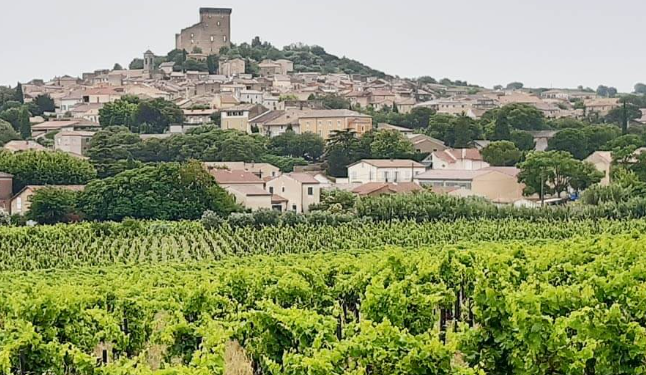
On my recent excursion to Bordeaux, France, I travelled to the Left Bank’s Margaux appellation where I visited Château Dauzac, which is a Margaux Grand Cru Classé according to the 1855 classification. Their vineyards span 49 hectares.

All the wines utilize gravity-flow vatting. Fermentation takes place in wooden vats with transparent double staves. The wine was aged in 100% French oak barrels (including 65% new barrels) for 15 months with racking based on tasting results.

Dedicated to the expression of terroir and dominated by Cabernet Sauvignon, Château Dauzac reveals a nicely complex bouquet that slowly unfolds during aeration. On the palate, it strikes a subtle balance between the richness of its tannins and the aromatic diversity of its supple fruits, emblematic of great wines for ageing.

Cabernet Sauvignon dominates with its complexity, elegance and minerality, while Merlot adds roundness and silkiness. Always deep in colour, Château Dauzac expresses a subtle balance where fruits, flowers and spices are combined, with a complex body and tannins ensuring an emotional tasting experience.

Like many of the wineries in the region, Château Dauzac is committed to reducing its carbon footprint. They have formed a partnership with Bioboon Agrology. Together they are working toward the ecological transition of agricultural activities that promote plant health while preserving the surrounding biodiversity.

They have also planted bamboo on the estate. The bamboo acts as an essential carbon sequestration mechanism, offsetting the residual emissions of their carbon-neutral wine. This initiative reduces the environmental impact of the winery’s activities.

Château Dauzac is also investing in research and development to fight against mildew. The aim is to use natural products free of heavy metals to preserve the health of their vines and the balance of the surrounding ecosystem.

The terroir is a clay-based soil that contains deep gravel outcrops. The vines have an average age of 35 to 40 years. The grape varietals consist of 69% Cabernet Sauvignon, 29% Merlot and 2% Petit-Verdot. The grapes are harvested by hand in small crates and sorted on tables before and after de-stemming.

The first wine that I sampled at Château Dauzac was the 2021 “Aurore de Dauzac Margaux”, which is a blend of 62% Cabernet Sauvignon, 37% Merlot and 1% Petit Verdot. It is bright red with ruby hues and a nose of red fruit with a slightly floral expression. The flavour displays a pleasant concentration with notes of black fruit.

The second wine I tasted was the 2019 Margaux Grande Cru Classé. Château Dauzac 2019 is a wine that expresses exceptional fruit vibrancy. It is very well-balanced and composed of dense tannins that exhibit finesse and elegance. It consists of a blend of 73% Cabernet Sauvignon and 27% Merlot.

I was surprised to see how much my wife enjoyed this wine as she usually prefers the Right Bank Merlot concentrated wines over the Left Bank Cabernet Sauvignon dominant wines. In fact, she enjoyed it so much that we decided to have some shipped home. When making the shipping arrangements we were told that the 2022 vintage would be more superior to the 2019, given the climate conditions that existed that year. The only caveat was that the 2022 would not reach its full potential for another 10 years.

We then decided that we would purchase some of the 2022 vintage as well to ship home. The 2022 wine consists of 63% Cabernet Sauvignon and 37 % Merlot. The overall yield was small due to the lack of water but the remarkable quality will make the 2022 vintage one of the greatest ever experienced in Bordeaux.

I was pleased to learn that Château Dauzac wines are occasionally available in Ontario liquor stores. I will be eagerly awaiting the next vintage to appear on store shelves.

Sláinte mhaith

Wine Barrels

Is the best wine made using French oak barrels or American oak barrels? The answer depends on who is answering. I would be amiss if I didn’t mention that there are also Hungarian oak and Romanian oak but these oaks are seldomly used in making wine.

Photo credit: bodegaspaniza.com

Oak can play a crucial role in the winemaking process. It is a long-known fact that not just any wood will do when it comes to aging wine. Oak has been the choice for centuries. Due to the natural wood compounds, aging wine in oak barrels exposes complex flavours and textures that are crucial to the overall taste and structure of a wine. There are natural wood sugars in the oak that influence the wine’s flavour. The wine’s texture can be enhanced from tannins found in the oak.

French Oak is known by winemakers for its subtlety. These trees have tighter grains that deliver lower amounts of tannin that are more readily integrated into the wine. This wood is also more aromatic, producing delicate notes of dark chocolate, roasted coffee beans, vanilla and baking spices to the wine.

American Oak presents more robust flavour profiles introducing bold vanilla notes along with coconut, sweet spices and dill. The wider grain patterns of American oak also injects more tannins into the wine.

French Oak lets wine age gracefully over time. The wine will evaporate less from barrels of French oak than American oak, thus producing a naturally slower oxidation. On the other hand, American oak will often go through a more rapid oxidation process in the barrel.

When it comes to price, American oak is less expensive to purchase. This is due to it being more readily available than French oak. However, French oak produces a more luxurious wine, making it well worth the higher price tag.

So, which wines work best with French oak versus American oak? Chardonnay flourishes when aged in French oak barrels because the French oak releases delicate vanilla undertones into the flavour of the wine.

Pinot Noir also benefits from the use of French oak. This light-bodied red grape works well with the lower tannin content inherent to French oak. It allows for slow maturation without overwhelming Pinot Noir’s naturally elegant profile.

In contrast, bold reds such as Zinfandel often get paired with American oak. The intense notes of coconut and sweet spice from the American oak can complement the robust nature of these types of wine.

Wines such as Cabernet Sauvignon, Merlot or Syrah can work well with either French or American oak, depending on the winemaker’s desires. European winemakers tend to use French oak while American winemakers and some Australian vintners may use American oak. It all comes down to the desired style of the wine.

Many winemakers use both types of barrels or blend wines aged separately. It lets them control flavour profiles more precisely. The type of barrel used, or combination of barrels used will depend on the flavour notes the winemaker wants to achieve.

Sláinte mhaith

Peruvian Wine

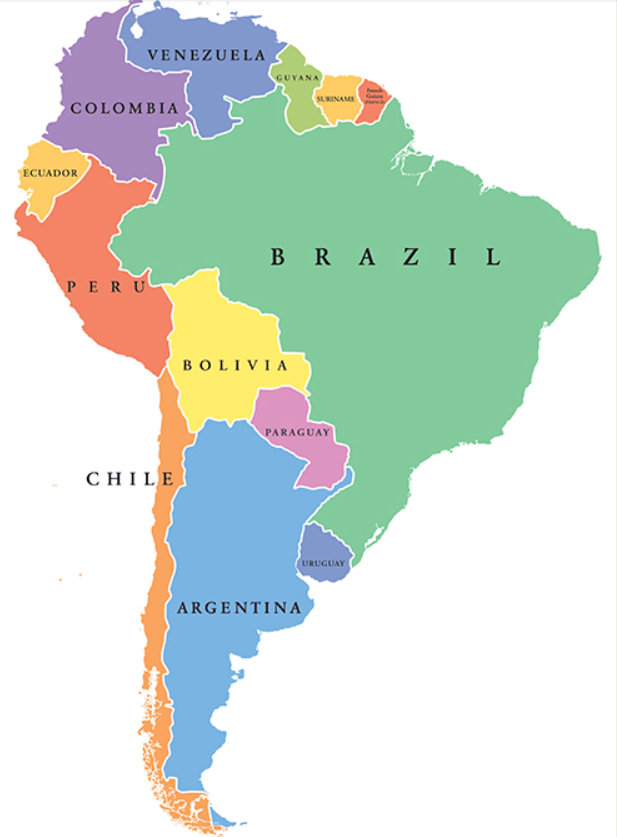
It seems that many people are not aware that Peru produces a variety of quality wines. In fact, it is the oldest wine producing country in South America, ahead of the more familiar wine nations of Chile and Argentina.

Photo credit: heinens.com

Because of the early Spanish settlers, Peru has a strong Spanish influence. During the 16th century Spanish conquistadors planted grape varieties that came from the Canary Islands. The 17th and 18th centuries were the golden age of wine production with Peruvian wine being sold throughout South America.

Unfortunately, during the 19th century viticulture suffered as a result of earthquakes, volcanic eruptions and phylloxera, an insect pest of grapevines worldwide. There were also economic restrictions imposed by Spain resulting in growers refocusing and producing crops other than grapes.

Those vineyards that remained changed their focus from wine making to producing pisco. Pisco is a pale yellowish to amber coloured spirit. It is produced by distilling fermented grape juice into a high proof spirit. Alternatively, grapes were used to make Borgoña, which is a sweet wine made from Isabella hybrid grapes.

Today Peruvian winemakers are once again focused on producing fine wine. They have modernized their wineries and repurposed their vineyards with the help of international consultants.

Producers are following one of two different paths. One is to grow European grape varieties, notably Malbec, Cabernet Sauvignon, Syrah, Merlot, Tannat, Sauvignon Blanc and Chardonnay. The other choice is to raise heritage grapes that have historically been used to make pisco. These include Quebranta, Mollar, Negra Criolla, Torontel, Muscatel Negro del Perú, Albilla and Italia. Some of these have been around since viticulture first began in South America, while others were bred there.

Production of wines from heritage grapes is a way to differentiate Peruvian wines from the other South American counties. On the other hand, there is plenty of potential to produce unique expressions using international varieties such as Malbec, Syrah, Cabernet and Muscat.

Whether you select a Peruvian wine made with heritage grapes or European varieties, the taste experience is well worth the effort to find one of these treasures along your wine store shelves.

Sláinte mhaith

Pizza and Wine

Homemade pizza and wine are the standard Friday night fare at our house. The topping choices are numerous, ranging from veggies to savoury cured meats and cheese. The options seem to be only limited by the imagination.

Photo credit: vinointeriano.wordpress.com

No matter what type of pizza you enjoy there will be a suitable wine to complement it. Here are some suggestions to pair with your pizza whether you create it yourself or order it from your favourite restaurant.

Let’s start with the simple Cheese pizza. This straightforward pie goes well with a light red wine, such as Pinot Noir or Chianti.

Building on that foundation we progress to the Pepperoni pizza. Pepperoni is the culmination of cured meats and spices such as cayenne, anise and garlic. It pairs well with either two of my favourite wines, Cabernet Franc or Sangiovese. These bold, spicy reds complement the flavours of the pepperoni.

The combination of veggies and assorted meats creates an assortment of flavour found in the Supreme pizza. It may seem strange but Prosecco makes a great pairing as it won’t overpower the delicate flavours of the veggies but can still balance the taste of the savory ham, sausage and pepperoni.

Speaking of meat, the Meat Lovers pizza needs to be matched with a bold and robust wine, such as a Cabernet Sauvignon or Malbec. These wines have a bold richness, as well higher tannins and acidity to offset the fattiness of the meat.

Tangy, sweet BBQ Chicken pizza pairs well with a fruity Malbec or Pinot Noir. The wine will complement the tangy notes of the barbeque sauce in the pizza.

Heading in the opposite direction is the Veggie pizza. This type of colourful pizza needs a light, chilled red or full-bodied white to let the taste of the vegetables be revealed. A sparkling red wine, such as Lambrusco, or a Chenin Blanc or a Chardonnay would be a good match.

During my Italian adventure last year, I enjoyed a Margherita pizza on several occasions. A Margherita is a light pie consisting of tomato sauce, fresh mozzarella and fresh basil. It pairs well with a light wine, such as a dry Rosé or Prosecco.

If pineapple on pizza is your thing, then Hawaiian pizza is for you. The sweet and salty flavours will be complemented by a German Riesling or a New World Sauvignon Blanc. The wine’s acidity and sweetness will complement the sweetness of the pineapple.

No matter what your choice of pizza is, there is a wine to go along with it.

Sláinte mhaith