Smoky Scotch for Summer

To me, Scotch whisky, especially a heavily peated one, is a beverage best enjoyed in the cool, damp spring and fall months or while cozied up next to a warm fire during the depths of winter. So, when Islay distiller Ardbeg began promoting their whisky offerings as a good summertime drink, I was skeptical to say the least. At best I saw it as a gutsy marketing plan by their promoters.
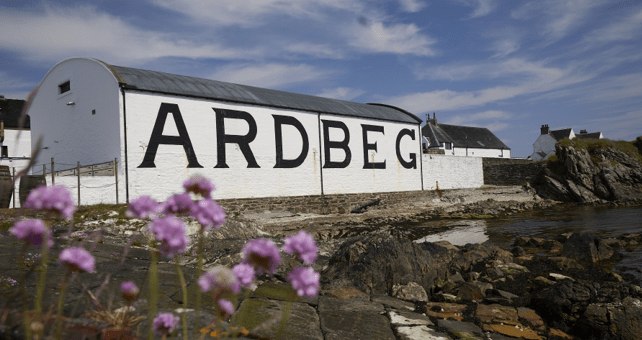
Photo credit: ardbeg.com

When it comes to peated whisky, people generally have strong opinions. The flavours used to describe such whisky include medicinal, campfire smoke, iodine, tire fire and seaweed. You either love the taste or hate it. Ardbeg’s offering of single malts capture all of these characteristics but there’s much more to it than just peat.

The French mega-giant parent company JVMH owns both the Ardbeg and Glenmorangie distilleries. Glenmorangie is located in the Highlands whisky region at Tain, Ross-shire, Scotland.

There’s a long history behind Ardbeg, but it’s only been operating in its present capacity since the late 1990s. Nevertheless, it has managed to make a big impact on the world of heavily peated single malt scotch under the direction of master distiller and whisky expert, Dr. Bill Lumsden and more recently, master blender and head of whisky creation Gillian Macdonald.

It was Macdonald who came up with the notion that you can and should enjoy smoky scotch during the hot summer months. She based her idea on the fact that Ardbeg’s complex flavours include hints of baked pineapple and banana, as well as the surprising level of sweetness.

Bartenders are using Ardbeg as a base in their cocktails as they claim that it works well with a variety of ingredients. Included in the list of cocktails is Whisky Sour, Scotch Margarita, Highball, Negroni and Expresso Martini.

Who would ever have thought such a smoky Scotch whisky would be popular in the sunny warm weather? Certainly not me. Bring on the summer!

Sláinte mhaith
Ardbeg Whisky

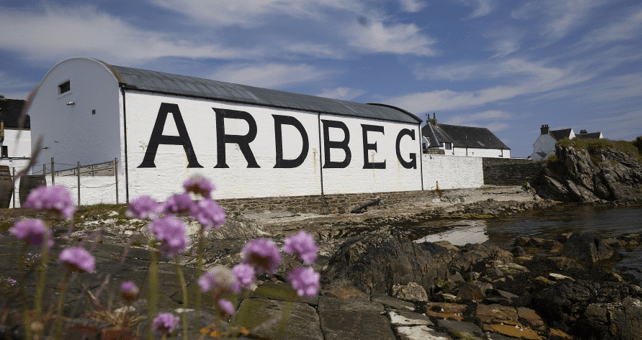
On the small remote Hebridean island of Islay (pronounced ‘eye-lah’), that lies off the western Scottish mainland, is where you will find the 200 year old Ardbeg distillery. The abundance of soft water, fertile soil and acres of precious peat makes Islay a place of pilgrimage for the single malt whisky faithful. I must admit that I have visited the island on two separate occasions and would love to return.

Photo credit: ardbeg.com

Ardbeg claims to produce the most peated of all the Islay malts and having tried it I would not disagree. It achieves this by using the most phenolic malt in the industry. Phenols are a class of organic compounds that contribute to the aroma and taste of whisky. They are often associated with smokiness and medicinal notes commonly found in peated whiskies. Ardbeg’s malt is peated to a level of 50 ppm (parts per million).

The casks used to mature the whisky come from a variety of sources. The vast amount of whisky matures in ex-Bourbon oak barrels. However, there is ongoing experimentation with different types of oak casks.

During the maturation process only 1st and 2nd fill casks are used. All of the new first fill Bourbon casks come from suppliers in the United States. Other casks come from Speyside Cooperage, and Craigellachie in Scotland.

As with many of the Islay distilleries, Ardbeg is situated next to the ocean. As a result, the whisky receives a certain salty, iodine character while it matures.

Here are the stats on Ardbeg’s three main whiskies:

Ardbeg 10 Year Old

  • Alcohol by Volume (ABV) = 46%
  • Appearance = Light Gold
  • Details = Revered for its balanced smoke and fruit character. Shows aromas of lemon, smoke, peat and brine with a kiss of sweet cereal. On the palate, it is warm and smoky with bold, yet balanced flavours that resonate with the aromas. The finish is long, sweet and smoky. Serve neat or with a few drops of pure water.
  • Price = $120 CDN

Ardbeg Uigeadail

  • ABV = 54.25
  • Colour = Deep gold
  • Details = With special vatting, this Ardbeg combines deep traditional smoky notes with sweet, raisiny tones of old, ex-Sherry casks. Rich and weighty with aromas of warm Christmas cake, fresh ocean spice, cedar and pine. Sweet and spicy with deep, smoky flavours, lingering raisins and smoke on the lengthy well-integrated finish.
  • Price = $190 CDN

Ardbeg Corryvreckan

  • ABV = 46.2%
  • Colour = Light gold
  • Details = Expect an intense nose of cedar, brine, and creosote, with caramel, smoky bacon, vanilla and clove; very complex aromas. The palate is also intense, but it is round and finely balanced with outstanding length. The lingering finish shows smoky, black tarry coffee with chocolate. Not for the fainthearted.
  • Price = $238 CDN

If you have a liking for peaty Scotch Whisky, and you haven’t done so already, you should try one or more of Ardbeg’s offerings.

Sláinte mhaith

World’s Oldest Scotch Distillery

The Glenturret is Scotland’s oldest working distillery, being officially established in 1763. The distillery is located in The Hosh, Crieff, Perthshire. This Highland distillery is one of the smallest in Scotland.

Photo credit: theglenturret.com

Over the decades Glenturret has been visited by writers and poets (including Robert Burns), Prime Ministers and Princes, including the present Duke and Duchess of Cambridge. The Glenturret brings together the hard-won wisdom of generations of distillers.

In 2019, the French-based crystal house, Lalique, purchased a controlling interest in The Glenturret. Since then Lalique has taken a lead in the product design.

In February 2022, Glenturret became the world’s first Michelin Star whisky distillery. That same year it also announced the release of its oldest single malt to date; a 50-year-old expression packaged in a specially designed Lalique crystal decanter. Only 150 bottles of the sherry cask-matured whisky were available for sale at a price of £40,000 each.

The restaurant was launched in 2021 with the support of their French owners and crystal house, Lalique. Their Executive Sommelier provides an extensive international wine list to complement the restaurant’s menus, comprising over 400 bins. The Glenturret staff are passionate about taste and flavour profiles of both their whiskies and in their food.

Lalique’s portfolio also includes two Michelin-starred restaurants, Villa René Lalique in Alsace, and Château Lafaurie-Peyraguey, in the region of Bordeaux.

Glenturret produces a series of both peated and unpeated whiskies. Unfortunately, none of which are available through the LCBO. However, there are a couple of Canadian websites where a limited variety of Glenturret products may be obtained.

Sláinte mhaith

Scotch – A Doberman?

I recently read an article where wine and spirits were likened to various breeds of dogs. Cute idea? Well maybe. Wine, Rum and Vodka were all associated with golden retrievers, being referred to as friendly, comfortable and universally liked. Scotch, on the other hand, was compared to a Doberman Pincher, considered as being beautiful and refined but aloof and requiring a great amount of effort to tame. A fair analogy? Not necessarily so. In my opinion not all Scotch is the same. There are several types, some being peated, others being smooth and silky. As a result, all Scotch should not be universally tarred with the same brush.

Photo credit: etsy.com

I have been told that Scotch is an acquired taste and that only a limited percentage of drinkers will in fact learn to like it. This may be true, but in my opinion, the same can be said about any other liquor. A person who appreciates Scotch is often perceived as being a snobby, upper-class intellectual with a certain knowledge and understanding of the dram. However, reality is that no special knowledge or perspective about Scotch is required to appreciate it. You just need to be willing to try it and not let the aura intimidate you.

In fact, if you love wine, you are already a great candidate for appreciating Scotch.  Anyone who enjoys a variety of flavour profiles like those found in wine, should feel comfortable exploring the world of Scotch and its many varieties (although my wife would disagree).

You don’t need to spend a lot of money or purchase an aged Scotch to find a delightful drink. Although older Scotches tend to seem like the highest quality, that is not always the case. Neither older nor expensive necessarily means it is better. The best Scotch for you is simply the one you like the best.

Another common misconception is that it should be drunk straight or ‘neat’ as they say. In fact, drinking it straight is not necessarily best. It has been proven that by adding an ice cube or a splash of water (no more than a teaspoon full), will release all of the true flavours of the whisky, making it even more enjoyable.

It is often recommended to introduce yourself to the world of Scotch by trying a blended variety. These Scotches are created to be very approachable. If you like it, then find out what malt whiskies the blend consists of and use that as a guide to gravitate toward exploring other varieties or single malts.

Regardless of the age of your Scotch, or whether you enjoy it straight, on ice, with a splash of water or even soda water, most importantly enjoy your whisky your way. Don’t put so many rules around it that it prevents you from enjoying your dram.

Sláinte mhaith