I recently returned from a trip to the Bordeaux region of France where I took advantage of the opportunity to experience some of the finest wines in the world.
The effects of climate change are impacting the grape harvests there the same as they are in many other parts of the world. The region is facing increasing temperatures and drought conditions each year. Not helping matters is the governing regulation that prohibits vineyards to irrigate vines that are more than 3 years old.
To help try and offset the effects of climate change, I saw horses being used in place of tractors to till the weeds that were growing between the rows of grape vines, lessening the need for herbicides and reducing the generation of carbon monoxide.
The Bordeaux region is separated into 2 distinct areas: the Left Bank and the Right Bank. To help identify which is which, the city of Bordeaux is situated on the Left Bank.
Bordeaux’s wine areas are often categorized into five main zones, primarily based on their location in relation to the Gironde, Garonne, and Dordogne rivers. These zones are: The Médoc, Graves and Sauternais, The Libournais, Blaye and Bourg and Entre-Deux-Mers. During our trip I visited wineries on both the Left Bank and Right Bank.
The Left Bank, often referred to as the Médoc and Graves, produces red wines, while the Right Bank, including Saint-Émilion and Pomerol, also focuses on red wines. Entre-Deux-Mers produces both red and white wines, and the Graves and Sauternais are known for their sweet white wines.
There are five Bordeaux wine classifications. These classifications serve as an expression of quality and prestige worldwide. The principle of the crus classés (“classified growths”) illustrates the synthesis of a terroir’s typical characteristics and dedicated human intervention over many generations to ensure quality. However, a wine or appellation can still be outstanding even if it is not a part of these classifications. The classifications are listed in order of seniority:
The 1855 classification
The Graves classification
The Saint-Émilion classification
The Crus Bourgeois du Médoc classification
The Crus Artisans classification
For a winery in Bordeaux to be referred to as a Château, the property must include a large house, vineyards and a place to make wine.
The age of the vines impacts the quality of the Bordeaux wine. The older the vine, the more expensive the wine. The roots on old vines extend much deeper and extend further int the soil. This adds minerality to the fruit, which in turn adds complexity to the flavour of the wine.
One thing I found interesting on this trip was how the various winery staff pronounced Cabernet Franc. I was always under the impression that Cabernet Franc was pronounced as the French do, with the ‘c’ in Franc being silent – ka·br·nay frong, but I now found out that it is acceptable to pronounce it in English as ka·br·nay frank.
Over the next few weeks I will describe my adventures through the region, as well as the wineries I had the opportunity to experience.
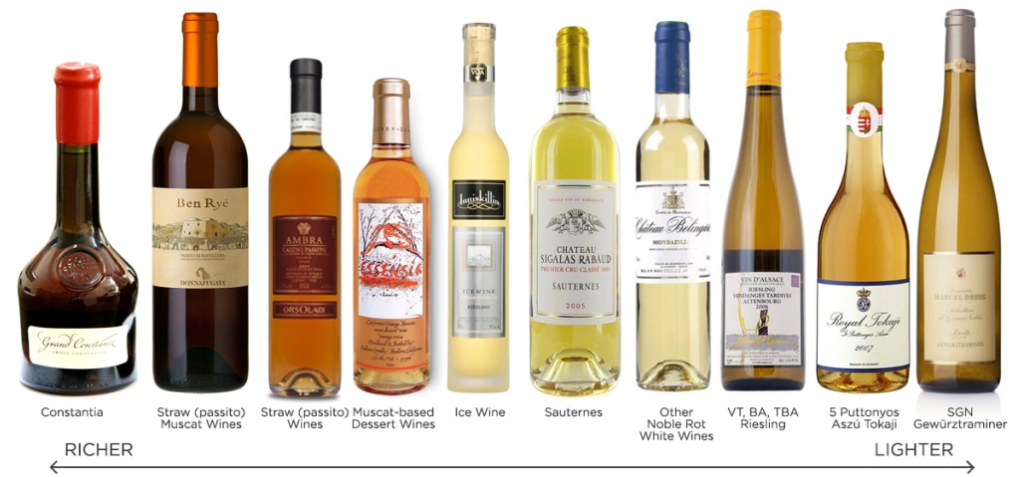
As the name suggests, dessert wine is a sweet wine that is intended to be served alongside dessert. These wines are often rich in flavour and have a high sugar content.
Photo credit: varuninamdar.wordpress.com
There has been a growing demand for premium dessert wines aimed at satisfying consumer demand for high-quality and unique flavours. This has driven market growth by enticing wineries to improve and enhance their product offerings and release new artisanal options, which in turn command higher price points and increased revenue.
There is rising interest in low-alcohol dessert wines by health-conscious Millennials and the Gen Z population who desire lighter wines. These wines also appeal to a broad range of wellness seekers, thus enhancing market growth.
Again, health-conscious and ethically driven drinkers are creating demand for vegan and allergen-free wine alternatives. By excluding animal-derived fining agents, which are added to wine to alter its colour, flavour, texture, and clarity, new dessert wine markets become available. These agents include additives such as casein or gelatin.
There are generally five types of dessert wine. Thirty percent of the market is made up of fortified wines, consisting of Port, Sherry, Madeira and Marsala.
Late harvest wines are next, consisting of twenty-five percent of the dessert wine market. Included in this category are Late Harvest Riesling, Late Harvest Sémillon and Late Harvest Gewürztraminer.
Controlling twenty percent of the market is Ice Wine. Included are Eiswein and Ice Cider.
Botrytized Wines, also referred to as Noble Rot, consist of fifteen percent of the market. For an explanation of this type of wine, refer to my post, Dessert Wines from April 18, 2020. Wines in tis group include Sauternes and Tokaji Aszú.
The “Other” wine category make up the remaining ten percent of the dessert wine market. Included in this catch-all category is Recioto della Valpolicella, Vin Santo and Muscat / Moscato.
The Douro Valley is the oldest established wine region in the world, dating back to 1756. It was first renown for its Port production. However, from a tourism perspective, it has only been popular for the past couple of decades, after being declared as a UNESCO World Heritage site in 2001.
Photo credit: portugalbywine.com
The Douro Valley region is no longer just know for its Port, but also for an increasing number of dry red wines often made from the same native grape varieties. A much smaller number of quality white wines are also now produced.
The viticultural zone covers the steep slopes along the banks of the lower ranges of the Douro River. The river flows from northern Spain, where it is called the Duero. The river finally reaches the Atlantic Ocean at Oporto. The vineyards stretch up the steep, dry slopes on either side of the river.
There are three subregions in the Douro, each covering its own section of the river. Of these, the Douro Superior region is the furthest inland. It is covered in terraced vineyards and takes up about 20 percent of available vineyard land in Douro.
The central part of the Douro region, centered around the village of Pinhão, is the Cima Corgo region. It is where most of the prestigious Vintage Port originates from.
Cima Corgo is the largest subregion, accounting for almost half of the valley’s total wine production. The vineyards are steep with the vines nearer the river generally ripening much earlier than those at higher elevations. For this reason, the harvest is often completed in multiple sweeps of the same vineyard.
Nearest Oporto and the coast is the Baixo Corgo subregion. This area is best suited to produce table wines. The area is cooler and wetter than the other regions and more accessible, easily enabling bulk-wine operations to function.
Both the Douro’s still and fortified wines can be made from more than 80 different grape varieties. However, the vineyards are dominated by five key varieties: Touriga Nacional, Touriga Franca, Tinta Barroca, Tinto Cao and Tinta Roriz (Tempranillo). Of these, aromatic Touriga Nacional is the most highly regarded, but Touriga Franca is the most planted.
As recently as twenty years ago, Portugal produced very little quality still wine. However, since then it has become world renowned not only for Port but also for its DOC Douro still wines
There are several international varieties of grapes grown in the Douro valley, particularly to produce table wines. The most common of these are Cabernet Sauvignon, Sauvignon Blanc and Gewürztraminer.
Given all of the recent tariff talk and the renewed patriotism that has come as a result of it, some interesting points have come to light regarding wine sales between provinces. Many Canadians are now avoiding U.S. made products, including wine. As a result, there are now signs of an increased need to support Canadian wineries and renewed calls to open inter-provincial trade in alcohol. However, there are inter-provincial trade barriers standing in the way.
Photo credit: LCBO
Until June 2019, federal legislation prohibited inter-provincial shipment of alcohol directly to the consumer. This then allowed the provinces the opportunity to pass legislation to permit direct purchase to consumers. Unfortunately, most provinces chose not to allow this, leaving only British Columbia, Manitoba, Nova Scotia and Saskatchewan who permit direct-to-consumer alcohol shipments. Ontario has recently amended its laws to prohibit the possession of wine that has been imported from other provinces unless the transaction was handled via the Liquor Control Board of Ontario (LCBO). There are now calls to have this ban lifted.
Ontario wine consumers cannot support small local wineries in another province. Ironically, living in Ontario and purchasing wines produced in another province, the LCBO charges the purchaser the same import duties as if the wine came from a foreign country.
The wine growers of B.C., as well as the B.C. government are advocates of opening provincial borders to enable wine to move east and west across this country. There is a great deal of regulatory burden making it difficult for small and medium-sized wineries. The process needs to be simple and streamlined.
The time has come for Canadian provinces to eliminate inter-provincial trade barriers.
Anti-alcohol messaging is going to continue and it will be increased during this upcoming year. The World Health Organization (WHO) is now warning against the consumption of any alcohol. Cancer warning labels are now being proposed and will no doubt soon be applied to all alcohol packaging. These warnings will no doubt be accompanied by a reduction in alcohol consumption. However, there are several other factors that will impact alcohol sales.
To begin with, many Millennial and Gen Z consumers are focused on their physical and mental state and how they portray themselves on social media. They have come to associate alcohol with vulnerability, loss of control, anxiety and abuse. For these reasons they have reduced their alcohol consumption.
The increase in popularity of anti-obesity drugs is also having an impact. Glucagon-like peptide 1 (GLP-1), anti-obesity Semaglutide, Liraglutide, as well as Tirzepatide drugs like Saxenda, Ozempic, Wegovy and Mounjaro are now very popular. GLP-1 works by trigging the release of insulin from the pancreas, reducing glucose from entering the bloodstream, slowing digestion and increasing the ‘full’ sensation people feel after eating.
So, how does this impact wine consumption? Studies revealed that Semaglutide reduced binge-like alcohol drinking. The drugs moderated GABA, the gamma-aminobutyric acid receptors in the brain responsible for the ‘buzz’ associated with moderate consumption of alcohol.
There is growing evidence that many users of these drugs feel less inclined to drink any form of alcohol. If GLP-1 becomes as affordable and as widely used as many predict, the effect on the food and drink industries may be dramatic.
Alcohol-free beverage alternatives are becoming more popular as the quality of these products continues to improve and they gain more market acceptance. Our own kids, who are all adults, are into alcohol free alternatives, especially beer. And now with many craft breweries and estate wineries expanding their offerings to include alcohol free options, the quality of these products maintains the same standard as their alcohol-based options. If nothing else, these beverages will provide lunchtime beverage alternatives to soda or mineral water.
Some countries, such as Great Britain, are imposing a different level of excise tax based on alcohol level. For example, beginning February 1, 2025, the duty and tax on a 13.5% Alcohol by Volume (ABV)bottle of wine will be £3.59, whereas an 8.5% ABV bottle will be taxed at just £2.05.
Finland has just reduced its alcohol distribution rules. Beverages with ABVs of 8% or less can now be sold in supermarkets. Traditionally, once one Nordic nation changes the rules, the others, such as larger Sweden, tend to soon follow.
Public attitudes toward alcohol are changing. The social licence to encourage a guest to have another glass of wine or to finish off the bottle are becoming less acceptable behaviours and are being widely revoked.
As Bob Dylan wrote, “The Times They Are a-Changin”.
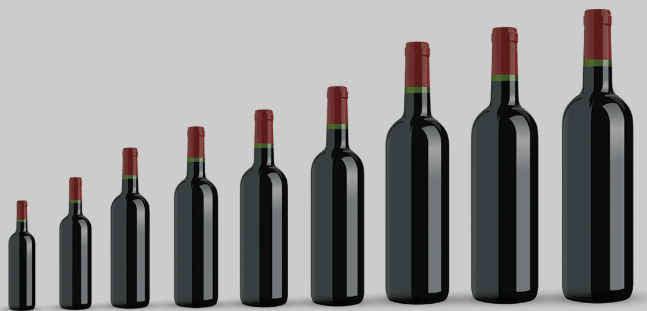
Ignoring cardboard and aluminum packaging options, did you know that there are seventeen glass bottle packaging sizes available for holding your favourite white or red wine? Now every wine is not available in every size as that would be cost prohibitive, but producers have lots of options for packaging their wine, depending on the market for packaging their wines.
The vessels from smallest to largest include:
Split or Piccolo – ¼ the size of a standard bottle or one glass. This is the size often served on trains and airplanes.
Half or Demi – ½ standard bottle or two glasses. This size bottle is also commonly served on trains and airplanes.
Half-litre or Jenni – 2/3 standard bottle or three glasses. This is a common size served in restaurants.
Standard – 1 standard 750 ml. bottle or five glasses. This is the most common size sold in wine stores.
Litre – 1 1/3 standard bottles or 7 glasses. This size is often produced in countries that use the metric system of measure. It is a size commonly sold to venues serving significant quantities of wine.
Magnum – 2 standard bottles or ten glasses. Some wines are available in this size at local wine stores.
Jeroboam or Double Magnum –4 standard bottles or twenty glasses.
Rehoboam – 6 standard bottles or thirty glasses.
Methuselah or Imperial – 8 standard bottles or forty glasses.
Salmanazar – 12 standard bottles or sixty glasses.
Balthazar – 16 standard bottles or eighty glasses.
Nebuchadnezzar – 20 standard bottles or one hundred glasses.
Melchior – 24 standard bottles or one hundred twenty glasses.
Solomon – 26 standard bottles or one hundred thirty glasses.
Sovereign – 35 standard bottles or one hundred seventy-five glasses.
Primat or Goliath – 36 standard bottles or one hundred eighty glasses.
Melchizedek or Midas – 40 standard bottles or two hundred glasses.
As you can now see, there are many sizes of bottles available for supplying your wine.
Is the best wine made using French oak barrels or American oak barrels? The answer depends on who is answering. I would be amiss if I didn’t mention that there are also Hungarian oak and Romanian oak but these oaks are seldomly used in making wine.
Photo credit: bodegaspaniza.com
Oak can play a crucial role in the winemaking process. It is a long-known fact that not just any wood will do when it comes to aging wine. Oak has been the choice for centuries. Due to the natural wood compounds, aging wine in oak barrels exposes complex flavours and textures that are crucial to the overall taste and structure of a wine. There are natural wood sugars in the oak that influence the wine’s flavour. The wine’s texture can be enhanced from tannins found in the oak.
French Oak is known by winemakers for its subtlety. These trees have tighter grains that deliver lower amounts of tannin that are more readily integrated into the wine. This wood is also more aromatic, producing delicate notes of dark chocolate, roasted coffee beans, vanilla and baking spices to the wine.
American Oak presents more robust flavour profiles introducing bold vanilla notes along with coconut, sweet spices and dill. The wider grain patterns of American oak also injects more tannins into the wine.
French Oak lets wine age gracefully over time. The wine will evaporate less from barrels of French oak than American oak, thus producing a naturally slower oxidation. On the other hand, American oak will often go through a more rapid oxidation process in the barrel.
When it comes to price, American oak is less expensive to purchase. This is due to it being more readily available than French oak. However, French oak produces a more luxurious wine, making it well worth the higher price tag.
So, which wines work best with French oak versus American oak? Chardonnay flourishes when aged in French oak barrels because the French oak releases delicate vanilla undertones into the flavour of the wine.
Pinot Noir also benefits from the use of French oak. This light-bodied red grape works well with the lower tannin content inherent to French oak. It allows for slow maturation without overwhelming Pinot Noir’s naturally elegant profile.
In contrast, bold reds such as Zinfandel often get paired with American oak. The intense notes of coconut and sweet spice from the American oak can complement the robust nature of these types of wine.
Wines such as Cabernet Sauvignon, Merlot or Syrah can work well with either French or American oak, depending on the winemaker’s desires. European winemakers tend to use French oak while American winemakers and some Australian vintners may use American oak. It all comes down to the desired style of the wine.
Many winemakers use both types of barrels or blend wines aged separately. It lets them control flavour profiles more precisely. The type of barrel used, or combination of barrels used will depend on the flavour notes the winemaker wants to achieve.
The way in which wine experts and sommeliers approach wine with their customers is changing. There is movement away from the traditional style of introducing a wine, explaining its character, aromas and flavours. The wine industry is recognizing that this change has become necessary as the younger generations, particularly Gen Z, do not embrace wine as enthusiastically as previous generations. This is resulting in a reduction in wine sales.
Photo credit: sommelierschoiceawards.com
There is a new group of forward-thinking sommeliers who are working to change the way wines are described when tasting and pairing. The aim is to make the industry more inclusive to the younger generation. Everything from the vocabulary used to describe flavours, to the way bottles are marketed and how wine is discussed culturally needs to change.
The traditional way of ordering wine in restaurants has often been fraught with fear by many patrons. The image of an intimidating snooty sommelier, who comes across as testing the depth of the customer’s wine knowledge and skill, is a potential embarrassment in the presence of the person’s date, spouse, family or friends. Many are left wanting the encounter to be over as quickly as possible and without feeling that they have embarrassed themselves and have selected a wine that they like without having to pay an exorbitant price.
The new generation sommeliers want the emphasis to be about creating an experience that makes the guest feel comfortable rather than fearful. Their approach is becoming directed toward how the customer is feeling and asking what they feel like drinking. The focus is on personal interaction; it’s not about the incomprehensibly complex tasting notes of the wines.
Certification of sommeliers has helped standardize baseline wine terminology and language, but it is now important to progress beyond that to provide more approachable and easier understood language for the public.
A new generation of writers, sommeliers, podcasters and influencers are beginning to challenge the traditional approach to understanding and selecting wine. Social media is playing a key role in interpreting wine due to young influencers like Wine Gini, The London Wine Girl or Carron Brown’s The Natural Sommelier. Individuals can now learn about wine in the unintimidating surroundings of their own home.
It is good to see that the wine industry’s image is beginning to change as the new generation of writers, sommeliers, podcasters and influencers are now challenging the old snobby, snooty stereotype.
As the end of the year rolls around I think back to the year that was and which wineries left me with an impressionable mark. This is not to suggest that these are the only great wineries in the province; they are merely the ones that caught my attention this year. My list varies in length from year to year as I like to focus on achievements rather than listing a specific number of wineries.
Here is my list for 2024. The wineries are presented in alphabetical order.
Henry of Pelham Family Estate
I was surprised when I checked back to my past lists and found that Henry of Pelham has never appeared until now. It was the top Ontario winery this year at the National Wine Awards.
This six-generation family farm is situated in the Short Hills Bench sub-appellation of the Niagara Peninsula. In 2006, Henry of Pelham was the first vineyard to be certified as local and sustainable by Local Food Plus. They have followed Sustainable Winemaking Ontario’s world-leading standards in their farming practices since 2004. In 2017, they became one of only six Ontario wineries to be certified by the Wine Council of Ontario as following sustainable winemaking practices from vine to table.
This year’s award-winning wines included:
Henry of Pelham NV Cuvée Catharine Brut Rosé
Henry of Pelham 2022 Speck Family Reserve Chardonnay
Henry of Pelham 2023 Pinot Grigio
Henry of Pelham 2020 Speck Family Reserve Cabernet-Merlot
Henry of Pelham 2023 Speck Family Reserve Riesling
Peller Estates Niagara-on-the Lake
This is Peller Estates fourth appearance on my Movers and Shakers list in the past five years. This year Peller Estates placed eighth at the National Wine Awards.
The Peller Estates team has operated in Niagara-on-the-Lake, in the heart of the Niagara wine region, as a family-owned Canadian company for four generations. Their winemaker is Katie Dickieson, who has previous work experience in vineyards in New Zealand and France, as well as in Ontario and British Columbia.
Their 2024 award winning wines included:
Peller Estates 2020 Signature Series Cabernet Sauvignon
Peller Estates 2022 Signature Series Sauvignon Blanc
Peller Estates 2023 Signature Series Vidal Oak Aged Icewine
The Organized Crime Winery
Organized Crime previously appeared as a Mover and Shaker in 2020. This year it was recognized as the fifth small winery at National Wine Awards.
Organized Crime is a second-generation, family-owned, small boutique winery located on the Beamsville Bench of the Niagara Peninsula.
They farm the land themselves and assist in the winemaking throughout all stages of the process. Their production volumes are very small as they intentionally lean towards the passion side of the business rather than the commercial.
Greg Yemen is Organized Crime’s Consultant Winemaker.
Award winning wines from 2024 included:
Organized Crime 2022 Sacred Series Cuvée Krystyna Chardonnay
Organized Crime 2020 Pipe Down
Organized Crime 2020 Sacred Series Tara Block Pinot Noir Unfiltered
Organized Crime 2020 Cabernet Franc Unfiltered
Organized Crime 2023 Riesling
Thirty Bench Wine Makers
Thirty Bench Wine Makers has previously appeared three times on the Movers and Shakers list, last in 2022. This year they were fifth at the National Wine Awards.
Thirty Bench is committed to “Small Lot” winemaking, which means that many of their wines are made in extremely limited numbers. With Riesling vineyards dating back as far as 1980, they are proud to be considered one of Niagara’s first true boutique wineries.
The Thirty Bench Wine Makers portfolio includes a diverse range of award-winning wines across nine varietals.
2024 award winning wines included:
Thirty Bench 2021 Small Lot Riesling Wood Post Vineyard
Thirty Bench 2022 Winemaker’s Blend Cabernet Franc
Thirty Bench N/V Sparkling Riesling
Thirty Bench 2021 Small Lot Chardonnay ‘Extended Barrel Aged’
Thirty Bench 2021 Small Lot Riesling Triangle Vineyard
Vieni Estates
Placing tenth at this year’s National Wine Awards, this is Vieni Estates first appearance on the Movers and Shakers list.
Vieni Estates brings the passion for wine from Italy and combines it with the love for this Canadian wine region. Located in the rolling hills of the Vinemount Ridge along the Niagara Escarpment, master winemaker Mauro Salvador takes the best of the many varietals grown on the estate to produce a broad range of still wines, ice wines and sparkling wines.
In addition to the many fine wines produced here, Vieni Estates also offers traditional Italian-style grappas and spirits distilled from the many fruits of Ontario.
This year’s award winning wines included:
Vieni Estates 2022 Cabernet Franc
Vieni Estates N/V Sparkling Apple Cider
Vieni Estates 2020 Cabernet Franc Reserve
Vieni Estates 2020 Aglianico Reserve
Vieni Estates 2023 Novello Nouveau Gamay Noir
Final Thoughts
The list of award-winning wines includes only a sampling from each winery in order to provide you with an idea of the noteworthy wines each winery produces. It is not an all-inclusive list.
As this is the final post for 2024, I would like to wish you all a safe and happy New Year!
As the end of the year rolls around I think back to the year that was and which wineries left me with an impressionable mark. My list varies in length from year to year as I like to focus on achievements rather than listing a specific number of wineries. Although B.C. wineries have had a very traumatic year, they continued to release some fantastic wines. The strength of B.C. wineries runs deep as they were awarded the majority of the awards at both the National Wine Awards and the All Canadian Wine Awards.
Here is my list of the wineries that have performed extremely well this past year. The wineries are presented in alphabetical order.
Black Hills Estate Winery
Black Hills last appeared on my list in 2022. This year they were fourth overall at the National Wine Awards.
Black Hills wine team is led by Ross Wise, one of only ten Masters of Wine in Canada. He has over 20 years of experience having worked in British Columbia, Ontario, and New Zealand, with an extensive background in organic and regenerative viticulture.
Black Hills has practiced organic farming since 2020, incorporating regenerative viticulture practices. By working with nature and promoting biodiversity, they strive towards a self-sustaining ecosystem.
Their approach is based on traditional, time-honoured winemaking techniques that favour patience over efficiency. The fruit is hand-harvested and slowly fermented using native yeasts to build complexity.
Black Hills approach to winemaking is defined by careful craftsmanship and a deep respect for nature. They blend traditional winemaking methods with modern technology.
Their 2024 award winning wines include:
Black Hills 2022 Bona Fide
Black Hills 2022 Ipso Facto
Black Hills 2022 Addendum
Black Hills 2022 Syrah
Black Hills 2022 Roussanne
Corcelettes Estate Winery
Corcelettes appeared on my Movers and Shakers list for the first time last year. This year they were the sixth place small winery at the National Wine Awards. They credit their success to their commitment to farming their vineyards in the most balanced and sustainable way possible.
The estate contains nearly 160 acres, with 30 planted acres of mostly Bordeaux varietal grapes, Syrah and Pinot Noir. The vineyards are located in the Similkameen Valley.
Their 2024 winning wines include:
Corcelettes 2021 Syrah
Corcelettes 2021 Cabernet Sauvignon Estate Grown
Corcelettes 2021 Malbec Micro Lot Series Estate Vineyard
Corcelettes 2020 Talus
Corcelettes 2021 Chardonnay
Lake Breeze Vineyards
Lake Breeze previously appeared on my list in 2020. This year they placed ninth overall at this year’s National Wine Awards. They were also the fourth place small winery.
Lake Breeze is located on the Naramata Bench on Lake Okanagan. The MacIntyre family purchased the property in 2001. Since then, Lake Breeze has become one of the most beautiful wineries in British Columbia. They practice careful and meticulous viticultural practices. They endeavor to take the natural expression of the grape and transfer it to the bottle with minimal intervention.
The vineyard consists of a 14 acre parcel originally named Rock Oven Vineyards. The first vines on the property were planted in 1985, making them some of the oldest on the Naramata Bench.
Their list of 2024 award winning wines include:
Lake Breeze 2020 Cellar Series Mistral
Lake Breeze 2022 Roussanne Viognier
Lake Breeze 2023 Riesling
Lake Breeze 2023 Ehrenfelser
Lake Breeze 2020 Cellar Series Alizé Roussanne
Meyer Family Vineyards
Meyer Family Vineyards was awarded second overall at this year’s National Wine Awards.
They follow the traditional French Burgundian style of wine making focusing on small case lots of varietals best suited and expressive of their unique place of origin. Chardonnay and Pinot Noir are the varietals produced. The grapes are hand harvested and hand crafted.
Meyer Family Vineyards has been in operation in the Okanagan Valley since 2006.
Their award-winning wines for 2024 include:
Meyer 2022 Chardonnay McLean Creek Road Vineyard
Meyer 2022 B Field Blend McLean Creek Road Vineyard
Meyer 2022 Old Block Pinot Noir McLean Creek Vineyard
Meyer 2020 Pinot Noir McLean Creek Road Vineyard
Meyer 2022 Micro Cuvee Pinot Noir McLean Creek Road Vineyard
Nostalgia Wines
Nostalgia Wines placed seventh this year at the National Wine Awards and was also the third-place small winery. They are located on the Black Sage Bench in Oliver.
Vintner Gina Fernandes Harfman is the fourth generation family farmer. She has created a small lot lineup of excellent quality wines.
The 2024 list of award-winning wines includes:
Nostalgia Wines 2020 Malbec Petit Verdot
Nostalgia Wines 2020 Merlot
Nostalgia Wines 2020 Meritage
Nostalgia Wines 2022 Rockabilly Red
Nostalgia Wines 2022 Chardonnay
Quails’ Gate Estate Winery
Quail’s Gate consistently performs well at the various Canadian wine awards. This year they placed sixth overall at the National Wine Awards.
They are a fourth-generation Okanagan farming family. The winery was founded in 1989. They remain committed to ensuring that the founding family principles and values are maintained throughout the winery. Through dedicated research and ground-breaking innovation, they have assembled a collection of wines that consistently exceed expectations in quality, character and flavour.
Quail’s Gate has 160 acres of vineyards which contain some of the most mature vinifera plantings in the country. They have been leaders in the development of Canadian viticulture practices.
Quails’ Gate Estate is certified by Sustainable Winegrowing BC, a made-in-BC program that leads the way in sustainable winegrowing practices and sets a standard for the province and the rest of the country.
Quails’ Gates 2024 award winning wines includes:
Quails’ Gate 2021 Rosemary’s Block Chardonnay
Quails’ Gate 2021 Stewart Family Reserve Chardonnay
Quails’ Gate 2022 Clone 49 Riesling
Quails’ Gate 2022 Clone 220 Chenin Blanc
Quails’ Gate 2023 Clone 49 Riesling
SpearHead Winery
SpearHead has been part of the Movers and Shakers list continually since 2022. This year they were named Winery of the Year and Small Winery of the Year at the National Wine Awards. In addition to the twin honours this year, they also had unprecedented success in an individual category (Pinot Noir), winning a total of seven medals for their Pinots, including three platinum, one gold, three silvers and a bronze. In total they earned a total of twelve medals.
Spearhead Winery is located on the benchlands of Southeast Kelowna. Their focus is on premium quality wine which they produce from grapes grown on the estate vineyard and from selected Okanagan Valley vineyards. The hand harvested grapes are sorted at the winery and fermented in small lots. They grow Pinot Noir, Chardonnay and Riesling grapes.
Their 2024 award winning wines include:
SpearHead 2022 Pommard Clone Pinot Noir
SpearHead 2022 Club Consensus Pinot Noir
SpearHead 2022 Saddle Block Pinot Noir
SpearHead 2021 Golden Retreat Pinot Noir
SpearHead 2021 Club Consensus Pinot Noir
Final Thoughts
Although these are the seven wineries I have featured, there are plenty of other fantastic British Columbia wineries. The devastation resulting from the environmental disasters of the past couple years have taken its toll on many of the wineries. I hope that all of the B.C. wineries will be able to recover from these disasters and continue to excel in producing the top-quality wines that we have come to enjoy over the years.
The list of award-winning wines includes only a sampling from each winery in order to provide you with an idea of the noteworthy wines each winery produces. It is not an all-inclusive list.





 A Layman's Wine Musings