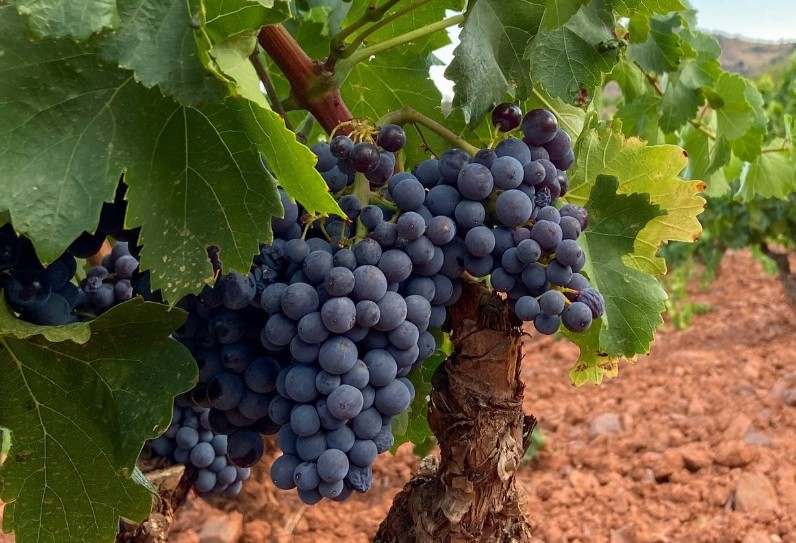
Grenache (also called Garnacha) are rich, flavourful red wines that can also be deep, ruby-coloured rosés. Although originating in Spain, France’s Southern Rhone Valley has become renown for Grenache production. As well, new world regions are now cultivating Grenache vines, with the United States and Australia being the main growers.
Grenache is a dry, medium-full bodied wine with a medium level of tannins and acidity. It is high in alcohol with a level of 15% alcohol by volume. Grenache is recognized for its fruity notes of strawberry, raspberry, plum and cherry, with hints of leather and dried herbs. Flavour can vary depending on the region it comes from, but notes of orange and red grapefruit are sometimes present.
Grenache will pair well with roasted meats, Mexican food, mild curry or vegetables spiced with Asian spices and cumin.
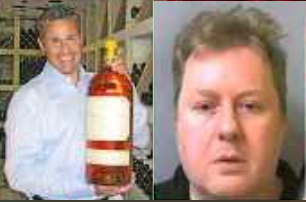
Earlier this year, two British men, James Wellseley and David Burton, were sentenced in Brooklyn, New York to ten years in prison for conducting a $97 million US Ponzi scheme that deceived investors into lending money against elaborate wine collections that did not exist. The scheme operated through a company called Bordeaux Cellars, which Wellesley and Burton presented to investors as a legitimate London and Hong Kong-based wine brokerage with access to high-value collections.
Bordeaux Cellars was said to be a business that arranged loans to wealthy individuals, many of whom were retirees or people approaching retirement who were attracted to what appeared to be a distinctive but comprehensible asset-backed lending product. The borrowers were presented as being in need of quick access to cash and were prepared to use their rare wine collections as collateral.
An investor would lend money to a borrower through Bordeaux Cellars, with the loan fictitiously secured against a specific collection of high-value wines. The wines would be held as security until the loan was repaid. Investors were led to believe there was a tangible, liquid asset backing their investment.
The wines and the company were a total fabrication. The borrowers, the collections, and the valuations were all fictitious. The documents they provided to investors — loan agreements, inventory lists, insurance certificates, storage confirmations, were all fake. Investors who received repayments in the early stages of the scheme were paid from the funds of later investors. It was a classic Ponzi scheme where the structure can only be sustained until the money from new investors fails to meet the commitments owed to existing investors. By the time the scheme met its demise, investors lost a total of $97 million US. Some lost a little while others forfeited their entire life savings.
Wellesley and Burton were shameless and brazen, presenting their offerings at investment conferences and events. They built a creditable reputation in the alternative investment sector as experts in the high-value wine market. Unfortunately, wine collections are difficult for investors to validate the existence of, let alone any associated value. The pair were able to persuade investors by having a good command of wine terminology and by presenting documentation that appeared professionally prepared.
Unfortunately, Bordeaux Cellars is not the only fraudulent company working the alternative investment market. According to authorities, whisky, art, classic cars and other similar assets are frequently used as the basis for fraudulent investment schemes as they are harder to value, authenticate, and verify than conventional financial instruments. Be wary of anyone suggesting you invest in such assets.
Be sure to do a thorough fact-find before investing. If investors in this scam had researched Bordeaux Cellars, they would have found that the company had no significant legitimate business history. Also, it would have been registered with the government regulated securities commission, which of course it was not. Finally, a search on James Wellesley and Stephen Burton would have indicated they had no background in in wine finance.
This past June the All Canadian Wine Championships (ACWC) took place in Ontario’s Lake Erie North Shore wine region. This year there were 1,085 products registered with entries submitted from all ten provinces.
If you are looking for a new wine to try or want to see how your favorite wines compare, this list may be useful for you. All prices are presented in Canadian dollars.
The 2026 trophy winners for 2026 are as follows:
Best Sparkling Wine of the Year
Noble Ridge Vineyard and Winery, BC – 2019 The One – $40.25
Intrigue Wines Ltd., BC – 2025 Social Rosé – $23.00
Best Fruit Wine of the Year
Krause Berry Farms & Estate Winery, BC – N/V Sparkling Golden Raspberry – $31.05
The following are the Double Gold and Gold medal winners for each grape wine category: To see the complete list, including all the silver and bronze medal winners, visit the ACWC website at allcanadianwinechampionships.com/acwc-2026-results/
Sparkling Wine-Traditional Method
Double Gold *Trophy, Best Sparkling Wine of the Year
Noble Ridge Vineyard and Winery, BC – 2019 The One – $40.25
Gold
Huff Estate Winery, ON – 2022 Cuvée Janine – $38.80
Tzafona Cellars, ON – 2024 – Cabernet Franc Icewine – $63.00
Gold
Pilliteri Estate Winery, ON – 2024 Family Reserve Corvina Icewine – $85.00
Grape Fortifieds
Double Gold
Moraine Winery, BC – 2023 O’Port – $47.00
Gold
Adega on 45th Estate Winery, BC – N/V Terra Quente – $29.99
INTERNATIONAL SEGMENT FOR 2026 “Cellared in Canada”
These wines are comprised of partial or 100% imported grapes or juice. The program was introduced to assist the BC wineries after 2 harsh winters. These wines are excluded from the trophy rounds.
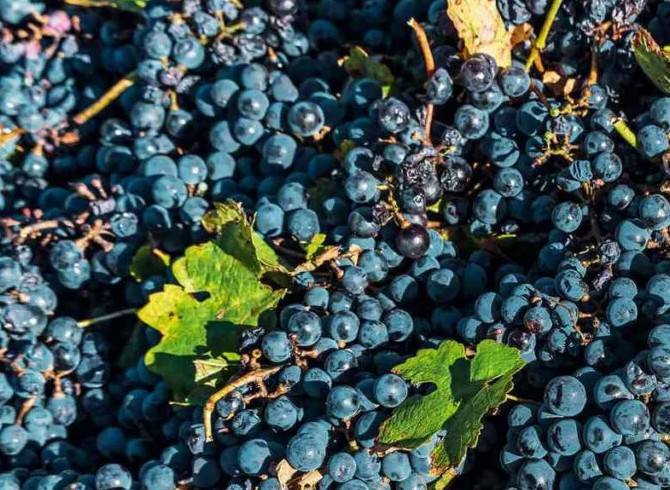
When I come across Malbec wines in my local liquor store, I think of them as full-bodied red wines with lots of tannins and high in alcohol. The level of tannins makes it a good wine for aging. Its dark plump fruit flavours and smoky finish make Malbec a great alternative to higher priced Cabernet Sauvignon and Syrah.
I always think of Malbec as being an Argentinian wine, but it originated on the Right Bank of Bordeaux, France, where it still flourishes today. The uniqueness of each region influences the flavour profile produced. Argentinian Malbec wine has flavours of blackberry, plum and black cherry. There are often hints of milk chocolate, cocoa powder, violet flowers, leather and, depending on the amount of oak aging, a sweet tobacco finish.
Malbec produced in France tends to taste leatherier, with flavours of tart currant and black plum with some bitterness. These wines tend to have higher acidity, and flavours described as black pepper and spice. There is a moderate amount of tannin and acidity with less alcohol than Argentinian Malbecs, which tends to allow French Malbec wines to age longer.
Unlike Cabernet Sauvignon, Malbec doesn’t have a long finish, therefore making it a good pairing with. lean red meat. It also goes well with lamb, pork shoulder and dark meat poultry, such as duck, chicken legs or thighs.
French Malbec, Argentinian Malbec, or both, the choice is yours.