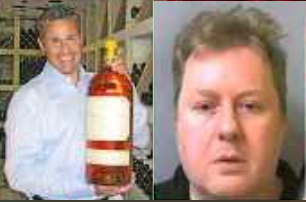
Earlier this year, two British men, James Wellseley and David Burton, were sentenced in Brooklyn, New York to ten years in prison for conducting a $97 million US Ponzi scheme that deceived investors into lending money against elaborate wine collections that did not exist. The scheme operated through a company called Bordeaux Cellars, which Wellesley and Burton presented to investors as a legitimate London and Hong Kong-based wine brokerage with access to high-value collections.
Bordeaux Cellars was said to be a business that arranged loans to wealthy individuals, many of whom were retirees or people approaching retirement who were attracted to what appeared to be a distinctive but comprehensible asset-backed lending product. The borrowers were presented as being in need of quick access to cash and were prepared to use their rare wine collections as collateral.
An investor would lend money to a borrower through Bordeaux Cellars, with the loan fictitiously secured against a specific collection of high-value wines. The wines would be held as security until the loan was repaid. Investors were led to believe there was a tangible, liquid asset backing their investment.
The wines and the company were a total fabrication. The borrowers, the collections, and the valuations were all fictitious. The documents they provided to investors — loan agreements, inventory lists, insurance certificates, storage confirmations, were all fake. Investors who received repayments in the early stages of the scheme were paid from the funds of later investors. It was a classic Ponzi scheme where the structure can only be sustained until the money from new investors fails to meet the commitments owed to existing investors. By the time the scheme met its demise, investors lost a total of $97 million US. Some lost a little while others forfeited their entire life savings.
Wellesley and Burton were shameless and brazen, presenting their offerings at investment conferences and events. They built a creditable reputation in the alternative investment sector as experts in the high-value wine market. Unfortunately, wine collections are difficult for investors to validate the existence of, let alone any associated value. The pair were able to persuade investors by having a good command of wine terminology and by presenting documentation that appeared professionally prepared.
Unfortunately, Bordeaux Cellars is not the only fraudulent company working the alternative investment market. According to authorities, whisky, art, classic cars and other similar assets are frequently used as the basis for fraudulent investment schemes as they are harder to value, authenticate, and verify than conventional financial instruments. Be wary of anyone suggesting you invest in such assets.
Be sure to do a thorough fact-find before investing. If investors in this scam had researched Bordeaux Cellars, they would have found that the company had no significant legitimate business history. Also, it would have been registered with the government regulated securities commission, which of course it was not. Finally, a search on James Wellesley and Stephen Burton would have indicated they had no background in in wine finance.
As the saying goes, buyer beware.
Sláinte mhaith

