Rising summer temperatures are impacting grape growers around the world, however today I will focus on France’s Bordeaux region. Temperatures are expected to rise between 0.3°C and 1.7°C over the next 20 years. At this point global warming has benefited Bordeaux but that is about to change, especially if the grape crop is not somewhat modified.
Photo credit: foodandwine.com
Growers are going to need to reconsider their mix of grapes as temperatures continue to rise. The future of white varietals from the region may become non-existent while the existing proportion of reds, where 60% to 70% is currently Merlot, is already too great an amount. Merlot is ideal in cooler regions where there is a shorter growing season. However, with temperatures increasing and the growing season getting longer, Merlot now ripens too quickly. Many of these vines will need to be replaced with varietals such as Cabernet Sauvignon, which perform better in hotter climates with a longer growing season.
At least until now the increase in temperature and the resulting riper fruit have not had a detrimental effect on the quality of the wine. Instead, higher temperatures have made wine quality more consistently better. However, if warming continues the quality of the wine will begin to deteriorate.
It is well known that high temperatures can have harmful effects on grape composition, such as a decrease in anthocyanins (the pigmented molecules that give red wine its colour), as well as other molecules, that could cause unpredictable aromas. The grape skins are also negatively impacted by higher temperatures.
Growers, scientists, and wine professionals all speculate that continued increases in temperature will negatively impact fruit and wine quality in the future. However, to date Bordeaux has successfully adapted to the quickly changing climate, but experts fear that the danger point is swiftly approaching.
Whisky can be enjoyed in many ways, whether it be on the rocks, with a splash of water, soda water, a mixer or in a cocktail. However, there are those of us who, on occasion, feel it’s important to appreciate the spirit in its simplest state. This is particularly true when trying a whisky you have not had before. Here is a simple guide for conducting a whisky tasting.
The process is very similar to the way a wine tasting is conducted. After all, they are both a savoured, complex drink. As with a wine tasting, it is fun and beneficial to do this with company. It is both entertaining and educational to see how your interpretations compare to those of your friends. The beauty lies in the senses of the beholder and there are no right or wrong interpretations.
There is a set of simple steps to follow that will help ensure you have the best possible whisky tasting experience. It is recommended to use tasting glassware such as tulip-shaped International Standards Organization (ISO) vessels or Glencairn footed glasses. Pour half an ounce or less into each glass, just enough for a few sips.
The first step is to examine the whisky in your glass. The colour can indicate what kind of cask the whisky was matured in and how long it aged. The older the whisky, the darker the colour. Also, the newer the cask, the darker the colour. The more a cask has been used, the lighter the colour of the whisky. However, in many places including Canada and Scotland, it’s legal and common to add artificial colouring. Most whiskies are in a range of gold to amber.
Avoid swirling whisky as you might wine; the higher alcohol content in spirits can prickle your senses, burning your nose and palate. Bring your nose to the glass slowly. Many whiskies can be over 50% alcohol by volume (ABV) and thus too intense if your nose isn’t accustomed. Get in close to the glass, take your time, and start sniffing. Some experts recommend frequent, small sniffs, while others say long, soft sniffs are better. People often recognize one or more of floral, fruity, spicy, toasty, nutty, caramel, toffee, butterscotch or vanilla aromas.
Take a small sip and then another. As with the aromas, focus on flavours that immediately pop into your head. Spend a few minutes sipping slowly, moving the whisky around your mouth and identifying the flavours. Then add a few drops of water to the whisky; this will lower the alcohol percentage, allowing more aromas and flavours to be identified. Consider how long they linger on the finish.
Also consider the whisky’s texture; whether it is rough and hot, oily and silky or intense and sharp. Note the flavours you taste, and how long they linger on the finish.
All that is left now is to gather a couple of fellow whisky enthusiasts together, along with a favourite bottle, and let the exploration begin.
This summer has proven to be especially bad for the grape harvest in France’s Bordeaux region. The perfect combination of meteorological conditions has led to an alarming spread of mildew throughout the region. The combination of warm weather and rain has resulted in new plant growth being left unprotected as the wet weather has hindered the application of herbicides.
Photo credit: vivino.com
The mildew has been having the greatest impact on the red grape varietals, most notably Merlot. So far this year the region has been impacted by two separate waves of mildew. It remains to be seen whether the disease will progress onto the stalks of bunches and if it can be ultimately contained.
Some growers have lost their entire harvest. As a result, a helpline has been established to help growers cope with the devastation. Some grape growers are even considering their careers because of the mildew. It has been quite traumatic for those trying to control it.
This is the second consecutive year where Bordeaux growers have been impacted by the weather. The 2022 harvest was about 11% less than the ten-year average.
Grape growers are hoping that the region will soon see a return to more uninterruptedly dry, hot weather. If the dry heat returns, Bordeaux may see the 2023 harvest being within the top three earliest harvests in the past decade. However, given the devastation caused by the mildew, the harvest yield will be much lower than in previous years. This will no doubt impact the price when the 2023 vintage of Bordeaux reaches store shelves in a few years’ time.
In June, Séverine Pinte, French born viticulturist and managing partner at both LaStella and Le Vieux Pin wineries, was awarded the Knight of the Order of Agricultural Merit. The award was presented in Oliver, British Columbia by the Consul General of France, Nicolas Baudouin.
Photo credit: en.wikipedia.org
The Order of Agricultural Merit (Ordre du Mérite agricole) is presented by France for outstanding contributions to agriculture. It is the highest distinction given in France to individuals, both French and foreign, who have made significant contributions in the fields of agriculture and the food and wine industry, whether in public duties or in the practice of agriculture. It also rewards people who have distinguished themselves in scientific research or in related publications.
Severine Pinte came to LaStella and Le Vieux Pin in 2010 with 14 harvests of international winemaking experience along with 8 years of vineyard management. She is a graduate of the infamous ENSAM (Ecole National Superior Agronomic of Montpellier) where she acquired her Masters in viticulture and oenology, and her National Diploma of Oenology. After graduating from ENSAM she apprenticed at the Cave de Tecou in the AOC Gaillac before coming for the first time to British Columbia to work for Domaine de Chaberton as an assistant winemaker. In 1999 she returned to France and worked a year in Bordeaux under the direction of Andre Lurton in Pessac-Leognan. For nine years Severine was head winemaker and viticultural council for ‘Le Vignoble des 2 terres’ in the Terrasse du Larzac terroir.
In 2003 Severine worked at Frankland Estate winery in Australia and learned about the Australian way of making Cabernet Sauvignon and other Bordeaux originated varieties. Curiosity and the pursuit of new challenges lured Severine to British Columbia’s Okanagan.
Severine is an active member of British Columbia’s wine industry as a board member of the B.C. Wine Grape Council. She is a leading advocate of sustainable viticulture practices and was instrumental in launching the Sustainable Winegrowing B.C. certification program.
She has proven to be a true steward of the land, making some of the finest, most sought-after wines in B.C. at both Le Vieux Pin and LaStella wineries. The wines produced by the two wineries may be purchased online through their respective websites, www.levieuxpin.ca and www.lastella.ca .
During the first week of August my wife Valerie and I made our first post pandemic adventure to Prince Edward County. I came prepared with a selection of wineries that I felt deserved a closer look, each having caught my attention for a variety of reasons.
The wineries are not presented in any particular order.
Hinterland Wine Company is a boutique winery specializing in wines made using the traditional method. Hinterland uses minimal intervention in their winemaking process, allowing the unique terroir to shine through.
I was particularly impressed with their 2021 L’Imparfait Seneca, which is classified as an orange wine, though it is very much red in colour. It is a blend of 67% Pinot Noir, 26% Marquette and 7% Savagnin grapes. If you like a sweet wine this one is definitely not for you; it has distinct earthy tones.
From Closson Chase we came away with some of their 2022 Estate Unoaked Chardonnay and 2021 Churchside Pinot Noir.
The unoaked Chardonnay was sourced entirely from their South Clos vineyard. It was whole cluster pressed, then cool fermented in stainless steel at 14 C.
The Pinot Noir is sourced entirely from their Churchside vineyard. Destemmed with no crushing and cold soaked for 3-5 days. The juice was then fermented in oak tonneau and aged for 18 months in French oak barrels, 20% new. The wine has five to seven years of cellaring potential.
Rosehall Run, 1243 Greer Rd, Wellington, Ontario
At Rosehall Run we found a 2021 Chardonnay Musque, a wine that not many wineries seem to produce. It is an unoaked variety that contains Chardonnay Musque grapes, rather than the more common Chardonnay. The wine is 100% estate grown and bottled.
Another find was their 2019 Cabernet Merlot which is a blend of 49% Merlot, 43% Cabernet Franc and 8% Cabernet Sauvignon grapes that were sourced from select vineyards in the Niagara Peninsula. This wine has a cellaring potential of a minimum of ten years. It has been consistently rated as a 92 out of 100 by several wine critics.
Grange of Prince Edward Vineyards and Estate Winery, 990 Closson Rd, Hillier, Ontario
At Grange I had to go with one of my favourite varietals, Cabernet Franc. In this case it was their 2020 Cabernet Franc, which contains 100% estate grown grapes. This is unusual for Prince Edward County given the slightly cooler climate and shorter growing season than either Niagara or the North Shore of Lake Erie.
Broken Stone Winery, 524 Closson Rd., Hillier, ON
This find I must credit my brother for as he happened by it when he was touring the County earlier this summer. He brought me back a bottle of each of their 2018 Intensity Meritage Blend Niagara Peninsula and 2021 Gamay Noir Barrel Reserve. Both were delightful.
In addition to purchasing these two wines, I also picked up some of their 2021 Chardonnay Sans Chene.
Karlo Estate Winery, 561 Danforth Rd, Wellington, Ontario
I am pleased to report that Karlo is back in full swing with a complete lineup of both red and white wines, including their unique red blend Quintus. Winemaker, Derek Barnett, has recreated this work of founder Richard Karlo using a blend of the classic noble grape varieties, Malbec, Petit Verdot, Merlot, Cabernet Franc, and Cabernet Sauvignon.
The Old Third Vineyard, 251 Closson Rd, Hillier
The Old Third produces unfiltered Pinot Noir, Cabernet Franc and Chardonnay. Unfortunately, the tasting room is inside a barn that can only be entered by climbing steps consisting of some uneven precariously strung planks with no handrail. This proved too much of an obstacle for my post-stroke climbing ability so I had to pass on going inside.
Stanners Vineyard, 76 Station Rd., Hillier
Stanners locally grown Cabernet Franc has always been one of my favourite Prince Edward County wines but given the small quantity produced, it is often difficult to obtain and this year is no exception. The 2020 Cabernet Franc VQA Prince Edward County is already sold out, as well as the 2020 Pinot Noir VQA Prince Edward County and the 2020 Pinot Noir VQA Prince Edward County. However, I was still able to obtain the 2020 Cabernet Franc VQA Lincoln Lakeshore. The grapes for this Cabernet Franc came from a single vineyard in the Lincoln Lakeshore sub-appellation of the Niagara Peninsula. The grapes were hand harvested then destemmed to whole berries with no crushing. The wine was aged in mostly older French oak barrels for 19 months and was not fined or filtered in order to preserve its fine fruit flavours. This wine is likely to age gracefully for quite a few years.
Devils Wishbone, County Road 7, Prince Edward County, Ontario
In the past I always enjoyed several of Devil Wishbone’s red varietals. When I last visited the County in 2020 the winery was temporarily closed. I anticipated a return visit there this summer but was saddened to learn that the owner, Jennifer Baldini, passed away in June of 2021 after suffering from a two-year illness. The retail operations of the Devils Winery had been closed since the onset of her illness in 2019 but the vineyards were maintained in anticipation of her successful recovery. Sadly, this didn’t prove to be the case and Devils Wishbone is now closed permanently.
Since the 1990’s Irish Whiskey has been gaining ever increasing popularity among liquor drinkers and thus, there are more people than ever trying Irish whiskey. As a result, there are now more selections on the market than ever before.
Irish Whiskey has a much more silky or smooth finish than other whiskeys, which is one major reason for its increasing popularity. There is less alcohol burn when drinking than with other types of whiskey.
Each Irish whiskey has its own unique flavour and may be produced in several different ways (see The Styles of Irish Whiskey from March 12th). How do you decide which whiskey is best for you? Below are some suggestions based on my own experiences to help get you started. In this list are whiskeys that are commonly available in liquor stores with a price point under $100. However, discovering your ultimate favourite will require you trying several different ones in order to find your preference of style and flavour.
Jameson Irish Whiskey ($42 CDN)
Like many, this was my introduction to Irish Whiskey.
The aroma has floral notes, such as honeyed fruits and cut grass. The taste contains hints of fresh fruit such as pears and apples. The finish has hints of honey and spices.
Jameson may be enjoyed with a few drops of water or mixed with a bit of lemon juice.
Bushmills 10 Year Old ($57 CDN)
Bushmills is one of the most prominent distilleries in the Emerald Isle, specifically Northern Ireland. Bushmills 10 Year Old, uses 100% malted barley.
The nose contains hints of banana skins and butter mint with lots of sugar and vanilla. The palate has a lot of fruity notes.
Writers Tears Copper Pot ($55 CDN)
Writers Tears is a smooth and easy-to-drink whiskey. It is made using a combination of single malt and single pot still which produces a variety of fruity notes. There are flavours of honey, vanilla, and fruit.
Green Spot ($85 CDN)
Produced by Mitchell & Son, alongside Yellow Spot and Red Spot, this pot still whiskey is my personal favourite. This Irish pot still whiskey is an easy-to-drink spirit, made using both unmalted barley and malted barley.
The nose has hints of apples with tastes of butterscotch, vanilla, and honey on the finish and is aged in a blend of first and second-fill Bourbon casks and sherry casks.
The Sexton Single Malt ($50 CDN)
This whiskey is crafted using 100% Irish malted barley and aged four years in sherry casks for a uniquely smooth finish. There are notes of dried fruit, nuts and honeycomb.
The Sexton is a bright golden spirit with aromas of toffee, marzipan, citrus, allspice and hints of dark chocolate. The taste has notes of dried fruit, a direct result of ageing in Oloroso Sherry casks. The finish is smooth and supple with a hint of sweetness.
Final Thoughts
Although any of these whiskeys provide a good starting point there are many other great ones out there waiting for you to discover.
This year was the 22nd addition of the WineAlign National Wine Awards of Canada (NWAC), which took place in Penticton, British Columbia. There were 1,930 entries from 255 wineries. All entries to the competition are 100 percent grown and produced in Canada.
Photo credit: winealign.com
The National Wine Awards presents four major awards: The Canadian Winery of the Year, The Best Performing Small Winery, Icewine of the Year and Cider of the Year. Within each of the 37 categories, wines are eligible to compete for Gold, Silver or Bronze medals, all topped by Platinum medals, which are presented to the highest one percent of wines across all competition categories.
The major award winners and the Platinum and Gold medal winners from the top 25 wineries are presented below:
The Winery of the Year is Hidden Bench Estate Winery in Beamsville, Ontario. Being one of the most respected Niagara wineries since its inception 20 years ago, Hidden Bench has finally won Winery of the Year honours by earning 12 medals – two Platinum, five Gold and five Silver. Congratulations to proprietor Harald Thiel and his team, including winemaker Alex Baines and viticulturalist Joel Williams.
The Platinum and Gold winning wines were:
Platinum
Hidden Bench Pinot Noir Felseck Vineyard 2020
Hidden Bench Chardonnay Tete De Cuvée Rosomel Vineyard 2020
Peller Estates Niagara 2021 Andrew Peller Signature Series Rieslin
The 2023 Best Performing Small Winery of the Year was presented to Deep Roots Winery of Naramata, British Columbia. Deep Roots had the best-scoring top five wines in the competition among wineries producing fewer than 10,000 cases. Their 2020 Reserve Chardonnay earned a platinum medal, one of only three Chardonnays to do so, as well as four gold medals for:
Deep Roots Parentage Red 2020
Deep Roots Gamay 2022
Deep Roots Syrah 2020
Deep Roots Sauvignon Blanc 2022
British Columbia wineries dominated the Small Winery category, claiming nine of the top ten rankings. The remaining top 10 small wineries are as follows:
2. Corcelettes Estate Winery, British Columbia
3. SpearHead Winery, British Columbia
4. Township 7 Vineyards & Winery, British Columbia
5. Painted Rock Estate Winery, British Columbia
6. Van Westen Vineyards, British Columbia
7. Orofino Vineyards, British Columbia
8. River Stone Estate Winery, British Columbia
9. Moon Curser Vineyards, British Columbia
10. The Organized Crime Winery, Ontario
Note: A minimum of five wines must have been entered to be eligible for Winery of the Year and the Top Wineries lists. Ranking was determined by the total score of their top five wines, not total number of medals.
The complete listing of all the winning wines from this year’s event is available on the Canadian Wine Awards website, www.winealign.com/awards.
If you get headaches when drinking wine or your face becomes flushed, chances are you have experienced an allergic reaction to the wine. Antihistamine medications like Zyrtec, Allegra, Claritin or Benadryl may provide quick relief for your symptoms. This is because histamine has caused an immediate inflammatory response in the body.
Photo credit: therealreview.com
Histamine is part of the immune system that serves to provide a warning to your body of any potential attackers. It causes blood vessels to swell so the white blood cells can quickly find and attack an infection or problem. The increase in the level of histamine is what causes a headache and leaves a person feeling flushed, itchy and miserable.
Many wines contain components that may react negatively to people with histamine sensitivity. To begin, the wineries tend to use grapes that are ripe or even overripe; a state which leaves the fruit in the perfect state for excess histamine production. Sulphur dioxide, which is a common preservative used in winemaking, can cause dermatitis, hives’ and/or flushing. Another preservative, ammonium sulphates, may cause nausea or vomiting. It also causes histamine release in the body. Commercial yeasts are also a known histamine trigger.
Lastly, ethanol, which is the alcohol we consume when we drink wine, is a by-product of the bacteria which feed on the sugars in the grapes from which the wine was made. It is the reason why all alcohol contains histamines. Generally, the higher the alcohol content, the lower the sugar content and vice versa.
The level of histamine in wine varies depending on the processes used when making the wine; things such as the type of barrel used. You won’t find an alcohol completely without histamines and sulfites but there are techniques that will lower the histamine formed in wine.
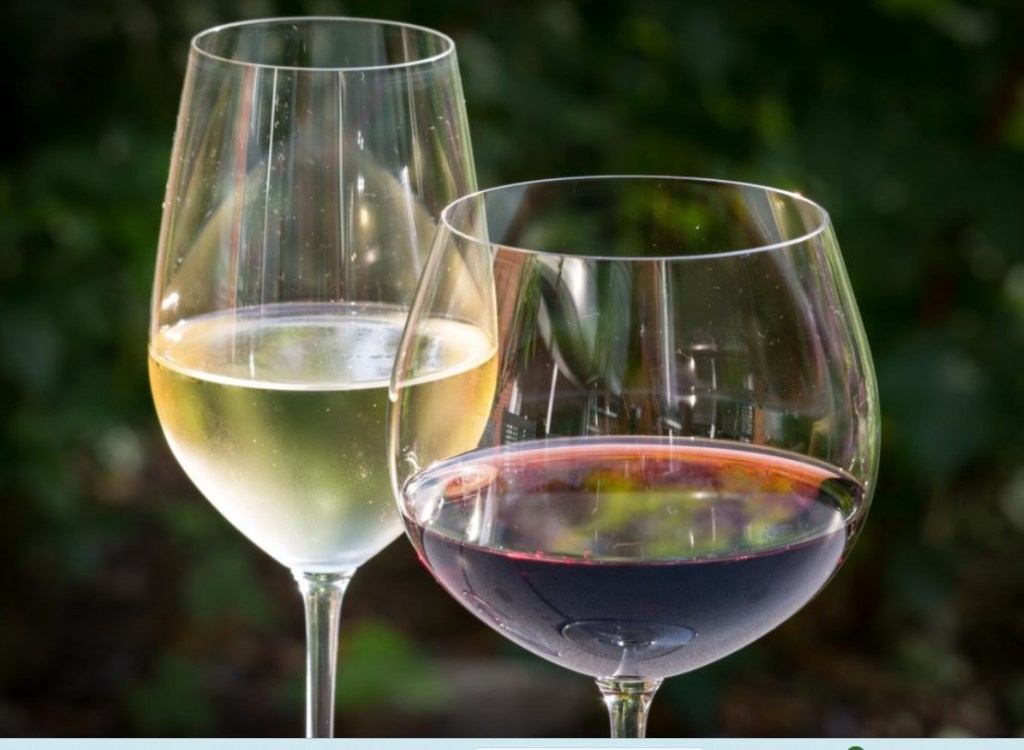
While both red and white wines contain some trace nutrients, red wine has much higher levels of antioxidants, but all wines contain substances such as sulfites, which can cause mild to severe allergy symptoms to appear in some individuals. White wine will contain between 3 to 120 micrograms of histamine per glass, whereas red wine will have 60 to 3,800 micrograms of histamine per glass.
Some people claim that natural wines contain low levels of histamine, however this is not always true. It is not easy to determine which wines are safe as most wine labels do not legally have to show this kind of information and there isn’t a legitimized certificate for low histamine wines.
What works for many people with a sensitivity to histamine is a low histamine wine without sulfates. White wines such as Sauvignon Blanc or sparkling wines like Cava or Prosecco are often a good choice for people with histamine sensitivity.
According to new guidelines from the Canadian Centre on Substance Use and Addiction (CCSA), which were published earlier this year, consuming more than six alcoholic drinks a week leads to high health risks, including cancer, especially for women.
The CCSA led the initiative to update Canada’s Low-Risk Alcohol Drinking Guidelines (LRDGs). This Health Canada initiative was initiated in July 2020. The result of this project was the creation of Canada’s Guidance on Alcohol and Health, which now replaces the LRDGs.
The CCSA states that no matter the kind of alcohol, whether it is wine, beer, cider or spirits, even a small amount is damaging, regardless of age, sex, gender, ethnicity, tolerance for alcohol or lifestyle. Thus, if you drink, it’s better to drink less.
According to the CCSA, the guide provides people with the information necessary to make well-informed and responsible decisions about their alcohol consumption. The guidelines state that there is a continuum of risk associated with weekly alcohol use.
No risk = 0 drinks per week — Not drinking has benefits, such as better health and better sleep.
Low risk = 2 standard drinks or less per week — Most likely to avoid alcohol-related consequences.
Moderate risk = 3 to 6 standard drinks per week — There is risk of developing several types of cancer, including breast and colon cancer.
Increasingly high risk = 7 standard drinks or more per week — The risk of heart disease or stroke increases significantly at this level.
Each additional standard drink radically increases the risk of alcohol-related consequences.
In addition, consuming more than 2 standard drinks on any occasion is associated with an increased risk of harms to oneself and others.
As with the previous guidelines, alcohol should not be consumed when pregnant or while breastfeeding.
On the other hand …
Contradicting at least a portion of the new Guidance on Alcohol and Health is another study, also published this year, this time in the Nutrients Journal where researchers completed a study aimed at understanding the association between wine consumption and cardiovascular mortality, cardiovascular disease (CVD) and coronary heart disease (CHD).
This investigation states that wine consumption has an inverse relationship to cardiovascular mortality. According to the journal, “Researchers performed a systematic review and meta-analysis using longitudinal studies, including cohort and case-control studies retrieved from multiple databases which they searched from their inception to March 2023”.
The researchers stand by the belief that light to moderate alcohol consumption positively affects general health; for instance, it acts on high-density lipoprotein cholesterol to prevent atherosclerosis, lowers the incidence of ischemic heart disease (IHD) and helps with the prognosis of people at higher risk of coronary complications leading to myocardial infarction.
However, these researchers agree that excessive drinking causes over 200 diseases, which makes it a leading cause of deaths globally. They also warn that alcohol interacts with multiple drugs, altering its metabolism. Decreased alcohol metabolism could lead to increased blood alcohol levels. For example, a component in wine, resveratrol, interacts with certain drugs and modifies their metabolism.
Polyphenols in red wine, such as tannins, provide multiple cardiovascular health benefits. It is also an anti-inflammatory, antioxidant and antimutagenic thus reducing potentially harmful chemicals from the body. Nonetheless, all cardiologist agrees that light to moderate alcohol consumption has a positive effect on cardiovascular health, whereas excessive alcohol drinking elevates the risk of CHD mortality, cancers, etc. At least both studies agree on this point.
The participant’s age, sex or smoking status apparently had no effect on the study’s results. Both red and white wines displayed positive affects but the impact varied by the type of wine.
Though health benefits were noted with both red and white wine, the variations in the strength of this association were attributable to the different concentrations of some components. Red wine, in particular, has phenolic compounds such as gallic acid, catechin, and epicatechin (flavonols), which gives it antioxidant properties. These wines also reduce low-density lipoprotein (LDL) oxidation, thrombosis risk, plasma and lipid peroxide.
Alcoholic components of wine reduce the risk of thrombosis and levels of fibrinogen, as well as induce collagen and platelet aggregation. Thus, higher consumption of red wine is more beneficial for combating CVDs than white wine other alcoholic beverages.
The study concluded that moderate wine consumption is good for cardiac health. However, researchers should interpret these findings with caution. Increasing wine consumption could harm patients susceptible to alcohol due to age, preexisting pathologies or medications.
In closing …
I leave it to you to make your own decision with regards to the merits of both studies. Complete information regarding Canada’s Guidance on Alcohol and Health is available at https://ccsa.ca/. The complete study, Association between Wine Consumption with Cardiovascular Disease and Cardiovascular Mortality: A Systematic Review and Meta-Analysis, is available at https://www.mdpi.com/2072-6643/15/12/2785.
The 2023 Canadian wine award season began in early June with the Ontario Wine Awards. There were 558 entries from 77 Ontario wineries.
Receiving the honour of the Winemaker of the Year was Peller Estates Winery’s Katie Dickieson. She earned more gold medals than any other winemaker in Ontario.
The Niagara region’s Domaine Queylus attained the Red Wine of the Year award for its 2020 Cabernet Franc Tradition. This wine is only available directly from the winery but at a very affordable price of $33.50 CDN.
The White Wine of the Year award was presented to Prince Edward County’s Norman Hardie for their 2017 Semi-Dry Riesling. This wine comes at a price of $21.00 CDN and is available from either the winery or select LCBO stores.
This year Gold medals were awarded in the following categories:
Sparkling Wine Award (Traditional Method)
Gold medals were presented to:
Malivoire Wine Bisous Rose NV
Megalomaniac Bubblehead Limited Edition Brut NV
Niagara College Teaching Winery, Balance Brut NV
Thirty Bench Wine Makers, Sparkling Riesling NV
Trius Winery, Showcase Blanc de Blancs NV
Sparkling Wine Award (Cuve Close)
The gold medal was awarded to Greenlane Estate Winery for their Saffron Sparkling Rose 2021
Riesling Award (Semi-Dry)
The gold medal was awarded to Megalomaniac Winery for their Narcissist Riesling 2021







 A Layman's Wine Musings